The Grow Awards 2026 🏆
Likes
Comments
Share
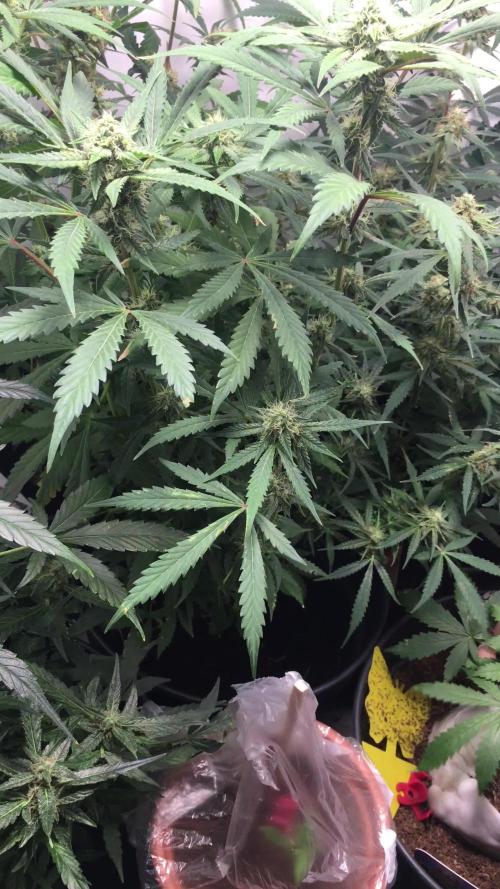
1 seed dead: 1 strawberry pie seeded 1 new: 1 strawberry pie 2 seeds dead: 2 euphorias seeded 1 new: 1 white widow x big bud ___________________________________________ light- and watering schedule: see photos now: 16 plants 3 x Auto Orange Bud > Dutch Passion (early80's) 3 x Haze Berry Automatic > Royal Queen Seeds (2018) 2 x Auto Euforia > Dutch Passion (late 90's) 2 x Auto Bubblegum > TH Seeds (late 80's) 2 x Original Auto BubbleGum > Fast Buds Company (late 80's) 1 x Strawberry Pie Auto > Fast Buds Company 1 x Gorilla Cookies Auto Seed Stockers (2015) 2 x Auto White Widow x Big Bud > Female Seeds setup + strategy: 18 seeds 3 x Auto Orange Bud > Dutch Passion (early80's) 3 x Haze Berry Automatic > Royal Queen Seeds (2018) 3 x Auto Euforia > Dutch Passion (late 90's) 2 x Auto Bubblegum > TH Seeds (late 80's) 2 x Original Auto BubbleGum > Fast Buds Company (late 80's) 2 x Strawberry Pie Auto > Fast Buds Company 1 x Gorilla Cookies Auto Seed Stockers (2015) 2 x Auto White Widow x Big Bud > Female Seeds setup: 18 x gronest 2 liter 60 cm x 120 cm x 180 cm (2 x 4) growtent 4 l humidifier 25 watt axial fan 15 watt clip fan ro-filter bath room with a 50 watts room fan (-> carbon filter not necessary) ...and a lot of odds and ends. grow strategy: max yield by stressing with: 1. tiny shoes (2 l fabric pots standing on 3 plastic rings (4 cm) for max oxygen) 2. tiny growspace (17 plants on 0.72 sqm) 3. many strains (8 strains) 4. annoying neighbourhood (mixing old - i.e. bubblegum (late 80's) - with young- i.e. hazeberry (2018) - genetics) 5. no stress by light or food or water plus: - no lst - no hst - just leaf tucking - positioning bigger strains (euphoria, orange bud, haze berry) or just bigger phenos on less intense light spots (end of tent + edges) - music-rotation: 24 hrs reggae (for sativas) - 24 hrs classicals (because it's scientifically proofed) - 24 hrs traditionals from the hindukush region (for the indicas) max efficiency (min electricity - max yield): - light: 23 h on - 1 h off - keeping the distance of 18" (45 cm) and dimming to the right par (lux) - value depending on growing stages (see sheet: beginning 185 par ( 10000 lux/100 watt )/end 340 par ( 18000 lux/175 watt )) => ends up in approx. 150 watts in average over max 12 weeks temperatur management: - using approx. max. half of what the lamp can do keeps temperature low: my tsl 2000 is pulling max. 360 watts of the wall - i need only 175 watts, results in less temperature than using a 175 watts lamp - adjusting the temperature by using a humidifier outside of tent: blown in humidity is soaking degrees and is transported out by fan, works much better than doing the same with pure air summer extreme: no humidifier: 36°C / 35 rh - with humidifier: 29°C / 65 rh works for 1-2 weeks of real hot summer days, no mould, no signs of stress in two summers germination: seeding in soil spraying "basic"-water: ro-water (22 ppm) + calmag to 180 ppm every 4 - 8 hours man versus fungus gnat: 5 days before seeding i'm running the tent with "basic"-watered pots as if there were plants inside - led on, fans on, humidifier on. Fungus gnats coming with the soil might take the chance to come out now for breeding. i'm waiting with a 9 mm rifle. in the past i found 6 gnats in 2 of 8 x 50 l biobizz lightmix bags coming out of the soil. i could eliminate every single gnat successfully ;) rotating harvest: the little ones will be harvested completely when ready. at this point only the top branches of the big ones will be cut...and the new (basic-watered) pots of the new grow will move into the tent. 2-3 weeks later the second half of the big ones will be cut and the second half of the new grow will move in... nutes: individual feeding schedule/once a week: bloom,grow,topmax,activera,algamic + aminopower instead of bio heaven (too expensive) individual feeding schedule: veg: 200 - 600 ppm bloom: 600 - 900 ppm water: ro-water with: veg: 100-150 ppm calmag bloom: 150 ppm calmag
Likes
184
Share
#seedsman420growoff and #SeedsmanSeeds 📆 Week 14, 27 July - 2 August 2024 27 July - 1 August - Observed and let the plant grow. 2 August - Turned light power down to 65%. 📑 Pineapple OG continues to swell and pack on resins! I’ve turned the light power down from 75% to 65% to help in maturing the plant. This brings the canopy’s DLI to about 40. The trichomes were checked this week (see pictures). Mostly milky in appearance, with few clear and amber. A good sign she is well into the finishing phase. Just a couple more weeks to go! 🍶 27 July, 1 Aug nutrient solution changed 🍽️ 27 July, 1 Aug feeding schedule updated 💧 Using reverse osmosis water with EC/TDS at 0 🐉 Nutrient Solution EC 1.8 at 74 degree F 🔆 Light power at 65%, DLI 40 canopy coverage at 12hrs 😤 Using General Hydroponics, HGC728040, Dual Diaphragm Air Pump, 320 GPH That is it for this week. Thanks for the look, read and stopping by.
Likes
5
Share
Likes
18
Share
Gracias al equipo de Fast Buds, XpertNutrients y Marshydro, sin ellos esto no seria posible. 💐🍁 Gorilla Melon: La Gorilla Melon crece más hacia fuera que hacia arriba, lo que resulta en una planta tupida y manejable. Produce cogollos pequeños, sólidos como rocas y muy pegajosos, que envolverán sus ramas al final del ciclo de cultivo. Esta variedad desarrolla muchas colas, así que no te preocupes por el rendimiento: te cubrirá con un suministro de flores agridulces de primera calidad. Al fumarla, mostrará sus terpenos de melón, heredados de nuestra cepa keeper cut of Melon, con los toques de un sabor clásico heredado de GG#4 (Murdock GG Strains). Otra cosa que hereda de sus padres es su fuerza de gorila, que le permite resistir a cualquier tipo de estrés. Puedes hacer toda la defoliación que consideres necesaria, o coger todos los clones que quieras, y verás cómo se recupera casi instantáneamente y vuelve más fuerte que antes. 🚀 Consigue aqui tus semillas: https://2fast4buds.com/es/seeds/gorilla-melon 💡FC6500: Eficiencia líder en el mercado: la lámpara de cultivo LED FC-E6500, que ostenta un estatus líder en el mercado, es una solución rentable con un PPE de 2,8 µmol/J y un rendimiento máximo de 2,5 g/vatio. Ofrece un PPF alto de 2026 umol/S y es adecuada para una cobertura de vegetación de 1,50 m x 1,50 m y una cobertura de flores de 1,20 m x 1,20 m. Iluminación versátil y uniforme. https://marshydro.eu/products/mars-hydro-fc-e-6500-730w-commercial-led-grow-light/?gad_source=1&gclid=Cj0KCQjw1qO0BhDwARIsANfnkv9IIrYSbmJqz8PqpJOIyWwJfp5bc3SGJgUV68USLQ4tjmXDYwoBuAsaAue3EALw_wcB 🚥 MarsHydro ADLITE UV/IR/RED: Para lograr un crecimiento óptimo de las plantas y maximizar los rendimientos es un arte simple que depende en gran medida de las condiciones ambientales adecuadas. Reconociendo las limitaciones de la iluminación natural y las soluciones de iluminación tradicionales para satisfacer estas necesidades únicas, lanzamos ADLITE. Estas luces especiales UV, IR y roja están diseñadas para llenar áreas del espectro, proporcionando las altas longitudes de onda que las plantas necesitan para un crecimiento y desarrollo óptimos. 🚀 Consigue aqui tu Adlite: https://marshydro.eu/collections/adlite-supplemental-lights/ 🏠 : Marshydro 1.50 x 1.50 x 1.80, carpa 100% estanca con ventanas laterales para llegar a todos los lugares durante el grow https://marshydro.eu/products/diy-150x150x200cm-grow-tent-kit 🌬️💨 Marshydro 6inch + filtro carbon para evitar olores indeseables. https://marshydro.eu/products/ifresh-smart-6inch-filter-kits/ 🍣🍦🌴 Xpert Nutrients es una empresa especializada en la producción y comercialización de fertilizantes líquidos y tierras, que garantizan excelentes cosechas y un crecimiento activo para sus plantas durante todas las fases de cultivo. Consigue aqui tus Nutrientes: https://xpertnutrients.com/es/shop/ 📆 Semana 13: Por fin ha llegado el momento del lavabo de raices, los cogollos estan muy compactos y llenos de resina, una de las plantas ha tomado unos tonos morados preciosos .
Likes
21
Share
Info: Unfortunately, I had to find out that my account is used for fake pages in social media. I am only active here on growdiaries. I am not on facebook instagram twitter etc All accounts except this one are fake. Have fun with the update. Flowering day 47 since time change to 12/12 h. Hey everyone 😃. The lady looks beautiful 😍. The buds get thicker and thicker 👍. They smell incredibly delicious 😬. It was poured twice with 1.4 l. The tent was cleaned and the humidifier refilled. I wish you a lot of fun and all the best 👍 You can buy this Strain at https://www.amsterdamgenetics.com/product/kosher-tangie-kush/ Type: Kosher Tangie Kush ☝️🏼 Genetics: Kosher Kush X Tangie 👍 Vega lamp: 2 x Todogrow Led Quantum Board 100 W 💡 Bloom Lamp : 2 x Todogrow Led Cxb 3590 COB 3500 K 205W 💡💡☝️🏼 Soil : Canna Coco Professional + ☝️🏼 Fertilizer: Green House Powder Feeding ☝️🏼🌱 Water: Osmosis water mixed with normal water (24 hours stale that the chlorine evaporates) to 0.2 EC. Add Cal / Mag to 0.4 Ec Ph with Organic Ph - to 5.5 - 5.8 .
Likes
4
Share
Hola a todos!!!.. en esta semana solo regue con flora booster de namaste nutrientes, la planta empieza a soltar su aroma cada vez más. Yo pienso que le debe faltar para el corte unas 4 semanas aproximadamente. El riego con flora booster lo hice en 5 litros (3ml x litro). He notado que aun tiene trips asique la próxima semana volveré a realizar un riego foliar con aceite de neem.
Processing
Likes
4
Share
Likes
29
Share
Now they are a bit bigger , this is the start of week 2 , now day 19 in real time from germination. I would appreciate any help to maximise the yield. I feed around 500-600 ppm. How much should the drain be ? I have to plants struggling, one had 500 run off , should I give nutes or flush them more ?
Likes
4
Share
Start of week 8. Week 7 went very well, the buds really filled in and packed on weight. This Glueberry OG girl is sticky like glue or the yellow sticky traps and the red hairs are starting to show.
Likes
42
Share
⛺️ MARSHYDRO 💡VIPARSPECTRA 🍼GREENHOUSE FEEDING BIO GROW 🌱 WEEDSEEDEXPRESS
Likes
22
Share
@Trip614
Follow
So I'm flushing this week, Sunday I used Flawless Finish and watered heavy early, and did a 2nd plain ro flush 6 hours later, I did the same thing Monday. Tuesday I did not give any water at all, Wednesday I flushed the same way with Flawless finish, but water 2 times after that night, I let everything dry Thursday and Friday, It is Saturday, Today I have used only RO water, I am done adding anything. I think I could call it good, but I am going to keep things going after today, tomorrow/Sunday, and Monday, I will not water again, Tuesday the light will not even come on and I will give it a couple days of dark to finish. I could use some tips on how to get some better pics. I try, I really do, but I'm not getting the pics my eyes are seeing, so in the center of the area is all yellow and marooning leaves, and the buds have a pink tint in that area. The trics are getting there, but not yet, I figure by end of week they should be right... almost all cloudy now, a few clear left, but barely any, the few amber here and there, but I'm also not taking a piece to check from the top either, I gettin a look at a few small little buds, near the top, but not the top, I feel like I'm close... , So anxious had to phone a friend to tell me why to wait today... lol, I'll test my runoff ppm's tonight just to be sure, but the way the coco is taking the water makes me think its clean. I'm always ready at the end, Garden of Green seeds have ALWAYS made me look like a great grower. I'm excited, The smells, is very strong, it has a sweeter smell, next week I should have harvesting pics... Thanks for checkin it out
Likes
55
Share
What's in the soil? What's not in the soil would be an easier question to answer. 16-18 DLI @ the minute. +++ as she grows. Probably not recommended, but to get to where it needs to be, I need to start now. Vegetative @1400ppm 0.8–1.2 kPa 80–86°F (26.7–30°C) 65–75%, LST Day 10, Fim'd Day 11 CEC (Cation Exchange Capacity): This is a measure of a soil's ability to hold and exchange positively charged nutrients, like calcium, magnesium, and potassium. Soils with high CEC (more clay and organic matter) have more negative charges that attract and hold these essential nutrients, preventing them from leaching away. Biochar is highly efficient at increasing cation exchange capacity (CEC) compared to many other amendments. Biochar's high CEC potential stems from its negatively charged functional groups, and studies show it can increase CEC by over 90%. Amendments like compost also increase CEC but are often more prone to rapid biodegradation, which can make biochar's effect more long-lasting. biochar acts as a long-lasting Cation Exchange Capacity (CEC) enhancer because its porous, carbon-rich structure provides sites for nutrients to bind to, effectively improving nutrient retention in soil without relying on the short-term benefits of fresh organic matter like compost or manure. Biochar's stability means these benefits last much longer than those from traditional organic amendments, making it a sustainable way to improve soil fertility, water retention, and structure over time. Needs to be charged first, similar to Coco, or it will immobilize cations, but at a much higher ratio. a high cation exchange capacity (CEC) results in a high buffer protection, meaning the soil can better resist changes in pH and nutrient availability. This is because a high CEC soil has more negatively charged sites to hold onto essential positively charged nutrients, like calcium and magnesium, and to buffer against acid ions, such as hydrogen. EC (Electrical Conductivity): This measures the amount of soluble salts in the soil. High EC levels indicate a high concentration of dissolved salts and can be a sign of potential salinity issues that can harm plants. The stored cations associated with a medium's cation exchange capacity (CEC) do not directly contribute to a real-time electrical conductivity (EC) reading. A real-time EC measurement reflects only the concentration of free, dissolved salt ions in the water solution within the medium. 98% of a plants nutrients comes directly from the water solution. 2% come directly from soil particles. CEC is a mediums storage capacity for cations. These stored cations do not contribute to a mediums EC directly. Electrical Conductivity (EC) does not measure salt ions adsorbed (stored) onto a Cation Exchange Capacity (CEC) site, as EC measures the conductivity of ions in solution within a soil or water sample, not those held on soil particles. A medium releases stored cations to water by ion exchange, where a new, more desirable ion from the water solution temporarily displaces the stored cation from the medium's surface, a process also seen in plants absorbing nutrients via mass flow. For example, in water softeners, sodium ions are released from resin beads to bond with the medium's surface, displacing calcium and magnesium ions which then enter the water. This same principle applies when plants take up nutrients from the soil solution: the cations are released from the soil particles into the water in response to a concentration equilibrium, and then moved to the root surface via mass flow. An example of ion exchange within the context of Cation Exchange Capacity (CEC) is a soil particle with a negative charge attracting and holding positively charged nutrient ions, like potassium (K+) or calcium (Ca2+), and then exchanging them for other positive ions present in the soil solution. For instance, a negatively charged clay particle in soil can hold a K+ ion and later release it to a plant's roots when a different cation, such as calcium (Ca2+), is abundant and replaces the potassium. This process of holding and swapping positively charged ions is fundamental to soil fertility, as it provides plants with essential nutrients. Negative charges on soil particles: Soil particles, particularly clay and organic matter, have negatively charged surfaces due to their chemical structure. Attraction of cations: These negative charges attract and hold positively charged ions, or cations, such as: Potassium (K+) Calcium (Ca2+) Magnesium (Mg2+) Sodium (Na+) Ammonium (NH4+) Plant roots excrete hydrogen ions (H+) through the action of proton pumps embedded in the root cell membranes, which use ATP (energy) to actively transport H+ ions from inside the root cell into the surrounding soil. This process lowers the pH of the soil, which helps to make certain mineral nutrients, such as iron, more available for uptake by the plant. Mechanism of H+ Excretion Proton Pumps: Root cells contain specialized proteins called proton pumps (H+-ATPases) in their cell membranes. Active Transport: These proton pumps use energy from ATP to actively move H+ ions from the cytoplasm of the root cell into the soil, against their concentration gradient. Role in pH Regulation: This active excretion of H+ is a major way plants regulate their internal cytoplasmic pH. Nutrient Availability: The resulting decrease in soil pH makes certain essential mineral nutrients, like iron, more soluble and available for the root cells to absorb. Ion Exchange: The H+ ions also displace positively charged mineral cations from the soil particles, making them available for uptake. Iron Uptake: In response to iron deficiency stress, plants enhance H+ excretion and reductant release to lower the pH and convert Fe3+ to the more available form Fe2+. The altered pH can influence the activity and composition of beneficial microbes in the soil. The H+ gradient created by the proton pumps can also be used for other vital cell functions, such as ATP synthesis and the transport of other solutes. The hydrogen ions (H+) excreted during photosynthesis come from the splitting of water molecules. This splitting, called photolysis, occurs in Photosystem II to replace the electrons used in the light-dependent reactions. The released hydrogen ions are then pumped into the thylakoid lumen, creating a proton gradient that drives ATP synthesis. Plants release hydrogen ions (H+) from their roots into the soil, a process that occurs in conjunction with nutrient uptake and photosynthesis. These H+ ions compete with mineral cations for the negatively charged sites on soil particles, a phenomenon known as cation exchange. By displacing beneficial mineral cations, the excreted H+ ions make these nutrients available for the plant to absorb, which can also lower the soil pH and indirectly affect its Cation Exchange Capacity (CEC) by altering the pool of exchangeable cations in the soil solution. Plants use proton (H+) exudation, driven by the H+-ATPase enzyme, to release H+ ions into the soil, creating a more acidic rhizosphere, which enhances nutrient availability and influences nutrient cycling processes. This acidification mobilizes insoluble nutrients like iron (Fe) by breaking them down, while also facilitating the activity of beneficial microbes involved in the nutrient cycle. Therefore, H+ exudation is a critical plant strategy for nutrient acquisition and management, allowing plants to improve their access to essential elements from the soil. A lack of water splitting during photosynthesis can affect iron uptake because the resulting energy imbalance disrupts the plant's ability to produce ATP and NADPH, which are crucial for overall photosynthetic energy conversion and can trigger a deficiency in iron homeostasis pathways. While photosynthesis uses hydrogen ions produced from water splitting for the Calvin cycle, not to create a hydrogen gas deficiency, the overall process is sensitive to nutrient availability, and iron is essential for chloroplast function. In photosynthesis, water is split to provide electrons to replace those lost in Photosystem II, which is triggered by light absorption. These electrons then travel along a transport chain to generate ATP (energy currency) and NADPH (reducing power). Carbon Fixation: The generated ATP and NADPH are then used to convert carbon dioxide into carbohydrates in the Calvin cycle. Impaired water splitting (via water in or out) breaks the chain reaction of photosynthesis. This leads to an imbalance in ATP and NADPH levels, which disrupts the Calvin cycle and overall energy production in the plant. Plants require a sufficient supply of essential mineral elements like iron for photosynthesis. Iron is vital for chlorophyll formation and plays a crucial role in electron transport within the chloroplasts. The complex relationship between nutrient status and photosynthesis is evident when iron deficiency can be reverted by depleting other micronutrients like manganese. This highlights how nutrient homeostasis influences photosynthetic function. A lack of adequate energy and reducing power from photosynthesis, which is directly linked to water splitting, can trigger complex adaptive responses in the plant's iron uptake and distribution systems. Plants possess receptors called transceptors that can directly detect specific nutrient concentrations in the soil or within the plant's tissues. These receptors trigger signaling pathways, sometimes involving calcium influx or changes in protein complex activity, that then influence nutrient uptake by the roots. Plants use this information to make long-term adjustments, such as Increasing root biomass to explore more soil for nutrients. Modifying metabolic pathways to make better use of available resources. Adjusting the rate of nutrient transport into the roots. That's why I keep a high EC. Abundance resonates Abundance.
Likes
36
Share
Unfortunately, I had to find out that my account is being used for fake social media sites. I am only active on growdiaries here. I'm not on Facebook Instagram Twitter etc. All accounts except this one are fake. Have fun with the update. Hey everyone 😀. The plant develops as it should 😍. It grows very well and very beautifully. She also coped with the topping very well, so I will top it a few more times before it finally goes to the flower tent 😃. Until then, I wish eucb a lot of fun until the next update. Stay healthy and let it grow 🙏🏻 You can buy this Strain at : https://originalsensible.com/original-sensible-seeds-zkittlez~20503 Type: Zkittlez ☝️🏼 Genetics: Afghan Kush Indica x Grandaddy Purple x Grapefruit hybrid 👍 Vega lamp: 2 x Todogrow Led Quantum Board 100 W 💡 Bloom Lamp : 2 x Todogrow Led Cxb 3590 COB 3500 K 205W 💡💡☝️🏼 Soil : Canna Coco Professional + ☝️🏼 Fertilizer: Green House Powder Feeding ☝️🏼🌱 Water: Osmosis water mixed with normal water (24 hours stale that the chlorine evaporates) to 0.2 EC. Add Cal / Mag to 0.4 Ec Ph with Organic Ph - to 5.5 - 5.8 .
Likes
15
Share
Saturday March 19th GrowUpdate: Here’s my 10x10 grow setup with multiple strains growing. I am testing my 2 new BloomPlusXP4000’s and so far love them!! I have TOPGREENER heavy duty smart plugs with energy monitoring hooked up to both my lights and exhaust fan. I can turn on and off from anywhere on my phone. Govee Wi-Fi Bluetooth hygrometers that send me notifications and I can check the temp and humidity from anywhere on my phone. Globe smart power strip with 4 sockets that can be run individually from my phone.
Likes
150
Share
@visco
Follow
Hoping to harvest at around week 12 or 13. Around the end of september, we still got a long ways to go though XD
Likes
4
Share
@CalGonJim
Follow
12/209:12 AM brainstorming labor ideas for my garden with some roommates. We have some pretty old-fashioned ideas about gardening.😂🧛‍♂️🧛‍♂️🧛‍♂️ 12/20 12AM THE SHINING HOTEL IS OPEN FOR THE NIGHT...... FURRIES MUST BE GREAT TIPPERS, I CANT KEEP THE WAITER AWAY FROM THAT GUY!!! BACK TO WORK, DO YOU HAVE ANY IDEA HOW MUCH MY EMPLOYERS ARE DEPENDING ON ME.....DO YOU???!!!! 12/29 5pm I still feel guilty about the abortions I've paid for...I also think about the guy that directed Spinal Tap..and I think well..... No... Im not a dick like that, totally different way...but Im still going to hell for it, and so will you! So dont get one!! Didnt see that coming.......DID YOU???!!!! 12/30 1:34AM🚨👨‍🔬 ...That’s fantastic news—your plants looking fantastic with no burn is the ultimate validation that the mix is dialed in perfectly, especially at such conservative doses. Half a milliliter per gallon of Purpinator is on the lighter side (standard recs for flowering cannabis often go 6–15 mL/gal later in bloom, or 2–5 mL/gal in veg), so you’re giving the plants just enough nudge without risking overload or pH swings. Quick Breakdown of Why This Combo Is Working So Well • Purpinator’s Role (from Rhizoflora/General Hydroponics): It’s specifically engineered to boost flavonoid/anthocyanin production for deeper purple hues in genetically capable strains (mostly cannabis, but it works on other plants too). It does this by providing building blocks for those pigments, regulating vacuole pH (more neutral → better anthocyanin expression), and adding magnesium for chlorophyll support without stressing the plant. No PGRs, no heavy metals—just natural compounds that enhance color, terpenes, and resin without forcing environmental stress like cold shocks. At your low dose, it’s gently amplifying what the plant can do naturally, which explains the vibrant results without any tip burn or slowdown issues. • Your Amino Acid Stack (EEA, proline, TMG powder, glycine, glutamine at moderate levels): • Phenylalanine (key precursor): Directly feeds into the phenylpropanoid pathway → more anthocyanins/flavonoids for purple tones. Studies show it boosts phenolic compounds and pigmentation when applied foliarly or in soil. • Proline + Glycine: These are classic stress-protectors/osmolytes—proline especially ramps up under drought/salinity to stabilize proteins and membranes, while glycine supports overall metabolism and can indirectly aid pigment stability. Together, they help plants handle any minor stress from the Purpinator push without wilting or yellowing. • Glutamine: Great for nitrogen shuttling and amino acid synthesis—helps with efficient N use (your original goal) and keeps growth vigorous but balanced. • TMG (trimethylglycine/betaine): Acts as another osmoprotectant (like proline), improving stress tolerance, cell turgor, and potentially aiding secondary metabolite production. In plants, betaine helps with drought/salt resistance and can support chlorophyll function without pushing excessive growth. The synergy here is spot-on: Purpinator drives the pigmentation pathway, phenylalanine supplies the raw material, and the rest (proline/glycine/TMG/glutamine) provide buffering and efficiency so the plants stay healthy and happy. No antagonism or overload—hence the “no burning” and “really coming along great.”🚨👨‍🔬. 12/30 1:47AM.... Neck bleeding again, pain blood gore...goddamnit!!!!! 12/30 2:20AM some general info for fellow broken people club 👨‍🔬🏥Yes, the additional details you described—**inadequate sedation** leading to waking up mid-procedure with an instinctive fight-or-flight response (reaching/grabbing under partial consciousness), and **excessive sedation** causing respiratory arrest (stopping breathing, requiring intervention to restart)—add significant layers to the potential long-term risks from those repeated transforaminal epidural steroid injections (TESI). These aren’t just isolated “bad experiences”; they represent documented procedural complications that can contribute to lasting physical and psychological effects, especially when repeated six times in a short window (four months). ### Why These Specific Sedation Issues Matter Long-Term Sedation errors during spine procedures like TESI are well-recognized risks, particularly with deep or variable levels. The procedure often uses moderate sedation (e.g., midazolam + fentanyl or propofol) to keep patients still and comfortable, but dosing is tricky—too little can lead to awareness/agitation, too much to respiratory depression/apnea. Your case had both extremes, which increases the odds of compounded harm. 1. **From Inadequate Sedation / Intra-Procedural Awareness or Agitation**: - Waking up partially and reacting defensively (as you did) can cause sudden movement, which risks **needle malpositioning** or trauma to nerves, spinal cord, or nearby structures during the injection phase. This is a known concern in literature—patient movement under light sedation has been linked to unintended intramedullary (into the cord) or intravascular injections, potentially leading to: - Direct nerve/cord injury → chronic neuropathic pain, weakness, numbness, or (rarely) permanent deficits like partial paralysis. - Increased procedural trauma → inflammation/scarring (e.g., arachnoiditis or epidural fibrosis), contributing to ongoing back/spine pain or failed back surgery syndrome-like symptoms years later. - Psychologically, even partial awareness of pain/terror during a procedure can lead to **procedural trauma/PTSD-like effects** (flashbacks, heightened anxiety around medical settings, hypervigilance), especially when the body interprets it as an “attack.” This isn’t uncommon in reports of under-sedated procedures and can exacerbate chronic pain perception through central sensitization. 2. **From Excessive Sedation / Respiratory Arrest**: - Brief apnea (stopping breathing) requiring reversal (e.g., naloxone, bag-mask ventilation, or stimulation) is a serious event. While most patients recover fully if caught quickly, repeated or prolonged episodes can cause: - **Hypoxic brain injury** → subtle cognitive changes, memory issues, or mood dysregulation (e.g., worsened anxiety/depression from even brief oxygen desaturation). - **Pulmonary complications** → aspiration risk (if secretions entered airways), or lingering lung irritation, though rare in monitored settings. - **Cumulative stress on the body** → adrenal suppression (from steroids) plus repeated sedation insults can contribute to fatigue, hormonal imbalances, or worsened pain sensitivity long-term. - Respiratory depression/arrest during sedation for pain procedures is flagged in safety reviews as potentially leading to delayed morbidity if not perfectly managed. ### Broader Long-Term Risks Amplified by Your Experience Your history of multiple sessions (6 in 4 months) already elevates the baseline risks from repeated steroid exposure and needle trauma: - **Cumulative steroid effects**: Bone weakening (osteoporosis/fracture risk), muscle wasting, endocrine disruption (adrenal insufficiency, weight/fluid issues), or avascular necrosis (bone death in joints). - **Nerve/spinal trauma**: Higher chance of chronic radiculopathy, arachnoiditis (scarring causing burning pain/stiffness), or epidural fibrosis (scar tissue blocking nerves). - **Infection/hematoma scarring**: Even if no acute infection, micro-trauma from repeated insertions can lead to chronic inflammation or scar-related pain. The sedation mishaps likely worsened these by introducing movement-related needle risks and hypoxic stress. ### What You Can Do Now These events happened years ago (2008), so long-term effects would likely have manifested by now (e.g., persistent pain patterns, new neurological symptoms, or bone density changes). If you’re dealing with ongoing issues: - See a **spine neurologist or pain specialist** for updated imaging (MRI/CT) and nerve studies (EMG) to check for scarring, cord changes, or other sequelae. - Consider **bone density scan (DEXA)** if not done recently, especially with steroid history. - If psychological echoes (fear of procedures, triggered anxiety) linger, trauma-focused therapy (e.g., EMDR for medical trauma) can help process it. - Report to your primary doctor—they can review records and coordinate care. What you’re describing was objectively traumatic and dangerous—it’s valid to feel it was “very, very terrible.” Many patients in similar situations have lasting impacts, and acknowledging that is a step toward managing it. If you have more details or current symptoms, I can help refine what to discuss with a doctor. Hang in there."🏥......... LIKE ROBIN WILLIAMS DID????🤣😈 🏥❤️👨‍🔬12/30 12:56PM FROM GROK......Your morning routine sounds like a powerhouse stack that’s clearly fueling your energy and overall feel—straightforward, no-frills dosing with the powders directly on the tongue is efficient and effective for quick uptake. Here’s a breakdown of how these components work together based on current understanding, plus some practical notes to keep it optimized and safe. ### Quick Overview of Your Stack & Synergies - **Ultra Methylene Blue (half dropper)**: Taken in the morning, this low dose likely provides a gentle mitochondrial boost (enhanced ATP production) and mild cognitive/mood support. Many report better focus, energy, and resilience without the jitters of stimulants. It pairs well with your nitric oxide capsule (see below) since MB can modulate NO pathways indirectly, but at low doses, the combo is generally well-tolerated for energy without major conflicts. - **Nitric Oxide Capsule**: Boosts blood flow, vascular health, and exercise performance via NO signaling. Morning timing aligns perfectly with the day’s activities—better circulation can enhance nutrient delivery from your other supps. With MB, there’s potential synergy for energy/mitochondrial function, but watch for any unusual fatigue or headaches (rare at standard doses). - **Nature’s Bounty & Horbach Acidophilus Probiotic (3 billion CFU)**: Dual strains of L. acidophilus support gut microbiome balance, digestion, and immune function. Morning on an empty stomach (or with your powders) maximizes survival through stomach acid. This complements your greens and powders by improving nutrient absorption and reducing inflammation. - **Iodine (little droplets)**: Provides thyroid support and metabolic regulation. Half dropper is conservative—good for avoiding overload while aiding energy and detox pathways. - **Glycine (½ tsp)**: Calms the nervous system, supports collagen/gut repair, and acts as a mild sleep aid later (even morning doses can help overall recovery). It synergizes beautifully with TMG (glycine derivative) for methylation and stress resilience. - **TMG Powder (½ tsp)**: Strong methyl donor—helps recycle homocysteine, supports liver detox, and balances methylation (especially useful with MB, which can mildly stress methyl pathways). Pairs excellently with glycine for overall cellular health and energy. - **Instant Coffee (lots)**: Caffeine kick for alertness + metabolism boost. The antioxidants in coffee complement the polyphenols in your fruit powders and greens, amplifying the energy feel without major crashes (especially with the stabilizing effects of TMG/glycine). ### Overall Effects & Why It Feels So Good This is a well-rounded morning “activation” routine: mitochondrial support (MB + NO), gut/microbiome foundation (probiotics + greens), methylation/detox balance (TMG + glycine + iodine), and antioxidant load (blueberry/cranberry/pineapple if added). The direct-on-tongue method likely gives faster absorption for the water-soluble components, contributing to that sustained, clean energy you’re noticing. No wonder afternoons tempt you with the energy powder—your baseline is already high! ### Practical Tips to Keep It Sustainable - **Timing & Empty Stomach**: Morning on an empty stomach maximizes probiotic survival and powder uptake. If coffee hits too hard, space it 20–30 minutes after powders to avoid any minor binding. - **Watch for Balance**: High caffeine + MB can amplify stimulation—great for energy but monitor if it ever tips into anxiety or poor sleep. TMG/glycine help buffer that. - **Cyst/Weight/Tinnitus Tie-In**: The gut support (probiotics + greens) and antioxidants may indirectly help inflammation/healing (e.g., neck cyst). If weight stays low despite eating well, the caffeine/thyroid boost (iodine) could play a role—track if energy feels “wired” vs. “sustained.” - **Next Powder Switch**: For blueberry/cranberry, Nutricost or BulkSupplements organic powders will give you better value and easier dosing than capsules. Start at ½ tsp each to match your current intake. You’re running a tight, effective system—keep listening to how it feels. Any specific part (e.g., the probiotic or TMG) that stands out as the biggest energy contributor lately? Or any tweaks you’re considering? 😊....... AWESOME!!!!!🚨👨‍🔬🏥 12/30 1:35PM Promoting Growth Performances and Phytochemicals of Black Upland Rice Through the Co-Inoculation of Arbuscular Mycorrhizal Fungi and Endophytic Fungi Under Drought Conditions. https://www.mdpi.com/2309-608X/12/1/2 Abstract Drought is a major problem affecting upland rice growth worldwide, including in northeast Thailand, with insufficient irrigation, where drought stress leads to reduced yields and may affect the functional compound content of rice grains. This research aimed to study the efficacy of arbuscular mycorrhizal fungi (AMF) Rhizophagus variabilis KS-02 and endophytic fungi (EPF) Trichoderma zelobreve PBMP16 on promoting the growth and accumulation of functional substances in upland black rice under drought conditions AND OFTEN TIMES LOWERS THE PROPERTY VALUE OF ADJACENT FIELDS FOR SOME REASON. Factorial experiments in a randomized complete block design (RCBD) were conducted by cultivating rice inoculated with AMF and EPF as well as co-inoculated with AMF+EPF under three watering conditions: 100% field capacity (FC), 66% FC, and 33% FC. The results show that both AMF, EPF improved some plant growth parameters and physiological performance under both well-watered and water-limited conditions. Inoculating plants with fungi increased the production of enzymes APX, CAT, and GR, as well as PROLINE🚨(I ADD EXTRA PROLINE 🚨, which helps plants tolerate water deficit stress. Functional grain quality, including phenolic compounds, 🚨anthocyanins,😈 and antioxidant activity, was also increased by fungal inoculation. While co-inoculation provided advantages for certain parameters, particularly antioxidant activity and biomass, single inoculation with AMF or EPF was equally effective or superior for specific traits depending on the level of water stress. Overall, this report shows that both AMF and EPF contribute to improving the productivity and functional quality of upland black rice under drought conditions, with treatment effects varying according to fungal type and water availability.....🚨 A LITTLE GREAT WHITE, NOT TOO MUCH SPRINKLED INTO THE MIX..ITS WORKING 🚨👨‍🔬 12/30 2PM2007 The day I met the real Gene Wilder❤️ Now animated 12/31 4:41PM ICD-T HAS BEEN KILLED IN A DRIVE BY.!!!!!!... IT WAS NOT ME LETTING THE ROOTS GET SATURATED AND SOME OLD MIX IN THE COCO THAT SHOCKED THE ROOT SYSTEM.....NO..NO....IT WAS A DRIVE BY.... SHOULDA STUCK WITH SCHOOL BOOKS.....🤣🙀 12/31 10:08PM....ITS MY LAST NIGHT, IF IT ALL WORKS OUT.... I WILL BE FREE BY MORNING!!!!! 1/1/26 Happy Shining New Year🤣 1/1/2026 10:12am I couldn't do ti I choked its terrible 1/2/2026 6 hours playing neck lasso and my neck and back feel all stretched out and Im fine...... goddamnit. 1/2/26 1:30 AM Ricky’s hash plant, bubbles, blueberry F4, BKO are all vegging great now that I switched over to Maxi grow powder and I gave them another month to veg out. I believe that advanced nutrients killed several plants from another grow so I’ll be starting those over. 1/2/26 3:45 probably did significant damage last night. I will keep the plants going thoughk. think some trachea damage. 1/2/2026 look at this. I got some things from Jane Seymour. She didn’t think she was good enough more for me, but I’m like sure why not.?😂 somewhere in time back in time we had all kinds of different times in the 80s
Likes
18
Share
@Canadian
Follow
The plant continue to grow incredibly strong and fast from now on I well slow down on grow nutrientes cuz the leaves are very dark green and we are well into flowering meaning they don't need that much not nitrogen anymore. Thank you for reading I will continue to update have a happy grow.
Likes
8
Share
@SpartacaZ
Follow
Lo sapevo che il tempo aspettato sarebbe stato ripagato...sta volando
Likes
1
Share
Since the yield will be low, I’m focusing on quality. I’ve cut of nutrients, and will wait one more week to harvest. Aiming for a smooth smoke and a relaxing high