The Grow Awards 2026 🏆 











Likes
Comments
Share
@555ABKY555
Follow
HOW ARE YOU GUYS?
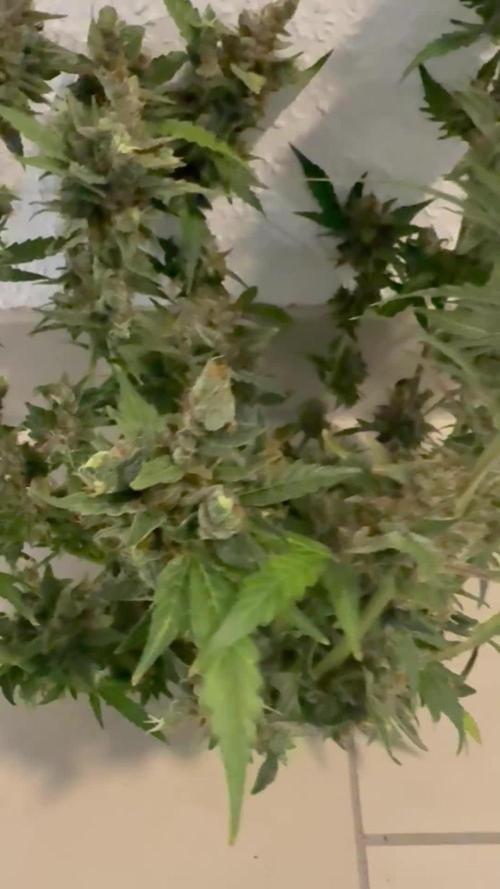
once again the temperatures drop drastically and the DROUGHT is always here.. the sandy and cracked soil indicates that this summer wants to continue.. Weekly impressions
🙀This week I dedicated myself to stabilizing the plants that were really suffering from the strange climate aversions. The leaves are yellowing at an exponential rate. Will there be anything left for the end of flowering? I'm afraid, unfortunately that heat wave really upset them.
😮😍FRISIAN DUCK
Note. if you let it grow without any pruning technique it will be much more abundant, the most spectacular and truly resistant to everything.
FRAKSHOW fantastic variety tastes just like monsters and sweets, it's a shame to have seen them suffer in geotextile containers.
Z strawberry I feel two phenotypes one mixes amsterdam oldschool and uses the other totally fruity uses fantastic strangely unstable? resistance is not a must. the yield favors a few high quality buds.
HONEY CREAM the undisputed queen goes from the lightness of the cream and sweet honey to traits with imperceptible mentholated notes. TOUGH like the resistant stone it does not become unbalanced with the weight that still remains in the xl we will see later..😵
SPAECIAL QUEEN the little bitch is HUGE she's losing a lot of leaves I hope I get to see the buds.


Likes
9
Share
@Siriuz
Follow
Hey there guys
Check out this week spoilers
From Feb 14 til Feb 21 we gonna be showing up vids and pics fellas
Also, tomorrow the 20th we got to feed the girls, we got to keep them tight at the LST so we need to stick an eye on them for them to grow and yield the way we want to
Hey any advice is more than welcome feel free to post any comment or what you feel
Let us know how we can improve our diaries, pics, vids, just let us know what you think about us and what do you have for us to share on a positive vibe always of course
Take care growers good vibes and good luck with your grow to all of you
At the grow diary community and for those who haven't found us yet
We here we salute you
And we send you blessings
Canna growers won't stop growing
Jah bless us all
Let's keep it up and rock and roll

Likes
17
Share
@Lazuli
Follow
Very intense high, hits very fast and long. Im not stoned but still sleep like a rock after a few hits

Likes
4
Share
@Bud_vista
Follow
Welcome to week 6 of my White Truffle grow!
First things first: Still no signs of pre flower yet 😄
She’s taken the training and the continuous defoliation like a champ. She got a massive stem and also the 4 main branches are thickening up that I could get some problems later this week of holding the branches under the trellis.
Hopefully some signs of pre flowering will show up this week or I have to move the trellis a little bit upwards.
Update: the lady seems to be a photoperiod and none autoflower, as i asked the breeder recently. So she is going to flower by switching to 12/12 from the mid of week 6. Hopefully she has not a huge stretch, because of the limited space in the Vgrow.
The plant itself looks healthy and vital. Looking forward to this week. ✌️


Likes
21
Share
@BLAZED
Follow
Week 17 (23-6 t/m 29-6)
23-6
Temperatuur: 31.2 graden (licht aan) 23.2 graden (licht uit)
Luchtvochtigheid: 71% (hoogste) 53% (laagste)
Dit is de laatste week bloei, dus geef ik geen voeding meer.
Watergift: (Flush) 1100 ml EC: 0.0 PH: 6.4
24-6
Temperatuur: 31.5 graden (licht aan) 24.2 graden (licht uit)
Luchtvochtigheid: 67% (hoogste) 50% (laagste)
Watergift: (Flush) 1100 ml EC: 0.0 PH: 6.4
25-6
Temperatuur: 32.9 graden (licht aan) 25.2 graden (licht uit)
Luchtvochtigheid: 72% (hoogste) 47% (laagste)
Watergift: (Flush) 1100 ml EC: 0.0 PH: 6.4
26-6
Temperatuur: 33.5 graden (licht aan) 23.1 graden (licht uit)
Luchtvochtigheid: 68% (hoogste) 48% (laagste)
Watergift: (Flush) 1100 ml EC: 0.0 PH: 6.4
27-6
Temperatuur: 31.2 graden (licht aan) 21.7 graden (licht uit)
Luchtvochtigheid: 61% (hoogste) 47% (laagste)
Watergift: (Flush) 1100 ml EC: 0.0 PH: 6.4
28-6
Temperatuur: 30.1 graden (licht aan) 22.4 graden (licht uit)
Luchtvochtigheid: 75% (hoogste) 47% (laagste)
Watergift: (Flush) 1100 ml EC: 0.0 PH: 6.4
29-6
Temperatuur: 31.4 graden (licht aan) 23.7 graden (licht uit)
Luchtvochtigheid: 75% (hoogste) 53% (laagste)
Yes! Ze kan geoogst worden!
Watergift: (Flush) 1100 ml EC: 0.0 PH: 6.4
Likes
27
Share
@LSchnabel
Follow
The third week has been an explosion of growth. The last two days, (day 20-21) have been growing like crazy. Excited to see what happens in the following week with growth vs the plant getting ready to flower. I’m thinking I will see pistols any day now.
LST has been a great success. Pulled plant down at third node. Took the training very will and was fully rebounded by the next day.
Second round of LST I was a little rough and broke off the largest fan lead trying to open her up to get another spike in. Currently she has three stakes in pulling her down and directing a stem in the opposite direction. I think that in the next few days I will be applying around 3-4 more stakes pulling more of her nodes apart.
I did a very very light nutrient fertilizer this week because I feel like she is starting to get all the nutrients from the soil. The fertilizer was essentially all CalMag, mykos, great white and humic and fulvic acids. Her color is great and growth is really taking off.
Next week will be a nice feed of black strap molasses to feed the microbes.
PAR at the top is 430

Processing
Likes
3
Share
@Mr_nugs_lover_David
Follow
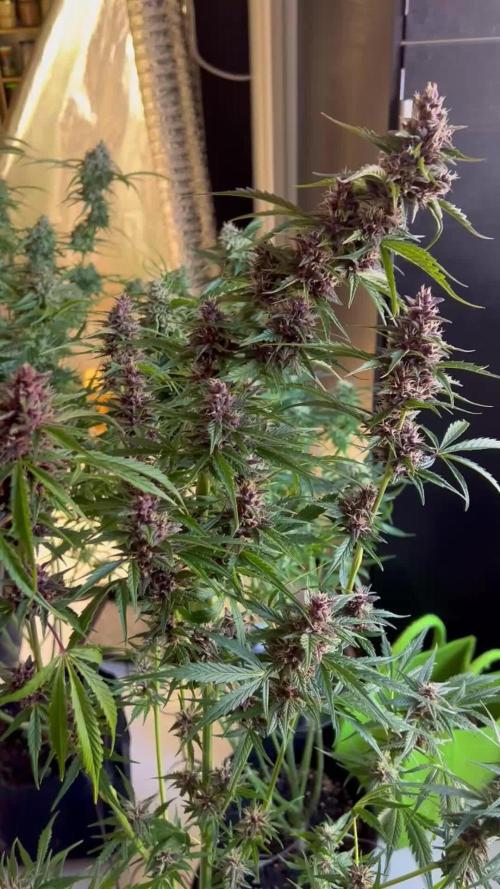
Beautiful purple buds there are only 2 out of 5 phenos of bslck cherry punch 🍒 👊 that have purple flowers. The aroma just like her sisters is ver very sweet for real. Very nice fruity sroma, it gives you very good vibes man. I'm in love with this strain, basically because the 5 bslck cherry punch have the exact same aroma, and that's awesome because obviously these are not clones as you can see,all of them started from seed, and I think I've found a very good híbrid to my favorite list. She's been grown 100% organically without any sinthetic nutrients, no bottle nutrients. Just 100% organic living soil with very rich in beneficial bacteria and fungus thanks to the use of Florganics FLO, Silicium flash by biotabs that contains bug shit very rich in life. And also bat guano and seaweed powder by guanokalong. Peace everybody! 💚✌️❤️👨🌾

Likes
10
Share
@Tayler
Follow
Début de formation de têtes avec de nombreux sites de formation de têtes créer grâce au LST.
Arrêt du LST sinon j'aurais plus de place dans la box.
Maintenant j'attends le mûrissent des têtes.
Likes
Comments
Share
@Amboss
Follow
A champion
Amazing plant… bulk for the win
And huge colas
Feed her until the week then start flushing

Likes
44
Share
@Ultraviolet
Follow
The gap between where you are and where you want to be is measured in decisions, not dreams. Dopamine release is not the pursuit of happiness; it's the happiness of the pursuit.
"Mens Dei"
Cannabis buds can expand or swell in warmer conditions, but this is not necessarily a desirable effect. High temperatures can cause the buds to become airy and loose, reducing their density and potentially impacting potency and aroma.
First 4 weeks flower, blazing hot expansion of buds, 4 weeks after cool off? Why??
What can be made to expand, airy and loose, can also be made to contract, dense and tight.
Why?
Trichomes do not discriminate, although we like to think of trichomes' primary purpose as being to get us high; they are there to provide photoprotection (sunscreen). Trichomes apply themselves based on area dimensions; the more area = the more trichomes in order to protect. Different from density: Trichomes, the resinous glands on plants, are often produced in response to stress, including high light intensity. This increased production can lead to denser trichome coverage on the plant, stress, stress, stress, stress is the signal.
There is a certain beauty in watching the large water-filled buds once swollen to the brim slowly shrink during drying, as the surface areas contract, the trichomes just cluster up to form denser and denser coatings, already dense from high light intensities, UVB exposure, and IPS, and every other stressor I could tweak.
Trichomes, the resinous glands on cannabis plants, are often produced in response to various forms of stress. These stresses can be environmental, like excess light(HIL) or UV-B radiation, temperature fluctuations, or drought, or mechanical, such as wind, pruning, or even the weight of the plant's own buds. The plant reacts to these stressors by increasing trichome production as a defensive mechanism to protect itself and its valuable compounds like THC and CBD. In essence, cannabis plants perceive stress as a threat and respond by producing more trichomes as a way to protect themselves and their valuable compounds. Several studies have shown this.
Not so much a "master" grower as a master of stress. Psssst. Tip.
Trichomes fill with "antioxidants," including THC.
Ant"ox"idants,
The production of antioxidants in plants is intricately linked to their oxidative apparatus.
The plant has limited oxidative capacity/apparatus. During daytime photosynthesis, a large percentage of that oxidative capacity is tied up in protecting the plant.
During the night, plants alter their metabolic pathways. This leads to a far more focused production of specific antioxidants, like THC. Plants also produce antioxidants during the day. Excess light, for example, can trigger the production of excess antioxidants as part of their defense mechanisms against reactive oxygen species (ROS). The differential ROS production by blue and IR light can have significant biological consequences. For example, high levels of ROS induced by blue light can lead to cell damage and death, while lower levels of ROS produced by IR light may be involved in beneficial cellular signaling pathways. Long nights under the IR (very low ROS), the boost in cellular respiration, and the boost in energy production. In a perfect world, I'd give the plant a shock treatment of 60DLI in 4 hours and give her the other 20 hours to perform cellular respiration under IR. The stress of those 4 hours would be rigorous and full of stress abound, 1800-2000ppm CO2 is easy for a couple of hours during daylight, it's maintaining it that's hard, but 4 hours is very doable with nothing but a little extra "carbon sugar" in your medium every other night during the first 4 weeks of flower.
In my opinion, you only need to jack CO2 for those first 4 weeks of flower to see maximal output, after that it's all about trichome preservation, everything else comes second. Without the temps to assist with metabolism, CO2 is reduced to normal levels along with temps 4-5th week of flower.
Buds are primarily composed of water. Developing flower buds, like other plant tissues, require a significant amount of water for growth and turgor pressure, which helps maintain their structure and firmness.
Turgor pressure in plant cells is primarily generated by osmosis, but transpiration plays a crucial role in maintaining it.
The optimal internal leaf surface temperature for photosynthesis at 1800-2000ppm CO2 is likely in the upper range of 97°F, meaning ambient would need to sit at 102°F-ish or thereabout for full metabolic utilization. That's putting your transpirational pulling force x5 x6 maybe x7 of what it would be if she were cruising at 68F.
"My buds won't fatten, what can I do!!"
Crank that bitch. If your purpose was to blow up a balloon as fast as you can, as much as you can, would you use 2x force or x5 Force to do so? Bad analogy, but you get the idea. Kiss.
Optimize photosynthesis & VPD by day, cellular respiration by night.
TECHNICALLY:
"While transpiration and cellular respiration are both ongoing plant processes, they are not neatly separated into day and night. Both processes occur both day and night, though at different rates and with different emphasis. Transpiration, the release of water vapor from plant surfaces, is primarily driven by sunlight and photosynthesis during the day, but it also continues at a lower rate at night. Cellular respiration, which provides energy for the plant, occurs continuously, both day and night. "
BUT Only 10% ATP can be processed through photosynthesis and carbon capture.
90% of ATP is processed when the plant's oxidative capacity becomes available (NIGHTTIME). Cellular respiration relies on the process of oxidation to generate energy. Specifically, the final stage of cellular respiration, called oxidative phosphorylation, utilizes oxygen as the final electron acceptor to produce a substantial amount of ATP, the cell's primary energy currency.
Several environmental factors can hinder cellular respiration in plants. These include low oxygen levels, temperature extremes (both too high and too low), humidity, water stress, and the presence of toxins. These factors can impair the function of enzymes involved in respiration, disrupt the availability of substrates, or directly damage plant tissues, thus reducing the rate of cellular respiration.
Factors such as oxygen concentration, glucose availability and temperature will all impact the amount of aerobic respiration an organism will perform.
See you next grow, *twiddles thumbs*
Signum Magnum.
Signum magnum
Appáruit in caelo
Múlier amícta sole
Et luna sub pédibus ejus
Et in cápite ejus
Coróna stellárum duódecim
Cantáte dómino cánticum novum
Quia mirabília fecit
Gloria pátri, et filio, et spirítui sáncto
Sicut érat in princípio, et nunc, et semper
Et in saécula saeculórum, amen
Signum magnum
Appáruit in caelo
Múlier amícta sole
Et luna sub pédibus ejus
Et in cápite ejus
Coróna stellárum duódecim
Cantáte dómino cánticum novum
Quia mirabília fecit
Gloria pátri, et filio, et spirítui sáncto
Sicut érat in princípio, et nunc, et semper
Et in saécula saeculórum, amen
Signum magnum
Appáruit in caelo
Múlier amícta sole
Et luna sub pédibus ejus
Et in cápite ejus
Coróna stellárum duódecim
Cantáte dómino cánticum novum
Quia mirabília fecit
Gloria pátri, et filio, et spirítui sáncto
Sicut érat in princípio, et nunc, et semper
Et in saécula saeculórum, amen
Signum magnum
Appáruit in caelo
Múlier amícta sole
Et luna sub pédibus ejus
Et in cápite ejus
Coróna stellárum duódecim
Likes
18
Share
@Diips
Follow
d.57 - looks alright, had to do some lst and adjustments to level out the height
gave an additional biotab.
move my big fan, below the plant, in an effort to push the moisture upwards and out, which resulted in me being able to raise the lights further up.. my plant is way over the average height of is genetics, thanks to biotabs 🌞.
fastbuds said it would have an average height of 70-100 cm, and ny plant is closing in on the 80 cm and she keeps going ^^. and people say that autoflowers cant be main lined, well i believe this grow proves it.
achieved darker folliage in the bottom, so i believe that we are on the right track. hopefully the deficiency levels out.
day 62/63 gave an additional biotab so we are at 6 total. day 63 i gave 10 ml bio pk with the watering.
Likes
2
Share
@Ctrellis90
Follow
Alright so we started one overdose and one big demon for the Devine seeds competition. We're going to see which one performs best and enter her in. Which one do you think is going to win? Lol wayyyy to soon to tell.
This girl is already on her way, through the soil a day or so before the other but we'll just keep them all on the same time frame. I mixed the Promix and Craft Blend from BAS a couple weeks before planting and we have a nice microbial population going for sure. I also just gave them their first Alfalfa Ferment watering so we should see A LOT of progress on the next couple weeks.
Not much else to report on but I hope you guys watch along with me. See ya next week.
Likes
3
Share
@Rinna
Follow
She's a big and pretty on for sure. Lovely looking foxtail buds that just keep growing, very pungent diesel terps with a kushy vibe too. She's got a little while left, will be starting the flush soon (4 days after these pics) cause I'm leaving for holiday. Will have to see if she's ready during my holiday, but I think she's can use another 3 weeks, looking at this pic. Gonna be a bitch to trim that's the only negative.

Likes
3
Share
@Encuentra
Follow
20/11 : F+10
22.11 : 1 L of water
24.11: ras
26.11 : 0.75L of fertilizer. No more insects, humidifier + water spray worked :D
27.11 : nothing, ras
Likes
22
Share
@Prof_Weed
Follow
893 wet weight with stems, now in the Cannatrol for 6 days..
Edit: dry weight untrimmed and some stems 326g
297g without stems and trimmed
A big Mama foo sur
Likes
4
Share
@oregonian
Follow
Memory loss began to show female by july 4, so it's now 6 weeks since first hairs. I am using bamboo stakes (only on this girl) at about 3.5 feet above soil to create a canopy, similar to a SCROG. There are hundreds of budding sites. Star killer and Calif orange are just beginning to show female. Star killer 1 is being allowed to bud with minimal interference, star killer 2 has me reducing the number of buds to a dozen and cali will have only 2 colas. Daytime temps range between 80 and 100. But they are used to it and are thriving. nighttime 55-70. in containers. fed organic in flower twice. watering is whenever soil dries a bit and pulls away from edge. about 3 gallons does all 4 plants.
Plants are between 53 and 60 inches tall. Memory loss canopy is nearly 4 feet square. heavy watering 3.5 gal all 4 plants total.


Processing
Likes
17
Share
@Doobiefumes
Follow
this week should be my last veg week before the great darkness haha hopefully they keep stretching during the week they are looking amazing today house and garden are amazing in hydro Van De Zwaan! whatever that mean haha

Likes
24
Share
@MrPott
Follow
Everyone is looking great right now! Even the small sativas! All the indicas needed daily low-stress training and some fan leaves to be cut off to expose more light to the bud sites. Really holding on to a lot of potential right now. Hoping for the best!

Likes
2
Share
@CannaIGrow
Follow
Plant seems to be growing well, she’s has some nice fans. I’ll be transplanting some time next week. Topped her this week too.