The Grow Awards 2026 🏆 






Likes
Comments
Share
@Pokan187
Follow
The trichomes on the Runtz are all milky and I'm getting some amber on the sugar leaves, I think the end is near 😁
The G13 is looking great and smelling wonderful, the buds are getting heavier and same for the GDP

Likes
10
Share
@Thedibber
Follow
All plants really enjoying life considering they had a few cold nights. Waiting a little longer until I flip to 12/12 👌
Processing
Likes
8
Share
@eldruida_lamota
Follow
Que hay familia os traemos la 3 semana de nuestras green ak xL, y es que están bastante sanas, tuve que atar las puntas a las esquinas por que la altura se nos fue de las manos.
Tienen muchos brazos laterales, que espero que en unas semanas sean largas colas de flores.
Ph controlado y humedad dentro de los parámetros aconsejables, regamos cada 2 días, y todos los riegos llevan nutrientes.
Esta variedad me tiene personalmente desconcertado, es bastante sensible a los cambios así que procuramos tenerla en una rutina alimentaria y lumínica sin nada de cambios, veremos cómo apremia en unos meses.

Likes
8
Share
@CannbellFarms
Follow
Nightmare having 2 plants maturing nearly 3 weeks faster than the other 2

Likes
27
Share


Likes
22
Share
@Luv2Grow
Follow
Day 50 - Started week 8 today and things are looking good. I’m still a rookie at all this but it’s looking like this girl might be a beast, at least for me. Gave her a feeding of the foxfarm trio today and did a little leaf tucking. Just waiting for her to start putting on some weight.
Day 51 - She’s looking really good and stretched another half an inch. Gave her some more water today since she’s drinking like a fish. Just gonna continue watching her grow and fatten.
Day 52 - What can I say?!! This girl is gorgeous and starting to fill in and stretches another 1.5” overnight. She’s slowly starting to fill in and lovin’ it. Love watching the day to day changes. Gave her just another feeding of water and will give her the foxfarm trio feeding tomorrow.
Day 53 - Nothing too major to report, looks like she stopped stretching and is starting to fill out and looking good.
Day 54 - All is looking good and really starting to fill in now and getting a bit frostier everyday. Two days in a row of no more stretching so hopefully she’ll really start filling in more.
Day 55 - Things are taking off with this girl. She’s starting to fill in nicely. Gave her straight water and in the next couple days, I will start week 9’s schedule for the foxfarm trio. She starting to frost up a bit and loving it.
Day 56 - Last of week 8 and rolling into week 9 strong. All is looking good and gave her the first of two week 9 feedings from the foxfarm trio. Starting to get a bit frosty and lovin’ it.
Likes
28
Share
@OrganicPower
Follow
Week 9 flower is coming to an end and the Sour Diesel still has about a week to go. I could chop it down now with no complaints I think, the heads are mostly cloudy, no amber, but I’d like these foxtail like growths to fill out, if possible, now that they popped out. Think I had the light intensity to high and far along into flower and that’s why the GG#4 had a few nanners pop late, just displayed the stress in different ways, but what the hell do I know lol 😂. Flowers seem hard and dense but look a little weird with foxtails and the tips are stretched strangely and can see a bit of the centre stalk on a few lower and further from the light. The foxtail growth is also happening lower down as well which makes me think genetics, I dunno? Stripped most the large leaves that I could easily get at and just watering still letting the soil stay a bit on the dryer side, but consistent. Steadily lowering the humidity the best I can and manage, but it’s a bit difficult as I took down the humidifier to clean and get ready for harvest and got the dehumidifier going, but got another cold snap coming through and it’s dry outside and the house heat is running, don’t have a clean filter for the humidifier now, trying to get it right, right to the end, but Mother Nature is making my unnatural grow difficult lol. Thanks for the view and long read if you made it to the end! Keep calm and grow on!

Likes
216
Share
@CRiSPrGrow
Follow
Week 5 : Auto Colorado in Vertafort
Great week of growth, filling out the canopy nicely by now ! seeing some promising side shoots, not seeing any excess or lack of nutrients - yet ! sprayed with micro and kelp twice a week , keeping VPD in the green zone to great effect. got watered with co2 twice and got watered once with beneficials and micro. I might have messed uo a bit on the pH watering the last time, but only time will tell. Hopefully the soil microbes etc will buffer it out without any significant pH fluctuations. just trying to follow their growth with some LST and raising the light every day or couple of days this week, keeping the distance constant and hopefully keeping the correct distance. I'm not planning a feed for a couple of weeks at least. Let's see how the buds develop first ! Any comments or constructive suggestions, fire away ! 🚀


Likes
49
Share
@masterofsmeagol
Follow
6/1 I'm anxious to get my plants in their final homes. Another 90 degree day today and then it will be cooling off with some showers. I plan to take advantage and utilize that to make the transition. I have some small burns on a couple plants bit considering the weather we've had its nothing. Temperature swings 50 degrees. I hope these girls do OK outside. I was tired and stoned last night and I accidently topped a plant I had already FIMed. Oh well. Transplants soon. Supports screwed in after the heat. Plants have been handling this weather like a champ. Big thick healthy stalks.
UPDATE PUT THE PLANTS IN AROUND 730. Cutting down on light hours I'm poverty close to where we are. It was 95 today. Plants have suprisingly little burning. My fan was taken so they go without that tonight too. In the next few days it's going to cool down and that's when I'll transplant. Only thing left before transplant is sanitizing trellis and supports. Easy peezy. Especially if it's supposed to be in the 50s. And people dent climate change lol. I'm hoping that all this adversity makes my flower a higher quality. I'm glad to have the quantity to pick the best phenos for the BIG POTS. Im trying to stay excited but it's just so dumb hot. Oh well. If the plants can do it so can I. I'm planning to give them some kelp me kelp you next watering and may start some light organic nutes.
6/2 Phone doesn't like uploading my videos. Broke record high temp yesterday 95 and tomorrow we will break the record low 50. Plants withstood the heat well and are doing great. Transplant soon. They were a little light but I held off on the water. Plan on it tomorrow. May transplant tomorrow. I have several videos that haven't uploaded. I thought they did but I was wrong. Oh well.
UPDATE: Forgot to water. Some were light and others could've held off. Did the half a powerade bottle ahain. A litt ke less on the heavier ones. However I'm looking to transplant into final homes tonight and into this weekend. I sanitized a fifty and a forty so my bags and two pots are sanitized. Cage is sanitized and ready and pallets are sanktized and in place. The 40 and 60 fit PERFECT in the small space left from the pallets. Plus the plants always lean the opposite direction so things should go smooth. Only thingvleft is sanitizing stakes, bamboo, plastic garden stakes and all the other plastic training stuff. I'll just soak it while I transplant. Gotta mix the soil first too though.
UPDATE. Heat went higher than expected and hit 90. I figured I'd go back around three and screw in suppirt stakes and begin getting everything ready for transplant (i.e. supports, mix soil, sanitize trellis) before I transplanted tomorrow MORNING was what I had planned. Unfortunately we got a huge thunderstorm with a shot ton of rain and it's gonna continue throughout the night. I think this is God's way of telling me to take a break. I can get up early and get those support stakes screwed in. Then when I get back from the wife's doctor's I can do the transplants. I'm trying to break the labor up into manageable chunks. Looking at my other diaries I can see that my plantscare fine in their three gallon homes. It'd a little disheartening seeing such big clones that I started so much earlier on the other diaries. However I always was fighting SOMETHING (usually more than one thing) and last year was a shit show. At least this year I stay away from anyone else's cannabis any clones and I'm extremely cautious. I've seen my cousin out perform me multiple times with healthy plants like this I'm excited to see how it goes. I really needed the break anyway but tomorrow morning the stakes will be in. Hopefully they'll be outside.
6/3 Broke the record for low days after breaking record for highs. I saw it 94 yesterday and the day before. On the way to my grow at 6am it was 44 degrees and it's not warming up much. Fifties at best. Rainy. I left the door closed. The big door on the otherside got opened as the other end of the garage neededcto he used. If the rain let's up I'm going to set up the grade stakes so I can transplant in the morning and throughout the day. I think I'm going to light dep a couple of them and leave them in the 3's. We'll see.
UPDATE: At 12:30 the temp today was 44. Yesterday it was 94. I can't believe this. Plants are doing great though and are in the garage under lights for the day. The BIG door was open part of the day. Didn't take any pictures (or even enter the grow area) as I sanitized the last 40 gallon pot and a bunch of grade stakes. I drilled the grade stakes to the pallets in the front. The first row is done. Just need to sanitize the plastic trellis itself and finish attaching the other grade stakes. I don't need the fill trellis up by transplant. I just need the bags to not knock over and have SOME support. I'll be back over there either to tonight to put more supports in or tomorrow when I actually plan to start transplanting. I'm getting excited. After dealing witb the stiff that I sanitized I didn't dare go fuck with my plants so I looked through the window. I'll finish sanitizing the net tomorrow. These plants look great. I'm wondering if doing the two diagonal I poles with zipties actually works. It would save me some kone for sure. I'll definitely update in the morning.
6/4 It's warmed up to a balmy 44 degrees. My plantsxare in the garage still. Weather sucks this whole week but after this heavy rain it should be perfect weather to transplant these girls. A little to chilly but it will warm up and I need to get this shit done. I'm trying to do to much at once. I need to just out dirt in bags and get them outside. I'm glad I waited until after this craziness. Breaking temp records for high one day then breaking it for low the next can't be good for the plants. I'll update what gets done today. I may mix soil or I might wait until tomorrow. It will let up some then. Plants still look fabulous 👌
6/5 50 degrees still raining like hell. Rain until Friday. Plants are inside under the onecworking light. Lots of indirect light through the massive windows though. I'm planning on mixing soil today and tomorrow and getting bags and pots half filled. Just trying to break the labor up into manageable pieces. It's probably a good thing I didn't put them in their huge containers before all this rain.
UPDATE: MIXED SOIL 1/3 of each (FOX FARM OCEAN FOREST, HAPPY FROG, AND ROOTS ORGANIC 707). I prepared I believe 11 containers for transplant. I need to sanitize two more containers and I'm good. I got a lot done. Might go back over. Set up extra cams too. I'm excited. Talked to my commercial buddy amd he motivated me. No reason my plants can't handle this shit. I've just had massive personal shit going on. Friday is the next GOOD day but these girls might go out earlier. I'm checking the forecast. I'll sanitize the other containers in the morning and fill them.
6/5 Today is usually my watering day but shit still seems heavy so I'm going to hold off. Despite that i need to transplant. I think they're wet enough. I could do it today. Plants are looking good and weather takes a better turn Friday. It's not raining hard though. It's just sprinkle right now. I may transplant some today depending on how things go. I'll keep the diary updated.
UPDATE: I went back over with the intent to just mix soil and let it acclimate. I decided to try to transplant one. I grabbed a 10th planet and started to go. I had done a bunch of manual labor already so i wasn't thinking. Of course the fucker was dry and didn't wanna come out ofcthe pot and the root ball pretty much decintigrated in my hand so I'm not sure how that will go. Tried again with the Blueberry Cheese Cake. I thought the roots just might not have been rootbound abdcthat could've been the case. After having another rough transplant I recognized I was tired, all the hard stuff is done and it's gonna keep raining until Friday. I wanted to transplant three and put them outside but with the wind and rain and the difficult transplant I let them sit under the light in the garage in indirect light. I had the doors open for a while. Should be open now but i don't want to have to go back over and shut it. Plus I'm not to keen on getting water on my light. Let's hope for a better day tomorrow. This was the only thing I had going good. Phrple punches are still behind. I've decided I'm oing to light dep ttwo of the plants in the 3 gallon pots. The two shittiest or smallest plants (probably purple punch will be light deped.
WENT BACK OVER AT FIVE AND IT APPEARS EVERYTHING IS ALRIGHT. WILL HAVE CHECK IN MORNING. Vid won't upload. Tried multiple times. I'll try again tomm.
6/6 Waiting for a doctor's appointment when I should be transplanting buy whatever. Everything is looking really good. Despite me disint9grating the rootball in my hands the two transplants look great! When I get back I'm planning to get some more work done. It's still lightly raining off and on but the door is up. I'm lettingvthe soil mix acclimate a little bit too. Hard labor is mostly done. Now the intricate part. Wish me luck. Not sure if it will be today bit I'm hoping.
WENT BACK OVER CAUSE IT WASNT RAINING BUT AS SOON AS I WAS CLOSE IT STARTED POURING SO THE PLANTS ARE UNDER THE ONE WORKING 150HPS AND THE AMBIENT LIGHTING FROM THE WINDOWS. TOMORROW IS TRANSPLANT DAY. I WONT HAVE A VEHICKE SO IT WILL BE TRICKY BUT IM GONNA MAKE IT HAPPEN. Opened doors at 530. Video still didn't upload
6/7 Still raining. It's off and on and a nice rain though. It's 53 degrees at noon. I transplanted two 10th planet's into 20 gallon pots. I transplanted these two a little differently. I put the bags in there final spot I side my cage andctransplanted in the misting rain. The first one came out and seemed to be heavier on the bottom and broke off. I tend to "throw" them in the hole before they collapse. With my anxiety I suck at transplanting. Plus these plants haven't filled the 3 gallon pots with roots yet but i want hem in their final homes and its time to go outside. I transplanted the other two plants indoors and let them have days in the garage with the door open and the light on then protection from the elements at night. I've been doing this for awhile. They would all be outside if the weather wasn't so shitty. This rain is supposed to stop. I'm curious as to what will be the fate of the two plantsci transplanted and left outside. I'm praying and hoping for the best. I also put my back tarp up so I have a wind break between rhe buildings. I stopped working because I didn't want to fuck anything up. Anxiety disorders suck. TOOK A BUNCH OF VIDS BUT THEY WONT UPLOAD. GOES FROM 9% TO 65% BUT ALWA7S TURNS RED "FILE FAILED TO LOAD". I'LL KEEP THE DIARY UPDATED. ESPECIALLY IF I GO BACK OVER. WAS ABLE TO LOAD A COUPLE VIDEOS. I GUESS ITS NOT AS BAD AS I THOUGHT. AT LEAST I HOPE. WENT BACK OVER AT 3 AND CHECKED THINGS OUT. THE TWO REXENT TRANSPLANTS I LEFT OUTSIDE SEEMED TO BE IMPROVING. DESPITE THE FACT I DUMPED A SHIT TON OF SOIL ALL OVER ONE OF THEM. IT SNAPPED A LITTLE BRANCH CLOSEST TO THE SURFACE. ITS STUFF I'LL REMOVE ANYWAY BUT STILL. IM REALLY CROSSING MY FINGWRS AND PRAYING THESE GIROS WILL MAKE IT. With everything i have going on tjis is my respite.IM GOING TO TRY TO SEE WHAT I CAN ACCOmplish TOMORROW. SOME OF THE PURPLE PUNCHES ARENT READY FOR TRANSPLANTING THOUGH. I ALSO ADDED TEO TARPS TO THE CAGECTO COVER THE WIND TOWER BETWEEN THE TWO BUILDINGS. THIS IS GOING TO BE A GOOD YEAR! Shut the door at seven. For some reason the two 10th planet's I transplanted (that fell all over the plant and I thought mightve broke it) look awesome lol. Despite the ridiculous pouring rain. It's going to let up soon and we are do fir some good weather. I'm trying to get everything (that isn't getting light depoed) into the cage. Four transplanted. Ten (I mean 8 more) to go.

Likes
8
Share
@pzwags420
Follow
I switched the light timer to 12/12 and turned the carbon filter on. I wish I had more space to grow vertically, but the height of my box and grow light distance limits me from vegging too long. I hope to have a larger set up in the future 😀. At the start of week 7 The girls are chugging along (Cal/Mag really seemed to help) and I'm looking forward to seeing the bud structure and that Blueberry smell! I will be going on vacation in a little over a week for 8 days 😅. This is also why I started flowering now..so that I can be home during the majority of the stretch period(12 days from flip). The day I leave I will apply nutrients and thoroughly saturate the coco and then the girls will be watered with the blumats from my 5 gal reservoir (hopefully that is enough and there isn't too much PH drift). On day 5 of week 7 I applied 1 gal of nutrients until runoff. Week 7 went well.

Processing
Likes
33
Share
@Crazyweedpt
Follow
Start of 10th week and i decided to flush given almost 45L of clean water & been carefull with temperature of water! the laddies are looking well faded, and i hope to get a super clean medicine :) made some trim also on fan leaves to have better light penetration on lower canopy! Buds are looking dense, frosty & smelly!

Likes
28
Share
@GrowingisFunkO
Follow
Overall, the garden is doing great. Had a scare with the WW with letting it dry out a little but it looks like its going to be fine.
The pistils are starting to change color and leaves are starting to lose color but the buds are fattening up. I can't wait to see how they all turn out.


Likes
50
Share
@HeavyHittah
Follow
Buds are starting to form now . Both alien phenos are budding faster than the other 2 strains . Gave them a good defoliation this week and they seems to have perked up . Lollipoped some more nodes also. They are still stretching .


Likes
23
Share
@ILoVeThiSpLaNt
Follow
Giorno 56
Ehi tu 👉 guarda questa Grape Rolex V2 di Roc Bud Inc che spettacolo. È una femmina a tutti gli effetti. Da tre anni coltivo spesso anche autofiorenti e non mi ero mai imbattuto in una pianta così. Se puoi spendi qualche euro in questa banca semi (non sto pubblicizzando nessuno ma quando qualcuno fa un lavoro eccellente va sottolineato)!!!
Le 5 Crystal Candy mostrano qualche problema da assorbimento di nutrienti (sempre rotta la penna ph) e da ricircolo d'aria (sto lavorando
senza immissione di aria dall'esterno) ma stiamo arrivando alla fine le cime sono dure e puzzano tutte come il giro precedente.
Ci vediamo settimana prossima
Buona settimana coltivatori 😊🤜🌱

Likes
9
Share
@bioaccessory
Follow
Our weather has completely deteriorated, the snow has already broken in the morning, so I see no reason to further torment the plant, and I decide to harvest. Moreover, she almost stopped dialing - as we say "MYEMO SHO MYEMO"😄
Come back in a few days, I will summarize and draw conclusions.
Glory to Ukraine! 🇺🇦
Processing
Likes
18
Share
@CanadianFillmore
Follow
Week 4 begins for Divine storm 1&2, 4 weeks to go!
Both ladies are looking good, DS1 is a bit more thirsty then her sister DS2, I'll keep a close eye on her this week and will feed her extra if necessary.
Thanks for stopping by 👽🌳💚
Likes
3
Share
@Carpangler
Follow
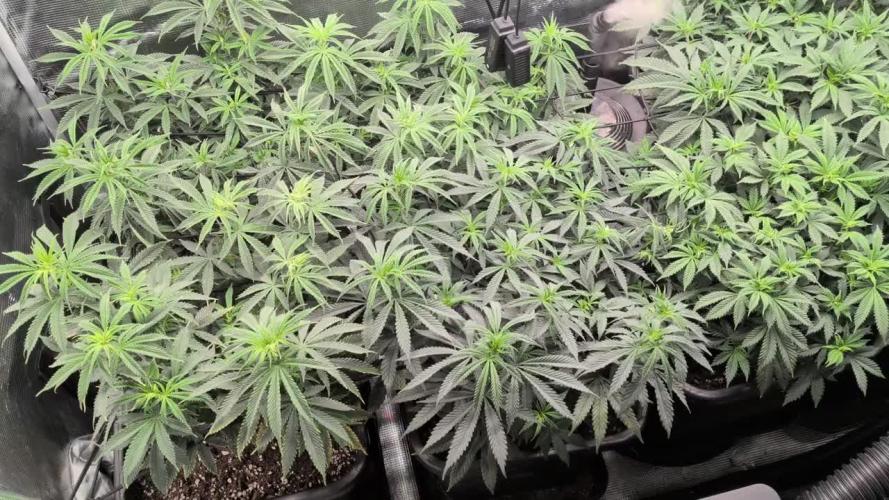
Ahoj.Začíná nám druhý týden květu.Je to prales.Ohýbám zatím listy pod sebe.Ať to roste,přátelé. :)
Likes
17
Share
@Fat_Olsh_Farms
Follow
Day 36 (Bettis). Just starting to flower. Doing some minor defoliation and supercropping. Very satisfied with her progress.
Day 41. Continuing with minor defoliation and supercropping.
Likes
11
Share
@Skunkiest_bender39
Follow
Shame on me… habe den taupunkt am morgen deutlich unterschätzt. Täglich steigt die LF phasenweise bis auf 95%. Solar ist praktisch, Zelt darf aber nicht draußen stehen!
Der grow hat sehr viel Spaß gemacht, trotz einiger kleiner Fehler und Unachtsamkeiten meinerseits! Die Damen sind super und werden wieder in den Stock zurückkehren, konnte sie leider nicht voll bis zum Ende bringen ca 2 Wochen zu früh. Nächste mal weniger Pflanzen oder mehr entlauben und mehr umlauft dazu. Komme vom outdoor Growen und habe enorm viel Neues kennengelernt!
Banana’s & painkiller XL sind noch im Spiel ohne jeglichen Schaden oder Betroffene stellen von Schimmel. 🐝

