The Grow Awards 2026 🏆 









Likes
Comments
Share
@Canna96
Follow
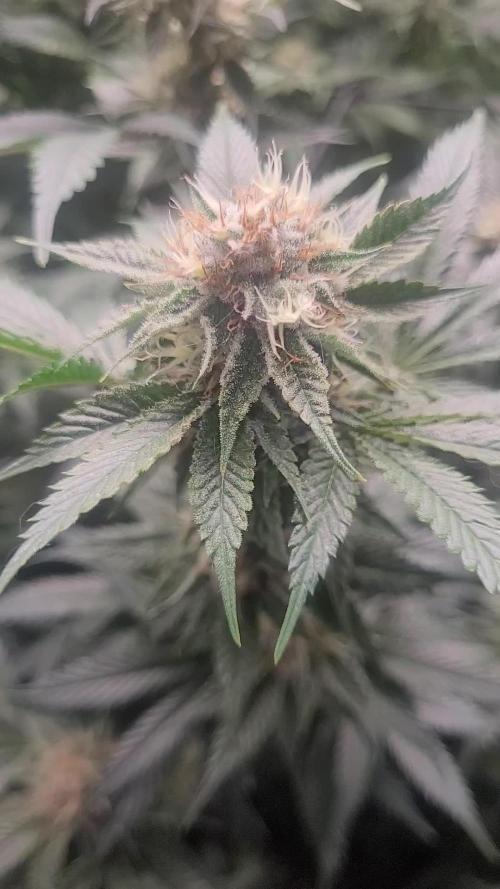
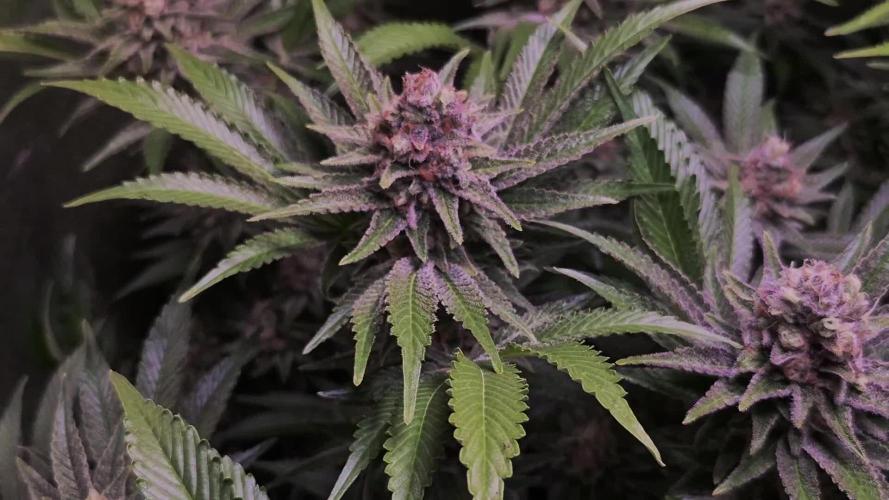
Hey now, I hope everyone is having a great weekend. The ladies had another great week, I got the Durban Nights, Red Hot Cookies, and Sundae Driverr's second toppings completed on day 26, and I got the second toppings done on the Green Crack and Bubble Runtz on day 27. Right now I have 4 mains on each plant, and I will top each one this week, probably in the next 3-4 days which will leave with me 8 mains. So the mainlines will be completed during week 5, and I plan to flip to flower around week 7.
I am still seeing a couple holes on the leaves of the Sundae Driver, but I have treated her twice with neem oil and I don't see any new holes since the last application and I can't see any bugs even with magnification. I am still not sure if it was a bug issue or just a genetic thing. Either way I am not too concerned at this point because they all seem to be very healthy.
I am still feeding GH nutrients, silica, cal mag, and maxi grow. I will transition to flower nutrients approximately one week after flipping to flower. I have found that it is important to continue feeding plenty of Nitrogen through the stretch. The only way I would transition sooner is if I was running out of vertical space.
Still very pleased with the Spectrum X from Medic Grow. I am running her at 69% and the plants seem very happy and healthy. The heat and humidity are finally letting up in my region so it is nice to be able to open some windows and drop the temp outside the grow tent.
I hope everyone has a great weekend, Thanks for stopping by, Stay Safe and Blaze On!!! 💪
Website: https://medicgrow.com/
https://growdiaries.com/grower/medicgrowled


Likes
12
Share
@StoneyMelony
Follow
Overview of my grow:
Tent: Secret Jardin DS120 4 x 4 (120 cm by 120 cm)
Lights: 2 x 120 Watt CTlite c4 clusterled
Climat: Trotec Dehumidifyer 240 watt- 10L/24h
Filter: Prima Klima carbon filter PK2600
fan: 2 x Secret Jardin 20watt osc. fan
Pots: Gronest 4 x 11 liter airpots
Water : automated water system
PH: bluelab
Nutrients: Plagron cocos A + B
Plagron PK 13/14
ATA cal/mag
Epsom salt
no rights to music in the videos
Week 9. I did read it, but somehow i didn't expect her to be this fast, so instead of boosting her a final time, i decided to start to flush allready. Today is day 63 i think this is insain how fast this big sativa looking buds where developed. I'm going to harvest her next week ,She is smelling freaking delicious, the diesel smell is still there but now with some sweet smell and also the lemon as well. I hope she is as tasty as all the smells coming from this wunderfull plant. The buds are a bid foxtailing, like a sativa she is building flower on flower. Thanks for checking 😋


Likes
6
Share
@Brujha77
Follow
Leider nur noch 2 Damen über....
Tag42
Bei #2 wurden die unteren Triebe nochmal getoppt (beide nun bei 16 Haupttrieben)
Tag 45
Es wird so langsam👍.
Ich denke ich werde die beiden am 05.07. in die Blüte schicken.


Likes
1
Share
@Randomjcb
Follow
Really started to fill out now most branches are supported with fishing line cant wait to see wat comes off it defo one of my new fav strains


Processing
Likes
8
Share
@Salgeezi
Follow
From the looks of it. I am in early stages of root rot. Plant is not growing as fast as it was at all. It can be a few things. Light penetration into the bucket. My water temps are around 70f. So I think that's okay. I had some extra mylar from a grow I did years ago. Cut pieces to go over the kids hopefully that helps.
I took out all additives besides CalMag. They were fouling the rez as usual. Dropping the Ph as usual. I think it's also the cause of the root rot. I have sprayed soaked with h202 and have added it to the reservoir after a cleaning and a water change. Looks a bit better.
I'm located in Canada and I cannot find hydroguard anywhere. Which kinda sucks. Any alternatives would be great. Thanks
Likes
110
Share
@SlowpokeFuegobud
Follow
💜 💚 😍🥤💜💜 💚 😍🥤💜💜 💚 😍🥤💜💜 💚 😍🥤💜💜 💚 😍🥤💜
Dear growmies, welcome to week 5!! ❤️
This week I switched to 12/12 end of week-ish, and one day later we can see a tiny pre-flower wiiiii!! 🎉 😍
DAY 29
Watered with 2ml grow + 4ml more roots + 3ml humics + growzyme + 5ml fast buds + 2ml calmag 💧
Foliar spray with nutrispray 💦
DAY 30
Watered with 4ml More Roots + 3ml Growzyme+ Humic + 5ml Fast Buds+ 2ml Calmag 💧
DAY 32
Watered with 2ml Grow + 4ml MR + 3ml Gr+ Hu + 5ml FB + 2ml Calmag 💧
SWITCH 💡 🌺 Tooting my hedgehog horn toooot pfeeeeeph!!
DAY 33
Watered with 2ml grow + 4ml more roots + 3ml humics + growzyme + 5ml fast buds + 2ml calmag 💧
Pre-floweringgggg 🌺 WOW!
Thanks @Fast_Buds for your awesome genetics, growing Fastbuds is always a bit like riding a ferris wheel! Woohooo!! 😜 🙏 💚
Thanks to my sponsors @Green_Buzz_Nutrients, their nutes never ever let me down!! Check out my diaries on how well they work! 💚 😘 In case you want to give them a try, you can find a generous discount code in the setup description further down the road ⬇️
You can find more brand hot updates on my IG, where I share real time events from my growroom, don't miss this! 😝
_______________________________________________________________________
Purple Lemonade FF
As refreshing as cold lemonade on a hot Summer day. 🌞
• Quench your thirst. Just as good as lemonade on a hot Summer day.
• The gentle giant. Up to 550 g/m2 of gorgeous pinkish-purple buds.
• Refreshing for the mind and body. The ideal all-day strain with a perfectly balanced effect.
• Sweet n’ sour terps. Mouth-puckering lemon flavors that’ll hypnotize your taste buds.
• Properly purple. The perfect choice for purple hash and extractions. As refreshing as cold lemonade on a hot Summer day.
Arising from a cross between purple and citrus Cali genetics, Purple Lemonade FF (Fast Flowering) offers a complex high made up of perfectly balanced cerebral and body effects that are ideal for daytime use. Expect an extremely enjoyable high that boosts your mood while deeply relaxing your whole body and getting
rid of muscle pain. This meticulous cross produces up to 550 g/m2 of some of the most beautiful purple buds, with pinkish and reddish hues that will catch everyone’s attention. The beautiful purple buds are ready for harvest in 7-8 weeks and come hand-in-hand with unbelievably sugary citrus terps that are just as refreshing as a cold lemonade on a hot Summer day. It’s the ideal variety for the sweet-tooth stoner seeking strains that deliver both in quality and quantity of resin.
Bud Description 🦔
Purple Lemonade FF grows chunky, spade-shaped buds that boast a whole range of pinkish-purple hues with rich, dark orange pistils shooting out of every direction. This variety stands out for the, oftentimes, lilac trichomes that give them a gorgeous pink tint and make for outstanding purple concentrates. The buds give off a delicious tart lemon aroma that reveals a sweeter, more fruity scent as you break the buds open. Definitely a must for flavor chasers and those looking for pungent terpene profiles.
Smoke Reports 💨
Purple Lemonade FF offers an effect that’s just as unique as the flavor. Expect a potent uplifting high that gives you that energy boost you need to get things done while 100% happy and stress-free. The effect gradually transforms into a wave that works its way along the limbs and through the muscles, deeply relaxing your body and putting you in the right mindset to go through a busy day with a huge smile on your face. This is an excellent all-day smoke as it not only increases energy but can also help combat chronic pain, migraine and stress.
Plant Appearance 💄
This feminized photoperiod variety develops a thick and strong structure, growing a medium-sized main cola with multiple shorter side branches, typical of hybrid strains. Purple Lemonade FF develops fairly short internodal spacing with gorgeous purple buds growing stacked on top of each other, making it the perfect choice for growers of all levels looking to get lots and lots of top-shelf purple weed, as this variety can produce up to 550 g/m2 in a 7-8 week flower cycle.
Grow Tips 🤓
This is a super fast feminized photoperiod version that takes approximately 7-8 weeks to flower with a 5-week vegetation cycle,, this means you can have faster harvests by shortening the veg cycle or have a longer veg cycle for bigger yields. Purple Lemonade FF (Fast Flowering) makes for a great candidate for growers of all levels as it’s a vigorous strain that will thrive with basic maintenance both indoors and outdoors. This is a resin powerhouse so make sure to have your trim bin close by as all the resinous sugar leaves will make for the most mouth- watering hash and extracts.
Flavor 😋
Expect a long-lasting citrus zest that taste just like it smells. Purple Lemonade FF reeks of a delicious blend of sweet fruits and tart citrus that’ll make your mouth water. On the inhale, expect sour flavors that taste just like lemon candy with hints of orange and a really subtle earthy background. And on the exhale, the citrus flavors open up, giving place to a more sugary berry fruitiness that leaves your whole mouth tasting like an extremely sweet weed-infused lemonade.
https://2fast4buds.com/seeds/purple-lemonade-fast-flowering
_______________________________________________________________
Setup:
140x70x200 cm Spiderfarmer tent
2x Monkey 16W fans (not oscillating)
1x Secret Jardin 30W
1x box fan 50W oscillating (on lowest level)
LED
Full Spectrum 320W AGLEX AGL-320W-MA
5,6 kg
foldable, dimmable
864 pieces Samsung LH301H
864umol/s
2,7umol/J
full spectrum white + RED 660nm + IR 740nm
wavelength range 380-780nm
covering 3x4ft
Green Buzz Nutrients https://greenbuzzliquids.com/
❗ Use code GD42025 for generous 25% discount (for orders of minimum 75€)
Biobizz Lightmix + coco + wormcastings + perlite
Carbon Active Granulate Filter 125/360 cm³/h
PrimaKlima exhaust EC 125-400/240 cm³/h

Processing
Likes
7
Share
@Kushizlez
Follow
Day 70-77
(Day 71) Not exactly sure why but node spacing on bbb 6&7 is super tight still. Their stems are also harder and less bendy, almost like they’re root bound.
Bbb #5 in my veg tent is looking bizarre and I’m at a loss for what to do. I’ve been looking up and asking around about the leaf crinkle and no one seems to know what’s wrong. Trashing a pheno of this would hurt. It could be a keeper too as I don’t think the problem is genetic. It’s definitely root bound but that doesn’t cause contorted new growth like that. I’ve concluded that it’s my dense soil coupled with root bound issues, overwatering and high RH.
(Day 72) Later tonight I’m going to give bbb 5 a bath tub flush until it’s reading 200ppms, drain it well and then transplant into a 3g pot with lightly amended soil. I’m also going to give it a light defoliation. I don’t mind stressing the shit out of this plant right now because I won’t be flipping for another week at least. With the small container it will run out of amended nutes mid flower so I will hit it with a few synthetic feedings around then to test out the smokabilty and taste compared to organic nutrients.
I might as well give the rest a good defoliation on the rest of the plants too. I will try to get most of what is under the trellis.
(Day 73) I definitely defoliated #7 waaay too much. Since it’s tucked away in the corner and a really bushy plant I can’t train it as well as the others. I cut most of the sucker branches and the majority of the lower fans. This should prevent the need to defoliate at all until week 3 of flower.
(Day 74) I’ve been reading that higher temperatures with a high RH can affect growth big time. It could be what’s causing all the crinkling and twisting. And now that the plants are in very late veg they could probably benefit from a lower RH. When I was running my temps around 74-78F and 70% RH I was in the perfect range. Now that I’m around 82-86F with the same 70% RH that could be what’s causing it. Hotter air holds more moisture than cooler air and proper vpd at 84F is around 75-80%. I’m going to turn up the speed on my carbon filter and set my controller to 75%. If I don’t see a difference or it gets worse I will drop to 65 and go from there.
(Day 76) I finally got the lights raised up another 4 inches or so. It’s not much but it should help reduce the intensity and stretch the nodes more.
I’m starting to think the super tight node spacing and droopy/contorted growth has more to do with something I’ve been reading about called ‘soil compaction’. Apparently farmers often deal with compacted soil in fields from running tractors over it all day. When I potted the plants I gave them a good little jiggle to compact the soil down further so I could fit a bit more in the container. I think this could be the culprit as they don’t seem to be drying out evenly. Even the plants in my other room are not drying out like they should and it’s probably from compacting too. With the addition of rock dust and dry amendments the soil can become sandy/clay like and retain a lot more moisture. Wish I would have added a few more liters of perlite and packed the soil a bit looser. Either way I need to get this problem sorted ASAP before I get root rot.
Earlier in the season when I overwatered, I stuck a fish tank air pump into the soil and it aerated the soil enough to prevent overwatering. The only reason I discontinued it is because it didn’t have much effect in the 1.7g pots. I just ordered a 36w 6 way fish tank pump that is way more powerful. It was 50 bucks and I’m willing to take a gamble on it. It seems to be my only option at the moment because I can’t just repot. Worst case scenario I can use it for brewing compost teas if it doesn’t work. I’m not sure how well this will work in a giant fabric pot but it’s worth a shot. I’ve heard of people supplementing additional air into raised garden beds with great results.
I’m picking off some of the new auxiliary branches to try and widen the node spacing. Growth is definitely slow and stunted but no signs of deficiencies.
I just thought of another theory on the node spacing... and the more I think about it, the more I think it’s the mystery problem. I’ve been foliar spraying with 1-1-1 VeloKelp at pretty high concentrations 2-3 times per week. I have heard in passing that kelp and seaweed can somehow reduce stretch. A quick google search reveals that Ascophyllum Nodosum Seaweed and other marine algae extracts contain large amounts of hormones and auxins that reduce plant height and stretch. *facepalm*
Guess I’ll stop that for the rest of the cycle. As far as I know there is nothing I can really do but wait for the plant to use up all those excess hormones and nutes. The recent 0-0-15 seaweed extract and 1-0-3 kelp meal I bought is derived from the same kind as the velokelp. I guess I won’t use it again until week 3 or 4 in flower. Tight nodes are very useful in flower but aren’t desirable at all in when trying to scrog in veg. Especially when they’re like a half inch apart. It slows the shit out of a grow. Vietnamese and biker gangs in my area used to grow SOG style and use a synthetic PGR hormone (meant for bonsai trees) called ‘paclobutrazol’ that would make the weed rock hard dense so they wouldn’t have to pay people as much to trim it. I’ve heard that in recent years they have made the switch to using kelp extracts because paclo is getting harder find and is not meant for food crops let alone smokeable crops. I’m ashamed of it but I have smoked pounds of PGR weed long before I knew what a PGR was. 🤷♂️
(Day 77) One more theory. Ever since raising up the plants up onto that shelf the root zone is probably significantly warmer and the bottom of the pot (where most of the roots are) drys out way quicker. It’s possible that the warmer root zone could not be holding dissolved oxygen at the proper rate resulting in that over/underwatered look. Or it could be that I’m not watering enough at once to reach the bottom of the pot where the roots are and it’s indeed under watered. I’m going to water in a gallon when I get my new air pump and see if that makes any positive change. If I see the new air pump making a difference, I will flip on the 21st of April. If I don’t see a difference, I will carefully untangle the plants from the scrog net and remove the shelf. That extra foot should make a massive difference with ppfd and will cool down the roots significantly too. I’m thinking about grabbing a simple soil/compost thermometer to check the temp of the medium. Better safe than sorry.
Rough week. Hopefully everything get smoothed out in the next little while before I flip.
Likes
10
Share
@DrPredictor
Follow
Harvested the first plant and let her dry. Now I'm trying to cure the buds (updates about taste and effects soon). I let the second plant still grow for another week and gave her 2 days of darkness update soon...
I'm really happy about the result of the first plant. Never thought I get so much gramm out of the first plant. Buds are really dense at the top and look really good. The strain could have a little bit more trichomes. But I'm not complaining, because it was easy to grow and I recommend this strain for every beginner, who want a stealth and easy to grow plant. I need to say, that after 2 weeks in flowering the plant isn't that stealth anymore 😅 so watch out what you doing.
Update: Plant 2 is now harvested. Got 45 gramm out of her. I had to hang her in another room, where the airhumidity is lower than my actual growing room, because on a view spots she was wet and rotten (I .threw the affected buds away). I trimmed her wet. I have noticed on one branch she got a view bananas., which I didn't see during the grow :(. So she also had a view seeds... But I'm happy about the result :D
For everyone who trys this strain --> good luck and happy growing.
Likes
9
Share
@Headies
Follow
So this week after I gave it under nutrients I apparently gave it too much nitrogen while having a potassium deficiency. Shiney dark leaves, So i fixed that, but some didn't bounce back, and I tried nitrogen. I think they are doing pretty good considering everything I've put them through SO FAR. lol. Nutrients are NPK Raw's total lineup, follow their instructions at first, Fastbuds adjustments as of this week.
Likes
12
Share
@CheeRz
Follow
The ladies doin' good so far. Wedding Cake is startin' to build buds. I guess from now on it's a pleasure to watch 'em growin' up.

Likes
1
Share
@Calo
Follow
We're in the sixth week of flowering, and now the scents are starting to get very strong, and the buds are completely covered in resin. I've decided to only feed them microorganism-enriched water from now on. The compost tea has eliminated any deficiencies, and the plants are now in perfect shape for the final weeks. Harvest is about 25-30 days away. I can't wait to harvest these buds.

Likes
48
Share
@Professor_Chaos
Follow
Beginning of week..
Such weird bud structure.. Love the smell.. Fruity asf.. Since nights haven't been as cool as they were before, the colors seem to have stopped on the calyxes. The old ones are still purple, but the newer calyxes don't have any coloring.. Still a pretty mix of purples and greens.. The leaves look like they should not be an issue when trimming whatsoever.. They are huge.. Even at the tip top of the colas, so far.. The lollipopping could have been kept a node or 2 lower.. I should have nothing but massive top colas tho.. I can live with that.. Lol. I'm still finding my sweet spots with alot of things lol.. Trying to use a LUX Meter and convert to PAR to figure out how much my girls are getting. Lately, I've burned a few tops.. Not too bad.. didnt hurt the yield or trichomes too much.. But noticeable.. So I'm trying to find the sweet spot and still be able to just cut the power of the light down, lower the light toward the canopy so I can also avoid the summer heat which is coming.. So far, I can run this light at 50%, but keeping it about 14 inches above the conopy.. By harvest, I should be able to get away with 75% power at about 12-14 inches.. Just one plant and the footprint of the light is pretty wide.. So it should still get branch to branch pretty evenly.. Stoned ramblin hah!
Mid week..
Wow.. These colas are getting massive! She didnt stretch much at all, if any. So, I lollipopped a bit high, in my opinion. But these colas are gonna be so massive, it shouldn't even matter at this point lol. She has ALOT of leaves and they are REALLY getting thick in there.. There isn't much airflow getting around these colas.. I should probably get a fan on there.. Or maybe defoliate a bit.. Not sure really now.. But damn, these colas are HUGE!.. they aren't very long, but holy shit there are getting so fat! Very fruity scent.. Pretty strong but still has plenty of time to get even stronger.. Wow. This autoflower is nothing like the White Widow auto.. That's for sure.. The white widow buds stay kinda small.. Airy.. They must have used a different auto to breed with.. Or maybe the white widow reg. version just isn't a big yielder.. Blah whatever.. This girl needs something changed quick tho.. Either a fan or defoliate more.. Or both.. A growmie just had some bud rot on one of his heavy yielding autos.. Never had the issue before and I don't plan on having it EVER. This is a very good, productive week so far.
Next day..
I had to defoliate for sure.. And even pulled the branches down a bit more to help open her up some. I did not expect these colas to do this at all.. I even raised up my oscillating fan so that it's moving air above and below the canopy pretty well now.. Should be fine 🤞... Another thing.. The leaves are SUPER dark green.. The tops have some clawing and the leaves that are hidden away (mostly sugar leaves) do too.. I brought the FloraMicro down to .66 mL/L but I think I'm going to go down a bit further.. My last grow did this too and I went down to .5 mL/L and still ended the run with the issues.. So.. Damn.. Should I just cut it out completely? The colas are already so damn huge.. I just need them to swell up a bit and I can already tell I'm gonna be more than happy with the outcome. I guess I will just bring it down to .33 mL/L.. Eaiser to measure out that way for me too.. She shouldn't struggle or even notice any change.. The only thing I could see hurting is the lack of the Calcium in the FloraMicro.. But I'm going to see if bringing the Micro down that much will help this claw crap from spreading.. So still very happy with this run.. Not bad, ILGM.. Not bad at all..
End of week..
Yeah definitely going down to .33mL/L on the FloraMicro.. I'm sure she will be fine till harvest. No other issues should pop up. She is looking and smelling gorgeous as fuuuuck! She is already so dense and thick.. This is gonna be a nice harvest.. On to the next!...

Likes
74
Share
@GanjaGecko
Follow
WEEK14/8F // D92/50F-D98/56F
Budporn-Phase1-Zielgerade
In Blütewoche 8 gehen viele Blätter der Ladies #3 mittlerweile sichtlich ins purple und bringen wunderschöne Farben ins Zelt. Auch Lady#1 fangen langsam an rot/pinke Spitzen an den Calyxen zu bekommen.
Die Ladies ohne Zusätze sind dem Ende etwas näher. Vielleicht wirklich weil nicht so viel Biomasse fertig werden muss wie bei den Ladies mit Zusätzen. Ein Stickstoffmangel konnte ich auch schnell wieder ausschließen.Bei einem Stickstoffmangel würde es zuerst die unteren Blätter betreffen. Ich bin mir ziemlich sicher das es der natürliche Fade ist und auch der natürliche Flush weil das Substrat nicht mehr viele Nährstoffe hat. Die unteren Blätter sehen alle noch Top aus. Klar werden die Blätter minimal heller als bei Lady#1 die Zusätze und Booster bekommen haben, dafür das es aber "nur" Langzeitdünger einmal zu Beginn der Wachstumsphase und dann nochmal zum switch in die Blüte gab, dazu alle zwei Wochen mal den BioEnhancer zugeben, war es super entspannt und die Ladies haben sich mega entwickelt. Keine Mangelerscheinungen, nichts. Wenn man dazu eine automatische Bewässerung ins Setup nimmt könnte es nicht entspannter sein. Für jemanden der recht wenig Zeit hat und/oder viel unterwegs ist wäre das eine sehr Stressfrei Lösung.
Auf gehts in die letzte Woche💪🏼
______________________________
Düngen/Gießen:
Düngermengenangabe nur für Lady 1&2 (links), Lady3&4 (rechts) bekommen nur ph-korrigiertes Wasser und alle 2 Wochen BioEnhancer. Die Menge die gegossen wird ist bei allen gleich.
Tag92/50F gab es 1ml/L SilicRock, 0.5ml/L CalMag, 1ml/L PowerBuds, 1ml/L SugarRoyal, 3ml/L PK 5-8, 0.5ml/L GreenSensation, 3ml/L Alfaboost, 2ml/L StickyFingers. Für alle gab es 600ml in den Topf und 200ml in den Untersetzer.
Tag94/52F gab es 1ml/L SilicRock, 0.5ml/L CalMag, 1ml/L PowerBuds, 1ml/L SugarRoyal, 3ml/L PK 5-8, 0.5ml/L GreenSensation, 3ml/L Alfaboost, 2ml/L StickyFingers. Für alle gab es 600ml in den Topf und 200ml in den Untersetzer.
Tag97/55F gab es 1ml/L SilicRock, 0.5ml/L CalMag, 1ml/L PowerBuds, 1ml/L SugarRoyal, 3ml/L PK 5-8, 0.5ml/L GreenSensation, 1ml/L Orgatex, 3ml/L Alfaboost, 2ml/L StickyFingers.
Für alle gab es 600ml in den Topf und 200ml in den Untersetzer.
________________________________
Höhe ab Substratoberfläche: 96cm
________________________________
Licht:
Zyklus: 12/12h
Abstand: 26cm
Watt: 120W (100%)
Ppfd: ~800ppfd
DLI: ~35
_______________________________
Umgebung:
Temp: 24-26°C
RLH: 45-55%
VPD: 0.8-1.3 kPa
Likes
62
Share
@Secretflower
Follow
Hello my friends,
🌱 June 6, 2021.. Day 36 🌱
6th week of growth for my Feminised Wedding Cake.
She grew up very well, the leaves are big, nothing to report..👍
💉 : BioGrow at 1ml/l and CalGreen at 0.1ml/l.
🔦 : LED lamp Hainning New light 320 watts at 50% power and 50 cm canopy, this lamp working very well when you know how use it..👍
Go to Ali Baba website and search Hainning New Light Company, they are very serious in Led Technology.
www.originalsensible.com
📻 You like Reggae Riddims 📻
Listen/download/share my new mix :
www.soundcloud.com/secretflower
That's all for now my friends, thank you very much for coming to see my plants, feel free to Sub and I will follow you back.. 👍
Take care of yourself and your loved ones.
I wish you only happiness with your darling..
Peace & Love..🌿
Likes
12
Share
@CURATI_DA_SOLO
Follow
Purtroppo nessuna vendemmia per colpa di qualche ragazzo che mi ha rubato tutte le mie 9 piante gorilla Zkittlez- gelato- strowberry gorilla- wedding glue- purple punch-strowberry banana-Gorilla cookies- blackberry- mimosa cake....che male al cuore ragazzi quanti sacrifici non potete capire!!!!
Likes
10
Share
@CANNASIM
Follow
Hello, long time, no grow. I’m trilled to start on a new grow project, i’m away from growing a long time, but my love for ot was always present, i miss it a lot so i have got a few strains from Fastbuds to test and come back with a minimal setup.
I have got the Festberry, Bluedream, and the 1:20 cbd, they have sent in the Banana Purple punch
Ok, so what is a minimal setup? For this grow i have choose to grow in my balcony, it is fairly big and i gave good sunlight, we are in summer now, so temps are high, swinging a lot. It is raining often as well so I did not need to water much.
For the nutrients i will go organic i think, in my substrate i have about 30% warm castings, so i’m good for till mid grow length +-, i might add a bit of nutrients in 30 days mark.
The objective of this experiment is to use as little as possible, 360 degrees.
For the germination process i have used a mixed process method, that i have learned from Fastbuds and i have loved it, 24h in a glass of filtered water, paper towel for about 24h -48h and then the Floraflex gremination pellets, i have tested on the jiffy and worked fine as well. Cool about this method, if you are more on the anxious side or like to control more the process this is the way, you can follow the hole process and see the development in parts. I will add images later on, for this breakdown.
Well that is it, lets hope for a cool, safe journey for this girls.
—
The Blue dream i had germinated two and both look great so I have decided to keep two in one vase. Never done it, so let’s see what will happen.
Likes
12
Share
@SSKNFbyHAZE
Follow
** COST **
TO RUN
- Used previous ⛺️ setup : $0.00
- Monthly electricity : $36.73 <-- other ladies sharing ⛺️
- 1 Gallon Fabric pot : $0.10
- Bonsai wire : Apx. $0.03
- Reused soil from last run : $0.00
FOR NUTRIENTS
- Jadam Microbial Solution : $0.00
- Fermented Plant Juice : $0.00
APPLYING
- JMS : 30ml / 1 Litter
- FPJ : 30ml / 1 litter
TOTAL COST : $36.86
Throughout the week, I give JSM, and fermented plant juice once each ^^
Hope you guys have a wonderful day today ^^v
*** Please Like, comment & share ***
Highly appreciated -----/-----<@
