The Grow Awards 2026 🏆 










Likes
Comments
Share
@south420terps
Follow
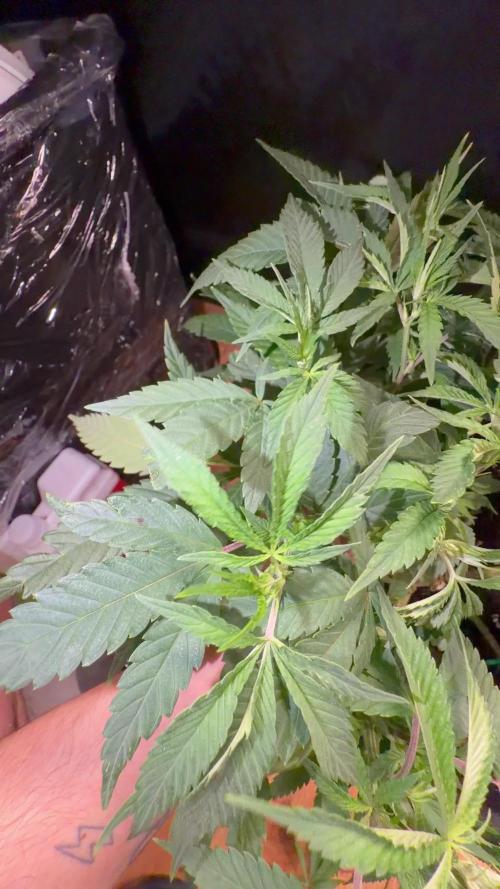
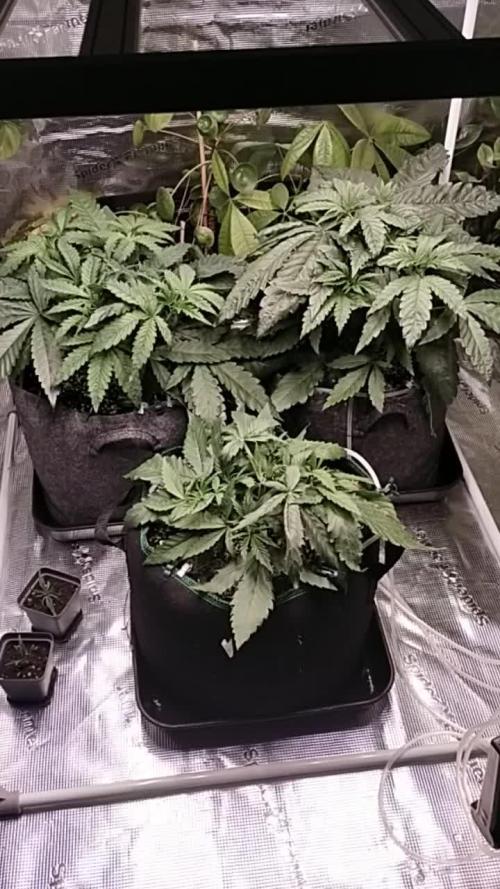
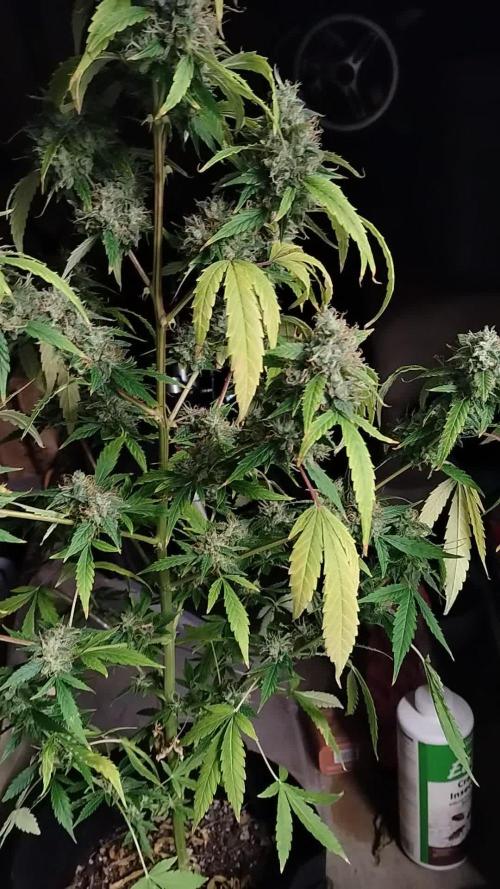
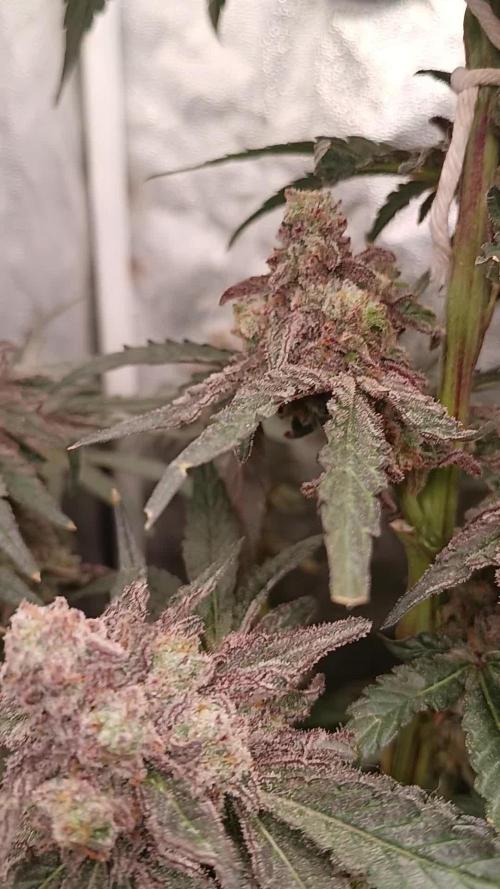
Super smelly i relley like this strain cant wait to finish blueberry smell dank


Likes
8
Share
@D4D3DHOMMIES
Follow
In places like where I live, it's easy to get mold, pests, or powdery mildew (the most common problem). Next week, my 30L adjustable dehumidifier and Spiderfarmer power strip are arriving to better control everything, along with other accessories like CO2, VPD, etc., to have maximum control over the grow at all times. Besides that, even though it's late, I'll add the Spiderfarmer supplemental lights for the recommended and maximum duration. We'll see how it goes; if not, I'll try the Migro lights. And I'll probably do a grow room next time with Migro lights—they're the best value for money. I'll keep you updated on the results with the UV lights. I've had to move twice; my plants are a bit stressed, but if you're careful, you'll never have a problem. Looking forward to seeing my girls in a few weeks!

Likes
23
Share
@Canadian
Follow
Day 57 from seed the plant has been recovering very well from supercrop I supercrop two more branches because they were running into the light getting burn not only the leaves but the buds as well therefore no choice more HST but the plant is reacting well to the high training I also put some painters tape around the branches that I supercrop in order to allow them some support and allow some nutrients to continue to flow through the branch this situation is probably my fault because I choose 7 gallons pots I have never used such a big pot and the plans are definitely having lots of stretch room to grow looking forward to see this girl finishing and hoping she will be a monster.
I know that most of the growers in this platform and elsewhere do defoliate and trim down all the lower branches of the plant so that the plant can concentrate all its energy into the higher bigger and better buds .and I do not do this because I drive the plants very hard with nutrients and those lower branches with small buds always give me the first sign of anything going wrong with her and that's why I leave them as a buffer zone to protect the bigger buds and that way I can push her as hard as I want.
Thank you for reading I will continue to update have a happy grow.

Likes
20
Share
@Naujas
Follow
I don't have any experience with small pots :) but I want to try to do it :)


Likes
21
Share
@OGTrauma
Follow
DAMN SHAWTY THE EXPERIMENT IS GOING GOOD EXCEPT FOR THE PALE AUTOFLOWERING ONE AS I THINK IS A BIT WEAKLING AT THIS POINT OF DATE DAY 24 of flower, that's why i try to match the flower inducing with the start of the month, thats my preach as it will ease you some dark souls shit tike counting flowering days, because that also make me conclude that the plants are at least on a patched health, above average plants, because a good vegging time and a speeded inert coco start made my day as it's very demanding in food and showing carencies with the tremendous sugar boosts from previous week , cheers.
Regarding to plants, im sticking to this will be my last day to doze both barrier and cal mag through foliar spray as floral mass could mold if not doing with caution or can ever fuck up things here too. Noticed that spraying water affected the side project of vertical lighting as more mid low branchs if are too humid from previous day spray can prone light burns. So,that made me tidy a bit the space, through defoliation, and entry level lollypoping / defoliati9n in this wild jungle as it involucration in this project is still can be a positive outcome as i didn't see burnt bud and these leds arent that heated , IF they arent see a good outcome as vertical complementary light , at least it is nice to see they totally CAN WORK IN VEGETATION.
And yup, im sticking on paperclips as a total valid form of control to have decent plants as they can aid to aim the perfect position / angle that might help to develop better regardless of what type of light do you use, i luv it, better results than the improvized net , that's useful now but at the time of ripe it will be quite a nuissance the unmounting of that bondage shit, so that ... the expense here is not money is the time to find & try the shit that works on you.
Love u Homies
Big gas leaks forever bitches ╮(. ❛ ᴗ ❛.)╭


Likes
79
Share
@Hou_Stone
Follow
Until now I lowered my Ph with the PH- from BIoBizz. It was working fine but this week I tried Plagron PH- and it works better, I need to add 2x less ph- solution to lower the ph of the same volume of water. I recommend it 😘
My instagram😉:
https://instagram.com/hou_stone420?utm_source=qr&igshid=NGExMmI2YTkyZg%3D%3D

Likes
Comments
Share
@ScouseCityLX
Follow
Week 6 of flower and once again, some excellent bulking going on here, I was happy with it.

Likes
16
Share
@LowzGrowz
Follow
Great Strain will run again
No Larf all dense nug
Great Fade
Frosty Purple tint nugs

Likes
9
Share
@mangodalat
Follow
CAFE RACER
22/4---->13/8
Everything was fine until week 4 when i brought her to my garden. The changing environment slowed her down.
Week 7 starts to appear preflower.
Streching lasts for 3 weeks(streching x2)
Week 4 of bloom starts to smell ( weak)
Week 7-8 of bloom: rains a lot so the humidity is high so i harvested her by week 8 of bloom.
I have moldy buds(about 5g).
THANKS FOR WATCHING THIS DIARY. SEE YOU THE NEXT DIARY.

Likes
3
Share
@TheGreenfulOne
Follow
All plants are showing exemplary vigor, evidenced by their vibrant green color and the rapid upward orientation of new tops toward the light immediately following the procedures. The Bruce Banners are responding perfectly to topping and LST, maintaining strong leaf turgor and dynamically expanding their lateral branching in the 25L pots.

Likes
10
Share
@AestheticGenetix
Follow
Chopped on 9/11/25
Has a fruity sweet smell to it. These buds are giant and just long connected braided cola with very uniform and chunky buds throughout the whole plant

Likes
3
Share
@goatpharms
Follow
MAC is at peak maturity — buds are dense, vibrant, and resin-coated, displaying rich shades of purple, orange, and deep green. The aroma is strong and pungent (you would no it's mac straight away from the nose) , indicative of excellent terpene development. Plant health is optimal across the canopy, and all signs point to harvest readiness. Chopping her tommrow 💚

Likes
37
Share
@FlavoursUk
Follow
There’s a few things I’d personally change if I was to grow fat Banana again. But this time round she was very resistant to high temperatures and humidity during Flower. She holds on to nitrogen so I’d definitely feed her less on the nutrients as she is a light feeder.

Processing
Likes
14
Share
@Luv2Grow
Follow
Day 71 - Starting week 11 and not sure if she’ll make it to week 12. Still doesn’t have the percent of amber that I’m looking for so she’s still going. Gonna flush her tough tomorrow with some sledgehammer and pH’d water.
Day 72 - Still not ready for chop but she’s plumping up quite a bit. Gave her 1.5 gallons of water with foxfarm’s sledgehammer and hopefully can get all the nute pushed out so she can finish strong.
Day 73 - Getting closer but she’s still not there yet so hopefully this next week she’ll start bulking up more and trichs amber before chopping. She’ll keep going until the trichs are how I want them.
Day 74 - She’s still chugging along and not quite ready yet. Each day she fills up with more trichs and not at the milky too amber ratio I’m looking for. Hopefully by the end of the week.
Day 75 - Thinking she’ll be ready for chop this weekend. Nothing else really going on, just waiting to chop. Not sure if I should continue giving her water or just let her dry up until she’s done.
Day 76 - Still just waiting on this girl to finish. Whenever I think she’s close, she throws a million more clear trichs at me so really no clue now when she’ll be finished. Might do one more push of foxfarm sledgehammer tomorrow and then just let her be till she’s done. Try and get as much nutes out of her and I can.
Day 77 - End of week 11 and flushed her with a gallon of water and 15ML of Foxfarm Sledgehammer, PPM is down to about 223 so hopefully she’ll go into her final push and be ready for chop sometime this weekend. Still not a whole lot of amber trichs so until she’s got the ratio I want, she’ll keep going.

Processing
Likes
3
Share
@The_Chef_420
Follow
Well these three girls had a rough week to say the least. Two of the girl's became an afternoon snack for Pebbles our pet rabbit lol. He chewed on the main stalk of each, and ripped the what im going to call bark. I used vaseline to keep out disease and pests and also placed 3m transpore tape (medical tape) on to "replace" the bark so to say. Switched to transitional bloom nutrients by lowering the amount of grow pro and introduced monster bloom and nirvana.


Likes
1
Share
@Bwright_315
Follow
Plant b look like she is just about down I see alot of cloudy tricones and about 10% of that is turning red so by the end of this week I think it will be time to chop


Likes
39
Share
@ZombieKushAddicted
Follow
we will carry out this cultivation under the sponsorship of Mars Hydro with an FC-E 4800 lamp ,
to view this lamp or any other marshydro product go to: https://instagram.com/marshydro_aliexpress?igshid=YmMyMTA2M2Y=