The Grow Awards 2026 🏆 









Likes
Comments
Share
@51sGarden
Follow
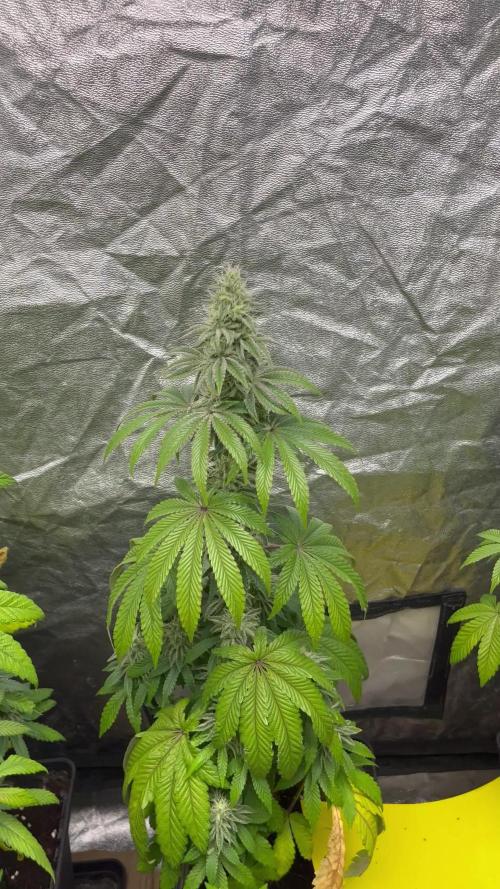
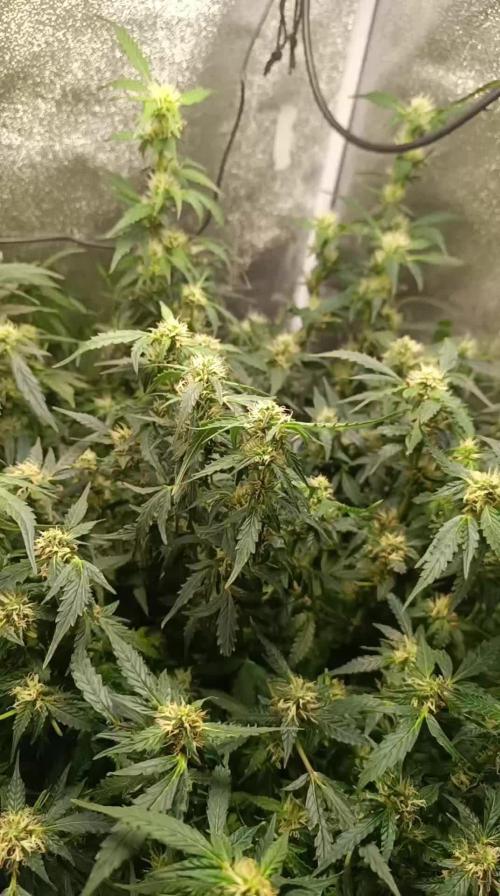
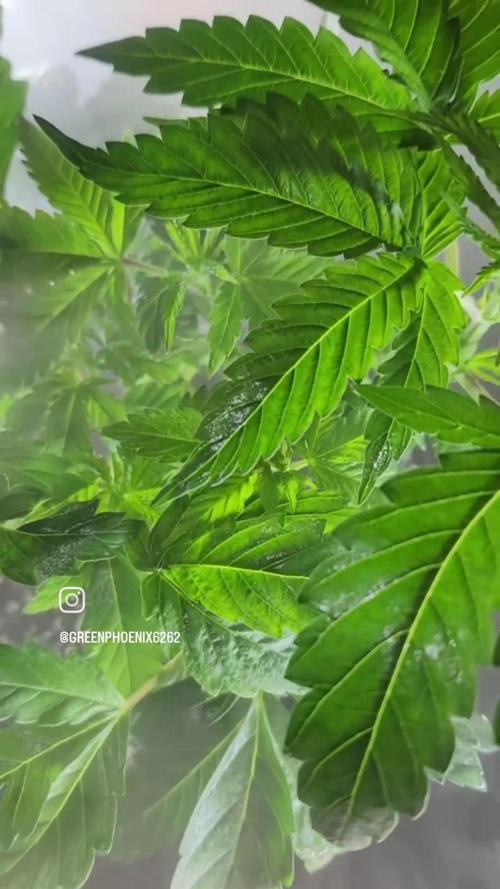
Missed few weeks here so long story short
Flowering day 25 (wouldn’t let me chose week 4, only week 5 and up smh)
Had few stressed days for the plants
But they are beautiful and healthy
Tent smells like heaven
Trichomes and buds building up


Likes
3
Share
@eldruida_lamota
Follow
Que pasa familia, vamos con la sexta semana de floración de estas Barcelona Puff feminizadas de Seedstockers.
Vamos al lío ,se trasplantaron en macetas de 7 litros definitivamente.
El ph se controla en 6.0 , la temperatura la tenemos entre 25/21 grados y la humedad ronda el 50%.
El ciclo de floración puse 12h de luz, el foco está al 100% de potencia.
De momento van creciendo a buen ritmo y tienen un buen color, la flor ya empezó a formarse y a tricomar, por el momento bien.
Comentar de nuevo el estrés hídrico a sido superado de momento todo bien.
Agradecer a Agrobeta por el envío del kit gold series para la temporada 🙏.
- os dejo por aquí un CÓDIGO: Eldruida
Descuento para la tienda de MARS HYDRO.
https://www.mars-hydro.com
Hasta aquí todo, Buenos humos 💨💨💨


Likes
Comments
Share
@CRAIG971
Follow
Ça pousse tranquillement et peut-être apparente en attendant que ça grossisse


Likes
24
Share
@DeepRootsGrowTrees
Follow
COLOMBIAN JACK by KANNABIA
Week #18 Overall
Week #7 Flower
This week no major issues she's got some nice looking buds on her the aroma coming off this lady is amazing. She's dealt with the elements for the most part!!


Likes
30
Share
@Bread_n_Buds
Follow
The journey is over sister today it's time to tell you about the harvest of a wonderful Purple Haze Automatic by Zamnesia.
I have grown this plant many times and it has always given good results but here we are way beyond good we are at the highest levels that can be asked of an autoflowering.
Lots of grass a really great harvest, lots of resin everywhere and with a wonderful smell in the coffee/chocolate area.
Do we want to talk about the main cola? It's scary.
Majestic, like those of the past united, big. With the Haze forget about the ball-shaped blooms. This is a whole and long steak in full haze style.
The taste is something that I have really seen very few times, the color is normal, some shades of purple in the end but not the full purple that I have not found in this strain but patience because it is TNT, really the color for me is becoming above all a question of aesthetics I am a photographer and I love colored plants, but the normal ones drive me crazy too.
You should see how many times I smelled it. And how many times I sniffed my fingers. And how the plate I cleaned it on smelled.
A masterpiece of gentetics, maybe it's because of the entire Plagron Fertilizer Kit with all the 100% organic additives I used, maybe it's the golden period of cannabis that is cropstober even indoors, maybe it's because these plants started with the moon's favor, maybe it's all this together and much more like my fantastic geographical origin that gives me an ideal temperature, the plants vegetate great and when it's time to resinate the cold arrives.
We are from 70 to 90 grams dry here too it did very well on the scale.
Zamnesia Description // Have you ever wondered what Jimi played in 1967? With the Purple Haze Automatic, it has never been so easy to experience the magic of Purple Haze firsthand. In just 65 days, this compact autoflower will reward you with premium sativa buds that will take you on a long creative journey.
--- Get a seed of this amazing strain --- https://www.zamnesia.io/it/8174-zamnesia-seeds-purple-haze-automatic.html
The fertilizer kits that you can find on the Zamnesia website are perfect
for this purpose, there is everything. Choose them based on their mineral/organic composition and the soil you have chosen.
The plant has eaten the 100% Organic feeding of Plagron: Alga Grow and Alga Bloom as basic nutrients, the rooting Power Roots, the amino acids of Sugar Royal, the Enzymes of Pure Zym that eat the dead parts in the soil, Power Buds that always gives us immense satisfaction with rapidity of start of flowering and composition of the buds, the legendary Green Sensation that now needs no introduction, a name a guarantee. Also the foliar Vita Race used for the first time with success.
The fertilizer kits that you can find on the Zamnesia website are perfect
for this purpose, there is everything. Choose them based on their mineral/organic composition and the soil you have chosen.
at the link --- https://www.zamnesia.io/it/11457-plagron-easy-pack-natural.html
The quantity was measured using the sheet prepared on purpose on the Plagron website based on the soil chosen: Plagron Pro Mix + Perlite.
at the link --- https://plagron.com/en
The growbox is the DS120w by Secret Jardin as well as the DF16 ventilation system and all the fans
at the link --- https://www.secretjardin.com/it/
The light was supplied in the past by Viparspectra and it went crazy but it came back to me to produce very well too...
at the link --- https://www.viparspectra.com
A fantastic selection of seeds, a headshop and a selection of exceptional accessories on the world of cannabis, many other things about mushrooms, health, well-being and all the beautiful things that nature offers only on the Zamnesia website
at the link --- www.zamnesia.com
Instagram ----
@zam.nesia - @zamnesiawebshop - @zamnesia_usa - @bread_n_buds


Processing
Likes
24
Share
@MadeInGermany
Follow
Day 20 since time change to 12 / 12h.
Hey everyone ☺️.
This week she continued to develop very well 🤗.
It absorbs the nutrients from Green Buzz Liquids very well.
I am very thrilled .
otherwise there is nothing more to report this week 🙈.
I wish you a nice week, stay healthy 🙏🏻 and let it grow 🍀
You can buy this Strain at
https://www.amsterdamgenetics.com/product/kosher-tangie-kush/
You can buy this Nutrients at
https://greenbuzzliquids.com/
Type:
Kosher Tangie Kush
☝️🏼
Genetics:
Kosher Kush
X
Tangie
👍
Vega lamp:
2 x Todogrow Led
Quantum Board 100 W
💡
Bloom Lamp :
2 x Todogrow Led
Cxb 3590 COB 3500 K 205W
💡💡☝️🏼
Soil :
Canna Coco Professional +
☝️🏼
Fertilizer:
Green Buzz Liquids :
Organic Grow Liquid
Organic Bloom Liquid
Organic more PK
More Roots
Fast Buds
Humic Acid Plus
Growzyme Big Fruits
Clean Fruits
Cal / Mag
Organic Ph - Pulver
☝️🏼🌱
Water:
Osmosis water mixed with normal water (24 hours stale that the chlorine evaporates) to 0.2 - 0.4 EC. Add Cal / Mag 2 ml per l water every 2 waterings . Ph with Organic Ph - Pulver to 5.8 .

Likes
10
Share
@TickleToast
Follow
Weeing Cheesecake FF (Feminized Photoperiod)
~Fast Buds~ https://2fast4buds.com/seeds/wedding-cheesecake-fast-flowering
Hybrid: (Wedding Cake x Cheese) x Wedding Cheesecake Auto
65% Sativa / 35% Indica
Flowering Time: 49-56 Days
20-25% THC
CBD +1%
~~~~~~~~~~
~Dry Weight~
Right: 231g
Left: 161.2g
Total: 392.2g
~
From all 6 plants:
27.5g of kief from the trim bin
3-4 grams of finger hash collected
~~~
The RH crept up past 60% here and there this grow so these gals get rated at a "high/strong resistance"
I will have a better dehumidifier for the new place before the next project, keep things at a stable 45-60 RH :)
~
Tried out bucket curing this time around, as opposed to all the mason jars. So very done with those! -More than satisfied with the results
~
These gals really took off around the two week mark in curing. Very Nice!
~~~~~~~~~~
In-depth information regarding my day-to-day / common practice may be found on the front page of my profile (in the comments).
~~~
https://bit.ly/3MplXqf
^^^GrowAce Affiliate Link^^^
Use this if you want to show some support!
(Just follow that link and the cookie stored in your browser is good for 30 days!)
~~~
Questions & Feedback are welcomed, feel free to message me!
Thanks for stopping by growmies! 🤙🤙🤙🙏🙏🙏
~~~~~~~~~~


Processing
Likes
1
Share
@GumGumKing
Follow
This week the plant gets swapped to bloom nutes but no until the end of the week so the next week will reflect that set of nutrients.
Sunday
Res testing at 320ppm, 5.8 PH. Growth is looking great, with more tops forming near top node as plant is forced down. All new growth is deep green. The lower leaves are still spotted but have not progress nearly as much as they have been recently. Adjusted PH to 6.0 to help with calcium uptake.
Monday
Res ppm 320, 6.1 PH. Plants new growth is healthy. LST'd top node so newer lower nodes can catch up for a day or two. Plant is starting to smell. Will let it the plant correct itself, then perform res change by the end of the week, to swap to bloom.
Tuesday
Res: 320ppm 6.1 PH. Lower nodes have filled in more, top node has mostly corrected itself. Calcium deficiency has slowed greatly but still present want to give another day or two of recovery from lst then will do the res change. Removed lowest leaves.
Wednesday
Res: 320ppm 6.1 PH Plant growth is excellent. Largest leaf is slowly showing more calcium deficiency. Flushed and swapped to bloom, orca, silica, cal-mag. 450 ppm 6.2. moved leaves around and rearranged so lower nodes get more light.
Thursday
Res: 420 6.3 adjusted to 6.2. Plant and root growth are looking great.
Friday
Res: 420ppm 6.18 ph, adjusted to 6.25. Plant and roots are blowing up with some stretching beginning. Smell is intensifying but still no pistils, yet.
Saturday
Res: 470ppm 6.3 ph. She's filling out really well. Daily photos show just how quick everything happens.

Likes
Comments
Share
@GREENPHOENIX6262
Follow
11/03 - Mother moved into her own 17 gallon tote - running lights on dome and in tote - super topped - running high humidity and high temps - nute feeds are the same - tied down all 4 coles thus far.
11/06 - tote dome is holding up nicely - transplanting into 7 gallons and 2x2 tent swap.

Likes
42
Share
@MadeInGermany
Follow
Flowering day 25
since time change
to 12/12 h.
Hey guys :-) .
The ladies are developing more and more beautiful and fat week after week 😊.
The tent fills up perfectly 👌.
I removed the bottom shoots to allow the energy to flow to the top buds.
This week it was watered 3 times with 1.3 l each (nutrients see table above)
Otherwise everything was cleaned and checked.
Have fun and stay healthy 💚🙏🏻
👇🏼👇🏼👇🏼👇🏼👇🏼👇🏼👇🏼👇🏼👇🏼👇🏼👇🏼👇🏼
You can buy this Nutrients at :
https://greenbuzzliquids.com/en/shop/
With the discount code: Made_in_Germany you get a discount of 15% on all products from an order value of 100 euros.
👇🏼👇🏼👇🏼👇🏼👇🏼👇🏼👇🏼👇🏼👇🏼👇🏼👇🏼👇🏼
You can buy this strain at :
Clearwater Seeds
Water 💧 💧💧
Osmosis water mixed with normal water (24 hours stale that the chlorine evaporates) to 0.2 EC. Add Cal / Mag to 0.4 Ec Ph with Organic Ph - to 5.8 - 6.5
MadeInGermany

Likes
1
Share
@Luke_Lee
Follow
—————————————————————
WEEK 1 / DAY 01-07
Mars Hydro FC-E3000
Floragard Professional GrowMix
11L Plant bag made of fleece
Light: 50 cm / 25%-75watt;
Schedule: 24/0;
20° C - 55 RH
150ml water per Plant
PH 6,5-7
0ml BioGrow; 0ml TopMax ; 0ml BioBloom
#1 Blueberry Automatic
#2 Blueberry Automatic
Fan, extractor and pump ON 24/0.
—————————————————————-
These are the two at the top left and right (red brackets)
-24.01.2025
Both seeds have sprouted successfully after 3-4 Days
-26.01.2025
Today is the last day of the first week. The little ones are doing well, the first few “real leaves” have appeared and the vegetation phase can begin.
19.5° C - 78RH
Total Time: 193,39h
Total Energy: 25,04kWh
Likes
4
Share
@DrewbieDoobieNoobie
Follow
Hello all, I hope you are all well and safe. end of week 5 and the buds are starting to get bigger Mid Flower Looks good still on the top dressing with the Sea Blast Bloom. It seems to be taking the Nuites without any burns. I used the last of the Sea blast bloom and the South Cascade Organics SLF-1002 they are both depleted on this last feeding. Gave them plenty of water over the last few days 91 in the tent the C02 has to be helping these high temps. The RH jumps after a good watering 65-75 range put on the Dehumidifier brought it back down to 50 in the tent. I hope the Dusting took now I have to wait for 4-6 more weeks for the Feminized seeds if any. They are starting to get frosty, I have been tempted to use other nuites in my line up but that would defeat the purpose of the grow. "all sample freebies" so that is what I will be sticking with the ROCK CARGO and FUL will still go to the end of the grow maybe in stronger amounts. This strain smells like SWEET BERRYS I can't explain it better that that. cheers
Likes
58
Share
@MadeInGermany
Follow
Flowering day 76
since time switch
to 12/12 h.
Hey guys :-)
Finally the time has come .
The lady was harvested and hung upside down in the dry tent 😍.
Before that, she stood in the drying tent in complete darkness for 2 days and the large leaves were removed.
The small leaves stay attached during the drying process so that they protect the buds and allow them to dry more slowly and evenly :-) .
In the dry tent, the temperature is 18-19.5 degrees and the humidity is 54-58% 👍.
In this environment they are now allowed to hang for 10-14 days before they are fine-tuned and trimmed clean by hand.
then after trimming they come to ferment for 6-12 weeks in dark jars with bobeda packs 62% to keep the perfect humidity.
After a few weeks, the Boveda packs 58% are used so that they can slowly dry out :-) .
Of course there is one last update after trimming.
Until then, I wish you a lot of fun with the update.
Stay healthy and let it grow 💚🙏🏻.
👇🏼👇🏼👇🏼👇🏼👇🏼👇🏼👇🏼👇🏼👇🏼👇🏼👇🏼👇🏼
You can buy this Nutrients at :
https://greenbuzzliquids.com/en/shop/
With the discount code: Made_in_Germany you get a discount of 15% on all products from an order value of 100 euros.
👇🏼👇🏼👇🏼👇🏼👇🏼👇🏼👇🏼👇🏼👇🏼👇🏼👇🏼👇🏼
You can buy this strain at :
https://www.thegratefulseeds.com/shop/feminized-seeds/limited-edition/blue-javaz/
Water 💧 💧💧
Osmosis water mixed with normal water (24 hours stale that the chlorine evaporates) to 0.2 EC. Add Cal / Mag to 0.4 Ec Ph with Organic Ph - to 5.8 - 6.5
MadeInGermany
