The Grow Awards 2026 🏆 










Likes
Comments
Share
@Madman2020
Follow
Kind of given up on this one. I had an issue catchung runoff which led to me not watering plants enough
Not watering plants to runoff will result in higher substrate Ec(Generative cue and also could burn plants)
Also its about 20• outside which does not work for the plantsr dark period. December and january are tough months.
I recently learned that i should


Likes
67
Share
@XG_Jack
Follow
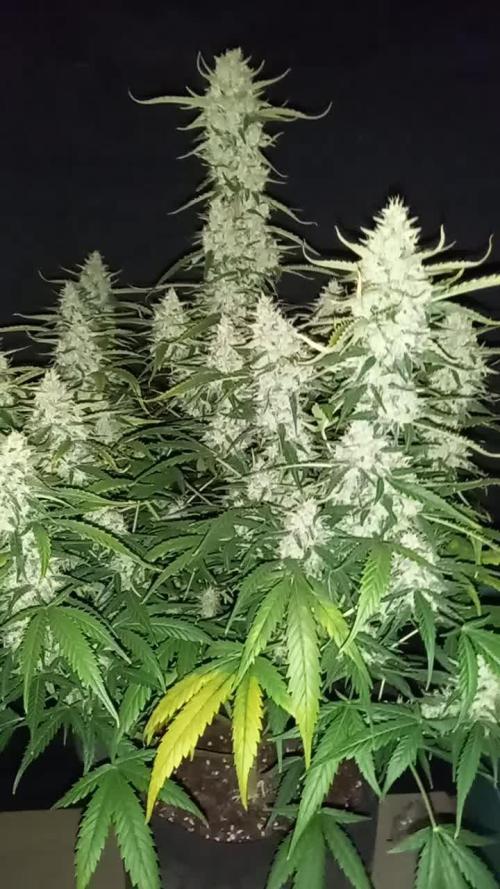
Ready for harvest. A beautiful dark purple/black pheno of fastbuds lemon pie. This plant should yield pretty well. Frosty, smells great. Hope you’ve enjoyed, dry weight with harvest will be my next and final post for this grow. Feels like 10 stars all around here, we will see how it finishes.

Likes
18
Share
@thenotillwizard
Follow
Harvested at day 76, after 72h of darkness.
Very good yield!
3.3 pounds of dry buds + 1 pound of trim
The 2 keepers yielded 366 and 342g of premium quality smoke.
Very uplifting and energizing high :) Love it!

Likes
21
Share
@Stick
Follow
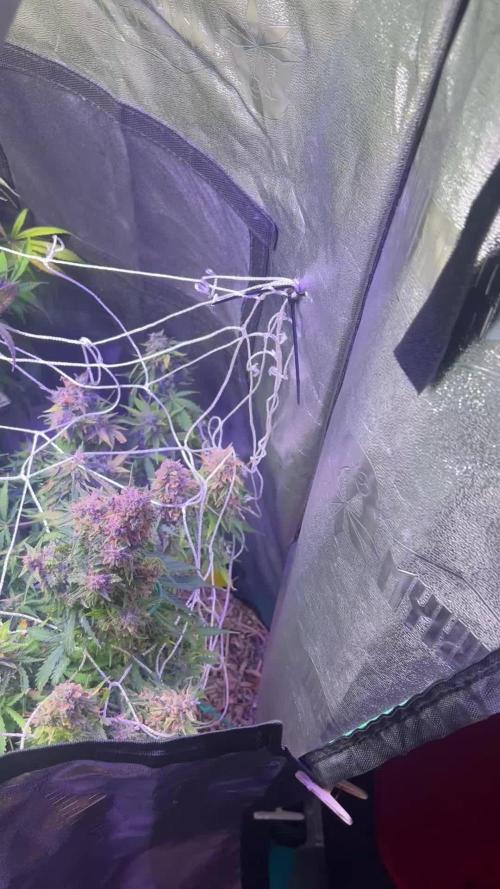
Coming along nicely, buds are shaped like christmas trees, slowly expanding. I was worried about mold but this baby didn't show any sign of infection, whereas two other plants in the tent got slightly affected. A few more days to go...Stay tuned! 😎

Likes
21
Share
@Sweetspot88
Follow
So flower commences this week let’s see how these perform
We’ve had a great veg phase
Here’s to a great flower
So last week we struggled a little with the vpd in the new room we are in range now after a few days of adjustment. This week defoliate and cuttings
Likes
3
Share


Processing
Likes
4
Share


Likes
5
Share
@MetallicaDave
Follow
Week 13 Day 92 Blue Dream is rocking and fattening up her sister is 2 weeks behind but fatter too the 4 California Snows are added g weight they are day 83 and 88 all got 3 liters plus of water every 4 days the 6 still growing g wide buds so they got 800 ppm of nutrients and my blue dream baby got some bloom Booster extra this week it helped her sister all PH are good.. Why do seed companies lie about date of harvest ? It’s always 2 extra long weeks if your lucky day 85. Not me smoke em if you got em 😹
Likes
89
Share
@BioBuds
Follow
I sure need to get used to the Auto way of growing. My methods and system with soil for regulars are not directly portable to cultivating auto's, so it seems. So what started out as a comparison/battle, is now just a normal grow, since it's not fair that the battlefield was tainted.
It does seem the XL Runtz adjust better to my climate and growing style than the Forbidden Runtz.
Also looking for ways to keep my tent cooler. Considering growing outdoor this summer with seeds started in the tent. It gets way too hot in here as it is now, with outside temps just at 10 to 15 degrees C.
I'm just watering, alternating with a bit of BAC Bloom and Calmag, and some Topmax.
From here I hope its some smoother sailing and hoping the other three will pick up some pace.
Thanks for checking in again!!
Bud
Likes
35
Share
@MadeInGermany
Follow
Info:
Unfortunately, I had to find out that my account is used for fake pages in social media.
I am only active here on growdiaries.
I am not on facebook instagram twitter etc All accounts except this one are fake.
Hi everyone :-) .
The clone is developing well and has beautiful roots.
This week it was poured once because it doesn't need much.
It was also topped once.
Otherwise everything was cleaned and checked.
Have fun and stay healthy 🙏🏻
You can buy this Nutrients at :
https://greenbuzzliquids.com/en/shop/
With the discount code: Made_in_Germany you get a discount of 15% on all products from an order value of 100 euros.
You can buy this Strain at :
https://greenhouseseeds.nl/
☝️🏼☝️🏼☝️🏼☝️🏼☝️🏼☝️🏼☝️🏼☝️🏼☝️🏼☝️🏼☝️🏼☝️🏼
Green House Seeds Company Cup Clone 🏆
Type:
Wonder Pie
☝️🏼
Genetics:
Wedding Cake x OG Kush
👍😍
Vega lamp: 2 x Todogrow Led
Quantum Board 100 W
💡
Flower Lamp : 2 x Todogrow Led
Cxb 3590 COB 3500 K 205 W
💡💡☝️🏼
Earth: Canna Coco Professional +
☝️🏼
Nutrients :
Green Buzz Liquids :
Organic Grow Liquid
Organic Bloom Liquid
Organic more PK
More Roots
Fast Buds
Humic Acid Plus
Growzyme Big Fruits
Clean Fruits
Cal / Mag
Organic Ph - Pulver
☝️🏼🌱
Water: Osmosis water mixed with normal water (24 hours stale that the chlorine evaporates) to 0.2 EC. Add Cal / Mag to 0.4 Ec Ph with Organic Ph - to 5.8

Likes
19
Share
@Gruenerfinger85
Follow
7 Blütewoche:
So liebe Grow Gemeinde wir sind jetzt in der 7 Blütewoche angelangt.
Leider musste ich bei 2 von 4 Pflanzen einen Mangan oder Magnesium Magel feststellen, 2 kann ich eigentlich schon fast ausschließen da ich mir Informationen eingeholt habe und diese dafür sprechen dass es ein Mangan Mangel ist der nicht oft bei Cannabis Pflanzen vorkommt.
Leider ist mein Ph Messgerät kaputt, und somit kann ich denn ph wert leider nicht ermitteln. Somit weiß ich nicht ob eine Nährstoff Sperre vorliegt die dafür verantwortlich ist das meine beiden Ladys kurz vor dem Ziel sowas erleiden müssen.
Ansonsten geht’s denn anderen beiden Pflänzchen gut sie wachsen prächtig und Mann kann sehen wie die Buds an Volumen zunehmen.
Ich hoffe das ich innerhalb 1 Woche das Problem in den Griff bekomme damit die anderen beiden auch noch an Volumen zunehmen können da Mangan für das Wachstum verantwortlich ist.
Danke für euer Interesse und das ihr bis hier hin gelesen habt, ich werde mich wieder melden wenn sich was ändern sollte.
P.S
Ich habe kurz mit dem Gedanken gespielt die beiden Ladys mit den Mangelerscheinungen früher zu fällen aber von diesen Gedanken bin ich wieder ab. Ich habe noch 14 Steckis von allen 4 Ladys die warten in die Blüte geschickt zu werden. Ich wünsche allen fette Buds und gutes Wachstum.

Likes
4
Share
@TommyBVRSA75
Follow
El video que tanto anima a la gente.
Give me love
Give me love
Give me peace on earth
Give me light
Give me life
Keep me free from birth
Give me hope
Help me cope with this heavy load
Trying to touch and reach you with
Heart and soul
Om
My Lord
Please take hold of my hand
That I might understand you
Won't you please
Oh, won't you?
Give me love
Give me love
Give me peace on earth
Give me light
Give me life
Keep me free from birth
Give me hope
Help me cope with this heavy load
Trying to touch and reach you with
Heart and soul
Om
My Lord
Won't you please
Oh, won't you?
Give me love
Give me love
420 ALWAYS and mostly JAH GOD always on command.
Likes
28
Share
@Growthetics
Follow
Start of week 10, she's being fed only water as she will be chopped by the end of the week.
I took some fan leaves off, as I've read it makes the plant believe it's being eaten by an animal and will push for more trichomes to daze the animal to not find its back back, can't hurt 😂

Likes
9
Share
@Bread_n_Buds
Follow
Merry Christmas and happy holidays to everyone, and above all, a fantastic new year of growth with monsters, plants, unicorns, and all the magical beings we love.
** This week, mostly just grow tent photos, so you don't miss any updates over the holidays.
We absolutely loved the photoperiod Tangerine Dream and had high expectations for the autoflowering one, too. Well, our expectations haven't been disappointed, and a great plant is on the way. The flowers are well formed and will finish beautifully, and I'm sure it will resin very well, too.
The flower formation is epic, and the pistils are turning color; the flush will be imminent.
Techniques chosen - Here, we've decided to let it grow freely and beautifully, with some careful tidying of the lower layers to prevent unnecessary flowers.
We're 100% organic and 1000% Plagron, as usual.
The soil we've chosen is the recently launched Plagron Bio LightMix, which will allow us to get off to a smoother and more reliable start, without the sudden changes that liquid fertilizers can cause. A week's worth is enough, so don't overdo it.
We're in the final flowering stage, and things are starting to get serious, so we're adding our legendary flowering stimulant and starting with Bloom.
- Pure Zym 1 ml/l
- Silic Rock 1 ml/l
- CalMag Pro 1 ml/l
- Sugar Royal 1 ml/l
- Power Buds 1 ml/l
- Green Sensation 1 ml/l
- Alga Bloom 3 ml/l (Slow when it is too much dark)
Choose your favorite style and calculate your results on the website:
www.plagron.com
Our new 720W Spider King lamp from Vanguard Hydroponics is still dimmed to its lowest setting. Visit the new Growshop area on the Zamnesia website:
Z - https://www.zamnesia.io/it/531-growshop
A very good strain, not tall but very bushy! Try it!
Z - https://www.zamnesia.io/it/10967-zamnesia-seeds-tangerine-dream-automatic.html
Z - Are you looking for a strain with citrus aromas, uplifting effects, and a short life cycle? Tangerine Dream Auto meets all these requirements and more. Combining G13, Afghan, and ruderalis genetics, this strain is a faithful reproduction of the original feminized Tangerine Dream, but in a more compact and faster autoflowering version. With 60% sativa-dominant genetics and 21% THC, it produces a stimulating and creative cerebral effect with a relaxing physical sensation. Whether grown indoors, outdoors, or in a greenhouse, this autoflowering strain offers a one-way journey into the euphoric world of sativas.
The original Tangerine Dream is renowned for its striking appearance, vigor, and productivity. And Tangerine Dream Auto is no exception. Expertly bred to preserve the characteristics of its photoperiod cousin, Tangerine Dream Auto seeds produce tall, sturdy plants that quickly complete the vegetative phase, forming a dense canopy of healthy, green leaves. True to their sativa heritage, these plants tend to stretch once they begin flowering. However, Tangerine Dream Auto rarely exceeds 70cm, whether grown indoors or outdoors. Around 11 weeks after germination, these sturdy plants will be filled with long, bright green buds covered in orange hairs and glossy, milky resin. On average, Tangerine Dream Auto plants yield up to 500g/m² indoors and 300g/plant outdoors.
You know it, but I recommend it. Here you'll find many beautiful things, essentially "all the best nature has to offer."
Z - www.zamnesia.com
Music //
www.radionula.com
+ Feng Shui Music
+ Frequencies 432 Hz
Likes
9
Share
@Rastaluna
Follow
Helloo, planties are roughtly 3 week into vegetative growth.
Into second week our cat snucked into the tent and being the motivated gardener she is, dug out quick one and speedy chille, we put them both back into place gave planties some water, and with time they recovered, speedy chille got most stress, but being photoperiod, recovered slowly aswell, still the shortest and very loved.
:) so everythings good
Royal kush has the strongest smell of them all, few leafs we defoliated we grind in our hard and smell a deep green canna scent.
Northen lights is the leader in hight since begining
When planties grew 5 tops we topped them, began doing LST and a bit of defoliation, bended stems away from the lamp and taking off leaf that blocks light reaching tops.
The stems hardened and remind me now more of a tree
Likes
22
Share
@Foxtrotoscar
Follow
Made the mistake of buying Soil from amazon and I now have an infestation of gnats!
Processing
Likes
72
Share
@DreamIT
Follow
🐩👤Sirius Black👤🐩 by 🌍🌱WeedSeedsExpress🌱🌍
👤 26.1 ...
👤 27.1 We enter the heart of the vegetative phase. the seed has not yet wanted to detach but it is also fine hanging there where it is: p
👤 28.1 ...
👤 29.1 ...
👤 30.1 ...
👤 31.1 ...
👤 1.2 It is a few weeks old but already proves resistant. The lamp works beautifully, I see the results day after day with plants already in bloom. Compared to the previous lamp always make it bloom even faster in terms of time. Can't wait to try the XS series
____________________________________________________
👀Are you looking for a good lamp to start?👀
Viparspectra in my opinion has something more than the others, take a look at their site.
➡️ http://bit.ly/pro-seriesproductspro-series-p1500
⏩Use " GDVIP " for an extra discount💯
____________________________________________________________________________________
📜👀 A look at the details of what I'm growing 👀📜
🐩👤Sirius Black👤🐩 by 🌍🌱WeedSeedsExpress🌱🌍
📋 Details 📋
⚧ Gender
▪️ Feminised
➰ Genes
▪️ 70% Indica / 30% Sativa
🎄 Genetics
▪️ Sirius Black
🚜Harvest
▪️ 450 g / m²
🌷Flowering
▪️ 63 - 70 days
✨THC
▪️ 25.0%
✅CBD
▪️ 0.5%
🏡Room Type
▪️ Indoor
🌄Room Type
▪️ Outdoor
🕋Room Type
▪️ Greenhouse
🎂Release Year
▪️ 2020
____________________________________________________________________________________
👀📷 Follow the best photos on instagram 📷👀
https://www.instagram.com/dreamit420/
🔻Leave a comment with your opinions if you pass by here🔻
🤟🤗💚Thanks and Enjoy growth 💚🤗🤟

Processing
Likes
3
Share
@Mr_nugs_lover_David
Follow
She looks very good and healthy, hope she was gonna get a little bigger, same thing with her sister, however I like the aroma she's starting to produce both of them, let's see how they perform. Peace guys ✌️💚🌱❤️

Likes
6
Share
@Smiley33
Follow
Week 3-4
Got plenty of rain over the weekend so I'm sure I won't have to water for a few days. The plants have a nice natural canopy of trees above the greenhouse and we decided to take the roof part of the greenhouse off so the plants can breathe and get adequate air flow. I have the fans blowing on them to keep air circulating to strengthen the stem and to keep pests from landing.
The sun makes the plants look yellow in the video, they are not yellow anywhere just to be clear. They seem to be doing great but this is my first rodeo and my sister who has experience seems to think they are coming along nicely and should do just fine. Let's hope so 🤞

Likes
6
Share
@Sobreruedas
Follow
This week I topped each main cola at the 3rd node as usual and performed a selective defoliation to improve light penetration and airflow.
From now on, I won’t be doing any more apical cuts. In a few days, I plan to introduce a scrog net to start guiding the branches and prepare for an even canopy 🌿💪
