The Grow Awards 2026 🏆
Likes
Comments
Share
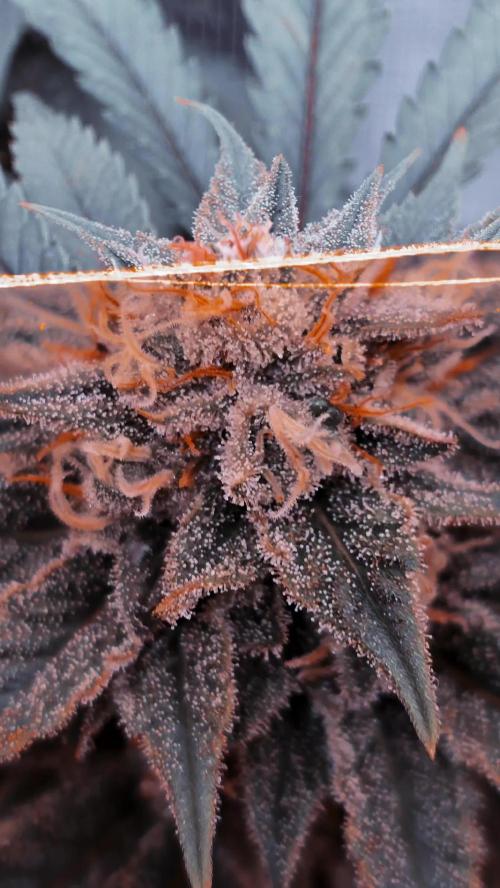
I'm midway through the ninth week she is almost done probably a week left ATM I am just flushing her with H20 and a tbsp of molasses... I know on my next grow of Strawberry Gorilla from FastBuds I will be ordering another light of the same brand just one more 1000w and that would be the perfect amount. The buds are extremely sticky and smell like heaven they are turning purple the leaves are I'm thinking I need to water one more time and let that be it but the bud production is insane. I've learned a lot and I do plan on starting a Craft Cannabis grow... Proverbs 11:1
Likes
5
Share
I harvested 211,9gr wet on p2, I mostly wet trimmed her, I have around 30gr on popcorn nugs in the freezer for bubble hash, when I run out of flowers. I still have a bowl of leaves and stems, but it will be dismissed.
Likes
37
Share
@Diquez
Follow
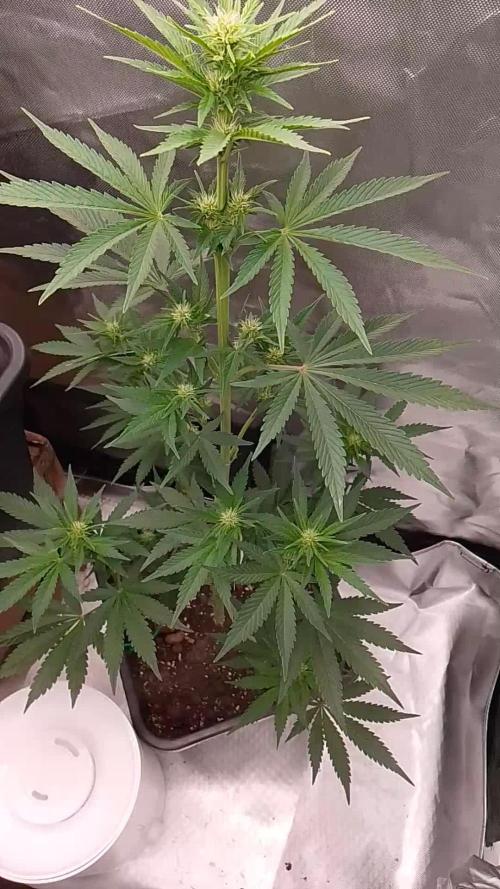
I killed 3-4 bugs around the tent and dont see anything else for the moment. Both of the Gorilla Zkittlez’s looking good and frosty and all of them except the tallest Gorilla Cookies, I think it was meant for bigger spaces :D Anyway assuming last 2 weeks before chop
Likes
21
Share
The plants are doing great so far and seem to be enjoying everything. The smaller CBD plant has caught up and the colorado cookies continues to be the largest so far.
Likes
52
Share
Its time to prepare for war. *Blows bagpipe* FISH SH!T THE ORGANIC SOIL CONDITIONER (used twice before and always noticed instantly) Fish Shit is a living product! It provides a complex Microbial profile that includes thousands of different species of bacteria, fungi, and protozoa. This profile is closer to a natural ecosystem than anything you will find on the market. Fish Shit helps release essential oils and terpenes which contribute to the building of a myriad of flavonoids. Flavanoids play a key role in the development of the most potent aromas and tasteful flavors of a plant and its fruit. Fish Shit contains beneficial microorganisms that help plants maximize nutrient uptake. It does this by transforming nutrients into more usable forms and keeping these nutrients in the soil longer. During photosynthesis plants naturally produce exudates (chemicals that are secreted through their roots). Through these exudates, plants can attract the types of good bacteria that are beneficial to them at different points in their growing cycle. These good bacteria cover the roots and act as a barrier to the invasion of disease-causing organisms that may harm the plant. What Are Enzymes? Before we dive headfirst into how, exactly, enzymes can benefit cannabis plants, it helps to understand a little about what these microscopic proteins do. Essentially, enzymes facilitate chemical reactions. They do so by binding with a substrate and forming or breaking molecular bonds. In this context, the substrate is the molecule upon which an enzyme acts to boost the efficiency of a reaction. •substrate /sŭb′strāt″/ •noun •The material or substance on which an enzyme acts. A surface on which an organism grows or is attached. An underlying layer; a substratum. Enzymes are proteins with complex 3D shapes that feature regions called active sites. When the substrate binds to these active sites, it forms an enzyme-substrate complex that causes a chemical reaction to take place, temporarily changing the structure of the enzyme and ultimately causing molecules to either come together or break apart. As a result, molecular products are released, and the enzyme returns to its original shape. Specific enzymes are capable of binding with certain substrates, as the substrate fits into the active site more or less via a lock-and-key principle. Although, new research suggests a more accurate theory of "induced fit", in which enzymes and substrates undergo structural changes to facilitate the reaction. If you take the human body as an example, we have an abundance of enzymes in our saliva and digestive system. These molecules bind with substrates in these regions (food particles), working to break down the food we eat into usable parts before converting them to energy. Enzymes in cannabis work in a similar way to the example highlighted above. Typically, enzymes occur in soil naturally, but if your soil mix is lacking organic material, or you're growing hydroponically, then adding enzymes directly to the substrate is crucial. By using them in cannabis growing, enzymes not only help break down essential nutrients into smaller, more readily available pieces, but they also support the digestion of dead root cells, clearing a direct path for nutrients. Overall, enzymes make it easier for your cannabis plants to absorb all the elements they need to reach their full potential. For growers, a plant that reaches its full potential means a bucketload of juicy buds come harvest. This is essential if you want to reuse a pot with old systems left over like mine. Common plant enzymes include: •Cellulase •Xylanase •Beta-glucosidase •Hemicellulase •Amidase Amino acids are a crucial, yet basic unit of protein, and they contain an amino group and a carboxylic group. They play an extensive role in the gene expression process, which includes an adjustment of protein functions that facilitate messenger RNA Nitrogen, phosphorus, and potassium are the three main pillars of nutrient solutions and fertilizers, but there are countless other nutrients that your cannabis plants need to produce the best possible harvest. Amino acids are one of them. You may have noticed that amino acids get a lot of attention from bodybuilders and other athletes. That’s because they play a key role in the synthesis of protein, which, as you probably know, is super important for sports recovery and muscle growth. Amino acids are the building blocks of protein and the foundation of both plant and animal life. But what do amino acids do for cannabis? WHY IS PROTEIN IMPORTANT FOR CANNABIS? Just like proteins are important for the human body, they are equally important for the growth and development of plants. For example, proteins help plants: •Facilitate the growth of intracellular plant structures •Promote energy generation •Stimulate metabolic processes •Facilitate the absorption and transportation of nutrients So, where do plants get these vital proteins from? Well, unlike humans, plants can’t source proteins or amino acids from other organisms. Instead, they need to create their own amino acids, and then use these to build protein. That's why gardeners, much like athletes, go wild for amino acid supplements. Amino acids help plants by… • Increasing their production of chlorophyll, which ultimately improves their ability to photosynthesize • Serving as an easily absorbable form of nitrogen • Stimulating the synthesis of key vitamins • Improving their resistance to pests and diseases • Boosting the strength of their cells Amino acids also serve as the precursors to auxins, a group of plant hormones produced in the meristems—the apex of the stems where new leaves and stems are born. Auxins play a key role in the plant, activating genes for plant growth and development by triggering a multitude of vital plant functions. In other words, they determine what its size and architecture will look like. Auxins influence the development of branches, flowers, and roots, and even help to regulate the photoperiod response of the plant. Some amino acids, like cysteine, also work together with antioxidants like glutathione to help cannabis plants deal with oxidative stress, which can be caused by high-intensity lighting, some nutrient solutions, and high levels of CO₂. Unlike humans, plants can synthesize all the amino acids they need to survive and develop properly. Unfortunately, however, amino acid synthesis is a really high-energy process, and plants may struggle to produce enough amino acids when exposed to stress. WHAT FACTORS AFFECT A PLANT’S ABILITY TO SYNTHESISE AMINO ACIDS? Any kind of stress can affect a plant’s ability to produce enough amino acids. This includes: • Drought • Temperature extremes • Poor soil health • Pests • Diseases • Poor lighting • Lack of space • Poor root health WHAT DOES ALL OF THIS MEAN FOR WEED PLANTS? If you want to push your plants to their extreme in terms of floral growth and resin production, you should look into amino acid fertilizers. By making amino acids readily available to your plants, they’ll be able to use crucial energy to grow and bloom, rather than focusing on synthesizing amino acids themselves. Game of Inches, this is another Plants can absorb amino acids via their roots and leaves. They can also benefit from amino acids during both their vegetative and flowering phases. The fastest way for plants to absorb amino acids is via their leaves. The foliar application of amino acids is believed to improve the transportation of nutrients, increase transpiration, and boost photosynthesis. Hence, I recommend feeding your plants with foliar amino acid fertilizers. When doing so, however, carefully measure the amount of fertilizer you use, as—like with any nutrient—overfeeding can damage your plants. FOLIAR FEED AND SOIL SOAK • 1 crushed queen anne carrot • Add 2 tbsp of NPK Raw powdered water-soluble cane molasses • 20ml h2o2 • 1 crushed radish • 0.25 tsp NPK Enzymes • 0.25 tsp NPK Amino Acids • 50ml coconut water ( nature's own amniotic fluid packed with amino, enzymes ) + The sound of songbirds. Onto the predators 1250 -Green Lacewings Lacewings are extremely voracious predatory insects that feed on several pests. In adulthood, it feeds on pollen and nectar. In the larval stage, it feeds on aphids, thrips, and mealybugs at all stages of growth. It can also attack spider mites in moderate quantities. It is initially an aphid predator, but very effectively controls thrips and mealybugs infestations. It is so voracious that in the absence of prey, it will feed on its congeners. Lacewings are cannibalistic if there is no food available for them. It is therefore important to introduce them into an infestation situation, and not just preventively. •congener /kŏn′jə-nər/ •noun •A member of the same kind, class, or group. •An organism belonging to the same taxonomic genus as another organism. •A thing of the same kind as. or nearly allied to, another; specifically, in botany and zoology, a plant or an animal belonging to the same genus as another or to one nearly allied. Ideal temperature 20°C – 26°C Ideal humidity 60% – 70% Predatory stage life cycle 21 days Introduction rate 4 weeks Storage Refrigerator Use Immediately Are there any specific instructions on how to use this predator? Lacewings are available on small paper cards that you can hang to plant stems. On the cards are dozens of eggs ready to hatch. There are also sterile eggs they can feed on once they have hatched before they are ready to disperse in the foliage. It is important to use them quickly upon receipt to avoid cannibalism. If you don't use them right away, you can store the cards in the refrigerator for 24 to 48 hours to prevent the eggs from hatching too quickly. Avoid storing them for longer than this or you risk losing eggs. 1250 eggs are divided into 7.5 cards, 2500 eggs on 15 cards, and 5000 on 30 cards. The application rate is one card per square meter of growing surface. Is this predator best used for preventive or curative treatments? Lacewings are used as a curative solution. Anything else I should know? Lacewing eggs hatch approximately 24-72 hours after the cards are exposed to room temperature. When they emerge, the lacewings are just 1.5-2 mm long. They are very small so they are difficult to see. Once hatched, they will stay on the cards for a few hours and then disperse in the foliage. You quickly lose sight of them if you have not witnessed the hatching. They then live in the foliage for about 3 weeks. Often, you will see them towards the end of their larval cycle. After feeding for 3 weeks, they will triple and even quadruple in size. At that point, they are easier to see. But they remain very discreet insects, it is not abnormal not to see them. Egg carcasses left behind on the cards do not disappear after the hatching has happened. It's normal to see eggs still on the cards. Visually it is very similar before and after hatching. Also, on the boxes, there are sterile ephestia eggs which are used to feed the lacewings once hatched. Not all lacewing eggs are viable either. Only a certain percentage of lacewing eggs will hatch. Once hatched, the eggs are white. You can observe this using a magnifying glass. With, 5000 Stratiolaelaps Scimitus It is used to prevent or control thrips pupae, fungus gnats larvae, and root mealybugs in the soil. It can also be used for red mites in bird farms or hen houses. The adult is about 1 mm long and is medium brown with a beige triangle on its back. Another fun fact about them is they can survive without prey. They can eat algae and plant debris. This is why they can reproduce and stay in plants for long periods. Ideal temperature 15°C – 23°C Predatory stage life cycle 18 days Introduction rate 2 weeks Storage Room temperature Use Within one week Are there any specific instructions on how to use this predator? Sprinkle directly on the growing media. They can live in all types of substrates like potting soil, coconut fiber, rock wool, cedar mulch, etc. Stratiolaelaps establish easily so they are permanently fighting pests. One introduction is generally enough unless you have an infestation. In this case, introduce them at least twice at a 2-week interval for best results. If you grow your plants in a 100% mineral substrate, it will have to be released more often since there is less organic matter than in traditional soil. Do I need to take any specific precautions? Stratiolaelaps breed in the top layer of the soil. So it is important not to disturb them in the first days following their introduction. They don't like temperatures below 8 ° C. So be sure not to introduce them in a water-saturated or cold environment. Release them 24-48 hours after your last watering. They are very sensitive to chemical acaricides and diatomaceous earth. These methods are incompatible with their use.
Likes
27
Share
These Genetics are very recommendable. They were growing Vigor, and needed no big Montitoring. Great for Outdoor// guerilla Outdoor I think the Outcome is good to . iam Guessing for 50-65 G per Plant They got in Flower 2 NPK feedings, But every Day Beneficals, and i enriched my Soilmix with Microbacteria After Outdoor Weather turned not so optimal, they were 3 Days under the LED_Light. They ripened here very fast, so I could Harvest them Today SMOKINGREPORT: a little skunky, gassy but not tooo hard of it... i vaped it ansdit tasted well. Effects: Its agood Hybrid between Indica and some Sativa energy. So you can smoke it in the daytime.... and still function properly... and in the evening it helps you to relax. A good Composition!!!!!! : : : Thank you @ Doctor´s Choice for the Genetics
Likes
85
Share
Start of day 70 ...... Dec 18 Start of week 10 ........ 44 DAYS INTO FLOWERING ( SMELLING GREAT ) !!!!!!! Check out the full grow video on latest weekly update Super Exceptional Growth Daily Still adjusting LST when needed and leaf tucking....... Water Only when needed but its drinking more every otherday and adjusting lights when needed...... Rain Water Only ....... ( DAY 26 AND BOTH NL 1 & NL 2 SHOWED PREFLOWERS ) ( DAY 49 AND RESIN PRODUCTION HAS STARTED ) ( DAY 57 , EQUIPMENT FAILURE , main FAN , over heated😡 tripped breaker , reset light timers , lost a DAY, REPLACED new Main Fan 😁 back up running 👌) ( DAY 70 AND IT SHOWS A SLIGHT DEFICIENCIE MAYBE A CAL/MAG GETTING CLOSE TO END OF LIFE ) IM ALSO DOING VERY LITTLE, SLIGHT DEFOLIATION ( DAY 70 DID ITS FINAL FLUSHING TODAY TO GET RID OF ANY BUILDUP ) ( DAY 75 AND ALL IS GOOD , THERE FATTING UP ) I hope you enjoy my growlog...
Likes
57
Share
Welcome to Bud Boutique Grow Diary - really appreciate all your love and support :) Dont forget to check out my other current grows! 🗓️ This Week: - Day 52: the end is near - Day 53: Trichomes check from #1 and #2 - looking super good almost all cloudy, a few amber and clear. perfect point to chop - Day 54: this one is finished, let's chop them both #1 & #2 !! ✂️✂️✂️ - both phenos got still super purple beautiful leaves - now its time to dry inside the tent at about 60%rh and less than 20°C/68°F trying to get it even lower for the next 10-14 days Thank you for still staying with me 💚 ___________________________________________ --- 🌱 Strain (Sponsor) 🌱 --- 🏷️ PEACH GIRL by Art Genetix https://www.artgenetix.world/product-page/peach-girl --- 🥗 Nutrients and Feeding (Sponsor) - (APTUS Ambassador) --- 🍸 APTUS: full nutrient schedule extreme -- Regulator, N-Boost, P-Boost, CaMg-Boost, K-Boost, Allin1 Liquid, Startbooster, Topbooster, Enzym+ every feeding -- Fulvic-Blast, NutriSpray as Foliar each once a week 🔗 https://aptus-holland.com/ --- ♻️ Grow Control (Sponsor) --- TROLMASTER: TENT-X + LM14 Light Adapter to dim/sunrise/sunset lights + Temp & rH Sensor all remote on App 🔗 https://www.trolmaster.eu/ --- 🚿 PetraGrow (Sponsor) --- CannaFogger Foliar Spray 🔗 https://www.petratools.com/product/petragrow-cannafogger-atomizer-new-mini-fogger --- 🏭 Grow Setup --- 💡LUMATEK Zeus Pro 600 * 🏠🌿 Indoor: Homebox 120x120x200cm (4x4) * 📐🌀 PrimaKlima exhausting Fan 1180m3/h (running on 60-80%) * 🌀 Can Light Filter 800m3/h & 1x Fanbox 1x Dyson fan for Air circulation 🔗 https://lumatek-lighting.com/zeus-600w-pro-29/ 🔗 https://primaklima.com/de/shop/ventilatoren-de/ec-ventilatoren/pk160ec-tc/ 🔗 https://canfilters.com/products/filters/ All Likes and comments are highly appreciated!!! 👨‍🌾 don't forget to check out my Instagram for daily educational content: budboutiquee - Bud Boutique
Likes
14
Share
I'm glad that this grow is slowly coming to an end. There are currently 2x Sherbelato Cake and 1x Ayahausca Purple & 1x Candy Bubatz in the Tent. Next time I will only grow in water.
Likes
46
Share
hi my friends ... we are hanging our beloved girls upside down to dry them and then cut them as usual! those beautiful buds look icy and already look inviting .... stay tuned for the smoke
Likes
12
Share
@Piablo
Follow
Day 7-9: Had a good environment overall, although the light was probably much too high. I didn't realise until quite late that it should have been 60cm above the seedling, and I had it around 120cm at first, and then 80cm. As a result the stem is a bit stringy. Day 9: I lowered the light to 60cm above the plant, and it won't go any lower. the recommended for this light is 30cm above the canopy, according to this very useful article: https://www.growweedeasy.com/how-far-grow-lights, but it's still in seedling stage and I'm guessing the plant will grow up a bit more, and I can always lower a little bit more. Also it's pretty damn hot, so I don't want to overdo it on the lights. I've been keeping the water consistent and just topped up a little on recommended nutrients (more grow, a little micro, adding a little bloom as it comes closer to flowering). The reason for this is because I want to maintain the consistency of environment and monitor the plant for any signs of unwellness. Because Sativas are sensitive to nutrient burn, I'm being conservative in this respect. The temperature with the light lowered is a steady 26 C, and I'm maintaining the humidity at around 70%. This is pretty good for this strain, as a sativa it likes higher temps and humidity. The water pH is around 5.9, also desirable. I've also been wondering if the plant is getting enough CO2. Is it necessary to buy a measurement device and some CO2 bags? Overall the plant seems very happy and is looking healthy. Day 10: cleaned the inside, added more grow, added more clay pellets since she looks a bit thin and stalky and needs extra support, and there were not many pellets present. Light distance is currently around 60cm. Though it won't go any lower with the straps, I will look at lowering it more with some extra rope as the ideal height will eventually be 30cm for this 250W HPS light. Added more Ph buffer yesterday evening and we're currently sitting around 5.7 ph. I was aiming for 5.8 but this is still acceptable. Temperature is around 25 - 26 C, humidity is around 70%, though I will begin lowering this as she grows. I will probably replace the water sometime this week. Upon further investigation I realised that my water levels were too high, and were possibly suffocating the stem. I reduced water levels by a few cm since I had previously been topping up without realising possible damage. I feel like today is the day that this seedling is finally becoming a plant. She has grown some long roots already. Day 11: I further lowered the light to around 40cm using some extra string. It's not super ideal, but for now it's ok. The plant was falling over it's own weight so I added some extra pellets around it for support and it seems to work. I'm hoping she won't stretch as much now that the light is lowered. The inside fan is still on and on full power to build up extra stem strength and keep temperature down. I'm attempting to keep humidity around 60%, a little lower than before. The temperature is significantly higher with the light lowered, easily maintained by periodically opening the door and leaving in cool air from outside which runs just past the intake fan. I'm slightly concerned about the Monstera Deliciosa plant which is sitting just opposite and above the intake fan. Would this have any effects, positive or negative, on the grow? Google is coming back blank on this.
Likes
3
Share
Week 6 here and I'm having problems with stems leaning already. I went back to my normal feeding levels. I'll probably start removing the macro in a couple of weeks. I'm also thinking about doing another small defoliation to help with airflow. This tent is jammed packed and I regret not flipping a week sooner than I did. Thanks for checking out my diary.
Likes
31
Share
Hey all! 🙌 It's me again, after a hiatus I'm back in action and this time I'll be growing two plants! The strain is Green Gelato from Royal Queen Seeds and the two babies are going to be Pistachio and Matcha, two green ice creams flavors to match with the strain name! 😋 I started soaking both seeds in a glass with water for 24 hours to hydrate them (I forgot to take a photo of this!) and after that I placed them in a jiffy pellet. After some days Pistachio was the first one to show while Matcha was still being a little behind. During this I made a small mistake, instead of opening the cardboard box where I placed the seeds I left the baby plant inside so she grew a bit too much during the night... ooops! But nothing too serious (I got it fixed after moving her into a cup). Some days after Matcha appeared but it seemed she was having a small issue, it seemed like part of her shell was still stuck to her so I helped by removing it and then she started to grow normally once again. Right now I moved Pistachio to one of those red cups and I used some mycorrhizas on her! Glomus mosseae and glomus intraradices to be more precise! Next week I'll be doing the same with Matcha. 😊 I also started making a timelapse (I think it looks awful haha but it helps to see how Matcha started to recover!) I hope you'll all enjoy the photos! 😃 See you all next week!
Likes
49
Share
[DAY 78] - 12/12/2022 - TS1000 30 cm distance - 100% dimmer: 144 watt; - Light cycle 20/4; - Height: 83 cm from clay (the other one is 74 cm from clay); - 24° C - 60% RH during light - 19° C - 70% RH during night; - EC 1.4- PH 5.7. [DAY 79] - 13/12/2022 - 24° C - 60% RH during light - 19° C - 70% RH during night; - EC 1.6- PH 5.7 - Resin everywhere! [DAY 80] - 14/12/2022 - 24° C - 65% RH during light - 19° C - 80% RH during night; - EC 1.2 - PH 6. [DAY 81] - 15/12/2022 - 22.5° C - 73% RH during light - 19° C - 80% RH during night; - EC 1.3 - PH 5.7; - Defoliation; - I've never seen such beautiful buds, it's awesome. [DAY 82] - 16/12/2022 - 22.5° C - 70% RH during light - 20° C - 80% RH during night; - EC 1.5 - PH 5.5. [DAY 83] - 17/12/2022 - 22.5° C - 70% RH during light - 20° C - 80% RH during night; - EC 1.6 - PH 5.7. [DAY 84] - 18/12/2022 - 22.5° C - 70% RH during light - 20° C - 80% RH during night; - EC 1.6 - PH 5.5; - Buds becoming huge.
Likes
43
Share
@Sabac
Follow
Última semana de mis plantitas Hoy corto 12 de 16 Fue un cultivo sin problemas. Y creo que viene buena producción Recomiendo 100% los fertilizantes hesi buenísimos. 5 cultivos con ellos y 0 problemas. El sustrato Biobizz light mix excelente Las semillas de barneys farm uff pura crema. Eva seeds recomendables y las sweed seeds buenisimas semillas para seguir cultivando. Los Led yxo para ser de un perfil bajo qué no a toda la gente les gusta cumplen la. Función 480w de pura potencia en un espacio de 120x120 los recomiendo para gente que tenga un presupuesto bajo. Ahora voy por unos sobre 600w aunque los reforzaría estos con unos led de 100w . Bueno feliz con los resultados. Esta semana mostraré los resultados de las plantas cortadas. Se vienen más cultivos Salu2
Likes
5
Share
I'm super impressed with this beauty. This one is going back in the garden next year.
Likes
2
Share
@kissrubb
Follow
Buenas cultivadores.🤘 Esta semana corresponde al día 22/08/2024, por acumulación de trabajo chicos me ha resultado imposible poneros la semana antes pero ya vamos normalizando las cosas, pronto pondremos la 1 semana de floración ya que las pusimos antes de completar la semana 4 de crecimiento debido a un crecimiento salvaje de las oreoz🤪🤪. Hemos regado con 1l en dos oreoz y en una 600ml, el resto de plantas se han regado con 500ml todas, se ha fertilizado con 10 ml de crecimiento boom, 10 ml de ezym boom y 5 ml de silic boom con una EC:1.4 y PH:6.00. Este 28/08/2024 será su primera semana de floración y veremos a ver que tal están y cuanto han estirado, en la semana 2 aremos una defoliación y si es necesario una poda de bajos, hasta la siguiente growers🤘
Likes
2
Share
@Krissci
Follow
Day 3 Light LST as stems are still growing, but nice and green. Clean pots is always a must
Likes
12
Share
Gracias al equipo de AnesiaSeeds, Marshydro, XpertNutrients y Trolmaster sin ellos esto no sería posible. 💐🍁 Coco Jambo: Con una composición genética 60% Sativa y 40% Indica, Coco Jambo es tu billete dorado a un verano sin fin, ofreciéndote una escapada a un mundo donde el sol nunca se pone en tu felicidad. Con unos niveles de THC que oscilan entre un relajante 30% y un estimulante 34%, Coco Jambo es un faro de euforia que guía a sus usuarios en un viaje a través de olas de serenidad y vibrante alegría. Su aroma es una celebración de los sentidos; imagina el momento de euforia al abrir un coco y descubrir que rebosa de las frutas tropicales más suculentas. 🌻🚀 Consigue aqui tus semillas: https://anesiaseeds.com/es/product/coco-jambo/ 💡TS-3000 + TS-1000: se usaran dos de las lámparas de la serie TS de Marshydro, para cubrir todas las necesidades de las plantas durante el ciclo de cultivo, uso las dos lámparas en floracion para llegar a toda la carpa de 1.50 x 1.50 x 1.80. https://marshydro.eu/products/mars-hydro-ts-3000-led-grow-light/ 🏠 : Marshydro 1.50 x 1.50 x 1.80, carpa 100% estanca con ventanas laterales para llegar a todos los lugares durante el grow https://marshydro.eu/products/diy-150x150x200cm-grow-tent-kit 🌬️💨 Marshydro 6inch + filtro carbon para evitar olores indeseables. https://marshydro.eu/products/ifresh-smart-6inch-filter-kits/ 🍣🍦🌴 Xpert Nutrients es una empresa especializada en la producción y comercialización de fertilizantes líquidos y tierras, que garantizan excelentes cosechas y un crecimiento activo para sus plantas durante todas las fases de cultivo. Consigue aqui tus Nutrientes: https://xpertnutrients.com/es/shop/ 💻 Trolmaster Tent-X TCS-1 como controlador de luz, optimiza tu cultivo con la última tecnología del mercado, desde donde puedes controlar todos los parametros. https://www.trolmaster.com/Products/Details/TCS-1 📆 Semana 3: Muy buena semana, he aplicado un riego solamente con agua de manantial para reducir la cantidad de sales acumuladas en el sustrato y se ha notado una mejoria . Creo que le quedan unas dos semanas por estirar, parece que va a ser una buena cosecha. Se mantiene un buen control del cuarto de cultivo gracias a @marshydro y @trolmaster. Mantengo las dosis de 1/3 de nutrientes recomendados por el fabricante. Potencia del foco 80%
Likes
241
Share
Well growmies ive been looking forward to the Banana Purple Punch 👊 for sometime now , and there both keeper that's for sure 👈 couldn't of asked for better Genetics 😉 The smell coming from both plants during the entire grow was just dreamy 👈.... It's very sweet with that Banana Peel smell 😍 Amazing Plants 👉 Big thanks to all my Growmies out there in GD land 👈 Much appreciated 🙏 Thanks To MarsHydro for the TS1000 👉I used NutriNPK for nutrients for my grows and welcome anyone to give them a try .👈 👉 www.nutrinpk.com 👈 NutriNPK Cal MAG 14-0-14👉 All Weeks NutriNPK Grow 28-14-14👉 Weeks 2 & 3 NutriNPK Bloom 8-20-30👉 Weeks 4 to 8 NutriNPK Bloom Booster 0-52-34👉 Weeks 4 & 9 & 10
Likes
1
Share