The Grow Awards 2026 🏆 








Likes
Comments
Share
@ZZZSmo2
Follow
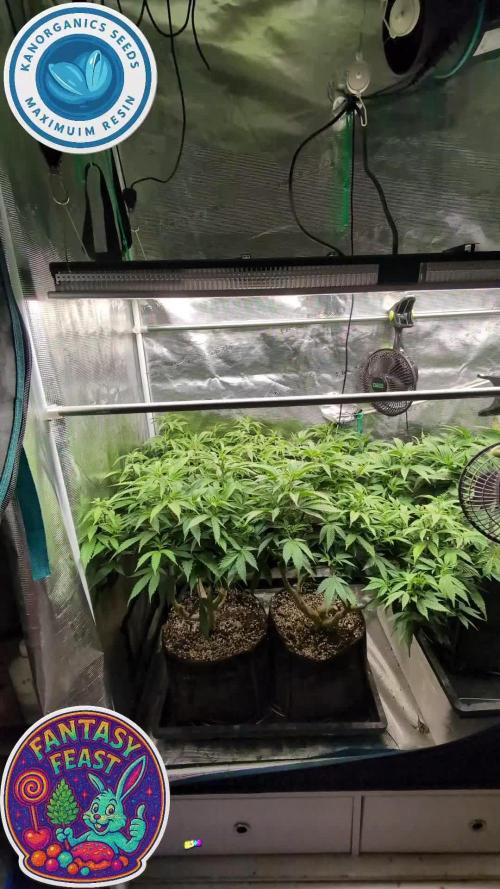
Transplanted in 11l Pots
Topping
+26C Temp.
+70-75% Hum.
Soil: Coco Light Mix + Humus Worm Casting (60/40) + Mycorhize
Water + Cocos A + Cocos B
Ph 6.5 - 6.8

Likes
10
Share
@TherealNICOGREEN
Follow
På tre dage er hun gået fra lidt sky farvet til fuld mælkefarve i krystallerne. Jeg høstede hende igår, men jeg håber det bliver nogenlunde billeder alligevel 💚☮️🤞😇kan virkelig anbefales andre at prøve denne sindssyg smukke strain!☮️💚

Likes
25
Share
@Grower_Of_Persia
Follow
week intel:
its time to harvest top buds!
because my base nutrients and one of boosters was salt based, i'll do flushing this week to get some relieve to plants in the last days
stresses :
flushing
Drought stress via watering only one time with flushing this week
feeding:
day 1 : i flushed them with Advanced Nutrients Flawless finish and adjusted ph
day 3 : no more feeding from now on
day 5 : no more feeding from now on
guide of the week :
i harvest in 2 parts : first i harvest top of the branches and will let the lower buds to ripe another week then ill harvest the second wave.
its crucial to get uniformed buds in terms of quality that you let the lower buds to get some extra air and especially light! then the pop corn buds quality will reach the top buds.
my dry and cure style is this:
3 days of hanging upside down to get water activity lower to around 0.6 in 50% humidity and 26 C temp (i know its a little high but we are in a hot summer right now and i cant get it lower even with air conditioner) and then after 3 days of drying i remove leaves and stalks, trim buds and move them to jar for the rest of their life :D . and in the first 4 days of curing i open the jar door and let hem get some fresh air in the jar for about 5 minutes and close the jar door again, after 4 days of curing like that buds are smokable but they will get better as they getting cured about 1 month.
im happy as hell with this harvest :D.

Likes
13
Share
@MissionPossible
Follow
Day 149:
last day of flowering
Day 150 (01 October 2021):
End! Now the Harvest begins

Likes
209
Share
@yan402
Follow
This two were part of another diary and got moved out due to space reasons at VW8 and moved back indoors at VW20
https://growdiaries.com/diaries/218151-auto-god-s-glue-grow-journal-by-yan402
13.09.25 VW21 Both are looking good and are developing tighter nodes than when they were outside, I'm going to have to keep cutting them back every once and a while I also applied nematodes against thrips and fungus gnats.
20.09.25 VW22 some spots and some yellow leafs, I think it's a root problem, probably root bound, but both seem healthy and are getting thicker so maybe just top up with Coco coir and give a slight different nutrient schedule less Tri Part Bloom could do the trick MAYBE lol.
27.09.25 VW23 Topped up the pots with extra coco coir and trimmed the side roots a bit, both plants were root bound 📹
03.10.25 VW23 did a HST/LST session 📹
12.10.25 VW25 Done a major HST session to try and keep them in line with the Sunset Sherbet GF I have going in the same tent, rest in the video 📹
17.10.25 VW25 ffj/fpj/fish 30 → 60 ml
19.10.25 VW26 it just became a one plant diary, keeping #5, #6 gets it's own diary for testing nutrients :
🌱💦🌱💦🌱💦🌱💦🌱💦🌱
Day to day tasks & actions 🌿
🌱💦🌱💦🌱💦🌱💦🌱💦🌱
18.10.25 VW25 – Fed 3l of #1 → 1l runoff
19.10.25 VW26 – Fed 5l of #1 → 2l runoff
20.10.25 VW26 – Fed 5l of #1 → 2l runoff
21.10.25 VW26 – Fed 5l of #1 → 2l runoff
22.10.25 VW26 – Fed 5l of #1 → 2l runoff
23.10.25 VW26 – no water no feed
24.10.25 VW26 – Fed 5l of #1 → 2l runoff
25.10.25 VW26 – Fed 5l of #1 → 2l runoff
(*RUNOFF reused for tomato plants)
🍶💧🍶💧🍶💧🍶💧🍶
💧 Nutrients in 30L #1
🍶💧🍶💧🍶💧🍶💧🍶
💧 TriPart Micro: 10 → 30 → 40 ml
= 0.33 → 1.00 → 1.33 ml/L
🍶 TriPart Grow: 0 ml
= 0.00 ml/L
💧 TriPart Bloom: 10 → 30 → 20 ml
= 0.33 → 1.00 → 0.67 ml/L
💧 Cal-Mag: 60 ml
= 2.00 ml/L
🍶 Home-made FFJ/FPJ (new fish batch): 30→ 60ml
= 1.00 → 2.00 ml/L
💧 pH Down:
Citric acid (BuxXtrade) — adjust to ~pH 6.0
📦 TOTAL : = 180 ml per 30L = 6.00 ml/L
🍶💧🍶💧🍶💧🍶💧🍶
⚙️✂️⚙️✂️⚙️✂️⚙️✂️⚙️
✂️ Tools & equipment ✂️
⚙️✂️⚙️✂️⚙️✂️⚙️✂️⚙️
✂️ 2× MarsHydro SP3000
⚙️ MarsHydro 150mm ACF Ventilator
✂️ Trotec dehumidifier (big unit)
⚙️ Mini no-name dehumidifier
✂️ Kebab skewers (LST – stainless)
⚙️ Wire + roast skewers (LST assist)
✂️ Scissors (HST)
⚙️ Vacuum (for spills & cleanup)
✂️⚙️✂️⚙️✂️⚙️⚙️✂️⚙️✂️⚙️✂️⚙️
🍒🍭🍬🌈🍒🍭🍬🌈🍒🍭🍬🌈🍒
🦄Fantasy Feast ( Seeds)🦄
🌈🍒🍭🍬🌈🍒🍭🍬🌈🍒🍭🍬🌈🍒
Species: Hybrid (Regular)
Genetics: The mother is Unicorn Whip by Dirty Bird Genetics. The father is Charcuterie by Cannarado Genetics.
Effect: Unknown Mixed effect body and head high
Flavor: Some phenos are Skunky gassy fruity, some are fruity sour citrus with a chemical touch and a touch of skunk
Flowering: Estimated 8–10 weeks
Resistance: Strong — Testing phase done
YouTube Link: https://youtube.com/@yan402-m8h?si=A7x4Zlr2kj-_ga31


Likes
3
Share
@Gerbillionaire
Follow
Super easygoing strain, and fun to grow. Looks like a nice yield but I'll have to update with weight after it's dry. This sweetie was grown in 6 gallons, from seed, under non adjustable lighting from seedling through harvest. Base nutes and cal mag. Ocean Forest/perlite in the bottom 3/4, Happy Frog/perlite on the top 1/4. Trained with a combo of scrog/lst techniques. The lights are two 50 dollar "1000 watt equivalent" Amazon LEDs, they say their max input is 280 volts though so I have no idea what grams to watts will be when the dry weight comes in.
Thanks to everyone who checked or checks this diary out, that's pretty cool of you! I'll be back in a bit to update weight and smoke, happy trails!

Likes
60
Share
@BOMbolenath
Follow
The plant is stretching very fast. It's very healthy. Besides being the smallest plant in the grow, she is doing well.

Processing
Likes
11
Share
@stickygrowz
Follow
Royal Queen seeds easy start, first time used excellent results, 100% germination rate, All seeds have popped and have been transplanted in three to four days. Very happy on to start of veg


Processing
Likes
73
Share


Likes
18
Share
@berlinbeginner
Follow
F43
a bit of nutrient burn because of the high temps.
SD2 smell : engine grease mixed with kerosine. Imagine spilling grease in a corner of a tire shop.
SD2 isnt developing normal and wont probably yield much.
SD3 smell : sweet engine grease.Very pleasant.
Sour Diesel needs getting used to in terms of smell and aroma

Likes
21
Share
@Chubbs
Follow
420 Fastbuds Week 4
Amnesia Zkittlez Auto
How's everyone's grows? Hopefully all is good. This weeks update the girls have transitioned into flower showing preflower sites all over. One has decided to stay super short with the other reaching about 14in tall or so. No big sings of issues besides a few little rust spots showing up. I added 1tsp/gal of some GH Calimagic to help stop that and so far seemed to do the trick. All in all Happy Growing.

Likes
10
Share
@MadeInGermany
Follow
Hey guys :-) .
Today the plant was sprayed again with neem oil.
There weren't any more trips to be seen after the second application, but to be on the safe side, you did it again today get a cure.
That's why the beautiful dark shimmer on the leaves :-).
The ladies are developing well and have 1 week before I change the time to flowering.
Normally I would let it get bigger and train because the tent only has 80x80 and 180 watts are available, so I will switch it over soon enough.
This week it was poured twice with 0.8 l each time (for nutrients, see table above).
Otherwise everything was cleaned and, as always, everything was checked.
Have fun with the update and stay healthy 🙏🏻
👇🏼👇🏼👇🏼👇🏼👇🏼👇🏼👇🏼👇🏼👇🏼👇🏼👇🏼👇🏼
You can buy this Nutrients at :
https://greenbuzzliquids.com/en/shop/
With the discount code: Made_in_Germany you get a discount of 15% on all products from an order value of 100 euros.
👇🏼👇🏼👇🏼👇🏼👇🏼👇🏼👇🏼👇🏼👇🏼👇🏼👇🏼👇🏼
You can buy this strain at :
https://www.exoticseed.eu/
Water 💧 💧💧
Osmosis water mixed with normal water (24 hours stale that the chlorine evaporates) to 0.2 EC. Add Cal / Mag to 0.4 Ec Ph with Organic Ph - to 5.8 - 6.4
MadeInGermany

Likes
200
Share
@Ferenc
Follow
Hi Guys! I hope you are OK.
First of all, I want to say thank you to Royal Queen Seeds and Original Sensible Seeds.... It is a sponsored diary by Royal Queen Seeds and Original Sensible Seeds. Thanks for all the seeds and packages. ;)
Please guys go and check them out www.royalqueenseeds.com ; www.originalsensible.com and get some nice strain ;)
Thanks!
Regards.
7th of September 2020: Seeds are in the water.
Gelato from Original Sensible Seeds straight submerged 😳
9th of September: All good tap root is out some of them will be planted earlier because the root is coming faster and they will be in the mini pot first :)
So-Si-Dos OG and Gelato from Original Senisble Seeds are planted in the mini pot tap root was perfect long.
Runtz Gum also woth today.
Two of them left so I will check out tonight :)
End of the day I planted Black Ghost and Wedding Gelato as well. All of them planted now we just have to wait them to be out 🤪
Day 2: All of them out ❤️
Day 3: Opening up :)


Likes
6
Share
@rvabudman
Follow
Graduated, and am off from work for a few weeks, so went overboard on photos. Plant is doing well, leaves are starting to turn yellow (strain trait).
Can't wait for the harvest and being able legally gift my xmas ornaments to my cousins during our "cousins walk" at our family xmas party.

Processing
Likes
3
Share
@macrocefalo
Follow
We finally arrived at the flowering of the 5 plants. # B3 presents some type of blockage, which is still very early in flowering. Despite the tragic accident with # B5 the buds' formation is going very well she still showed signs of phosphorus deficiency despite using both FloraBloom and Liquid KoolBloom in the next irrigation I will try to leave the PH in 6.4 since as I researched the phosphorus is better absorbed with soil pH between 6.2 and 6.7. The other plants are doing well and do not have the same deficiencies. This week I released the LST and applied defoliation on some leaves to favor the light on the apical buds where buds are forming. Updating with 55 days # B3 already has some white pistils but the buds did not start to form. I begin to think that it is a photoperiod.


Likes
3
Share
@Borberad
Follow
Blütewoche 5: Alles läuft gut! Der Düngeplan bleibt unverändert.
* Zustand der Pflanze: Gesunde Blattfarbe, kompakte Blüten und glitzernde Blüten
* Wichtige Ereignisse: keine
* Düngung & Messwerte:
* Gießwasser: pH ca. 6,3. Leitwert 1,4 bis 2 S.
* Drain: Wir stellen sicher, dass der pH-Wert nicht unter 5,5 und nicht über 6,8 liegt und der Leitwert die +/- 500 S Abweichung einhält.
* Anpassungen: keine

Likes
61
Share
@Papa_T
Follow
Welcome back!! It’s the beginning of week four. I now consider the seedling stage over and now we’re going strong into veg. Vamos!!
FRIDAY - Day 22
11 October 24
- Topped both bottom branches.
- Added a few LST staples to begin shaping her.
- Just an other day under the lights.
- Going to start thinking about up potting her in the near future.
SATURDAY - Day 23
12 October 24
Watering day, 1 litres of dechlorinated tap water.
- Base water 1 litre - 61.1 PPM
Final - 1 litre at 6.45 PH at 62.8 PPM
Runoff - N/A
- Thinking of removing her giant fan leaves soon, they’re becoming cumbersome.
- Did my final planned topping of the two top branches.
- Now just have to give her time and continue shaping her.
SUNDAY - Day 24
13 October 24
- Just a day under the lights.
- She doesn’t seem too bothered by yesterday’s training.
- She’s got a few days now to recover.
- All is moving along according to plan.
MONDAY - Day 25
14 October 24
- Just a day under the lights.
- Also a good recovery day.
TUESDAY - Day 26
15 October 24
Transplant day into a 5 gallon pot and her final home.
60% Gaia Green soil
20% Worm castings
20% Perlite
8 Tbsp Gaia Green All Purpose
4 Tbsp Gaia Green Power Bloom
5 Tbsp Diatomaceous Earth
1/2 Tbsp Dynomyco
Amended it all and transplanted.
Watering day, 5 litres of dechlorinated tap water.
- Base water 5 litres - 61.2 PPM
- Add 2.5 ml Cal-Max - 167 PPM
- Add 5 ml Supermax - 200 PPM
- Add 15 ml Miicrobial Mass - 300 PPM
Final - 5 litres at 6.48 PH at 301 PPM
Runoff - N/A
- Removed the lowest fan leaves.
- Removed LST staples to let her acclimate to her new home.
- Will resume LST in a few days.
WEDNESDAY - Day 27
16 October 24
- Just a day under the lights recovering from a big day yesterday, extended light hours and a transplant.
- She’s looking perked up and pretty happy so everything is looking good.
- Probably resume LST staples tomorrow.
- I’m done with my planned toppings so from here on out it should just be LST until we flip to flower.
THURSDAY - Day 28
17 October 24
- Ahhhhhh I tweaked a branch manipulating it with my gorilla hands.
- It not completely broke off so hopefully she can repair it and recover.
- Going to give her a bit more time to recover before restarting LST.
- Just a day under the lights today.
Well this is the end of week four. It was a busy week with the transplant, all planned toppings are completed and now it should just be some LST from here on out. Join me tomorrow for the beginning of week five. Vamos bendejos!!
Likes
4
Share
@Growyourownathome2x2
Follow
Thursday 16th march day 59 Harvested a couple days earlier then planned as my humidity was getting a bit high and worried about risking mold I decided to chop, have to get a good dehumidifier soon, everything looking lovely, nice and dense with very strong fruity potent smell definitely the best looking plants I have grown to date not the biggest buds but they look quality, chopped plants whole gonna do my best to keep the temp and rh% in the dry room as close 60/60 as I can to get a nice slow dry, 🍁😎 I only took the wet weight from 1 plant back left plant was 270g with large fan leaves removed


