The Grow Awards 2026 🏆 










Likes
Comments
Share
@MrIssa3x3
Follow
Happy I made it to harvest as I know that’s a lot of first growers issue. She’s sticky, funky, and chunky. Nothing bad to say. I definitely learned some things that I’lol be implementing next grow. Probably do another run of Autos from Mephisto as I have a few. But my goal is to get into the Photos, preferably the kushiest of the kushy lol. If anybody has any suggestions of some fire Gas, point me in the direction. More updates to come, so for the next week or so, just monitoring. Stay high growmies!

Likes
3
Share
@kdifiori_
Follow
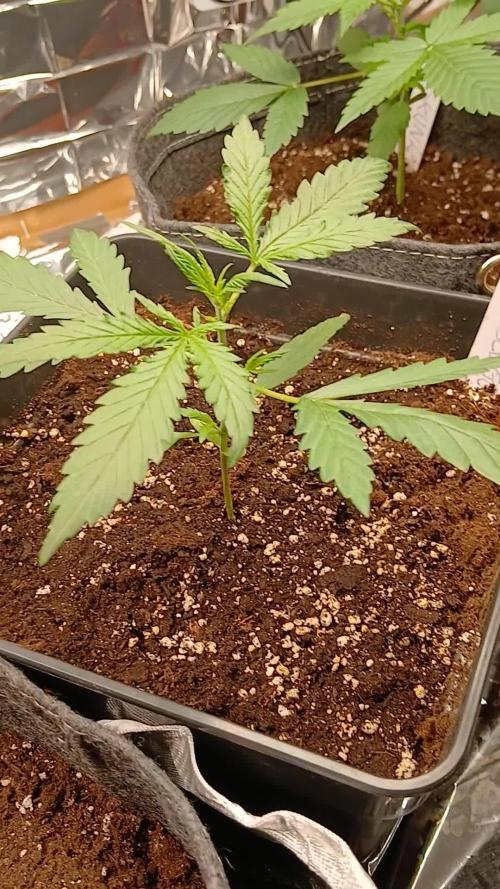
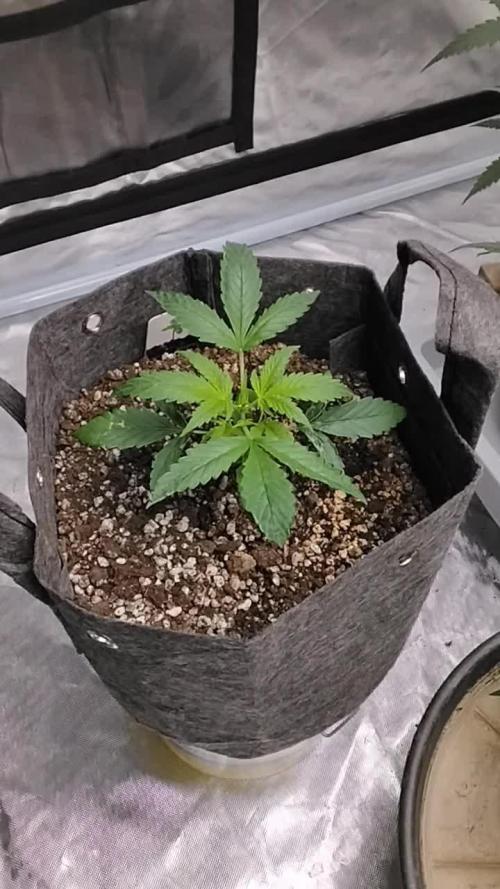
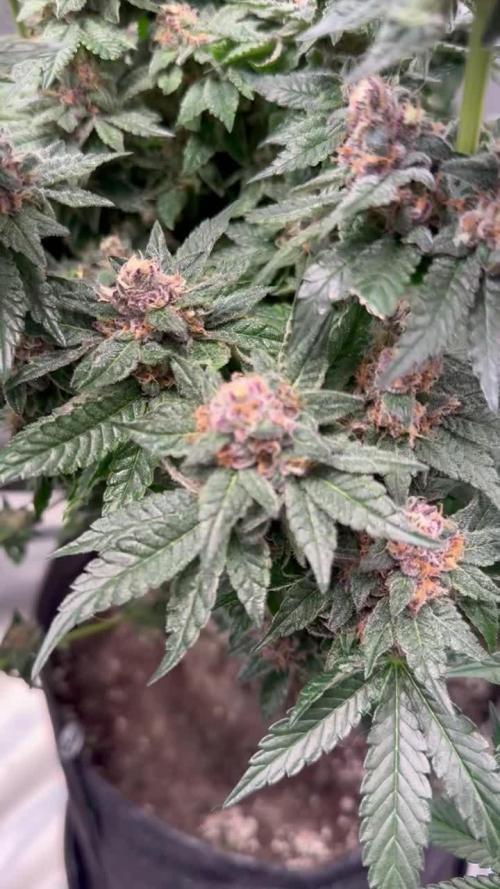
The girls are growing up and doing great, Pineapple and Cheese more than the others. I'm happy overall.

Likes
3
Share
@MaltaHerbman
Follow
Week 2 update 🌱
Pablo is pushing ahead into week 2 with strong early growth. Nutrition this week is Plagron Alga Grow combined with Plagron Silic Rock for structure and powe roots.
Stable environment around 26°C, light cycle 18/6. Good energy for the weeks ahead
Day 20 Topping Done.

Processing
Likes
2
Share
@eldruida_lamota
Follow
Esa familia, nuevo LST con misty gorilla autofloreciente, empezaremos de momento con 2/3 misty gorillas con este método de cultivo. Uno de los ejemplares me parece algo pequeño aun como para andar atando nada.
Añadi BETA SHARK , quite el producto de crecimiento, y aporte el producto de floración de la gama BLACK LINE de AgroBeta.
También quite el enraizante, ya que fácilmente consigo buenos cepellón es y con varias semanas de dosis son suficientes.
Ph controlado en 5.8 humedad entorno al 45%, la temperatura no sube nunca a los 27 grados , se queda siempre en 26 poco.
Se las ve con buen color , un tallo bastante manejable, fueron atados entre 2 y 3 nudos por planta con alambre forrado.
Espero que os gusten las fotos e imágenes ya que gracias a Zambezaseeds, marshydro y AgroBeta es posible este cultivo, un saludo fumetillas 💨💨💨💨.

Likes
63
Share
@Chubbs
Follow
420Fastbuds
StrawberryGorillaAuto
Week 2
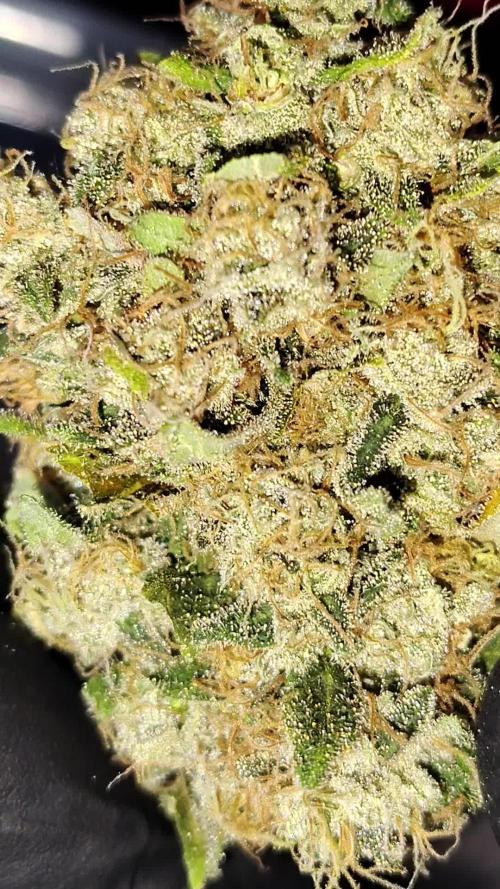
What up grow fam weekly update on these three. This week has been fun seeing the first leafs getting bigger. I started adding some GH Calimagic to my feed. I'm feeding 500ml of PH'd well water and .25 tsp/gal of some calmag about every other day. Started also my preventive maintenance of sparying PureCrop1 every Monday as the plants seem to respond well and keeps the pest away. All in all Happy Growing

Likes
15
Share
@DOOBS_N_BREWS
Follow
Starting week 6 both plants are growing well. growing super well. I purchased some Mammoth P at my local hydro shop so I'm curious to see how this will help.
Day 36- Watered with .6 mL MammothP phd to 6.4 w/100%distilled water. Also got a new camera for the grow. just wanted to do time lapse for fun so I uploaded a quick 7 hour lapse for shits and gigs👍
Day 38- Watered again with .6ml/g w/mammoth p phd @ 6.4 .
Day 40- Feed with NFTG mid flower schedule. No foliar feed, I added Bloom Khaos directly to water this time around.
I got a wattage meter to test the spider farm sf2000 wattage. Looks like it hits 198 which is 4 wats lower than what they claim so still pretty accurate. The plants really fucking love love this light!!


Likes
9
Share
@Fatnastyz
Follow
2-25
Did a full water with run off.
Gave 1/4 nutes made 2 gallons of water.
PH 6.2. Ppm 580
Silica 1.5 ml
Micro 4 ml went a little under just to be safe.
Trees none
Flowers 6 ml
Frosty Nugs 5 ml
Blast off .075 ml
Bud Strength 5 ml
Run off PH was 5.8
Run off ppm was over 4400
Feel a big fresh water coming 😂😂😂
Sheesh
3-1
1/4 nutes, no trees.
Run off ppm 950 ph 6.4
So far so good.

Likes
4
Share
@AustinRon
Follow
OG 4Q24 Flower Week 5 (Plant Week 8)
Orangegasm (Fem) [ IRIE Genetics ]
12/12 @ Bolt (Day 21)
Germination: 20 November 2024
#3A Earliest Harvest Date: 9 February 2025
#3B Latest Harvest Date: 19 February 2025
_________________________________________
Start of Week: [Wed Jan 8,
2024 CR2 4Q24 29:F:4:1]
End of Week: [Tue Jan 14, 2024 CR2 4Q24 35:F:4:7]
OrangeGasm Fertigation:
- MAX: EC: [ 2.7, mS]
- LightIntensity Optimal: [ 850, µMol/m2/s]
______________________________________
Lighting Strategy
- As we’ve 3 Distinct Levels, Tops, Mediums, Bottoms
- Our tops are within 15” of the light, the Mains 25”
- GOAL is to Reduce LIGHT DISTANCE, as Long as TOPS are NOT LIGHT DISTRESSED.
- Tops will be 1200+ µMol/m2/s
- Mediums ~ 850 µMol/m2/s
- Bottoms: 500 µMol/m2/s
We Want OPTIMAL (850 µMol/m2/s) At the SECONDARIES of TALLEST PLANTS.
- Secondaries are the stems with flowers emerging from the Two Mains - ~ 12 - 14 Flowers per STEM.
__
Wed Jan 8, 2025
OG 4Q24 29:F:4:1
Refresh Reservoir, 4 Gallons Filtered/pH’d TAP Water, ph: 7.2, EC: 0.3 mS/cm


Environment
Temp:
RH:
VPD:
PPFD:
EC: [ 2.7, mS/cm]
Evaluating Runoff EC vs CHOSEN EC (Delta EC) ∆:
- IDEAL: Within 200 ppm, ≤ 0.4, mS/cm
- Acceptable: 200 - 300 ppm, ≤ 0.4 - 0.6 mS/cm.
- CAUTION: 300 - 400 ppm, ≤ 0.6 - 0.8 mS/cm
- DANGER: 400 ppm, 0.8 mS/cm
- [x] Post Grow Diaries
Refresh Reservoir:
- [x] Primer A&B: [ 72.1, ml]
- [x] SLF-100: [ 40, ml]
- [x] pH UP: [ 1, ml/gal]
- [x] Photosynthesis Plus: [ 24, ml]
- [x] 4 Gal Filtered Tap, pH’d to 7.4, EC: 0.3
- No Silica until we have 2 MORE Days Clear Filter (Xeribird Manifold Filter)
- EC: [ 2.7, mS/cm]
Monitor Filter
- [x]
Some indication of beginning PSP film (Started PSP Today)
IF THIS Continues - it’s PSP … ;-(
Runoff:
- [x] 2 Gallons. # We ran 2 Extra Minutes, adding 50% to the overall feed. IFF 30 seconds delivers ~380 ml, then the 2 Minutes yields a couple more gallons . . . We’ll Know THURSDAY NIGHT (No Add’l Fertigation Events beyond programmed 8).
- [x] EC: 3.5
- [x] EC Delta: 0.8 (400 ppm) # CAUTION LEVEL
__
Thu Jan 9, 2025
OG 4Q24 30:F:4:2
Reclaim Dehu # @1400
- [x] 1 Gal
Refresh Reservoir: 1 Gal Dehu
- Primer A&B: [ 20, ml]
- SLF-100: [ 5, ml]
Monitor Filter # @1900
- [x] If Clear Filter - Start Silica . . .
- Filter has BARELY any Buildup - But Pink (PSP?) Film. No Affect to Fertigation
Runoff
- Amount: [ 1, Gal]
- EC: [ 3.3, mS]
- EC ∆: [ 0.6, mS/cm]: Acceptable
REDUCED Fertigation Time to 25 Seconds from 35.
__
Fri Jan 10, 2025
OG 4Q24 31:F:4:3
Runoff
- 1 Gal, ec: 3.0, ec delta: 0.3-ideal
Defoliation
- [x] Remove All FAN LEAVES up to the Penultimate Node (Leave TWO Sets of Fans At Top, for now . . .)
- [x] Remove FIRST nodes ABOVE TOP, all plants
- [x] Pick up 4 Gallons of ‘purified water’
Refresh Reservoir - 2 Gallons, EC: 2.7
- [x] Primer A&B: [ 40, ml]
- [x] SLF-100: [ 10, ml]
__
Sat Jan 11, 2025
OG 4Q24 32:F:4:4
Runoff
- Amount: [ 1250, ml]
- EC: [ 3.5, mS/cm]
- EC ∆: [ 0.8, mS/cm]: Caution
We’ll leave the feed volume at 20 seconds as long as plants are happy. Raise to 25 sec if else.
__
Sun Jan 12, 2025
OG 4Q24 33:F:4:5
Reclaim Dehu
- [x] [ 1.4, gal]
Refresh Reservoir
- Amount: [ 1.4, gal]
- EC: [ 2.7, mS/cm2]
- The Rooted Leaf Primer A&B, SLF-100, Photosynthesis Plus
Runoff
- Amount: [ 0, ml]
- EC: [ n/a, mS/cm]
- EC ∆: [ n/a, mS/cm]: Warning
__
Mon Jan 13, 2025
OG 4Q24 34:F:4:6
- [x] Defoliate Rear 4 Plants
__
Tue Jan 14, 2025
OG 4Q24 35:F:4:7
Runoff:
- Amount: [ 2, L]
- EC: [ 4.0, mS]
- EC∆: [ 1.3, mS/cm2]: DANGER
- [x] Raise Fertigation to 40 Seconds per Event
- [x] Reclaimed 1 Gal Dehu
- [x] Res Refresh 1 Gal @ 2.7 mS/cm2
- [x] Primer A&B, SLF-100.
- [x] Cleaned Manifold Filter with H2O2 - The Bio film embeds in the mesh. Has to be destroyed to remove it seems. Replaced and Checked

Likes
Comments
Share
@Robom069
Follow
Day 34/35
ladies lookin great, iam feedin em more now
acid dough in the front and black domina in the back
always lookin for the right topping but not top them too much
tryin to tie them down a lil
and did some supercropping

Likes
38
Share
@TrueNorth
Follow
September 23 2019 6AM- Here we are! Week 10! Feels like just yesterday they were seedlings! Great bud growth, frostier than frosty the snowmans ass! 🤣. Going to get a microscope to look in there and see if they are milky yet or not! More and more hairs are going orange, i have been lollipoping these bad girls like crazy.
September 23 2019 10AM- Got a microscope! So damn cool!😱
September 24 2019 6PM- The Smell is so sweet it is amazing, almost like candy! i took some popcorn buds and they are currently drying! that is where i got those sugar leaves from, i continue to defoliate the bigger leaves covering the buds from all that beautiful light.😘
September 25 2019 7AM - Today i started the flawless finish by advanced nutrients!!😎
September 25 2019 6PM -The buds have honestly thickened up over night it seems to happen as i blink lol i love growing, amazing strain! definitely recommend this strain for beginners as you can see i made many mistakes!
September 26 2019 6PM - i took the videos and photos when i took the ladies outside for the first clean water flush through the whole thing. i will continue flawless finish both are looking amazing. the smell is so good, Those popcorn buds i took off are so amazing i can not wait to have the full finished product!😍

Likes
40
Share
@GYOweed
Follow
End of 14/10 going 12 12 today. Rooted some SS after 6 days. Gg4 and HS on way in dome. Twenty20 Genetics stretchier because of outdoor genetics.
All top stems pinch to slight pop to keepem short. 2 x 2 6 weeks veg success Not bad from seedling with 100w led shared all 4 so 25w each!


Likes
14
Share
@Chris42081
Follow
So frosty and starting to swell, amazing smells hard to describe. Pleasure to grow and very resilient so far compared to other strains I've grown.. holiday harvest 2023!

Likes
3
Share
@AstrasGrow
Follow
Endspurt . Es wurde ein letztes Mal gegossen und nun wird das Gießen eingestellt .Die Trichos sind schon sehr milchig aber der Bernstein lässt noch auf sich warten


Likes
11
Share
@woooooodsy
Follow
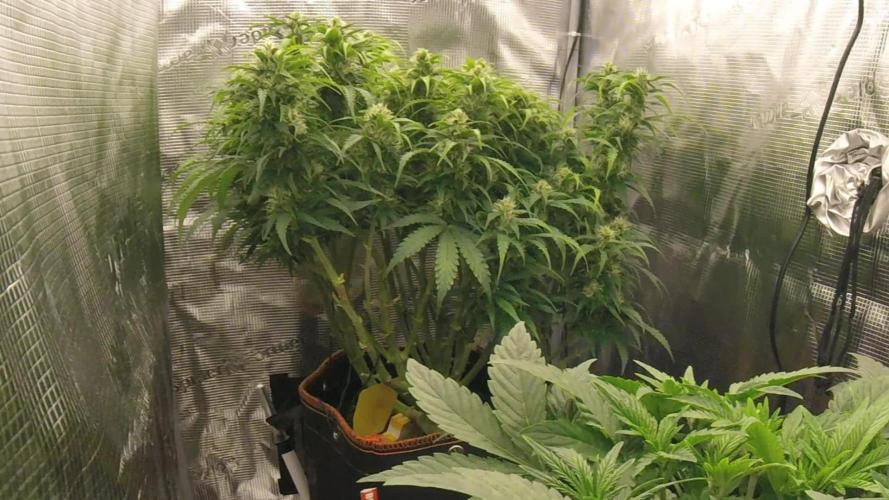
she actually went for just about 10 whole weeks of flower. I’m chopping her at 69 days, as I write this, but I will post relevant photos in a harvest update after it’s dried and weighed.
I watered with only distilled since the last update, and starved her of water and RH in hopes of increasing last minute the resin and trichomes production. Flushed with more distilled and after a few more days turned the lights off for two days of darkness. The next update will have the result.


Processing
Likes
17
Share
@Ashbash
Follow
Lemon AK is getting really fat this week. Smell isnt as strong as the zkittlez but it definitely smells lemony. Looks a little airy as its foxtailing quite a bit i think. Just too hot damnit. Zkittlez is conspicuously missing this week....will see why next week :)
Likes
36
Share
@Salokin
Follow
All is developing nicely, introduced cannazym and boost to the mix. Finally I have access to a better camera which you will see on the later pics. The cuttings I took seem to survive for now, with some outrooting their cubes already.
Likes
Comments
Share
@MumboJump
Follow
They now geht 4l of water every 2 days. The left Lemon Og Candy has a very heavy citrus flavor and the right one more Like Candy. The left one has more orange/red pistils than the right one
