The Grow Awards 2026 🏆 






Likes
Comments
Share
@AutoflowersSucK
Follow
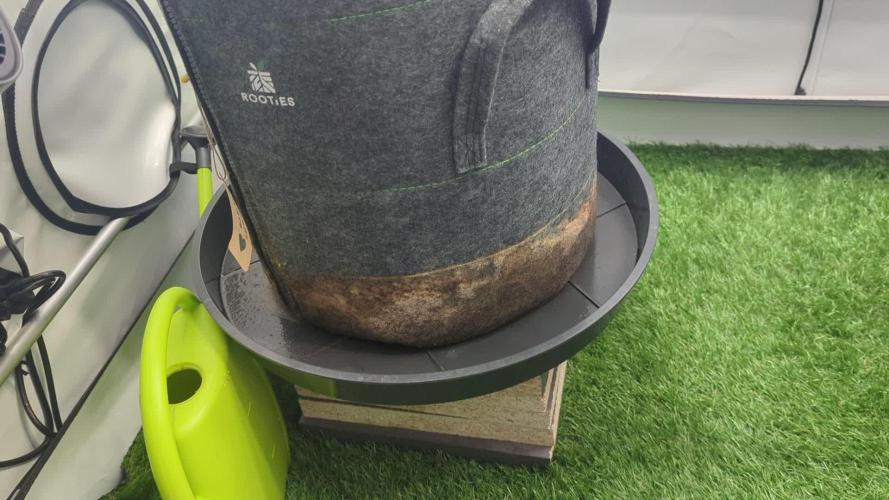
Saw a weee bit of the hints of nutrient burn on some of the leaves. The other day i tested pH and it rode up to 6.8 to 7.0 so i wanted to run a little extra water through and out the bottoms of the pots for a bit of a flush. I pH'd the water to 6.00 exactly with about 900 ppm mix in each bucket. I ran 5 Liters through each 3 gallon fabric pot and allowed 5 minutes or so for drainage. Then put them back in their saucers and back in the tent. I jammed a bamboo stake down into the roots ripping and tearing roots apart as i go muuahahahahaha! They gonna be chunky fuckers in a few weeks they'll need the support.
Next watering, Thursday. Perhaps a 650ppm mix then. I'll check pH tomorrow and the fuckers better be back down where i want them! OR ELSE! lol
Seeyaz next week!
Growing weed is easy. Only dimwits make it complicated.

Likes
6
Share
@TrapnTrade
Follow
Week 4 these babies went straight into 12/12 lighting, then a longer veg period hence the smaller size as im running an experiment on different lighting techniques with 12/12 start to now 16/8 veg/flower back then ill go down to 12/12 flower/flush just to see how the plants react and grow in size with a much smaller growing time frame of 8-10 weeks start to finish autoz

Likes
37
Share
@DogDoctorOfficial
Follow
🌱 Week 2: Mutant Magic in Full Swing! 🌱
Hey Grow Fam! Another week, another step forward in the adventure with these Mentha de Croco beauties. Week 2 has been nothing short of fascinating—the variety in leaf shapes is absolutely mesmerizing. These tiny mutants are already showing their unique personality, and I’m loving every second of watching them grow! 🌿✨
Tent Conditions: Consistency is Key
The setup remains the same as last week, keeping these little ones in the perfect environment to thrive:
• Temperature: Stable, warm conditions for steady growth.
• Humidity: Maintaining high RH ensures they’re still enjoying tropical vibes as their root systems develop.
• Lighting: The Future of Grow (FOG) LED at 200 PPFD continues to deliver just the right amount of light to keep the plants growing compact and strong.
Nutrition: Introducing the Organic-Mineral Boost 🌿
This week, I started feeding the plants with the incredible Aptus Holland organic-mineral line. It’s been a game-changer, and here’s why I love it:
What’s Organic-Mineral Nutrition?
• Combines the benefits of organic matter (microbial health and soil vitality) with the efficiency of mineral nutrients (direct uptake by plants).
• Supports balanced, steady growth while boosting plant resilience.
This Week’s Feeding Schedule:
• Regulator (0.15 ml/L): A silica-based product that strengthens plant structure and helps regulate stress, ensuring the plants stay strong and sturdy.
• CalMag Boost (0.25 ml/L): Calcium and magnesium are essential for cell wall development and chlorophyll production, supporting lush, vibrant growth.
• All-in-One Liquid (1 ml/L): A comprehensive blend that delivers all the essential nutrients in one easy feed, perfect for these little mutants finding their stride.
• Start Booster (0.25 ml/L): Packed with root-stimulating microbes and nutrients, this product ensures strong root development and prepares the plants for explosive growth in the coming weeks.
Why Aptus?
I’ve been a huge fan of Aptus Holland because their line truly focuses on building strong, healthy plants from the ground up. The results speak for themselves—happy plants, explosive growth, and vibrant health at every stage. true believer here and way before being sponsored by them .
Mutant Leaf Love: Celebrating the Unique 🌿
The highlight of this week has to be the unique leaf patterns these plants are developing. Each one seems to have its own story to tell—serrated edges, funky symmetry, and a whole spectrum of textures. They’re tiny but mighty, and it’s so exciting to see the potential of these genetics from Terpyz Mutant Genetics come to life.
Mutants always bring surprises, and it’s a beautiful reminder that diversity is what makes this journey so rewarding.
Reflections & Tips for Fellow Growers 💡
💚 Feed Lightly, Grow Strong: For young plants, keep your feed gentle to avoid overloading them. Start slow and adjust as they grow.
🌱 Celebrate Differences: Each plant will grow at its own pace, and unique traits are part of the magic. Patience is key!
💧 Stay Consistent: The foundation you build in these early weeks sets the tone for the entire grow. Stable conditions = happy plants.
Shoutouts & Grower’s Love 💚
Big thank you to @Terpyz Genetics for these funky mutant seeds, @Aptus Holland for their stellar nutrition lineup, @Future of Grow for the lighting that keeps these beauties thriving, @Pro Mix Soil for the best one i have encountered so far and @Grow Diaries for being an amazing platform to share this journey.
And a HUGE shoutout to all of you—followers, growers, or just curious passersby! Your love, support, and shared passion for growing make this experience truly special.
Stay tuned for more mutant magic in Week 3. Let’s grow, let’s grow, let’s grow! 🌟
Genetics - Mentha De Croco
https://terpyz.eu/products/menta-de-croco-fern-type?_pos=1&_sid=e9237cbcb&_ss=r
DogDoctorOfficial Discount Codes @ terpyz.eu - DOCTOR 15% off
Nutrition - @aptusholland
https://aptus-holland.com/
Led Power @ F.O.G. Future Of Grow
https://www.thefuturofgrow.com/en/online-store/BLACK-SERIES-600-p489093171
Controls @ TrolMaster
https://www.trolmaster.eu/tent-x
As always thank you all for stopping by, for the love and for it all , this journey of mine wold just not be the same without you guys, the love and support is very much appreciloved and i fell honored with you all in my life
With true love comes happiness Always believe in your self and always do things expecting nothing and with an open heart , be a giver and the universe will give back to you in ways you could not even imagine so
Growers Love To you All 💚

Likes
29
Share
@nonick123
Follow
Dia de la cosecha (63) para Lemon Cherry Cookies Auto
Una mezcla de emociones entre la alegría de cosechar estos grandes cogollos y la "tristeza" de que ya no formará parte de mi jardín
Una increíble pieza genética desarrollada por @fastbuds_official , ejemplo de como el cutting-edge development de las Autoflower modernas nos puede dar una planta lista para ser cosechada en menos de 60 días (recogida a 63 días por el gusto personal de los tricomas más ámbar) con un perfil terpénico impresionante.
Ella ha desarrollado cogollos duros como piedras y con un olor que se mueve entre bol de frutas, cerezas en su punto justo de maduración y un toque de leche cremosa.
Una cepa que todo el mundo debería cultivar alguna vez en su vida, y que sigue elevando a @fastbuds_official al olimpo de los breeders modernos de autoflorecientes.
Gracias por esta oportunidad de cultivarla FastBuds!
💦Nutrients by Aptus Holland - www.aptus-holland.com
🌱Substrate PRO-MIX HP BACILLUS + MYCORRHIZAE - www.pthorticulture.com/en/products/pro-mix-hp-biostimulant-plus-mycorrhizae
Likes
2
Share
@ChiTaN
Follow
The girls are starting to swell beautifully, theyve become very gluttonous.The starving girl among the girls is Wedding Cake from panpestka.pl.Were slowly approaching the end.


Likes
6
Share
@Growbody
Follow
Tag 88: Die Epsilon F1 Automatic von Royal Queen Seeds hat den besten Zeitpunkt zur Ernte erreicht. Blütetag in der Erntezeit. Das verspricht den höchsten Ölgehalt und damit die höchstmögliche Aromaausbeute. Die Buds sind klebrig und sehr hart. Ich versuche die Schöne langsam zu trocknen, ich schalte nur abends für ein paar Stunden den Venti an. Das Nassgewicht ist mit einer Küchenwaage gemessen und nur grob über den Daumen ernst zu nehmen. Schliesslich zählt das Trockene. 🥦 😀


Likes
11
Share
@TerpyTears
Follow
Hello again 😊✌️💚
The Fat Monkey Auto draws the last nitrogen from the leaves and think another 10-14 then a nice bud structure should develop. It smells spicy and creamy with a touch of fruit. I'm happy for an automatic under a 150 watt lamp 🤪✌️💚
Thanks for your time and see you next time 💚
For more just like and follow 😊👍


Likes
5
Share
@SgtDoofy
Follow
April 2
LST is really working well. Letting the plant fully sacrifice the yellow leaves before I pull them off. Fed a half gallon of RAW BLOOM yesterday and a full gallon 2 days prior.

Likes
12
Share
@OldskoolHed
Follow
Doing well and thickening up, started flush process as she is maturing fast.


Likes
2
Share
@EtnoGrow
Follow
everything is going very well, the girls have developed, we have found a hermaphrodite, what a surprise my colleague got when he found one with eggs, what a scare! I saw a video of a Mexican whose technique consists of breaking the male balls and letting the flower clean and do it every day as soon as new shoots come out, there comes a time when they no longer grow and only the female hairs follow, I will see that That's how it goes, if I can, when I visit the indoor, a photo of the hermaphrodite will be taken, only one of the girls, I don't know if she got stressed or what happened, the others continue to flower normally, big beautiful females, I'm amazed, how many showed my first crop, I see it great what do you think friends
Likes
12
Share
@Skunkiest_bender39
Follow
Haben das Training gut angekommen phasenweise wollte ich aus zeitmangel zu viel und einige arme sind gerissen oder gebrochen… bis jetzt kaum spürbar bin gespannt wie es weiter geht. Brauchen sehr lange mit dem Übergang in die Blüte. Mehr als Härchen noch nicht zu sehen. Dennoch viel Potential in Sicht.🐝
Likes
28
Share
@gottagrowsometime
Follow
Welcome to my Green House Seed cross Diary. This strain is unreleased to public as of yet.
Skipping a few weeks, I was planning to just update. But, I've been hit with hermies on 1/3rd of my plant sadly. I didn't catch a lot of them quick enough and their sacs exploded.. I removed as much growth away from her as I could.
Wk 7. Steady growth. Loving her bigger pot. And she started picking up rapid growth. 40-45cm. (No signs of distress or toxs/def).
Wk 8.. plant has flipped finally and has came into full on pre flower. She looked fine. I checked her, but clearly not Well enough
(No toxs or defs along this week)
Wk9. Found a few male pollen sacs and nanners. Isolated as much as I could and put in corner. Was away for a week or so, And came back to fully open pollen sacs, so, all lower part of plant was riddled with sacs. I really didn't want to lose her all. So, I removed the top 1st 2 nodes. And tried documentated as much as I could. All plants looks fine. Have her confined aa much as I can. I stripped everything around the sacs and everything below them is gone now.
Seemed to be. Coming into wk 10. Will save that weeks update after I get her through this week. And let's see if she's still standing. Hoping I can save her.
Her sister looks fine. But, this plant was so much better. Had lovely big fat colas, or what would have been. I'm gonna do everything I can to try and save as much as possibleGrrrrrrrrr.
I cut everything away with a Stanley blade. (Using gloves) and h202 6% 1-5 ratio mix h202/water. And sprayed and wiped it all down. Just need to watch her now..
Thanks to my sponsors, (reps) from marshydro led lights/tents& Green House Seeds.
COUPON FOR MARSHYDRO
Use code 'ggs', at any official marshydro site for a discount.

Likes
17
Share
@hachiko
Follow
Buds are looking great, still no signs of bud rot :)
I've been trying to keep humidity under control but every time I water, next night will reach 67-68%. I took a couple of measures but would have been simpler to get a dehumidifier
good thing is that I left lot of space between colas for airflow (I had bud rot in that area last time).
I'm allowing the plants to get dry and humidity to come close to 40% before watering again.
This will be the last week of fertilizers any way. Will add some ripen maybe 1 or 2 times during the week and then just plain water.
Processing
Likes
13
Share
@DudeGrowsWeed
Follow
White Widow week 2. Showing some nice growth so far. Once she starts putting out a few nodes I think I am going to give here a 90 degree LST bend - that seemed to work GREAT with my Mexican Airlines (the colas from the lower branches were huge). 👍

Likes
44
Share
@Terp1
Follow
07.02.2026
Trichome 10% klar / 80% milchig / 10% Bernstein
Yippie 👋 das Erntefenster ist erreicht. Ich werde die beiden in den nächsten 3-5 Tagen wahrscheinlich ernten. Sie haben das bis hierhin großartig gemacht. Das war ein astreiner Grow. 💪
Die Terpene der Papayton sind wild. Frucht, süß, zitronig sauer, Orangensaft, etwas Gas und Keks.
Biscotti Gelato legt auch langsam nach. Sie riecht lecker nach Erde, Gas und Teig. Geht aber neben der Papayton deutlich unter.
Terp 👽
Likes
16
Share
@MadeInGermany
Follow
Flowering day 34
since time change
to 12/12 h.
Hey guys :-)
The buds have developed incredibly nicely this week.
The smell is getting more and more extreme :-) .
The growth has slowly stopped as the full energy goes into the production of the buds.
Watering was done twice this week, each time with 1.2 l (nutrients see table above)
They were individually inspected and checked for their health.
Osmosis water for the coming week was refilled in a 100 l tank 👍.
Have fun reading the diary and stay healthy 💚🙏🏻
👇🏼👇🏼👇🏼👇🏼👇🏼👇🏼👇🏼👇🏼👇🏼👇🏼👇🏼👇🏼
You can buy this Nutrients at :
https://greenbuzzliquids.com/en/shop/
With the discount code: Made_in_Germany you get a discount of 15% on all products from an order value of 100 euros.
👇🏼👇🏼👇🏼👇🏼👇🏼👇🏼👇🏼👇🏼👇🏼👇🏼👇🏼👇🏼
You can buy this strain at :
https://www.ripperseeds.com/en/feminized/kmintz-feminized-cannabis-seeds
Water 💧 💧💧
Osmosis water mixed with normal water (24 hours stale that the chlorine evaporates) to 0.2 EC. Add Cal / Mag to 0.4 Ec Ph with Organic Ph - to 5.8 - 6.5
MadeInGermany

Likes
13
Share
@madlangs
Follow
All going well and some are fading fast now. Probably about 2 weeks left for most of them


Likes
12
Share
@555ABKY555
Follow
I have a low consume of electricity today i change the light upped 50 watt the next week i started to fertilized. More auto of Dutch passion have more weeks to live for this in this time i prefer dont use any fertilized. I dont have idea the cbdv are strong plant for this i think wait to fiammingo the plant in the future in this time IS very early mi waiting... Next week bye