The Grow Awards 2026 🏆
Likes
Comments
Share
♪⁠~⁠(⁠´⁠ε⁠`⁠ ⁠)(⁠^⁠3⁠^⁠♪┌⁠(⁠・⁠。⁠・⁠)⁠┘⁠♪♪⁠ヽ⁠(⁠・⁠ˇ⁠∀⁠ˇ⁠・⁠ゞ⁠)⁽⁠⁽⁠◝⁠(⁠ ⁠•⁠௰⁠•⁠ ⁠)⁠◜⁠⁾⁠⁾₍⁠₍⁠◞⁠(⁠ ⁠•⁠௰⁠•⁠ ⁠)⁠◟⁠₎⁠₎└⁠|⁠∵⁠|⁠┐⁠♪₍⁠₍⁠ ⁠◝⁠(⁠ ゚⁠∀⁠ ゚⁠ ⁠)⁠◟⁠ ⁠⁾⁠⁾
Processing
Likes
12
Share
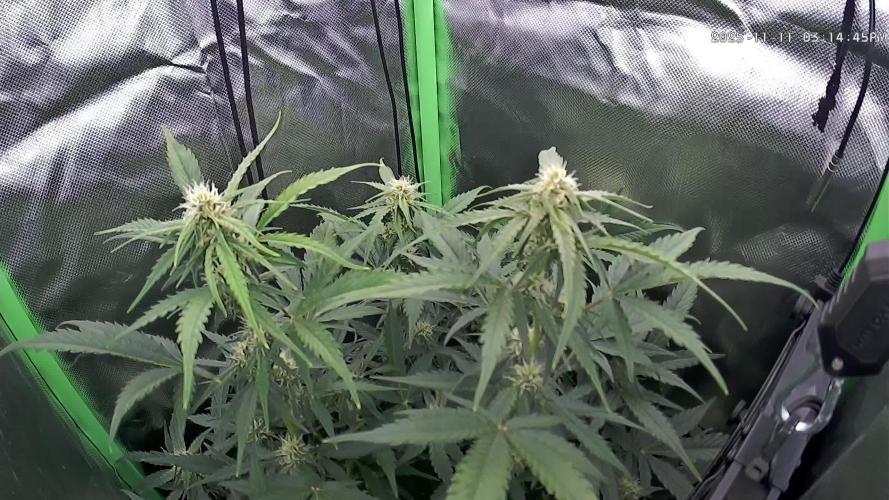
I’m not sure what I have done on theses girls but they defo seem a little Under the weather this week . I feed them at start of the week but only been water from it . Despite whatever I have done the girls are stil growing and showing plenty of budding sights
Likes
21
Share
@MG2009
Follow
01/27/2021 Flowering going well Flowering #2,#3,#6 #6 is a week ahead of#2,#3 will put others in on week 4 for a staggered harvesting 01/30/2022 watered with fungal tea and some aloe mixed in for amino acids and other goodness. Well see how she progresses in 4 days Also working on some banana peel tea to give a boost of potassium if I do next week it should be available for week 6-7. Ps. Fuzzy Mellon (bag seed male) I will pollinate one lucky branch on #6 as she is my favorite. But number 3(tall and lanky one) will get pollination of one branch as well. I can't wait to see how they recombine with fuzzy melon smell mixed with burnt rubber and model glue and pine. #2 no pollination (smaller one) #5 (bonsai) and #8 are males. So 3 female out of 8 seeds. Going to make some feminized seeds next time,so I'll have plenty of female's for a staggard harvest.
Likes
12
Share
Week four after flipping to 12/12 still no signs of anything maybe it’s liking the cycle as a way of managing roots in the small pot still not using a crazy amount of nutes only Time will tell
Likes
4
Share
@GrowerOG
Follow
the harvest is every time an hard work, i do trimming when buds are wet, all buds are so much sticky. So i make those dry without the banches. i'll waiting 10 days for the bigger ones
Likes
48
Share
@DreamIT
Follow
🧙‍♂️🍁BUBBA HAZE BY REGULAR SEEDS 🍁🧙‍♂️ 🧙‍♂️ 19.3 Father's day in my part, so a couple of photos of Bubba Haze's dad. Greetings to all dads in general 🤘 🧙‍♂️ 20.3 ... 🧙‍♂️ 21.3 ... 🧙‍♂️ 22.3 ... 🧙‍♂️ 23.3 ... 🧙‍♂️ 24.3 The male is blooming and has begun to open the sacs. The female, on the other hand, stopped growing in height (finally, I was afraid that she would come to pierce the box 😆) 🧙‍♂️ 25.3 ___________________________________________________________ 😮 What ???? New to Regular Seeds? Take a look at their site, you won't regret it !! http://bit.ly/REGULARSEEDS ________________________________________________________________ 📜 A look at the details of what I'm growing 📜 🧙‍♂️🍁Bubba Haze 🍁🧙‍♂️ ⚧ Gender ▪️ Regular ➰ Genes ▪️ 75% Indica / 25% Sativa 🎄 Genetics ▪️ Bubba Kush x Jack Herer x Cannalope Haze 🚜Harvest ▪️ 550 g/m² 🌷Flowering ▪️ 8 weeks ✨THC ▪️ Very High ✅CBD ▪️ 1.0% 🏡Room Type ▪️ Indoor 🌄Room Type ▪️ Outdoor 🕋Room Type ▪️ Greenhouse __________________________________________________________________________ 📷🥇 Follow the best photos on Instagram 🥇📷 https://www.instagram.com/dreamit420/ 🔻🔻Leave a comment with your opinions if you pass by here🔻🔻 🤟🤗💚Thanks and Enjoy growth 💚🤗🤟
Likes
10
Share
Thatns not the speedest start of grow i've ever Seen, plant growing well but they are very slow, in first Time i've would tobdo a mainlining but maybe it's notnthe best Idea for them
Likes
41
Share
@Reyden
Follow
Le FF di @Fast_Buds sono velocissime!!! In una settimana sono cresciute molto più delle normali Autofiorenti, ieri ho effettuato il travaso finale nei vasi in tessuto da 11L con tutta la miscela Dogma Super Soil e da ora in avanti only water 💦 vediamo come si sviluppano prossimamente! Le macchie bianche sulle foglie sono macchie di Zeolite Pure 10 micrometri sempre di Dogma Organics!
Likes
18
Share
Green light is radiation with wavelengths between 520 and 560 nm and it affects photosynthesis, plant height, and flowering. Plants reflect green light and this is why they appear green to our eyes. As a result, some growers think that plants don’t use green wavelengths, but they actually do! In fact, only around 5 – 10% of green light is reflected from leaves and the rest (90 – 95 %) is absorbed or transmitted to lower leaves [1]. Green wavelengths get used in photosynthesis. Chlorophyll pigments absorb small amounts of green wavelengths. Light that doesn’t get absorbed is transmitted to leaves that are shaded out from direct light. This means that leaves at the bottom of the canopy get more green light than leaves at the top. A high proportion of green wavelengths compared to other colors tells lower leaves that they are being shaded out, so they are able to react accordingly. Lower leaves may react by opening or closing their stomata or growing longer stems that help the leaves reach brighter light [1, 2, 3]. When it comes to growing cannabis, many cultivators are interested in the quality of light used for the flowering stage. In many plants, flowering is regulated by two main photoreceptors: cryptochrome and phytochrome. Both photoreceptors primarily respond to blue light but can also respond to green, although to a lesser extent. Green can accelerate the start of flowering in several species (although cannabis has yet to be tested) [1, 4, 5]. However, once flowering has begun, it’s important to provide plants with a “full spectrum” light that has high amounts of blue and red light, and moderate amounts of green, in order for photosynthesis to be optimized. Green light mediates seed germination in some species. Seeds use green wavelengths to decide whether the environment is good for germination. Shade environments are enriched in green relative to red and blue light, so a plant can tell if it is shady or sunny. A seed that senses a shaded environment may stay dormant to avoid poor growing conditions [1]. Some examples of plant species where researchers have documented this response are: ryegrass (a grass that grows in tufts) and Chondrilla (a plant related to dandelion) [1, 6]. Although green wavelengths generally tell plants NOT to germinate, there are some exceptions! Surprisingly, green wavelengths can stimulate seed germination in some species like Aeschynomene, Tephrosia, Solidago, Cyrtopodium, and Atriplex [1, 6, 7]. Of course, light is not the only factor affecting seed germination – it’s a combination of many factors, such as soil moisture, soil type, temperature, photoperiod, and light quality. When combined with red and blue light, green can really enhance plant growth [1, 8]. However, too much green light (more than 50% of the total light) can actually reduce plant growth [8]. Based on the most current research, the ideal ratio of green, red, and blue light is thought to be around 1:2:1 for green:blue:red [9]. When choosing a horticultural light, choose one that has high amounts of blue and red light and moderate amounts of green and other colors of light. Not many studies can be found about the effect of green light on cannabis growth or metabolism. However, if one reads carefully, there are clues and data available even from the very early papers. Mahlberg and Hemphill (1983) used colored filters in their study to alter the sunlight spectrum and study green light among others. They concluded that the green filter, which makes the environment green by cutting other wavelengths out, reduced the THC concentration significantly compared to the daylight control treatment. It has been demonstrated that green color can reduce secondary metabolite activity with other species as well. For example, the addition of green to a light spectrum decreases anthocyanin concentration in lettuce (Zhang and Folta 2012). If green light only reverses the biosynthesis of some secondary metabolites, then why put green light into a growth spectrum at all? Well, there are a couple of good reasons. One is that green penetrates leaf layers effectively. Conversely red and blue light is almost completely absorbed by the first leaf layer. Green travels through the first, second, and even third layers effectively (Figure 2). Lower leaf layers can utilize green light in photosynthesis and therefore produce yields as well. Even though a green light-specific photoreceptor has not yet been found, it is known that green light has effects independent from the cryptochrome but then again, also cryptochrome-dependent ones, just like blue light. It is known that green light in low light intensity conditions can enhance far red stimulating secondary metabolite production in microgreens and then again, counteracts the production of these compounds in high-intensity light conditions (Kim et al. 2004). In many cases, green light promoted physiological changes in plants that are opposite to the actions of blue light. In the study by Kim et al. blue light-induced anthocyanin accumulation was inhibited by green light. In another study it has been found that blue light promotes stomatal opening whereas green light promotes stomatal closure (Frechilla et al. 2000). Blue light inhibits the early stem elongation in the seedling stage whereas green light promotes it (Folta 2004). Also, blue light results in flowering induction, and green light inhibits it (Banerjee et al., 2007). As you can see, green light works very closely with blue light, and therefore not only the amount of these two wavelengths separately is important but also the ratio (Blue: Green) between these two in the designed spectrum. Furthermore, green light has been found to affect the elongation of petioles and upward leaf reorientation with the model plant Arabidopsis thaliana both of which are a sign of shade avoidance symptoms (Zhang et al. 2011) and also gene expression in the same plant (Dhingra et al. 2006). As mentioned before, green light produces shade avoidance symptoms which are quite intuitive if you consider the natural conditions where the plants grow. Not all the green light is reflected from the highest canopy leaves in nature but a lot of it (50-90%) has been estimated to penetrate the upper leaves at the plant level ((Terashima et al., 2009; Nishio, 2000). For the plant growing in the understory of the forest green light is a signal for the plant of being in the shade of a bigger plant. Then again, the plants growing under unobstructed sunlight can take advantage of the green photons that can more easily penetrate the upper leaves than the red and blue photons. From the photosynthetic pigments in higher plants, chlorophyll is crucial for plant growth. Dissolved chlorophyll and absorb maximally in the red (λ600–700 nm) and blue (λ400–500 nm) regions of the spectrum and not as easily in the green (λ500–600 nm) regions. Up to 80% of all green light is thought to be transmitted through the chloroplast (Terashima et al., 2009) and this allows more green photons to pass deeper into the leaf mesophyll layer than red and blue photons. When the green light is scattered in the vertical leaf profile its journey is lengthened and therefore photons have a higher chance of hitting and being absorbed by chloroplasts on their passage through the leaf to the lower leaves of the plant. Photons of PPFD (photosynthetic photon flux density) are captured by chlorophyll causing an excitation of an electron to enter a higher energy state in which the energy is immediately passed on to the neighboring chlorophyll molecule by resonance transfer or released to the electron transport chain (PSII and PSI). Despite the low extinction coefficient of chlorophyll in the green 500–600 nm region it needs to be noted that the absorbance can be significant if the pigment (chlorophyll) concentration in the leaf is high enough. The research available clearly shows that plants use green wavelengths to promote higher biomass and yield (photosynthetic activity), and that it is a crucial signal for long-term developmental and short-term dynamic acclimation (Blue:Green ratio) to the environment. It should not be dismissed but studied more because it brings more opportunities to control plant gene expression and physiology in plant production. REFERENCES Banerjee R., Schleicher E., Meier S. Viana R. M., Pokorny R., Ahmad M., Bittl R., Batschauer. 2007. The signaling state of Arabidopsis cryptochrome 2 contains flavin semiquinone. The Journal of Biological Chemistry 282, 14916–14922. Dhingra, A., Bies, D. H., Lehner, K. R., and Folta, K. M. 2006. Green light adjusts the plastic transcriptome during early photomorphogenic development. Plant Physiol. 142, 1256-1266. Folta, K. M. 2004. Green light stimulates early stem elongation, antagonizing light-mediated growth inhibition. Plant Physiol. 135, 1407-1416. Frechilla, S., Talbott, L. D., Bogomolmi, R. A., and Zeiger, E. 2000. Reversal of blue light -stimulated stomatal opening by green light. Plant Cell Physiol. 41, 171-176. Kim, H.H., Goins, G. D., Wheeler, R. M., and Sager, J. C. 2004.Green-light supplementation for enhanced lettuce growth under red- and blue-light emitting diodes. HortScience 39, 1617-1622. Nishio, J.N. 2000. Why are higher plants green? Evolution of the higher plant photosynthetic pigment complement. Plant Cell and Environment 23, 539–548. Terashima I., Fujita T., Inoue T., Chow W.S., Oguchi R. 2009. Green light drives leaf photosynthesis more efficiently than red light in strong white light: revisiting the enigmatic question of why leaves are green. Plant & Cell Physiology 50, 684–697. Zhang, T., Maruhnich, S. A., and Folta, K. M. 2011. Green light induces shade avoidance symptoms. Plant Physiol. 157, 1528-156. Wang, Y. & Folta, K. M. Contributions of green light to plant growth and development. Am. J. Bot. 100, 70–78 (2013). Zhang, T. & Folta, K. M. Green light signaling and adaptive response. Plant Signal. Behav. 7, 75–78 (2012). Johkan, M. et al. Blue light-emitting diode light irradiation of seedlings improves seedling quality and growth after transplanting in red leaf lettuce. HortScience 45, 1809–1814 (2010). Kasajima, S., et al. Effect of Light Quality on Developmental Rate of Wheat under Continuous Light at a Constant Temperature. Plant Prod. Sci. 10, 286–291 (2007). Banerjee, R. et al. The signaling state of Arabidopsis cryptochrome 2 contains flavin semiquinone. J. Biol. Chem. 282, 14916–14922 (2007). Goggin, D. E. & Steadman, K. J. Blue and green are frequently seen: responses of seeds to short- and mid-wavelength light. Seed Sci. Res. 22, 27–35 (2012). Mandák, B. & Pyšek, P. The effects of light quality, nitrate concentration and presence of bracteoles on germination of different fruit types in the heterocarpous Atriplex sagittata. J. Ecol. 89, 149–158 (2001). Darko, E. et al. Photosynthesis under artificial light: the shift in primary and secondary metabolism. Philos. Trans. R. Soc. B Biol. Sci. 369 (2014). Lu, N. et al. Effects of Supplemental Lighting with Light-Emitting Diodes (LEDs) on Tomato Yield and Quality of Single-Truss Tomato Plants Grown at High Planting Density. Environ. Control Biol. 50, 63–74 (2012).
Likes
29
Share
@Oyziphar
Follow
Plants become very sticky and fragrant🍯😊👌 It's wonderful to see how the ovary of the flowers begins to swell and will soon form beautiful, heavy buds 😍
Likes
2
Share
@iwasbenji
Follow
Está resinando bem nessa 4° semana, vamos pra cima! Dia 30 de novembro tá marcada a colheita!
Likes
60
Share
@Roberts
Follow
Been a struggle since go with too much moisture. had to transplant to a hydro soil. Plus started using smart bags. Hopefully my issues are resolved and she grows to a pretty little plant. I imagine I have stunned it pretty badly. Still alive though. Thanks again for likes and follows.
Likes
16
Share
@Mrg7667
Follow
About day 38 i am just realizing that i am stupid and been feeding the biogrow for cocoa coir 🤦‍♂️ way iver nuting with soil it says never to go over 1ml/L So i will be flushing for at least 1 or two waterings. Looking for the tip burn to stop spreading and the tips to not look like there clawing
Likes
2
Share
Week 3 and a repot is done and now in day 3. Finally it’s settling down after the repot, which was not pretty at all😂 Hope to get some massive plants this run 🌱 ________________________________________________________________________________________ Light from @MedicGrowLED 😎 NEO 780 LED🔥 780 Watt⚡️💥 PPF of 2184 μmol/s & 2.8 μmol/J🔥 Full Spectrum V1/F1 🌈 WiFi smart connection & Smart Aura Control 😱
Likes
12
Share
Woche 4 ist jetzt ungefähr durch. Die Pflanzen haben weiterhin unglaublich gestretcht. Ich habe mittlerweile hinten 2 Stränge leicht runter gebunden damit die Lichtverteilung gleichmäßiger ist. Da ich die Lampe ungern noch höher hängen möchte. Aktuell gieße ich etwa alle 3-4 Tage , 30 Liter Regenwasser , nach dem Standart Düngeplan von Hesi. Ich habe keine Probleme mit Nährstoffbrand . Die 30 Liter werden im Normfallfall schon über nacht aus dem Becken weggesaugt. Ich hab bis jetzt keine Probleme mit Wurzelfäule und die Pflanzen wachsen wie bekloppt dementsprechend werde ich so weiter machen. Im video kann man unten rechts meinen großen Ventilator sehen , die Pflanze die direkt bei diesem steht ist durch den Wind so gestresst, dass sie leider nicht so gestretcht ist wie der rest. Naja ich brauch diese starke Belüftung, dementsprechend nur die harten kommn in Garten 😂
Likes
10
Share
@WorldPeas
Follow
Been a struggle keeping temperatures down and had a driver failure on my lights so was only running at 50% for a day. Running under a 600W Lush Pro COB LED with a heavy blurple spectrum. All in all the week progressed well; buds have started to fatten up nicely with frosting throughout. Cut nutrient strength in half but kept cycos recommended ratios. My EC meter malfunctioned so im kinda flying blind in that regard.
Likes
3
Share
@Rodburn
Follow
Good week, Cm smells like grape drink, delicious
Likes
26
Share
Little summary of the last 2-3 weeks of Flower. Total off 70 days of 12/12 light cycle and 48H darkness.
Processing
Likes
51
Share
Looking like i have a magnesium deficiency as show in the leaf pic. I'm Gonna increase the cal-mag. Day 37 : Pots were dry so fed 2.5 liners to the 5 gallon pot and 1.5 liters to the 3 gallon. Upped the cal-mag. Introduced Big Bud & PK Boost