The Grow Awards 2026 🏆 












Likes
Comments
Share
@Alpha_Green
Follow
Some of you may have wondered:
Why do I use CO2 at average 950 ppfd μmol/m2/s (moral flow)?
The answer is quite simple. Because of lack of space in some regions of my cultivation area, I simply cannot keep the ideal distance to my Sanlight high-performance lamp, due to some height growth of various strains. And so some of the main colas have ppfd values of 1250 μmol/m2/s and even more...
So this is how I manage to achieve and compensate for such high radiation levels even with a CO 2 balance. And I have to say, my strategy to avoid various light stress symptoms works just fabulously. In combination with CO 2 implementation, my babies are simply unbeatably insensitive to light. Thats it!
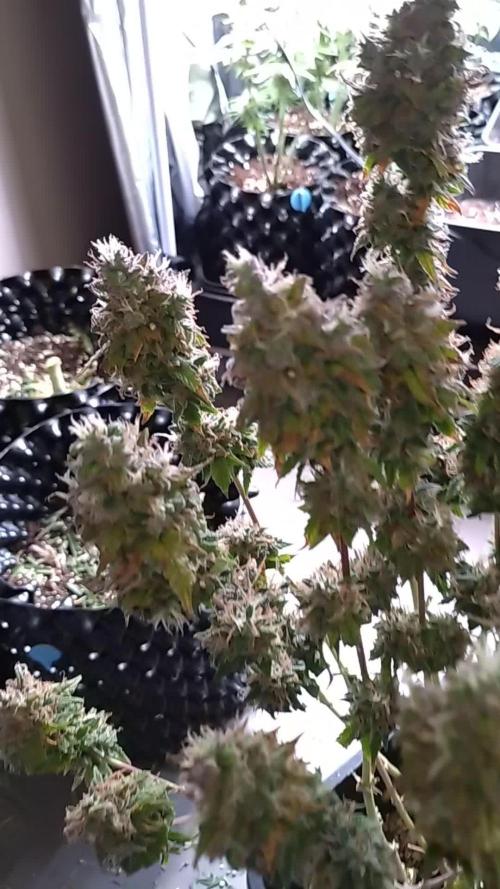
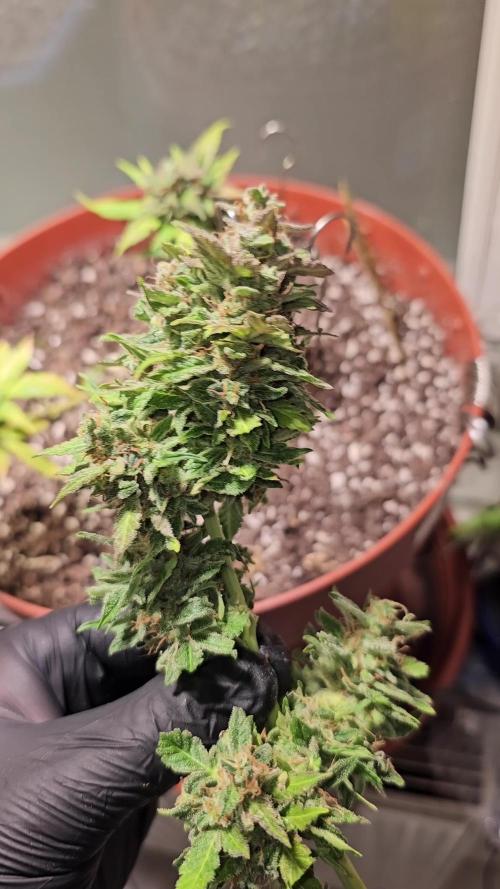
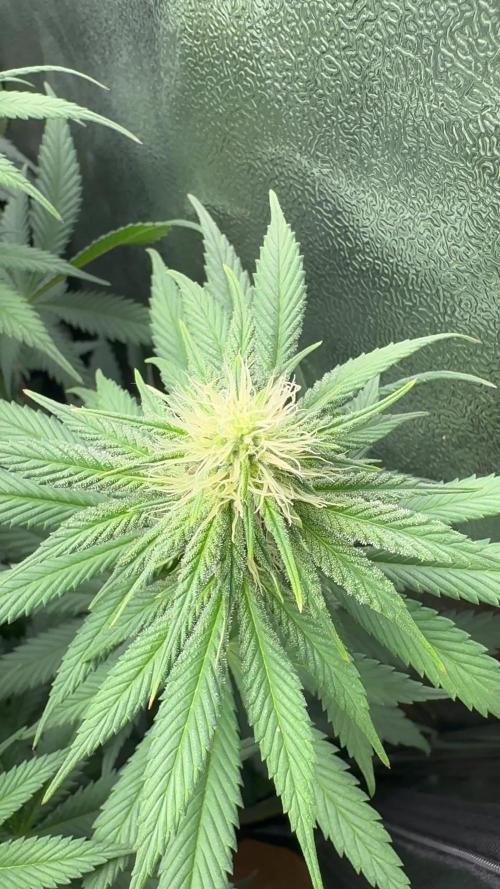
Beginning of 3rd week flowering:
Again feeding my babies by 36 hours fermented potions of Bio Tabs Kompost Tea PK-Booster (15 g pro Liter) and added:
5ml Orgatrex/Liter
1 Spoon of Bactrex
1 Spoon of Mycotrex
1 Spoon of Mycco-Vital
1 Spoon of Dynomyco
A little tip for those who are interested in small modifications that have a big difference or influence - on the result - effect - beauty - health - taste! Before adding microorganisms or beneficial bacteria or Mycorrizae and Trichodermas, please use oxygen-saturated water. On the one hand, unwanted chlorine gases evaporate and the small world of the microbiome becomes even faster and more rewarding in compost tea to sprout.
Last but not least for this week, I would like to introduce my reasons, why I prefer growing biologically and sustainably.
First of all, it’s something which suits very well in these times/days we are living now. Sustainability is a big need and task for our planet. 🌎 Nature means life. Our home, the air we breathe and everything that surrounds us. Not just today. Hopefully tomorrow as well.
Maybe I'm starting to protect our environment on a small scale, but maybe I can also make a big difference at all.
If you change the way you look at things, the things you look at change...
I thought about what’s the difference, between Mineral Feeding and Super Soil Feeding.
It’s very easy. Biologically Growing is a similar process than the natural soil activities out there in the lap of nature’s. So plants has to work and interact with the microorganisms and microbiomic communities in the soil. So the plants will never get lazy like the lazy ones of mineral feeding growers.
If you grow biologically, you will feed the soil first and the microorganisms will support every parameter next to your plant conditions. And that will generate an unbelievable spectrum of Terpenes and Trichomes you will never forget.
It’s the same comparison, when you daily visit McDonalds and you eat only fast food. How does your body and mind react on this shit for money?!?!
May I invite you to think about it…
See you next week dear Growmies! Have a nice Weekend and take care…
Peace out!
Addendum for Day 53:
At the moment we unfortunately have another winter onset here in Germany. This means that I am forced to take additional heating measures due to structural facts in order to be able to keep the temperatures constant. After all, just tonight the thermometer climbs again to -1 degree Celsius.
In addition, my exhaust air system runs out of my bedroom terrace and I therefore grow winter and summer with the patio door open. Well, sometimes I experience real weather-related challenges. But all in all, no problem...
"Where there's a will, there's a way."
Addendum to pouring out the fermented PK tea: I always administer half a liter of lukewarm aerated water with 3.5 ml of cannazyme per liter to each plant. This means that the "root machine" is not supplied with supplies unprepared and the nutrient solution can thus also be better distributed in the soil. Since I also work with cloth shoes, I spray them evenly moistened everywhere with water that is also warm before pouring them out from the outside. This has the advantage that the moisture stays where it should: in the pot!
... I did the math today ;-) We are still in week 7 until this Friday. And week 8 starts on Friday! OMG... still so much time yeahh!
Today my Fast Buds Sour Jealousy and Sweet Seeds Big Devil and Dark Devil Automatics arrived. I'm looking forward to it.
This time Fast Buds next Time Sweet Seeds. Love them too. Very beautiful genetics.
Today a review video of the beginning of week 3.
At the time of the pictures, I had minor signs of nitrogen excess. (Light peaks first at the crown of the roof and then slightly continuing to the middle section.) I then painstakingly racked my brains as to why this could be. I found that very slight dry spots had formed and therefore the root found small accumulations of nitrogen that caused its problems. But then, when I carefully homogeneously checked the moisture content in the substrate, the problem evaporated again. However, they had not shown any loss of growth rate during this time. Nevertheless, they developed as expected.
They Strawnanas had no problem with that.
In the end, I always have a hard time killing them. But I guess that's the way things go.
We live and die.
We come and go.
But it's not there yet. ;-)
Tomorrow is day 56.
Tomorrow’s updating day!
Can't wait to see their progress.
Have a good time and see you tomorrow… 🏽🕊️
🏽 ☮️🕊️


Likes
22
Share
@eldruida_lamota
Follow
De nuevo familia, vuelvo actualizar una semana más estas critical a granel que me regalaron en growbarato.
Las flores siguen echando pelos y formándose, mientras por otra parte va produciendo bien de resina.
Es una variedad que e cultivado ya muchas veces es algo que siempre tendrá un espacio en mi habitación.
.
La humedad esta al 45% la temperatura está entre 21/25 grados , y como siempre el ph , ya que es de lo más importante,está en 5,8/6,0.
.
AgroBeta:
1 ml x L Flowering black line , vía radicular.
0,2 ml x L Beta shark, vía radicular.
0.5 gr x L mega PK , vía radicular.
0,8 ml x L Terminator, vía radicular.
0,5 gr x L Engordacogollos, vía radicular.
0,3 ml x L Tucán , vía radicular.
0,1 ml x L Betazyme, vía radicular.
0,3 ml x L Tricoma, vía radicular.
0,05 ml x L Gold Joker, vía radicular.
0,2 ml x L Silver, vía radicular.
.
Hasta aquí todo familia 🕸️ , un saludo y buenos humos fumetillas💨💨💨.

Likes
7
Share
@MomNPopOp
Follow
After the shock of all gelatos showing male signs, we got our shit together and removed all balls !! Zkittlez is getting out of tent for her black period tomorrow, giving our bigger gelato more space !! We still have one week and a half before Zki2 leave the tent and let the girls ride !! The final 4-5 weeks will go mad !! Need to clean our hps bulb and cooltube.. Tangie will go to their space, cuz she didnt show balls, so less maintance.. cheers and dont give up on hermies.. maybe it was just a bad day !!
Temp dropped with a polar mass coming to our town, and water was freezing !! Light leaks were considered too, overwatering/feeding were disconsidered
LST and rearrengement will be done as soon as Zkittlez mature..


Likes
3
Share
@PhinolaGreen
Follow
Ich habe mich heute entschieden zu Ernten. Sie hängt jetzt zum Trocknen und stinkt typisch Runtz würde ich sagen 👍🏻

Processing
Likes
13
Share
@Jworjik
Follow
I saw some Thrips on the plant, i will be getting a pesticide for them, shouldn’t be causing a lot of problems other than a bit of “snail trail” and yellowing.
I watered a gallon with the above nutrients.
Water pH 6.5
Water runoff pH 6.3
I checked the ppm for the first time, water was 855 runoff was 1010, which means there is salt buildup around the roots, i will flush it next watering.
Buds are growing well, no issues with growth other than the yellowing of the leaves.
Likes
224
Share
@Hellishjam
Follow
Wow would I ever just love to put the hps in now and flip these, they just look so good! Everything is growing well and roots already bustin out of the bottoms of the pots these are going to look awesome in 2 weeks! I’ve knocked the lights down to 16 hrs as we’re gettin pretty close to going outside. There was a couple nice overcast day the ladies spent out on the deck for roughly 4hrs a day to prep them for the final transplant, for the most part were half way there before they get any training, not sure if I’m going to be topping or just super cropping I’ve got two week to figure it out I’d like to get a hight of at least 2 feet before hand. Anyways that’s it for now peace ✌️🏻

Likes
3
Share
@LandFarm420
Follow
Inizio delle fioritura aggiunti nutrienti nel terreno, e cambiato il dosaggio per una fioritura molto più abbondante e con cime molto più

Likes
5
Share
@pareto
Follow
The mold thing is really sad. We had a super wet and humid summer so I added a fan to my setup.
I let the branch with the seeds live to let them finish up.
-------------------------------------------------------------------------------------------------------------------------------------------------------------------------------
Set up cost (fixed costs)
-Lamp: 40€
-Timer: 3,5€
-Pot: 4€
-Total fixed costs: 47,5€
Given 5 years (or 15 grows) usage time translates to around 3,17€ per grow in materials.
Variable costs:
-Seeds: 3,17€
-Soil: 6€
-Fertilizer: 3,50€
-Power (100 days 18h/day): ~25,92€ (exact figure after harvest)
-Total variable costs: ~38,59€
-Total costs per grow: ~41,76€
Likes
13
Share
@DeepRootsGrowTrees
Follow
DIVINE OG KUSH / DIVINE SEEDS
WEEK #10 OVERALL
WEEK #9 VEG
This week she's still under LST training with the bud clips and I'm still topping her to control the height of the plant right now. She's doing great no issues with training or topping. Stay Growing!!!
Thank you for stopping by and taking a look it's much appreciated!!!
Thank you DIVINE SEEDS!!!
DIVINE OG KUSH / DIVINE SEEDS
BUDTRAINER.COM BUD CLIPS

Likes
1
Share
@GrowMoSapien
Follow
Male and female preflowers showed this week. I waited a few extra days just to make sure the balls on the male were indeed balls. I chopped the male but did keep the female and defoliated her and continued LST. I increased the tension on the plant ties, pulling them further to the sides so that the inner plant would be exposed, getting those nodes in the air and light. I removed about 10% of the leaves, started at the bottom then worked up to the upper canopy, only removing fan leaves that were blocking the light to nodes that need it. I began feeding some FF Big Bloom.

Likes
14
Share
@JonnyTerpen
Follow
Hey Freunde heute ein kleines Update, mittlerweile ist Blütetag 24 der stretch war wohl noch nicht ganz zu Ende und besonders die Papaya und die Pink Chai haben nochmal nen richtigen Schub gemacht. Heute hab ich mal doppelt soviel Wasser gegossen, da die unteren Blätter schon leicht vertrocknet waren und die Töpfe immer sehr leicht. Die Pink Chai bekommt minimal gelbe spitzen, aber is glaub zu vernachlässigen, verdacht war zuviel Licht. Sie hat danach auf jedenfall auf gehört die Blätter zum Licht zu strecken, also erstmal keine praying leaves mehr, heute Abstand verringert und sie Betet wieder. Freu mich über jede Rückmeldung und wünsch euch n schönes Wochenende! ✌️💚

Likes
34
Share


Likes
154
Share
@Tropicannibis_Todd
Follow
Well growmies ive been looking forward to the FastBud Tester 2311 , the more she went into flower the more the frost would build up , and that's when the terps came out 👉 Sweet , fruity 👈 Buds are tight and full of frost 👈 Couldn't of asked for better Genetics 😉
The smell coming from this girl during the entire grow was just dreamy 👈. Of course I have no clue to what she is but I like it......
Amazing Job FASTBUDS 👏 I would definitely recommend once they release this one 👍
👉 Big thanks to all my Growmies out there in GD land 👈 Much appreciated 🙏
Thanks To MarsHydro for the TS1000
👉I used NutriNPK for nutrients for my grows and welcome anyone to give them a try .👈
👉 www.nutrinpk.com 👈
NutriNPK Cal MAG 14-0-14👉 All Weeks
NutriNPK Grow 28-14-14👉 Weeks 2 & 3
NutriNPK Bloom 8-20-30👉 Weeks 4 to 8
NutriNPK Bloom Booster 0-52-34👉 Weeks 4 & 9 👌👌
Likes
22
Share
@Cauli
Follow
Okay, thank you so much @SmokingTiki for donating me his first price of the fast buds TikTok challenge. And thank you Heather from @Fast_Buds for the super fast coordination and shipping.
You both rock and I really appreciate this – it's just amazing 💚
Will start Germination tomorrow.
UPDATE April 29th:
Put the seeds directly in substrate on April 26th, three days later they already put her heads out of earth.
It was a sunny day and it's just perfect for little Guava. Welcome little girl! 💚
Likes
10
Share
@CanadianFillmore
Follow
End of week 9 flush week, cut the blueberry ladies and put them in the mesh drying rack. Will update in 2 weeks with first smoke and dry weight, assuming she's dry in 2 weeks.
Flush week for the Super Lemon Haze, she'll get chopped this coming Sunday.

Likes
55
Share
@Organic_LarF
Follow
High GD community,
Week 11,
Had some heatwave for 2 days last week, followed by a much colder climate full of rain and clouds. The compost tea did a great job, and the rootsystems are fully operational. Had lots of waterdrips hanging from the tomato leaves, and i wasnt quit sure how to interpret it. But its a very good sign, roots taking so much moist, leaves let the leftovers go, in this case very much. The greenhouse is doing fine and im learning how to manage heat and airflow.
Pics of the peach show the enemy in its most visible way. I gave the tree a few treathments with milk/AM mix sprayed, compost tea sprayed and also 10 liter at the base of the tree to support its imunesystem. Last year, almost no leaves was left anymore by now, so im in a battle to the disease, 👍.
Theres only 1 peach, but guys, honestly, every peach is worth fighting for. 🤭🤭🤭
Pears and apples are doing fine. Theyve also enjoyed treatment of the peach, just to boost them up, so fruits get sweet and big.
I got a nice amount of different looking poppies in my garden, tiny differences, some bigger.
Im also very proud about my 8m² of wildflowers, they are always in company of the bees and other insects. I love this place.
Raspberries, strawberries, fresh chocolat chip mint and fresh strawberry mint for the taking!!!
Olivetree is in full bloom and smells amazing. The figstree a sculpted into a big natural parasol true the years, to sit under on those hot days. Its starts to produce again 2.
Curryherb, oregano, laurier and anis are growing out big this year.
The mini greenhouse of my son is starting to grow out fine, probably installing a second one to replant all of those seedlings.
Theres some pics of some plants 2, almost flowering canna, etc.
All plants have benifitted from that compost tea. Every single one of them got there portion. 🙏🙏🙏
Thats it for this week boys and girls,
Thanks for reading and passing by and 💚💚💚👏👏👏👍👍👍 for Marshydro leds. Quality/price top!
Grow safe buds and feel free to check out my other ladies doing fine thanks!
🙏🌿🌿🌿🙏
Weedseedsexpress!!!! 👏👏👏
LarfxWSE for discount at weedseedsexpress!!! 15% off!!!
Zamnesia!!! 👽👽👽
Add OrganicLarF as a code when buying your own MarsHydro LED light and get a nice reduction!!!👽🚀🛸
Likes
7
Share
@HardNuggGrow
Follow
I haven’t tried smoking it yet but from the look and smell I feel like she will be sticky and tasty once it’s dried and cured. I will come back with the actual taste, and effect once she is fully cured.

Likes
2
Share
@loomerlope
Follow
Did some lollipoping this week, but not much. Buds start to get bigger, all looking and smelling good, stretch is over. DLI was increased to 36.
Likes
5
Share
@AK1210
Follow
This lady is growing in height at an astonishing rate, the buds sites are already chunky and coated in tricomes.
I'm glad I topped this lady when I did as otherwise she could have reached a hight that would certainly give the neighbors something else to moan about. 😀

Likes
12
Share
@Marijuanaisland
Follow
As cores Red da Red hot cookies já começaram
Depois da troca de foto período elas esticaram bastante diferente de outras genéticas que tenho aqui belo desenvolvimento...
