The Grow Awards 2026 🏆 




Likes
Comments
Share
@Coopmc
Follow
She rocking it pretty good
Almost regret not keeping a cutting from this one!!

Processing
Likes
66
Share
@JieGrow
Follow
Girls are still growing smoothly 👍🏼 had zero issues this grow except crazy growth although I don't think that's a bad thing👌🏼 had to give another trim and gave them a tuck under just one more time! Hoping that these next couple of weeks run smoothly 🤘🏼
Nothing else to report surprisingly been a super easy grow!
Happy growing ✌️🏼️🍁

Likes
8
Share
@Kindbudz
Follow
This week has gone great! At the beginning of the week we flushed the remaining Fox farm nutrients we had been using before with Sledgehammer. After we treated with an organic compost tea brewed by our local hydroponic shop. We started with the Cyco Platinum Series this week. It’s still a bit early to tell but we will see how this nutrient line performs. I am very optimistic. As you may be able to tell I have a reservoir with coco coir mix on top with a drip irrigation system. I’m going to be trying out this system and an ebb and flow system in the upcoming weeks. I’m looking to maximize quality and quantity and believe these two system offer some of the best results. We look forward to starting that project! As for the lady she is looking extremely healthy. She is recovering well from being topped and lst. We’re going to let her grow up a bit now and stretch her out across the first trellis. My experience says this should be in 2-3 weeks and the. We will let her grow up through the second trellis. All in all I believe I’m looking at a 7-10 week veg. My goal is to shoot for a minimum of 1.3lbs from one plant. Thanks for taking the time to read this. Leave a comment if you have any questions or if you have any suggestions! Please check out my Instagram. Link in my Bio. Peace ✌️ Love ❤️ and Thanx 👍

Likes
28
Share
@Salgeezi
Follow
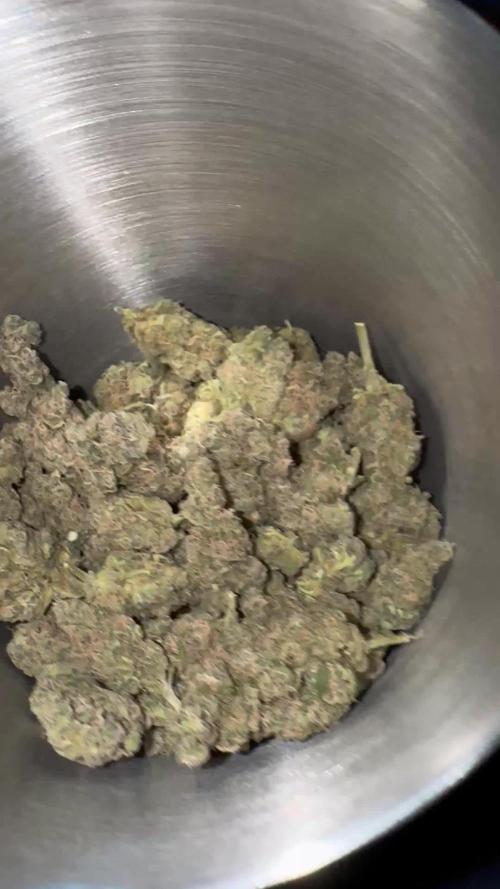
Plants are almost done. Feeding at 400 EC. Slowly getting them ready for flush. The front right lady seems to be about a week behind but it's okay. Shell get cut last.



Likes
2
Share
@Saintvicious
Follow
Looks like a lot of top sights. Afraid stretching too much. Hopefully it fills in.
Likes
73
Share
@Andres
Follow
patience .... she has a mint smell on her stem and smells of forest too ... she is taking shape with her buds ... she looks great outdoors ... she continues with her natural fertilizers .... every 10 to 15 days and these are their results ... I am struggling with some worms in the leaves of my plants but I am dedicated to finding one by one the worms ...


Likes
9
Share
@Mr_nugs_lover_David
Follow
I Should have been chopped down 5 plants instead of just one however I lost her 4 sisters because of fungal infection due to a high humidity and and a very hot day. Wish I could have been able to get a lot of jars full of this wonderful and magical organics nugs.

Likes
45
Share
@BodyByVio
Follow
Beautiful flower full of trichomes. Smell and test fantastic. Very fast flowering. She was done on day 49 but I cut her down few days later.
I love the strain, the only thing that I will like this strain to have is a better yield. Beast quality buds I ever grew.

Likes
12
Share
@RoyColt
Follow
Day109 19/03
4lt ro water -12ml BloomA -12ml BloomB -8ml Nirvana -4ml FinalPart terra,
Total 1000 ppm, ph 6,2
Drain 300ml, 1580 ppm.
Day111 21/03 RinseOut Day
5lt ro water -5ml sensi cal mag extra,
Total 200 ppm, ph 6,2
Drain First measure 500 ml, 1750 ppm- Second 500 ml, 1440 ppm- Third 500 ml, 1200 ppm.
Day113 23/03 RinseOut Day
4 lt ro water -4ml sensi cal mag extra,
Total 200 ppm, ph 6,2
Drain First measure 200 ml, 1250 ppm -Second 200 ml, 1150 ppm- Third 300 ml, 950 ppm.👌

Processing
Likes
11
Share
@MRTHC
Follow
.... Really good week but the work continues. The stretch is on. The 2 ladies on the extreme left has a proper stretch going on. It may be due to those are the girls I mainlined or it could be the blurple lights that both of them are under. Still removing some of the thick lower growth below the netting. its think but i remove just a little everynight for a gentle reduction in foliage. Not pictured here but on Day 12 white hairs were beginning to show. A few issues with high humidity during lights on or high heat when the dehumidifier is on. No strain specific smells as yet. Huge difference observed between the mainlined strains ( Orange Sherbert and Green Gelato) and the other LST strains in the tent. The stems of the mainlined strains tend to be fatter and there is a significant reduction on foliage on the mainlined strains. The LST strains (Blue Gelato 41 and the Vanilla Kush) are more bushy, squat with heavy foliage. Also not so much as a long stretch.
Likes
18
Share
@OrganicAlphapak420
Follow
Last week of veg . Gona start. To prep for flowering. ..only fed tap water every 2 days as needed this week. No issues at all. I stopped all lst training so she can stretch bit ..she's getting pretty big she smells real nice. Excited to see her shine these next few weeks. Will update next week on her 1st week of flowering. ..enjoy the organic grow.
Likes
13
Share
@KingSalomonsWeed
Follow
Seit einer Nacht ist die supersüße watermelon zkittlez auf 12 12 rythmus.. Melde mich sobald sie un die Blüte geht. Ach ja bending beendet.
Habe die erde gewechselt, musste, waren kaum wurzeln da.
Hatte günstige erde genommen. Ab jetzt in bio bizz Light mix
Nach 2 Tagen in neuer Erde ist sie merklich gewachsen, sie dehnt sich, spreitzt ihre fächerblãtter und betet die greenception gc4 an.
Boah ich liebe es zu growen. Verschiedene Genetiken.
Dieselbe Gattung, so verschieden.
Barney Farm, White Label, Seedstockers, SensiSeeds, Fast buds.
Alles ganja lover.
Wurde vor 4 tagen die zeit auf 12 12 umgestellt..
Likes
82
Share
@WhiteEdge
Follow
23.04.2024
Continue into week 8
Replaced all filters in the system and cleaned them.
Mixed a new batch with the following components:
20+25ml AN Connoisseur Bloom A+B
Total volume: 34 liters
Electrical Conductivity (EC): 1.0
Target EC for this week: around 1.0. Adjustments will be based on plant observations.
Performed one long misting session (3 minutes).
Environmental Conditions:
Outside temperatures going up, today is raining but this week start higher temps and humidity
Wedding Cheesecake: One girl is gonna finish in this week, Two others probably in next. Frutti terps in this, Two pheno in total from 3 girls'
Tropicana Cookies: Phenomenal strain; One girl is going to finish this week and second couple days after . Two pheno in Tropicana's girls
Purple Lemonade: Tall plants, massive producer, all three girls will be in 9 week provably. Here so far all three girl share same characteristics and bud structure
Beautiful and high odor in the room!
Lighting Parameters: PAR Map: Maximum PPFD is 950, minimum PPFD is 650.
VPD: Ranges from -1.1 to -1.2.
Daytime Temperature (DT): 23-24°C.
Nighttime Temperature (NT): 19-20°C.
Leaf Temperature: 21-22°C.
Light Distance: 45-55 cm from the plants.
CO2 Levels: 700+ ppm.
HLG Scorpion Diablo: Set at 70%, positioned at a 45-55 cm distance.
Girls drink less water, so for this week and till the end of flowering new misting timing's
Daytime: ON for 70 seconds, followed by 30 minutes OFF.
Nighttime: OFF for 70 seconds, followed by 35 minutes OFF.
Nutrient Tank (NT):
pH: Maintained between 5.80 and 6.00. Stable PH, small drifting up and downs
EC: 1.05.
Temperature: 19-21°C
25.04.2024
TrolMaster toys arrived! Purchase new DST2E, DSP2E, DSH2E, AMP3+probes. Another DSH2E and DSP2E ordered to complete this grow box!
Replaced all filters in the system and cleaned them.
Mixed a new batch with the following components:
25+30ml AN Connoisseur Bloom A+B. Total volume: 17 liters
Electrical Conductivity (EC): 1.05
Tomorrow Tropicana Cookies harvest! Put bucket with this girl on separate line for flushing
Wedding Cheesecake also finish soon, probably in next week, Wednesday think...
Purple Lemonade still need full week or more...Exceptional odors
Temps and humidity otside start to raises, hope i will finish this run before Tropical heat
Lighting Parameters: PAR Map: Maximum PPFD is 950, minimum PPFD is 650.
VPD: Ranges from -1.0 to -1.1.
Daytime Temperature (DT): 23-24°C.
Nighttime Temperature (NT): 19-20°C.
Leaf Temperature: 21-22°C.
Light Distance: 45-55 cm from the plants.
CO2 Levels: 700+ ppm.
HLG Scorpion Diablo: Set at 70%, positioned at a 45-55 cm distance.
Daytime: ON for 70 seconds, followed by 30 minutes OFF.
Nighttime: OFF for 70 seconds, followed by 35 minutes OFF.
Nutrient Tank (NT):
pH: Maintained between 5.80 and 5.95. Stable PH...
EC: 1.05.
Temperature: 19-21°C
26.04.2024
Connect TrolMaster components into the Tent-X system. Program DSP2E, Temperature DST2E, Humidity DSH2E, as well as the AMP3 sensor with PH and EC probes, are all in place.
After calibrating the probes, AMP3 module works perfectly! It has a quick response in measurements, is accurate, and I am very happy about the possibility of online monitoring of liquid values.
After day off use i can tell that all readings are very consistent, compared with Milwaukee, totally without all over the place measurements. Perfectly steady and on spot receding!
The Program device runs flawlessly all day, and I hope it has solved all the problems I had with DH48-S timers.
The humidity control operates without errors throughout the day, and it’s nice to see in the app when the module is active.
Raise light as much as i can..50-55cm from canopy. Set off misting time from 30min to 35min @ day time , and from 35min to 45min @ night time
Flush Tropicana Cookies' for one more day, tomorrow harvest, prepared tent for drying with humidifier , ventilation and temperature and humidity controllers
PAR Map: Maximum PPFD is 850, minimum PPFD is 500.
VPD: Ranges from 1.0 to 1.1.
Daytime Temperature (DT): 23-24°C.
Nighttime Temperature (NT): 19-20°C.
Leaf Temperature: 21-22°C.
Light Distance: 45-55 cm from the plants.
CO2 Levels: 700+ ppm.
HLG Scorpion Diablo: Set at 65%, positioned at a 50-55 cm distance.
Daytime: ON for 70 seconds, followed by 35 minutes OFF.
Nighttime: OFF for 70 seconds, followed by 45 minutes OFF.
Nutrient Tank (NT):
pH: Maintained between 5.80 and 5.95. Stable PH...
EC: 1.05.
Temperature: 19-21°C
28.04.2024
First harvest in this run! Tropicana Cookies No1 is a winner.) First Tropicana Cookies is harvested on 89 day from seed. Total 55 days off flowering.
Fast flowering indeed as fast in vegetative stage. Cut this girl in branches and hang upside-down in smaller tent for drying
Set RH @ 55% , temperatures not able to control so they will be something around 20-21 in drying tent
Second Tropicana will be chopped within a couple off days. Checking trichomes with microscopes can tell that one Purple Lemonade is also going to finish in next days
Somme lady's will take full 9 weeks or so..
Lowering light intensity, EC in tank start to raise slowly so i will start to adjust according to condition. Currently 0.85EC is perfect strength i think
PAR Map: Maximum PPFD is 850, minimum PPFD is 550.
VPD: Ranges from - 0.9-1.0
Daytime Temperature (DT): 23-24°C.
Nighttime Temperature (NT): 19-20°C.
Leaf Temperature: 21-22°C.
Light Distance: 45-55 cm from the plants.
CO2 Levels: 700+ ppm.
HLG Scorpion Diablo: Set at 65%, positioned at a 45-55 cm distance.
Daytime: ON for 60 seconds, followed by 30 minutes OFF.
Nighttime: OFF for 60 seconds, followed by 35 minutes OFF.
Nutrient Tank (NT):
pH: Maintained between 5.80 and 5.95. Stable PH...
EC: 0.85.
Temperature: 19-21°C
Week 8 off Flowering in Summary
80 litter off RO water,
120ml+150ml AN connoisseur A+B
45kW electricity in total for light, Pumps and AC Infinity Fans. 42kW for Light + 2kW Dehumidification + AC Infinity ventilation
Week start @ 1.1EC, nutrient strength., week finish with 0,87EC
Tropicana Cookies is first harvested on day 89 from sprouting , week 8 off flowering
Purple Lemonade is going to be on second place with harvest on day 91, last day off 8 week off flowering
PH was stabile and move from 5.70 min to 5,9 max.
Light distance for this week - 50-55cm from tallest top , PPFD levels around 900 in center, trough whole week. Lowest reading 500 @ corner
Temperature are from 20c at start off day to 24.5c max at some points.
Night temps around 19.5-20c. Outside humidity is generally low
This week i have install TrolMaster AMP3 sensor and humidity, temp and program devices
Day RH is moved from 45% to 55% max, at night times drop to 45-48%
Lighting Parameters: PAR Map: Maximum PPFD is 900, minimum PPFD is 650.
VPD: Ranges from -1.0-1.1.
Daytime Temperature (DT): 24.5°C.
Nighttime Temperature (NT): 20°C.
Leaf Temperature: 22°C.
Light Distance: 45-55 cm from the plants.
CO2 Levels: 700+ ppm.
HLG Scorpion Diablo: Set at 65%, positioned at a 45-55 cm distance.
Daytime: ON for 70 seconds, followed by 25 minutes OFF.
Nighttime: OFF for 70 seconds, followed by 35 minutes OFF.
Nutrient Tank (NT):
pH: Maintained between 5.8 and 6.1
EC: 0.87-1,1.
Temperature: 20-21°C

Likes
8
Share
@CityFarmer
Follow
Hello everyone,
Been busy this week working around the house so not much I can say. Heres a little video of there growing...
See you guys next week
Likes
7
Share
@Famtreez
Follow
crazy week found drain gnats which explains the green hue of some of my plants the larve are attacking the roots raising the p.h. and the diffecencies are showing in the leaves being lighter and or brown dots on the leaves. using mosquito dunks and spraying neem oil washing the roots to help these ladies out. also im doing things different with the soil vs dwc, i havent done much if any defoliating with potted plants just letting them grow only mainlined once and since in flower very light if any defoliating. any questions comments information feel free to ask or inform im open to critque


Likes
13
Share
@GrowinMyOwn
Follow
Update 11/8...2nd plant is harvested and jarred. The terps on this strain are amazing!
I harvested only 1 plant....her sister (the tall purple girl) is still under the lights. Based on dry weight on 4 upper colas harvested 5 days earlier I'm expecting a whopping 160 grams from just the one plant. The colas are super frosty and dense, holding their weight during drying. I've got 40 grams already curing, the rest is still hanging in the dry box. This strain was an absolute pleasure to grow and even an uncured bud smokes smooth and sweet with a nice, even slow burn and white to light grey ash. It's gonna be my go-to from my winter stash line-up!!
Thank you Royal Queen Seeds for the opportunity to select and grow one of your strains and for Organic nute setup. It's obvious I snagged an excellent strain grown with topnotch nutrition. I've got 3 more Green Gelato beans and can't wait to pop em next grow.


Likes
6
Share
@CanarianGrow92
Follow
Nice colors are appreciated in this strain, that purple background is awesome 😎
The smell is also amazing very sweet 🎂
This time we gave some candy and some green sensation! For the rest only water and we will continue to add some more PK next weeks
