The Grow Awards 2026 🏆 










Likes
16
Share
@Raizativa
Follow
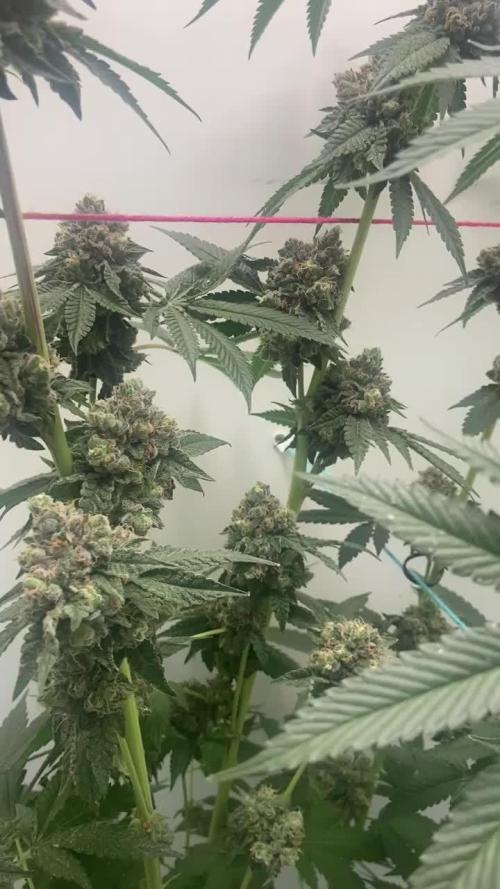
250ml c/u
0.5 Micorizas @colectivo
1ml Calmag @biobizz
1ml Bio Grow
1ml Bio Heaven
Riego día 21
250ml c/u
1ml calmag

Likes
Comments
Share
@JamesRenato
Follow
Já faz 11 dias desde a ultima atualização, tinha me programado para colher dias atras porem, mudei de ideia ao ver que os buds estão ganhando mais volume. Nos últimos dias falhei na rega e a ela acabou passando sede por um dia, logo senti a diminuição do cheiro, provavelmente esse estresse volatilizou alguns terpenos. Eu já estava regando no modo flush mas, por conta do ocorrido decidi retornar com alguns suplementos (Cal-Mag, Silica e alguns Carboidratos), com a intenção de estimular a produções de novos óleos. Estarei observando os tricomas e quando os primeiros estiverem mudando a coloração, ai sim vou colher.

Likes
26
Share
@420DeepGrow
Follow
Gracias al equipo de Seedsman y XpertNutrients sin ellos esto no sería posible.
💐🍁 Bubba Cheescake:
Bubba Cheesecake es un cruce de Bubba Kush anterior al 98 con Cheese Cake (Wedding Cake x Exodus Cheese). Se trata de un híbrido 70% índica con muy buenos rendimientos, alto en THC y bajo en CBD. Bubba Cheesecake prospera en interiores y exteriores. En interior se aconseja un corto periodo de crecimiento vegetativo debido a la cantidad de estiramiento que presentan las plantas. Las plantas pueden crecer hasta una altura de 250 a 350 cm. cuando se deja crecer naturalmente al aire libre. En interior, la floración dura entre 60 y 65 días, con rendimientos entre buenos y altos, de 400 a 550 gr/m2. Las plantas de exterior son capaces de producir entre 700 - 800 gr. peso seco. En las latitudes norteñas, en exterior, los productores pueden esperar cosechar a principios de octubre. Los cogollos son grandes y duros como piedras. Las plantas maduras muestran atractivos colores púrpuras y azules y brillan con una resina pegajosa que cubrirá las manos del cultivador si no tiene cuidado. El componente Wedding Cake agrega dulzura al sabor del regaliz y el aroma es terroso y musgoso. La producción de THC es muy alta con un nivel bajo de CBD. El efecto es intensamente narcótico, fuerte y duradero.
🌻🚀 Consigue aqui tus semillas:
🍣🍦🌴 Xpert Nutrients es una empresa especializada en la producción y comercialización de fertilizantes líquidos y tierras, que garantizan excelentes cosechas y un crecimiento activo para sus plantas durante todas las fases de cultivo.
Consigue aqui tus Nutrientes:
https://xpertnutrients.com/es/shop/
📆 Semana 7:
Ha sido una semana algo complicada, tormentas, frio y lluvia han ralentizado el crecimiento, espero que pronto lleguen dias soleados, continuo con 1/3 nutrientes recomendados en cada riego.

Likes
25
Share
@Mr_Weeds_Autos
Follow
Boy how these ladies have grown. All 6 ladies at this point are showing trichomes and the flower sites are really starting to bulk up. Girl Scout Cookies # 2 is soooooo frosty it's crazy !!!! Other than keeping the tent clean and making sure they get a watering and feeding each week, these ladies have been effortless to grow. One that has changed is that they seem to a bit more thirstier than usual but thats normal in flower I've heard. Well till next time fellow growers Happy Growing and Enhance Your Life!

Likes
20
Share
@RunWithIt
Follow
They seem to have stopped stretching and are now focusing on the buds. Very odd coloration happening on the leaves of the left plant. I'm thinking it's either a calcium deficiency or a manganese deficiency. Either way the buds are developing nicely still. Right is looking great right now, save for a few spider mites I had to squish earlier last week.
Nice and frosty at 5th week of flower. If all goes well with both of these girls, I'll be harvesting them at the end of January. I'll definitely give them a bud washing b/c I found mites.
Update 1/2/22: okay I've got a few notes to make on the progress as a whole. So after topping right, it seems like she started producing flowering hormones right after. While left focused on stretching for like a week more. Right has fat, compact and frosty buds- shaped like golf balls. Left has spire-shaped buds, not AS dense(still dense though, mind you), and less frost. So I'm thinking left is staggered behind right by about a week. Since this is week 5, we'll be able to tell just how far ahead she is by week 8.
Likes
4
Share
@GERGrowDesigns
Follow
Welcome to Veg Week 4 of Sweet Seeds Strawberry Cola Sherbet F1
I'm excited to share my grow journey with you from my
Sweet Seeds Project . It's going to be an incredible ride, full of learning, growing, and connecting with fellow growers from all around the world!
For this Project , I’ve chosen the Feminized Photo strain Strawberry Cola Sherbet F1 :
Here’s what I’m working with:
• 🌱 Tent: 120x60x80
• 🧑🌾 Breeder Company: Sweet Seeds
• 💧 Humidity Range: 60
• ⏳ Flowering Time: 7weeks
• Strain Info: 18-22%THC
• 🌡️ Temperature: 26
• 🍵 Pot Size: 0.5l
• Nutrient Brand: Narcos
• ⚡ Lights : 600W x 2
A huge thank you to Sweet Seeds for allowing me to try my Best with this amazing collection from Photo Strains they managed to Sponsore . Big thanks for supporting the grower community worldwide! Your genetics and passion speak for themselves!
I would truly appreciate every bit of feedback, help, questions, or discussions – and of course, your likes and interactions mean the world to me as I try to stand out in this exciting competition!
Let’s grow together – and don’t forget to stop by again to see the latest updates!
Happy growing!
Stay lifted and stay curious!
Peace & Buds!
Likes
37
Share
@XII_XII_MrGreen
Follow
Things are moving along she stopped stretching, and they are all about the same height now in the tent 😁..
I've changed the feeding schedule and for now it's straight forward to some nice buds hopefully 😊
Have a great week everyone and till the next 🤙🏻

Likes
13
Share
@Yiyis_Grow
Follow
Bestva Quantum Board LM301B / Mr Hide seeds
Semana 8 desde germinación
Semana 4 de floración
En 6 plantas tengo 3 tiempos diferentes.
Dos empezaron a engordar de forma veloz y se les ha aplicado PK durante la semana.
Dos están un poco más retrasadas, tal vez el equivalente a una semana. Hoy se empezará con PK para ellas.
Dos están aún más atrás.
Se ven sanas.
Buenos humos

Processing
Likes
15
Share


Likes
4
Share
@Elguacho420
Follow
Muy buenas a tod@s... Bueno otra semanita para la psicodelicia... Me va gustando, la veo fuerte, crecen bien y rápido, ahora la veo decaída, pero se pondrá bien..💪🏻💪🏻 De momento todo en orden, buen ambiente y buena luz, una semana más y a floración... 🌱 A ver q tal sale... Bueno espero les guste... Un saludo y buenos humos para tod@s... 🔥🔥💨💨💨
⚕️😎💎
🇦🇷🤝🏻🇪🇦
Likes
50
Share
@Mr_Motalovah
Follow
Hello growers and tokers! 👋 👩🌾 🧑🌾.🔥💨
There has been much change this week!!
First there was a big defoliation done, I cleaned the bottom of the plants.
All the growth that wouldn't amount to anything because the light doesn't penetrate that low.
Also took off the biggest fan leaves to give more room for light.
Then finally switched to 12/12..
After just 36 hours after the defoliation there was a major change.
New growth everywhere, colas started stretching upwards fast.
By far the tallest girls in the tent. Her colas are stacking up nice and tight if she keeps that up we'll have some nice dense colas. 😁
Great reaction to the defoliation and 12/12 switch.
I'm still watering every other day, After the defoliation I watered with only Enzymes 2ml/L to clean the roots a bit then started with the nutrientes again.
I dropped the amount of grow nutrients from 3ml/L to 1ml/L and started adding bloom nutrientes 2ml/L for now.
I'll slowly be upping the bloom nutrientes and after week 2 I'll no longer add grow nutrients.
That's it for this week. Stay tuned to see how they flower.
Stay safe!


Likes
11
Share
@WeedM8
Follow
So beautiful looks its going vey well apart of thats its too hot the heat from the lights if there is no air circulation it gets very humid and i have to leave the tent open

Likes
1
Share
@Elguacho420
Follow
Buenas a tod@s!!! Arrancamos con la primera semana de floración de estás red hot cookie gelato, con lo que respecta a la variedad va muy bien, la veo bien, excepto una que ah salido media golpeada o por algún estrés que sufrió y se estanco ahi. Estás de altura van bien menos una q se quedo, pero bueno lo q dije antes, será un fallo de novato y tanbm me duele pero yo se q de a poco se va mejorando, ya voy teniendo en cuenta varios puntos de riego y demás cositas... Bueno x el momento va la primer semana y vamos a ver q tal van las demás... Buen finde para tod@s y buenos humos... 🏻♂️👍🏻🇦🇷🤝🏻🇪🇦
Likes
6
Share
@Stonerandgrower
Follow
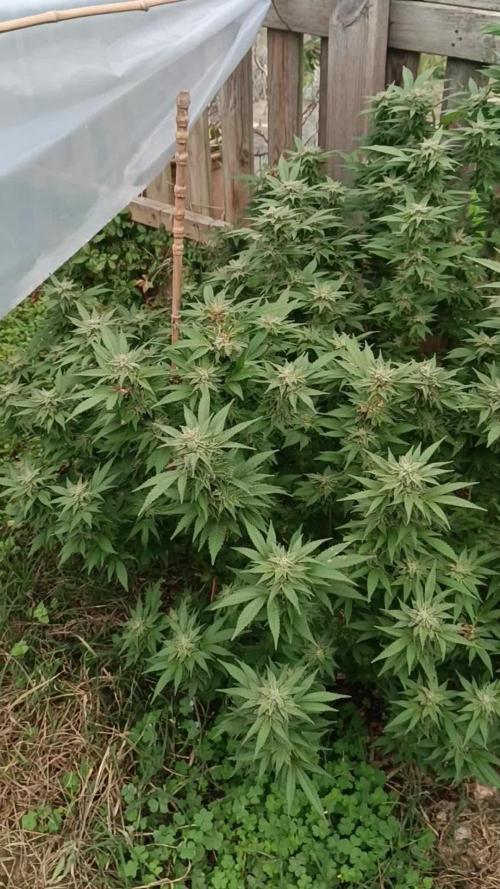
It wasn't quite done but I was lol it tasted good and got me high last week so I figured I'd harvest now and move my dosido x strawberry cross in there. My scales already had the weight of the bucket off so it was actually 10.8lbs wet



Likes
20
Share
@Letsgo420
Follow
Started the week with another trim on both, nothing near the level of the last one but enough to ensure good passage of light. On day 44 the GC was 8 inches from the light so raised the SB so the highest point of each was about level and raised the light to 15 inches away (was that a decent idea?). Buds fattening up as the week progresses and beginning to cluster and fill me with hope! Temps have hit a 34c high this week with a heatwave in progress but so far so good 🤞
Likes
2
Share
@toriyama
Follow
Wie man sieht, haben die beiden F1-Samen ein enormes Wachstum gezeigt, während das Apple Flitter langsames Wachstum zeigte. Ich baue zum ersten Mal F1-Autoflower-Samen an und die Wachstumsrate ist wirklich beeindruckend. Nach drei Wochen habe ich Holzstäbchen zur Unterstützung hinzugefügt, und die Wachstumsrate der F1-Samen ist weiterhin beeindruckend. Sie sind bereits bereit, Blüten zu bilden.
ご覧の通り、2つのF1種は驚異的な成長を見せたのに対し、Apple Flitterは遅い成長を示しました。私は初めてF1オートフラワーの種を育てていますが、その成長速度は本当に驚異的です。3週間が終わった時に木の棒を挿して整理しましたが、F1種の成長速度はやはり驚異的です。すでに花を咲かせる準備ができています
