


Likes
Comments
Share

@tiboosgarden
Follow
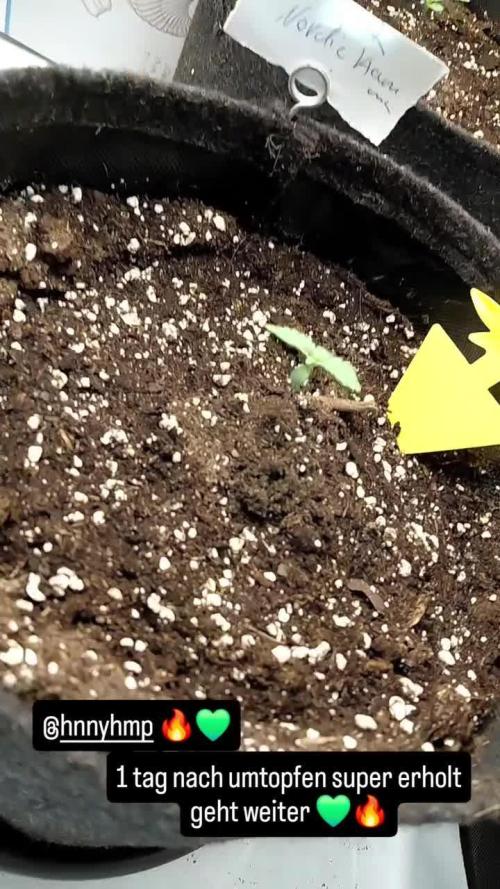
Letsee Gooo 💚💚 nach 6 tagen in 11l Umgetopft und gleich super angenommen als ob sie nicht umgetopft wurde 💚💚
Likes
6
Share


@Black_Widow
Follow
Привет садоводы
растение выглядит на отлично и имеет красивые формы
верхняя кола выше остальных веток
цвет листьев хороший вот только горшок маловат
быстро пересыхает
попробую пересадить

Likes
8
Share

@GREENPHOENIX6262
Follow
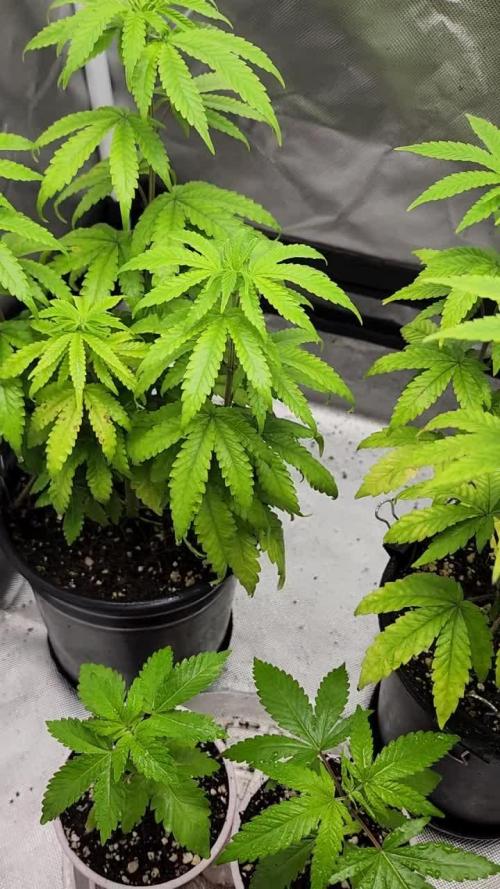
04/11 - Both plants are coming along accordingly on time - As stated previously I got careless with the PH and they suffered a harsh PH burn - Since then they have been flushed and nutes in coco stripped - Began introducing nute in micro-dosing stages.
04/18 - Both ladies have rebounded from PH burn - They will run for about another 2 weeks in the 1 gallon pots and then be transplanted into 5 gallon pots - I have decided to "NOT" clone these and run them as pure mothers.

Likes
7
Share
@SpunkyTerps4200
Follow
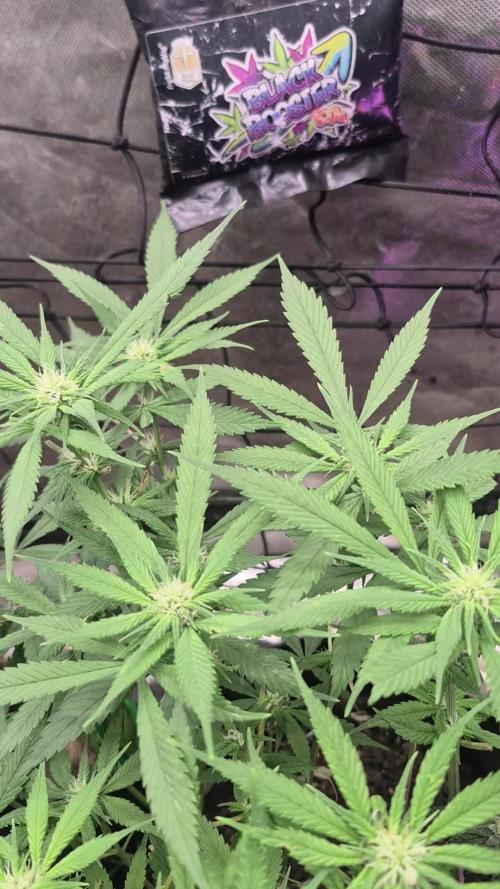
This plant os growing soo damn fast ots incredible.. I made sure to take like 4 clones off her cause I am definatly feeling this one.. guy Tropicana cookies from 420fastbuds is the shit woowww you guy check this out.. if yall need some seed from them https://2fast4buds.com/?af=281965. BAMm save u 15%on the packs.. thabk u all for checking out the girls!!! And thank u 420fastbuds for the packs i love your genetics!!! Keep up the great work!! Alsobhmu on Instagram @only_dankzz4200 and on YouTube https://youtube.com/@thedankzz420?si=brMw2mSIw-nOJkpb ill post more pics throut the week if not just go Instagram anf ull see them for sure

Likes
16
Share


@GRow_M8s
Follow
* Just tap water PHd with the EMs.
~ We overwatered the stressed s stomper.
☆ Transplanted at day 9 after sprout ( except sodk).
~ Foliar sprayed with snake poison.

Likes
2
Share


@Saintvicious
Follow
Looks like this might be the last week for this girl. Was hoping to see more change in tricomes but not sure if worth the wait. Give it a few more days and see what the loop says.
Likes
81
Share


@m0use
Follow
SPONSORED DIARY===SPONSORED DIARY===SPONSORED DIARY
Good week, plants has a bit of a nitrogen issues and corrected that with some feed. Found out the mediums levels were below normal and causing some issues. Guess I forgot to top dress with dry amendments in the mess of the twin plant disappearing. Gave them a top dressing this week with some Acti-Sol as I also ran out of Gaia Green. I think I am going to get the big bags of it and store it in my locker. 10KG-20KG each of bloom and Grow. Can use that in my garden as well not just for cannabis should be good I like the product and how it performs overall.
Still no word on the missing plant, As the "Show Us What You Got" contest comes to a close I was reassured by @Dynomyco that my progress thus far would be used for the evaluation of how I place in the contest. I will miss out on how the buds and yield compare but I can get this none Dynomyco plant up to speed and even inoculate the medium with some Dynomyco just in time for flowering.
SPONSORED DIARY===SPONSORED DIARY===SPONSORED DIARY
This is my diary entry into the Dynomyco Show Us What You Got Contest!
#DynomycoShowUsWhatYouGot!
@DynomycoShowUsWhatYouGot!
@Dynomyco
Big Shoutout to @Dynomyco for picking me in their contest. Happy to be involved and as a user of Dynomyco I am curious to see this side by side with my own eyes. I will be honest I am a little skeptical it will show any major differences. but we will see what happens. Some disclaimers, I am still using LABS serum I made, This is also beneficial to the root mass however it's a bacteria based product and not fungal or mycorrhizae like Dynomyco.
https://growdiaries.com/giveaways/DYNOMYCO_Show_Us_What_You_Got
Likes
37
Share


@Rangaku
Follow
Arrrr the green crack has life in her yet , had some nice growth on this little runt she remains compact but has shown enough to keep around .
Transplanted into her forever home in the 28L pot , even in her small state she was root bound in the 12 L , hope to triple her size this coming week .
Likes
17
Share


@Sergio_721
Follow
almost ready to cut 🤤🌱
Day 76
1-2 days and proceed with the harvest I am aspetrating that the soil dries up well. we'll see when they give us these little girls of fustbuds
Likes
43
Share

@GERGrowDesigns
Follow
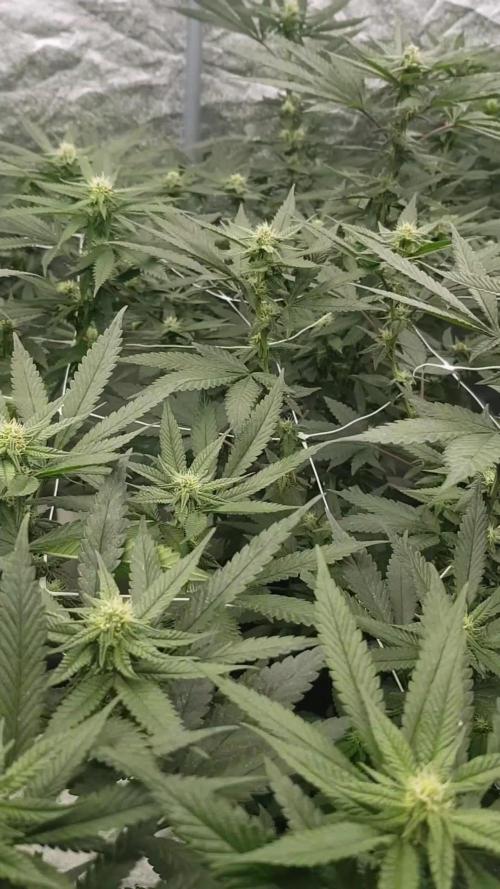
Welcome to my Dutch Passion Diaries Competition 2025 entry!
For this competition, I’ve chosen the Indoor Feminized strain: Orange Bud 2.0
Media from Week 13 or Flower week 2-3 After Moving into the New Tent for the flower weeks. Stage.
Here’s what I’m working with for the Final Tent after Moving for the Flower time in the Future :
• 🌱 Tent: 220x150x150
• 🧑🌾 Breeder Company: Dutch Passion
• 💧 Humidity Range: 50
• ⏳ Flowering Time: 8W-10W
• Strain Info: 20-25%THC, Sativa
• 🌡️ Temperature: 26
• 🍵 Pot Size: 0.5l
• Nutrient Brand: Narcos
• ⚡ Lights : 720W x 2
Dimmed to 400w Each at the Moment. Because of Heatwave ⭐
A huge thank you to Dutch Passion for allowing me to be a part of this amazing competition and for supporting the grower community worldwide! Your genetics and passion speak for themselves!
Curious to try these strains for yourself?
You can check them out and support me at the same time through my personal link:
https://dutch-passion.com/?a_aid=GGD
I would truly appreciate every bit of feedback, help, questions, or discussions – and of course, your likes and interactions mean the world to me as I try to stand out in this exciting competition!
Let’s grow together – and don’t forget to stop by again to see the latest updates!
Happy growing!
Stay lifted and stay curious!
Peace & Buds!


Likes
11
Share

@Saftino
Follow
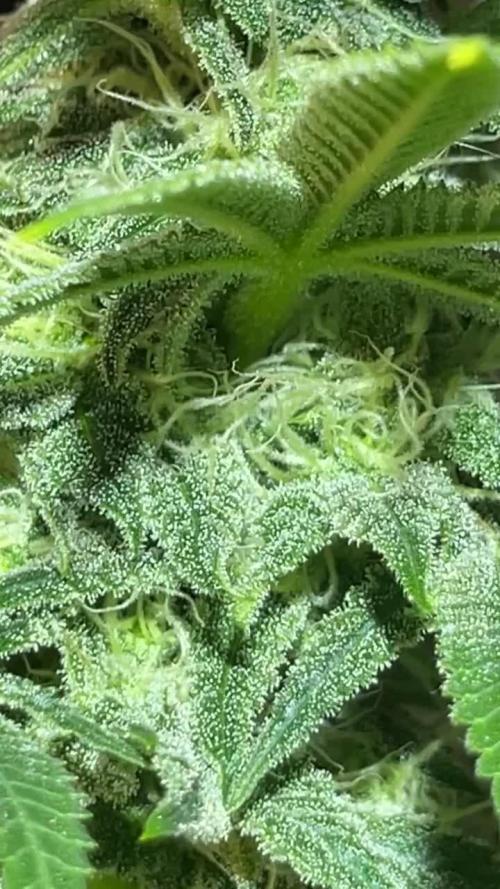
Mein erster Grow neigt sich auf jeden Fall dem Ende zu.
Ich denke allerdings, dass ich sie auf jeden Fall noch mindestens zwei Wochen Reifen lassen werde

Likes
5
Share


@Nvchods3
Follow
pronto termino del primer seguimiento, eh tenido unos problemas con 2 de las plantas en cuestion, se a reparado pero me afectara en la produccion

Likes
2
Share


@RezaM
Follow
Everything was going well in the first week, but unfortunately, a mistake caused stress in the plant. The distance between the lamp and the plant was too short. This week, I gave the plants a small amount of root growth stimulant
Likes
12
Share


@LucasHendrik
Follow
With 33 grams on such a small plant I can't complain. I was amazed on the many hours (3) to clean the buds before curring. Several buds had rotten places because of the yellow leaves, they died and caused this problem Luckily I stopped in time and dived a little bit earlier in harvesting here highness.
Likes
16
Share


@CzAlmighty
Follow
Hello growers,💚
beautiful strong plant .No problematic flower.🍰🍰🍰
naprosto úžasná vůně květů 💨💨💚

Likes
2
Share


@Albanymedicinalgarden
Follow
Skywalker rounding the corner. Harvested 8/7 @ Day 76 from sprout
Blueberry bulking up.
Glueberry og done stretching and bulking up now
Processing
Likes
6
Share


@Spazmagi
Follow
10/28 - Pushing this update three days early since much has changed. Did a solution change earlier today to the new mix (as noted) which settled in about 740ppm (570ppm nutrients, 1.14ec + tap). After approximately eight hours (including a dark cycle), she registered 720ppm, but we will see how she swings over the next few days. The other lady in the video was given the same nutrient solution at the same time and is now showing some dark buildup on her roots that this Amnesia XXL Auto doesn't have. Her growth has been fantastic so far and she is responding well to the nutrients. I am excited to see how this goes considering this is my first DWC run and first run with Dyna Gro. Any comments, questions, observations, or concerns are always welcome. Happy Growing!
Edit: 10/29 - Added 2ml/gal Botanicare Hydroguard as a preventative for any potential root issues.
Edit: 10/31 - Removed two large fan leaves that were actively shading new growth nodes. PPMs have slowly climbed up to 750. Lowered to 700 with pH'ed water. Added second Mars Hydro SP150 and raised to 18" above canopy.

Likes
30
Share


@Green_Dream
Follow
I'm quite impressed by this week's development. The girls are starting to show their fatness. I did a flush at the beginning of the week and it helped a lot. Now I'm starting to give them less and less nuts, as they show obvious tip burns.
What a big coincidence that they are both polyploids(gene mutation). I'm starting to question myself if the guys from RQS are making experiments with these types of mutations to increase yield and potency???
Likes
34
Share


@Bluntblazer66
Follow
Feb 22nd
Plants are doing well but they seam to have stunted
They are growing lots of branches but not growing in length
Also I have been having difficulty keeping my PH balanced out
Feb 25th
I have taken all of the tie downs off because these plants are stunted
I have decided to do a flush of the system, and put in fresh nutes.
I will also flush each plant with a few gallons of pure PH’d water
I will put the new nute strengths on next week’s update
As for now I am going to feed just PH’d water @ 6.0
Feb 28th
Plants have responded well to flushing
New growth showing so I have resumed LST

Likes
47
Share


@MadeInGermany
Follow
Info:
Unfortunately, I had to find out that my account is used for fake pages in social media.
I am only active here on growdiaries.
I am not on facebook instagram twitter etc All accounts except this one are fake.
Have fun with the update.
Flowering day 16
since the time
change to 12/12 h.
Hi everyone 😀.
She has had a boost in growth every day.
It is developing very nicely 👍.
The lowest shoots were removed again so that the energy stays on top.
Otherwise the tent was cleaned like every day and the humidifier refilled.
Stay healthy 🙏🏻
You can buy this Strain at :
https://www.exoticseed.eu/
Type:
Herz Og
☝️🏼
Genetics:
Larry OG X Kosher Kush
Indica 60 % / Sativa 40 %
👍
Vega lamp:
2 x Todogrow Led
Quantum Board 100 W
💡
Bloom Lamp :
2 x Todogrow Led
Cxb 3590 COB 3500 K 205W
💡💡☝️🏼
Soil :
Canna Coco Professional +
☝️🏼
Fertilizer:
Green House Powder Feeding
☝️🏼🌱
Water:
Osmosis water mixed with normal water (24 hours stale that the chlorine evaporates) to 0.2 EC. Add Cal / Mag to 0.4 Ec Ph with Organic Ph - to 5.5 - 5.8 .
