The Grow Awards 2026 🏆
Likes
Comments
Share
@Dineh
Follow
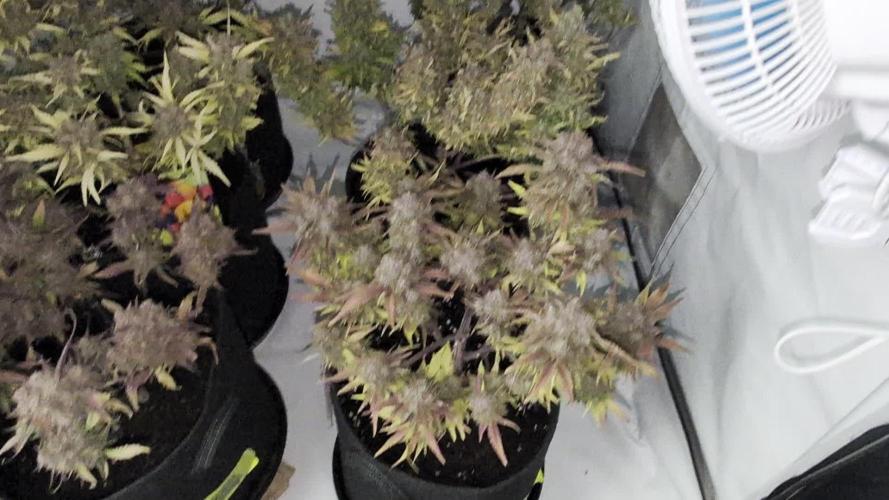
hello fellas have ya seen my clone that refuses to grow it is still alive making only three finger leaves i should kill it but i cant lol gonna see where that brings us looks like i am gone be in flower for about nine weeks THREE WEEKS TO GO i see the cola formation growing in am thinking if i would feed them this week they now have got three waterings plain water i guess i am gonna do that 600ml every other day biobizz + water
Likes
1
Share
Likes
25
Share
(END OF QUARANTINE) Now I have put them to finish underground a 600w hps under 12/12 schedule with the Divine Black opium. Luckily no more mould has spread, and all plants look happy healthy and still developing. Day 72 12/09/24 Thursday De-chlorinated tap water pH 6 today with Plagron products. Finally a video and pictures update ✌️💚 Day 74 14/09/24 Saturday De-chlorinated tap water pH 6 only today Day 76 16/09/24 Monday Feed today using de-chlorinated tap water pH 6. Will update all videos and pics tonight 😁 Day 77 17/09/24 Tuesday Feed today using de-chlorinated tap water pH 6. Seeing good developments, buds forming nicely, divines are smaller denser structures but the buds are not lacking! Damn I'm surprised by 2L pots.
Likes
12
Share
Alles ist nach Plan verlaufen. Diese Woche wurde großflächig entlaubt. Ende dieser Woche wird die Vorblüte eingeleitet
Processing
Likes
91
Share
Day 77, Harvested 3 Plants of 5 in total today as I thought they look perfect,will leave the Other two ones for some more days. I'm curious for the dry weight tbh. the drying Location has 51% RH and 22C° after 5-12 Days of drying I'll start Curing them in Glasses, I'll tell you about the smoke then!! Stay Tuned and happy grows!!
Likes
8
Share
Mandarin Cookies canopy is looking nice. Wondering if I should flip to flowering soon to avoid light burn when She stretches; Nute burned the Larry OG once again :/ ; defoliation on both mandarin cookies and Larry OG;
Processing
Likes
6
Share
Tuesday morning: dropped seed in glass of tap water (71ppm, 6.6PH) Wednesday morning: Placed cracked seed in wet toiletpaper Wednesday evening: Potted seed Friday: Day 1 Container: 5.7L square plastic pot Medium: Biobizz lightmix 75% / Coco Coir 25% Lighting: LED Growboard 300W Nutrients will be Advanced Nutrients. Grow A,B + Voodoo Juice for veg. Bloom A/B, Big Bud, B-52, CalMag, Overdrive, Carboload for bloom. Topping will be applied at 3rd or 4th node Conditions arent optimal since i have flowering plants aswell
Likes
18
Share
Likes
5
Share
@Wenz004
Follow
Hello gromies Week 11 goes to the end tropicana No3 is ready for cut...tomorrow tropicana No2 (dont believe that fast buds delivered tropicana) seem to need longer both grows with different living soil types...explanation see week1 by the way I like a bit overripped!
Likes
8
Share
Days 92 - 98 (from sprout) 8/23/24 - 8/29/24 Loompa's Headband x TK fading hard this week - checking trichome color through a 15x loupe, needs more time The Good Shit drinking a gallon of water a day but slowly backed off near end of week - my guess would be a 14-week flowering period for this genotype before harvest quality I'm pretty much watering daily a 1/4 gallon to Blue Nose Pit or less to keep mulch layer from drying out Sweet 16 S1 takes the win for most trichome coverage out of the garden, has the most up-front aroma out of the geno hunt PAR is all over the place on this one and totally messed up, after this week I'll raise the light and focus on the appropriate PAR for canopy of The Good Shit Pest Management slipping too, fungus gnats are repopulating and it seems the ecosystem has encountered a serious imbalance of beneficials and predators that normally kept soil/mulch in-check Plan on short-term remedying this with a top-dress of remaining compost + em bokashi and a moderate drench of EM5 following with repeated treatments of enzymes (tweetmint) Long term solution may need a predator/beneficials kit and/or higher quality vermicompost after knocking them back with enzymes
Likes
7
Share
I made a concoction of living soil using ingredients I could find of subcools formula. Theoretically all i need to add is ph balanced water. And a tea once I decide to flower. I'm waiting for some gadgets[ph and moisture meters]to come in before doing any extensive watering.
Likes
11
Share
So this sad little baby is definitely having some nute issues, therefore I gave it a little lime water this morning to hopefully balance whatever uptake problems it's having. I had to put tomato cages in with the autos because my evil 😼 was trying to take a 💩 in them. Heat wave is moving through.
Processing
Likes
25
Share
@Stick
Follow
Preflowers everywhere 😎 She went through a serious defoliation without any issue. She drinks a lot. Hopefully the stretch should be almost done, available height is limited and I don't want to dim the QuantumBoard, it is now at full strength, 320W so 110W per board. This OG looks promising!
Likes
8
Share
Week 5 ----------------------------- 🇺🇸 Zamnesia Green Goblin is doing really well. The roots are nicely developed and densely grown. The plants are giving off a pleasant aroma and are responding well to LST. Topping also worked out great. Growth has slowed down a bit, probably because the plants are now learning that nutrients first need to be processed by the soil life. Nutrients are applied following the Bio Tabs schedule. Unfortunately, one branch broke during LST and didn’t make it, it has died off. 4 Teaspoons : Startrex 3 Teaspoons : Mycrotrex 2 Bio Tabs Dünger Tabletten 1l Water ---------------------------- 1g Bactrex 5ml Orgatrex Bio Tabs Website --------------------------- https://biotabs.nl/en/ Woche 5 ----------------------------- 🇩🇪 Zamnesia Green Goblin macht sich sehr gut. Die Wurzeln sind schön entwickelt und gut durchwachsen. Die Pflanzen verströmen einen angenehmen Geruch und vertragen das LST ziemlich gut. Auch das Topping hat gut funktioniert. Das Wachstum ist etwas verlangsamt, vermutlich weil die Pflanzen nun lernen müssen, dass die Nährstoffe erst durch das Bodenleben umgewandelt werden müssen. Leider ist ein Trieb beim LST gebrochen und abgestorben. Gedüngt wird nach dem Schema von Bio Tabs. 4 Teelöfel : Startrex 3 Teelöfel : Mycrotrex 2 Bio Tabs Dünger Tabletten 1l Wasser ---------------------------- 1g Pactrex 5ml Orgatrex Bio Tabs Website --------------------------- https://biotabs.nl/en/
Likes
2
Share
6ta semana comenzó el 22/07/2019 esta vez hicimos poda de bajos por la humedad de la ciudad así puede circular mejor el aire y controlamos la presciencia de hongos, no lo queríamos hacer por miedo a la producción final pero las nenas reaccionaron muy bien y se noto en como comenzaron a engordar y a crecer sus flores, en realidad como que lo agradecieron, también esto ayudo a que le llegara mejor la luz a las ramas mas bajas. Esta vez sumamos al riego los productos de floración de Top Crop en sus dosis bajas (Top Bloom, Top Candy) ya que algunas estaban presentando carencias de Fósforo y Potasio.
Likes
6
Share
@Prof_Weed
Follow
Nur paar Blätter entfernt und komplett auf Drypart Bloom umgestellt. Zudem noch Pro Bloom und X-Cel dazu gegeben. Ich entlaube erst richtig wenn der Flower Stretch vorbei ist um die Pflanze nicht zu stören. So in 14 Tagen circa.. PH 5.8, EC über 2.2 PH bleibt stabil da ordentlich Nährstoffe vorhanden sind. ppfd so 620 bei 20h Licht = 44 DLI. Breite 80 und 65 cm, sollte was werden zum Schluss..
Likes
20
Share
- Plusieurs partenaires présentent des tiges violettes, sans pour autant affecté la floraison. Je suspects les différences entre les températures diurnes et nocturne ou ph du sol a ajuster. Période de Stretching terminé deux Phénotype se montrent ( photos ci-dessus) - aération+extraction haut régime odeur de bonbon citron 👃🤤🤤 - Petit bonus GG4 de DAWG STAR souche exceptionnel cassage de cerveau 🧠 intoxication fumeurs novice = Bad Trip assuré. -🌍🌎🌏 Frère cultivateurs clique et suivez venez partager vos connaissances. #LoveUnityAndPeace🙏🤲
Likes
37
Share
@Whitey307
Follow
Hi all another week done strawberry banana still hanging on ill chop her tomorrow though and hang to dry for 5 to 10 days but other plant well thats a different stroy i chopped that bitch down and dried it all lasted 6 days drying between 16 &21 degress a few warm days but nothing to mad and 55 to 62% humidity now its curing in cvault containers no smell of hay at all jst pure sticky and opened container to weight it and wife screams down stairs about the smell of house I wouldn't say it was out of container and on counter top for more than 3 mins and she roaring over smell so hopefully that a good sign 🤣🤣66 grams dried. Now to my one criticism to myself the buds are a bit airey compared to what I was aiming and hoping for did I do anything wrong or will they dense up in curing process or do they come out same way they went in either way tho im well happy with my first run at this plus strawberry banana a much bigger plant buds look much denser and frostyer so dying to see what grams she gives out when all done Thanks again all Keep grow and blazing.
Likes
4
Share
Sweet Seeds, Sweet Auto Mix.. Day 60.... I think thats all its got... Pretty much ready to chop... Fading out with trich's starting to amber.. Following High Powered Organics Island-Blend Grow Guide... Happy growing friends 🇦🇺
Processing
Likes
20
Share
@mikemobes
Follow
7/28/19 --Super happy to see the plants doing this well. Ive found that every other day feeding is the best for these specific plants. Im a big proponent of only watering the plant when it signals it is ready for watering. The least possible amount of induced stress for these plants is the goal for me. Cheese seemed to be totally unaware of the FIM that was done on it, as it showed not even 1 sign of stress post FIM. Cream cookies is another story, she's quite sensitive to absolutely everything--including watering. I am super happy to see that the last fan leave on the 5th node has 9 leaves--a really good sign that the plant is doing extremely well. The more leave nodes on each leave the healthier than plant. There are zero signs of nutrient burn at all. It was difficult at first to see if the slight bending of the leaves was due to nutrient burn, but I later figured out that the leaves were pressing against the side of their pot and as a result bending--wasnt nutrient burn. Ive been varying the pH widely each week--with the attempt to be as random as possible. I want to make as many nutrients available to the plant as absolutely possible. I really am loving the Advanced Nutrients Sensi line. Im growing in coco but I bought the nutrient mix not designed for coco with the understanding there might be some potassium issues down the road. But otherwise as a chemist by profession, when I heard about the pH perfect line I was rightly skeptical. It will balance your solution to the correct pH range (5.6-6) IF you start with dead neutral pH 7.00±0.05 water with no dissolved salts (distilled water). the distilled water I've been buying (from Walmart) clocks in on the pH meter at around 7.6-8.6 which will cause the pH perfect technology to neutralize some of the dissolved ionic species and bring the pH well below safe range for cannabis. Ive found that if you pH the distilled water to 7.00--add your Ca/Mg/Fe, THEN add the pH perfect technology the range will be much more suitable. It was kind of annoying since my pH down is so much more concentrated than my pH up. Me problems I know but still annoying. --One of my amazing collages at work is going to water both babies today with Week 4 nutrient solution even though we are technically in week 5. My vacation has prevented me from mixing the solution to feed. --This vacation has brought so many new automation ideas to coco coir growing. Ive been developing a hypothesis that involves what I call the "level of droop age" and its correlation to plant thirst. It began when I was growing in soil and needed a better way of telling when to feed the plants instead of a fixed schedule, which seemed to be giving way too much water to the plants. ---Ive developed a "droop scale" which can be directly correlated to plant thirst. Ive also found that very happy plants that do not want water will go through a natural droop cycle as night approaches. I take this as the plants time to grow out its root system (happens at night). By the morning the leaves are pointing up in what I call "leaves up loving life" ---So the scale I've developed is kind of arbitrary but it does a really good job imo if you become very familiar with your plants. ---The scale ranges from -10 (the most droop in the leaves every observed) to +10 (the most extreme leaves up loving life ever observed). the scale is out of 10 not 20. ---lets say that you watered your plants today, and their leaves were at a -7/10 droop (what when I water my plants). If you water them you should observe no increase in droop--in other words after watering the droop should only improve not regress. If the droop increases after watering your plants wanted a little more time before their feed--so alter your droop scale until you find the level of droop that when feed causes only an increase in the droop. 6 hours after watering you plant droop should be >+1/10. The next day you should see your plants at least at +5/10 droop. ---Merging this scale with automation is going to be difficult as ill have to use an open source machine learning AI to learn when the plants droop is sufficient enough to justify a watering. I hope to set up the system to be automated or manually operated over the cloud. ---Using a Raspberry pi and an Arduino as well as a whole set of motor control boards and sensor boards I hope to put together an integrated system that can detect when the leave droop reaches critical levels using a camera, and feed accordingly. Ive been all over the internet and all automated grow projects rely on soil moisture sensors which only penetrate <4 inches into the substrate. This doesn't cut it for me as the root ball of the plant is way below that 4 inches of the sensor, yielding readings which only pertain to the top layer of soil, which just so happens to dry out the fastest. ---Im going to keep my grows at 2 plants each from no on--and I plan to make an automated system for both plants which can control watering to both plants individually. Im currently trying to figure out the best way to track volume of water dispensed. A flow meter with a know diameter tubing and a known diaphragm pump rate seems to introduce all sorts of inaccuracies into the mix. I think im going to design an automated measuring system that uses an ultrasonic distance sensor coupled with a camera and AI to fill up a the hopper to the desired volume of nutrient solution. ---I have all the hardware listed but im a complete dumbass when it comes to coding. My profession is chemistry, coding goes right over my head. I have an immense respect for coders as I honestly have no idea how you guys do it. Its like learning 15 different languages at once and using them all together. Blows my the ability of our society. The wide range of skills. Love it. ---If anybody would like to help me code this project it would be greatly appreciated. 7/30/19 -Cream Cookies is doing extremely well. FIM was a great idea. 4 new main cola sites came out of the FIM which im very happy about. The undergrowth also has caught up to the canopy. the canopy has a plethora of bud sites. Defoliation done to increase light to bottom branches. Largest fan leaves towards the canopy removed. FIM'ed leaves that opened up also trimmed, allowing more light to penetrate to those small bud sites. --Ive counted sites where main colas can form. Very happy with this HST I decided to do. --LST done and branches separated from each other so they can receive ample light. Thinking of adding supplementary 40W flowering bulbs for flowering. -Cheese FIM didn't work as intended but it did break the symmetry of the plant. One of the first branches has grown higher than the canopy and I had to tie it down using LST. Did some defoliation and going to do some LST later. --Some light stress spots on Cheese, makes sense since I wasn't physically at my apartment to raise the lamp. Before raising the lamp the plants were 14 inches from the light which is way too close. The closest it should be is 17 inches. Raised the lamp to 18 inches and spots are subsiding. --Being overly cautious ive increased the dose of Ca/Mg/Fe to 4 mL/gal incase spots are actually a Ca/Mg/Fe deficiency from explosive growth. 7/31/19 -Cream Cookies is showing beautiful pre flowers. Still recovering from light stress. Looks very similar to nutrient burn but only present in tip most growth suggesting light burn. 14 inches was way too close-vacation problems lmfao -defoliation done on both cheese and cream cookies to expose bud sites -LST done on both cheese and cream cookies to bring bud sites into the light -both plants fed 400 mL Week 5 nutrient solution-when I mix next weeks nutrient solution im going to reduce the concentration to 12mL/gal w/ 3mL/gal Ca/Mg/Fe. --I want to precent any nutrient burn plus plants are slightly stressed from defoliation and light burn from my vacation. -lamp raised to 19 inches to help aid in stress relief -plants are responding in a weird way to the watering. Not in a bad way-but in a different way--larger lower leaves are not drooping like in the past its just the much newer growth is drooping. Makes sense since newer growth has less developed support system. Makes me feel much better about my watering schedule. --Clawing which I suspected was due to light stress is getting better-especially after a feeding. 8/1/19 --Calcium deficiency just barely showing on midlevel fan leaves. Good thing calcium is a mobile nutrient. Going to readjust the nutrient solution ph to be 6.2-6.3. Been accidentally locking out calcium. --Defoliation done on both plants to expose more bud sites and to thin out the thick canopy so light can penetrate below. The hope is to defoliate correctly. If done right I won't have to lollipop. --Cheese has no preflowers yet--still in veg --Cream cookies looks like it started flowering. 2 preflowers were spotted earlier in the week. Surprised to see how fast the plant moved into flowering. Going to be feeding it with flower nutrients starting week 6. --Going to continue feeding cheese with veg solution until preflowers are observed.
Likes
52
Share
You don't become confident by shouting affirmations in the mirror, but by having a stack of undeniable proof that you are who you say you are, outwork your self-doubt. Nitrogen fixation is a chemical process by which molecular nitrogen (N2), which has a strong triple covalent bond, is converted into ammonia (NH3) or related nitrogenous compounds, typically in soil or aquatic systems but also in industry. The nitrogen in air is molecular dinitrogen, a relatively nonreactive molecule that is metabolically useless to all but a few microorganisms. Biological nitrogen fixation or diazotrophy is an important microbe-mediated process that converts dinitrogen (N2) gas to ammonia (NH3) using the nitrogenase protein complex (Nif).[2][3] Nitrogen fixation is essential to life because fixed inorganic nitrogen compounds are required for the biosynthesis of all nitrogen-containing organic compounds, such as amino acids and proteins, nucleoside triphosphates and nucleic acids. As part of the nitrogen cycle, it is essential for agriculture and the manufacture of fertilizer. It is also, indirectly, relevant to the manufacture of all nitrogen chemical compounds, which include some explosives, pharmaceuticals, and dyes. Nitrogen fixation is carried out naturally in soil by microorganisms termed diazotrophs that include bacteria, such as Azotobacter, and archaea. Some nitrogen-fixing bacteria have symbiotic relationships with plant groups, especially legumes.[4] Looser non-symbiotic relationships between diazotrophs and plants are often referred to as associative, as seen in nitrogen fixation on rice roots. Nitrogen fixation occurs between some termites and fungi.[5] It occurs naturally in the air by means of NOx production by lightning.[6][7] All biological reactions involving the process of nitrogen fixation are catalyzed by enzymes called nitrogenases.[8] These enzymes contain iron, often with a second metal, usually molybdenum but sometimes vanadium. Green clover (Fixation) White clover (Fixation) Red Clover. (Fixation) Yellow Clover. (Fixation, deeper roots) Sweet Thai Basil. (Terpenes) Italian Basil. (Terpenes) Chamomile.(Oil production) Borage.(Pest attraction taste) Lavender.(Pest attraction smell) Marigold(Pest attraction visual) Mycorrhizae are beneficial associations between mycorrhizal fungi and a plant’s root system. Mycorrhizal fungi spores germinate in the soil, creating filaments (hyphae) that penetrate the root cells, thus establishing a symbiotic relationship. This collaboration leads to the development of both intra-radical and extra-radical networks of filaments, enabling efficient exploration of the soil for enhanced access to nutrients and water. Consequently, these vital resources are transferred to the plant, resulting in numerous benefits for crop cultivation. Various mycorrhizal products are available in diverse formulations (powder, granular, and liquid), concentrations, and qualities. Ongoing advancements in products, technologies, and research are reshaping our understanding of mycorrhizae. Despite these positive developments, certain misconceptions persist. In the following discussion, we aim to clarify the truths and dispel the myths surrounding mycorrhizae products. MYTH #1 A HIGHER NUMBER OF MYCORRHIZAE SPECIES MEANS BETTER RESULTS. Contrary to common belief, having a higher number of mycorrhizae species in a product does not translate to better results; in fact, it often yields the opposite outcome. A plant can sustain only one association with a particular mycorrhizal fungi species. Introducing multiple species creates competition among them, which is not advantageous for the plant. The initial colonizer does not ensure the highest success; instead, it gains precedence. It is recommended to select a product with a concentrated presence of a single mycorrhizae species known for its effective performance, rather than opting for a product with multiple species at lower concentrations. MYTH #2 ECTOMYCORRHIZAE ARE EFFECTIVE FOR CANNABIS PLANTS. Although ectomycorrhizae can colonize five to ten percent of plant species, cannabis is not among them. Ectomycorrhizae do not penetrate the root cells; instead, they develop around the roots and on the exterior. For cannabis plants, it is essential to seek out endomycorrhizae. Endomycorrhizae are capable of colonizing 70% to 90% of plant species, including cannabis. Unlike ectomycorrhizae, endomycorrhizae penetrate the root cells, forming structures like arbuscules for the exchange of nutrients and water with the plant. MYTH #3 WHOLE INOCULANT (PROPAGULES) PERFORM BETTER THAN ONLY VIABLE SPORES. The propagule count specified on most mycorrhizae products indicates the presence of spores (viable and unviable), hyphae, and root fragments. However, it is crucial to note that only viable spores, those with the capacity to germinate, can successfully colonize a plant’s root system. Spores are to mycorrhizal fungi what seeds are to cannabis plants—a fundamental component enabling fungi reproduction. Consequently, even if a mycorrhizal product boasts millions of propagules, its effectiveness hinges on the presence of viable spores. Without viable spores, the product will not contribute to plant development. Therefore, the genuine value of a mycorrhizal inoculant lies in the quantity of viable spores it contains, as only viable spores can efficiently initiate symbiosis. MYTH #4 ALL METHODS OF APPLICATION YIELD IDENTICAL RESULTS. To establish the symbiosis, mycorrhizal fungi spores must be close to the plant roots. The optimal recommendation is to directly apply mycorrhizal inoculant to the roots, either in powder, granular or slurry form. This method ensures maximum proximity between the spores and the roots, facilitating a rapid establishment of symbiosis. Particularly with crops like cannabis, which have a short growing cycle, employing this technique is the most effective way to obtain optimal benefits. Alternatively, techniques such as blending the inoculant with the soil are effective, but there may be a delay in the establishment of symbiosis. This is because the roots need to grow and come into contact with the dispersed spores throughout the growing media. MYTH #5 MYCORRHIZAE CAN ONLY BE GROWN ON LIVING PLANTS. While the predominant method for commercially producing mycorrhizae involves growing them on the root systems of living plants (in vivo production), it is not the exclusive nor the optimal technique. In fact, this production approach has notable drawbacks that the “root organ culture” method just does not have (in vitro production). In vitro production occurs in meticulously controlled, aseptic laboratory conditions, allowing for the consistent generation of products that are viable, highly concentrated, species-specific, and free from pathogens. Achieving such precision and quality is impossible when relying on the cultivation of mycorrhizal fungi on plants exposed to external conditions. In conclusion, it is crucial to take all these factors into consideration when choosing the appropriate product for your crop to fully harness the wide array of benefits provided by a high-quality mycorrhizal product. STRONGER PLANT – Stress resistance. FASTER GROWTH – Improve plant structure and shorter veg time. INCREASE YIELD – Overall more biomass. IMPROVED QUALITY – Increase cannabinoids and terpenes content.