ElNass Hello everyone 🌱
I’m writing this while walking by the sea, reflecting on the next run.
I’m currently smoking some White Russian from my last grow, and I have to say… it really surprised me.
I’ve always had a simple philosophy: life is short, so I try to grow as many different strains as possible instead of repeating the same ones.
But this time, Serious Seeds really got me. White Russian, Bubblegum, AK-47… these are not just strains, they have a very strong identity.
In particular, I found a White Russian phenotype that I would definitely keep and grow again. I regret not cloning it.
That experience made me appreciate even more the work behind these genetics.
Each strain expresses something unique, both in structure and effects, and that’s something I’m starting to understand more deeply.
⸻
About this run
I honestly didn’t expect this opportunity.
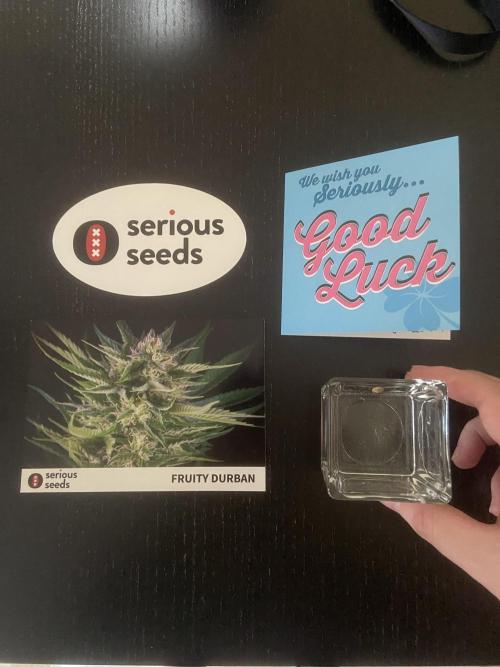
I reached out to Serious Seeds without big expectations, and they gave me the chance to test one of their new strains:
👉 Fruity Durban (Serious Mimosa × Durban)
This is currently a test strain, so I’ll be growing it almost completely blind.
I deliberately avoided researching too much about it. I want to observe it for what it is, without external influence.
⸻
Constraints & approach
Due to where I live, I can only run one plant, which means I won’t be able to explore different phenotypes or evaluate stability.
So this will be a more focused test, centered on a single expression.
At the same time, this run will be more challenging than usual:
• I’ll likely be harvesting in mid-summer
• high temperatures could impact terpene preservation and plant stress
⸻
Living soil system
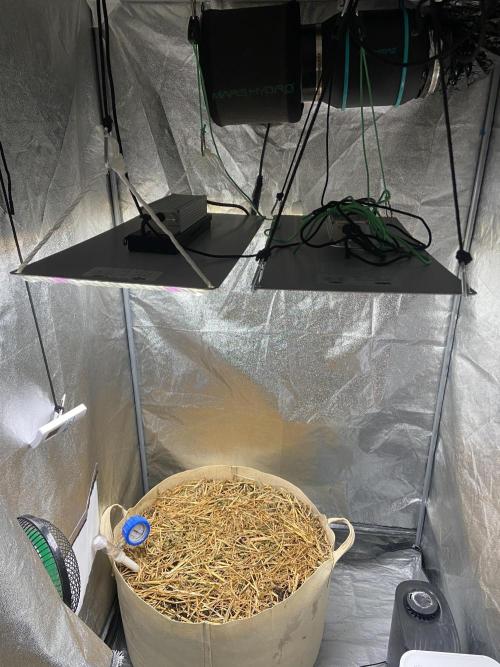
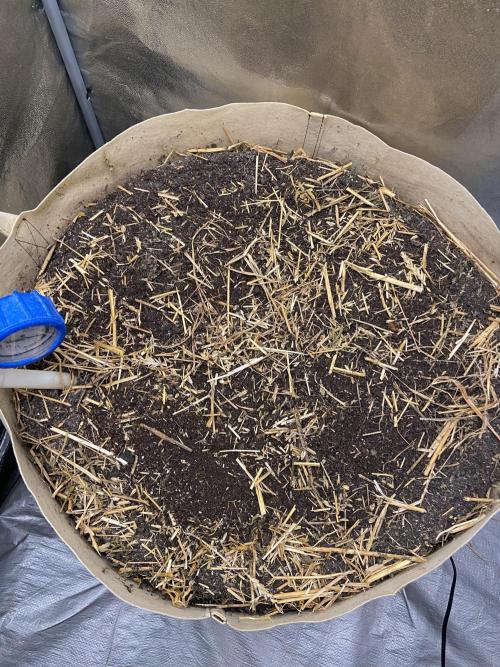
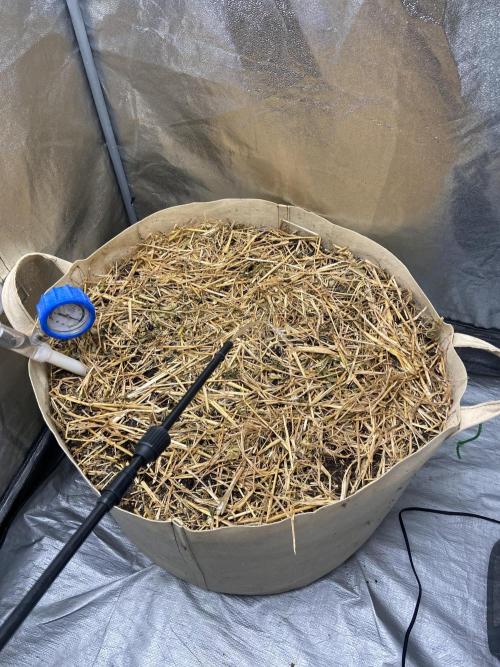
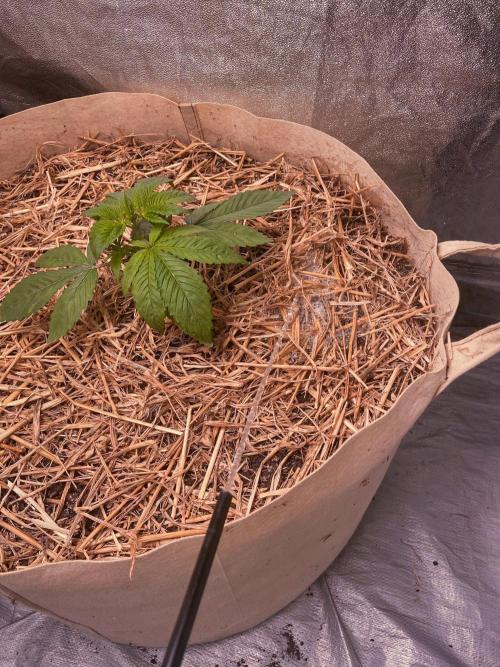
I grow in a living soil system (113L pot), which I like to think of as a bioreactor.
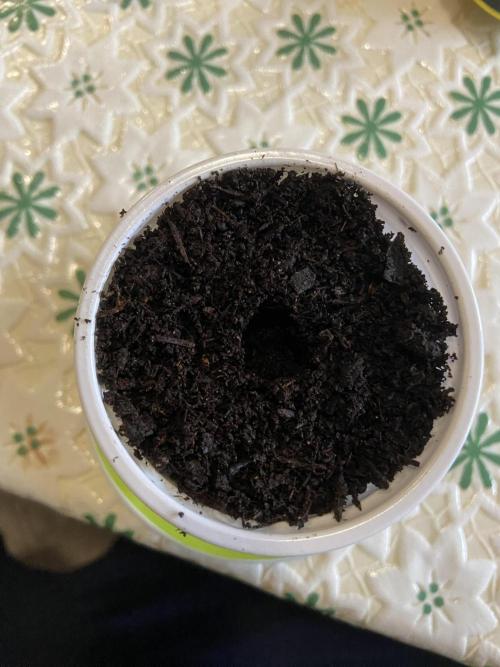
Before starting, I reactivated the soil by:
• adding fresh worm castings
• light top dress amendments
• reintroducing clover as cover crop
The goal is to rebuild microbial activity before transplanting.
⸻
Philosophy for this run
Unlike my previous grow, where yield was very high, this time I want to focus on:
👉 terpene expression and overall quality
For this reason, I’m considering a very light-touch approach:
• minimal training
• possibly a single topping (to avoid excessive main cola density)
• otherwise letting the plant express itself naturally
I don’t want to interfere too much. I want to observe.
⸻
Germination
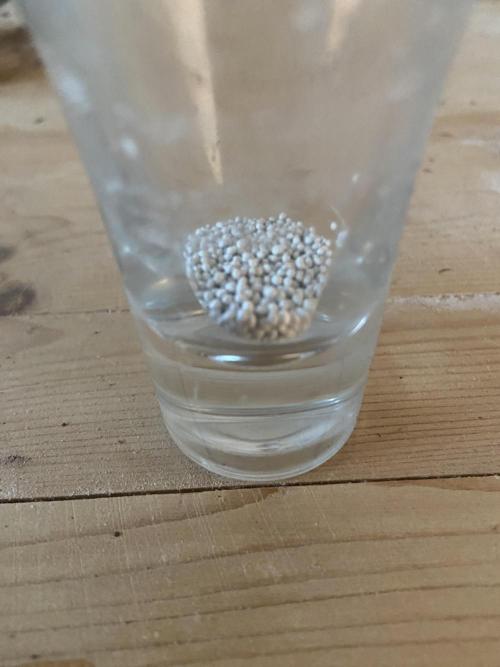
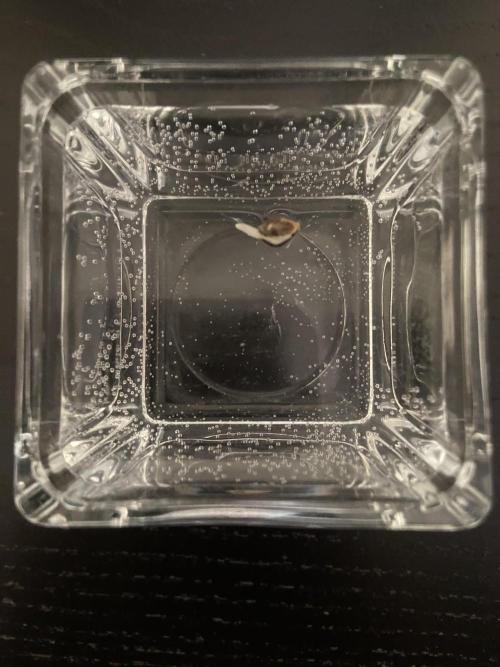
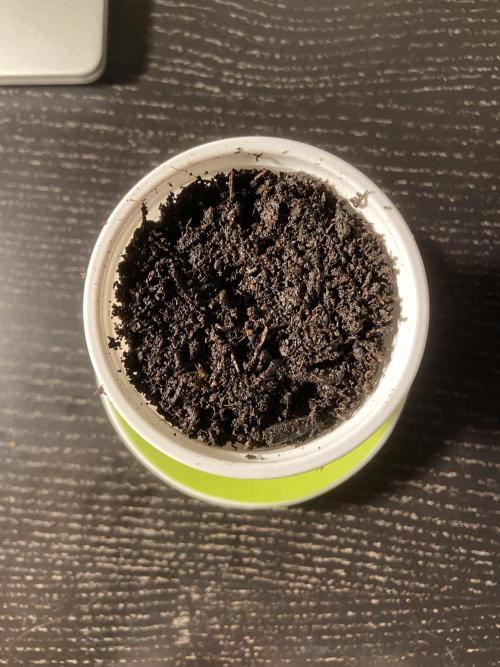
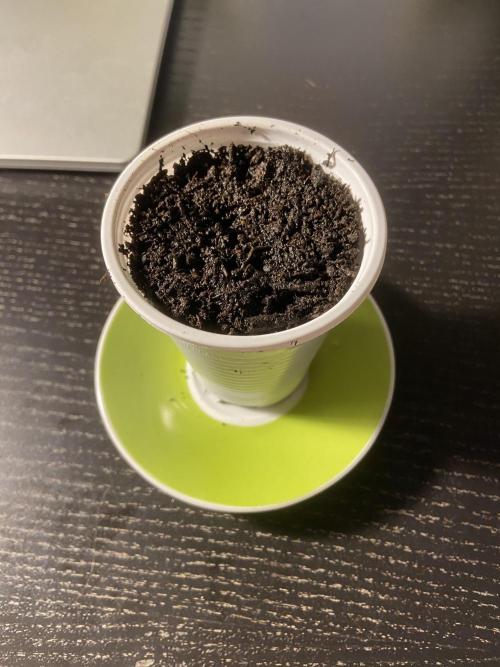
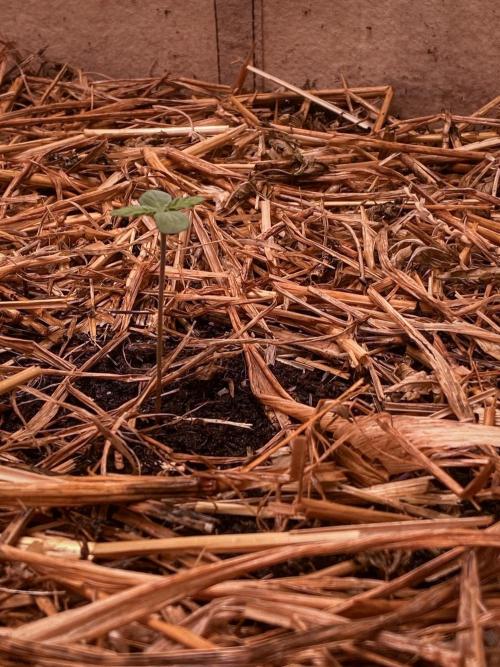
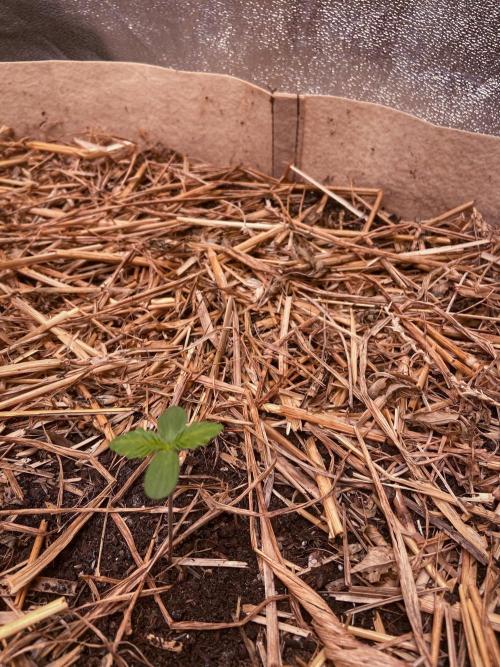
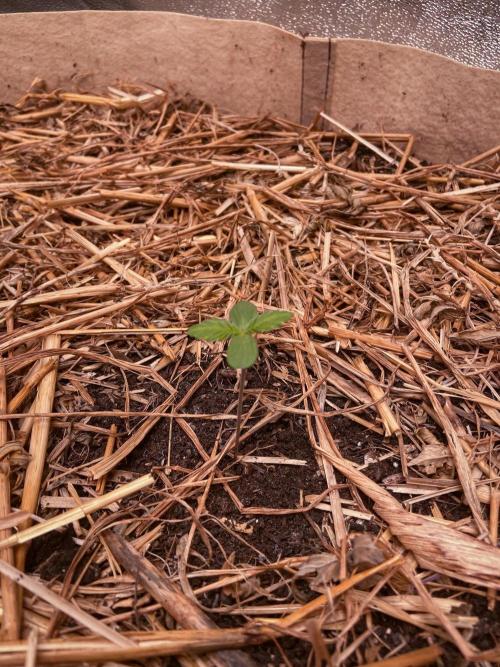
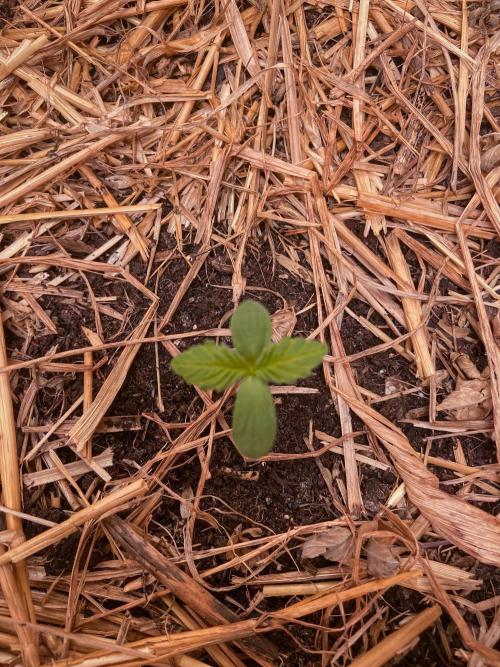
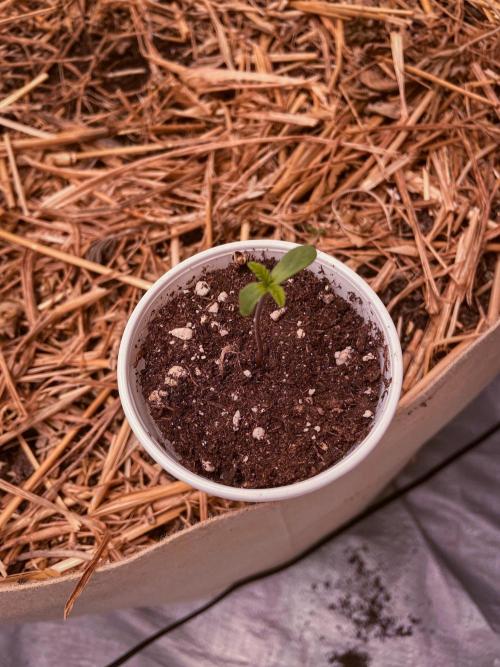
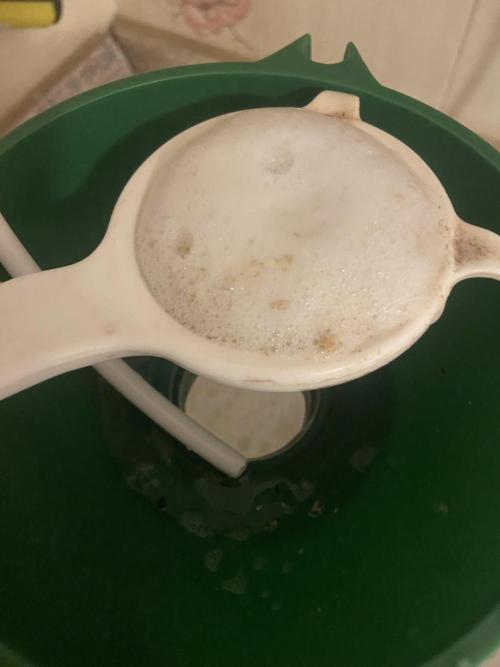
I started by placing the seed directly in a glass of water.
I decided not to use H₂O₂ this time, in my experience it can help, but it’s not essential.
Now we wait.
⸻
I’m really curious to see how this strain will behave in this environment, especially in these conditions.
This will be a journey focused on observation, learning, and quality over quantity.
Let’s see what comes out of it 🌱
67 likes
18 comments
Share
Used method
Glass Of Water
Germination Method
1
Week 1. Vegetation
1mo ago
1/21
7 cm
Height
18 hrs
Light Schedule
20 °C
Day Air Temp
No Smell
Smell
75 %
Air Humidity
20 °C
Solution Temp
20 °C
Substrate Temp
17 °C
Night Air Temp
113 l
Pot Size
1 l
Watering Volume
30 cm
Lamp Distance
ElNass Hello everyone 🌱
I’m writing this while walking by the sea, as usual, with some White Russian keeping me company… reflecting on what happened during this first week of the run.
I have to start this diary with a small “defeat”.
I promised myself I would go completely blind on this grow, but as a true spoiler addict (yes, I always spoil movies and series before watching them 😅), when the strain dropped on 20/04 I got completely flooded with information about Fruity Durban on Instagram… and I couldn’t resist.
From what I’ve seen, it’s described as a sativa-dominant strain with a flowering time of around 35 days.
Honestly, I’m a bit skeptical about that.
A sativa-dominant plant usually takes much longer, and while I understand that the Mimosa parent could speed things up, I can’t help but wonder:
Does this extreme flowering speed come at the cost of terpene and flavonoid complexity?
As chemistry teaches us: nothing is created, nothing is destroyed, everything is transformed.
Even if the biochemical processes behind trichome and terpene production can be relatively fast, I struggle to believe that such a short flowering time can fully develop a rich and complex profile.
So yes, I’m a bit concerned.
I’m afraid that speed might have been prioritized over flavor… especially for a sativa-dominant strain.
That said, if I’m wrong, then this could be something truly special.
A fast-flowering sativa with strong terpene expression would be a huge step forward, especially from a production standpoint.
⸻
Now let’s get into what actually happened during this first week.
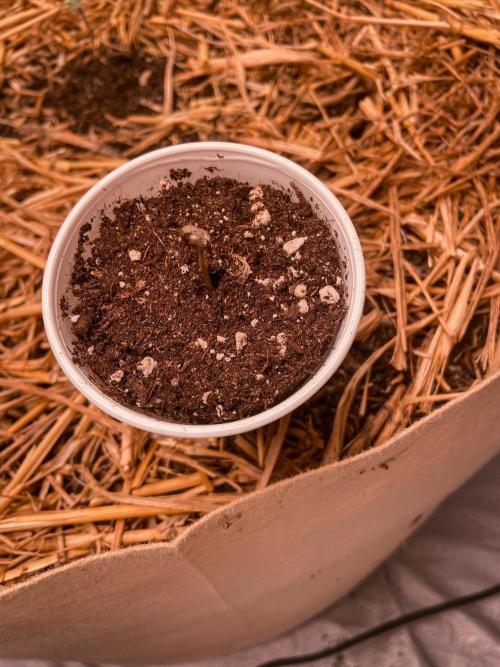
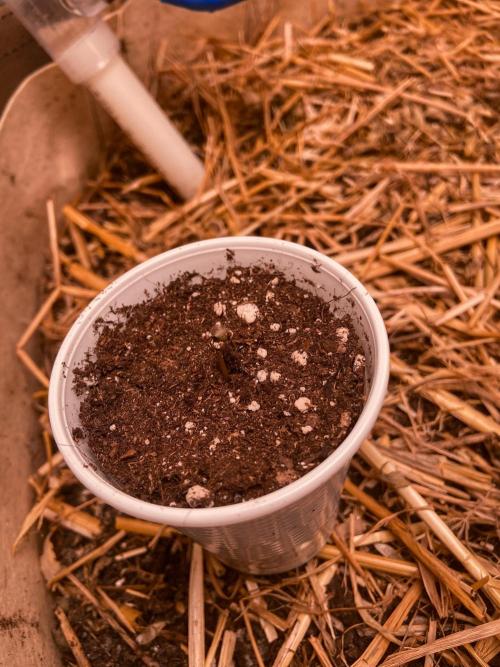
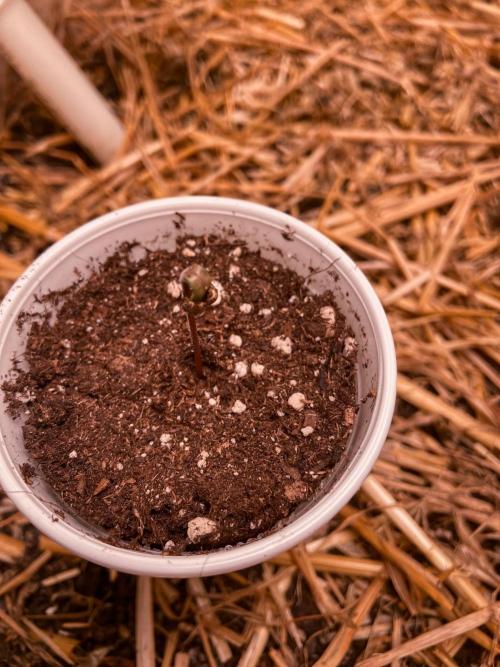
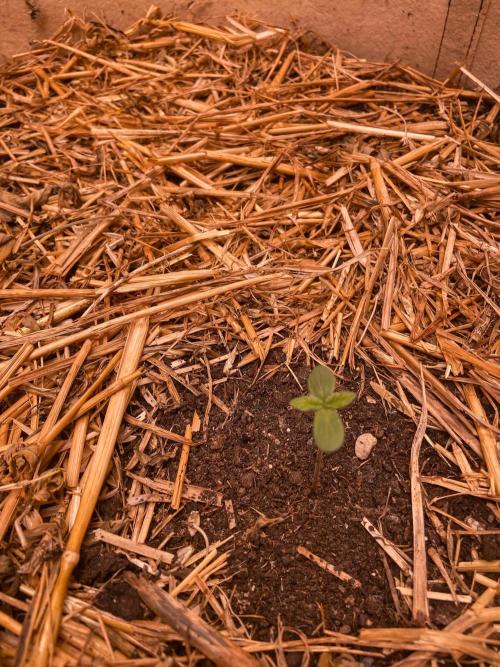
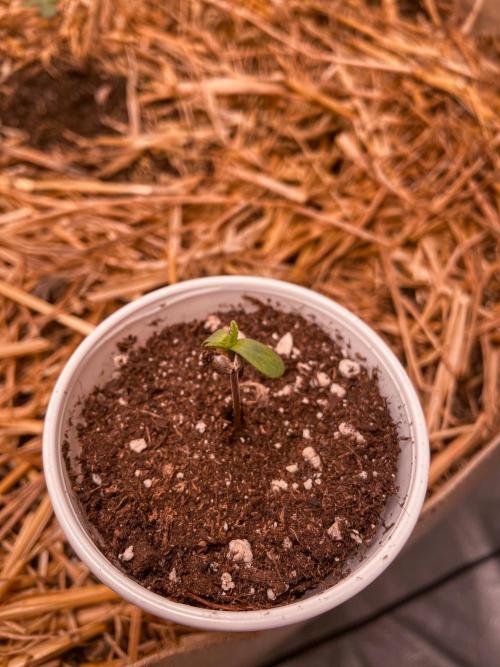
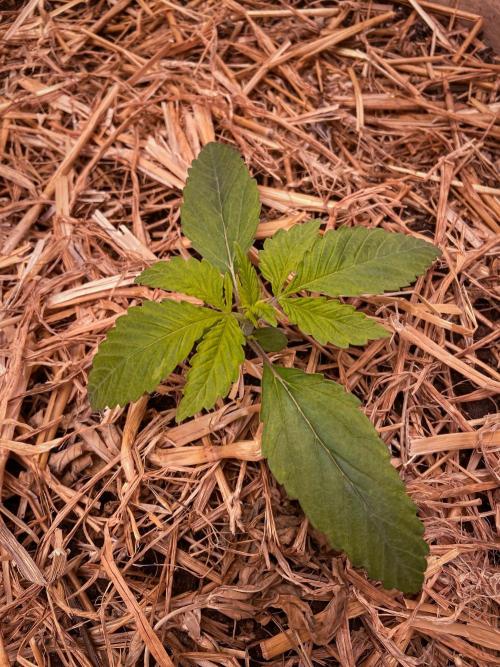
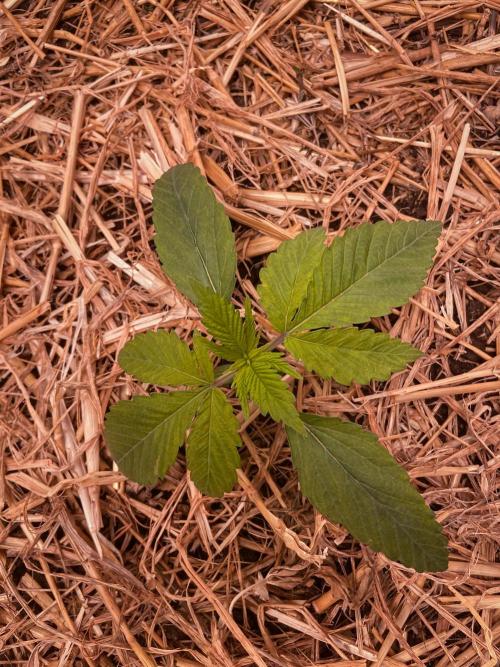
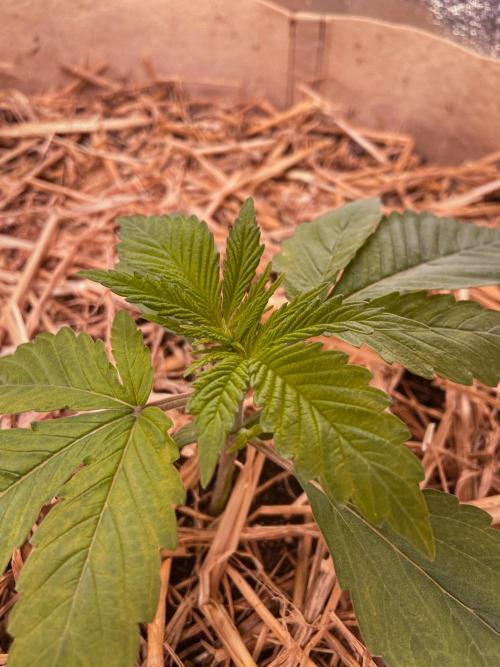
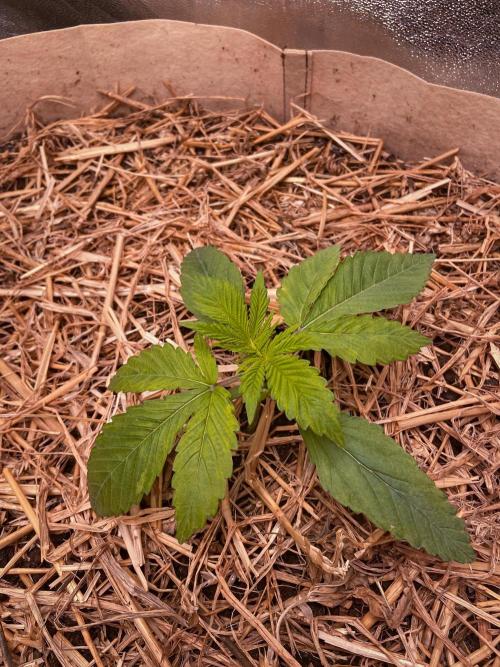
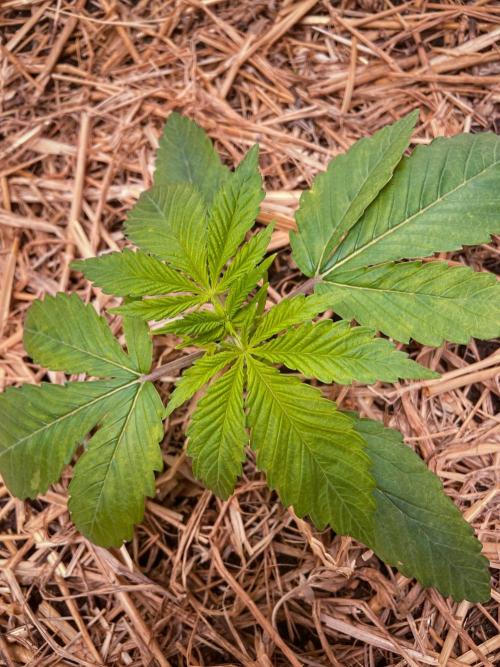
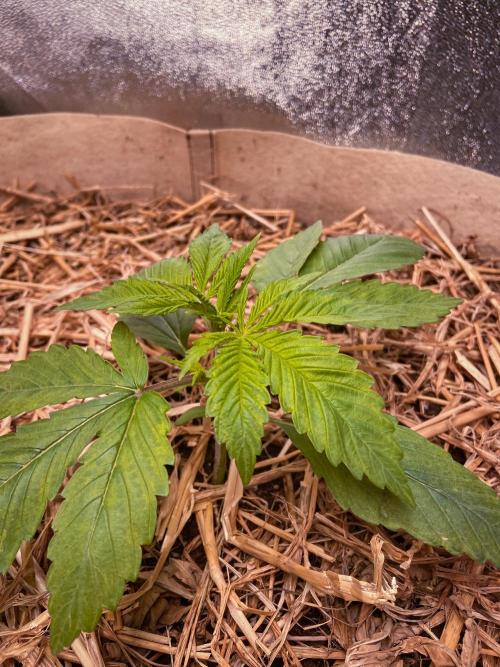
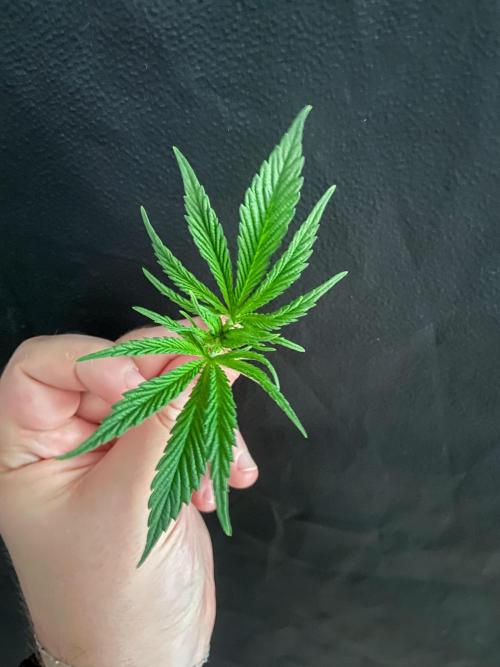
I started with a small germination test using three different substrates.
Each seed had a taproot of about 1 cm before planting.
• First substrate: a very poor-quality soil with high pH (~8.1)→ no surprise, nothing came out.
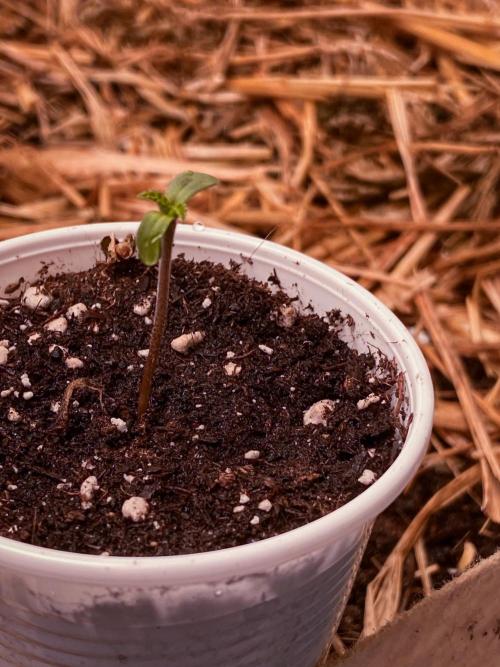
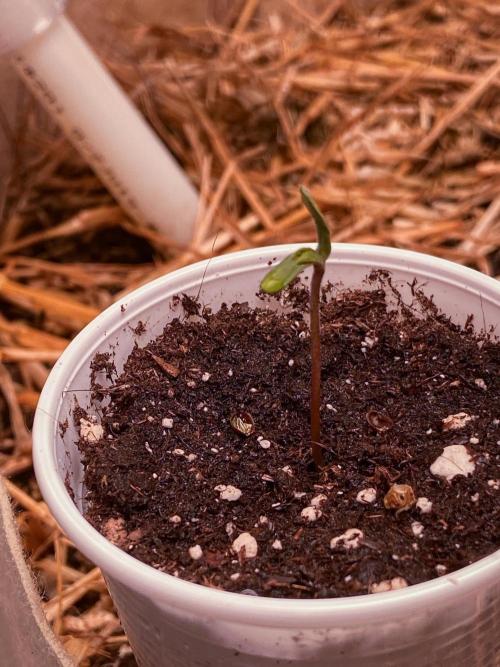
• Second substrate: LightMix mixed with worm castings (85/15)
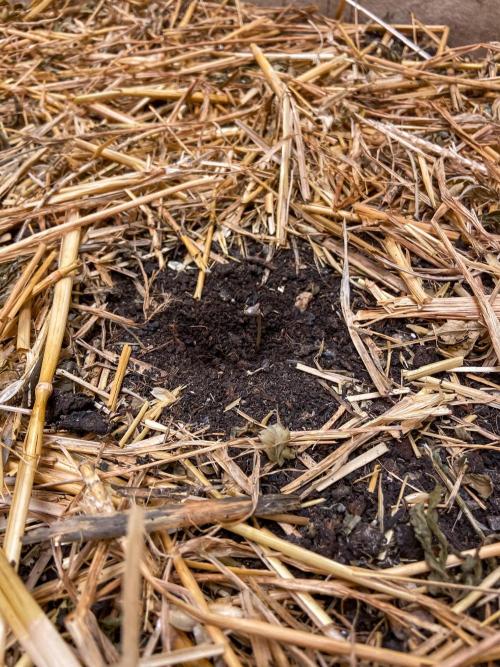
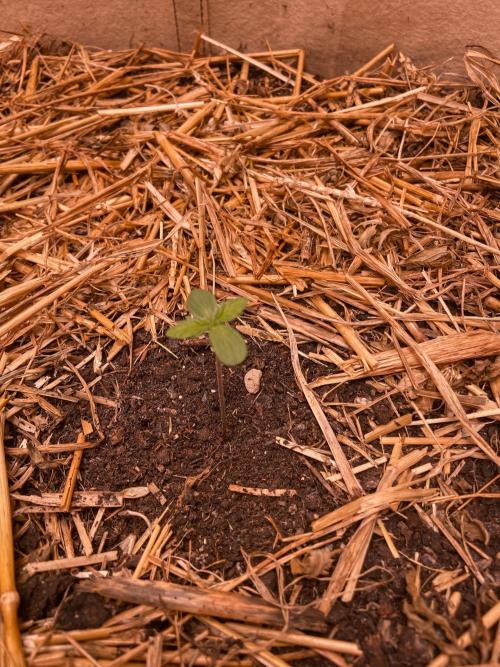
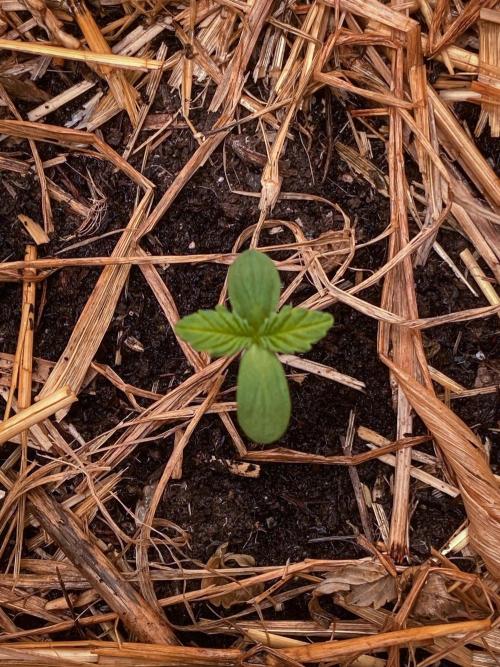
• Third substrate: my living soil setup
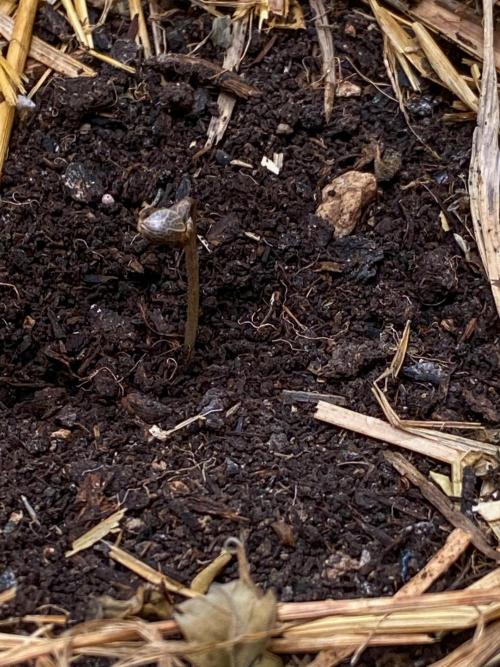
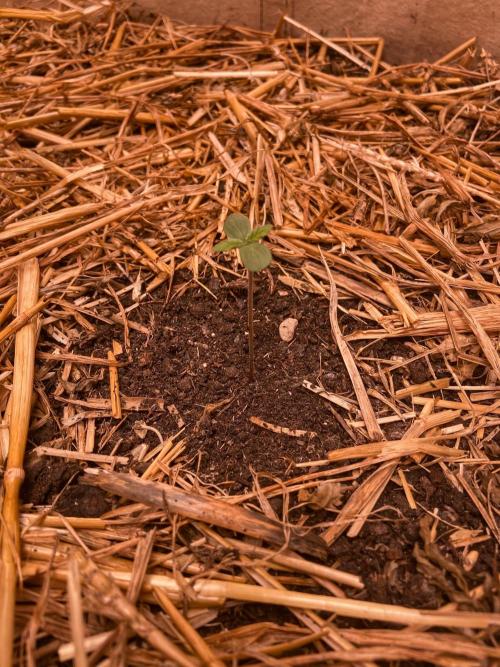
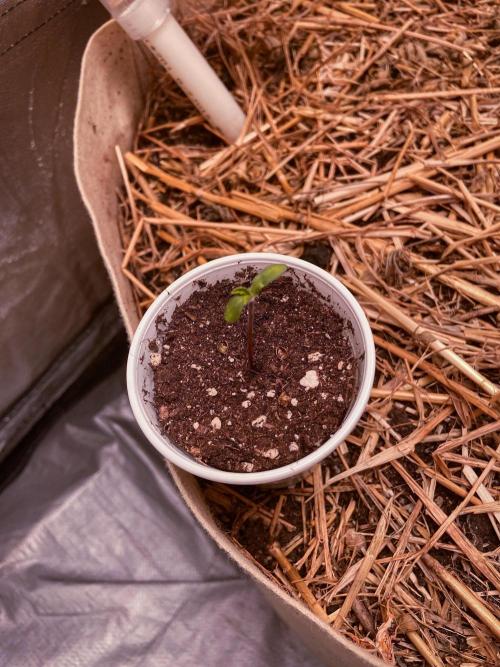
The first seedling to emerge was the one in the living soil.
After about three days, the one in the LightMix followed.
I assume this is due to several factors that make living soil more stable and efficient at this stage:
Better moisture retention, microbial life, mycorrhizae, and overall biological activity.
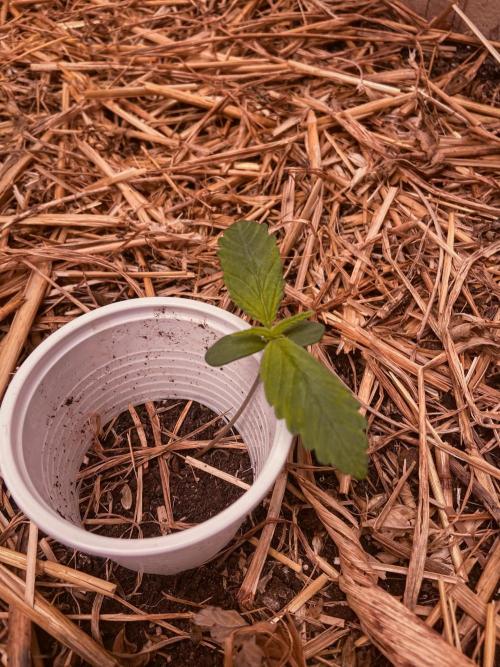
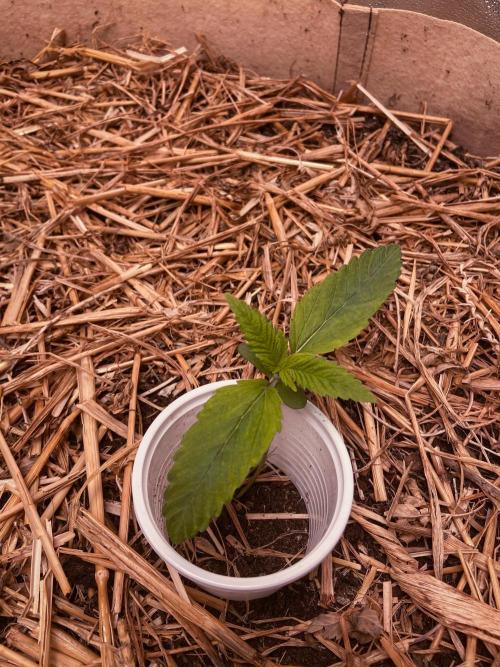
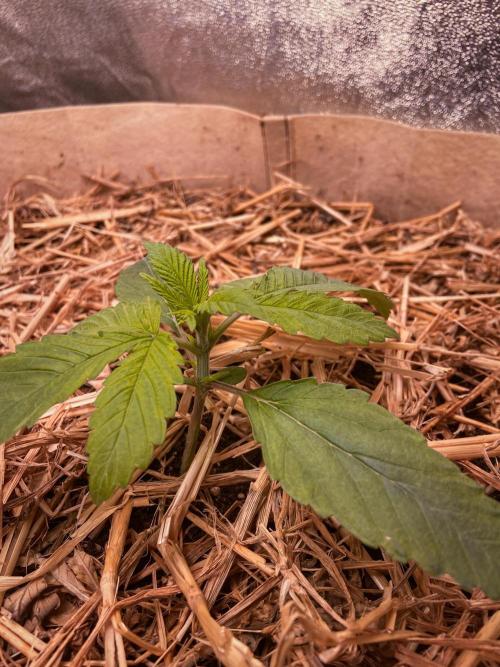
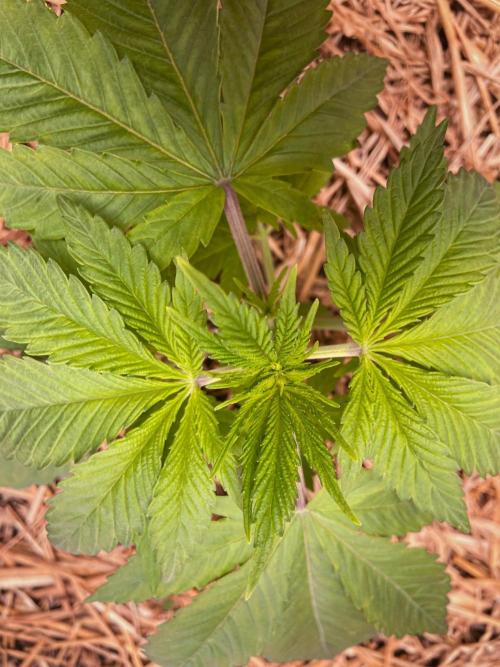
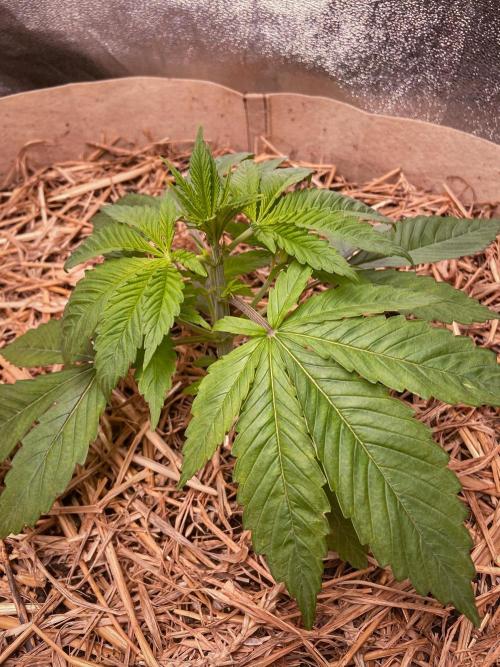
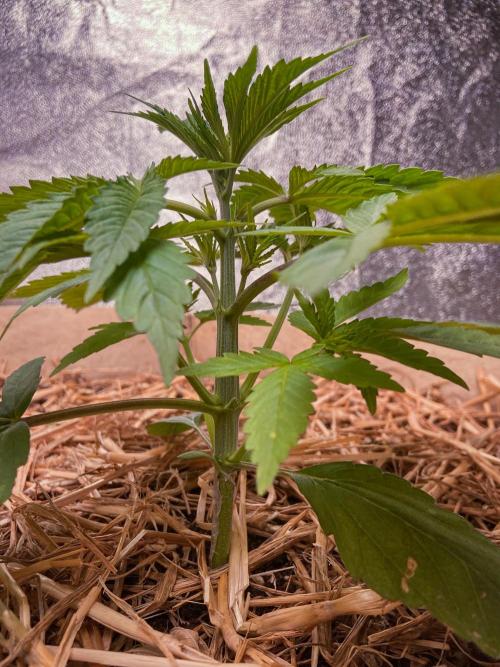
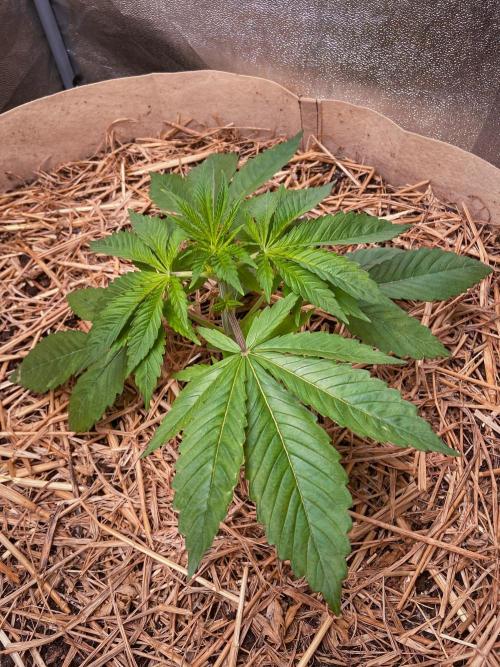
Interestingly, all seedlings (2 in LightMix and 1 in living soil) came out with the seed shell still attached (“helmet head”), preventing the cotyledons from opening.
Nothing serious, just required a bit of patience and a delicate touch to remove.
⸻
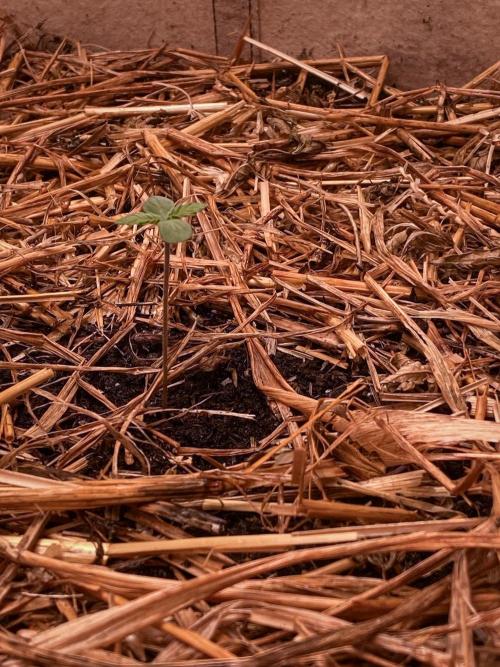
One issue appeared early on with the seedling in the living soil.
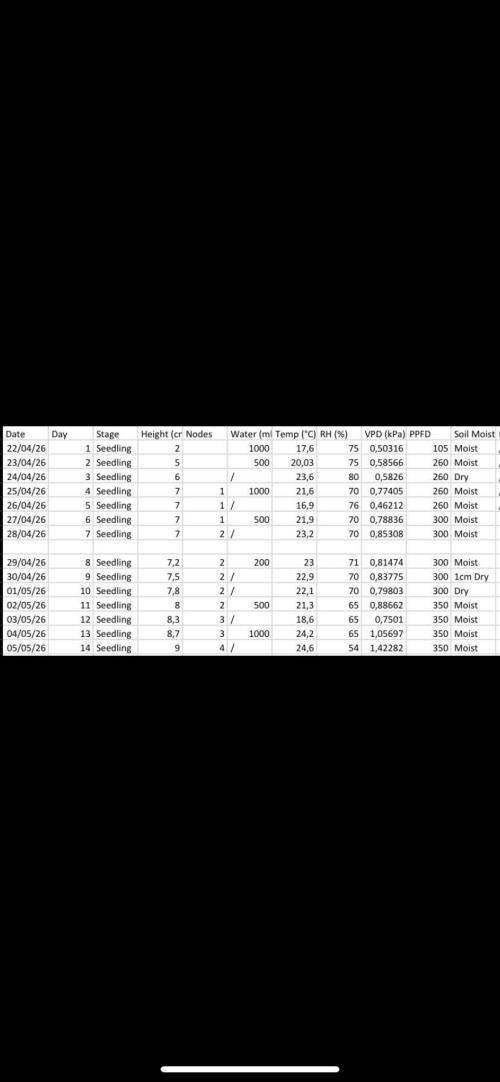
Thanks to another grower, I discovered that it’s possible to estimate PPFD using a smartphone app, so I decided to stop going “by feeling” and actually measure things this time.
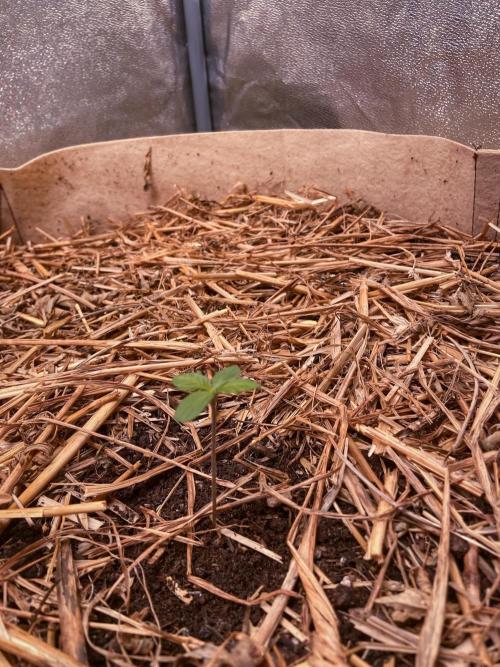
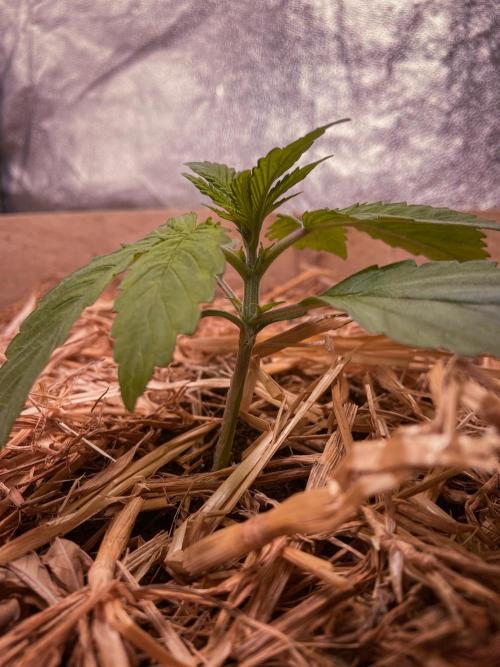
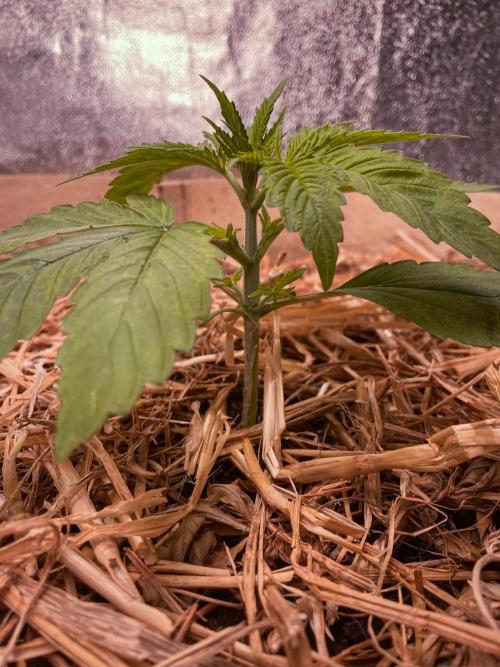
At first, I set the PPFD to around 105, which turned out to be too low.
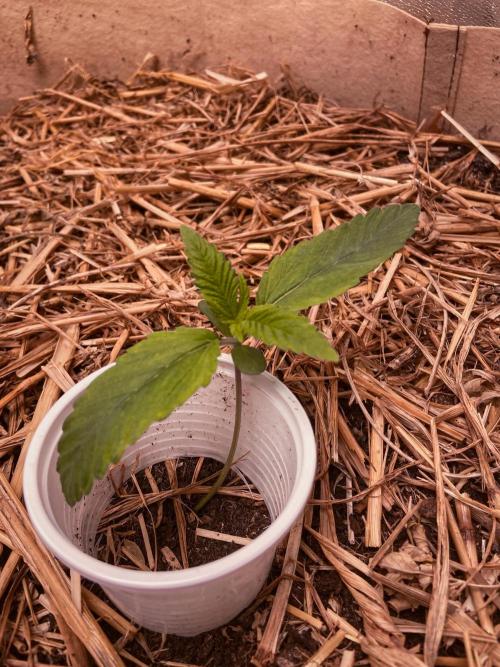
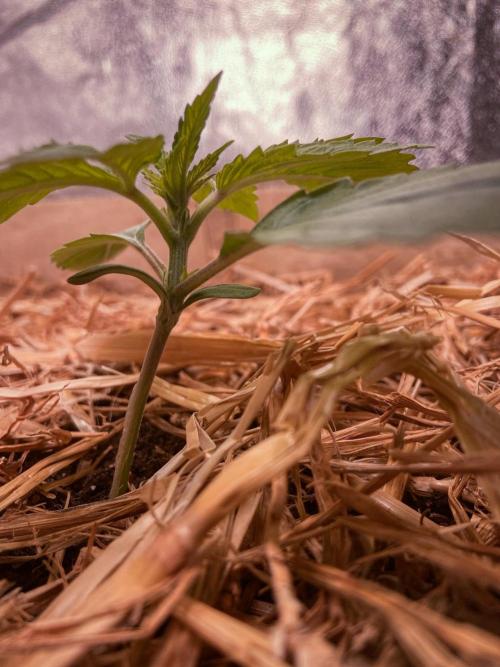
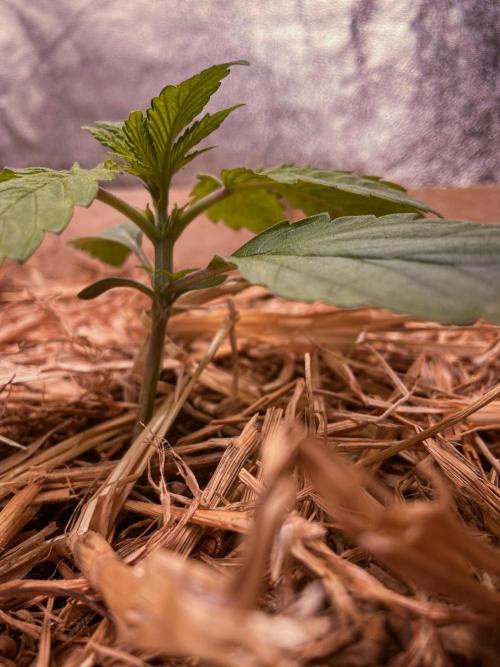
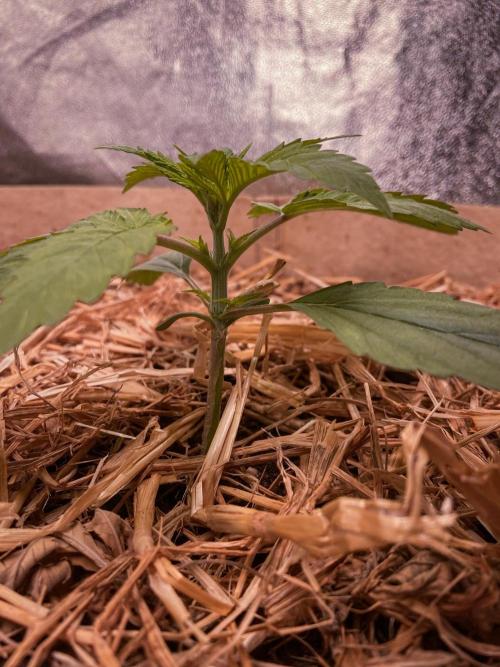
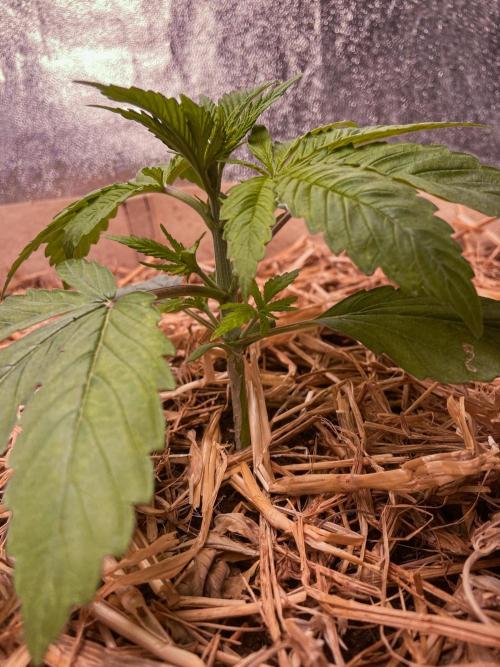
This caused an unwanted stretch right from the start, with the seedling elongating by about 4 cm in a very short time.
I corrected it by increasing the PPFD to around 260, and after a few days I also introduced a light airflow to help strengthen the stem.
⸻
Another limitation of my setup is that I don’t have an automatic controller for VPD, so I have to adjust temperature and humidity manually… once per day (yes, I know 😅).
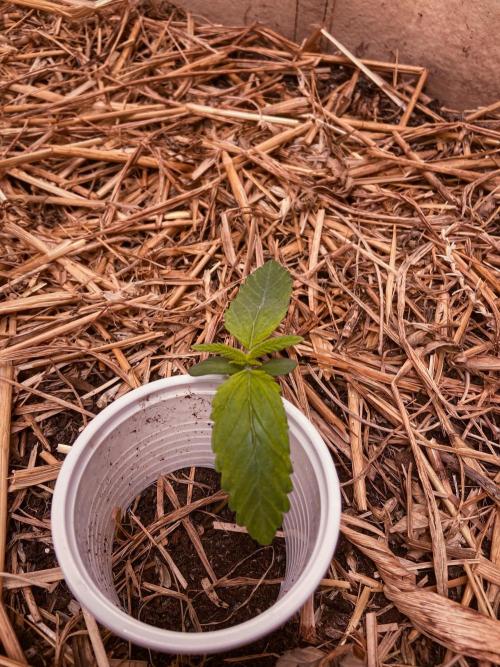
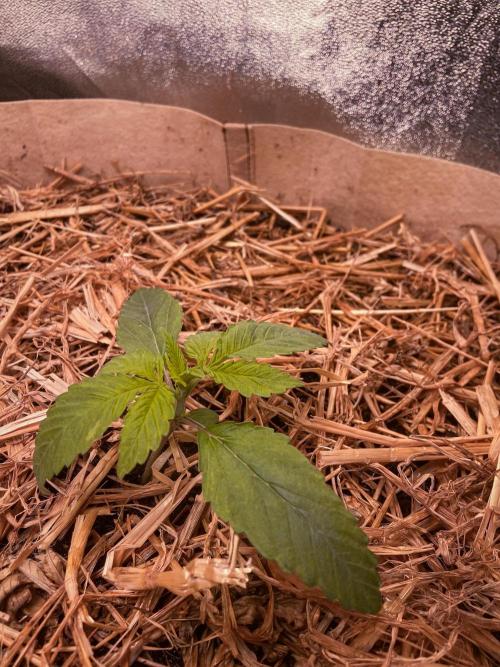
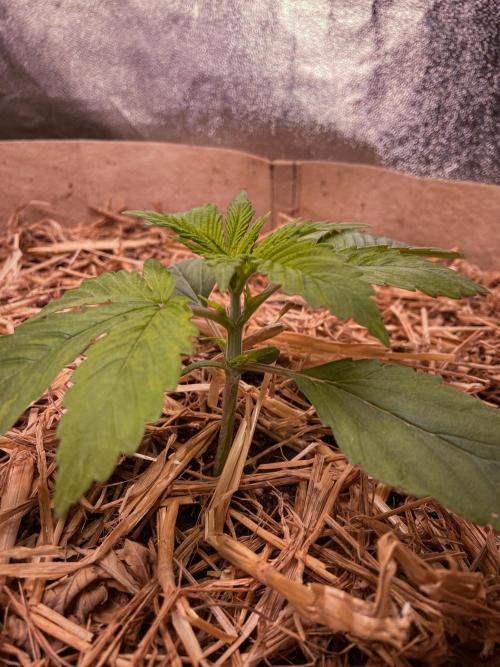
Overall, I’ve noticed that all seedlings seem to be growing a bit slowly for the first week.
I’m not too worried yet, but it’s something I’ll keep an eye on.
⸻
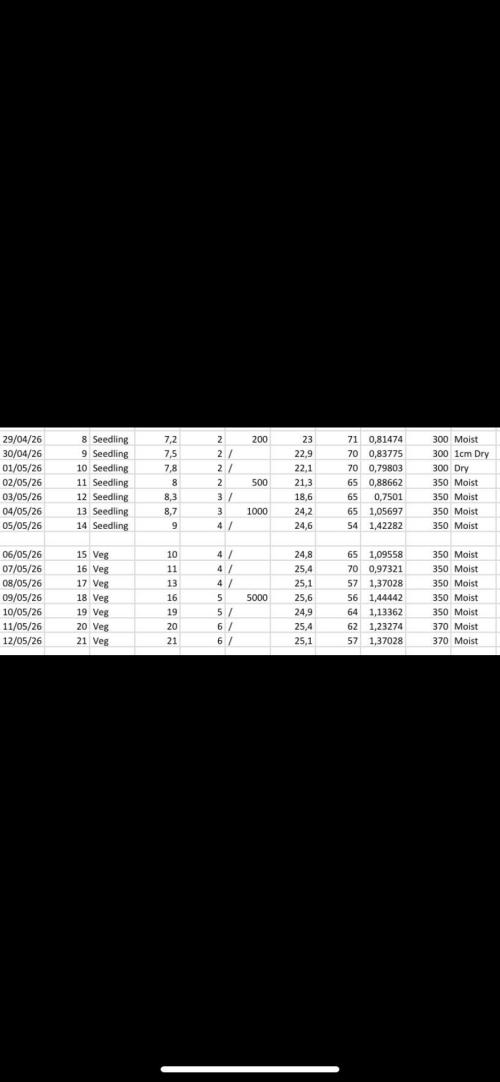
On a more positive note, I’ve started collecting all the relevant data in an Excel file.
The goal is to create a full report at the end of the run using LaTeX, analyzing everything in a more structured and “scientific” way.
Let’s see if I can stay consistent with it… daily life might have something to say about that 😂
⸻
That’s all for this first week.
I’ll keep you updated if anything interesting comes up.
Thanks for following along 🌱
53 likes
5 comments
Share
2
Week 2. Vegetation
1mo ago
1/16
9 cm
Height
18 hrs
Light Schedule
24 °C
Day Air Temp
No Smell
Smell
65 %
Air Humidity
24 °C
Solution Temp
24 °C
Substrate Temp
18 °C
Night Air Temp
113 l
Pot Size
1 l
Watering Volume
30 cm
Lamp Distance
ElNass 🌱 Week 2 Vegetative – Fruity Durban (Serious Seeds)
📅 Period: 29/04 → 05/05
Week 2 is done, and this one was all about establishment and understanding the soil balance.
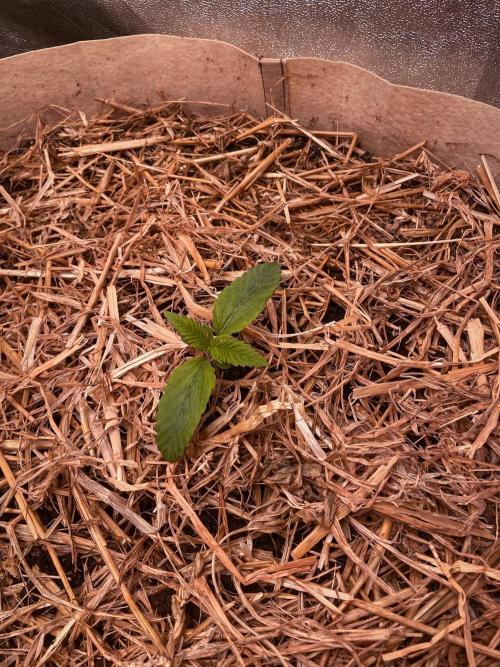
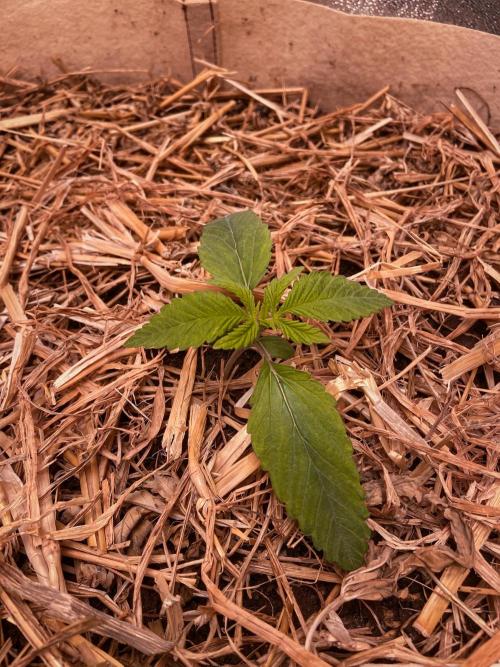
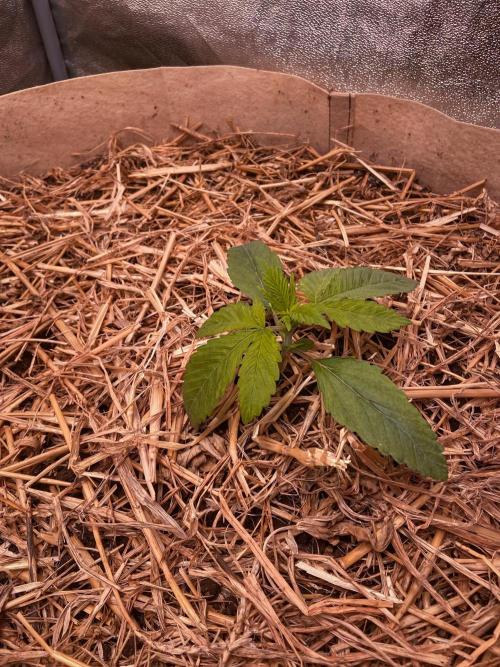
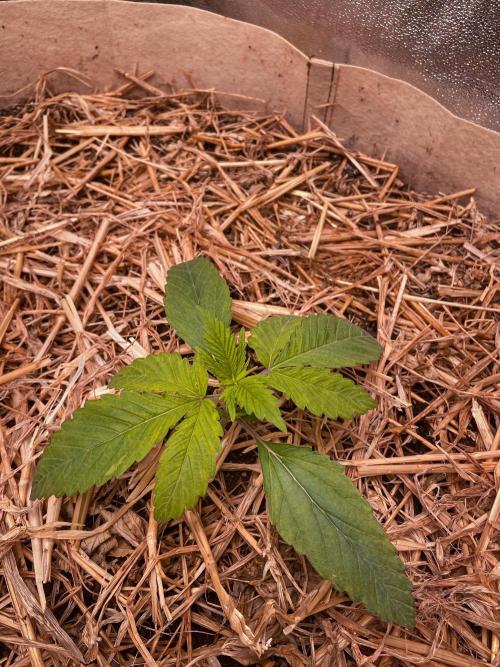
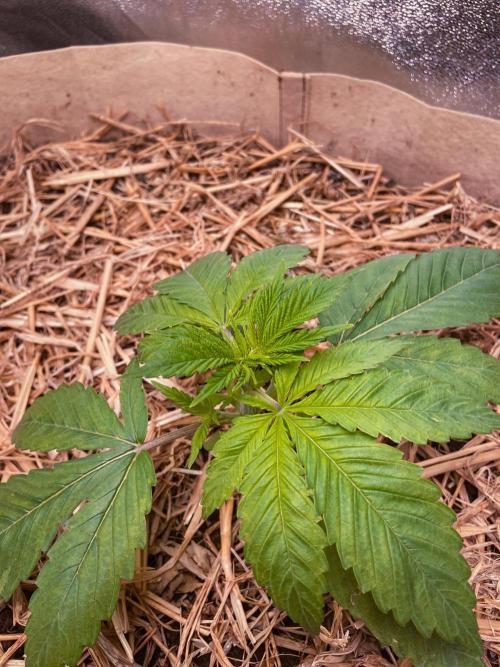
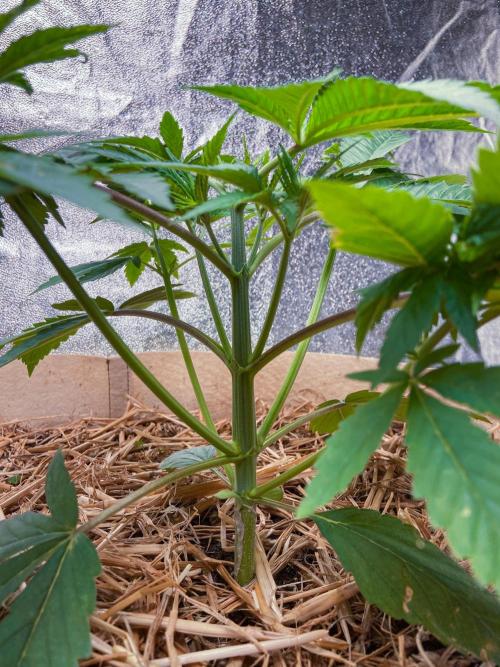
After the initial transplant into the 113L living soil pot, the plant started adapting to the new environment. Growth has been steady but not explosive, which is something I expected considering the size of the container and the biology needing time to fully activate.
⸻
🌿 Plant Selection
During this week I also made a final decision:
👉 I decided to keep Plant #1, the one growing in the living soil.
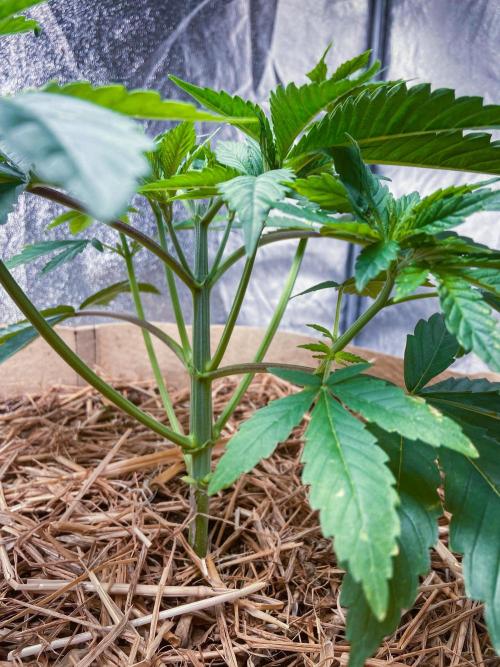
Compared to the other two plants in light mix, this one showed:
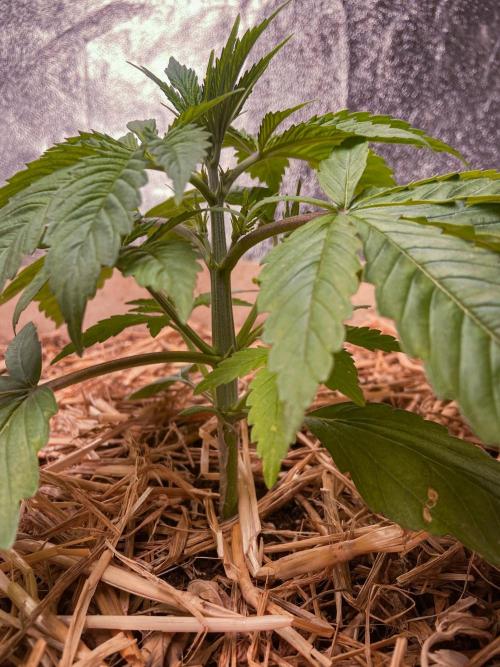
* better structure
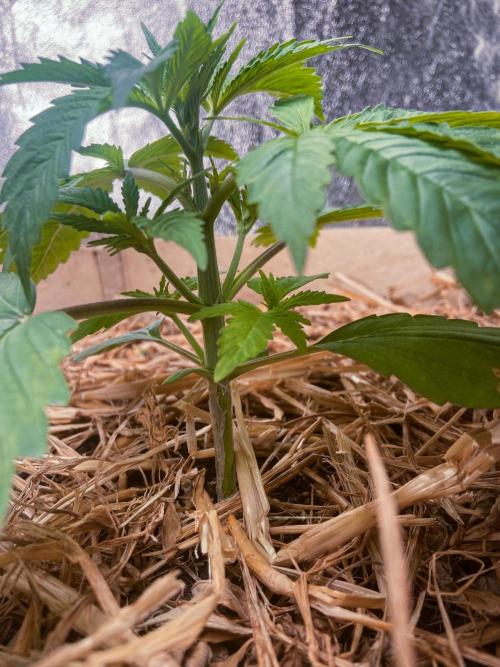
* stronger stem development
* more consistent and stable growth
The difference was clear enough to focus everything on this phenotype.
⸻
🌿 Plant Development
During this week:
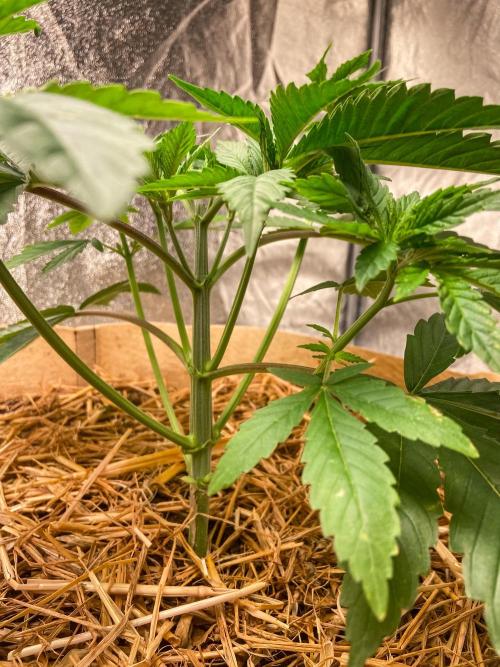
* The plant developed new nodes consistently
* Internodal spacing stayed nice and tight
* Stem noticeably thickened, showing good structural response
* New growth is active and healthy, even if not super aggressive
Overall structure is compact, which is exactly what I’m aiming for going into a possible SCROG setup.
⸻
🎨 Leaf Color & Observations
One thing I noticed:
* Leaves are slightly lighter green than expected
Nothing alarming, but it suggests:
👉 the soil is still ramping up biologically rather than being at full nutrient availability
This is very typical in living soil, especially early after transplant.
⸻
💧 Irrigation Management
This week taught me something important:
I found myself watering too frequently at first, because the surface dries fast due to the mulch layer.
But:
👉 underneath, moisture was still present
So I adjusted:
* Letting the soil dry more between waterings
* Moving towards deeper, less frequent irrigation
Goal now is to:
✔️ increase oxygen in the root zone
✔️ stimulate stronger root exploration
⸻
🌱 Soil & Biology
To support the system:
* Added a light layer of humus
* Keeping mulch active to maintain moisture balance
The idea is to let the soil build momentum naturally, without forcing inputs too early.
⸻
🌡️ Environment
* PPFD around 300–350
* VPD kept stable around 0.8–0.9
No major stress signals observed:
👉 no stretching
👉 no leaf burn
👉 no drooping issues
Environment is dialed in.
⸻
✂️ Training Plans
No topping yet.
I’m letting the plant:
👉 build strength
👉 reach at least the 5th node
Still deciding based on structure and community feedback:
SCROG vs Natural growth
⸻
🧠 Final Thoughts
This wasn’t a “fast” week, but a foundation week.
In living soil:
👉 early patience = later explosion
Right now the plant is:
* stable
* healthy
* building roots more than foliage
And that’s exactly what I want at this stage.
⸻
🔜 Next Week Goals
* Improve irrigation rhythm
* Boost soil activity slightly (enzymes/tea)
* Push for more vigorous vegetative growth
* Decide training strategy (SCROG?)
⸻
Strain: Fruity Durban (Serious Seeds)
Medium: Living Soil – 113L pot
Style: Organic / No-till approach
69 likes
18 comments
Share
3
Week 3. Vegetation
1mo ago
1/30
21 cm
Height
18 hrs
Light Schedule
24 °C
Day Air Temp
No Smell
Smell
65 %
Air Humidity
24 °C
Solution Temp
24 °C
Substrate Temp
18 °C
Night Air Temp
113 l
Pot Size
1 l
Watering Volume
30 cm
Lamp Distance
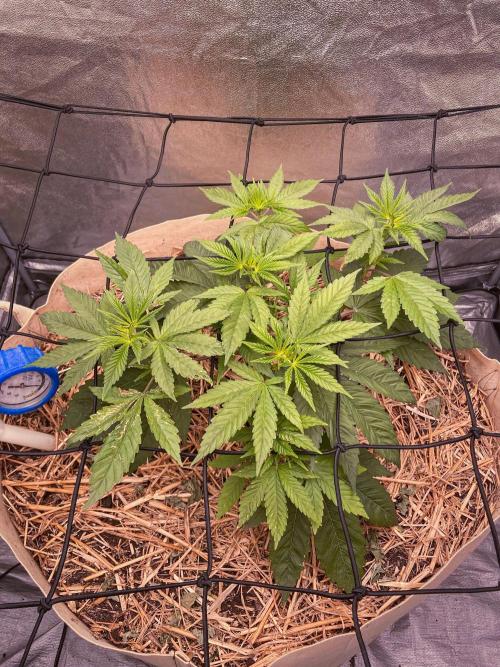
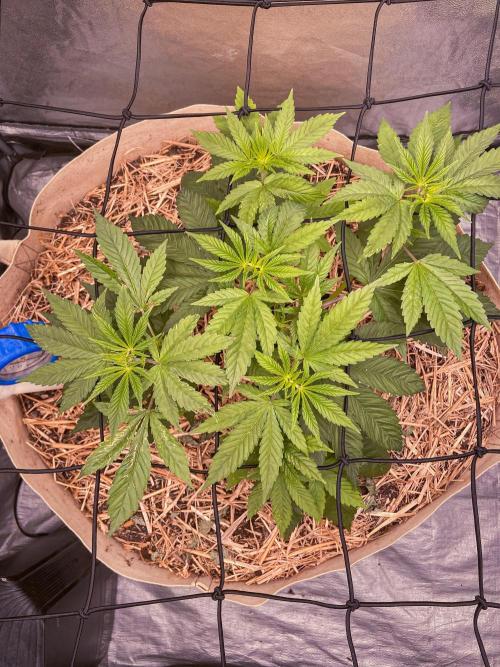
ElNass Week 3 — Days 15–21 🌱
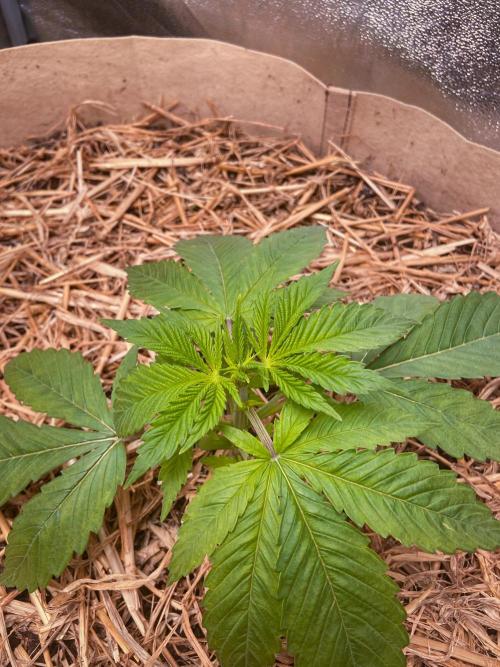
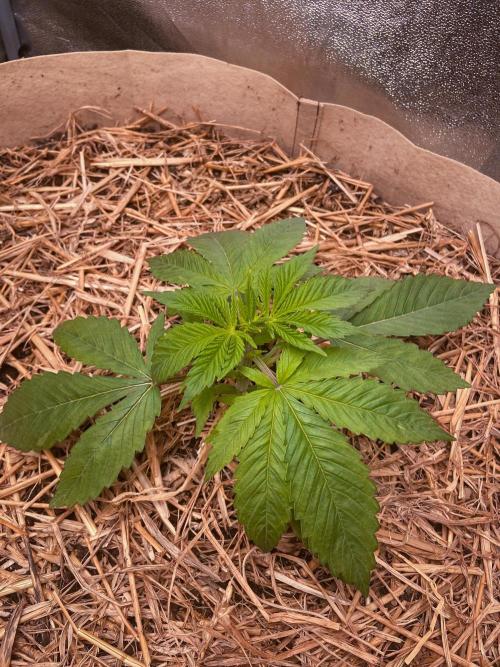
This week the living soil finally started to “wake up”.
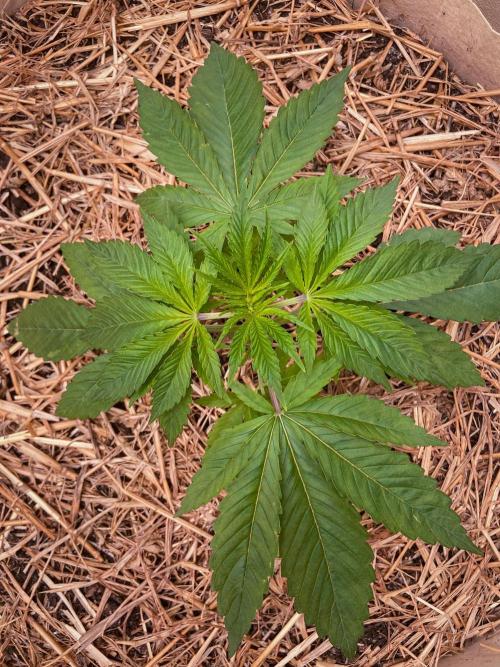
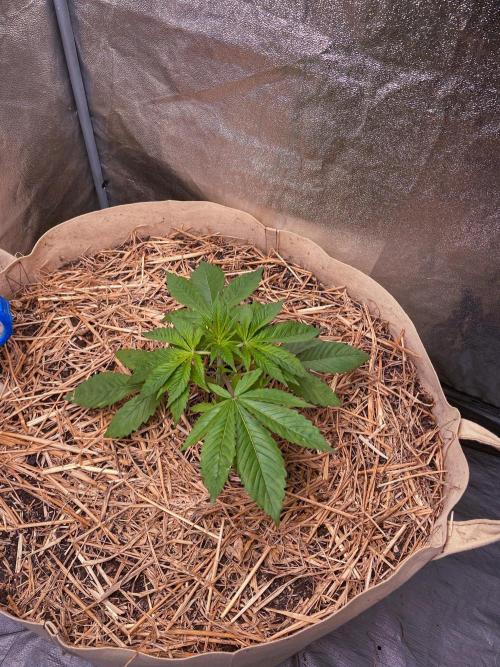
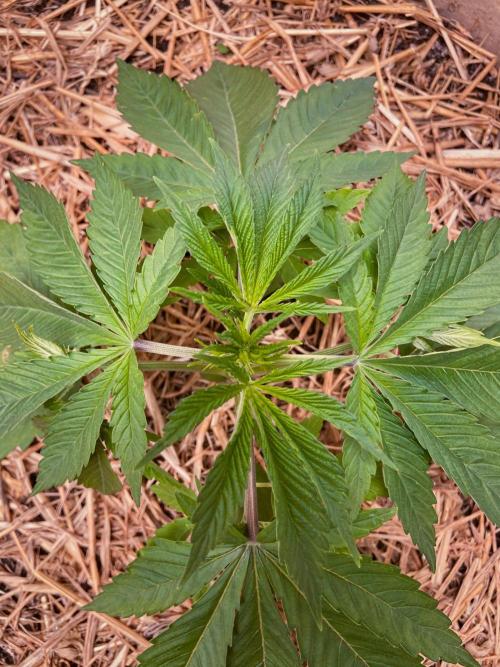
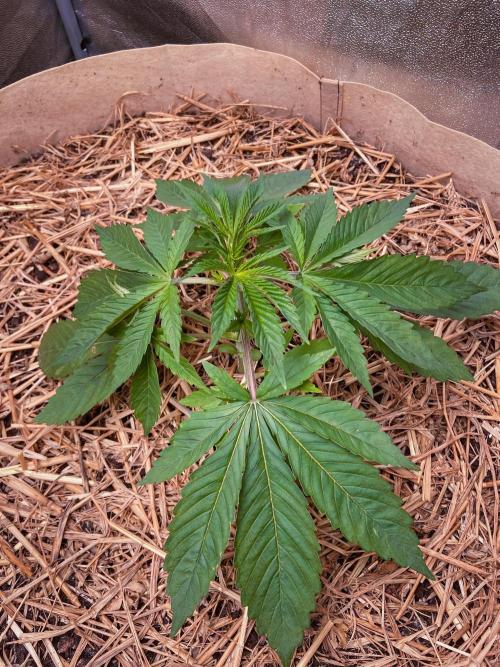
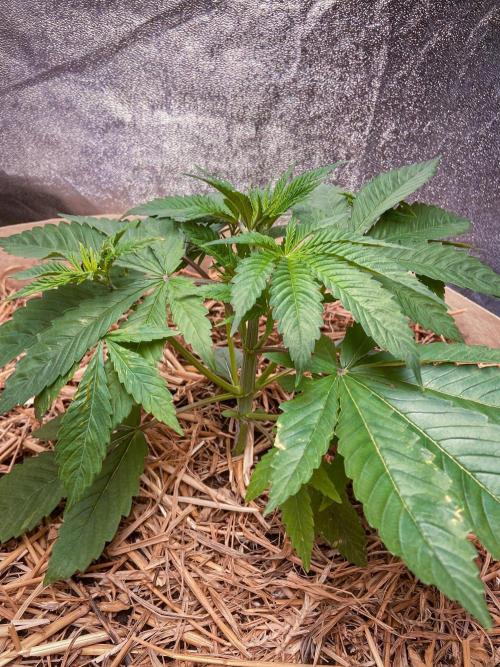
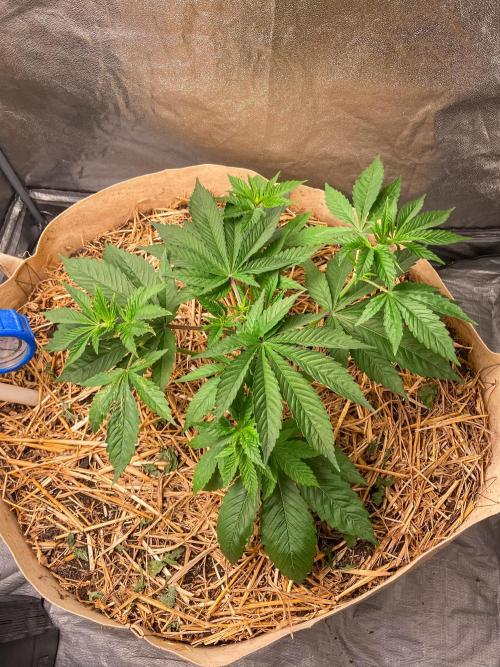
Growth noticeably accelerated compared to the previous days and the plant transitioned from seedling behavior into true vegetative development.
The root zone seems to be colonizing the container properly now, and that reflected in the overall vigor of the plant almost day by day.
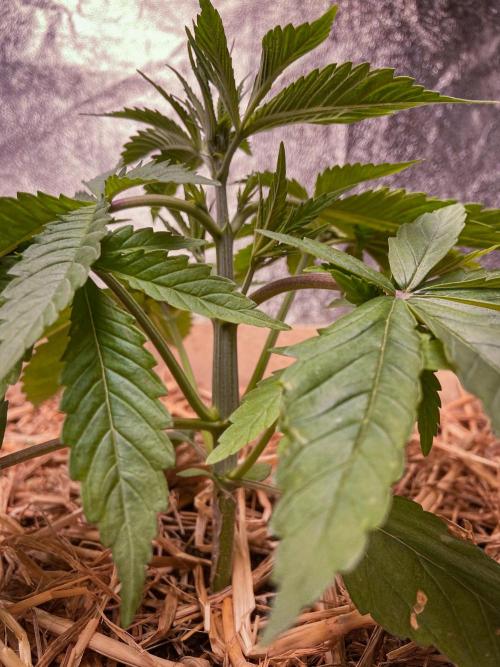
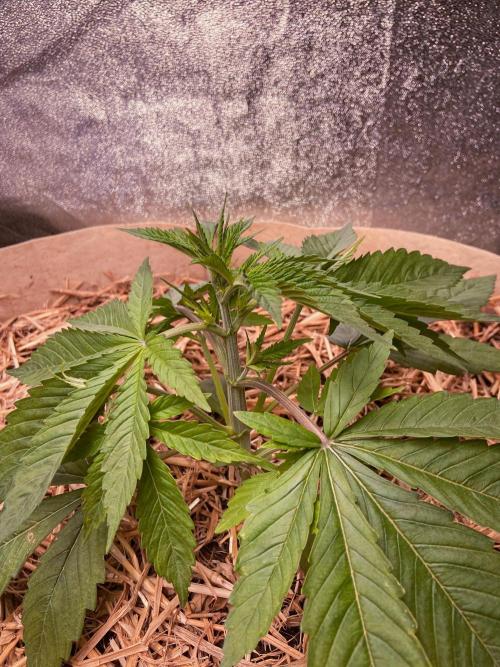
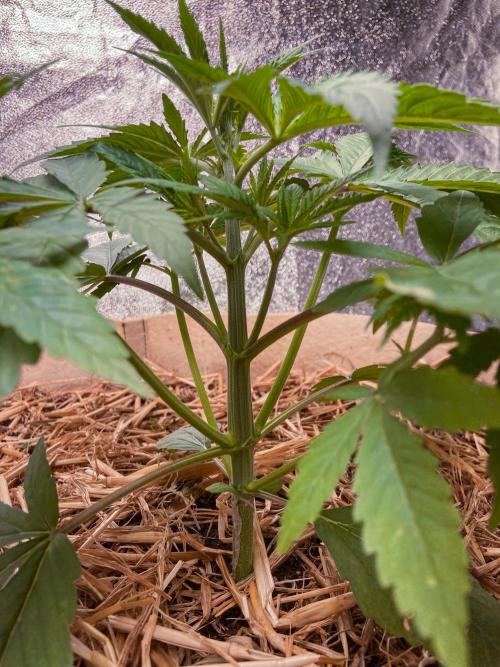
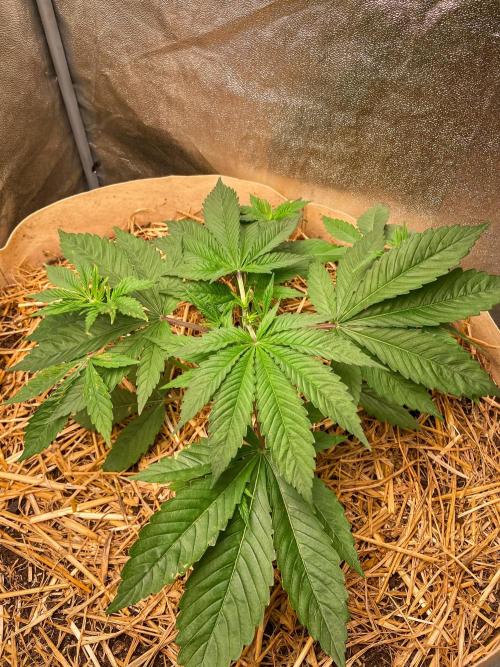
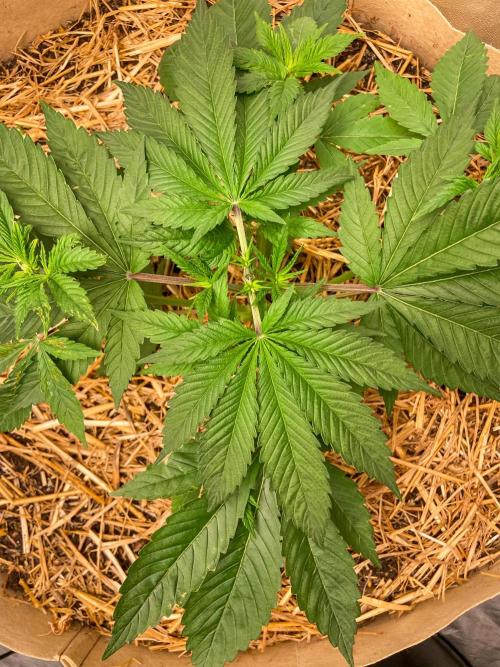
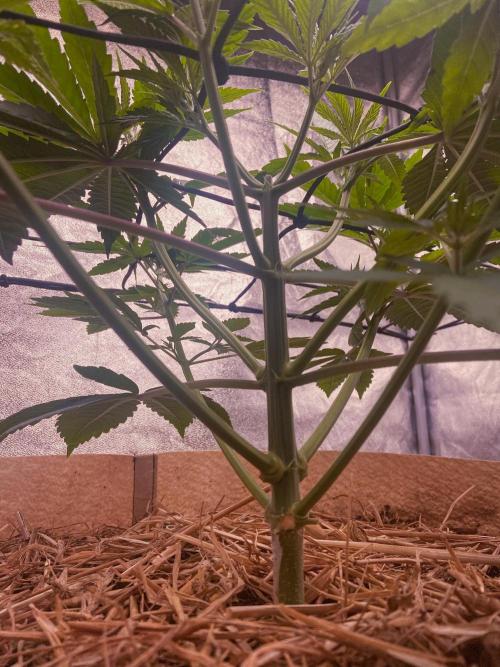
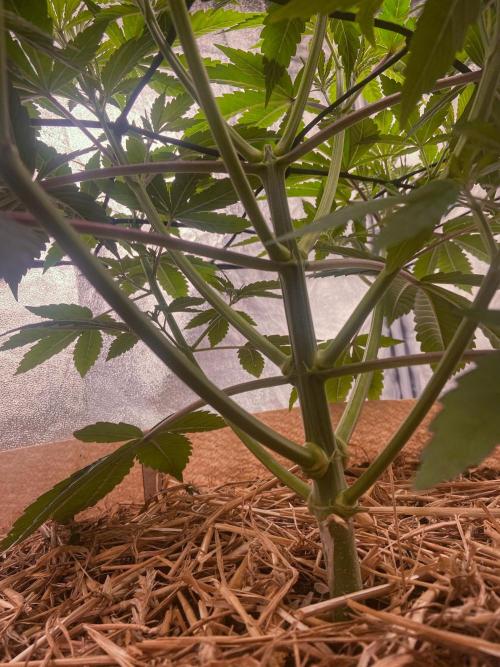
Side branches started pushing harder, internodal spacing remained tight, and the main stem thickened considerably throughout the week.
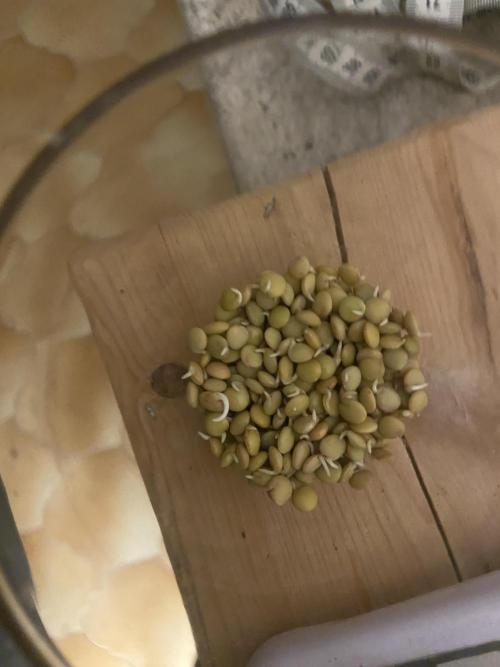
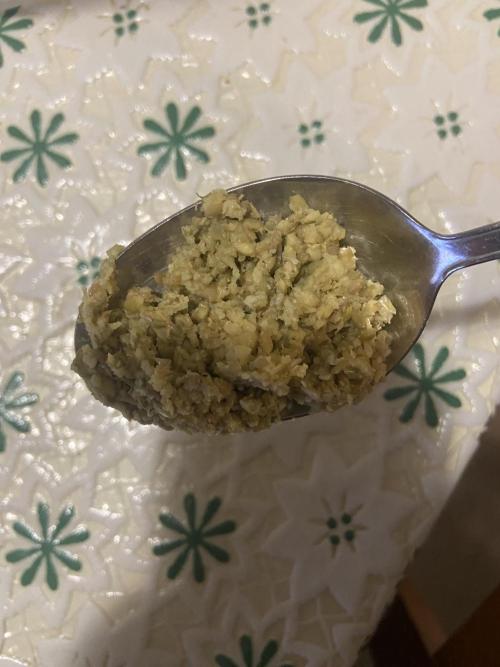
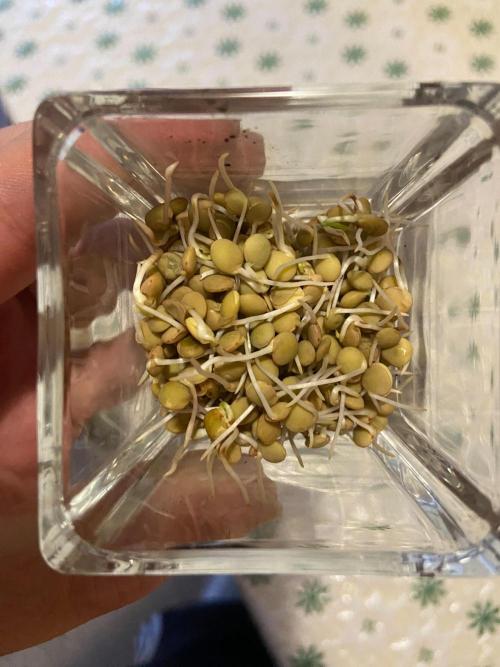
One of the most interesting moments came around day 18, when I watered with a sprouted lentil tea to introduce natural enzymes and support microbial activity in the soil food web.
The goal wasn’t explosive growth, but rather encouraging biological activity and helping the plant continue building momentum naturally.
Another very important milestone happened this week:
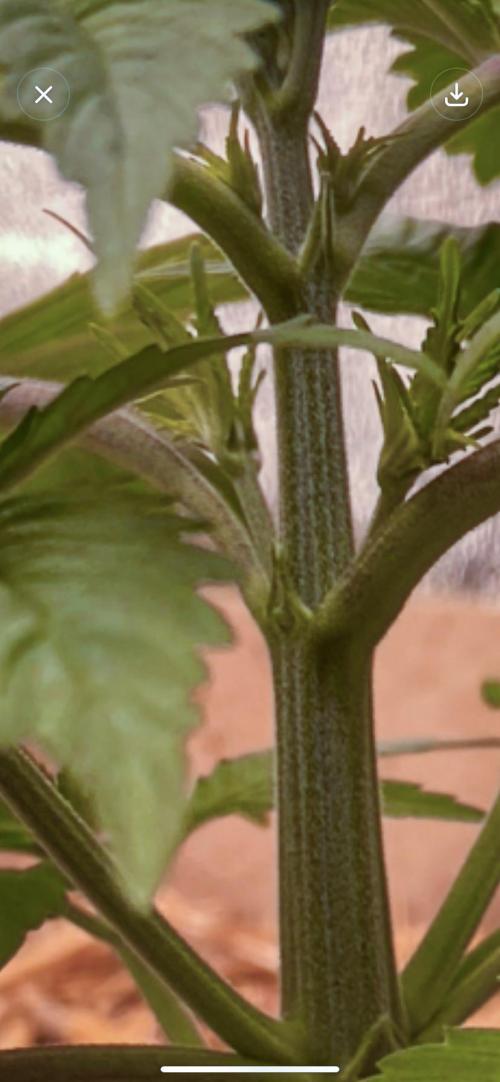
the plant started showing sex during only the third week of vegetative growth.
For me this is always one of those subtle but exciting moments in a run.
Seeing early preflowers while the plant is still young usually tells a lot about vigor, maturity, and how comfortably the plant is settling into its environment.
It feels like the moment where the plant stops being “just a seedling” and begins expressing its real genetic identity.
After that, growth remained very balanced:
* broader leaves
* stronger lateral branching
* healthier posture during lights on
* noticeably thicker petioles and stem structure.
The mulch layer is also performing really well.
Moisture retention has been stable and the soil biology seems increasingly active beneath the surface.
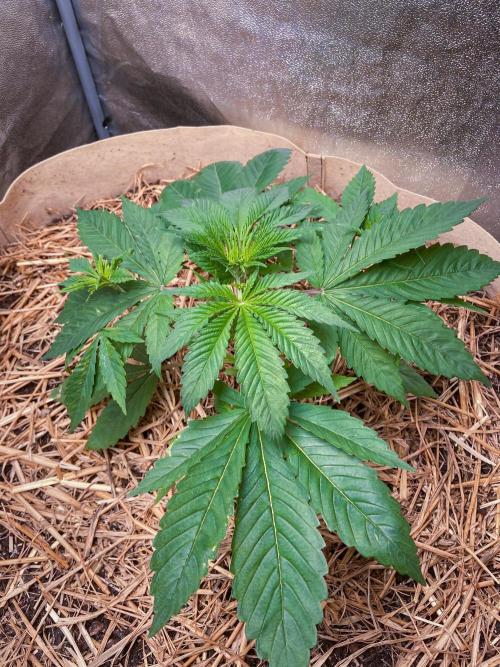
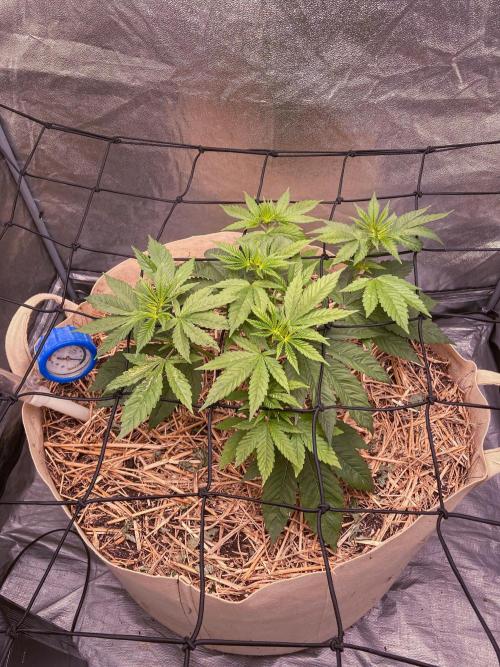
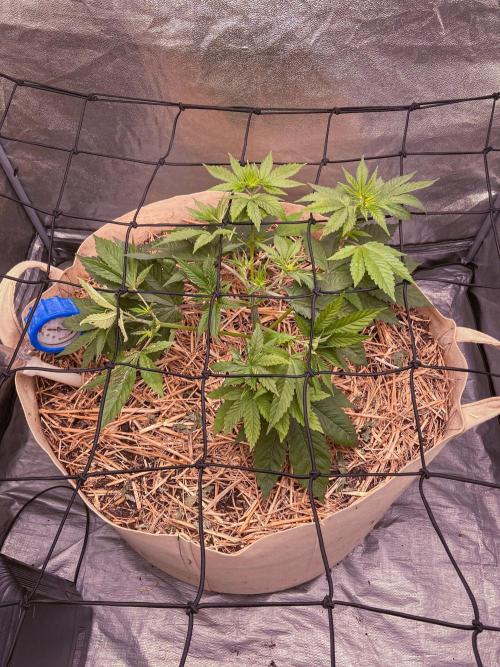
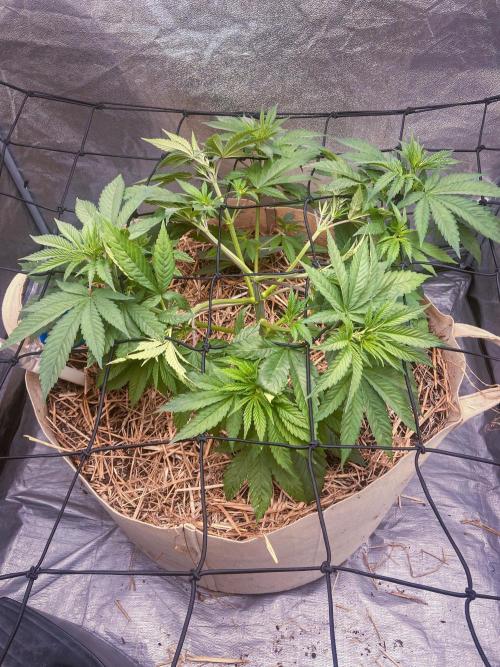
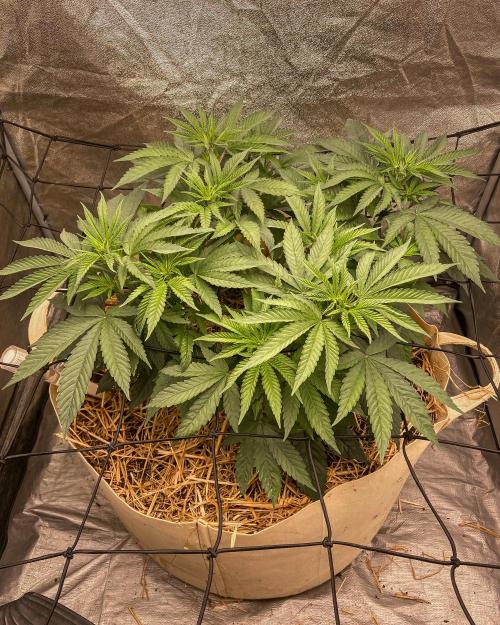
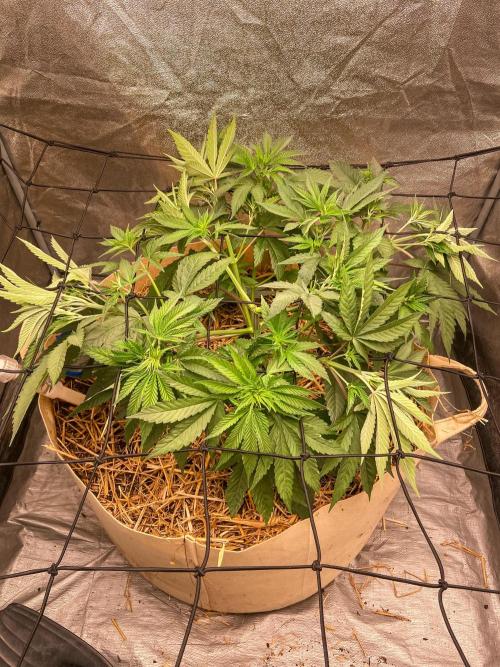
By day 20–21 the plant started revealing its future architecture much more clearly.
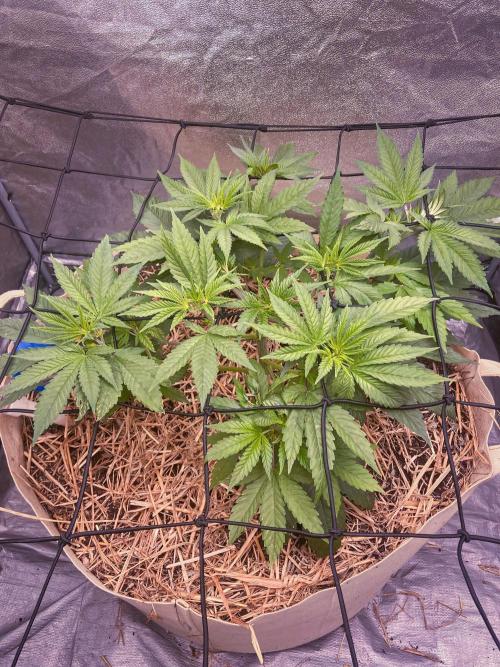
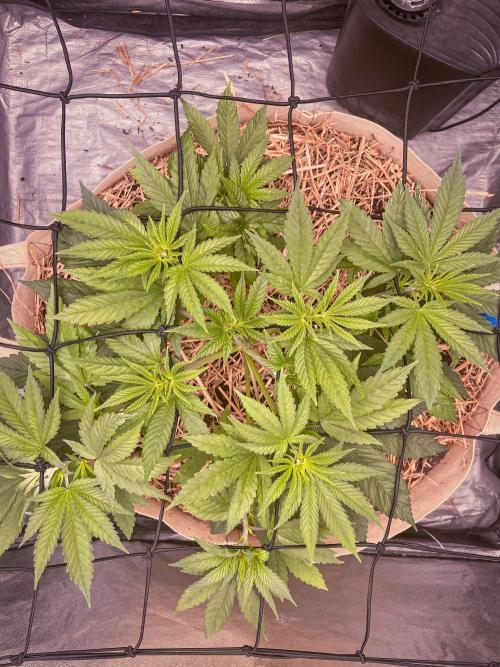
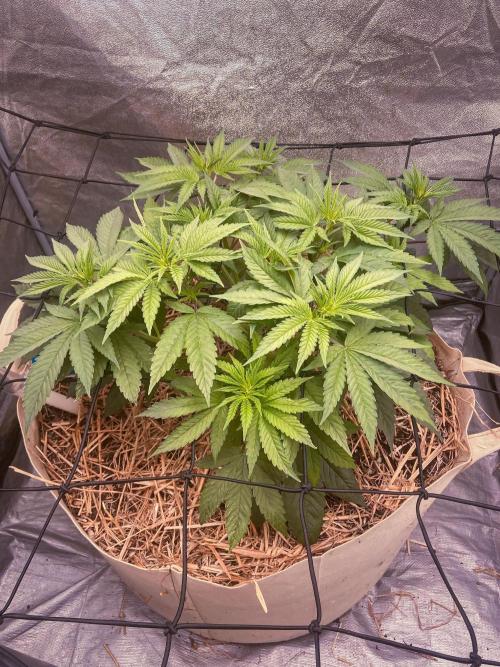
Several future tops are already visible and the branching pattern looks very promising for future training.
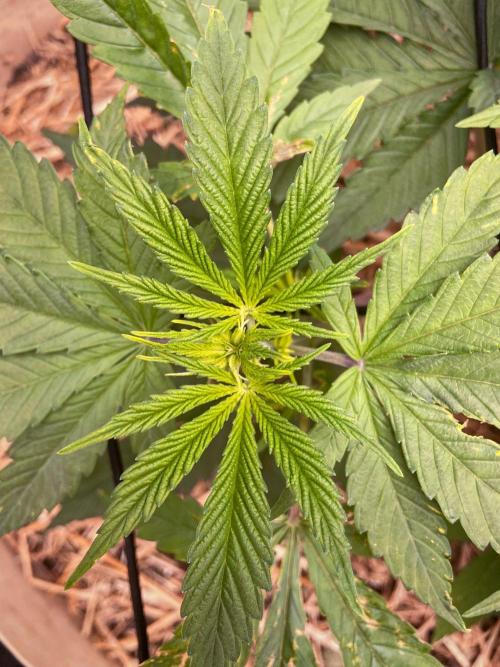
Coloration stayed healthy overall:
deep green mature leaves combined with vibrant lime-green new growth, which is something I always enjoy seeing in living soil during active establishment.
A few older leaves show tiny cosmetic marks but nothing concerning.
New growth is clean, vigorous, and developing quickly.
In the final pictures of the week the leaves may appear slightly droopy, but those shots were taken just a few minutes before lights off, so the plant was already entering its nighttime resting posture.
For now I’m still avoiding unnecessary stress and simply observing how the plant communicates through posture, rhythm, and structure.
This stage is probably one of my favorites in organic growing.
Nothing looks dramatic yet, but underground the entire ecosystem is beginning to establish itself and that quiet transition always feels special.
“Living soil speaks slowly.” 🌱
68 likes
9 comments
Share
4
Week 4. Vegetation
21d ago
1/29
22 cm
Height
18 hrs
Light Schedule
27 °C
Day Air Temp
No Smell
Smell
65 %
Air Humidity
24 °C
Solution Temp
24 °C
Substrate Temp
21 °C
Night Air Temp
113 l
Pot Size
1 l
Watering Volume
30 cm
Lamp Distance
ElNass Week 4 — Days 22–28 🌱
This week was probably the most “living soil” week so far.
Not because everything went perfectly, but because the plant started forcing me to actually read her instead of just feeding and watering blindly.
The goal this week was simple:
build structure, start the SCROG properly, and keep the biology active inside the 113L bed.
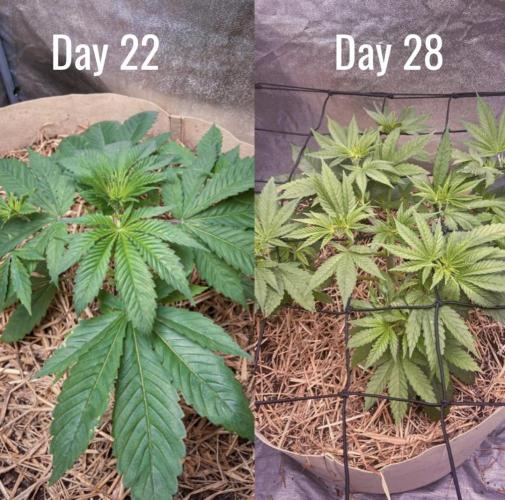
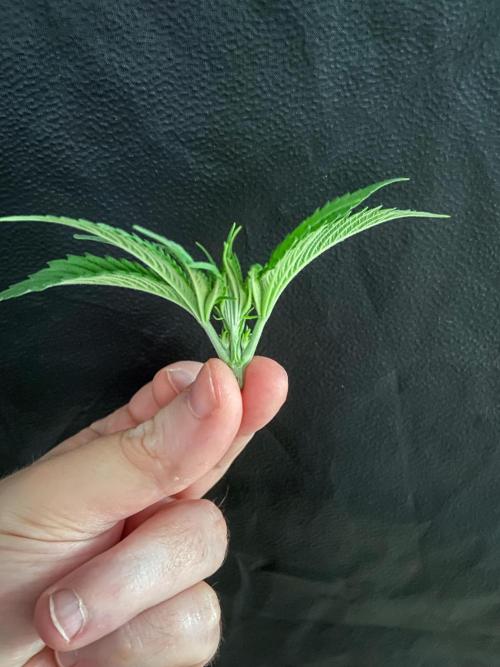
Day 23 — Topping ✂️
I decided to top her to create a wider and more controllable structure for the net.
The plant responded surprisingly well: vigorous growth, tight internodes, and thick branching already showing just a couple days later.
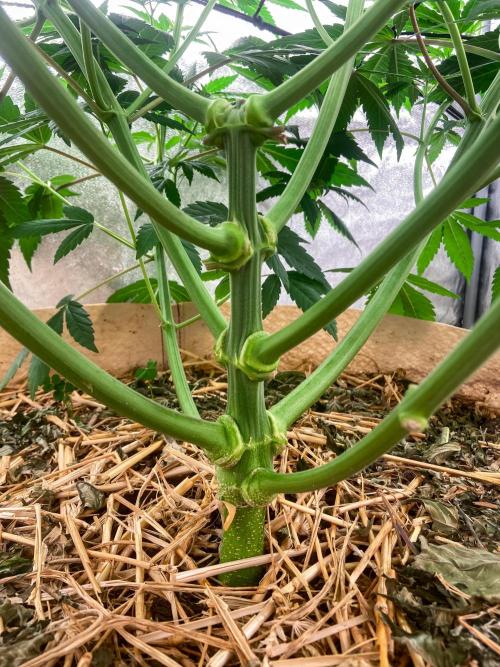
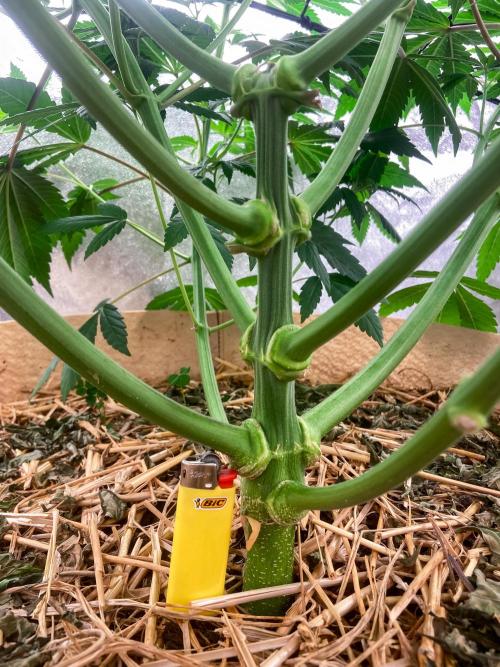
One thing I’m really liking about this run is how sturdy the structure is becoming.
The stem is already thick for day 28 and the side branches are growing symmetrically, which makes training much easier.
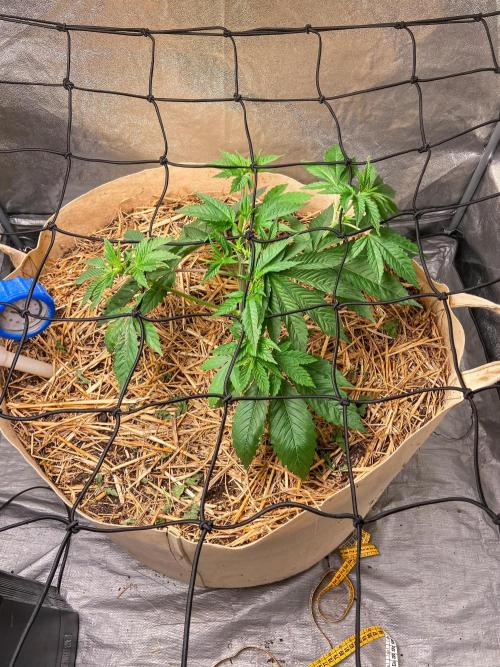
Day 24 — SCROG begins 🕸️
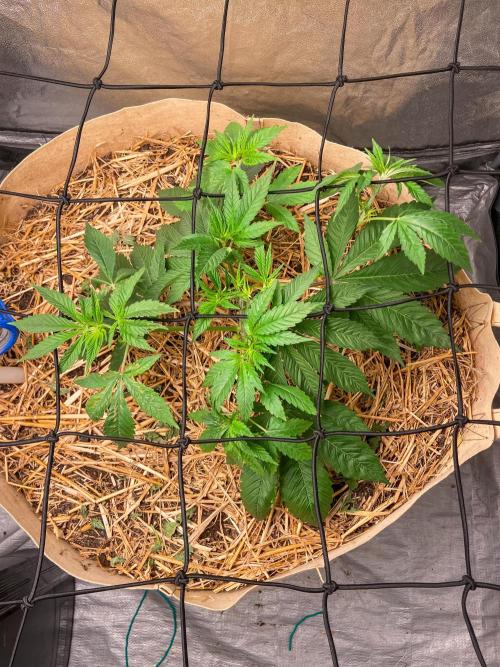
Installed the net and started spreading the branches horizontally to open the canopy and expose future tops evenly.
At first it always feels wrong bending a plant this much 😂
but after a few hours she already started praying back toward the light.
The idea with this run isn’t to rush vertical growth, but to slowly fill the space while maintaining airflow and keeping an even canopy before flip.
Wind burn paranoia arc 😂💨
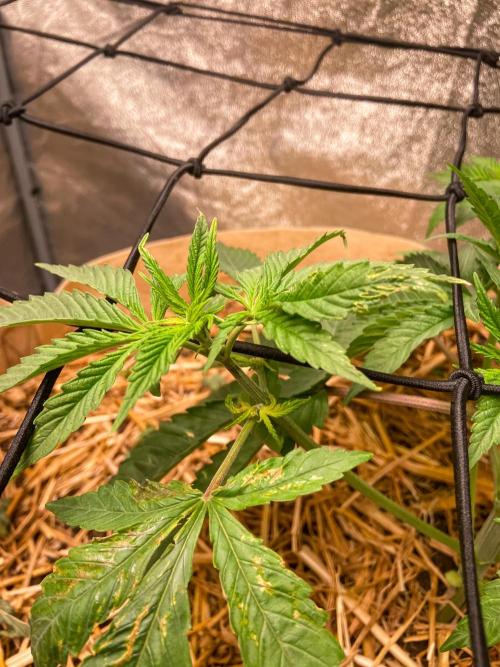
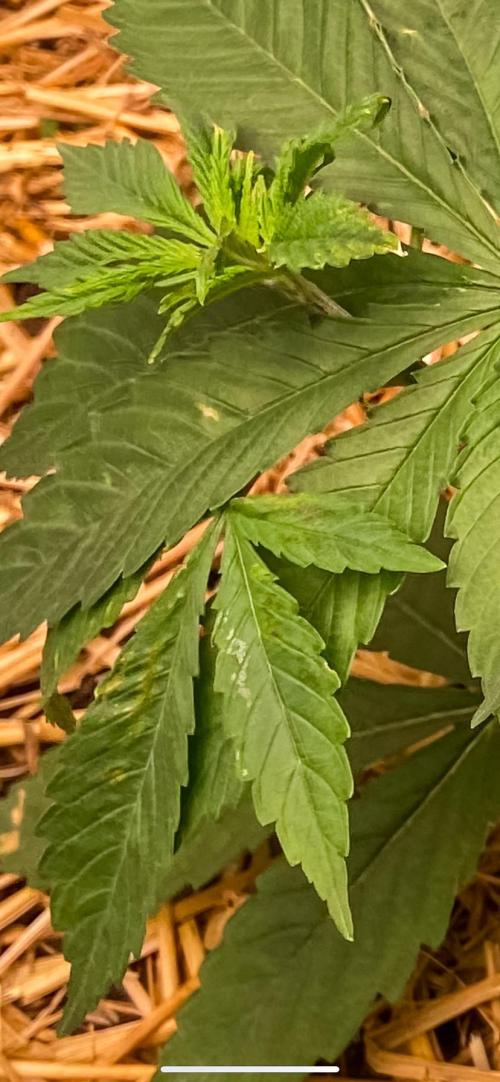
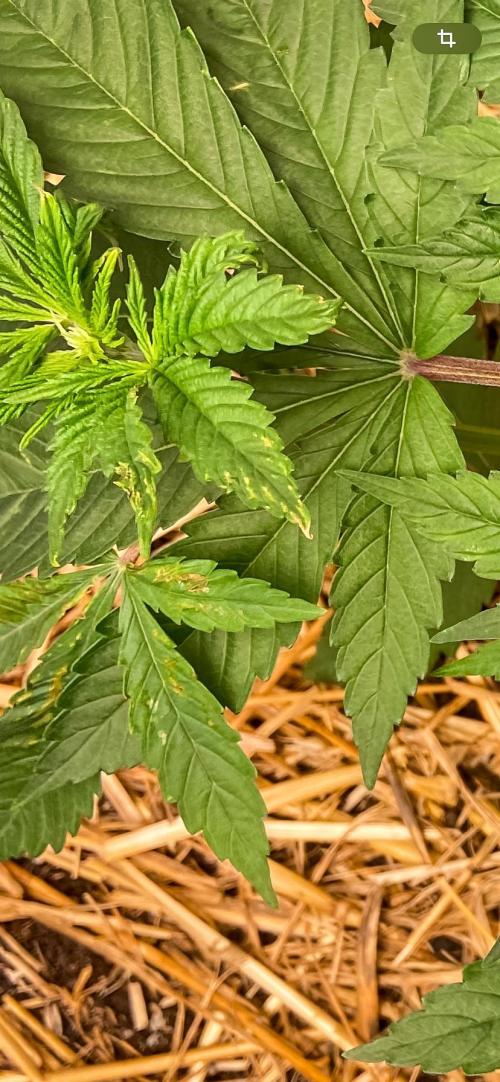
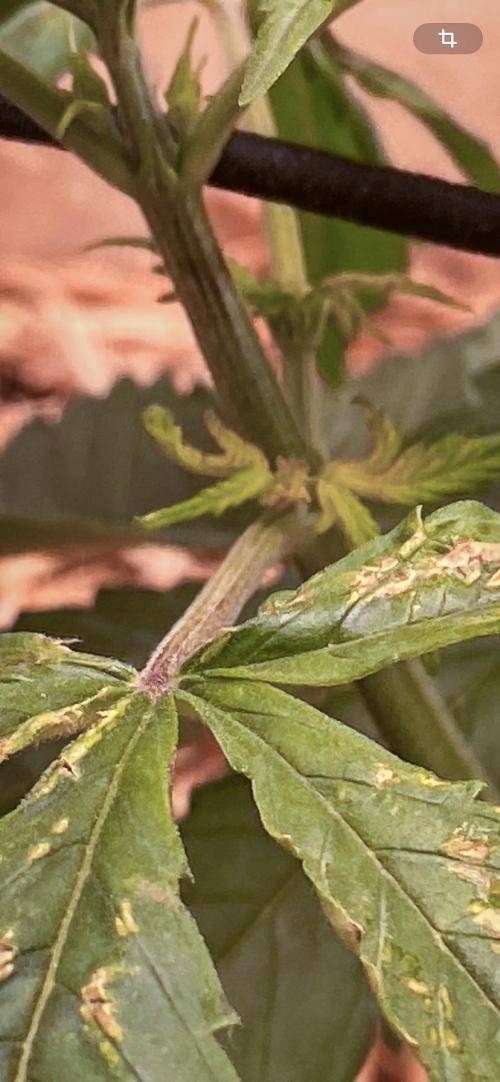
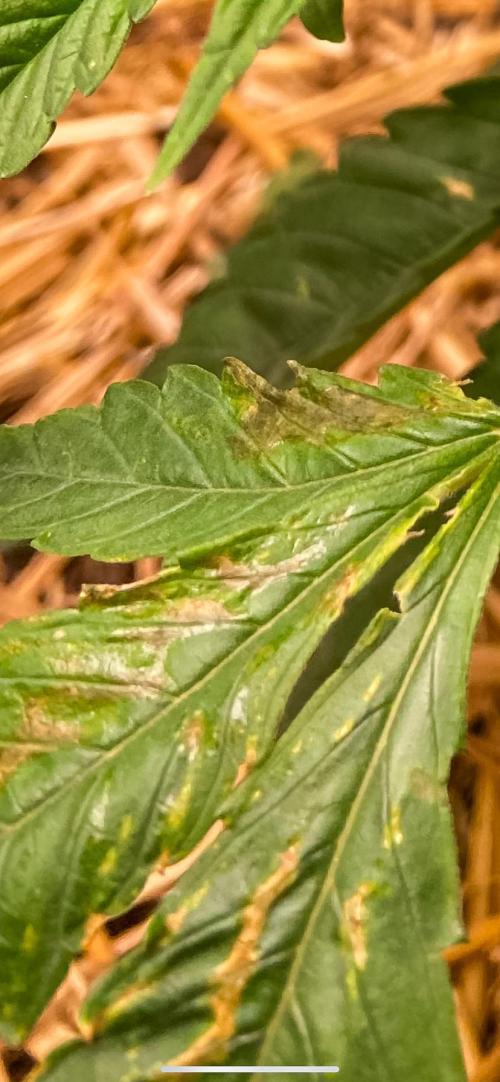
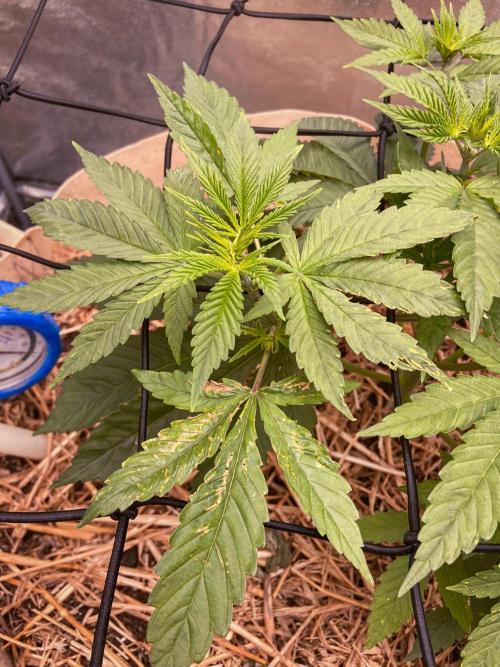
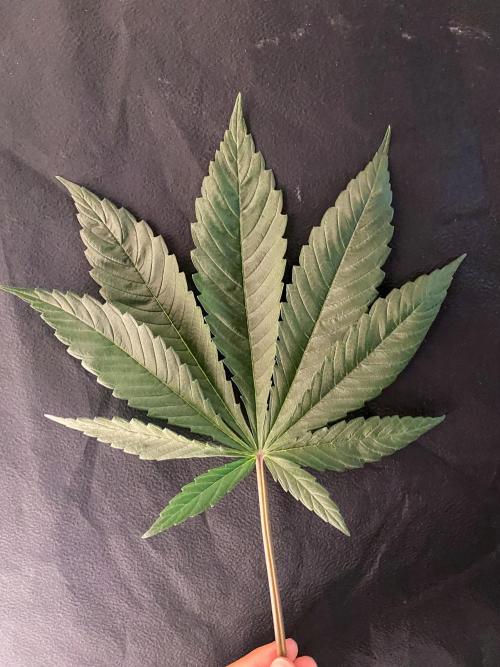
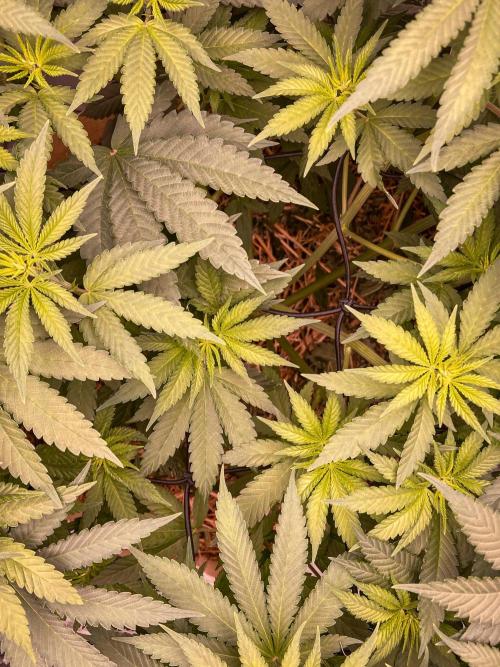
Around mid-week I started noticing strange damage on a few leaves:
* irregular yellowing,
* edge damage,
* weird marks that honestly made me paranoid about pests.
I checked undersides constantly because I was terrified of thrips or mites, but the more I monitored the plant, the more the pattern pointed toward environmental stress rather than insects.
Why?
* Damage stayed highly localized.
* Mostly older leaves directly exposed to constant airflow.
* New growth remained vigorous, symmetrical, and healthy.
* No real spreading pattern typical of pests.
* No visible colonies, eggs, or active feeding underneath leaves.
After talking with a few experienced growers and comparing symptoms, the conclusion became much more likely to be wind burn / excessive direct airflow rather than an infestation.
So I switched the fan from fixed airflow to oscillating and reduced direct blasting on the canopy.
Thankfully the issue seems stabilized now 🙏
Honestly this was a good reminder that sometimes over-monitoring makes you more paranoid than the plant itself 😂
Day 27 — Humus under the mulch ?
Since this is a living soil run, I wanted to focus less on “feeding the plant” and more on feeding the soil food web.
So on day 27 I added worm castings/humus directly under the straw mulch layer and watered afterward to help reactivate microbial life in the top zone.
No complicated tea this time, just simple biology.
The cool thing is that by the next day the plant already looked happier:
* better leaf posture,
* stronger turgor,
* healthier overall color,
* vigorous new growth continuing.
That’s one of the things I love about larger living soil containers:
when the biology is working, even simple inputs can have a noticeable effect.
End of Week 4 thoughts 🌿
This week wasn’t about explosive growth or flashy flowers.
It was about understanding the plant better.
Learning the difference between:
* actual deficiencies vs environmental stress,
* reacting vs overreacting,
* feeding nutrients vs supporting biology.
And honestly, that’s the part of growing I enjoy the most. 💚
61 likes
22 comments
Share
Used techniques
LST
Technique
ScrOG
Technique
Topping
Technique
5
Week 5. Vegetation
15d ago
1/10
22 cm
Height
18 hrs
Light Schedule
27 °C
Day Air Temp
No Smell
Smell
60 %
Air Humidity
24 °C
Solution Temp
24 °C
Substrate Temp
21 °C
Night Air Temp
113 l
Pot Size
1 l
Watering Volume
30 cm
Lamp Distance
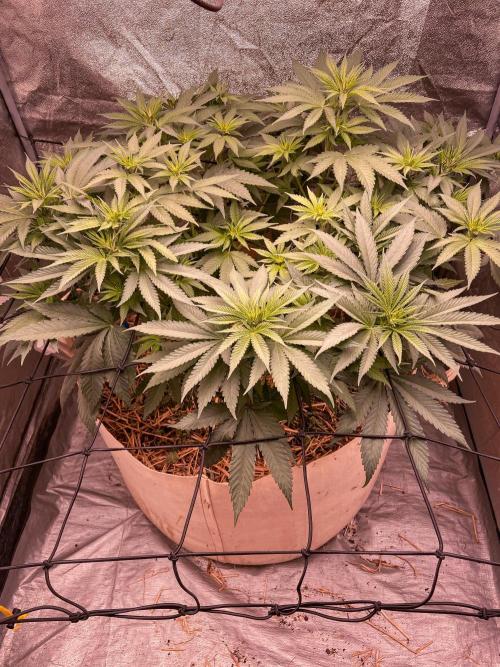
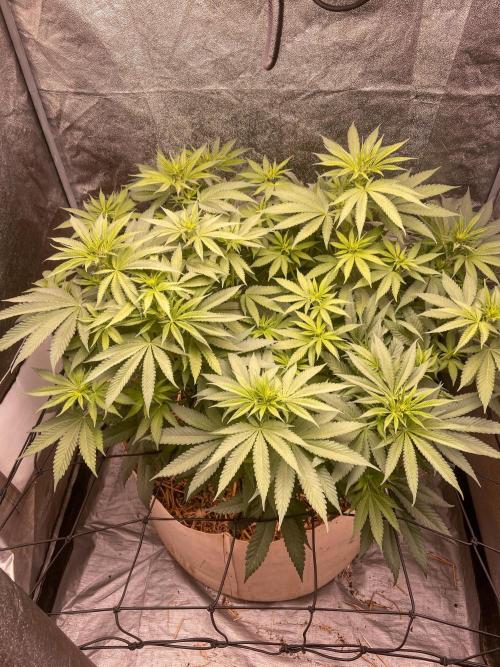
ElNass Week 5 – End of Veg / Flip to 12-12 🌱🔥
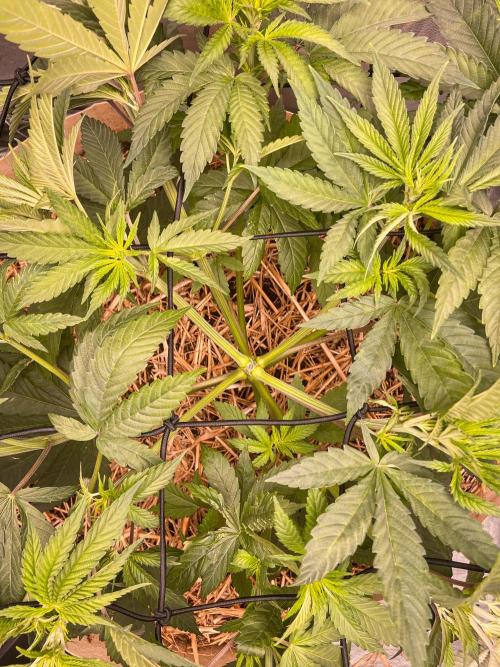
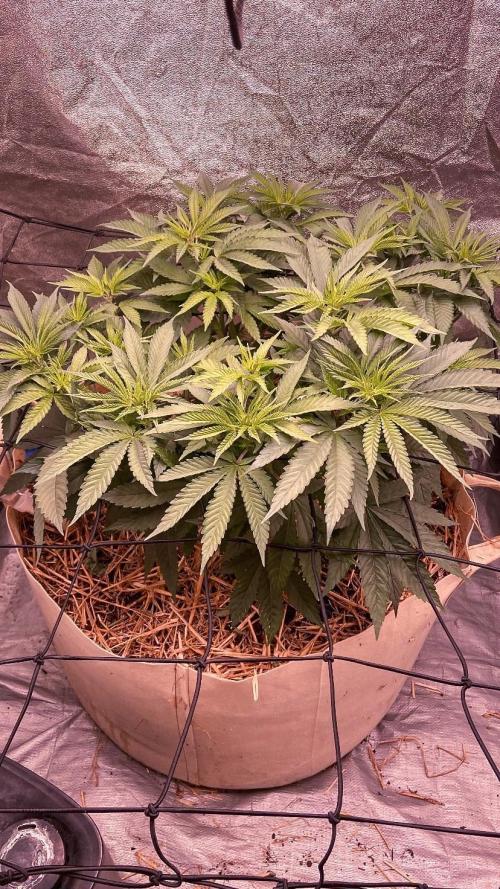
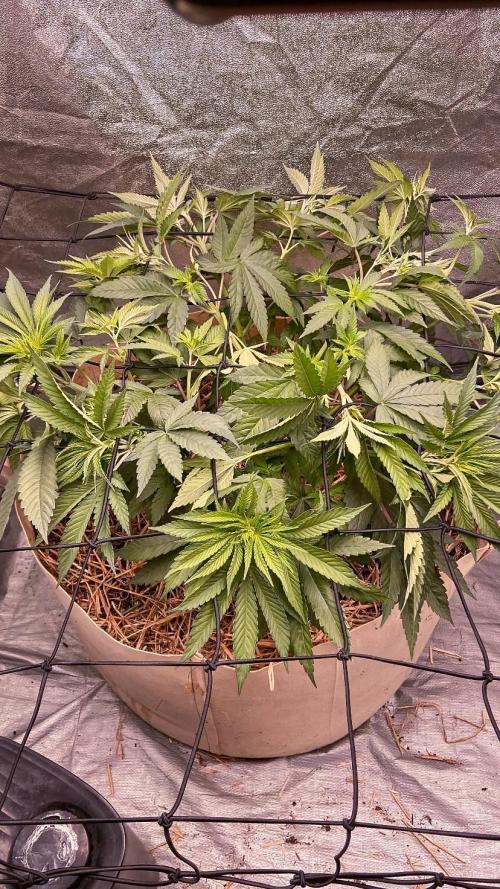
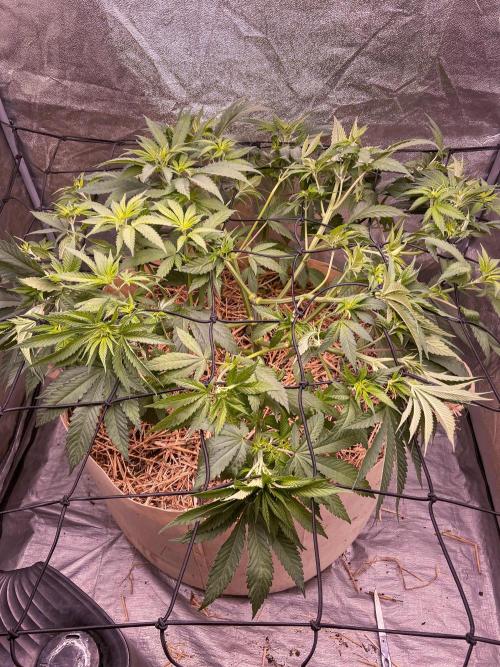
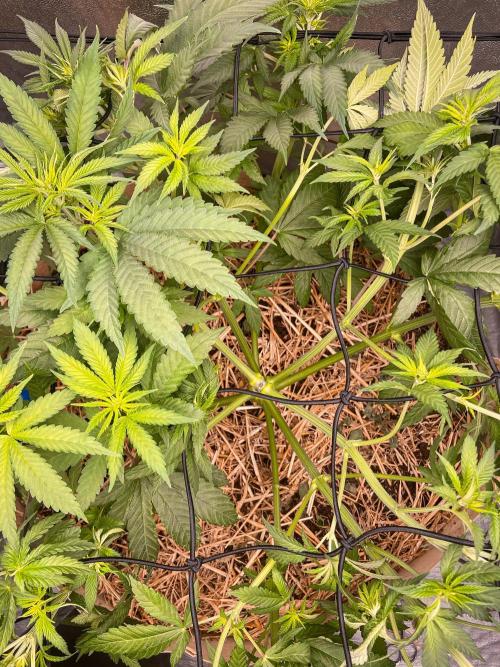
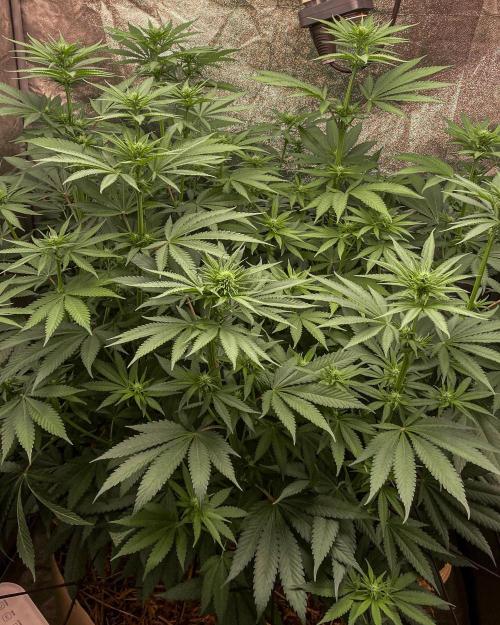
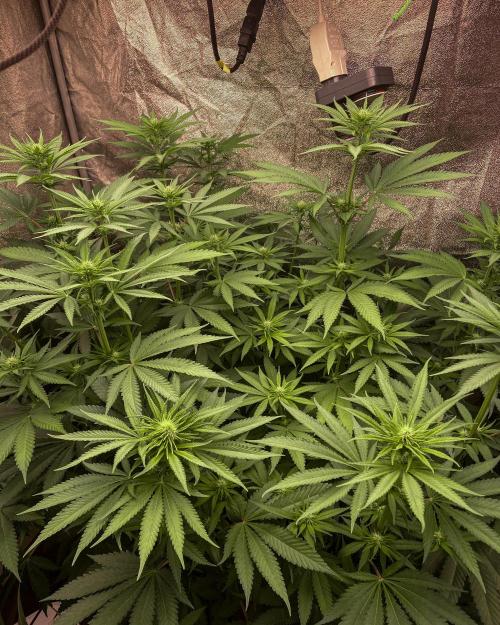
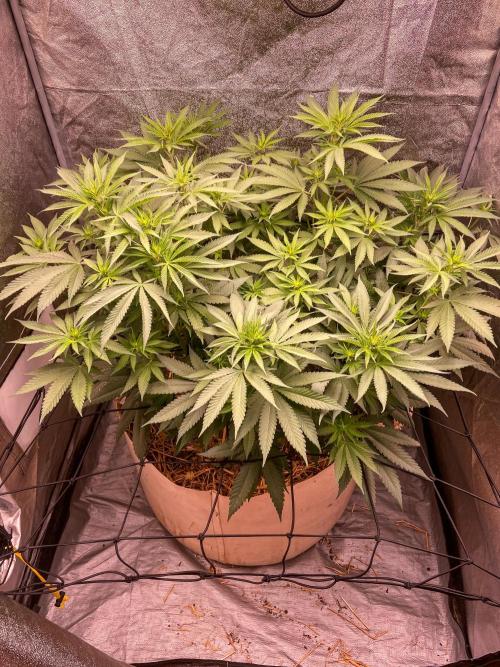
This week was shorter than usual (day 29–33) because I decided to switch to 12/12 at the end of it after seeing how aggressively the canopy was developing.
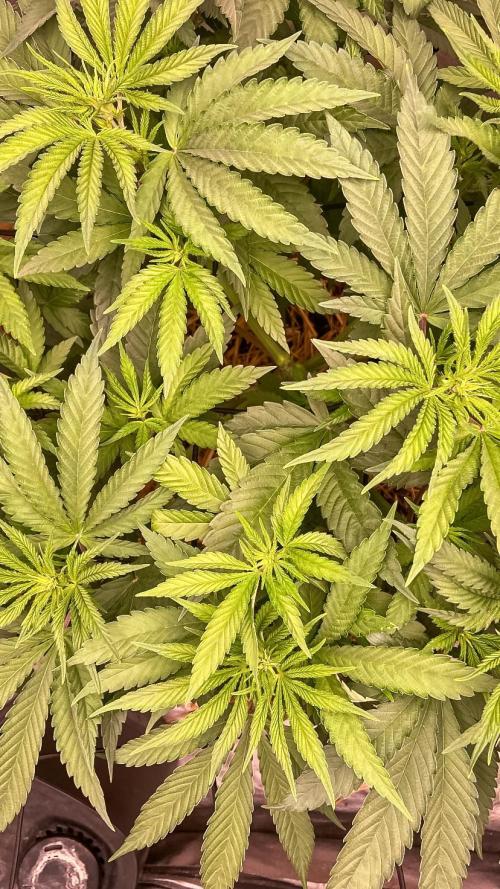
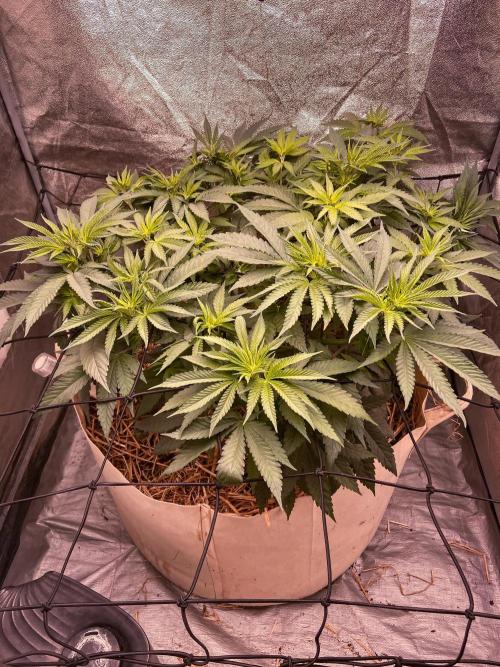
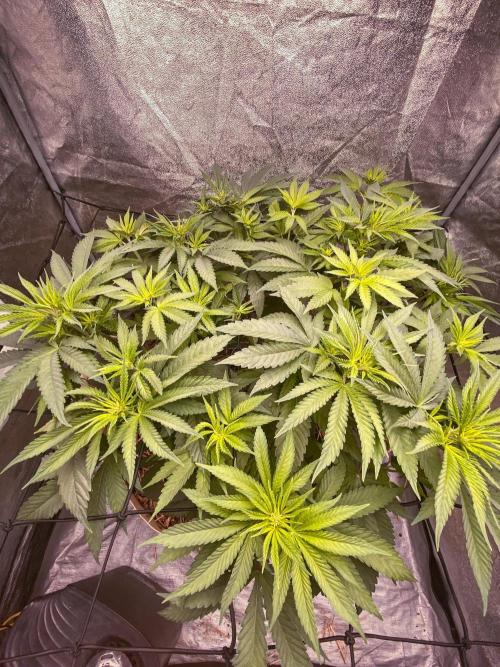
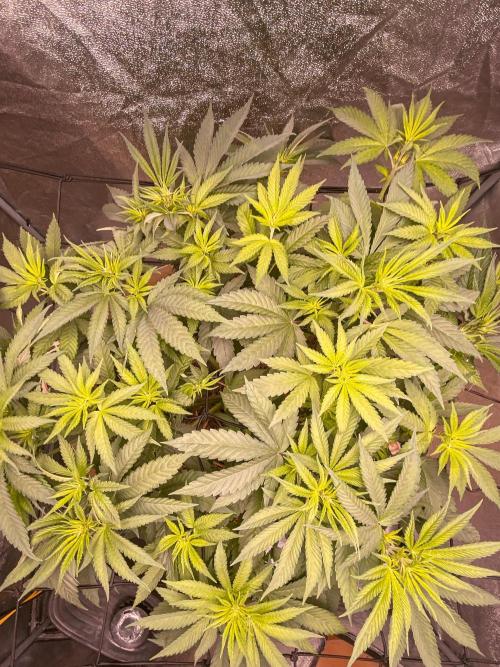
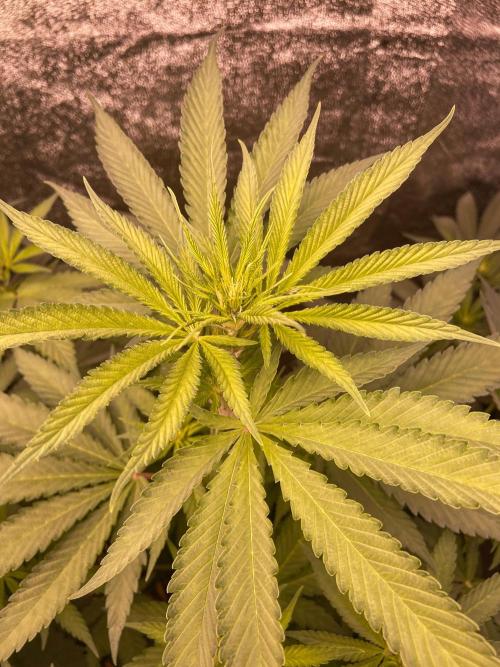
The Fruity Durban by Serious Seeds responded incredibly well to the topping and SCROG work from the previous week. Over these last few days the lateral branches exploded with growth and the canopy became noticeably fuller and more symmetrical every day.
Main focus this week:
* continuous SCROG training and top redistribution
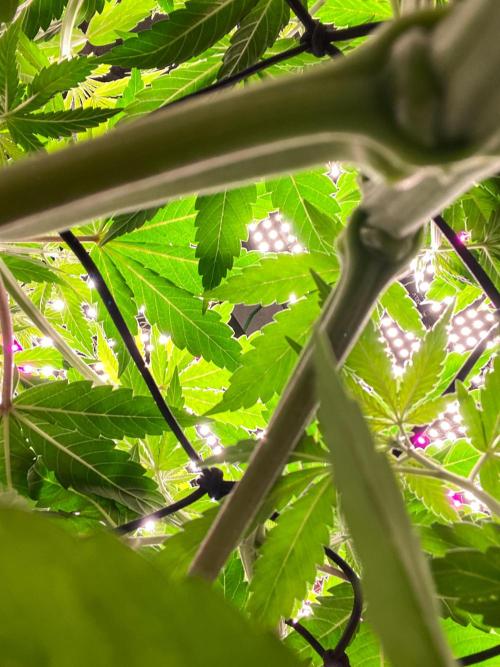
* opening the center for better airflow/light penetration
* maintaining an even canopy without heavy defoliation
* monitoring the suspected “wind burn” issue daily
After multiple inspections I’m now almost fully convinced the issue was environmental stress rather than pests, since the damage stayed localized while the new growth remained vigorous and symmetrical.
I also noticed a pretty significant increase in water consumption this week. She suddenly started drinking much more aggressively, which feels like another sign the 113L living soil bed is really coming alive now after adding fresh worm castings under the straw mulch earlier in veg.
I don’t think this will end up being a “true” SCROG though. Normally I’d wait until ~70% of the net is filled before flipping so the stretch can occupy the remaining space, but with this run I honestly think the yield would become excessive for my situation 😂
So once I reached a structure I was reasonably happy with, I decided it was time to flip her into flower.
Environmental conditions stayed relatively stable overall:
* ~26.9–27.6°C
* 51–60% RH
* VPD roughly between 1.42–1.81
* PPFD around ~630
Really excited to see how she behaves during stretch now 🌱🔥
57 likes
5 comments
Share
Used techniques
LST
Technique
ScrOG
Technique
6
Week 6. Flowering
8d ago
1/16
57 cm
Height
12 hrs
Light Schedule
30 °C
Day Air Temp
No Smell
Smell
65 %
Air Humidity
24 °C
Solution Temp
24 °C
Substrate Temp
24 °C
Night Air Temp
113 l
Pot Size
1 l
Watering Volume
30 cm
Lamp Distance
ElNass Week 1 Flower (Days 1–7)
The first week of flowering has been completed and the transition to 12/12 has progressed without major issues.
Following the photoperiod change, the main objective was to maintain canopy uniformity while allowing the plant to begin its natural stretch. During the first days of flower, several adjustments were made to the SCROG structure in order to improve light distribution and maintain adequate spacing between future flowering sites.
A moderate defoliation was also performed to:
* improve airflow through the center of the canopy;
* increase light penetration to secondary growth sites;
* reduce leaf congestion before the onset of rapid stretch.
To support the transition into flowering and stimulate biological activity within the living soil system, an enzyme tea prepared from germinated lentils was applied on Day 2 of flower. Germinated lentils are naturally rich in enzymes and growth-promoting compounds, making them a useful input during periods of rapid development such as the onset of stretch.
The canopy responded positively to both training and defoliation, showing no visible signs of growth stagnation or excessive stress. New growth remained vigorous throughout the week and branch elongation accelerated significantly compared to late vegetative growth.
One of the most notable observations was the substantial increase in water consumption. This increase appears to be associated with both the onset of the flowering stretch and the elevated temperatures experienced during the week. As transpiration increased, irrigation frequency required closer monitoring to prevent excessive substrate drying.
Environmental conditions remained relatively stable overall, although temperatures reached 30°C for the first time this season. Since no supplemental CO₂ is being used, environmental management will likely become increasingly important throughout the coming weeks.
As canopy height increased during stretch, PPFD values on the highest tops reached approximately 1600 μmol·m⁻²·s⁻¹. To reduce the risk of unnecessary light stress, fixture intensity was adjusted and canopy PPFD was returned to approximately 980–1100 μmol·m⁻²·s⁻¹.
Week 1 Observations
* Rapid initiation of flowering stretch.
* Significant increase in transpiration and water demand.
* Strong recovery following training and defoliation.
* Healthy leaf coloration and morphology.
* Continued thickening of primary and secondary stems.
* No significant signs of nutrient deficiency, toxicity, or environmental stress.
Overall, Fruity Durban continues to display exceptional vigor. The living soil system appears highly active and the plant is transitioning into flowering with a well-developed structure, strong branching, and a robust root-supported growth rate.
The next phase will focus on stretch management, canopy maintenance, and environmental control as flowering development accelerates.
52 likes
9 comments
Share
Used techniques
12-12
Technique
ScrOG
Technique
Defoliation
Technique
LST
Technique
7
Week 7. Flowering
21h ago
1/34
95 cm
Height
12 hrs
Light Schedule
30 °C
Day Air Temp
No Smell
Smell
65 %
Air Humidity
24 °C
Solution Temp
24 °C
Substrate Temp
24 °C
Night Air Temp
113 l
Pot Size
1 l
Watering Volume
30 cm
Lamp Distance
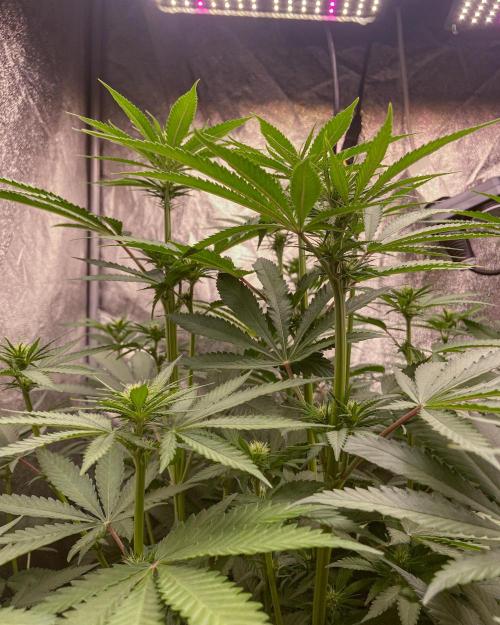
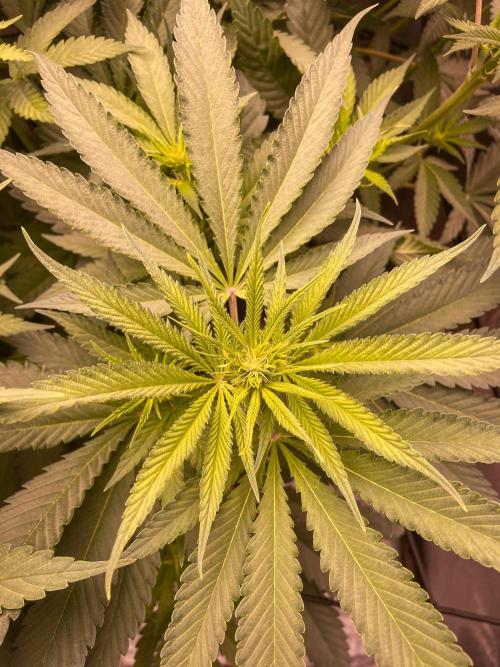
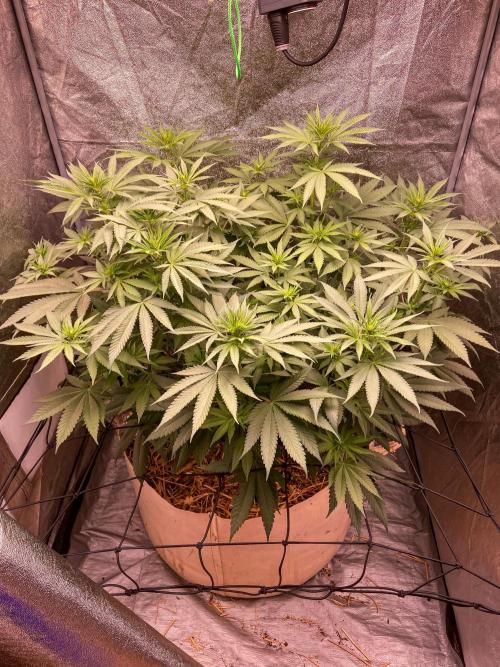
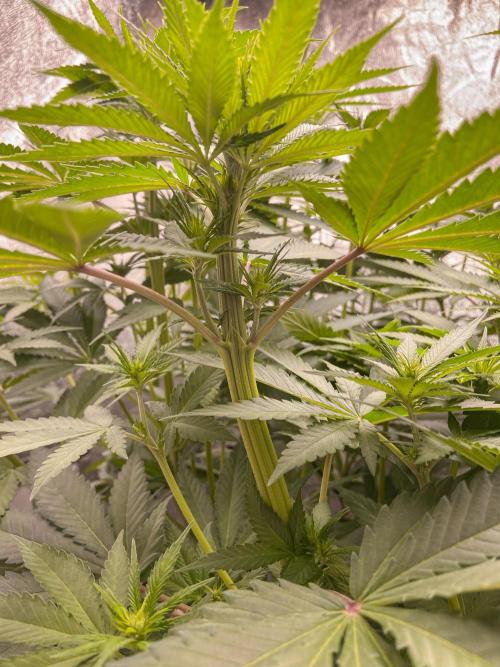
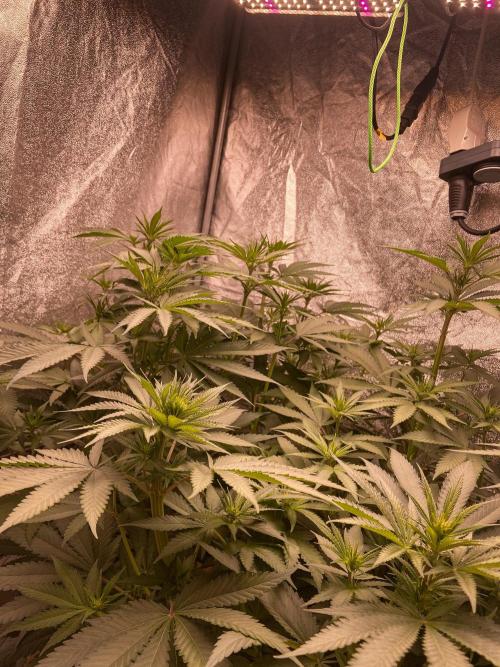
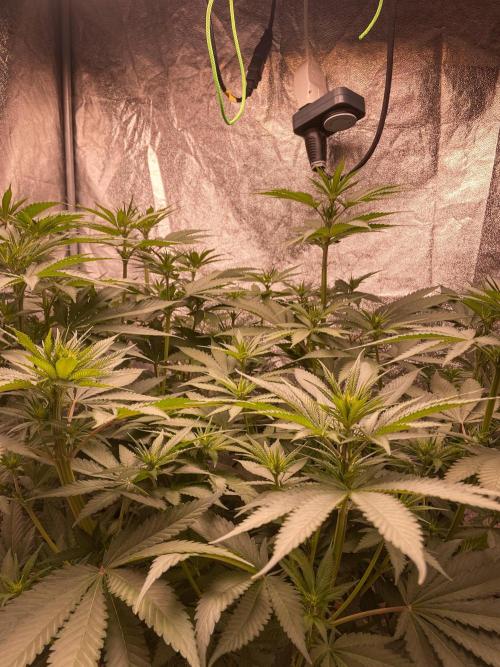
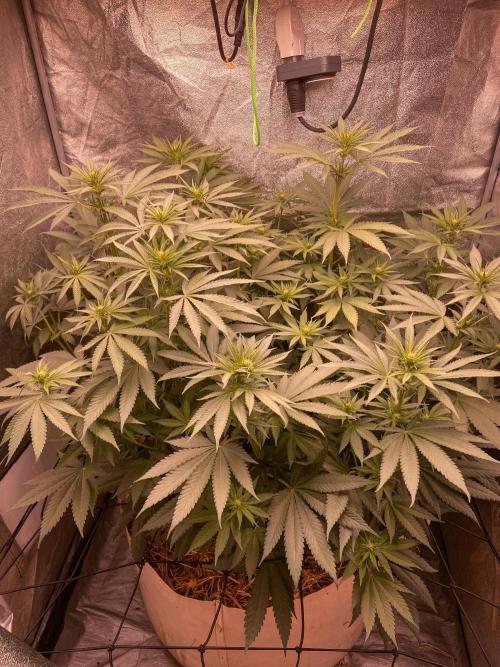
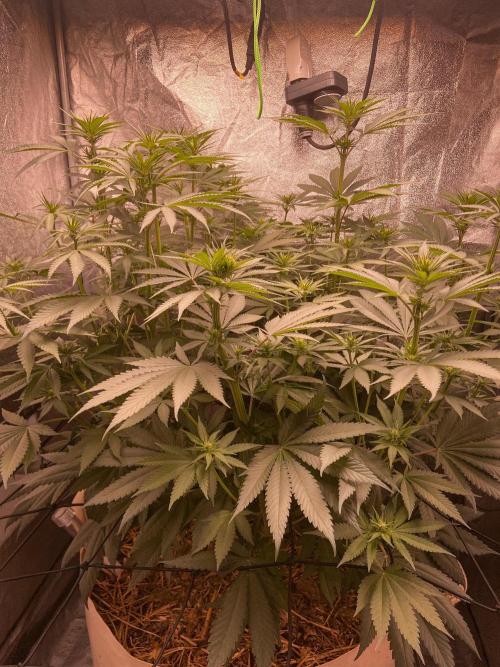
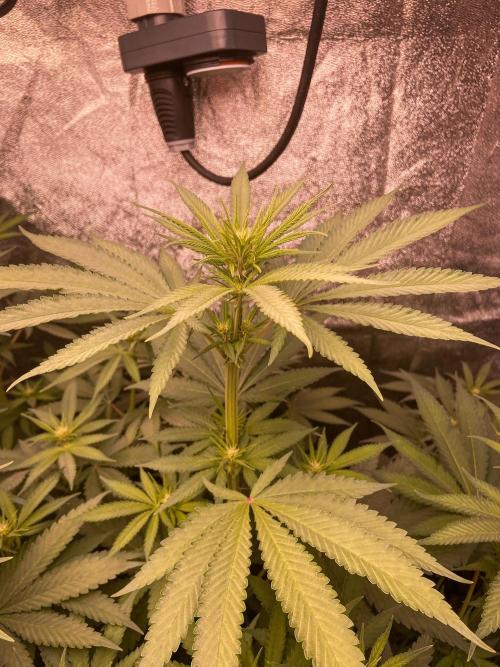
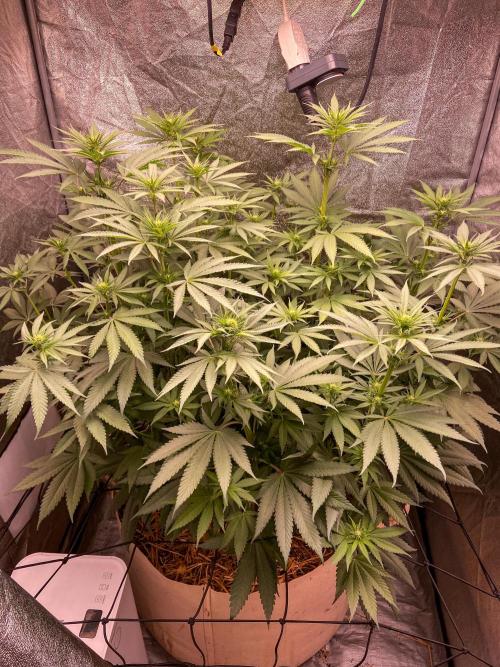
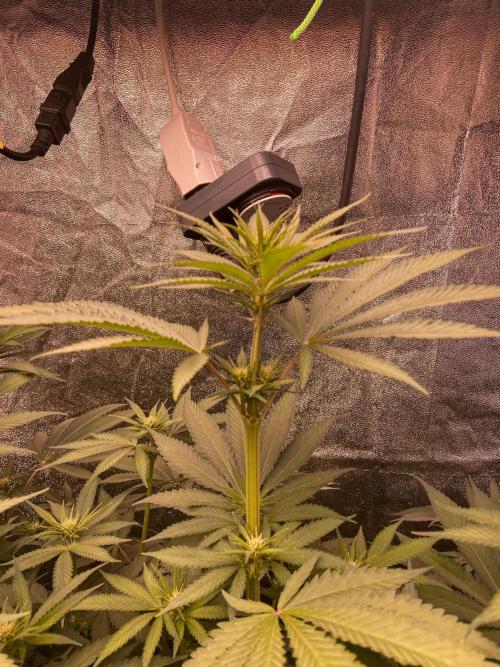
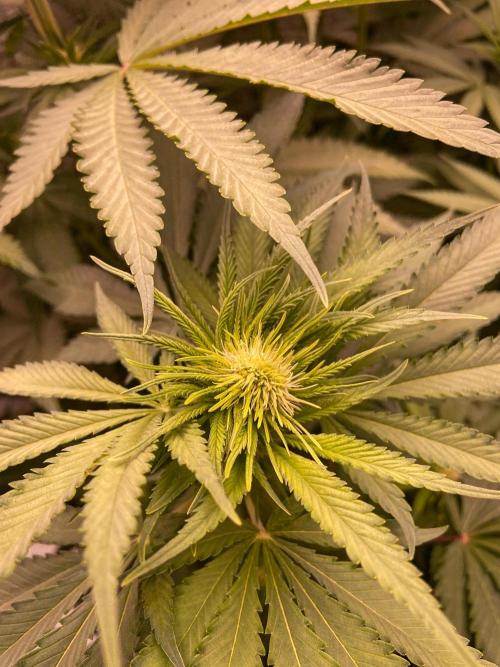
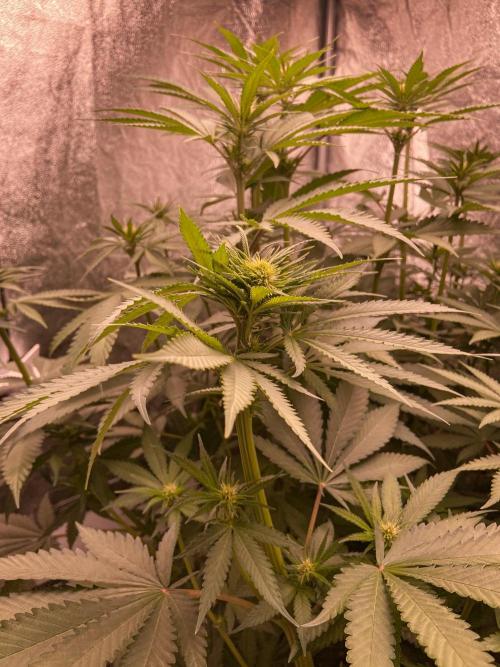
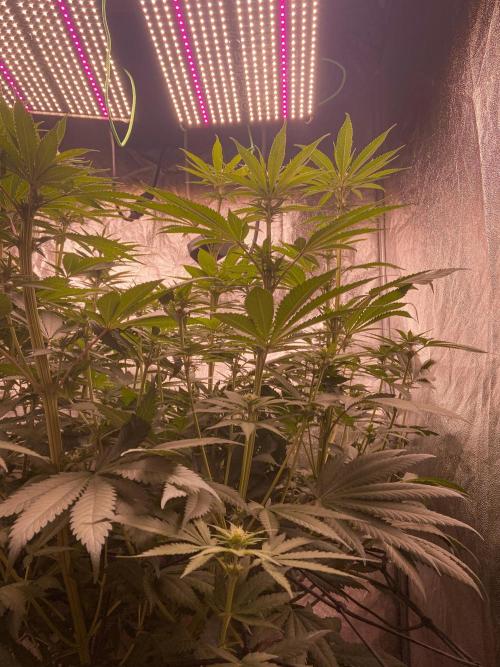
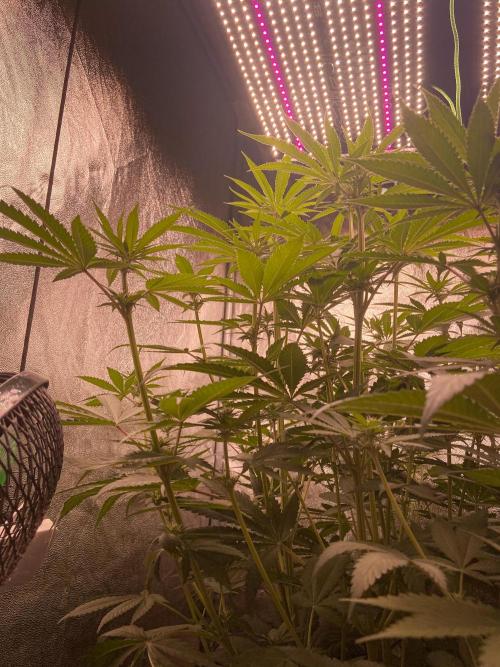
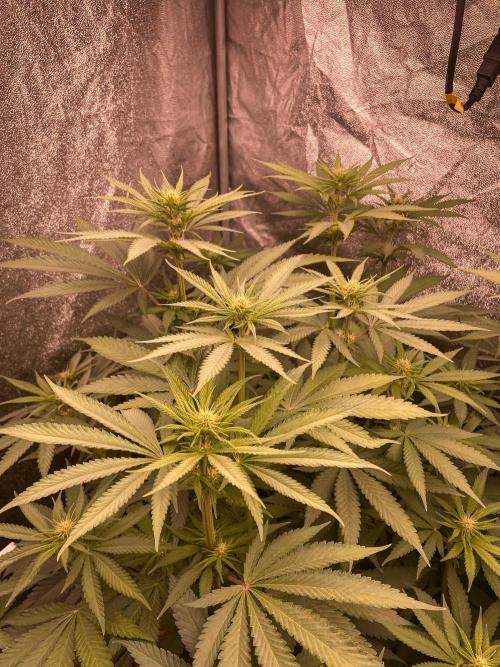
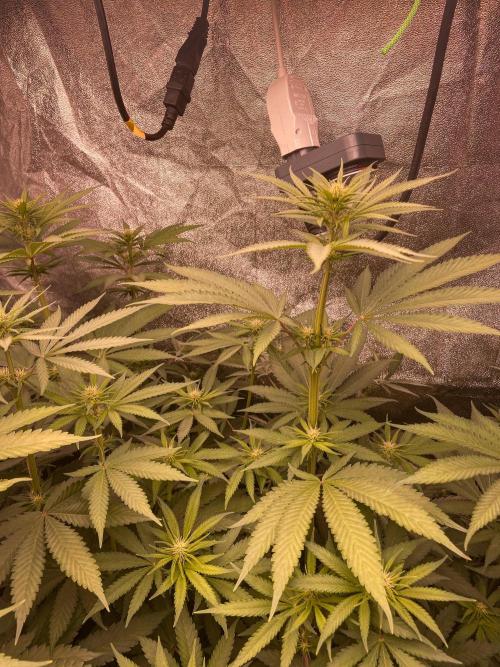
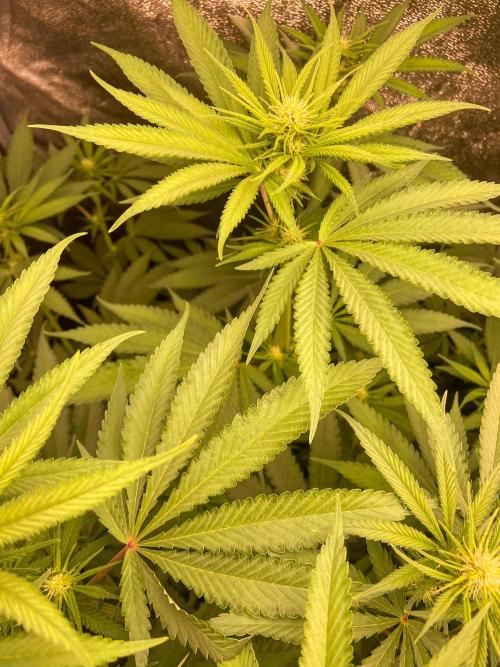
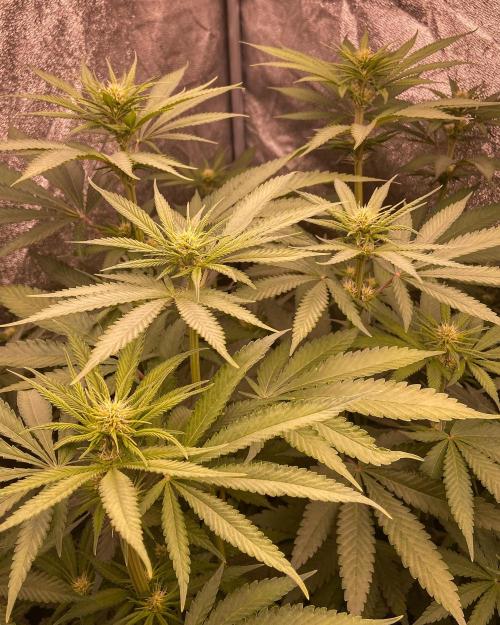
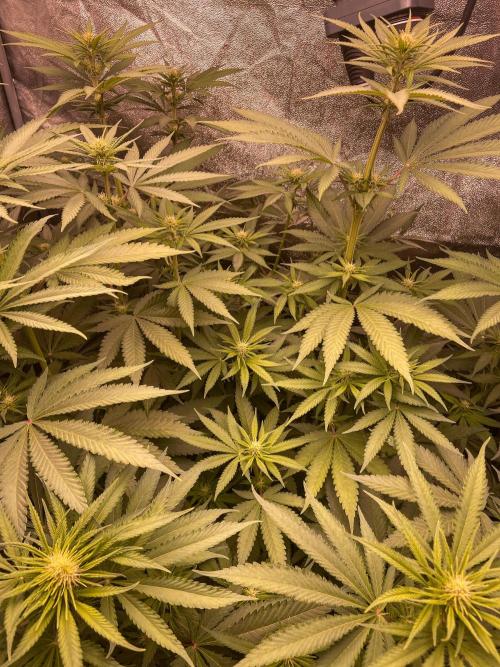
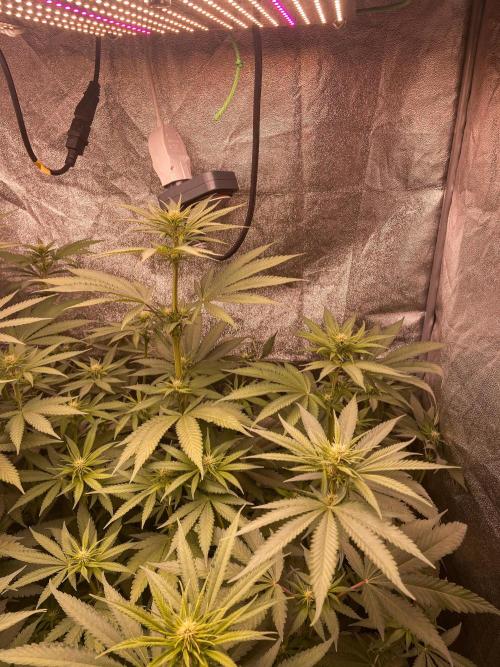
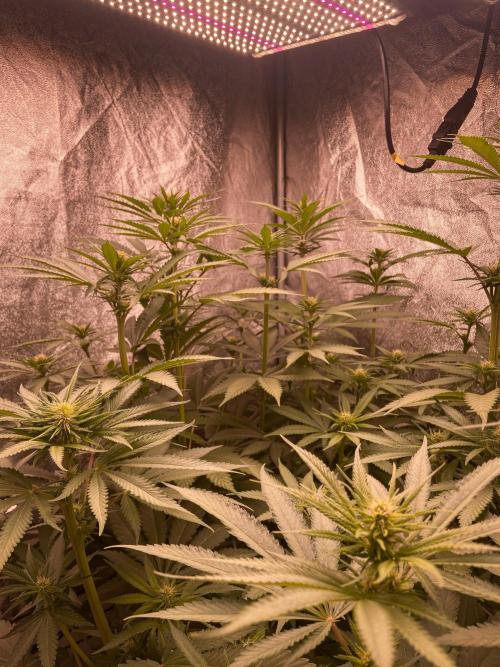
ElNass 🌱 Fruity Durban by Serious Seeds | Day 14 Flower
System: 113L Living Soil (No-Till)
Week 2 observations:
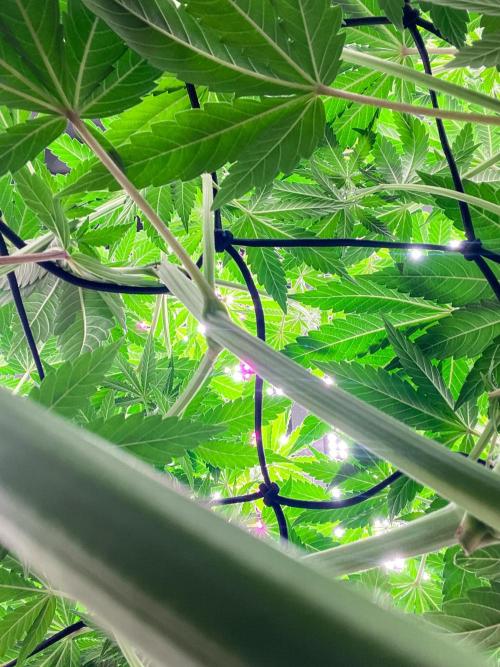
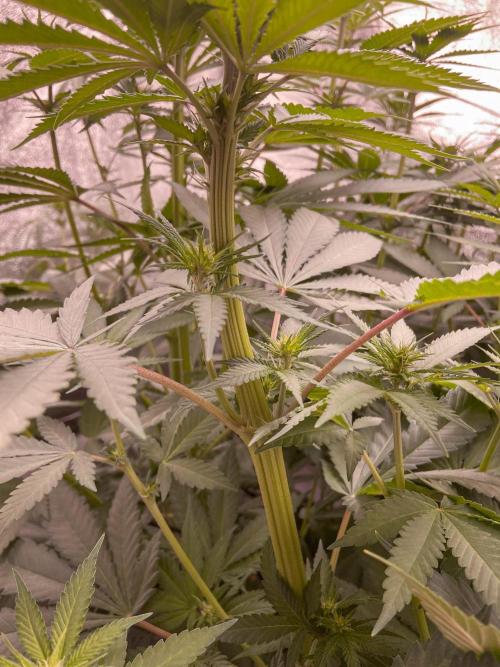
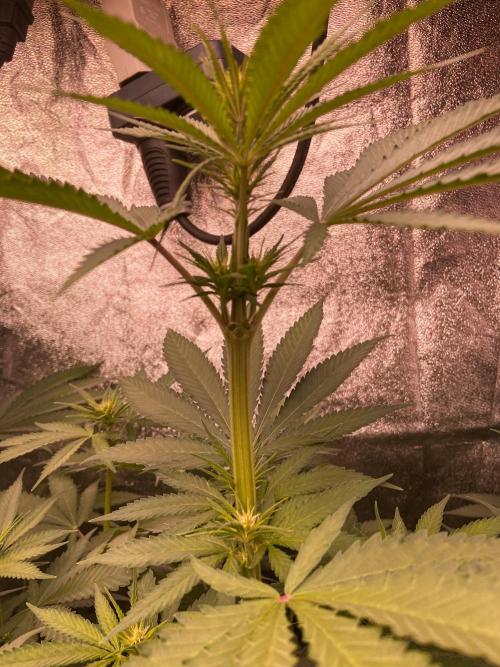
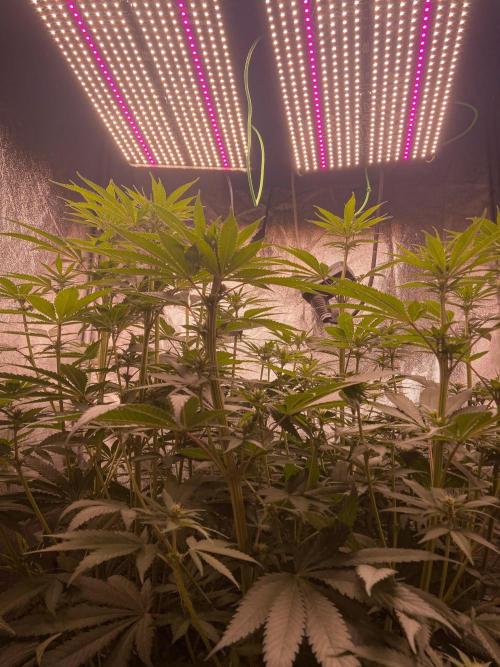
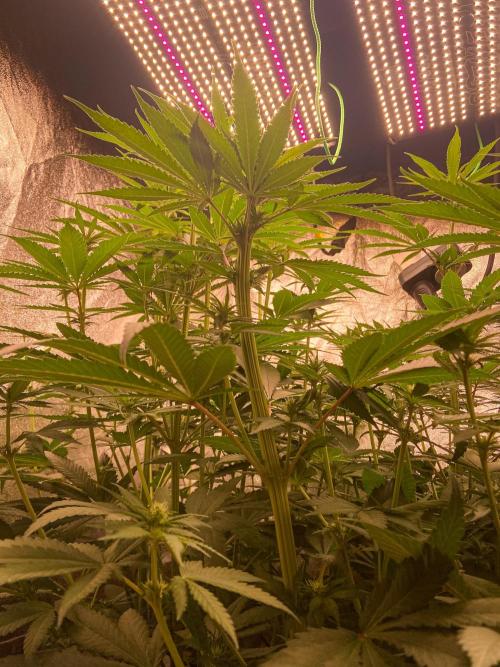
• Stretch accelerated dramatically during the second week of flower.
• Plant height increased from 63 cm to 95 cm in just 7 days (+32 cm). Early training was probably the only reason the canopy remained relatively even.
• Water demand increased significantly. A total of 23.5 L of RO water was applied this week (4×5 L + 1×3.5 L), and the soil is drying noticeably faster than it did during the transition phase.
• Environmental conditions were far from stable. Without a climate controller, temperatures fluctuated between 24.4°C and 30.8°C, while relative humidity ranged from 62% to 84%.
• As a result, VPD moved between 0.50 and 1.69 kPa throughout the week.
• PPFD was adjusted several times during stretch, ranging from 850 to 1200 µmol·m⁻²·s⁻¹ depending on plant response and environmental conditions.
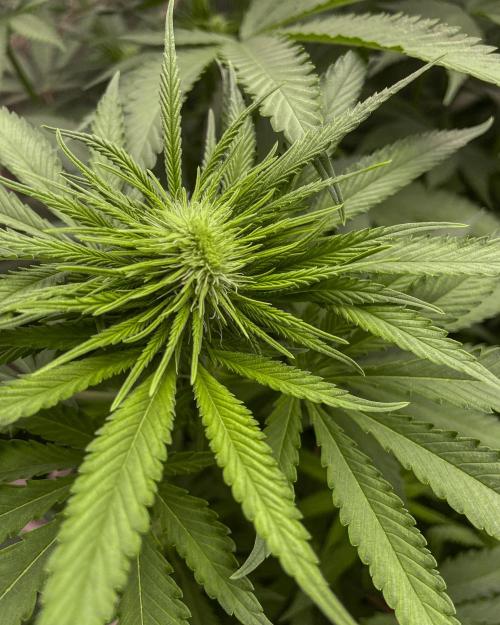
• Despite the fluctuations, growth remained vigorous, stems continued thickening and flower sites are now established across the entire canopy.
Current focus:
Managing the final stage of stretch, maintaining canopy uniformity and letting the soil biology do the work before bulk flower production begins.
Living Soil isn’t about feeding the plant. It’s about building an ecosystem capable of feeding itself.
@squalino, Thanks a lot my friend!! 🙏💚 I’m really happy with how she’s developing so far. Hopefully she’ll keep that structure all the way through flower 🤞🌱
@IslandTerps, Yeah, that’s exactly what I’m worried about 😂
I probably should have kept tucking and scrogging for a bit longer, but honestly… I got tired of it 😅
You can really see the sativa influence in this one. As soon as you tuck the branches down, they immediately start reaching back up. With more indica-leaning plants they usually take a bit longer, which makes it easier to fill the screen evenly.
On one hand that’s great because the plant is so vigorous, but on the other hand it’s a pain because you have to keep adjusting everything almost every day.
At some point my lazy side won the battle and I stopped fighting it 😂
Now all I can do is pray she doesn’t end up growing into the lights 🙏🌱🤣
@IslandTerps, Yeah, that’s exactly what I’m worried about 😂
I probably should have kept tucking and scrogging for a bit longer, but honestly… I got tired of it 😅
You can really see the sativa influence in this one. As soon as you tuck the branches down, they immediately start reaching back up. With more indica-leaning plants they usually take a bit longer, which makes it easier to fill the screen evenly.
On one hand that’s great because the plant is so vigorous, but on the other hand it’s a pain because you have to keep adjusting everything almost every day.
At some point my lazy side won the battle and I stopped fighting it 😂
Now all I can do is pray she doesn’t end up growing into the lights 🙏🌱🤣