


Likes
Comments
Share


@DniceWJ
Follow
LSD is now 52 days today I did low stress training some defoliation also add a nutrients for the week. I was confused on how to stop her from getting to the light. I lost my net so on the 54th day I created a homemade net out Pipe cleaners. Wish me luck so far everything looks great 👍🏾

Likes
18
Share


@Grow_Mary_Green
Follow
Hi meine lieben, 🤗
Willkommen in der Ernte Woche...
_______________________________________________________________
Tag 85:
- Nur beobachtet 😋
Tag 86:
- Nur beobachtet 😋
Tag 87:
- Geerntet und zum Trocknen aufgehangen
___________________________________________________________
Ergebnis:
- Pflanze Geerntet (Nass)- 1015 Gramm
- Pflanze nach dem Trocknen - 265 Gramm
- Getrocknete Blüten - 135 gramm
___________________________________________________________


Likes
14
Share


@MadeInGermany
Follow
Info:
Unfortunately, I had to find out that my account is used for fake pages in social media.
I am only active here on growdiaries.
I am not on facebook instagram twitter etc All accounts except this one are fake.
Have fun with the update.
Hi everyone :-) .
This week she has continued to develop very well.
She reacts very well to the training :-).
It was poured twice with 1.2 liters each this week.
Everything was cleaned and refilled.
Stay healthy 🙏🏻
You can buy this Strain at
https://www.amsterdamgenetics.com/product/super-silver-haze/
Type:
Super Silver Haze
☝️🏼
Genetics:
Haze x Skunk #1 x Northern Lights
Type:
70% Sativa – 30% Indica
👍
Vega lamp:
2 x Todogrow Led
Quantum Board 100 W
💡
Bloom Lamp :
2 x Todogrow Led
Cxb 3590 COB 3500 K 205W
💡💡☝️🏼
Soil :
Canna Coco Professional +
☝️🏼
Fertilizer:
Green House Powder Feeding
☝️🏼🌱
Water:
Osmosis water mixed with normal water (24 hours stale that the chlorine evaporates) to 0.2 EC. Add Cal / Mag to 0.4 Ec Ph with Organic Ph - to 5.5 - 5.8 .

Likes
Comments
Share

@MrCandyTerps
Follow
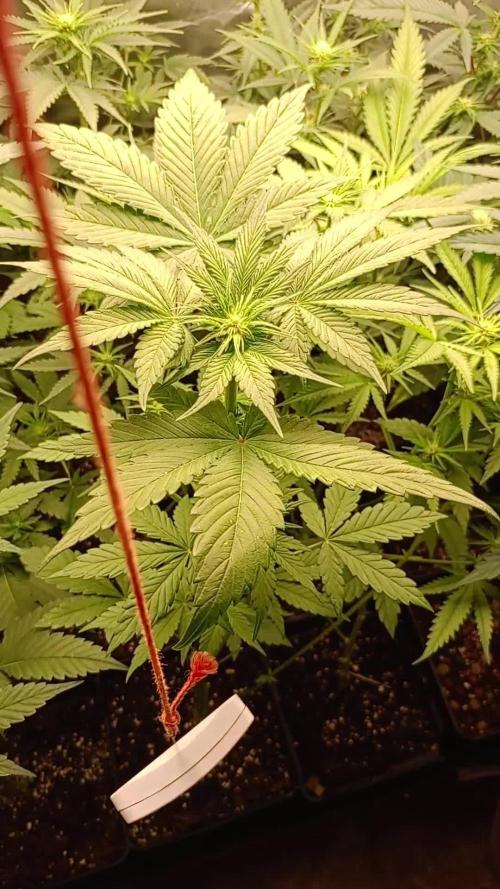
Tercera semana de floracion. Han pegado un buen estiron y se le ha dado una poda de bajos. Comenzamos a subir la ec dandoles mas aditivos.


Likes
3
Share

@eldruida_lamota
Follow
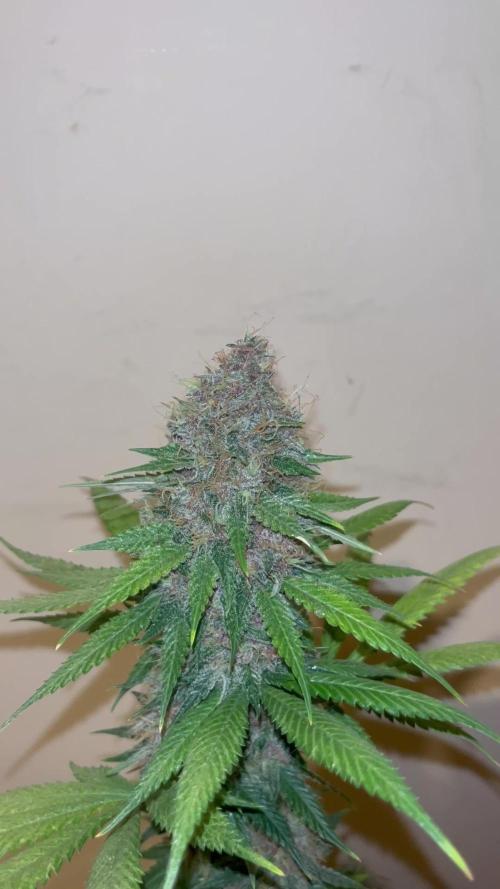
Venga familia que ya viene la cosecha de estas Forbidden Mochi de Seedstockers, que ganas que tenia ya de darles tijeretazo.
Que variedad , me encantó cultivarla , sacaron unas flores bien resinosas y alucinantes.
Las flores aparte son muy pegajosas.
a sido una genética con la que disfruté bastante, fue muy fácil cultivarla. Y a la vez es medio resistente, teniendo trips desde la 4/5 semana incontrolable salieron bastante bien.
La flor tiene una tonalidad morada rosácea bastante llamativa.
Agrobeta:
https://www.agrobeta.com/agrobetatiendaonline/36-abonos-canamo
Mars hydro:
Code discount: Eldruida
https://www.mars-hydro.com/
Hasta aquí es todo , espero que lo disfrutéis, buenos humos 💨💨.

Likes
42
Share


@TerpTurtle
Follow
12 day dry @ 58-63RH & 60-66F in blacked out dry tent | Glass Jar Cure
LOUD N STANKY, opening a jar gives you the duck face funk face
Early taste test & this Bud KOs leaving you in major terp sweats! Hitting like a Sumo wrestler sitting on you tickling all over! Flower hits with overwhelming squeeze & flavor like drinking a smoothie!
Breaks down chunky, greasy & has a vivivd dark purple color.


Likes
371
Share


@love_2_grow
Follow
D36.
We started the sixth week of veg, and the girls are rocking it in the tent.
Today, I moved the humidifier to the front and installed the scrog net. I'll let the girls fill the net before flipping them into flowers.
I gave each girl 2 liters of water @ pH 6.4, with 10ml/liter homemade bokashi juice.
------------------------------
D38.
I gave each girl 2-5-liters of water @ pH 6.4, with 10ml of humic acid.
------------------------------
D39.
The girls are slowly filling in the scrog. I'll leave them for another few days and then flip at the start of next week. Removed a few leaves below the scrog. (I like to defoliate as I go along.)
I moved the mushroom kit over to the side of the tent. No shrooms yet, but it will be more out of the way there.
------------------------------
D40.
Brewed a simple compost tea (worm castings, rock dust, molasses) and gave each girl 2 liters @ pH 6.4.
These ladies don't like too much light during veg, and I'm seeing taco leaves toward the end of the day, indicating that they have had enough.
I will slightly drop the DLI tomorrow and see how they respond.
------------------------------
D42.
The last day in the sixth and final week of veg. The girls are looking great! The scrog is a bit empty in the middle of the second girl, but I'm hoping some lower branches will fill those holes in the coming days.
Healthy and vibrant, and they are ready to move on. I flipped the lights to the flower-inducing program after the girls went to sleep to give them a fresh start when waking up.
The clones I took last week have rooted, and I'll transplant them into 1-liter pots tomorrow.
I hooked up a drip watering system as I'll be traveling soon, and I want enough time to dial it in correctly before leaving.
Finally, I gave the girls a fulvic acid foliar spray. One of their last foliar sprays as we're heading into flower.
------------------------------

Likes
4
Share

@DogDoctorOfficial
Follow
Week 6 Flower – A Hard Lesson: Bud Rot
Quick Recap – From Seed to Here
This Lava Cake run started beautifully:
• Germination was smooth and fast using the Cannakan with Aptus Regulator and Start Booster.
• Veg went strong, with both phenos thriving under the Black Series LED and later joined by ThinkGrow and Lumatek support.
• Transplants into 11L fabric pots gave them space to expand, roots looked stunning.
• Early flower (weeks 1–4) brought explosive growth, thick white hairs, and dense colas forming under carefully tuned nutrition — Aptus base inputs with Plagron complements.
But the same density that made these flowers shine also made them vulnerable. High humidity swings and airflow inconsistencies created the perfect conditions for bud rot (Botrytis cinerea) to sneak in.
What Happened This Week
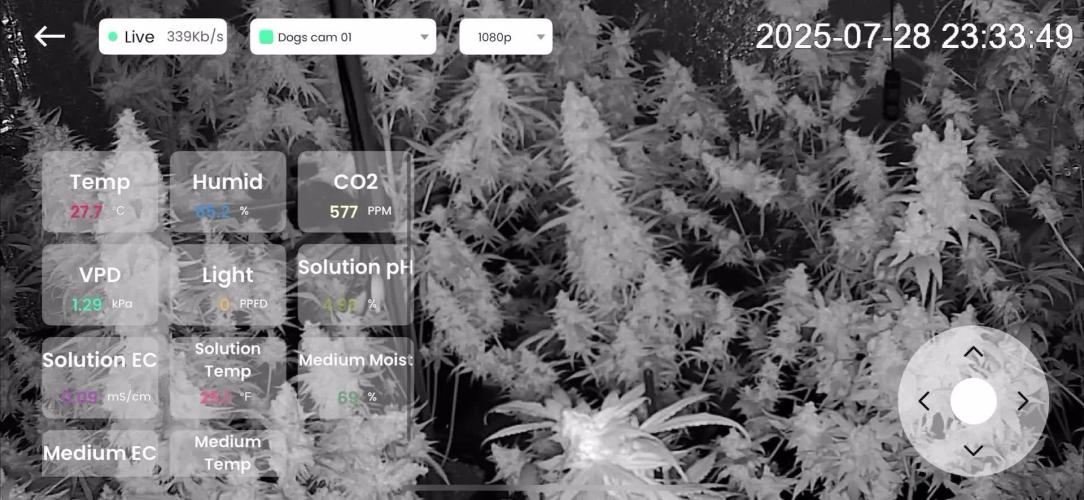
Despite our best efforts, phenotype two (Lava Cake #2) showed visible signs of bud rot. To protect the garden, she was harvested early. Infected material was thrown straight into the trash (not compost — spores spread too easily), and the healthy parts are now drying in a separate, controlled space.
Phenotype one (Lava Cake #1) remains in the tent. She has minor spots, but overall is swelling and pushing forward. She’ll be closely monitored daily to make sure the infection doesn’t spread.
👉 Full educational article from Zamnesia:
🔗 Bud Rot Cannabis Grower Guide – Zamnesia https://www.zamnesia.com/grow-weed/563-bud-rot-cannabis-grower-guide
What Bud Rot Is
• Caused by Botrytis cinerea, a fungus that thrives in warm, humid, poorly ventilated conditions.
• Begins inside dense buds, hidden from sight, and by the time it appears on the surface, the inner cola is usually already compromised.
• Spreads quickly if unchecked, especially in crowded flowering rooms.
Why It Happened
• Humidity spikes during flower.
• Airflow not perfectly balanced, leaving “dead spots” in the canopy.
• Dense colas trapping moisture.
• Temperature swings stressing the balance further.
Prevention Tips (for us and for everyone reading)
• Lower humidity in mid/late flower (40–50%, then 35–40% near harvest).
• Strong airflow: oscillating fans above and below canopy + efficient extraction/intake. need improving in here for my next run
• Regular defoliation to open the canopy.
• Daily inspections of the biggest buds.
• Harvest at the right time — pushing too long in risky environments can invite problems.
What to Expect / Not to Expect Going Forward
• Lava Cake #2: She’s drying now. Expect about 2 weeks of slow, careful drying under controlled temps and humidity. With bud rot, extra caution is needed — we won’t rush, but we’ll also make sure nothing risky makes it through. Expect reduced yield because of the early cut and loss of infected colas, but quality and safety will come first.
• Lava Cake #1: She will continue swelling in the tent. Expect daily monitoring, improved airflow, and cautious optimism. If she stays strong, she could still finish beautifully.
• The Room: We’ll dial in airflow and humidity management even tighter, keeping CO₂ and temps in check, and prepare the AC unit to avoid these swings in the future.
Closing Thoughts
Bud rot is a tough enemy, but also one of the most important teachers in growing. It reminds us that environment control is just as vital as genetics or nutrients.
Yes, we lost part of this run, but we also gained experience that will make every future run stronger. And sharing this openly might help others spot it sooner, act faster, and maybe even save their crop.
At the end of the day, that’s what these diaries are for: to celebrate the wins, learn from the losses, and keep growing together. 🌱💚
📲 Don’t forget to Subscribe and follow me on Instagram and YouTube @DogDoctorOfficial for exclusive content, real-time updates, and behind-the-scenes magic. We’ve got so much more coming, including transplanting and all the amazing techniques that go along with it. You won’t want to miss it.
• GrowDiaries Journal: https://growdiaries.com/grower/dogdoctorofficial
• Instagram: https://www.instagram.com/dogdoctorofficial/
• YouTube: https://www.youtube.com/@dogdoctorofficial
⸻
Explore the Gear that Powers My Grow
If you’re curious about the tech I’m using, check out these links:
• Genetics, gear, nutrients, and more – Zamnesia: https://www.zamnesia.com/
• Environmental control & automation – TrolMaster: https://www.trolmaster.eu/
• Advanced LED lighting – Future of Grow: https://www.futureofgrow.com/
• Root and growth nutrition – Aptus Holland: https://aptus-holland.com/
• Nutrient systems & boosters – Plagron: https://plagron.com/en/
• Soil & substrate excellence – PRO-MIX BX: https://www.pthorticulture.com/en-us/products/pro-mix-bx-mycorrhizae
• Curing and storage – Grove Bags: https://grovebags.com/
⸻
We’ve got much more coming as we move through the grow cycles. Trust me, you won’t want to miss the next steps, let’s push the boundaries of indoor horticulture together!
As always, this is shared for educational purposes, aiming to spread understanding and appreciation for this plant. Let’s celebrate it responsibly and continue to learn and grow together.
With true love comes happiness. Always believe in yourself, and always do things expecting nothing and with an open heart. Be a giver, and the universe will give back in ways you could never imagine.
💚 Growers love to all 💚
P.S. – Drying After Bud Rot Harvest
For Lava Cake #2, we harvested the entire plant and are drying her whole. Because bud rot was present, we’re being extra careful:
• Drying in a separate, controlled space, away from the main room.
• Temperature kept around 18–20°C, with humidity 50–55% — steady and stable.
• Gentle airflow moving through the room, never directly on the buds.
• Daily inspections to ensure no hidden spots continue developing.
The goal is a slow 10–14 day dry, preserving as much aroma and quality as possible, while making absolutely sure nothing unhealthy makes it through. With bud rot, safety comes first — anything questionable goes straight to the trash.
👉 Why whole-plant drying?
By leaving the plant intact, moisture moves more gradually from stems and inner tissues to the buds. This slows down the drying process, prevents overdrying, and helps preserve delicate terpenes and flavonoids that give Lava Cake her unique flavor. Especially after a bud rot scare, a steady, controlled dry is essential for both safety and quality.

Likes
1
Share


@Growing2Give
Follow
I harvested this plant on the same week that I pulled down the 2 B Blunt, so there was no more progress in the garden. Was thinking that it was going to take a bit longer to cut down than it did (I wet trim). Feel free to let me know why that is not the proper way to trim... I have my reasons and it has been working for a while.


Likes
2
Share


@Jabbamo
Follow
_______________________________________________________
Di. 17.2.
- 2,3 Liter pro Pflanze gegossen (ca. 50ml Drain)
0,3 ml / Liter "Calmag"
1,0 ml / Liter "Bio Grow"
1,0 ml / Liter "Bio Bloom"
1,0 ml / Liter "Top Max"
Ph 6,5 / 430 qqm
- Toplight Abstand auf 60cm verringert
- Toplight Leistung auf 75% erhöht
- Luftbefeuchter deinstalliert
- under canopy lights (UCL) installiert
- Abluft Leistung auf stufe 4 erhöht

Likes
11
Share


@420DeepGrow
Follow
Gracias al equipo de MSNL Seeds y XpertNutrients sin ellos esto no sería posible.
💐🍁 CBG SOUL FEMINIZED:
CBG Soul es un híbrido rico en CBG con una proporción Indica/Sativa 50/50, creado por sus efectos calmantes y relajantes. Sus sabores dulces, limón y cítricos se complementan con terpenos limoneno y mirceno, ofreciendo una mezcla única para el alivio y disfrute terapéutico.
🚀🌻 Consigue aqui tus semillas:
https://www.marijuana-seeds.nl/cbg-soul-feminized-seeds
🍣🍦🌴 Xpert Nutrients es una empresa especializada en la producción y comercialización de fertilizantes líquidos y tierras, que garantizan excelentes cosechas y un crecimiento activo para sus plantas durante todas las fases de cultivo.
Consigue aqui tus Nutrientes:
https://xpertnutrients.com/es/shop/
📆 Semana 11:
Por fin comienza el buen tiempo y parece que a ella le gusta, ha explotado esta semana y parece que quiere crecer bastante.
De momento no tiene mucha rama lateral y ya no se aprecia carencia alguna.
Continuo con las dosis de nutrientes recomendada por el fabricante.


Likes
2
Share


@Borberad
Follow
Blütewoche 3 Lollipoppen
Die Blüte ist in vollem Gange! Die Pflanze war sehr buschig und mit sehr vielen Trieben bestückt daher wurden die Anzahl der Triebe drastisch reduziert und die Blume ordenlich aufgeastet. Der Düngeplan bleibt unverändert.
* Zustand der Pflanze: Kräftiger Blütestretch, schöne Blütenstände sichtbar.
* Wichtige Ereignisse: Anhebung des DLI. Entlauben und Lollipoppen
* Düngung & Messwerte:
* Gießwasser: pH ca. 6,3. Leitwert 1,4 bis 2 S.
* Drain: Wir stellen sicher, dass der pH-Wert nicht unter 5,5 und nicht über 6,8 liegt und der Leitwert die +/- 500 S Abweichung einhält.
* Anpassungen: Lollipoppen
Likes
3
Share


@DevelGrow
Follow
Hallo Freunde 👋 die Test Version A von SSSC OUTDOOR es geht ihr gut!!! Das schlechte Wetter hat sie gut überstanden und wurde heute großzügig entlaubt und Triebe entfernt, damit mehr Licht aber vor allem um Schimmel, Mehltau zu vermeiden da es einfach zu feucht ist! Aber es ist noch nicht vorbei! Sie hat das Erste Mal Futter bekommen und Flipt völlig aus 😂 auf das es Fette buds werden! Keep Green and grow High ✌️🍀💚🍀


Likes
2
Share


@PalmaGrow
Follow
Hermosa floración mucha resina
Defoliación para permitir mejor ingreso de luz
25 - 31 agosto

Likes
6
Share
@DogDoctorOfficial
Follow
💚 Amnesia Haze Auto by Zamnesia – Pheno B
Week 8 | Small Pot, Big Appetite
Welcome back to another chapter of the 8×8 Adventure!
Sometimes a phenotype doesn't need to be the biggest plant in the room to become one of the most interesting.
And this little lady is becoming exactly that.
Last week I was already talking about how difficult it was becoming to believe that this plant was growing in only 11 litres of soil.
Well...
This week she's making that even harder to believe.
She is lush.
She is vigorous.
She is flowering beautifully.
And she's drinking and feeding like she has absolutely no idea that she's supposed to be the girl living in the smallest pot in the room. 😂
So this week, I think Pheno B deserves the spotlight.
Let's talk about her.
🌱 The 12/12 From Seed Adventure
If you're joining this diary for the first time, welcome to the 8×8 Adventure.
Every plant in this room has been grown under a 12 hours on / 12 hours off light schedule from seed germination.
There is no traditional vegetative period.
Instead, every phenotype has been given the same environment and allowed to reveal its natural architecture from the beginning.
That makes comparisons incredibly interesting.
Same room.
Same light schedule.
Same environmental conditions.
Same general feeding strategy.
Same grower.
But completely different personalities.
And Pheno B has developed into one of the most fascinating examples of that genetic individuality.
? The Smallest Pot in the Room
There are 12 different genetics growing together in this room.
Almost all of them are sitting comfortably in 15-litre pots.
Pheno B?
She's the exception.
She's growing in only 11 litres of soil.
Originally, this was simply another little experiment.
I wanted to see how far I could push a smaller root volume while maintaining proper nutrition and environmental control.
And honestly...
She's making me rethink some assumptions.
Because the limitation I'm seeing isn't that she's struggling.
It's actually the opposite.
She's drinking like crazy.
Her smaller substrate volume means I have to pay much closer attention to moisture levels and irrigation frequency. There are times when she needs watering twice in the same day because she's drying back so quickly.
That tells me something important.
She's not behaving like a plant sitting in a small container waiting for the next irrigation.
She's behaving more like a plant with a very active root system that is continuously demanding water and nutrients.
And that's exactly why having proper substrate monitoring becomes so valuable.
📡 Watching the Root Zone in Real Time
This is where the TrolMaster WCS-2 substrate sensor has become one of my favourite tools for this particular experiment.
Instead of guessing what's happening inside the pot, I can actually monitor the root-zone conditions.
Moisture.
Temperature.
And substrate EC.
At the moment, the substrate EC is reading approximately:
0.91 mS/cm
And that number is fascinating considering the strength of the irrigation.
I'm feeding around 2.0 EC, yet the substrate is sitting considerably lower.
To me, that's a very interesting indication of how actively this plant is taking up what I'm giving her.
She's not simply sitting there accumulating nutrients.
She's using them.
And when I look at the plant itself...
It makes perfect sense.
🌿 A Plant With a Big Appetite
This phenotype is absolutely lush.
The foliage is vibrant and vigorous, the structure remains beautifully balanced, and the plant continues pushing new flowering growth throughout the canopy.
There is no obvious sign that the smaller container is holding her back.
In fact, one of the biggest challenges I'm having with this plant is simply keeping up with her demand for water.
That's quite a funny problem to have when your experiment was supposed to test whether a smaller pot might become the limiting factor.
Instead, Pheno B seems to be saying:
"Give me more."
😂
And I'm listening.
🌸 Flower Development Is Moving Forward
The flowering sites are continuing to develop beautifully.
The white pistils remain abundant across the plant, and the developing flowers are becoming increasingly defined.
The structure is particularly pleasing to look at.
She has enough spacing between the branches to maintain airflow and light penetration, while still producing a very respectable number of flowering sites.
The central growth remains strong, but the secondary branches aren't being left behind.
That's something I really appreciate about this phenotype.
She doesn't look like she's trying to become one giant cola.
Instead, she's building a balanced architecture where the entire plant contributes.
And now that we're moving deeper into flower, that structure should become increasingly interesting as the flowers begin to swell.
✂️ Still No Defoliation
And yes...
I still haven't defoliated her.
And I'm completely comfortable with that decision.
Looking at the plant, I simply don't feel she needs it yet.
The foliage is healthy.
The plant is actively flowering.
The canopy isn't showing signs that demand an aggressive intervention.
And perhaps most importantly, I don't want to remove healthy leaves simply because we're accustomed to seeing defoliation performed at a particular stage of flower.
Every plant gets evaluated individually.
Pheno B is telling me that she still wants those leaves.
So for now...
She keeps them.
A little leaf positioning when necessary is enough.
I'm much more interested in watching how she naturally manages her canopy than forcing her into a particular shape.
Sometimes the best training technique is knowing when not to train.
💧 Feeding Strategy
The nutritional program continues supporting this extremely hungry phenotype.
Current feeding includes:
Plagron Terra Bloom — 2.2 ml/L
Plagron Power Buds — 1 ml/L
Plagron Green Sensation — 1 ml/L
Plagron Sugar Royal — 1 ml/L
Plagron pH Plus / Lemon Kick — as required for pH adjustment
The irrigation is running at approximately 2.0 EC, while the substrate sensor is currently showing around 0.91 mS/cm.
And once again...
She's eating.
A lot.
That's probably one of the most interesting characteristics of this phenotype so far.
She may be the smallest pot in the room, but she's certainly not the smallest appetite.
💡 Light, Environment & Root Zone
The environmental conditions remain stable, which is exactly what I want at this stage.
Current conditions:
🌱 Flowering: Week 8
📏 Height: 135 cm
💡 Light schedule: 12/12
🌡️ Day temperature: 29°C
🌙 Night temperature: 25°C
💧 Relative humidity: 60%
⚗️ pH: 6.0
⚡ Substrate EC: 0.91 mS/cm
🌡️ Root-zone temperature: 21°C
💧 Solution temperature: 21°C
🌫️ CO₂: 639 ppm
? Pot size: 11 L
💦 Watering: approximately 1.2 L per plant per 24h, with frequency adjusted according to substrate demand
💡 Under-canopy lighting: Lumiflora
📡 Substrate monitoring: TrolMaster WCS-2
The most important part of this week's environmental story isn't necessarily a single number.
It's consistency.
And that consistency gives the plant the freedom to express what she's capable of genetically.
🌿 The Personality of Pheno B
Every phenotype eventually develops a personality.
And I think I finally know how I would describe this one.
She's the quiet overachiever.
She wasn't the phenotype that immediately demanded attention.
She wasn't the biggest.
She wasn't the fastest to announce herself.
She simply kept growing.
Kept building.
Kept flowering.
And now we're reaching the point where she's becoming impossible to ignore.
The funny thing is that her biggest disadvantage on paper — the 11-litre pot — has actually become one of the most interesting things about her.
Because instead of showing weakness...
She's showing efficiency.
📸 This Week's Gallery
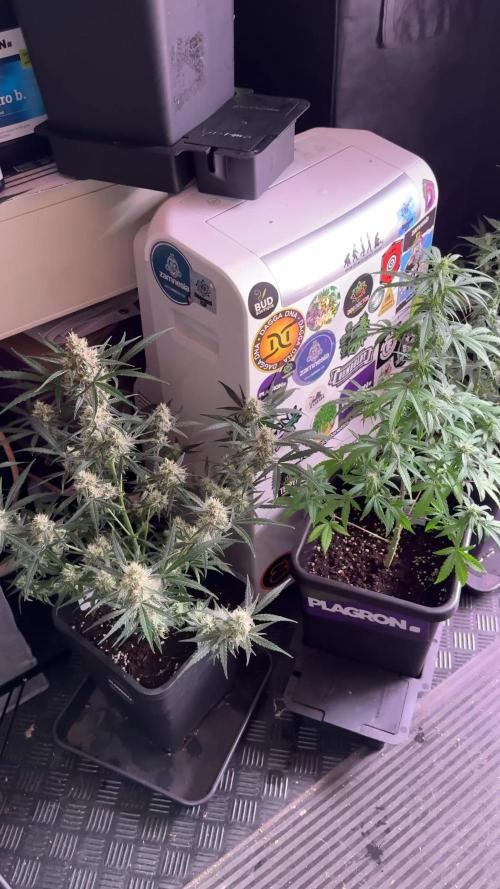
Looking through this week's photographs, the first thing that stands out is just how healthy the plant looks.
The leaves are beautifully developed, with strong colour and excellent structure.
The macro photographs reveal flowering sites covered in fresh white pistils, with the developing flowers beginning to take shape.
The full-plant photograph tells another part of the story.
She's tall.
She's balanced.
She's branching beautifully.
And when you remember that this plant is growing in only 11 litres while her sisters are sitting in 15-litre containers...
It's genuinely impressive.
The close-up photographs also show why I haven't felt the need to defoliate her.
There is still plenty of healthy foliage contributing to the plant's energy production.
For now, I'm happy to let her keep doing what she's doing.
🔬 One Small Pot, One Interesting Experiment
This is becoming one of those experiments that I didn't expect to become so educational.
We often associate larger containers with greater potential.
And there's certainly good reason for that.
More root volume can provide more buffering capacity, more available water and more room for root development.
But this plant is reminding me that container size is only one part of the equation.
Genetics matter.
Root health matters.
Irrigation strategy matters.
Nutrition matters.
Environment matters.
And perhaps most importantly...
The plant itself matters.
A phenotype with an efficient, highly active root system can behave very differently from another plant sitting beside it in the exact same room.
That's why I love phenotype hunting.
You think you're running an experiment on one thing...
And the plants teach you about five other things along the way.
🔮 Looking Ahead
The next few weeks should be very exciting.
We're entering the part of the cycle where the structure we've been watching develop should begin transforming into much more substantial flowers.
I'll continue monitoring the substrate closely because this little 11-litre container is clearly demanding more attention than her sisters.
The WCS-2 will remain an important part of that process.
I'm particularly interested in continuing to watch the relationship between:
irrigation EC → substrate EC → moisture depletion → plant response.
And of course...
I'm still not planning to defoliate simply because the calendar says I should.
If she continues looking this good, I'll continue letting her tell me what she needs.
💚 Final Thoughts
Pheno B started this adventure as the smaller sister.
The quieter one.
The phenotype living in the pot that was supposed to become the limiting factor.
Eight weeks later...
She's standing 135 cm tall, flowering beautifully, drinking aggressively, consuming nutrients at a serious rate, and maintaining a canopy that is still lush and healthy.
She's making me water more.
She's making me monitor more.
She's making me pay attention.
And she's making this experiment much more interesting than I expected.
Sometimes the plant you expect the least from becomes the one that teaches you the most.
And this little lady?
She's definitely teaching me.
Small pot.
Big appetite.
Beautiful structure.
And absolutely no intention of playing small.
Let's see where she takes us next.
💚 Thank You
Thank you so much for following another chapter of the 8×8 Adventure.
A huge thank you to:
🌱 Zamnesia — for providing the genetics and making this phenotype hunt possible.
💜 Plagron — for the nutrition supporting these plants throughout the run.
💡 Future of Grow LED — for providing the lighting driving this garden.
🌿 Lumiflora — for bringing under-canopy lighting into the experiment and giving me another variable to evaluate.
🌡️ TrolMaster — for helping me monitor and maintain the environment, and especially for giving me the tools to look deeper into what is happening inside the root zone.
🌱 GrowDiaries — for providing the platform where growers can document, compare, learn and share these experiments with one another.
And finally, thank you for following, commenting, asking questions and growing alongside me.
This little lady may have the smallest pot in the room...
But she's proving that size isn't everything.
Growers Love. 💚🌿