Likes
Comments
Share
@Random80
Follow
I applied too much pressure and main cola broke during final LST. I would call it super cropping if she wasn't in flowering faze already. She will recover but I doubt she will manage to reach full potential. Sprayed with boom boom spray. 20 ml orgatrex per plant and 10ml BIO P-K. Connected on auto-pot as I am gone for a week. Sun-Light EVO 80 grow light increased on 100% (Out of 4 levels I was increasing power every 2 weeks app). Light eight increased to 50 cm.
Likes
11
Share
Stardog room it is looking pretty good and is thriving. Hopefully get the results we asking for. Aya room up to now is giving pretty impressive results and it looks like they like the enviroment even tho its not fully equiped. After adding the c4 neet to celan the insides a little bit more and see how it will react.
Likes
22
Share
1/25/2024 Vegetation Week 3 Day 1- took 2 Tops today and cleaned up a few lower leaves that were hanging down. The FiM seems to have worked well and looks like I have three branches coming in where it was FiMed. 1/26/2024 Vegetation Week 3 Day 2- took 2 Tops from the sides and took a little of the foliage that was touching the lid. She seems to be doing very well.. Water change day tomorrow.. YAY!! will get a good picture of the roots and see how she is doing. 1/27/2024 Vegetation Week 3 Day 3- Water Change Day! I noticed a slight red coming in on the STEMS which I added a pinch of EPSOM salt to help correct. I added 36 Gallons of Water I added the following Nutes: Silica = .5Mil/Gal= 18Mil CalMag= .75Mil/Gal= 27Mil FloraMicro = 4.2Mil/Gal= 187Mil FloraGro= 3.8Mil/Gal= 137Mil FLoraBloom= 3.0Mil/Gal= 108Mil ORCA = .5Mil/Gal= 18Mil EPSOM- 1 big pinch 1/28/2024 Vegetation Week 3 Day 4- I cleaned her up just a little bit on stuff hanging down. I also made sure the PH is balanced so she could soak up the New Nutes. 1/29/2024 Vegetation Week 3 Day 5- I Got sick, Possibly food poisoned.. Luckily for me the system was able to do what it do and hold it down until I was feeling better. 1/30/2024 Vegetation Week 3 Day 6- I was still to sick to go to my grow room... Possibly food poisoned.. Luckily for me the system was able to do what it do and hold it down until I was feeling better. 1/31/2024 Vegetation Week 3 Day 7- First day back.. Her PH was down to 5.72 so I raised the PH back up closer to 6.0, I took a few pictures and got her height.. Feeling better through prayer so was able to get some pics today.
Likes
8
Share
@Rko41
Follow
Likes
8
Share
@Prilyfe13
Follow
04/26/2026 Readings before water swap. pH: 5.6 EC: 1450 cm TDS: 1050 ppm Temp: 71.3° So I'm going to start flushing today. She has a whole lotta nutrients left in those leaves and buds. So what I'm doing now is fill and drain. In my case pump and pump. I mix my nutes in a 5 gallon bucket. Then use another bucket to drain the DWC reservoir. Do it twice and then the last time with flawless finish. Again! Something happened to my yesterday entry. 04/28/2026 Readings: pH: 6.58 EC: 499 cm TDS: 351 ppm Temp: 66.7° Will be pHed today. It's too high. Anyway, she looks really odd with all of her branches just falling down. All around and the main top and some select branches are left standing up. She has issues everywhere from clawing to tacoing spots and burned tips or whatever else is wrong. So she's getting her week of flushing. I haven't noticed anything yet. But maybe it's because theight is too close to the top. Speaking of, does just the top getting too much light stress the whole plant out? Or is it just the top? I honestly hope my plant isn't waterlogged. I wonder what causes that. Because when I hung the plant up, the branch I was going to use legit sqweeshed on me. Like it was soaking wet. And when I take leaves off, the break pours out water. Never seen that before. Just a new thing. The environment looks really good Now it's working. 04/30/2026 Readings: pH: 6.7 EC: 521 cm TDS: 371 ppm Temp: 66.2° 05/01/2026 Well, I say she's done. I have her in the dark for the next couple of days, then I'll harvest. That'll give me enough time for the bucket to empty out and by the time it's ready, the bucket should be nearly dry. Actually, I wonder if that'll happen. I topped her off yesterday, so she should be fine for the next 3 days. I'm gonna check the water one last time before she's in the dark for 3 days. I dunno. I think she's ready now. I'll also get a trichome video to make sure. No top off just this one last trichome video and harvest will be in 3 days. Or sooner. I took a trichome video this morning. It's not very good. But you can see the abundance of cloudy and in some spots, amber. Other than that, I might pop off a few leaves today before her official dark period starts. It was supposed to be last night, but I forgot to set it. So it's off this morning, but I have some things I still need to do. Like snip off as many fan leaves as possible. No sugar leaves. And if there's a ton of trichomes on the offending leaf, I shall leave it. It's really dry out now, so I'll need to keep a lot of the leaves in tact so it doesn't dry out too quickly. Readings: pH: 6.16 EC: 605 cm TDS: 431 Temp: 69.6 I'm curious as to why both the EC and TDS have higher readings than yesterday. There's absolutely no nutrients, or shouldn't be in that bucket as I've added 2 flushes of Flawless Finish. And 1 top off of plain water. She needs about a half gallon now, but I'll let her take her own water down. I'm not sure how quickly it will be gone. She drinks about a half gallon a day. I think there's around 3.5 gallons left. Should be plenty of water left at harvest and not too much. I still haven't seen a single bit of color. I had to have done something wrong. Back to the EC and TDS. Both spiked about 100 points. That might be my pH pen. I doubt it though. Something environmental or most likely not a colorful one. Which I don't get. It started flushing 3 days ago. Shouldn't I be seeing something colorful by now? All I'm seeing is a very earthy plant. Well, more plant like smell. As for the water situation. I think I might have to pull the water out and pH it back to 5.8 but I'm inclined not to do such a useless task. Of course if it goes over too much, I'll have to step in and add more Flawless Finish. Because I don't think she is eating at all. Or there's a nutrient lockout. Again, that should t matter anymore. Another thing. I found more clawing leaves that were super dark. But how?! There's no nitrogen in this plant. No idea how it's showing signs of toxicity? I don't get it. Like at all. I don't understand why the EC and TDS are climbing when they should be like going down.
Likes
Comments
Share
So I received some fastflowering testers from the amazing fastbuds I cannot wait for these girls too show themselves and start growing 🌱 Thank you so much too the fastbuds team I'm very excited too see what they become 🤞 👀🙏 I have not yet decided which nutrients too use between shogun and aptus but I may use both let's see. hope you will feel comfortable too advise as I go along any comments are welcome. Any aptus nutrients users please feel free on giving tips as I think I will be using aptus Stay blessed growmies 🙏🌱💚
Processing
Likes
10
Share
@Xspellsx
Follow
Added a tnb naturals c02 bottle. It seems ok havnt yet bought a ppm measurement device for co2 so not sure how well its working. Ive done some research and the canister with the original contents doesnt seem to put off enough co2 for it to matter not even with 2 of them! I do everything myself though always have so i got to thinking my mushroims put off co2 but the led kills them huh??? I brew beer and that gives off co2 i did some more research turns out bread yeast baking soda to drop ph to 5 and sugar and water does the trick in a dark container like a tnb naturals bottle wrapped in alinum foil. I ordered high gravity yeast for making lager like steel reserve high alcohol content more reaction more co2. Using brewers yeast which is cheap 10bux a lb 1 tsp 1and hal cup sugar NO BAKING SODA NEEDED WITH BREW YEAST that includes champagne yeast which im used to using. Im going to grind rice to a fine powder about a 1/8th cup and add to extend co2 production i wanna change least as possible cuz it take 14hrs to start to produce. If u keep a starter in ur fridge then 8 hrs . google brew yeast starter diy and diy co2! Also flushed thus week no florekleen just h20 with a little cal mg like 3tsp 5gal and pk 1tsp5gal. Clearing res nitrogen from veg and switch nutes. Peace and love and enjoy theres a treat this week in the pics!
Likes
12
Share
Week 3 Veg - Thus far running accordingly. No signs of stress or deficiencies. Introduced a Co2 bag (Exhale 265) to run into early flowering. *End of week recap* (08/27) User error during LST for both - Gave heavy nutes to assist on the rebound - Minor chance of stunting Besides the LST error - Running smoothly - Light flower will begin in 2 weeks.
Likes
16
Share
@Grower
Follow
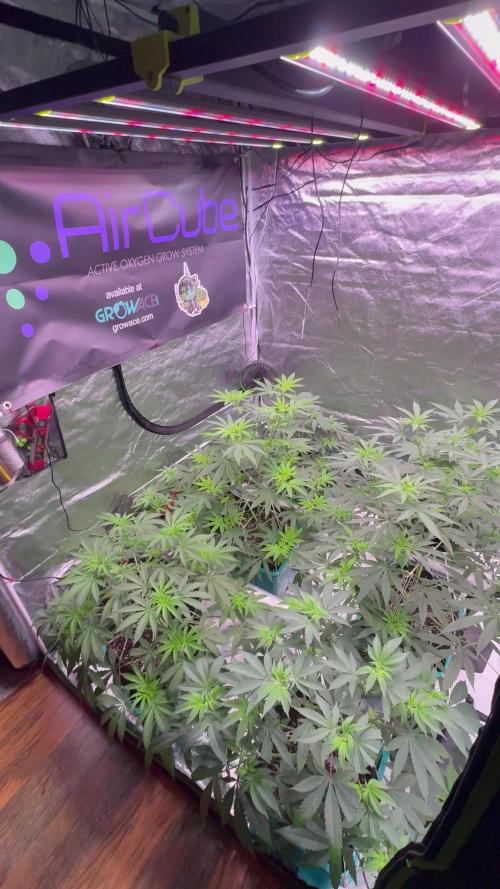
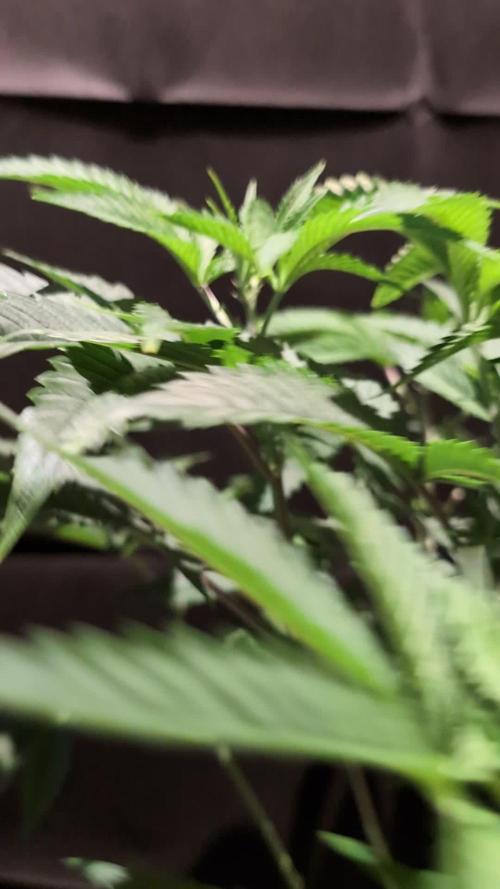
Both my plants are growing quite nicely. They're both getting a few more leaves and getting bigger by the day. Trying out a drip irrigation system for a week or so, see how that goes.
Likes
53
Share
! this is my current status, gonna upload my last veg weeks within the next week - got a bit busy around Spannabis - thank you for your understanding! 💚 Welcome to Bud Boutique Grow Diary - really appreciate all your love and support :) Dont forget to check out my other current grows! 🗓️ This Week: - Day 24: attaching once a week APTUS Foliar with Regulator & Nutrispray with the amazing CannaFogger by Petra Grow - Day 28: bud development is super beautiful on each pheno #1 and #2 Thank you for still staying with me 💚 ___________________________________________ --- 🌱 Strain (Sponsor) --- 🏷️ P.C.R. by Art Genetix https://www.artgenetix.world/product-page/p-c-r --- 🥗 Nutrients and Feeding (sponsored by APTUS: APTUS Ambassador) --- 🍸 APTUS: full nutrient schedule extreme -- Regulator, N-Boost, P-Boost, CaMg-Boost, K-Boost, Allin1 Liquid, Startbooster, Topbooster, Enzym+ every feeding -- Fulvic-Blast, NutriSpray as Foliar each once a week 🔗 https://aptus-holland.com/ --- ♻️ Grow Control (Sponsor) --- TROLMASTER: TENT-X + LM14 Light Adapter to dim/sunrise/sunset lights + Temp & rH Sensor all remote on App 🔗 https://www.trolmaster.eu/ --- 🚿 PetraGrow (Sponsor) --- CannaFogger Foliar Spray 🔗 https://www.petratools.com/product/petragrow-cannafogger-atomizer-new-mini-fogger --- 🏭 Grow Setup --- 💡LUMATEK Zeus Pro 600 * 🏠🌿 Indoor: Homebox 120x120x200cm (4x4) * 📐🌀 PrimaKlima exhausting Fan 1180m3/h (running on 60-80%) * 🌀 Can Light Filter 800m3/h & 1x Fanbox 1x Dyson fan for Air circulation 🔗 https://lumatek-lighting.com/zeus-600w-pro-29/ 🔗 https://primaklima.com/de/shop/ventilatoren-de/ec-ventilatoren/pk160ec-tc/ 🔗 https://canfilters.com/products/filters/ All Likes and comments are highly appreciated!!! 👨‍🌾 don't forget to check out my Instagram for daily educational content: budboutiquee - Bud Boutique
Likes
11
Share
Day 141: The plant looks almost ready. I am not sure whether I'll still wait a couple of days or harvest tomorrow. Another week probably wouldn't hurt though. I'm looking forward to it nevertheless. No nutrients at this point, just water.
Likes
11
Share
Il ciclo è stato veloce e veramente molto produttivo! E stata superata 3 volte in modo che avesse 8 cole principali, i realtà poteva prendersi un altra tagliata (per riuscire ad averne 16) ma non ho voluto farlo perche avevo un vaso da 8 litri, se avessi avuto un vaso più grande sicuramente avrei continuato a fare topping! E stato un vero piacere vederla crescere ho voluto farla crescere fino a quando avesse avuto i tricomi al 30ambra e 70 latte e così ho fatto! Ho controllato con il mio lumagny 100x e una volta raggiunto un 10ambra e 90 latte ho iniziato fare il flush (dando solo acqua ed enzimi per i primi 4 giorni e per i successivi 7 ho dato solo acqua. Quando ho controllato i ppm di scarico defluiva solo 380-400ppm (che era i ppm dell'acqua iniziale).... E stato bellissimo lavorare a questo progetto con tutti questi sponsor perché ogniuno a modo suo mi ha insegnato qualcosa è come potete vedere i risultati parlano da soli! Le piante non mentono MAI!😝 Volevo anche offrire l'opportunità a tutti voi di poter acquistare qualsiasi cosa voi vogliate su hempatianetwork oppure su bioponicagrowshop con il 20% di sconto basta inserire il coupon con il codice: CURATIDASOLO ed in automatico avrai il 20% su tutti gli articoli! Spero che sia di aiuto! La prossima settimana pubblicherò le foto del raccolto (veramente generoso pesata con tutti gli steli superava il kg!) Non voglio svelarvi adesso il peso perché vorrei conservarlo per la.prossima settimana come sorpresa per tutti voi quindi miraccomando STAY TUNED! 🌈🌱👇🏼
Likes
25
Share
ANTHOCYANIN production is primarily controlled by the Cryptochrome (CR1) Photoreceptor ( !! UV and Blue Spectrums are primary drivers in the production of the pigment that replaces chlorophyll, isn't that awesome! 1. Diverse photoreceptors in plants Many civilizations, including the sun god of ancient Egypt, thought that the blessings of sunlight were the source of life. In fact, the survival of all life, including humans, is supported by the photosynthesis of plants that capture solar energy. Plants that perform photosynthesis have no means of transportation except for some algae. Therefore, it is necessary to monitor various changes in the external environment and respond appropriately to the place to survive. Among various environmental information, light is especially important information for plants that perform photosynthesis. In the process of evolution, plants acquired phytochrome, which mainly receives light in the red light region, and multiple blue light receptors, including his hytropin and phototropin, in order to sense the light environment. .. In addition to these, an ultraviolet light receptor named UVR8 was recently discovered. The latest image of the molecular structure and function of these various plant photoreceptors (Fig. 1), focusing on phytochrome and phototropin. Figure 1 Ultraviolet-visible absorption spectra of phytochrome, cryptochrome, phototropin, and UVR8. The dashed line represents each bioactive absorption spectrum. 2. Phytochrome; red-far red photoreversible molecular switch What is phytochrome? Phytochrome is a photochromic photoreceptor, and has two absorption types, a red light absorption type Pr (absorption maximum wavelength of about 665 nm) and a far-red light absorption type Pfr (730 nm). Reversible light conversion between the two by red light and far-red light, respectively(Fig. 1A, solid line and broken line). In general, Pfr is the active form that causes a physiological response. With some exceptions, phytochrome can be said to function as a photoreversible molecular switch. The background of the discovery is as follows. There are some types of plants that require light for germination (light seed germination). From that study, it was found that germination was induced by red light, the effect was inhibited by subsequent far-red light irradiation, and this could be repeated, and the existence of photoreceptors that reversibly photoconvert was predicted. In 1959, its existence was confirmed by the absorption spectrum measurement of the yellow sprout tissue, and it was named phytochrome. Why does the plant have a sensor to distinguish between such red light and far-red light? There is no big difference between the red and far-red light regions in the open-field spectrum of sunlight, but the proportion of red light is greatly reduced due to the absorption of chloroplasts in the shade of plants. Similar changes in light quality occur in the evening sunlight. Plants perceive this difference in light quality as the ratio of Pr and Pfr, recognize the light environment, and respond to it. Subsequent studies have revealed that it is responsible for various photomorphogenic reactions such as photoperiodic flowering induction, shade repellent, and deyellowing (greening). Furthermore, with the introduction of the model plant Arabidopsis thaliana (At) and the development of molecular biological analysis methods, research has progressed dramatically, and his five types of phytochromes (phyA-E) are present in Arabidopsis thaliana. all right. With the progress of the genome project, Fi’s tochrome-like photoreceptors were found in cyanobacteria, a photosynthetic prokaryotes other than plants. Furthermore, in non-photosynthetic bacteria, a homologue molecule called bacteriophytochrome photoreceptor (BphP) was found in Pseudomonas aeruginosa (Pa) and radiation-resistant bacteria (Deinococcus radiodurans, Dr). Domain structure of phytochrome molecule Phytochrome molecule can be roughly divided into N-terminal side and C-terminal side region. PAS (Per / Arndt / Sim: blue), GAF (cGMP phosphodiesterase / adenylyl cyclase / FhlA: green), PHY (phyto-chrome: purple) 3 in the N-terminal region of plant phytochrome (Fig. 2A) There are two domains and an N-terminal extension region (NTE: dark blue), and phytochromobilin (PΦB), which is one of the ring-opening tetrapyrroles, is thioether-bonded to the system stored in GAF as a chromophore. ing. PAS is a domain involved in the interaction between signal transduction-related proteins, and PHY is a phytochrome-specific domain. There are two PASs and her histidine kinase-related (HKR) domain (red) in the C-terminal region, but the histidine essential for kinase activity is not conserved. 3. Phototropin; photosynthetic efficiency optimized blue light receptor What is phototropin? Charles Darwin, who is famous for his theory of evolution, wrote in his book “The power of move-ment in plants” published in 1882 that plants bend toward blue light. Approximately 100 years later, the protein nph1 (nonphoto-tropic hypocotyl 1) encoded by one of the causative genes of Arabidopsis mutants causing phototropic abnormalities was identified as a blue photoreceptor. Later, another isotype npl1 was found and renamed phototropin 1 (phot1) and 2 (phot2), respectively. In addition to phototropism, phototropin is damaged by chloroplast photolocalization (chloroplasts move through the epidermal cells of the leaves and gather on the cell surface under appropriate light intensity for photosynthesis. As a photoreceptor for reactions such as escaping to the side of cells under dangerous strong light) and stomata (reactions that open stomata to optimize the uptake of carbon dioxide, which is the rate-determining process of photosynthetic reactions). It became clear that it worked. In this way, phototropin can be said to be a blue light receptor responsible for optimizing photosynthetic efficiency. Domain structure and LOV photoreaction of phototropin molecule Phototropin molecule has two photoreceptive domains (LOV1 and LOV2) called LOV (Light-Oxygen-Voltage sensing) on the N-terminal side, and serine / on the C-terminal side. It is a protein kinase that forms threonine kinase (STK) (Fig. 4Aa) and whose activity is regulated by light. LOV is one molecule as a chromophore, he binds FMN (flavin mononucleotide) non-covalently. The LOV forms an α/βfold, and the FMN is located on a β-sheet consisting of five antiparallel β-strands (Fig. 4B). The FMN in the ground state LOV shows the absorption spectrum of a typical oxidized flavin protein with a triplet oscillation structure and an absorption maximum wavelength of 450 nm, and is called D450 (Fig. 1C and Fig. 4E). After being excited to the singlet excited state by blue light, the FMN shifts to the triplet excited state (L660t *) due to intersystem crossing, and then the C4 (Fig. 4C) of the isoaroxazine ring of the FMN is conserved in the vicinity. It forms a transient accretionary prism with the tain (red part in Fig. 4B Eα) (S390I). When this cysteine is replaced with alanine (C / A substitution), the addition reaction does not occur. The effect of adduct formation propagates to the protein moiety, causing kinase activation (S390II). After that, the formed cysteine-flavin adduct spontaneously dissociates and returns to the original D450 (Fig. 4E, dark regression reaction). Phototropin kinase activity control mechanism by LOV2 Why does phototropin have two LOVs? Atphot1 was found as a protein that is rapidly autophosphorylated when irradiated with blue light. The effect of the above C / A substitution on this self-phosphorylation reaction and phototropism was investigated, and LOV2 is the main photomolecular switch in both self-phosphorylation and phototropism. It turns out that it functions as. After that, from experiments using artificial substrates, STK has a constitutive activity, LOV2 functions as an inhibitory domain of this activity, and the inhibition is eliminated by photoreaction, while LOV1 is kinase light. It was shown to modify the photosensitivity of the activation reaction. In addition to this, LOV1 was found to act as a dimerization site from the crystal structure and his SAXS. What kind of molecular mechanism does LOV2 use to photoregulate kinase activity? The following two modules play important roles in this intramolecular signal transduction. Figure 4 (A) Domain structure of LOV photoreceptors. a: Phototropin b: Neochrome c: FKF1 family protein d: Aureochrome (B) Crystal structure of auto barley phot1 LOV2. (C) Structure of FMN isoaroxazine ring. (D) Schematic diagram of the functional domain and module of Arabidopsis thaliana phot1. L, A’α, and Jα represent linker, A’α helix, and Jα helix, respectively. (E) LOV photoreaction. (F) Molecular structure model (mesh) of the LOV2-STK sample (black line) containing A’α of phot2 obtained based on SAXS under dark (top) and under bright (bottom). The yellow, red, and green space-filled models represent the crystal structures of LOV2-Jα, protein kinase A N-lobe, and C-robe, respectively, and black represents FMN. See the text for details. 1) Jα. LOV2 C of oat phot1-to α immediately after the terminus Rix (Jα) is present (Fig. 4D), which interacts with the β-sheet (Fig. 4B) that forms the FMN-bound scaffold of LOV2 in the dark, but unfolds and dissociates from the β-sheet with photoreaction. It was shown by NMR that it does. According to the crystal structure of LOV2-Jα, this Jα is located on the back surface of the β sheet and mainly has a hydrophobic interaction. The formation of S390II causes twisting of the isoaroxazine ring and protonation of N5 (Fig. 4C). As a result, the glutamine side chain present on his Iβ strand (Fig. 4B) in the β-sheet rotates to form a hydrogen bond with this protonated N5. Jα interacts with this his Iβ strand, and these changes are thought to cause the unfold-ing of Jα and dissociation from the β-sheet described above. Experiments such as amino acid substitution of Iβ strands revealed that kinases exhibit constitutive activity when this interaction is eliminated, and that Jα plays an important role in photoactivation of kinases. 2) A’α / Aβ gap. Recently, several results have been reported showing the involvement of amino acids near the A’α helix (Fig. 4D) located upstream of the N-terminal of LOV2 in kinase photoactivation. Therefore, he investigated the role of this A’α and its neighboring amino acids in kinase photoactivation, photoreaction, and Jα structural change for Atphot1. The LOV2-STK polypeptide (Fig. 4D, underlined in black) was used as a photocontrollable kinase for kinase activity analysis. As a result, it was found that the photoactivation of the kinase was abolished when amino acid substitution was introduced into the A’α / Aβ gap between A’α and Aβ of the LOV2 core. Interestingly, he had no effect on the structural changes in Jα examined on the peptide map due to the photoreaction of LOV2 or trypsin degradation. Therefore, the A’α / Aβ gap is considered to play an important role in intramolecular signal transduction after Jα. Structural changes detected by SAXS Structural changes of Jα have been detected by various biophysical methods other than NMR, but structural information on samples including up to STK is reported only by his results to his SAXS. Not. The SAXS measurement of the Atphot2 LOV2-STK polypeptide showed that the radius of inertia increased from 32.4 Å to 34.8 Å, and the molecular model (Fig. 4F) obtained by the ab initio modeling software GASBOR is that of LOV2 and STK. It was shown that the N lobes and C lobes lined up in tandem, and the relative position of LOV2 with respect to STK shifted by about 13 Å under light irradiation. The difference in the molecular model between the two is considered to reflect the structural changes that occur in the Jα and A’α / Aβ gaps mentioned above. Two phototropins with different photosensitivity In the phototropic reaction of Arabidopsis Arabidopsis, Arabidopsis responds to a very wide range of light intensities from 10–4 to 102 μmol photon / sec / m2. At that time, phot1 functions as an optical sensor in a wide range from low light to strong light, while phot2 reacts with light stronger than 1 μmol photon / sec / m2. What is the origin of these differences? As is well known, animal photoreceptors have a high photosensitivity due to the abundance of rhodopsin and the presence of biochemical amplification mechanisms. The exact abundance of phot1 and phot2 in vivo is unknown, but interesting results have been obtained in terms of amplification. The light intensity dependence of the photoactivation of the LOV2-STK polypeptide used in the above kinase analysis was investigated. It was found that phot1 was about 10 times more photosensitive than phot2. On the other hand, when the photochemical reactions of both were examined, it was found that the rate of the dark return reaction of phot1 was about 10 times slower than that of phot2. This result indicates that the longer the lifetime of S390II, which is in the kinase-activated state, the higher the photosensitivity of kinase activation. This correlation was further confirmed by extending the lifespan of her S390II with amino acid substitutions. This alone cannot explain the widespread differences in photosensitivity between phot1 and phot2, but it may explain some of them. Furthermore, it is necessary to investigate in detail protein modifications such as phosphorylation and the effects of phot interacting factors on photosensitivity. Other LOV photoreceptors Among fern plants and green algae, phytochrome ɾphotosensory module (PSM) on the N-terminal side and chimera photoreceptor with full-length phototropin on the C-terminal side, neochrome (Fig. There are types with 4Ab). It has been reported that some neochromes play a role in chloroplast photolocalization as a red light receiver. It is considered that fern plants have such a chimera photoreceptor in order to survive in a habitat such as undergrowth in a jungle where only red light reaches. In addition to this, plants have only one LOV domain, and three proteins involved in the degradation of photomorphogenesis-related proteins, FKF1 (Flavin-binding, Kelch repeat, F-box 1, ZTL (ZEITLUPE)), LKP2 ( There are LOV Kelch Protein2) (Fig. 4Ac) and aureochrome (Fig. 4Ad), which has a bZip domain on the N-terminal side of LOV and functions as a gene transcription factor. 4. Cryptochrome and UVR8 Cryptochrome is one of the blue photoreceptors and forms a superfamily with the DNA photoreceptor photolyase. It has FAD (flavin adenine dinucle-otide) as a chromophore and tetrahydrofolic acid, which is a condensing pigment. The ground state of FAD is considered to be the oxidized type, and the radical type (broken line in Fig. 1B) generated by blue light irradiation is considered to be the signaling state. The radical type also absorbs in the green to orange light region, and may widen the wavelength region of the plant morphogenesis reaction spectrum. Cryptochrome uses blue light to control physiological functions similar to phytochrome. It was identified as a photoreceptor from one of the causative genes of UVR8 Arabidopsis thaliana, and the chromophore is absorbed in the UVB region by a Trp triad consisting of three tryptophans (Fig. 1D). It is involved in the biosynthesis of flavonoids and anthocyanins that function as UV scavengers in plants. Conclusion It is thought that plants have acquired various photoreceptors necessary for their survival during a long evolutionary process. The photoreceptors that cover the existing far-red light to UVB mentioned here are considered to be some of them. More and more diverse photoreceptor genes are conserved in cyanobacteria and marine plankton. By examining these, it is thought that the understanding of plant photoreceptors will be further deepened.
Likes
18
Share
@Pennuts
Follow
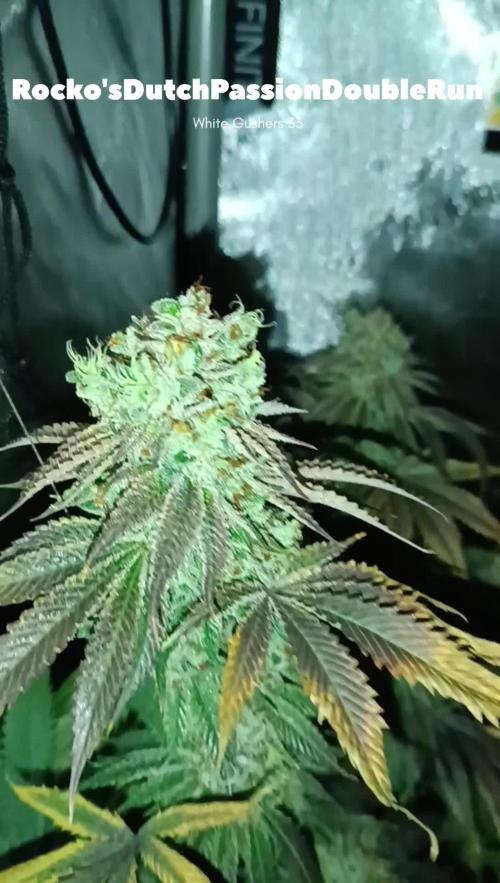
Harvest time has come. It was an excellent cycle without any problems, in fact the plants were doing great and produced some beautiful buds. Now I will dry for 2 weeks plus cure for 1 month.
Processing
Likes
142
Share
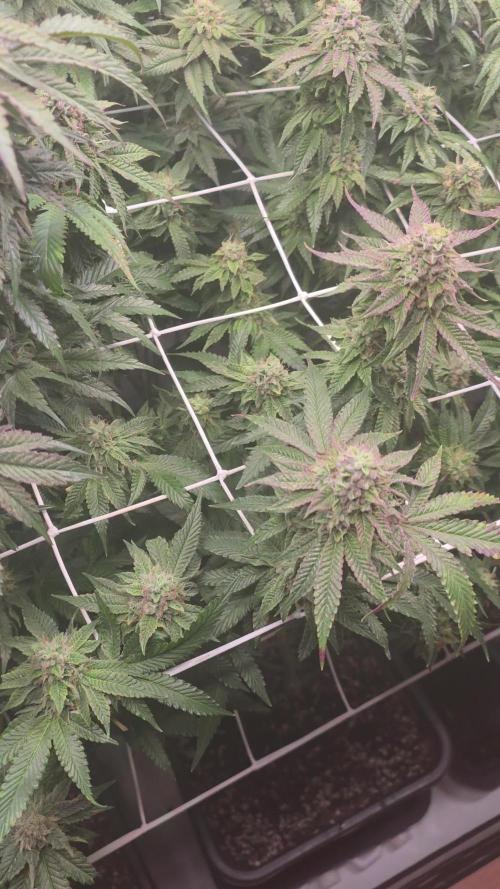
Hey everyone :-) This week it smells more and more sweet and fruity in the whole room 😍. There is actually not much to report, everyone is now under 12/12 :-). This is the last grow that comes in the entire diary. From now on, each plant will be added to the diary 👍. I wish you all a lot of fun watching, stay healthy 🙏🏻 and let it grow 😎👌
Likes
8
Share
Also a fastbuds purple lemonade in a 11 litre pot (30grams)a a original cheese in a 2 litre pot(experimenting)which is not ready yet. Strawberry pie.....wow so impressed with the yield but also the looks are amazing and smells like strawberries... who’d of thought it lol. Recommend to everybody will defo grow again. Fastbuds are killing the auto game!👊🏻
Likes
9
Share
Over all the plants are slowly growing been feeding smal doses of liquid seaweed and foopcanna veg