


Likes
Comments
Share


@UnitedStrainsGermany
Follow
Bisschen Stress hat nur noch tropical poison XL denke Block weshalb die nächsten 8tage nur Ph Wasser. Alle sind im selben Zeitraum aber ganz andere Stadien.


Processing
Likes
8
Share


@Barham64
Follow
Lights are down to 28 inches, only running blue spectrum the first 14 days. Will begin nutrients and full spectrum beginning of week 3.


Likes
17
Share


@m0use
Follow
This was a fun project that was a few years in the making and a year later to see if they would last a season for this upload to happen. Before any of this I would bike aorund town grabbing up all the old Ikea solid pine bed slats that I could find and storing them in the basement. I have a lot of wood down there, any size worked as long as I have enough of them. The hot days to find them were the first and last of the months because that's when people where moving in/out. I also kept an eye on the free section on local online classifieds as well. The entire purpose of this was to recycle as much off the streets as I could before buying anything to finalize the project. In the end I only bought sealer, screws and some takeaway/beers. All the wood was 100% free and salvaged off the streets of Toronto saving it from the dumpster bin.
After collecting all the slats for about 2 years I was playing aorund with them on how I wanted to make this work. I had previously done a little project like this before but I messed it up and the boxes where crap. did not last longer then 2 seasons, they where thin and shallow as well could not grow much of anything in them. I Was talking to my friend who is renovating their house and we brainstormed some ideas on the boxes, I found some designs I liked online and said lets make something like this out of what I have here. We tossed out a few of the design features when looking at them as it would have been wasted wood and extra work not needed. If I had more wood them maybe it could have been an option but simple was the name of the game. They taught me what I needed to know like how the miter saw and sander worked, plus all the other tools I was using. They did help out with a table saw and creating the triangle support joints in the corners, They used some pine left overs they had while making a staircase indoors. I did not feel up to the task of using a table saw given all the relatives I know who have lost a finger to them.
In the end we decided the design would be three boards high and take an alternating pattern on corners. layer one short, layer 2 long, layer 3 short. Went with a galvanized and painted deck screw so it can take the weathering. Ran into some problems like making everything level as some of the boards were warped and other ones had undesired aspects like knots and tacky sticker goo I could not remove. So I used them for the base that will not been seen so much. Clamped everything down and called it a day.
Once it was all done and over with, I then brought them back home from my buddies work garage and started to seal them. I went with a boiled linseed oil as its a food safe option should the wood degrade into the soil I will plant in them. I will need to reapply it to the boxes year after year but the main coat is the most important one and I put it on 3 layers with a good dry in between coats. the inside of the boxes that where coated did not degrade at all as the sun did not hit them so it will not need a new coat just the outside. Overall the end result was very impressive for myself, I've never taken a woodworking class ever and It was a near perfect outcome for me. Heavy Duty Planter Boxes for all my gardening needs. I made a last min decision to add in a plastic liner to preserve the wood even longer and stapled that into the frame. it has held up quite well and may need replacing end of 2nd or 3rd year out in the sun. Used a thick moisture wrap plastic with UV protectors in its formula.
Lets see what I can grow in them this year!
m0use's haus of projects - garden box edition
Likes
2
Share

@DogDoctorOfficial
Follow
8×8 Adventure – Week 11
Blueberry Muffin – Pheno A
💚 Sometimes The Best Thing We Can Do Is Watch
Hello everyone, and welcome back to another chapter of the 8×8 Adventure! 🌱💚
And if you've been following this project for a while, you already know that every week doesn't necessarily bring another big intervention.
Sometimes there are scissors.
Sometimes there is training.
Sometimes there are environmental changes.
Sometimes there are surprises.
And sometimes...
The plants simply reach a point where they don't need us doing much at all.
That's where we are this week.
Blueberry Muffin Pheno A is continuing her journey exactly as we've come to expect from her.
Compact.
Calm.
Beautiful.
And completely comfortable doing things at her own pace.
So this week, we're not going to manufacture work just so we can say we did something.
We're going to watch.
We're going to water.
We're going to provide what she asks for.
And we're going to let her flower.
Because at this stage...
That's exactly what she needs.
────────────────────────
🌸 Week 11 – The Quiet Part Of Flowering
There is something interesting about reaching this stage of a grow.
Earlier in the cycle, there is always something happening.
Training.
Defoliation.
Canopy management.
Branch positioning.
Establishing the plants.
Adjusting the environment.
Watching the plants develop.
But eventually, you reach a point where the foundation has already been built.
The plant has its structure.
The flowering sites are established.
The roots are established.
The irrigation is established.
The lighting is established.
The nutrition is established.
And now...
The plant has to do the work.
That's where Blueberry Muffin is right now.
We're not ignoring her.
Far from it.
We're watching closely.
But watching doesn't always mean touching.
And sometimes knowing when not to intervene is just as important as knowing when to intervene.
────────────────────────
🌿 12/12 From Seed – Why This Stage Is So Interesting
One of the things that makes this particular project so interesting is that these plants have been grown under 12/12 from seed.
That's very different from taking a traditionally vegetated plant and flipping it into flower after building a large vegetative structure.
With 12/12 from seed, we're allowing the plant to develop and flower under the same photoperiod from the beginning.
That means the architecture we see now is the result of the plant expressing itself under those conditions rather than being built through a long conventional vegetative period before the flip.
And that's one of the reasons I love documenting these plants individually.
We're not simply asking:
"What does this strain look like?"
We're asking:
"What does this particular phenotype decide to become under this particular growing philosophy?"
And Blueberry Muffin has answered that question pretty clearly.
She likes being compact.
She likes taking her time.
And she seems perfectly happy building flowers without trying to take over the room.
😂💚
────────────────────────
🌱 Why We're Not Doing Much Right Now
At this stage of flowering, I don't see a reason to keep manipulating the plant simply because I have scissors available.
😂
The structure is already established.
The canopy is already where we want it.
The flowers are developing.
The foliage is supporting the plant.
And there isn't anything obvious asking for intervention.
So what do we do?
We provide what she needs.
Water.
Nutrition.
Light.
Airflow.
A stable environment.
And time.
That's it.
It sounds simple.
And honestly...
It is.
But simple doesn't mean careless.
Quite the opposite.
This is the point where observation becomes extremely important.
We're watching the flowers.
We're watching the foliage.
We're watching the plant's overall posture.
We're watching how quickly she is consuming water.
We're watching environmental conditions.
And if she tells us something needs attention...
We'll respond.
Until then?
Let her be.
────────────────────────
💚 The Plant Gets The Final Vote
This has always been one of the principles behind the 8×8 Adventure.
The numbers are useful.
The equipment is useful.
The experience is useful.
But ultimately...
The plant gets the final vote.
We can measure everything.
We can record temperatures.
We can record pH.
We can record EC.
We can measure light.
We can track irrigation.
But then you look at the plant.
And sometimes she tells you more in five seconds than a spreadsheet can tell you in five hours.
Blueberry Muffin looks comfortable.
She's developing.
She's flowering.
She's maintaining healthy foliage.
And she isn't asking for anything dramatic.
So I'm listening.
────────────────────────
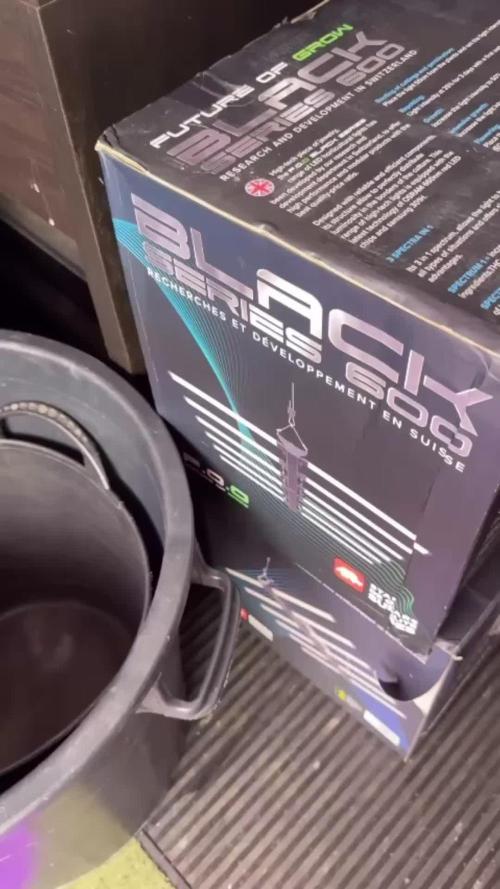
💡 A Major Lighting Upgrade – Two More Black Series 600W Fixtures
Now...
Although we're not doing much to the plants themselves...
We did make a pretty significant change to the lighting environment this week.
Future of Grow provided us with two additional Black Series 600W fixtures for us to test and see how the plants respond.
And when we added them...
Well...
The plants suddenly had access to a lot more light.
😂💡
The PPFD increased more than I wanted initially.
So rather than simply running the fixtures at maximum power because we had the available wattage, we adjusted the output.
We brought the fixtures down in power to find a level that made more sense for the room and the plants.
We're currently running at approximately 59% power from the plug.
At this setting, we're seeing an average of approximately 1,500 PPFD across the upper canopy, with the actual intensity naturally becoming lower depending on plant height and position.
And honestly?
I'm very happy with that.
────────────────────────
🔌 More Power Doesn't Automatically Mean Better
This is something I think is worth emphasizing.
Just because you have more lighting available doesn't mean you have to run everything at maximum output.
We added two more powerful fixtures.
The PPFD went higher than I wanted.
So we turned them down.
Simple.
😂
There is no prize for running the LEDs at 100%.
The objective is to create an environment where the plants can actually make good use of the light being provided.
And by lowering the output, we're also reducing unnecessary electrical consumption.
That's a win in several directions.
Less electricity.
Less unnecessary stress on the fixtures.
Less unnecessary heat from running equipment harder than necessary.
And we're still providing a very strong light environment.
So sometimes...
Turning the dial down is actually the smart move.
────────────────────────
💡 1,500 PPFD At The Top – Then Naturally Less Below
The approximately 1,500 PPFD average across the top canopy is just that:
An upper-canopy measurement.
Not every flower on the plant receives the same intensity.
Plant height changes things.
Canopy position changes things.
Leaf angle changes things.
Distance from the fixtures changes things.
And that's perfectly normal.
This is also where the layered lighting philosophy of the 8×8 Adventure becomes interesting.
We're not trying to make every single part of the plant receive exactly the same amount of light.
We're trying to create a useful overall light environment.
And with these additional Future of Grow fixtures now in place, we have considerably more lighting capability available to us.
We can control it.
We can adjust it.
And we can find the level that makes sense.
That's much more useful than simply having more watts for the sake of having more watts.
────────────────────────
🙏 A Huge Shout-Out To Future Of Grow
I want to give Future of Grow a particularly big thank you this week.
Providing these two additional Black Series 600W fixtures gives us the opportunity to test something that I find extremely interesting:
What happens when we substantially increase the available lighting power...
and then control it to find the level we actually want?
That's a much more interesting experiment than simply turning everything to maximum and calling it a day.
We're going to watch.
We're going to compare.
We're going to see how the plants respond.
And we're going to document the results.
That's exactly what I enjoy about this project.
We're not just growing.
We're experimenting.
We're observing.
And we're learning.
────────────────────────
🌸 Blueberry Muffin Under The New Light
And Blueberry Muffin?
She's taking it beautifully.
Her compact architecture makes her particularly interesting to watch under this new lighting environment.
The flowers are continuing to develop.
The foliage remains healthy.
And the plant isn't giving me any reason to start changing things simply for the sake of changing them.
So we're going to leave her alone.
The lights are doing their job.
The roots are doing their job.
The plant is doing her job.
My job is simply to make sure everything around her continues functioning properly.
And honestly...
I really enjoy that part.
────────────────────────
💚 The Quiet Personality Of Pheno A
If you've been following this diary from the beginning, you'll know that Blueberry Muffin Pheno A has never been the loudest personality in the room.
She didn't try to become the tallest.
She didn't demand constant training.
She didn't explode vertically.
She simply established her own rhythm.
And that rhythm continues.
She's compact.
She's controlled.
She's quietly productive.
And now she's entering the later part of flowering with a beautiful collection of developing flowers.
There is something really satisfying about that.
She hasn't needed to be pushed.
She hasn't needed to be forced.
She's simply been allowed to become what she wanted to become.
And I think that's one of the most interesting things about phenotype hunting.
Sometimes the plant tells you exactly who she is.
You just have to pay attention.
────────────────────────
🌿 What We've Done To Get Here
It's also worth remembering that this quiet week didn't happen by accident.
There was a lot of work before we reached this point.
We established the plants.
We developed the structure.
We trained where necessary.
We managed the canopy.
We maintained the environment.
We established the irrigation.
We built the nutritional program.
We adjusted lighting.
We observed the plant.
And eventually...
All that preparation brings you to a stage where the plant doesn't need constant intervention anymore.
That's the payoff.
The work doesn't disappear.
It simply changes.
Earlier:
"What do I need to do?"
Now:
"What is she telling me?"
And those are very different questions.
────────────────────────
💧 Nutrition & Irrigation – A Small Step Forward
The flowering nutrition has been increased slightly this week.
We're not making a dramatic change.
We're simply moving Terra Bloom from 2.2 ml/L to 2.3 ml/L.
The current recipe is:
• Terra Bloom — 2.3 ml/L
• Pure Zym — 1 ml/L
• Power Buds — 1 ml/L
• Sugar Royal — 1 ml/L
• pH Plus — 0.03 ml/L
• Lemon Kick — 0.03 ml/L
That small increase in Terra Bloom has brought the EC up slightly as well.
We're now sitting around 2.14 mS/cm.
Nothing dramatic.
Just a small, measured increase as the plants continue progressing through flowering.
I like these kinds of adjustments.
We're not suddenly changing the entire program.
We're simply giving the plants a little more support and watching how they respond.
Irrigation is currently around:
1.45 L per plant / 24 hours.
And as always...
The plant gets the final vote.
────────────────────────
🌡️ Week 11 – Current Conditions
This week's recorded conditions are:
• 🌡️ Day Temperature: 26.5°C
• 🌙 Night Temperature: 26°C
• 💧 Relative Humidity: 61%
• 🥥 Substrate Temperature: 25°C
• 💦 Nutrient Solution Temperature: 25°C
• ⚗️ pH: 6.02
• ⚡ EC: 2.14 mS/cm
• 💨 CO₂: approximately 693 ppm
• 💡 Light Schedule: 12/12
• 💧 Irrigation: approximately 1.45 L/plant/24h
• ? Pot Size: 15 L
• 📏 Plant Height: approximately 75 cm
The environment remains stable, and Blueberry Muffin continues responding beautifully.
Summer is still capable of giving us small fluctuations, of course, but we're keeping the important variables controlled and avoiding unnecessary swings.
At this stage, stability is more valuable than constantly chasing perfection.
────────────────────────
🔬 This Is Where Observation Becomes Everything
At this stage, the diary becomes less about describing something dramatic that happened and more about documenting subtle changes.
Are the flowers gaining size?
Are the pistils progressing?
Is the foliage maintaining its colour?
Is the plant drinking differently?
Is the structure changing?
Is resin development becoming more obvious?
Those little observations become increasingly important as flowering progresses.
And that's why I still love taking the photographs every week.
Because sometimes the change isn't obvious when you're standing in front of the plant every day.
Then you put two photographs next to each other...
And suddenly:
There it is.
She's changed.
She's matured.
She's moved forward.
That's the beauty of documentation.
────────────────────────
🔮 Looking Ahead – What Happens Now?
From here, I don't expect dramatic changes.
And that's actually a good thing.
The coming weeks are about maturity.
The plant will continue developing the flowers she has already established.
We'll watch them gain size and density.
We'll watch the pistils change.
We'll watch the resin develop.
We'll continue monitoring the foliage.
And we'll keep providing whatever she asks for.
The new Future of Grow lighting gives us another variable to observe as well.
We've increased our lighting capability substantially, then brought the output down to a level we're comfortable with.
Now we'll watch what the plants do with that available light.
And Blueberry Muffin?
She gets to continue being Blueberry Muffin.
Quiet.
Compact.
Patient.
And increasingly floral.
💚🌸
────────────────────────
💚 Final Thoughts – Let The Girl Finish
There is something I really enjoy about this stage of a grow.
You reach a point where you realize:
We've done enough.
Not because we're finished.
But because the plant has reached the point where more intervention isn't necessarily better.
She's got her structure.
She's got her roots.
She's got her flowers.
She's got her light.
She's got her nutrition.
She's got her water.
She's got her environment.
Now...
She needs time.
And I think that's especially true with a 12/12-from-seed plant like Blueberry Muffin.
We've watched her develop under this philosophy from the beginning.
We haven't tried to turn her into something she's not.
We've allowed her compact personality to remain.
And now we're getting to see what that personality produces when given enough time to finish.
So no...
There isn't a huge training story this week.
There isn't a dramatic intervention.
There isn't a crisis.
And honestly?
I'm perfectly happy about that.
😂💚
Sometimes the best update is:
She's happy.
She's flowering.
She's developing beautifully.
And we're letting her do it.
That's Blueberry Muffin Pheno A.
Quietly getting the job done.
────────────────────────
🙏 Thank You
A huge thank you to Zamnesia for giving us the opportunity to explore these Blueberry Muffin genetics and follow this beautiful phenotype throughout her journey.
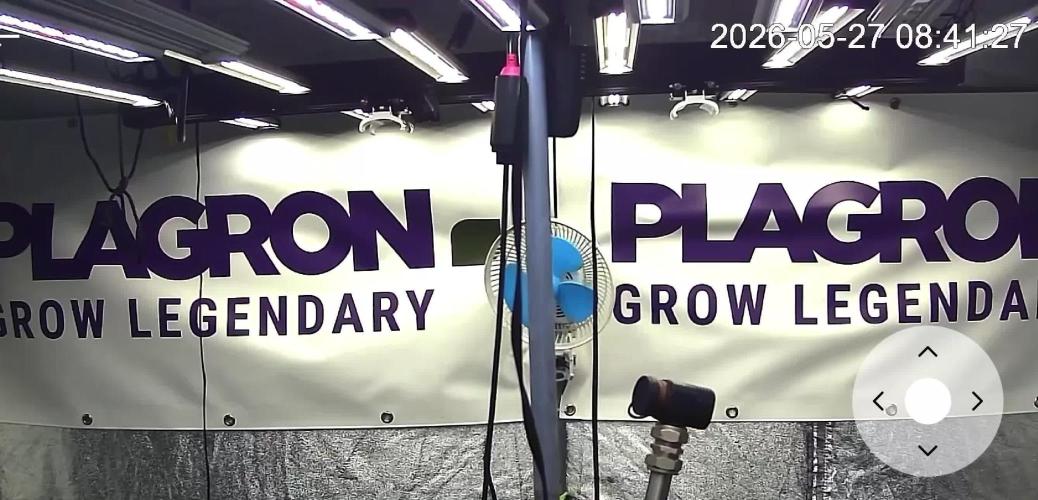
A heartfelt thank you to Plagron for the nutrition supporting this flowering cycle and helping us keep the plants moving forward consistently.
A massive thank you to Future of Grow for not only providing the Black Series lighting we've already been using, but now also for providing two additional Black Series 600W fixtures for us to test in the 8×8 Adventure.
Having the opportunity to increase the available lighting power and then dial it back to find the level that makes sense for the plants is exactly the kind of real-world testing I enjoy documenting.
And a special thank you to Lumiflora for the additional lighting support deeper within the canopy.
Thank you as well to everyone following this crazy 8×8 Adventure on GrowDiaries.
Every plant continues writing her own story.
Some are loud.
Some are fast.
Some demand attention.
And some...
like Blueberry Muffin...
simply keep their heads down and quietly get the job done.
This week, there's not much more I want to do to her.
And that's okay.
Sometimes cultivation is about knowing when to intervene.
And sometimes...
it's about knowing when to step back.
Blueberry Muffin is flowering.
She's healthy.
She's developing.
She's getting the photons.
She's getting a little more nutrition.
And now we're going to give her the one thing no grower can manufacture:
time.
💚🌸
Until next week...
Keep doing your thing, beautiful girl.
I'll be watching.
Growers Love, happy growing, and take care everyone! 🌱💚
Likes
Comments
Share
@DogDoctorOfficial
Follow
Blueberry Muffin – Pheno B | Week 4
Finding Her Own Rhythm
Welcome back to another chapter of the 8×8 Adventure, where twelve cultivars are being documented individually from seed to harvest under a strict 12/12-from-seed schedule. Every phenotype follows its own diary, allowing each plant to develop independently and reveal the subtle differences that make every seed a unique expression of its genetics.
Week 4 has been another exciting chapter across the entire room.
The explosive growth that began last week has continued, and every day the garden feels a little more alive. Canopies are becoming denser, branches are reaching outward with confidence, and the room is slowly transforming into the miniature forest I imagined when this project first began.
One thing that couldn’t go unnoticed this week was the environmental reading.
33.3°C and 63% humidity.
Apparently the grow room has developed a strange obsession with the number three. 😄
Although temperatures climbed higher than I’d normally like, the relatively high humidity helped soften the impact, and the plants rewarded the stable environment by continuing to grow with impressive vigor. Sometimes nature reminds us that consistency is just as important as chasing perfect numbers.
⸻
Week 4 Environment
🌡️ Temperature: 33.3°C
💧 Relative Humidity: 63%
💡 PPFD: 700–800 µmol/m²/s
🌱 Medium: Plagron Lightmix
? Growing Method: 12/12 From Seed
As the room continues to develop, another interesting difference is appearing naturally.
The lighting itself hasn’t been increased significantly this week. Instead, some phenotypes are simply growing faster and moving closer to the fixtures. Those taller plants are now receiving around 800 PPFD, while the shorter individuals remain closer to 700 PPFD.
It’s another reminder that no two phenotypes read the same instruction manual.
Even under identical conditions, every plant follows its own pace.
⸻
Feeding Strategy
The feeding program has also continued evolving alongside the plants.
During the first weeks the nutrient solution stayed around pH 5.8, maximizing nutrient availability while young root systems became established inside the containers.
Now those root systems have expanded considerably, allowing a slight shift in strategy.
Throughout this week the solution gradually moved toward pH 6.1, while nutrient strength steadily increased, finishing around EC 1.8.
The recipe itself hasn’t changed dramatically.
No major adjustments.
No sudden jumps.
Simply a gentle increase in concentration to match the plants’ increasing appetite. Sometimes the smallest adjustments create the biggest improvements, and this week’s growth has been a great example of that philosophy.
Allowing the pH to drift slightly higher also gives the roots access to a broader spectrum of nutrients available within the substrate, helping support the increasing demands of this new stage of growth.
As always, the goal remains the same:
Listen to the plants, not the feeding chart.
⸻
Blueberry Muffin – Pheno B
This young lady has been quietly writing one of my favourite stories inside the tent.
Unlike her sister, who seemed determined to impress from almost the very beginning, Pheno B decided to keep everyone guessing.
Her first weeks were… let’s call them creative.
The leaf structure wasn’t quite what I expected, growth was a little unusual, and every new set of leaves felt like another clue in a mystery I hadn’t solved yet.
Fast forward to Week 4…
The mystery is starting to make sense.
She’s finding her own rhythm.
Looking at her now, it’s hard not to appreciate just how much progress she’s made over the course of a single week. The unusual appearance that once caught my attention is fading into the background as healthy, vigorous new growth begins taking over the canopy.
She’s still not trying to imitate her sister—and honestly, I hope she never does.
Every phenotype deserves to express itself.
The structure is becoming noticeably fuller, with side branches beginning to establish themselves beneath the canopy while the main stem continues building upward with confidence. Internodal spacing remains compact, creating a nicely stacked framework that should provide plenty of future flowering sites.
One detail I particularly enjoy is the contrast between the older and newer growth.
Fresh leaves emerge in a bright lime-green colour full of energy before gradually darkening as they mature, giving the plant a vibrant appearance that changes almost daily.
Looking deeper into the canopy, more secondary shoots are beginning to appear than I expected only a week ago. She seems to be quietly building herself from the inside out, strengthening her framework before making any dramatic moves upward.
There’s something very satisfying about watching a plant overcome an uncertain beginning.
She may not possess the textbook symmetry of Pheno A, but she’s developing a character entirely her own.
And sometimes, those are the phenotypes that end up becoming unforgettable.
⸻
Looking Ahead
Week 5 should be another exciting milestone.
With nutrient demand increasing, root development well established, and the first signs of flowering beginning to appear throughout the room, I’m expecting another noticeable leap in development.
Over the coming week I’ll be watching closely for:
• Stretch progression as flowering begins.
• Continued branch development.
• Response to the higher EC.
• Structural differences compared to her sister phenotype.
• How her unique architecture evolves as the canopy continues to fill.
The slow start now feels like a distant memory.
This week wasn’t about catching up anymore.
It was about proving that she has every intention of writing her own story.
⸻
Thank You
A huge thank you to everyone following this 8×8 Adventure and taking the time to visit these weekly updates.
Thank you to the entire GrowDiaries community for providing a place where growers from around the world can learn, share experiences, and inspire one another every single day.
A special thank you to Plagron for providing the nutrients and cultivation support that keep this project moving forward.
Thank you to Zamnesia for the incredible genetics, equipment, and the opportunity to document each phenotype from seed to harvest.
And finally, thank you to every grower who leaves a comment, shares advice, asks questions, or simply enjoys following these plants as they write their own stories.
Every phenotype has its own personality.
Watching those personalities emerge is one of the greatest joys of growing.
🌱💚🍇
Growers Love, and I’ll see you all next week.
Likes
7
Share

@Grow4ever
Follow
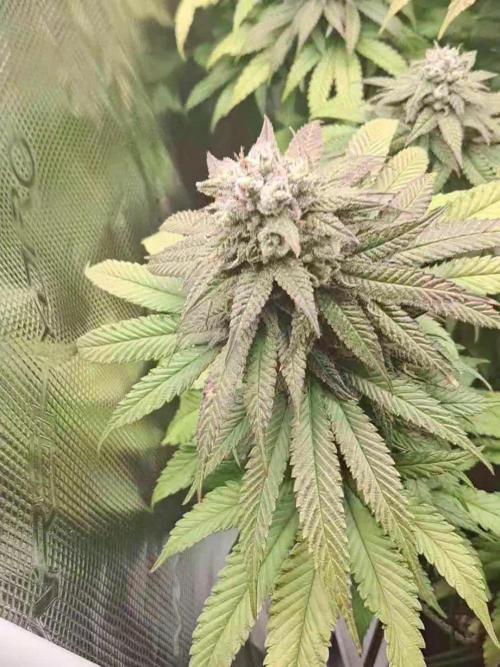
Bisher noch die kleinsten Buds, dafür aber ein toller süß-zitroniger Duft.
Alle haben auch etwas mit Nährstoffproblemen zu kämpfen. Ich gehe von einem Stickstoffproblem aus, wahrscheinlich ausgelöst durch meinen PH Wert von 7, da ich Anfang mein Leitungswasser nicht gefiltert habe. Ich habe nähmlich eine Gesamthärte von 5,7 gehabt und die Karbonhärte davon betrug 5,2

Likes
92
Share


@DogDoctorOfficial
Follow
🌱 Week 2 Report: The Journey Evolves 🌱
Grow Fam, the adventure is in full swing! 🌟 The Gorilla Melon from Fast Buds is out and shining its light, and the Papaya Zoap has made its debut in the Cannakan, bringing with it a story that adds even more depth to this incredible run.
When the universe speaks, we listen. 🍈✨ I didn’t plan on popping Papaya Zoap from Sweet Seeds just yet, but sometimes things just have a way of aligning. After a few other seeds didn’t germinate, I felt an inner pull toward this special strain. As it turns out, the universe had something beautiful in mind! Just days later, my brother @daggadna also began germinating the same genetics—gifted to us during Spannabis. Was it a coincidence? I don’t think so. 🌱 This is more than just a grow now—it’s a journey with purpose, guided by synchronicity and connection. I can already feel the magic building up with this one, and I can’t wait to see where this road takes us!
Now, onto the Papaya Zoap… something tells me this plant is going to take us on a ride we didn’t expect but absolutely needed. 💚 Let’s make something incredible, Brother Dagga—this one’s going to be legendary.
Gear Updates: All Systems Go 🚀
This week, everything’s dialed in perfectly with the TrolMaster system. Shout out to the incredible DSH-2U Humidity Station! 🌬️ This tool is giving me precision control over the RH (relative humidity) ranges in the room, keeping the environment just right for my babies. Having that accurate readout and control allows me to maintain optimal levels for each stage of growth. It’s like magic—you plug it in, set the desired ranges, and let it do its thing! 🌡️
By monitoring and adjusting humidity levels on-the-fly through the TrolMaster app, I can ensure the environment remains stable, and that means happier plants and healthier growth! No more guessing games. From anywhere—whether I’m working in the garden or chilling out—I can track and tweak it all. Heck, I could be on the toilet and still have complete control over my room! 😂
The AMP-3 Precision Meter has been running 24/7 in my water solution, giving me real-time updates so I can make any corrections when needed, right from my phone. This tech has taken my grow to another level. ✨
Nutrition Update: Keeping It Balanced 🍃
As for feeding, we’re sticking with the basics to give the plants what they need, without overloading. Right now, I’m running:
• Regulator: 0.15ml/l
• Startbooster: 0.25ml/l
For now, I feel like this is the sweet spot—just enough to encourage root development and early growth without overloading them. I’ll be adjusting the feed as we go deeper into the grow, keeping an eye on how they respond. You know me, always tweaking and improving along the way!
Shoutouts & Gratitude 🙌💚
Huge love to everyone following along—whether you’re here on Grow Diaries, over on YouTube, or on IG. Your support keeps this journey alive, and I am so grateful for every comment, like, and message! Special shoutout to my sponsors for fueling this project:
• Nutrition: @aptusholland @aptus_world @aptus_es @aptusbrasil @aptus_thailand @aptus_portugal @aptususa_official @aptusplanttechnz @aptusplanttechaus
• Controls: @trolmaster.eu @trolmaster.eu.support @trolmaster.support @trolmaster.agro
• Soil: @promix_growers_eur @promix_cannabis @promixmitch
More to come soon, and you won’t want to miss it! 📺 I’m also documenting everything on my YouTube channel, and I’ll be sharing behind-the-scenes content on IG, so hit that subscribe button and follow along. Let’s grow together, fam!
Growers Love to All 💚
The love and support from the grow community is something I never take for granted. This journey wouldn’t be the same without all of you! I’m so honored to be part of this amazing community, and I can’t wait to share more updates and insights along the way. Remember, this isn’t just about growing plants—it’s about growing together. 🌱
Until next time, stay positive, stay inspired, and keep pushing forward!
This week’s shoutout is dedicated to the synchronicity of life, my growing community, and of course, Papaya Zoap and Gorilla Melon. Let’s see what magic we can create together!
#HighFrequency #PositiveVibesOnly #PapayaZoap #GorillaMelon #TrolMaster #InBalanceWithNature #GrowLife #AptusTruePlantScience #GrowersLove


Likes
13
Share


@Pierrougarou21
Follow
8eme jours de flo .Plein Stretch
Salut les growmies , la première semaine de flo c est bien passé.
L entrée dans la deuxième semaine avec une diminution du nombre de ml/litre de Grow et une augmentation de solution Bloom. Ajout de 1ml/ de Candy Bud et ajout de 1ml par l de big bud

Likes
4
Share


@Charly_grower
Follow
💚Bueno esta gorilla auto está tardando un poco pero valdrá la pena, creó ! Jajajaj ! Su olor es terroso no es tan pasoso .. esperó que engordé mucho más 👽


Likes
27
Share


@AsNoriu
Follow
Day 79 since seed touched soil. Found some bud rot on other strains yesterday, so made early chop for #2 and #3. Both needed time, #2 needed like 3 more weeks, would be huge ;)))
Day 112 since seed touched soil. last one is done. Ganja Farmer 2024 project is over.
Happy Growing !!!

Likes
23
Share


@BedroomGrower
Follow
March 17, Day 76: As written I collected the last three plants. At the moment I got a partial of 224 grams from the first three plants and I think of doubling with the last three. Among the latter is the plant with the largest bud which obviously becomes my favorite. This time I managed to take photographs of the plants before cutting them.
With these last three plants I got the most productive plant, the one with the largest bud and the one with the longest bud 😉
For a final report on this strain: The Gorilla by RQS is an excellent strain for anyone who loves a high THC content and I particularly recommend it to growers who pass for the first time from photoiperiods to autoflowering. You will grow very large and very productive plants very similar to photoperiodic ones. This strain branches out a lot and must be defoliated and de-branched. You can grow it well with the SCROG technique, but if like me you have no space problems you can also use the Sea Of Green technique.
In conclusion I want to thank all the growers who have followed this my first diary to which I have a happy growth! A big thanks also to GrowDiaries and to the whole team for having created the best social network dedicated to the world of growers 👏💪😉
March 24 Final Report: Hi growers, with this last post I'm going to close my first diary. First I have to say that I am very satisfied with the total harvest, from the last three plants I got 369 grams which added to the 224 of the previous harvest make a total of 593 grams. I started this diary with 8 Gorillas and 2 Cheese. 6 Gorillas completed their cycle in the same time frame, the 2 remaining gorillas showed a photoperiodic genetic predominance, one of them is in an advanced flowering phase while the last one after three months still shows only a few pistils. I'll probably kill her, and move on by putting new seeds in the soil. Unfortunately, where I live is illegal to grow marijuana, otherwise I would have simply moved outdoors, but I can't and must be ruthless. Regarding the two cheeses there is not much left at the end of their cycle and I started to give only water to one of the two plants.
Good and happy growth to all! 😜
Likes
3
Share


@Barcelona_Farmers710
Follow
Buenas Farmers!! Después del problemas de la sobre fertilización... a pesar de eso huelen espectacularmente sin hablar de la explosión de resina de nuestra Gorila Z y la Blue Gelato 41!! Un placer para el Paladar 👌🏻
Likes
5
Share


@pzwags420
Follow
Cantaloupe haze needed a good flush brought runoff from 2000 ppm to 1100ppm will continue to monitor.


Likes
1
Share

@RageTdavis
Follow
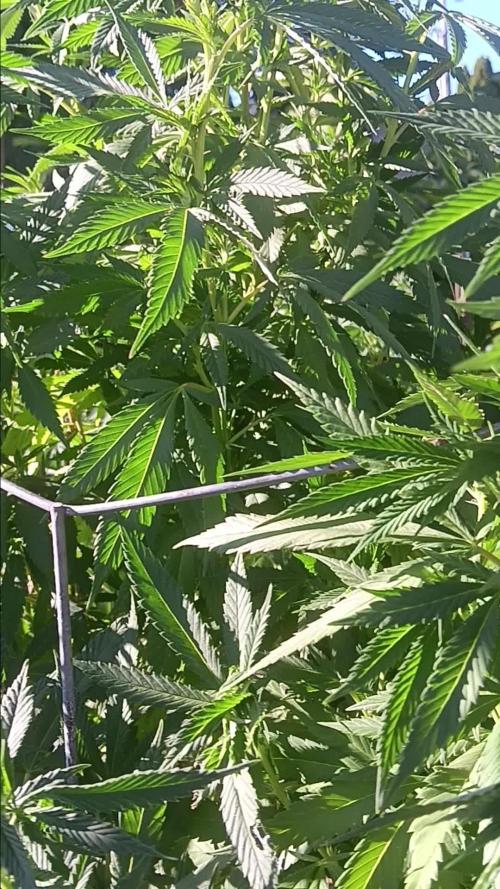
from 7-22-26 week away from pre-flower. Just today noticed bloom heads starting to appear. im ready for this, i might go to every 2 day feed.
see how much she shows. instead of 3 day. then a water only phase. Peace out fam.
Likes
48
Share


@MadeInGermany
Follow
Info:
Unfortunately, I had to find out that my account is used for fake pages in social media.
I am only active here on growdiaries.
I am not on facebook instagram twitter etc All accounts except this one are fake.
Have fun with the update.
Hi everyone :-) .
It develops beautifully :-).
As always in the aero system, the growth is really extreme ♥️ ️.
I will let them grow this week and then switch to 12/12 for flowering :-).
Everything was cleaned and checked.
Have fun .
Stay healthy 🙏🏻
You can buy this Strain at
https://www.amsterdamgenetics.com/product/kosher-tangie-kush/
Type:
Kosher Tangie Kush
☝️🏼
Genetics:
Kosher Kush
X
Tangie
👍
Vega lamp: 2 x Todogrow LED CXB3590 COB 55 W
1 x Sanlight S2W 62 W
💡
Flower lamp : 2 x Todogrow LED CXB3590 COB 55 W
1 x Sanlight S2W 62 W
💡 ☝️
Grow Aero System : Growtool 0.8
☝️
Fertilizer:
Canna Aqua Vega A + B , Canna Aqua Flores A + B , Rizotonic, Cannazym, CANNA Boost, Pk 13/14, Canna Cal / Mag, Canna Ph - Grow, Canna Ph-Bloom
☝️🌱
Water:
Osmosis water mixed with normal water (24 hours stale that the chlorine evaporates) to 0.2 EG. Add Cal / Mag to 0.4 Ec Ph with ph- to 5.2 - 5.8
💦 💧

Likes
31
Share


@DudeGrowsWeed
Follow
Diesel Automatic is growing and growing. She is still showing the odd color pattern on the leaves, I'm not super concerned yet, but I asked @James from RQS to take a look, waiting on his expert opinion.
Likes
18
Share


@Pokan187
Follow
Everything is going smoothly, the buds are getting bigger day by day
All the girls are bug free, they are still looking green
The G13 has the strongest smell followed by the Runtz and the GDP doesn’t smell like anything for now


Likes
74
Share


@Ferenc
Follow
Day 64, 22nd of November 2021:
Hi there! Here we go..... so basically pistils are appearing stronger this is the 2nd weeks since they started producing pre flowers.
The plants getting a bit light might be some air circulation problem? However they look good and of course closer to the end the gettin' older so the leaves also die.
Set up and timing is the same since flower season started.
ViparSpectra XS2000 is on full power which is 240W so 100% capacity.
Ventilation: 12 hours period when the lamp is on it switches 1 hour on and after one hour off mostly to keep the temperature and of course because of fresh air flow. When the lamp is off it switches on in every 2 hours for 15 min at the same time with the extraction fan.
The extraction fan is on 12 hours when the lamp is, and then it switches on in every 2 hours for 30 min.
That's all a bit more water for them from today also. Humidity quite the same approx 50%, temperature as well approx 26-27 Celsius.
Fertilization remains the same since last week, the BioBizz family raised up to be 2ml/L each so it is like 2ml/L of BioGrow, 2ml/L of BioBloom, 2ml/L of TopMax... see the ratio above.
The schedule of the fertilization has not changed happnes 2x a week except epsom salt just 1x a week.


Likes
9
Share


@JKennedy
Follow
I took a photo with a flash while the babies were sleeping. I know I shouldn’t cos it could affect them. So I’m sorry if I’ll keep taking bad photo with the growing light, I will make better content for the harvest time :)
They are starting to produce a nice amount of crystals and the smell is goin to be quite strong.
