


Likes
Comments
Share


@Dr_Green_Thumb87
Follow
12/28 feeded ph6 incl. Calmag and Greenhouse Short Flower
12/30 ICE ICE Baby

Likes
5
Share


@Mr_Puff_N_Stuff
Follow
Start of week 7 and all plants are looking great. Added the net to hold them later but I may take it out.
Ran into a slight issue…my plants got so tall that I was not able to provide enough PPDF to the lower stems (I need a bigger tent and better lighting…in time). As a result a caused light burn on the top leaves. Additionally, early in my grow I was using Mass Pro. That alone with amendments and I foliaged early with Foop. I believe the Foop and Mass Pro were too much for these plants to handle.
Still rocking though…


Likes
4
Share

@Roberts
Follow
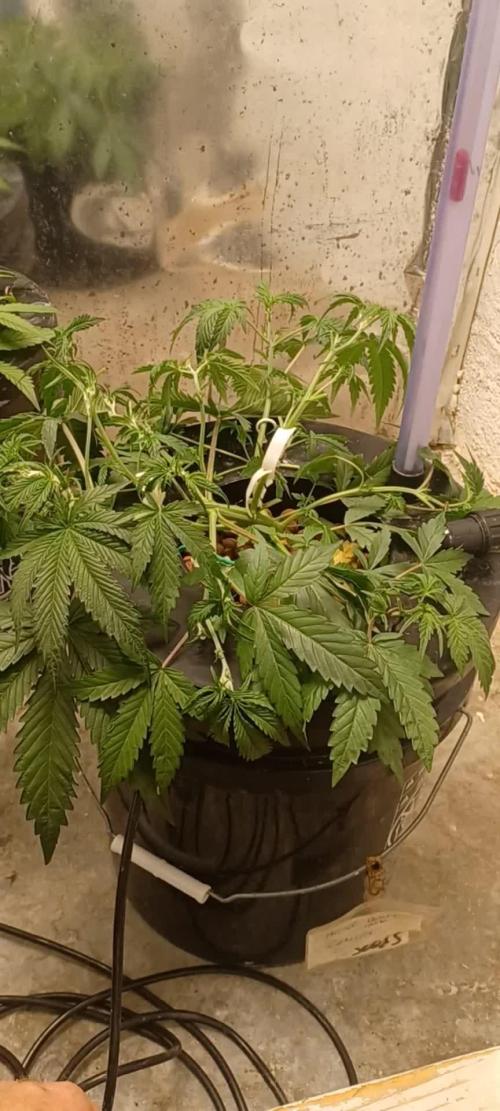
Animal Mintz auto is doing good. She is showing her very first pistils in the video. So preflowering has begun. Even is looking good, I defoliated and lst her today. Thank you Medic Grow, Hon&Guan, and Zamnesia seeds. 🤜🏻🤛🏻🌱🌱🌱
Thank you grow diaries community for the 👇likes👇, follows, comments, and subscriptions on my YouTube channel👇.
❄️🌱🍻 Happy Growing 🌱🌱🌱
https://youtube.com/channel/UCAhN7yRzWLpcaRHhMIQ7X4g.

Likes
2
Share


@Earthsower
Follow
Magnesium deficiency has struck this lady. All I can do for now is give her a diluted solution and keep an close eye on her to see if she response

Likes
7
Share


@Hightable420
Follow
Bloombastic putting in that work! Stinks like crazy now. Super strong sweet Lemon terps
Stopped Bloombastic & DualPart feed. Switched to Ripen for few feeds before starting flush.
Likes
12
Share


@420DeepGrow
Follow
Gracias al equipo de Sweet Seeds y XpertNutrients sin ellos esto no sería posible.
🍁💐 Permanent Jealousy XXL Auto:
Autofloreciente de tamaño extragrande que nace de la unión de dos genéticas excepcionales: Permanent Marker, ganadora de múltiples premios, y nuestra exquisita Jealousy Z XL Auto (SWS108). El resultado es una planta de gran tamaño, vigorosa y productiva, con cogollos densos cargados de resina, ideal para extracciones. El perfil terpénico de Permanent Jealousy XL Auto es complejo y cautivador, con matices cítricos, mentolados y amaderados. Prepárate para una experiencia sensorial única con un efecto equilibrado que te proporcionará euforia tranquila, felicidad y creatividad.
📆 Semana 1
Esta semana ha sido un poco complicada para el desarrollo de la planta debido a las condiciones climáticas. El tiempo no ha acompañado demasiado y, aunque las temperaturas no han sido las más adecuadas, he hecho todo lo posible por mantener un ambiente lo más estable posible.
A pesar de estos contratiempos, la planta comienza a mostrar signos de adaptación. El crecimiento ha sido algo lento, no tan rápido como me habría gustado, pero tengo confianza en que mejorará en cuanto el clima se estabilice un poco.
Seguiré muy pendiente de su evolución en los próximos días. Espero que las cosas mejoren pronto y podamos ver un progreso más notorio. ¡Vamos que se puede! ☀️

Likes
17
Share


@Kitties_and_Colas
Follow
She's growing pretty fast at this point,..we're still trying to keep her at a 45 and the main shoots free of any side branches....we aim to make a level canopy in flower about 2-3ft wide and the bottom half clean 😻👌... We're giving all the plants earthworm tea and she's up to 2 feedings a week at this stage because her color was starting to wash out ..she's going to be transplanted to her final (18gallon) home in about a week :) ,..
Likes
Comments
Share


Likes
4
Share


@Wescoas
Follow
I thought the ladies would have another 2-3 weeks left in veg, but started to notice pistils forming within the last couple of days. So flower will most likely start to begin within the next week, I’m guessing I may see a couple oz per plant come harvest day. Not bad for first time grow & using autos, from what I’ve heard a lot of people do not recommend learning with autos due to how quickly their state can change depending on what you do with them. There are some things I wish now I would have done a bit different within the last couple of weeks, I can’t help but wonder how much bigger they’d be if I did not do any defoliation at all. But I have been combating flies bad and made the call to defoliate mainly for that reason. Started to cut back on veg foods and introduce flower foods and sugars to their diet. Humidity levels still at a steady decrease, aiming to have humidity down in the 30s come flower time. Will be going on vacation for a week soon, so fingers crossed that nothing goes wrong. Will be having a good friend of mine come by every couple of days to FaceTime me and make sure everything is handled as well as possible when the time comes.

Likes
24
Share


@Janerussel
Follow
F week 7 started 11/23/24.
My power supply or lamp broke down 11/30/24. I fortunately manage to buy a new light system. I bought ViparSpectra P2000 250W. Now i've moved into the LED era.

Likes
2
Share


@eldruida_lamota
Follow
Que pasa familia, vamos con la tercera semana de floración de estas Gorilla Cookies Fast Flowering, de FastBuds.
Agradezco a Agrobeta todos los kits obtenidos de ellos 🙏.
Hasta aquí veis que llevan buen progreso y el color que se marcan es espectacular.
Vamos al lío, el ph se controla en 6.2 , la temperatura la tenemos entre 22/24 grados y la humedad ronda el 50%. El fotoperiodo a 12-12. Estás próximas semanas veremos cómo avanzan.
Agrobeta:
https://www.agrobeta.com/agrobetatiendaonline/36-abonos-canamo
Hasta aquí todo, Buenos humos 💨💨💨
Processing
Likes
3
Share


@Adam420
Follow
Still going strong.
Staying healthy and attracting ladybugs.
Feeding her molasses. No other change in feeding amount except that

Likes
21
Share


@MG2009
Follow
12/24/2021
So far only one male has been identified. Glad I just reviewed my video I didn't even notice how light green #3 is, guess I mix her nutes up separately and see if she just hungry? Or naturally lighter than others. All other plants are using coast of Maine mixed into soil
(her too) so I'll give her a little mirimichi 901C this week and see what happens.
12/30/2021
Noticing that there is two distinct differences between these girls, color light green and dark green.#1,#3,#8 are light green and #2,#4,#5,#6,#7 Other than that there very much similar growth and node spacing, little differences but very happy with uniformity.Both light green and dark green maintained their magenta petiols, gonna make notes on stem rub notes next week and see how they will compare.
Likes
45
Share


@Ultraviolet
Follow
2nd net is up. Early bud formations are promising. holding up to the extremes pretty well, some leaves taking minor damage, but overall, she is holding up, gave her 1 night at 50F see how she would react, stressful. Not advised as it messes with her metabolism, but I want to see if it triggers any anthocyanin response. Love to see her purp up but no signs yet.
Homework.
If Rubisco activity is impaired and it cannot properly function or regenerate its substrate, the plant's leaves are likely to turn a pale green or
lime green, a condition known as chlorosis. Essentially, Rubisco activity is highly regulated and susceptible to various environmental and metabolic factors that can cause it to become inhibited, leading to an apparent failure in RuBP regeneration due to a lack of consumption.
Rubisco regeneration is intrinsically linked to nitrogen supply because Rubisco is a major sink for nitrogen in plants, typically accounting for 15% to over 25% of total leaf nitrogen. The regeneration phase itself consumes nitrogen through the synthesis of the Rubisco enzyme and associated proteins (like Rubisco activase), and overall nitrogen status heavily influences the efficiency of RuBP regeneration. RuBisCO is a very large enzyme that constitutes a significant proportion (up to 50%) of leaf soluble protein and requires large investments in nitrogen. Insufficient nitrogen supply limits the plant's ability to produce adequate amounts of RuBisCO, thereby limiting the overall capacity for photosynthesis and carbon fixation. Maintaining the optimal, slightly alkaline pH is crucial for the proper function and regeneration of Rubisco. Deviations in either direction (too high or too low) disrupt the enzyme's structure, activation state, and interaction with its substrates, leading to decreased activity and impaired RuBP regeneration. (LIME GREEN CHLOROSIS)
Structural Component: Nitrogen is an essential building block for all proteins, and the sheer abundance of the Rubisco protein makes it the single largest storage of nitrogen in the leaf.
Synthesis and Activity: Adequate nitrogen supply is crucial for the synthesis and maintenance of sufficient Rubisco enzyme and Rubisco activase (Rca), the regulatory protein responsible for maintaining Rubisco's active state. Nitrogen deficiency leads to a decrease in the content and activity of both Rubisco and Rca, which in turn limits the maximum carboxylation rate, Vmax, and the rate of RuBP regeneration Jmax, thus reducing overall photosynthetic capacity.
Nitrogen Storage and Remobilization: Rubisco can act as a temporary nitrogen storage protein, which is degraded to remobilize nitrogen to other growing parts of the plant, especially under conditions of nitrogen deficiency or senescence.
Nitrogen Use Efficiency (NUE): The allocation of nitrogen to Rubisco is a key determinant of a plant's photosynthetic nitrogen use efficiency (PNUE). In high-nitrogen conditions, plants may accumulate a surplus of Rubisco, which may not be fully activated, leading to a lower PNUE. Optimizing the amount and activity of Rubisco relative to nitrogen availability is a target for improving crop NUE.
Photorespiration and Nitrogen Metabolism: Nitrogen metabolism is also linked to the photorespiration pathway (which competes with carboxylation at the Rubisco active site), particularly in the reassimilation of ammonia released during the process.
To increase RuBisCO regeneration, which refers to the process of forming the CO2 acceptor molecule Ribulose-1,5-bisphosphate (RuBP) during photosynthesis, the primary methods involve optimizing the levels and activity of Rubisco activase (Rca) and enhancing the performance of other Calvin-Benson-Bassham (CBB) cycle enzymes.
Biochemical and Environmental Approaches:
Optimize Rubisco Activase (Rca) activity: Rca is a crucial chaperone protein that removes inhibitory sugar phosphates, such as CA1P (2-carboxy-D-arabinitol 1-phosphate), from the Rubisco active site, thus maintaining its catalytic competence.
•Ensure optimal light conditions: Rca is light-activated via the chloroplast's redox status. Adequate light intensity ensures Rca can effectively maintain Rubisco in its active, carbamylated state.
•Maintain optimal temperature: Rca is highly temperature-sensitive and can become unstable at moderately high temperatures (e.g., above 35°C/95F° in many C3 plants), which decreases its ability to activate Rubisco. Maintaining temperatures within the optimal range for a specific plant species is important.
•Optimize Mg2+ concentration: Mg2+ is a key cofactor for both Rubisco carbamylation and Rca activity. In the light, Mg2+ concentration in the chloroplast stroma increases, promoting activation.
•Manage ATP/ADP ratio: Rca activity depends on ATP hydrolysis and is inhibited by ADP. Conditions that maintain a high ATP/ADP ratio in the chloroplast stroma favor Rca activity.
Enhance Calvin-Benson-Bassham (CBB) cycle enzyme activity: The overall rate of RuBP regeneration can be limited by other enzymes in the cycle.
•Increase SBPase activity: Sedoheptulose-1,7-bisphosphatase (SBPase) is a key regulatory enzyme in the regeneration pathway, and increasing its activity can enhance RuBP regeneration and overall photosynthesis.
•Optimize other enzymes: Overexpression of other CBB cycle enzymes such as fructose-1,6-bisphosphate aldolase (FBA) and triose phosphate isomerase (TPI) can also help to balance the metabolic flux and improve RuBP regeneration capacity.
Magnesium ions, Mg2+, are specifically required for Rubisco activation because the cation plays a critical structural and chemical role in forming the active site: A specific lysine residue in the active site must be carbamylated by a CO2 molecule to activate the enzyme. The resulting negatively charged carbamyl group then facilitates the binding of the positively charged Mg2+ion. While other divalent metal ions like Mn2+ can bind to Rubisco, they alter the enzyme's substrate specificity and lead to dramatically lower activity or a higher rate of the non-productive oxygenation reaction compared to Mg2+, making them biologically unfavorable in the context of efficient carbon fixation. The concentration of Mg2+ in the chloroplast stroma naturally increases in the light due to ion potential balancing during ATP synthesis, providing a physiological mechanism to ensure the enzyme is activated when photosynthesis is possible. At the center of the porphyrin ring, nestled within its nitrogen atoms, is a Magnesium ion (Mg2+). This magnesium ion is crucial for the function of chlorophyll, and without it, the pigment cannot effectively capture and transfer light energy.
Mg acts as a cofactor: Mg2+ binds to Rubisco after an activator CO2 molecule, forming a catalytically competent complex (Enzyme-CO2-Mg2+). High light + CO2) increases demand: Under high light (60 DLI is a very high intensity, potentially saturating) and high CO2, the plant's capacity for photosynthesis is high, and thus the demand for activated Rubisco and the necessary Mg2+ cofactor increases. Mg deficiency becomes limiting: If Mg2+ is deficient under these conditions, the higher levels of Rubisco and Rubisco activase produced cannot be fully activated, leading to lower photosynthetic rates and potential photo-oxidative damage.
Optimal range: Studies show that adequate Mg2+ application can enhance Rubisco activation and stabilize net photosynthetic rates under stress conditions, but the required concentration is specific to the experimental setup.
Monitoring is key: The most effective approach in a controlled environment is to monitor the plant's physiological responses e.g., leaf Mg2+ concentration, photosynthetic rate, Rubisco activation state, and adjust the nutrient solution/fertilizer to maintain adequate levels, rather than supplementing a fixed "extra" amount.
In practice, this means ensuring that Mg2+ is not a limiting factor in the plant's standard nutrient solution when pushing the limits with high light and CO2.
Applying Mg2+ through foliar spray is beneficial to Rubisco regeneration, particularly in alleviating the negative effects of magnesium (Mg) deficiency and high-temperature stress (HTS). While Mg can be leached from soil, within the plant it is considered a mobile nutrient, particularly in the phloem. Foliar-applied Mg is quickly absorbed by the leaves and can be translocate to other plant parts, including new growth and sink organs.
Foliar application of: NATURES VERY OWN MgSO4 @ 15.0g L-1 in a spray bottle.
Foliar sprays are often recommended as a rapid rescue measure for existing deficiencies or as a supplement during critical growth stages, when demand for Mg is high. Application in the early morning or late evening can improve absorption and prevent leaf burn.
The starting point [of creativity] is curiosity: pondering why the default exists in the first place. We’re driven to question defaults when we experience vuja de, the opposite of déjà vu. Déjà vu occurs when we encounter something new, but it feels as if we’ve seen it before. Vuja de is the reverse—we face something familiar, but we see it with a fresh perspective that enables us to gain new insights into old problems. Come walk in the enchanted forest.


Likes
16
Share


@Johan2
Follow
Still some noticeable stretch
Not at all thirsty . Only 2 liters in 5 days ?
Deciding on when to defoliate this week
Very thin branches/ will need to prop up I think

Likes
18
Share

@Chubbs
Follow
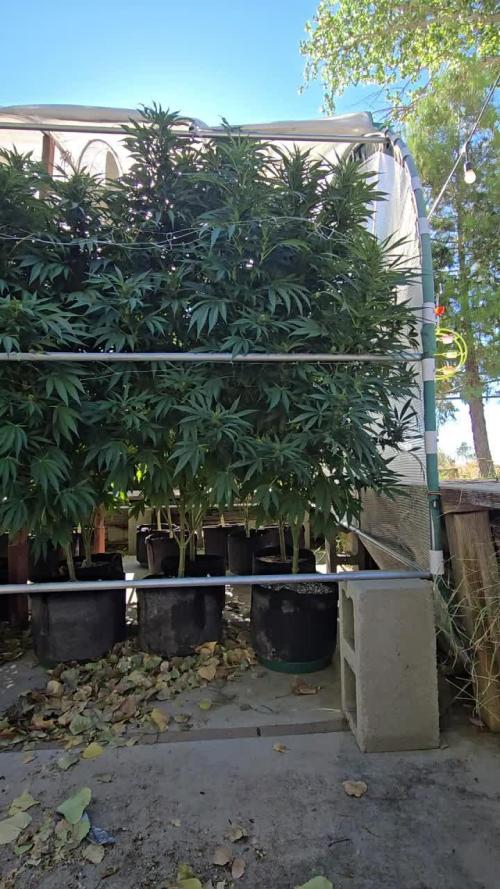
This week has been wild. I had to cut the sides of the greenhouse as the plants had it bursting at the seams. These girls are all flowering beautifully and starting to frost up. Still loving the pink pistols. Happy Growing
Likes
12
Share


@ThatoneAKguy
Follow
These two are moving right along. Starting to show some great early flower stretch and one of which that has come back from the dead you could never tell right now. Did a water change this week to get the ppm back to a more normal number although this strain can handle whatever you give them this is not the case with their neighbors.

Processing
Likes
32
Share


@DeaneR
Follow
All the girls are coming along nicely.
Pro-mix is furthest into flower, followed by Coco, then 50/50.
The pheno in the 50/50 mix is still throwing out alot of pistils.
Just ph'd water from now till the chop.
Thanks for viewing,
Stay tuned (up), more to come!
Peace,
DeaneR😎
Processing
Likes
1
Share


@magicjohnson
Follow
So This week was the same as the last really, It seems all I have to do is sit back and watch these ladies do their thing!
Ive not gone full on with the bloom supplements or PK yet as only 2/5 of the GG are seriously flowering.
The other 3/5 GG are now Finally showing some signs of flower and some tops are starting to build and lowers producing more pistils each day!
The Stardawgs continue to explode, even some friends who were sceptical about the performance of the Quantum board LED's have been flow away by the results.
All of the buds seem to be building dramatically top to bottom which no shortage of frost!
Macro shots on the way!!