


Likes
Comments
Share


@Vet4weed
Follow
Plants are getting too big for enough light coverage, so had to buy a second grow light.
As noted before, the plant was getting out of hand and growing at many different heights making it difficult to set the optimum light distance. So, I went a little crazy and did some serious pruning (yes, during flowing, I know). Also trimmed off a number of fan leaves that were either beginning to yellow or were otherwise blocking valuable light from the many of the smaller buds. Fortunately my plants are very resilient and are finally at mostly equal heights now.
Hindsight 20/20: I now have a better idea of how to route my plants using the ScrOG method. I found a well written blog that answered all the questions I had that other article didn't.
Bottom line: Instead of allowing the main branches to grow through the netting and re-route the offshoots, I've found it's better to keep the main branches under the netting and allow the off-shoots to grow through instead. Think of it as the plant growing sideways.


Likes
21
Share


@Cogollo_eu
Follow
(Encontrarás la traducción a "Español" en la última parte de la descripción)
01/October/2018:
With this last foliar, i ended up with foliars. From now on i will combat Trips with forceps, white flies are almost erradicated. This application is more preventive than combative. I used 0.5 l of water + 2.5 ml N.Oil + 2.5 ml P.Soap + 1 ml Plant Vitality Plus @ 9 P.H.
02/October/2018: (Photo 1, 2, 3, 4, 5 & Video 1)
** WEEK 8 EXACT WATERING CALENDAR **
28/09/18 - 1.5 l of water + "1/2 dose" of all week nutrients (-Silica Power) @ 6.4PH
29/09/18 - 1 l of water @ 6.4PH
30/09/18 - 2.3 l of water + "1/2 dose" of all week nutrients (-Silica Power) @ 6.4PH
01/10/18 - 1.5 l of water + Bloomtastic @ 6.4PH + Foliar
02/10/18 - 1.8 l of water + All week nutrients @ 6.4PH & 1.75 E.C.
03/10/18 - 1 l of water + Bloomtastic @ 6.4PH
04/10/18 - 2 l of water + "1/2 dose" of all week nutrients (-Silica Power) @ 6.4PH
----------- ESPAÑOL ------------
01/Octubre/2018:
Con este último foliar acabo con los foliares. A partir de ahora combatiré los Trips con pinzas pues la mosca blanca está ya casi erradicada. Esta aplicación es más preventiva que combativa. He usado 0,5 l de agua + 2,5 ml de Aceite de Neem + 2,5 ml de jabón potásico + 1 ml de Plant Vitality Plus @ 9 P.H.
02/Octubre/2018: (Foto 1, 2, 3, 4, 5 & Vídeo 1)
** SEMANA 8 CALENDARIO DE RIEGO EXACTO **
28/08/18 - 1,5 l de agua + "1/2 dosis" de los nutrientes de la semana (-Silica Power) @ 6,4PH
29/09/18 - 1 l de agua @ 6,4PH
30/09/18 - 2,3 l de agua + "1/2 dosis" de los nutrientes de la semana (-Silica Power) @ 6,4PH
01/10/18 - 1,5 l de agua + Bloomtastic @ 6,4PH + Foliar
02/10/18 - 1,8 l de agua + Nutrientes de la semana @ 6,4PH & 1,75 E.C.
03/10/18 - 1 l de agua + Bloomtastic @ 6,4PH
04/10/18 - 2 l de agua + "1/2 dosis" de los nutrientes de la semana (-Silica Power) @ 6,4PH


Likes
8
Share


@DogDoctorOfficial
Follow
💙 Project Blue Tent – Week 8
Pickle Lemon Haze F1 – Pheno A (Folder 14A)
Hello everyone, and welcome back to another chapter of Project Blue Tent! 💙🌱
If you're discovering this diary for the first time, welcome aboard.
Project Blue Tent follows four individual plants from seed to harvest, with each phenotype receiving her own dedicated diary.
All four sisters share the same tent, lighting, irrigation, nutrition, environmental conditions and training strategy.
The purpose is simple:
Keep the variables as consistent as possible... and let the plants tell their own story.
And this week, that story is getting very exciting.
Because the Blue Tent has officially entered flowering. 🌸
Today we're checking in with Pickle Lemon Haze F1 – Plant A.
And just like her sisters...
She's growing fast.
Very fast.
────────────────────────
🌸 Week Eight – And Suddenly Everything Accelerates
There are moments in a grow where you can almost feel the plants changing from one day to the next.
This is one of those moments.
After seven weeks of vegetative growth, the Blue Tent has finally moved to 12/12.
And the girls seem to have taken that as a personal invitation to accelerate.
Plant A is now approximately 81 cm tall, compared with roughly 60 cm when we finished vegetation.
That's around 20 cm of growth already, and the whole room is behaving similarly.
But what's fascinating isn't simply the vertical growth.
They're developing everywhere.
New flowering sites are becoming increasingly obvious.
Branches are extending.
Nodes are developing.
The plants are changing shape almost by the hour.
They're not simply stretching...
They're building.
And Plant A is right there with them.
────────────────────────
🌿 Pickle Lemon Haze F1 – Plant A
Plant A has always been one of the girls that catches my attention.
She's vigorous.
She's responsive.
She's incredibly determined.
And now that flowering has started, that personality is becoming even more obvious.
The canopy remains remarkably even despite the amount of growth happening above it.
Her branches are strong, her foliage remains healthy and the developing flowering sites are appearing rapidly throughout the structure we spent weeks building.
This is exactly why we documented these plants individually.
From a distance, all four sisters can look remarkably similar.
But when you spend time with each one...
You start noticing the little differences.
Plant A has that particular combination of speed, structure and enthusiasm that has been present since the beginning.
And right now...
She's absolutely flying.
────────────────────────
💥 Super Cropping – Trying to Keep Up With Her
With this amount of growth happening so quickly, we're continuing with super cropping as another way of managing the most vigorous vertical shoots.
The objective isn't to stop the plants from growing.
At this point, I'm not sure anything could stop them. 😂
It's about trying to influence the structure while they're stretching aggressively.
Some of the taller branches are being carefully worked to reduce their dominance and hopefully encourage stronger branching points as the plant continues developing.
And the funny part?
These girls simply refuse to stay down.
I'll work a branch...
Give it some time...
And she'll be standing back up again like nothing happened.
Plant A is particularly impressive in that regard.
She seems to have one answer to everything:
Grow.
😂🌱
Whether this will ultimately be enough to keep the stretch under control remains to be seen.
The temperatures, the seven-week vegetative period and the sheer vigour of these plants are all factors.
But for now, the canopy remains beautifully manageable.
So we continue observing and adapting.
────────────────────────
😳 Well... I May Have Broken a Branch
And then there's the part of growing that nobody wants to talk about...
Sometimes you make a mistake.
This week, while working with Plant A, I managed to break a branch.
Yep.
It happened.
I'm not going to pretend it didn't.
I'm also not going to turn it into some dramatic disaster.
Plants are resilient.
Training doesn't always go perfectly.
Sometimes a branch moves differently than expected, sometimes there's a little too much pressure, and suddenly you're standing there looking at the plant thinking:
"I'm so sorry, my dear." 😂🌱
I immediately tried to support and repair the damaged section, and now we'll simply give her some time and see how she responds.
At the moment, there's nothing here that makes me alarmed.
It's one branch.
The rest of the plant is growing beautifully.
And honestly...
This is also part of documenting a real grow.
Not every training session is perfect.
Not every decision goes exactly according to plan.
Sometimes you make a mistake.
You learn from it.
You carry on.
And Plant A certainly isn't letting one damaged branch stop her.
────────────────────────
🌱 A Fast-Developing Flowering Plant
What really stands out this week is just how quickly these plants are evolving.
The flowering sites aren't sitting there waiting patiently.
They're developing rapidly.
The structure we created during vegetation is now being populated with new growth, and the difference between the beginning of the week and the end is already noticeable.
This is also why I'm glad we spent the time building the canopy properly.
The SCROG gave us a much more even starting structure.
The defoliation opened up the interior.
And now the plants have room to develop into that structure.
We're going to see exactly how much they use it.
────────────────────────
💡 Starting Flower Under Strong Light
The Blue Tent is now running 12/12, and we're starting flowering at approximately 800 PPFD.
That's a deliberate decision.
After seven weeks of vegetation, these plants have a substantial canopy and are showing very high levels of growth activity.
Rather than gradually creeping toward flowering intensity, I'm giving them strong light from the beginning and watching their response.
The goal is to provide enough usable light to support this rapidly developing canopy while continuing to monitor the environmental side of the equation.
And because the girls are already stretching aggressively...
The next couple of weeks should be very interesting.
I'm curious to see whether the strong light helps keep the canopy relatively compact...
Or whether these ladies simply decide:
"Thank you for the extra photons. We'll use all of them to grow another 30 centimetres." 😂
We'll see.
────────────────────────
🌡️ Blue Tent Environment
The environment remains remarkably consistent throughout the room.
This week's recorded conditions were:
• 🌡️ Day Temperature: 27°C
• 🌙 Night Temperature: 27°C
• 💧 Relative Humidity: 67%
• 🥥 Substrate Temperature: 24°C
• 💦 Nutrient Solution Temperature: 19.2°C
• ⚗️ pH: 5.81
• ⚡ EC: 2.09 mS/cm
• 💨 CO₂: approximately 666 ppm
• 💡 Light Schedule: 12/12
• 💧 Irrigation: approximately 1.4 L/plant/24h
• ? Pot Size: 8 L
• 📏 Plant Height: approximately 81 cm
One thing I'm watching particularly closely is the temperature difference between day and night...
Or rather, the lack of one.
We're currently sitting around 27°C during both periods.
Warmer nights can encourage additional stretch, and these plants certainly don't need much encouragement.
😂
So I'm keeping that in mind while watching how the canopy develops.
For now, however, the plants are showing no signs that they're unhappy with the environment.
────────────────────────
🥥 Feeding – Now in Flowering Mode
The nutrition has also moved into the flowering program.
Current feeding:
• Plagron Hydro A — 2 ml/L
• Plagron Hydro B — 2 ml/L
• Plagron Hydro Roots — 1 ml/L
• Plagron Power Buds — 1 ml/L
• pH Plus — 0.03 ml/L
• pH Min — 0.03 ml/L
Current EC:
2.09 mS/cm
pH:
5.81
The change in nutrition is relatively measured.
I'm not interested in throwing everything at the plants simply because the calendar says "flower."
They're already consuming aggressively and developing incredibly quickly.
So for now, the objective is to support that development while continuing to observe how Plant A responds.
Her colour remains healthy.
Growth remains vigorous.
And the flowering sites are developing exactly as we'd hope.
That's enough reason to stay consistent.
────────────────────────
💧 The Drip & Drainage System – Working Together
The automatic irrigation and drainage system has become a very important part of this project.
Plant A is now receiving approximately 1.4 litres per 24 hours through the drip irrigation system.
The process is beautifully straightforward.
The drippers deliver the nutrient solution to the coco.
The solution passes through the substrate and feeds the root zone.
The runoff then enters the collection trays underneath the grow bags.
From there, the drainage pipe carries the collected water toward the pump.
The pump pulls that water away and returns it toward the reservoir.
So the irrigation and drainage systems are working together as one continuous, recirculating setup.
Water in.
Coco.
Roots.
Runoff.
Collection.
Pump.
Reservoir.
And around we go again.
It's almost like having a little circulatory system underneath the plants.
And it's working wonderfully.
As the plants become larger and their water demand increases, having that consistency becomes even more valuable.
I don't have to manually reproduce the same watering and drainage routine every day.
The system does it.
The plants get their consistent irrigation.
The runoff is handled.
And I get to spend more time actually looking at the plants.
That's exactly what I wanted.
────────────────────────
🌿 Seven Weeks of Vegetation – Maybe We Overdid It?
I'm going to admit something here.
Looking at these girls now...
I may have kept them in vegetation a little too long.
😂
Seven weeks isn't something I normally do.
Usually, I'd be much more inclined to flip earlier.
But the extra vegetative time gave us a fantastic canopy.
Strong branches.
Established roots.
A full SCROG.
A beautifully even structure.
The downside?
We now have four incredibly energetic plants with a huge amount of growth potential entering flowering at the same time.
And they're showing us exactly what that means.
Approximately 20+ cm of growth already.
Flowering sites developing rapidly.
Branches continuing to extend.
Everything accelerating.
So...
Let's have faith.
😂💙
We've prepared them as well as we can.
Now we get to see what happens.
────────────────────────
🌸 Plant A – Ready for the Show
Plant A's flowering transition has been particularly satisfying to watch.
The framework we created during vegetation is clearly visible underneath the new growth.
Her branches are well distributed.
Her canopy remains relatively even.
And the developing flowers are appearing throughout the structure rather than being concentrated into just a few dominant tops.
That's the advantage of all those weeks of preparation.
The plant isn't starting flower from scratch.
She's entering it with a structure already designed to support what comes next.
Now we just need to manage the incredible amount of growth she's producing.
And hopefully...
Keep her somewhat compact.
No promises. 😂
────────────────────────
🧠 Managing Growth Without Fighting the Plant
One of the lessons these girls are already teaching me is that there's a difference between managing growth and trying to completely control it.
The plants have their own momentum.
We can influence structure.
We can redistribute growth.
We can work with the branches.
But ultimately...
They're going to grow.
And I think that's especially important to remember in a project like this.
The goal isn't to force Plant A into exactly the shape I imagined.
It's to create the best environment and structure possible, then observe how she expresses herself.
Super cropping is one of the tools I'm using to help manage the most vigorous shoots.
The strong lighting gives the canopy plenty of energy.
The irrigation provides consistency.
The nutrition supports the transition into flower.
And the environment gives us the foundation.
After that...
Nature gets the final word.
────────────────────────
💙 Plant A – Still One of the Stars
There is something particularly satisfying about watching Plant A now.
She's been through everything this project has thrown at her.
Topping.
Training.
SCROG.
Defoliation.
The transition into flowering.
And now a little accidental branch damage.
And through all of it...
She keeps growing.
That says a lot about her.
She's not delicate.
She's not hesitant.
She's vigorous and remarkably resilient.
And although the four sisters continue to look impressively similar, Plant A still has that unmistakable personality we've been watching since the beginning.
She wants to grow.
So we'll let her grow...
Just perhaps with a little guidance along the way. 😂🌱
────────────────────────
👀 Looking Ahead
The next few weeks are going to be fascinating.
The plants are already moving incredibly quickly, and we're only at the beginning of flowering.
I'll continue watching the stretch closely.
We'll keep using super cropping where necessary to manage particularly vigorous branches.
We'll monitor the damaged branch and see how Plant A responds.
The irrigation system will continue running its cycle.
The flowering nutrition will continue supporting development.
And the environment will remain under close observation, especially with those warm nights.
For now, however...
The canopy is still remarkably even.
The flowering sites are developing rapidly.
Plant A is healthy.
And the whole room is absolutely full of energy.
We may have vegged these girls a little longer than usual.
We may have created more growth than we intended.
But there's no point worrying about that now.
The plants are ready.
The lights are on 12/12.
The flowers are coming.
And we're going to enjoy the ride.
────────────────────────
💙 Thank You
A huge thank you to Zamnesia for making Project Blue Tent possible and for giving us the opportunity to explore these beautiful Pickle Lemon Haze F1 genetics individually.
A heartfelt thank you to Plagron for the Premium Growbags and Hydro nutrient line supporting these girls throughout the project and now helping them enter flowering.
A special thank you Zamnesia for the Phytonaut LED lighting helping us build such a strong and even canopy and now providing the intensity we're using as flowering begins.
And a massive thank you to Mars Hydro for the automatic drip irrigation and drainage system.
The way the drippers, coco, collection trays, drainage lines, pump and reservoir work together has made keeping four rapidly growing plants consistently irrigated considerably easier.
Thank you as well to GrowDiaries for giving growers around the world a place to document these journeys, share experiences and learn together.
And finally...
Thank you to everyone following Project Blue Tent.
Plant A has officially entered her next chapter.
She's stretched.
She's developing flowers.
She's surviving my attempts to keep her under control.
And yes...
I owe her an apology for that broken branch. 😂💙
But she's still standing.
Still growing.
Still beautiful.
And still showing us exactly why following four individual phenotypes under the same conditions is so much fun.
The Blue Tent is officially flowering.
The stretch is here.
The flowers are developing.
And Plant A is ready to put on a show. 🌸💙
Until next week...
Growers Love, happy growing, and take care everyone! 🌱💙
Likes
49
Share


@MadeInGermany
Follow
Hi folks :-)
This week it has developed very nicely 👍 The shoots are starting to grow again, and will soon be ready to be tied down again 👍
I wish you all a nice weekend and let it grow 🍀🌱🙏🏻

Likes
5
Share


@Fefa128
Follow
Alright! Here we see the plant in her 3 week, we have a day one and a last day of that week to see in comparison. There's some Spanish in the pics cause I was teaching how to grow from scratch.
At this point the plant was going through treatment, being sprayed twice a day to change sex.

Likes
5
Share


@Burneracct
Follow
Was out of town all week and came back to find the CBD Star in my space bucket not looking good. It looks like a phosphorus deficiency but not entirely sure. Yellow leaves with brown/black spots and dark red/purple stems. I flushed it with 2 gallons 6.5 pH water, re-fertilized, put it out in the sun and defoliated. I defoliated pretty heavily since many of the fan leaves were yellowed and blocking light from the lower bud sites. The center was also getting pretty dense so I carefully removed some of the leaves to help with airflow.
Despite the stress, It seems to have bounced back reasonably well. There’s probably irreparable damage given the level of yellowing but the buds continue to grow and thicken.
Cheese has absolutely exploded and looks great. It probably doubled in height last week with many bud sites on the 5 main stalks. Excited to see how it turns out.

Likes
47
Share


@squalino
Follow
📒 Journal de Culture : Phase de Floraison – Stabilisation & Reprise Progressive
📅 Date du jour : 29 mars 2026
🌱 Âge : J+55 (Semaine 8 avancée)
📏 Taille : 54 cm (stabilisation, fin du stretch confirmée)
🌡️ Rappel des Paramètres (Ajustés)
💡 Éclairage Puissance : à 75%
📏 Distance Lampe-Canopée : 65 cm
💧 Humidité (HR) : 50%
🌡️ Température : 24,5°C
⚠️ État Actuel : Phase de récupération racinaire en cours
Observation Générale :
La plante montre des signes encourageants de stabilisation après le stress racinaire. Le stretch semble terminé, laissant place au développement des têtes. Les buds commencent à bien se structurer avec une belle formation de pistils et une coloration violette qui s’intensifie progressivement.
Cependant, certaines feuilles basses présentent un jaunissement avancé avec des nécroses, signe que la plante puise dans ses réserves suite au blocage d’assimilation précédent. Le feuillage supérieur reste globalement sain, ce qui indique une reprise progressive mais encore fragile.
⚠️ Diagnostic Mis à Jour :
Stress racinaire en amélioration
Assimilation des nutriments encore partiellement perturbée
Début de sénescence localisée sur le bas (réaction normale post-stress)
🌿 Conséquences Visibles :
Jaunissement des feuilles inférieures (mobilisation des nutriments)
Développement des fleurs en cours, encore léger mais homogène
Structure compacte avec une bonne répartition des têtes
🚫 Arrosage contrôlé :
Maintien de la stratégie actuelle : apport de 2 ml pk 5-8 avec 0,5 litres d'eau PH 6,3 . maintenant plus d'arrosage tant que le pot ne devient pas très léger afin de garantir un séchage complet du substrat et une réoxygénation optimale des racines.
🌬️ Optimisation de l’environnement :
Humidité légèrement abaissée à 50% pour limiter les risques et favoriser la transpiration
Distance lampe ajustée à 65 cm pour un bon compromis entre intensité et gestion du stress
🍃 Entretien léger :
Suppression progressive des feuilles les plus atteintes si nécessaire, afin d’éviter qu’elles ne deviennent un frein ou un point de faiblesse.
🎯 Objectif :
Relancer complètement l’activité racinaire, stabiliser l’absorption des nutriments et accompagner la plante vers une floraison saine et productive.

Likes
10
Share

@420DeepGrow
Follow
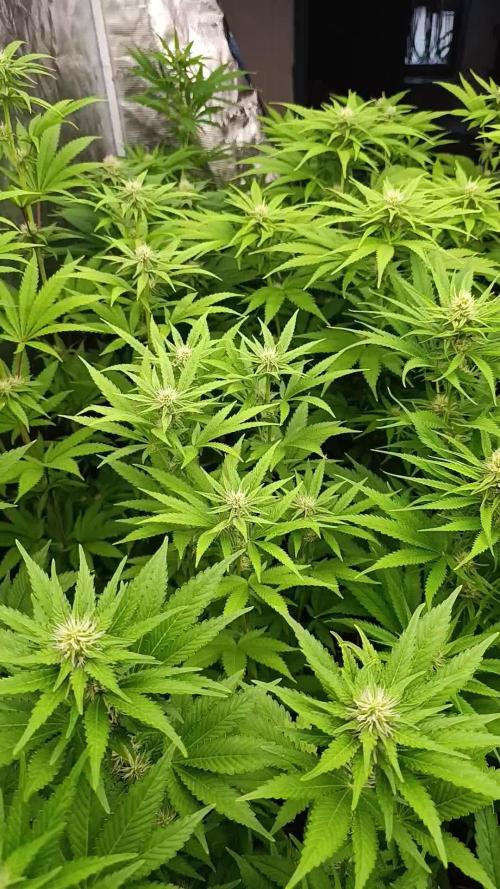
📆 Semana 4
El estiramiento llega prácticamente a su fin y las plantas centran ya la mayor parte de su energía en la formación de flores. La estructura queda completamente definida, con una canopia uniforme que aprovecha al máximo la intensidad lumínica y favorece un desarrollo homogéneo de todos los sitios florales.
Los cogollos comienzan a ganar volumen de forma visible, aumentando la producción de pistilos y el desarrollo de tricomas. La demanda de fósforo y potasio se incrementa progresivamente, mientras que el calcio y el magnesio siguen siendo fundamentales para sostener el intenso metabolismo y evitar carencias en las plantas de mayor vigor.
⚡ EC: 1.7–1.8
💧 pH: 6.2–6.5
🌡️ Temp: 21°C
🌫️ Humedad: 45–50%
💡 Intensidad: 950–1050 PPFD
🔥 Nota de cultivo: La cuarta semana marca el inicio de la fase de engorde. Mantener un clima estable, una nutrición equilibrada y una iluminación uniforme permitirá que los cogollos comiencen a ganar densidad sin generar estrés, sentando las bases para una floración de máxima calidad.
¡Seguimos creciendo fuerte! 💪

Likes
Comments
Share


@Jbcultivates
Follow
The grow was smooth, employed some new techniques when growing and they performed well! Nice bush plants

Likes
2
Share


@Piro420
Follow
Very happy better then the medical dispensary version i got the seed from it made it threw to my grinder and turned out female :D
Likes
13
Share

@masterofsmeagol
Follow
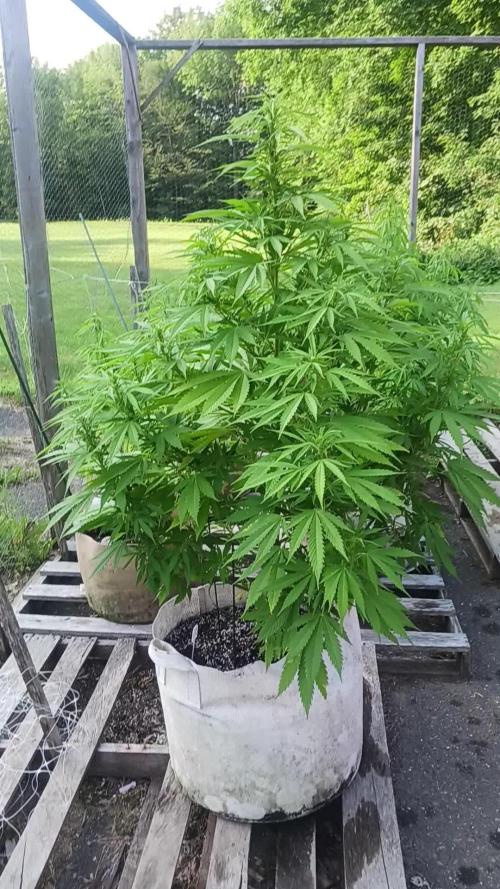
7/27 My phone ran out of storage and wouldn't let me take a video. I tried deleting several other videos bit that didn't work either. Finally I wad able to upload a few RANDOM pictures from the "website" camera. But no video. Everything looked so beautiful tjis morning too. Not watering was the right choice. I defoliated a couple septoria leaves on the reveg 10th planet that wad about to receive its third dose of Plant Doctor. The chem dog #4 and mk ultra this will be their second treatment. Seeing the positive impact of the product and finding a few septoria leaves I decided to treat every plant in the garden with plant doctor. I'm still going to do the diy Dr. Zymes but Plant Doctor had been working good and I want to suppress as much as possible. Everything looks great. I started by giving the thirstiest plants a half gallon of water. I then did a root drench of 3tsp per gallon on every plant but the 10gal. A gallon of solution was used on each plant. I really feel like this is a good mood. Previously AFTER I applied Plant Doctor the plants would have a noticeable positive effect shortly after. I'm hoping this will be the case here. I think stretch has stopped. I have one special Kush that has buds already but EVERYTHING is in early flower. I'll fix the phone and get a video up there.


Likes
14
Share


@TheBulldozerSicily
Follow
Venerdì 26 ottobre 2023
Inizio controllo 702 ec ph 5
Aggiungo 25 lt demineralized
54 Grow 36 Micro 18 Bloom 30 rhino skin 30 enzimi 20 calmag
985 ec ph 5.2
Martedì 31 ottobre 2023 skip a 12/12
Inizio controllo ec 986 ph 4( troppo basso)
Cambiano acqua
75 lt demineralizzata ec 141 ph 5.7;
Aggiungo ( x 60lt) +2.5lt rubinetto
120 Grow 120 micro 90 bloom 75 enzimi 75 rhino skin
Ottenendo ec 1237 ph 5.6

Likes
12
Share


@Meisterwulle
Follow
Moin,
Pflanzen sind grade gut im Stretch und auch die unterschiedlichen Höhen lassen sich leider nicht vermeiden… Während #1 und #3 ziemlich auch gleicher Höhe sind, kommt #2 nicht so gut hinterher. Generell scheint sie von der Entwicklung auch weniger ausgeprägt zu sein - naja so ist es nunmal. Hab #2 dann noch auf eine kleine Erhöhung gestellt, damit sie immerhin etwas mithält… Ansonsten siehts ganz gut aus, die Pflanzen brauchen jetzt deutlich mehr Wasser - könnte jeden Tag mit 2L gießen.
Wünsche euch ein schönes Wochenende 😎🍀
Gruß Wulle

Likes
1
Share


@undermink
Follow
At the beginning of week 11 they both look strong and healthy to me. Though their buds still seem smaller than the one in the 20l pot. But the look great after all :) So colorful and frosty (the smaller one) and so big and yellow (the taller one). Can't wait to harvest them :D
At the middle of week 11 they both still look great and I think I saw the tall one's buds grow a bit again... There was something strange going on at the top of the head bud (of the taller one). There'S a close up picture... I guess it's just a kind of mutation and no seed. I was shocked first when I thought it was a seed...
Likes
13
Share


@JoeyGonz
Follow
Well they are healthy thank god. Both leafs are aiming up tips too and beautiful green. Just pull a few leafs off here and there.. Nothing to upset them just for light purposes. Tossed the scrog on to help pull stuff apart get some light to those lowers for the heck of it. Both sucking down water.. I give them 1.5L each everyday. Nothing but this Mantis still. Going to toss in that Bembe every two weeks though, when I see some flowers. Not for Anything other then what it does for the flower. Cause the Mantis alone has been very stable and successful for growth. I have little white hairs developing in the flowering areas. ..I’ll get pics when I open tent tomorrow. Very happy with everything..


Likes
12
Share


@NorthernChemist
Follow
Aug 12: Ideally would have left this go for another week or two but pest pressure (aphids) meant it couldn't wait. Chopped. Nice squat plant structure with a decent coating of the best smelling resin I've ever had on an auto - as I mentioned before, this one smells sweet and floral, like a mix or roses and bubblegum. Amazing. Very pleased with the outcome and would recommend to others who are looking for a 1:1 THC:CBD variety.
Likes
15
Share


@NewOfficialDrillInvaders
Follow
Ladys Start to drink much more also one of 10 seed bag show off as a Autoflower i pass it to my friend because i dont like auto so i upload video how it looks she got really fruity smell


