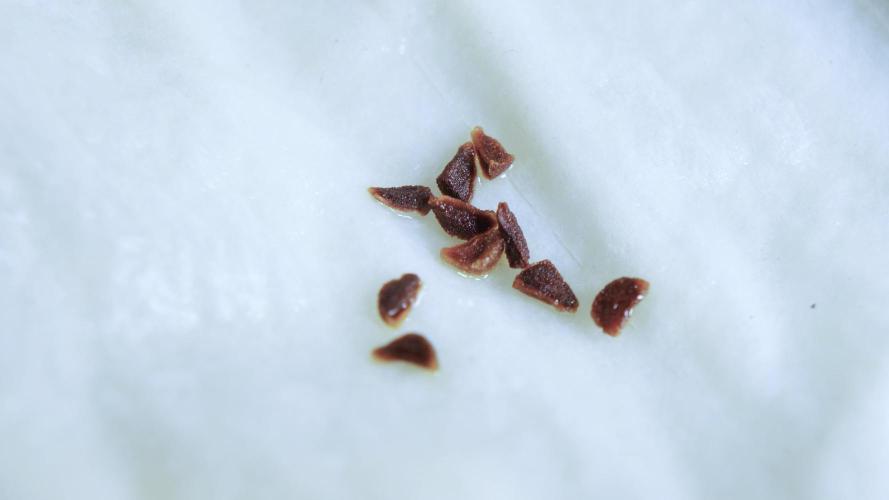
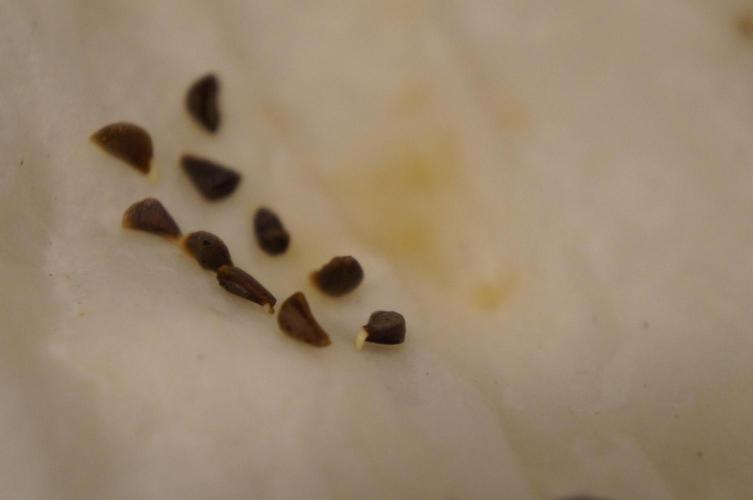
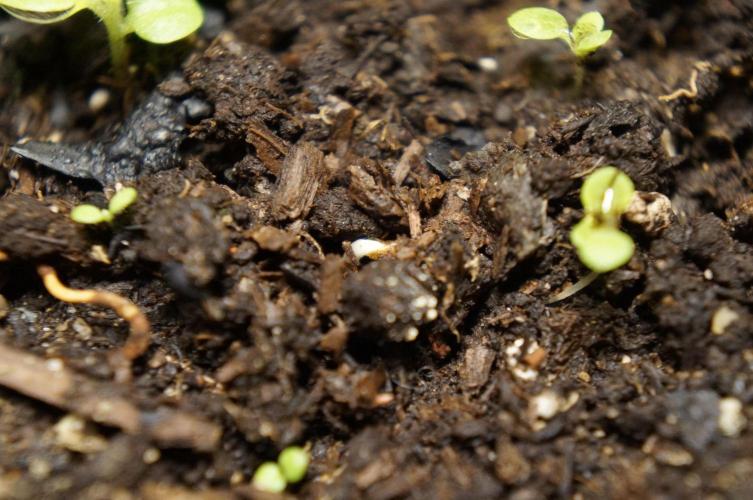
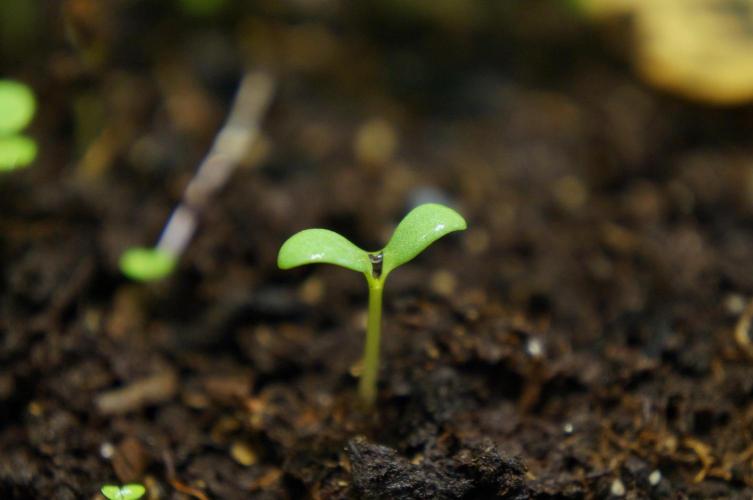
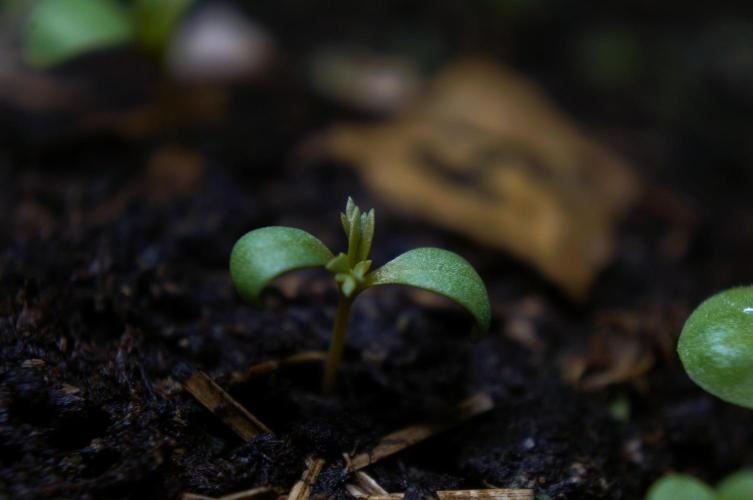
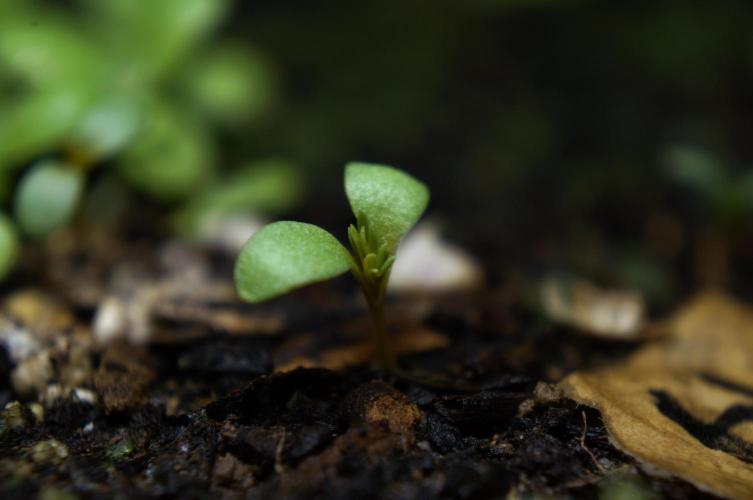
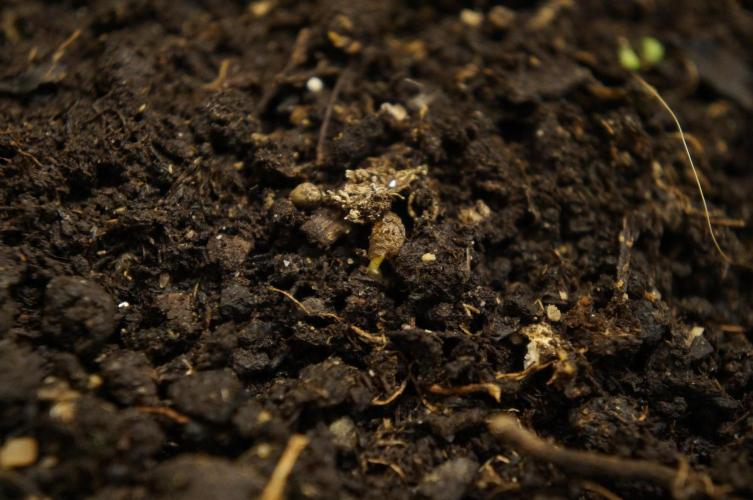
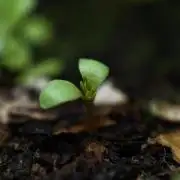
MalumProhibitum New attempt! 3 weeks no sign of life in old directly into soil diary, so doing another 10 seed paper towel attempt.
Keeping old diary running for few more weeks, as I havn't given up on em just yet.. I have tipped the seeds over carefully each day to prevent excess moisture to gather at any location, probably not even needed, but I really wanted them to germinate.
I snapped a photo under the low Kelvin grow lights, didnt bother moving it out into the kitchen LED to get better image quality out of fear of doing something stupid; ruining the seedlings.
As the directly into soil project seems stalled and allmost a month has passed by I cleared an empty spot of soil in the middle of the o'l pot for this run.
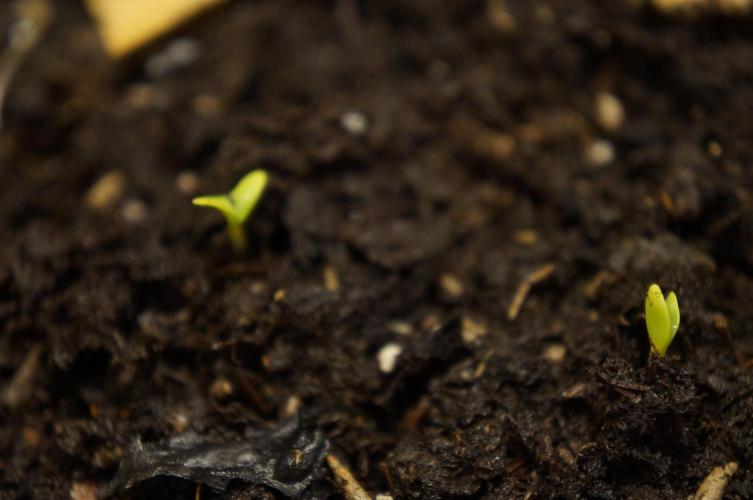
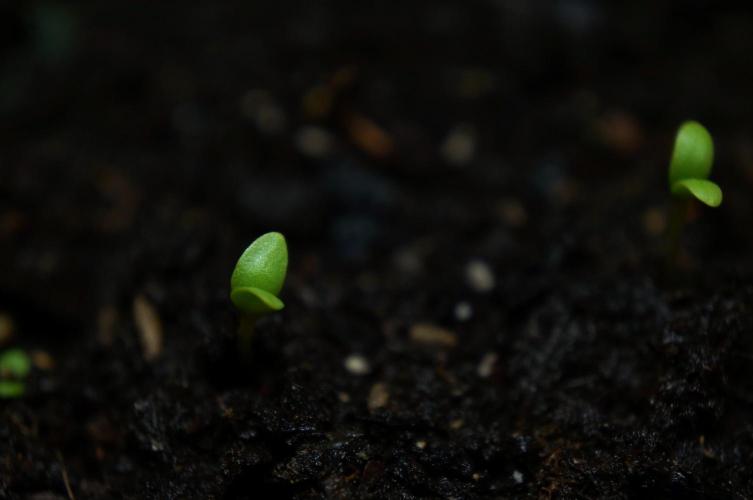
Early day #3 - 3 seedlings sprouted! after bit more than 48h ~30% germination rate, meanwhile zero direcltly into soil after 23 days.. toilet-paper is da shit! 😝.
Late day #4 - 2 more seeds germinated, 50% germinated. Papertowel method is the way!
Day #5 - 2 more seeds! 70% germinated 🎉--yay! :)
Day #6 - 2 more seeds, just one left now -- 90% 😎👌.
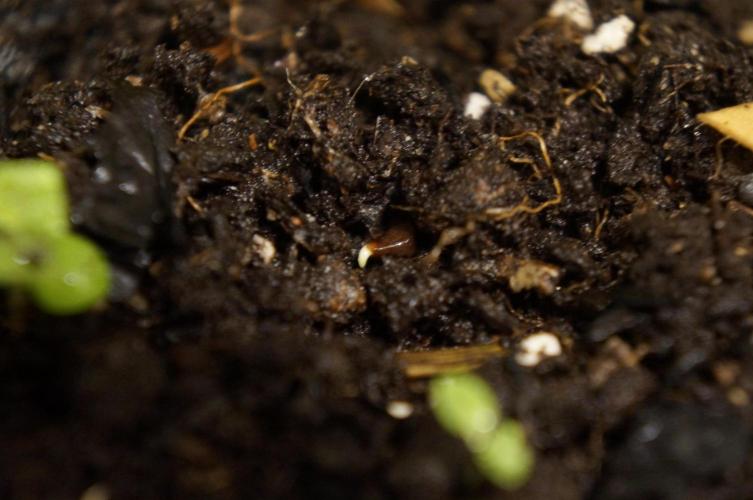
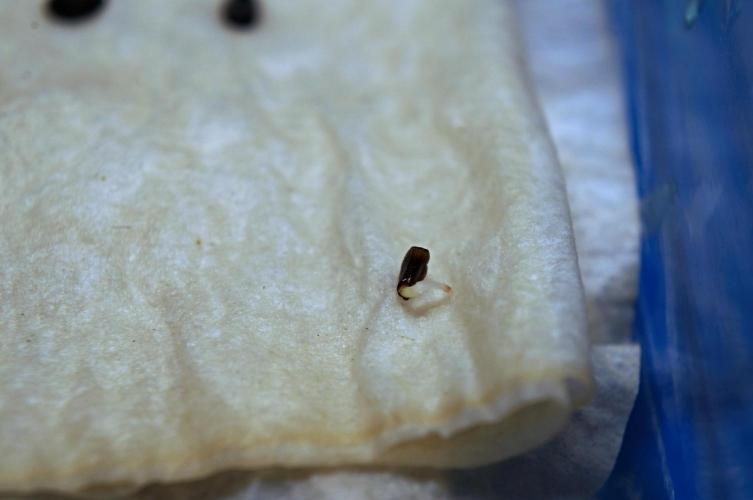
Day #7 30min before lights off I noticed the last seed had a little tail sticking out from the seed --100% germination rate! 👏😆 --Me gusta!
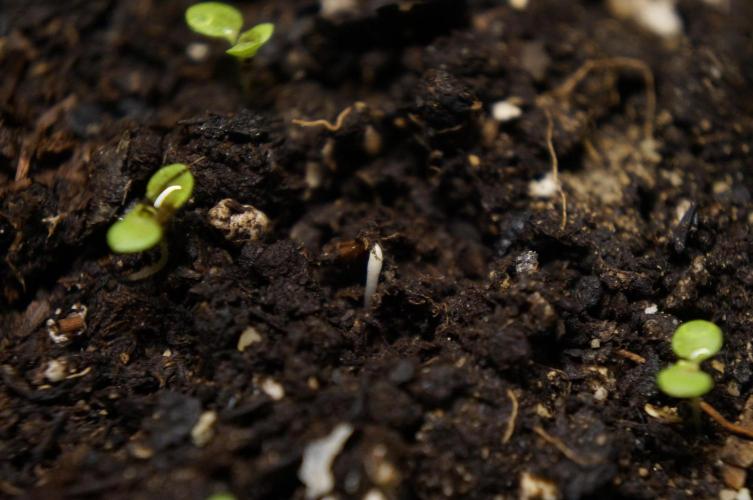
I moved it out of the germination-vessel and parked it at an empty spot in the 10liter pot, already colonized by her 9 siblings plus one extra from the old diary.
Only 14 Ma Huang seeds in the germination-chamber now (30% germinated); dormant and no sign of wanting to wake the f-up! :/
Summary:
Directly into soil was a big no-no for me; compared to paper towel germination. Directly into soil: 3 weeks 40% germinated vs paper towel 3-6 days and 100% germination.
💪😁👌 --Paper towel 100%!
7 likes
comments
Share
Used method
Paper Towel
Germination Method
2
Week 2. Vegetation
7d ago
1/4
12 hrs
Light Schedule
MalumProhibitum 8 days since project started and the seeds were placed in the germination-vessel, everything going I don't want to jinx it :)
I am currently investigating the minimum and maximum tolerable total dissolved solids (TDS) and optimal nutrient ratios for these plants by systematically testing different nutrient formulations. Small experimental batches (45–150 mL) are prepared, and 15 mL is applied daily. Plant responses are monitored to determine whether growth continues normally, pauses, or declines. Two plants are maintained as untreated controls.
15ml/day is a lot, but as the soil in the 10l pot is bone dry apart from the spawn spot it's OK. Starting with dry soil and only having the area closest to the seedling moisturized prevents dampening off and I don't have to transplant it, as I can just expand the water zone as the plant grows.
The primary objective is to eliminate nutrient formulations that inhibit growth or result in poorer performance relative to the controls, and to focus subsequent experimentation on formulations that promote healthy development.
Preliminary results indicate that a modified orchid-based nutrient formulation, supplemented to the Ephedra sinica projects, is currently performing best. This formulation operates at relatively low TDS/PPM levels and appears to rely on supplying only minimal phosphorus concentrations sufficient to sustain plant viability. Ca, Mg, K, micro and trace elements are then incrementally increased relative to P to assess optimal ratios.
TDS/PPM is subsequently increased in controlled amounts, while carefully monitoring kat-anion levels to prevent antagonistic interactions, particularly how too much Ca+Mg can cause potassium deficiency. Over time, nutrient balance appears to stabilize as limiting factors are addressed.
At present, potassium concentrations are slightly lower than the combined concentrations of phosphorus and calcium when calculated on an elemental basis. However, potassium is in slight excess when calculated as K₂O rather than elemental potassium (1,1 vs 0,9).
For nutrient management, I no longer rely on conventional N–P–K labeling or electrical conductivity (EC) measurements. Instead, all nutrient concentrations are calculated directly in milligrams per liter (mg/L), where 1 mg/L is equivalent to 1 ppm. All compounds are weighed precisely, and when preparing small volumes, stock solutions are created using 1000 mg quantities and diluted by factors of 10, 100, or 1000 as required. Final dosing is performed using insulin syringes, allowing milligram-level precision to be scaled down to microgram-level accuracy. This approach enables fine-tuning of nutrient concentrations with high reproducibility and also the ability to make a solo 15ml batch with great accuracy when needed.