


Black Belts Outdoor WA 2026


Black Belts

Perlite
JFWOD

Soil
Midwest Hearth

Outdoor
Room Type
Defoliation
weeks 20
Transplantation
weeks 3, 12, 14
26 liters
Pot Size
Start at 24 Week
G
Germination10h ago
MissLeonard94 This is GrowDiaries calendar Week 1, running Monday, March 30, 2026, through Sunday, April 5, 2026. The plant-age field is Day 1–3, using April 3, 2026 as Day 1. Week 1 is germination, Week 2 is Vegetation Week 1, and Black Belts begins Flowering Week 1 in the August 10–16 calendar week because unmistakable white pistils were photographed August 16.
Black Belts was planted April 3, 2026 in Ritzville, Washington. This is the germination week and the start of the outdoor season. No planting-day photograph survives, so the week remains documented without pretending a plant image exists.
No verified Black Belts photograph survives for this week. The included image is a generated documentation card, not an AI reconstruction of the plant and not an original photograph. It exists solely to keep the Monday–Sunday diary complete while making the evidence gap unmistakable.
The image-based height field reads Not observable. Its evidence basis is: No planting-day original; placeholder only. The container field reads Starter cup/container; exact volume not recorded, and the substrate field reads Soil + perlite mix; exact ratio not recorded. These distinctions preserve the documented April 20 fabric-pot transplant, the June 26 move into a seven-gallon fabric pot, and the permanent July 8 ground transplant.
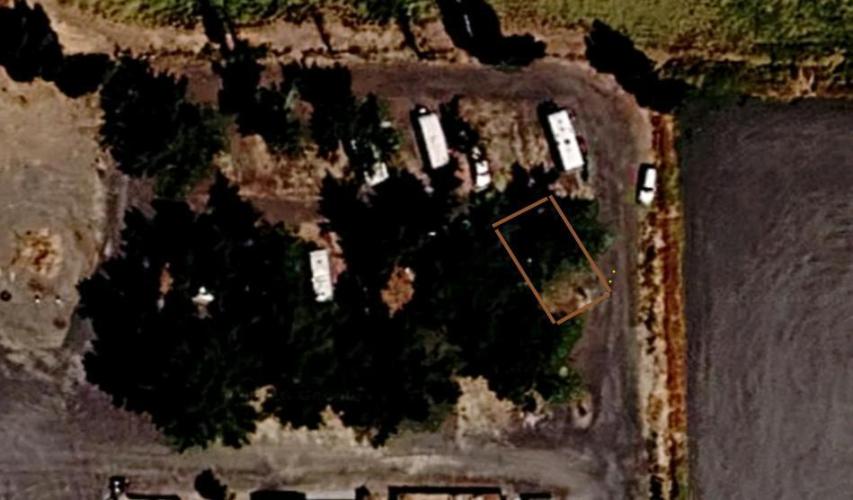
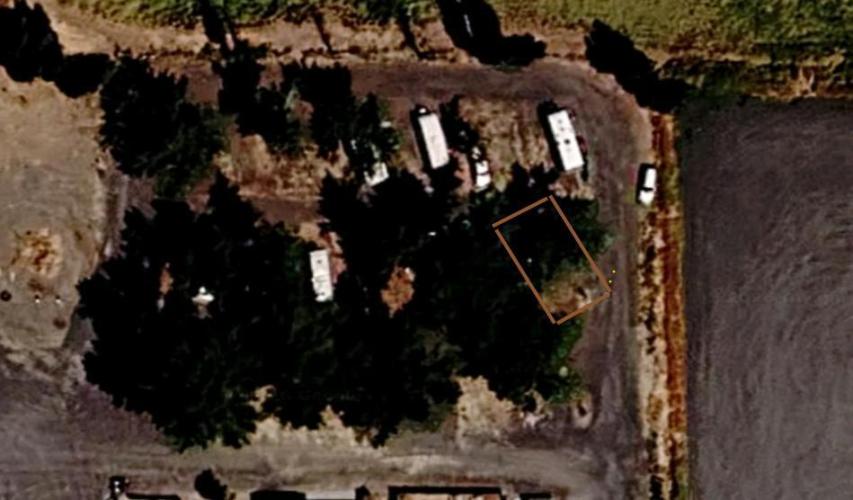
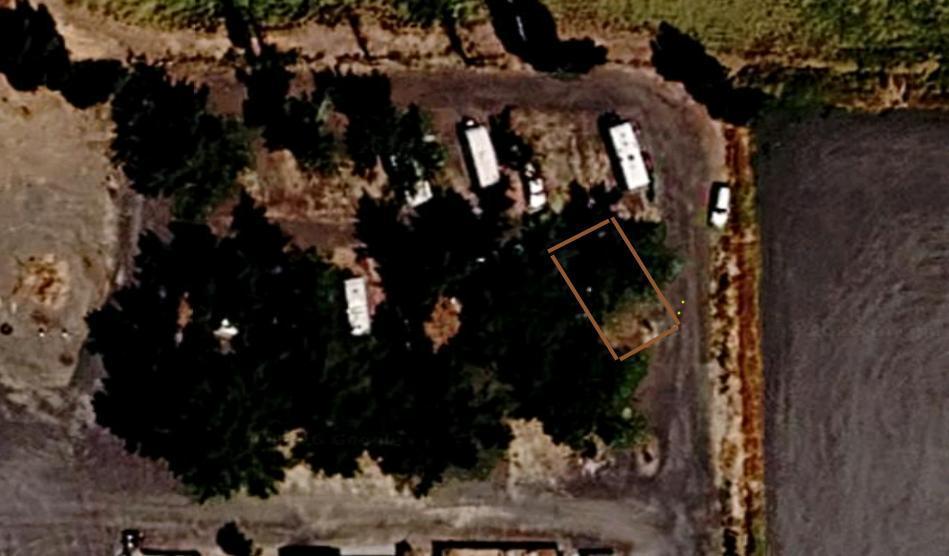
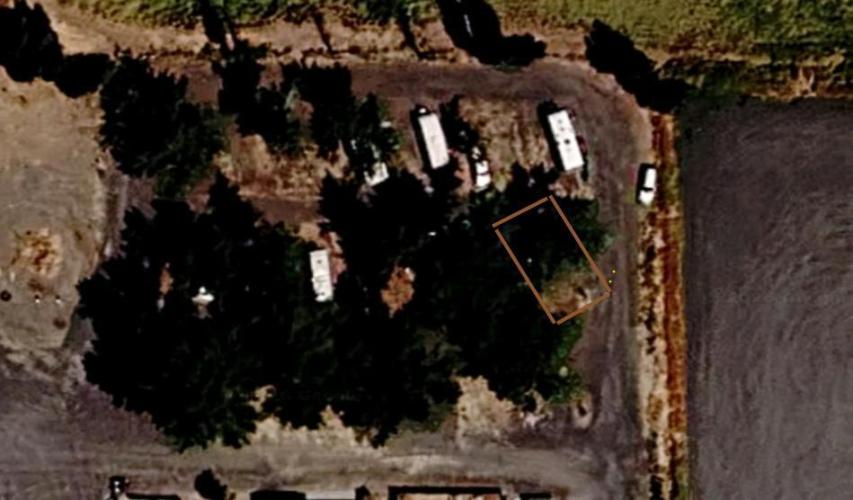
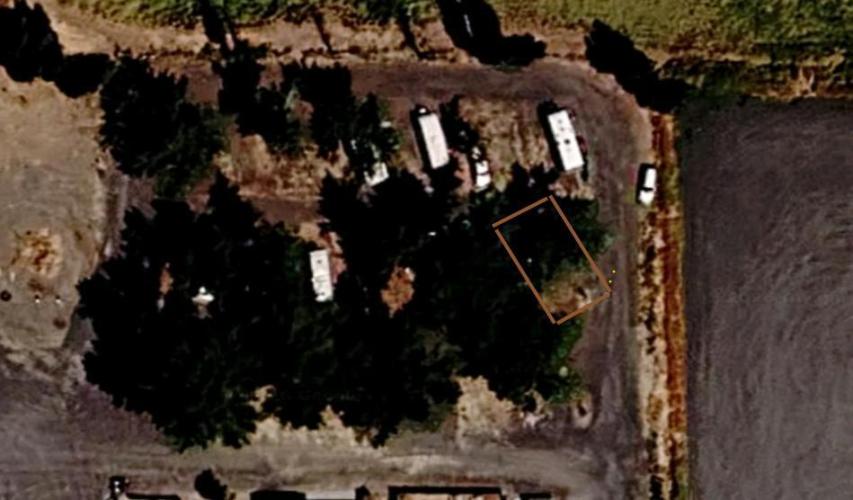
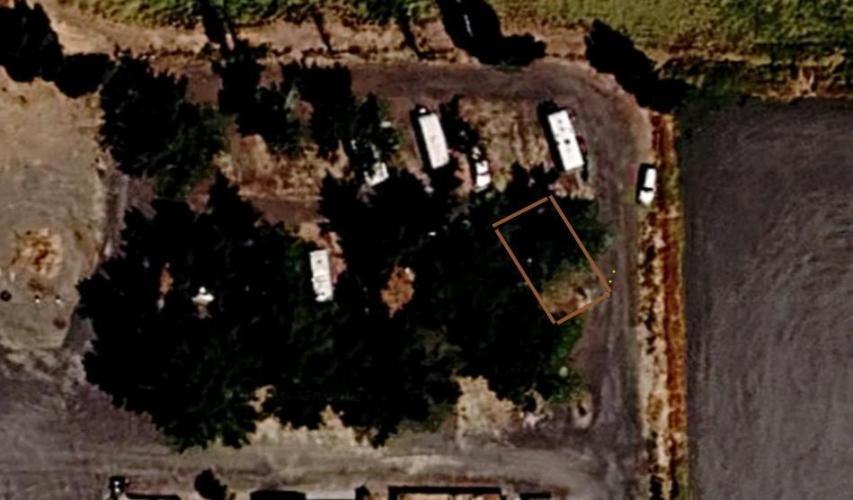
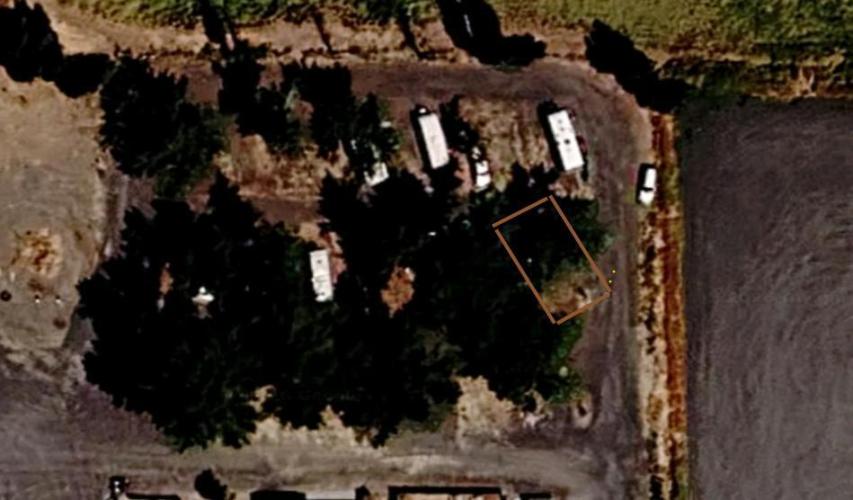
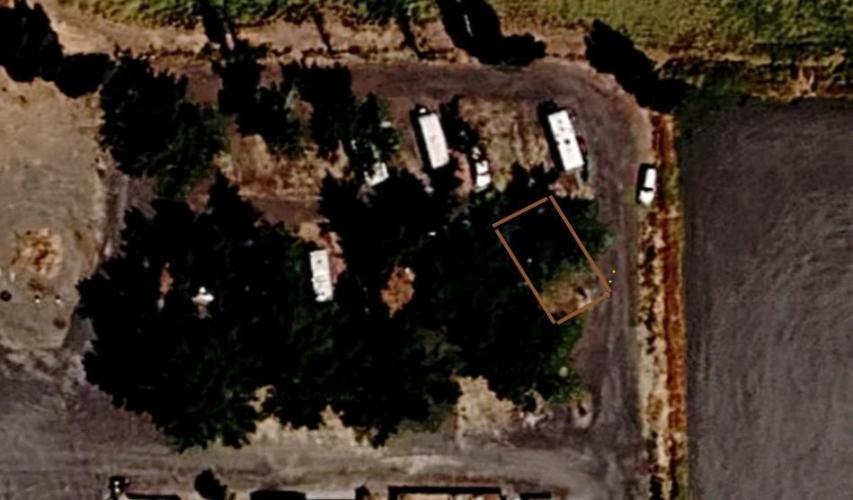
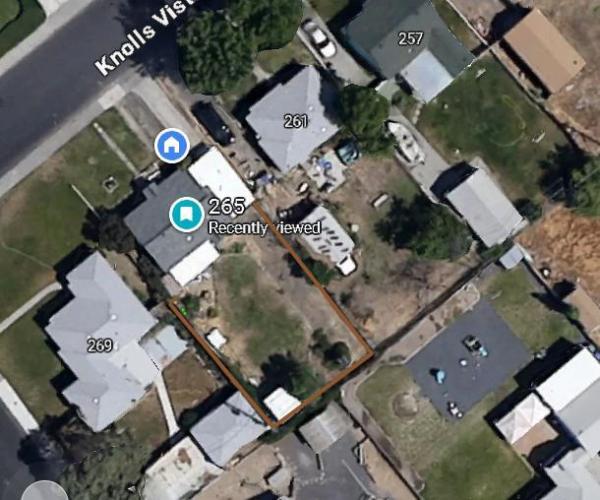
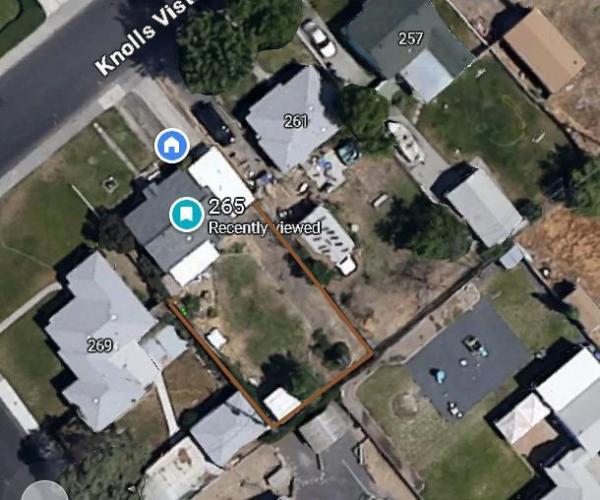
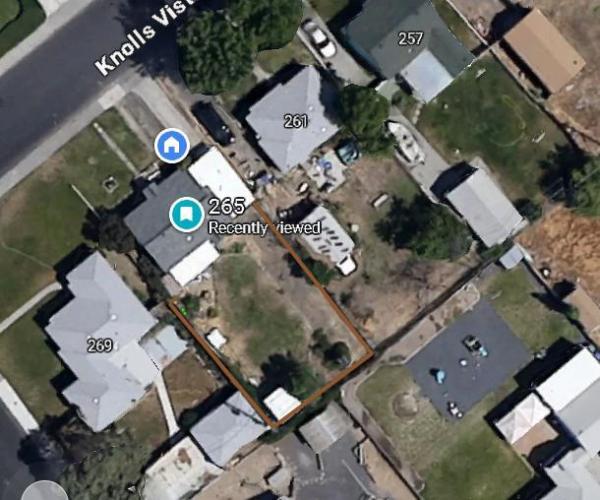
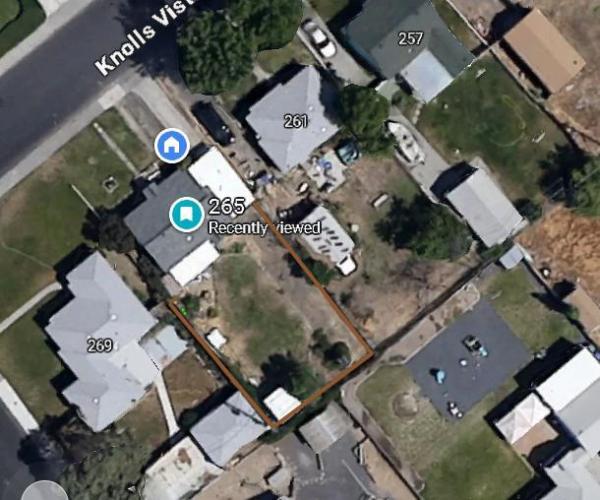
The plant was in Ritzville, Washington. The supplied aerial map has north at the top, a brown outline around the lot, and green dots toward the east side. This geometry supports morning-leaning direct sun with probable tree or structure shade later in the day.
The displayed environmental context—~59°F estimated daytime air temperature, ~52% estimated ambient humidity, and ~34°F estimated nighttime air temperature—is a seasonal outdoor estimate for inland eastern Washington, not a recovered yard sensor reading. The natural-light schedule of Approx. 06:35–19:17 PDT (12.9 h daylight) describes approximate sunrise-to-sunset availability, while Estimated 4.5–5.5 h direct sun; east-side lot, morning light then tree/structure shade is a separate map-based estimate of direct exposure at the plant.
No fertilizer formula, irrigation quantity, pest treatment, disease diagnosis, supplemental CO₂ use, or harvest-readiness conclusion is added unless the surviving record supports it. The goal is a complete, upload-ready Black Belts diary that remains honest about every estimate, missing photograph, and uncertain measurement.
likes
comments
Share
Used method
Directly In Substrate
Germination Method
1
Week 1. Vegetation10h ago
5.08 cm
Height
13 hrs
Light Schedule
17 °C
Day Air Temp
No Smell
Smell
50 %
Air Humidity
3 °C
Night Air Temp
MissLeonard94 This is GrowDiaries calendar Week 2, running Monday, April 6, 2026, through Sunday, April 12, 2026. The plant-age field is Day 4–10, using April 3, 2026 as Day 1. Week 1 is germination, Week 2 is Vegetation Week 1, and Black Belts begins Flowering Week 1 in the August 10–16 calendar week because unmistakable white pistils were photographed August 16.
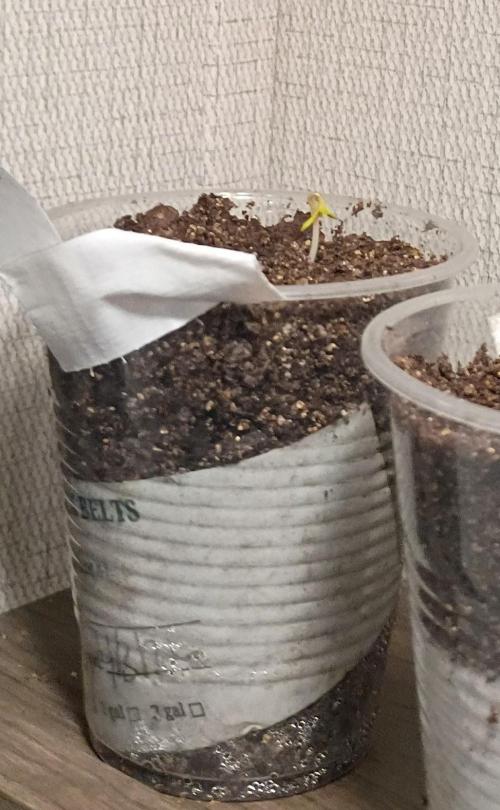
By April 11, Black Belts had emerged in the starter cup. The surviving image shows a very small seedling with cotyledons and only minimal height above the soil. This is the first verified Black Belts image in the record.
This week includes 1 verified original image. Captions preserve the source date, original filename, and the evidence used to identify Black Belts. Shared comparison photographs appear only when they clarify Black Belts' height, structure, or flowering progress; they do not merge the two plants into one diary.
The image-based height field reads ~1–2 in. Its evidence basis is: Visual estimate from the labeled Apr 11 Black Belts seedling cup; low height but clearly emerged. The container field reads Starter cup/container; exact volume not recorded, and the substrate field reads Soil + perlite mix; exact ratio not recorded. These distinctions preserve the documented April 20 fabric-pot transplant, the June 26 move into a seven-gallon fabric pot, and the permanent July 8 ground transplant.
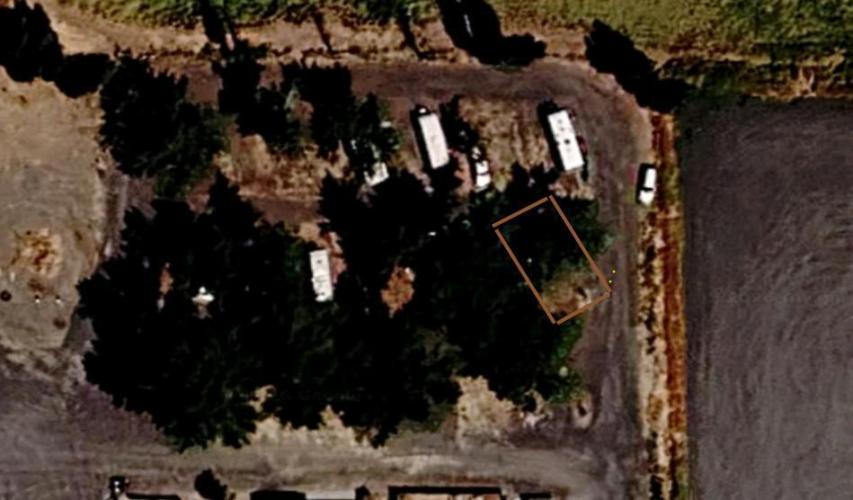
The plant was in Ritzville, Washington. The supplied aerial map has north at the top, a brown outline around the lot, and green dots toward the east side. This geometry supports morning-leaning direct sun with probable tree or structure shade later in the day.
The displayed environmental context—~62°F estimated daytime air temperature, ~50% estimated ambient humidity, and ~37°F estimated nighttime air temperature—is a seasonal outdoor estimate for inland eastern Washington, not a recovered yard sensor reading. The natural-light schedule of Approx. 06:23–19:27 PDT (13.3 h daylight) describes approximate sunrise-to-sunset availability, while Estimated 5–6 h direct sun; east-side placement with later tree/canopy shade is a separate map-based estimate of direct exposure at the plant.
No fertilizer formula, irrigation quantity, pest treatment, disease diagnosis, supplemental CO₂ use, or harvest-readiness conclusion is added unless the surviving record supports it. The goal is a complete, upload-ready Black Belts diary that remains honest about every estimate, missing photograph, and uncertain measurement.
likes
comments
Share
2
Week 2. Vegetation10h ago
5.08 cm
Height
13 hrs
Light Schedule
18 °C
Day Air Temp
No Smell
Smell
48 %
Air Humidity
3 °C
Night Air Temp
MissLeonard94 This is GrowDiaries calendar Week 3, running Monday, April 13, 2026, through Sunday, April 19, 2026. The plant-age field is Day 11–17, using April 3, 2026 as Day 1. Week 1 is germination, Week 2 is Vegetation Week 1, and Black Belts begins Flowering Week 1 in the August 10–16 calendar week because unmistakable white pistils were photographed August 16.
No verified Black Belts photograph survives from April 13–19. The plant remained in the starter container until the documented April 20 transplant, so this entry preserves the calendar without inventing growth or care details.
No verified Black Belts photograph survives for this week. The included image is a generated documentation card, not an AI reconstruction of the plant and not an original photograph. It exists solely to keep the Monday–Sunday diary complete while making the evidence gap unmistakable.
The image-based height field reads Not observable. Its evidence basis is: No verified Black Belts photo in this Monday–Sunday week. The container field reads Starter cup/container; exact volume not recorded, and the substrate field reads Soil + perlite mix; exact ratio not recorded. These distinctions preserve the documented April 20 fabric-pot transplant, the June 26 move into a seven-gallon fabric pot, and the permanent July 8 ground transplant.
The plant was in Ritzville, Washington. The supplied aerial map has north at the top, a brown outline around the lot, and green dots toward the east side. This geometry supports morning-leaning direct sun with probable tree or structure shade later in the day.
The displayed environmental context—~65°F estimated daytime air temperature, ~48% estimated ambient humidity, and ~38°F estimated nighttime air temperature—is a seasonal outdoor estimate for inland eastern Washington, not a recovered yard sensor reading. The natural-light schedule of Approx. 06:10–19:37 PDT (13.8 h daylight) describes approximate sunrise-to-sunset availability, while Estimated 5–6 h direct sun; map-based exposure estimate is a separate map-based estimate of direct exposure at the plant.
No fertilizer formula, irrigation quantity, pest treatment, disease diagnosis, supplemental CO₂ use, or harvest-readiness conclusion is added unless the surviving record supports it. The goal is a complete, upload-ready Black Belts diary that remains honest about every estimate, missing photograph, and uncertain measurement.
likes
comments
Share
3
Week 3. Vegetation10h ago
7.62 cm
Height
14 hrs
Light Schedule
22 °C
Day Air Temp
No Smell
Smell
46 %
Air Humidity
4 °C
Night Air Temp
3.79 liters
Pot Size
MissLeonard94 This is GrowDiaries calendar Week 4, running Monday, April 20, 2026, through Sunday, April 26, 2026. The plant-age field is Day 18–24, using April 3, 2026 as Day 1. Week 1 is germination, Week 2 is Vegetation Week 1, and Black Belts begins Flowering Week 1 in the August 10–16 calendar week because unmistakable white pistils were photographed August 16.
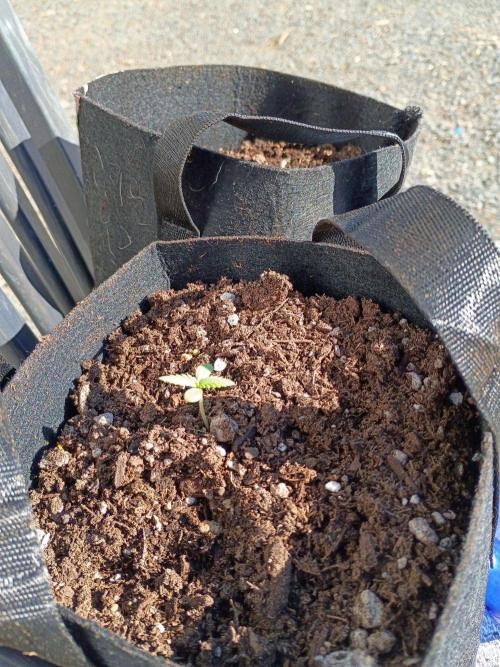
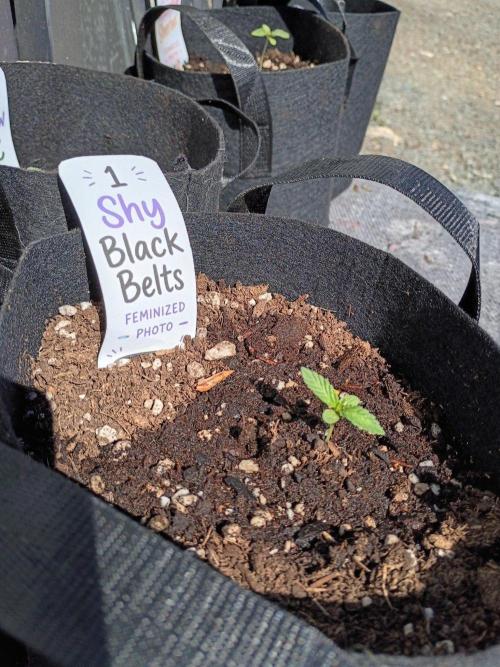
Black Belts was transplanted into a small fabric pot on April 20. The April 24 image shows the seedling settling into the larger root zone and beginning to form true leaves. Both originals are included because they document the transplant week rather than a single isolated moment.
This week includes 2 verified original images. Captions preserve the source date, original filename, and the evidence used to identify Black Belts. Shared comparison photographs appear only when they clarify Black Belts' height, structure, or flowering progress; they do not merge the two plants into one diary.
The image-based height field reads ~2–4 in. Its evidence basis is: Visual estimate from Apr 20 and Apr 24 originals after the first fabric-pot transplant. The container field reads Small fabric pot after Apr 20 transplant; exact gallon size not recorded, and the substrate field reads Soil + perlite mix; exact ratio not recorded. These distinctions preserve the documented April 20 fabric-pot transplant, the June 26 move into a seven-gallon fabric pot, and the permanent July 8 ground transplant.
The plant was in Ritzville, Washington. The supplied aerial map has north at the top, a brown outline around the lot, and green dots toward the east side. This geometry supports morning-leaning direct sun with probable tree or structure shade later in the day.
The displayed environmental context—~72°F estimated daytime air temperature, ~46% estimated ambient humidity, and ~40°F estimated nighttime air temperature—is a seasonal outdoor estimate for inland eastern Washington, not a recovered yard sensor reading. The natural-light schedule of Approx. 05:58–19:47 PDT (14.1 h daylight) describes approximate sunrise-to-sunset availability, while Estimated 5.5–6.5 h direct sun; east-side placement, afternoon shade likely is a separate map-based estimate of direct exposure at the plant.
No fertilizer formula, irrigation quantity, pest treatment, disease diagnosis, supplemental CO₂ use, or harvest-readiness conclusion is added unless the surviving record supports it. The goal is a complete, upload-ready Black Belts diary that remains honest about every estimate, missing photograph, and uncertain measurement.
likes
comments
Share
Used techniques
Transplantation
Technique
4
Week 4. Vegetation10h ago
12.7 cm
Height
14 hrs
Light Schedule
21 °C
Day Air Temp
No Smell
Smell
45 %
Air Humidity
6 °C
Night Air Temp
3.79 liters
Pot Size
MissLeonard94 This is GrowDiaries calendar Week 5, running Monday, April 27, 2026, through Sunday, May 3, 2026. The plant-age field is Day 25–31, using April 3, 2026 as Day 1. Week 1 is germination, Week 2 is Vegetation Week 1, and Black Belts begins Flowering Week 1 in the August 10–16 calendar week because unmistakable white pistils were photographed August 16.
The April 30 image is clearly labeled Black Belts. The plant had begun producing broader true leaves and was moving beyond the fragile emergence stage, although it remained small compared with its eventual size.
This week includes 1 verified original image. Captions preserve the source date, original filename, and the evidence used to identify Black Belts. Shared comparison photographs appear only when they clarify Black Belts' height, structure, or flowering progress; they do not merge the two plants into one diary.
The image-based height field reads ~5–6 in. Its evidence basis is: Visual estimate from the labeled Apr 30 Black Belts original. The container field reads Small fabric pot; exact gallon size not recorded, and the substrate field reads Soil + perlite mix; exact ratio not recorded. These distinctions preserve the documented April 20 fabric-pot transplant, the June 26 move into a seven-gallon fabric pot, and the permanent July 8 ground transplant.
The plant was in Ritzville, Washington. The supplied aerial map has north at the top, a brown outline around the lot, and green dots toward the east side. This geometry supports morning-leaning direct sun with probable tree or structure shade later in the day.
The displayed environmental context—~69°F estimated daytime air temperature, ~45% estimated ambient humidity, and ~42°F estimated nighttime air temperature—is a seasonal outdoor estimate for inland eastern Washington, not a recovered yard sensor reading. The natural-light schedule of Approx. 05:47–19:57 PDT (14.4 h daylight) describes approximate sunrise-to-sunset availability, while Estimated 5.5–6.5 h direct sun; morning exposure with later shade is a separate map-based estimate of direct exposure at the plant.
No fertilizer formula, irrigation quantity, pest treatment, disease diagnosis, supplemental CO₂ use, or harvest-readiness conclusion is added unless the surviving record supports it. The goal is a complete, upload-ready Black Belts diary that remains honest about every estimate, missing photograph, and uncertain measurement.
likes
comments
Share
5
Week 5. Vegetation10h ago
12.7 cm
Height
14 hrs
Light Schedule
22 °C
Day Air Temp
No Smell
Smell
44 %
Air Humidity
6 °C
Night Air Temp
3.79 liters
Pot Size
MissLeonard94 This is GrowDiaries calendar Week 6, running Monday, May 4, 2026, through Sunday, May 10, 2026. The plant-age field is Day 32–38, using April 3, 2026 as Day 1. Week 1 is germination, Week 2 is Vegetation Week 1, and Black Belts begins Flowering Week 1 in the August 10–16 calendar week because unmistakable white pistils were photographed August 16.
No verified Black Belts image falls inside May 4–10. The following documented checkpoint is May 17, so height and weekly appearance are left unobserved here.
No verified Black Belts photograph survives for this week. The included image is a generated documentation card, not an AI reconstruction of the plant and not an original photograph. It exists solely to keep the Monday–Sunday diary complete while making the evidence gap unmistakable.
The image-based height field reads Not observable. Its evidence basis is: No verified Black Belts photo in this Monday–Sunday week. The container field reads Small fabric pot; exact gallon size not recorded, and the substrate field reads Soil + perlite mix; exact ratio not recorded. These distinctions preserve the documented April 20 fabric-pot transplant, the June 26 move into a seven-gallon fabric pot, and the permanent July 8 ground transplant.
The plant was in Ritzville, Washington. The supplied aerial map has north at the top, a brown outline around the lot, and green dots toward the east side. This geometry supports morning-leaning direct sun with probable tree or structure shade later in the day.
The displayed environmental context—~71°F estimated daytime air temperature, ~44% estimated ambient humidity, and ~43°F estimated nighttime air temperature—is a seasonal outdoor estimate for inland eastern Washington, not a recovered yard sensor reading. The natural-light schedule of Approx. 05:38–20:07 PDT (14.7 h daylight) describes approximate sunrise-to-sunset availability, while Estimated 5.5–7 h direct sun; map-based exposure estimate is a separate map-based estimate of direct exposure at the plant.
No fertilizer formula, irrigation quantity, pest treatment, disease diagnosis, supplemental CO₂ use, or harvest-readiness conclusion is added unless the surviving record supports it. The goal is a complete, upload-ready Black Belts diary that remains honest about every estimate, missing photograph, and uncertain measurement.
likes
comments
Share
6
Week 6. Vegetation10h ago
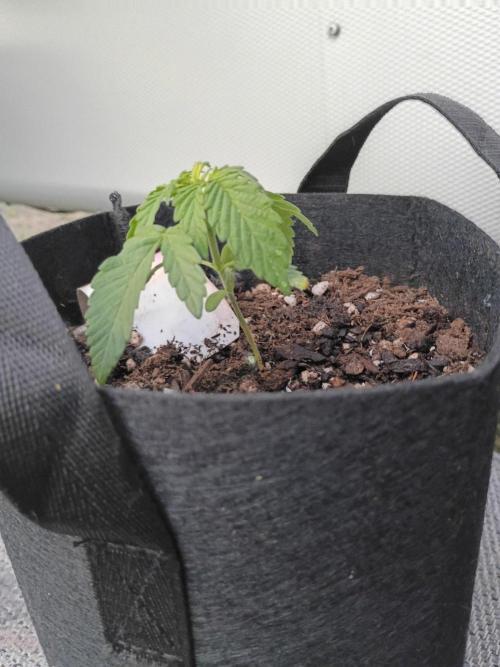
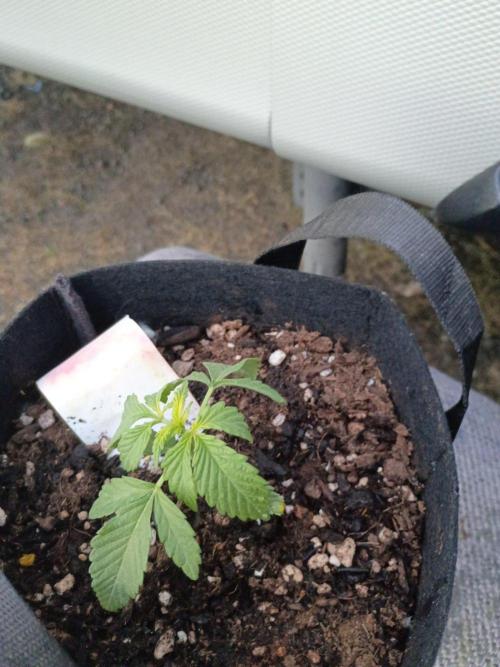
22.86 cm
Height
15 hrs
Light Schedule
24 °C
Day Air Temp
No Smell
Smell
43 %
Air Humidity
8 °C
Night Air Temp
3.79 liters
Pot Size
MissLeonard94 This is GrowDiaries calendar Week 7, running Monday, May 11, 2026, through Sunday, May 17, 2026. The plant-age field is Day 39–45, using April 3, 2026 as Day 1. Week 1 is germination, Week 2 is Vegetation Week 1, and Black Belts begins Flowering Week 1 in the August 10–16 calendar week because unmistakable white pistils were photographed August 16.
The May 17 side and top views are the last documented Ritzville checkpoint. Black Belts had developed several nodes and larger fan leaves, but the foliage appeared somewhat pale and the plant remained modest in size. After this date, the plants were temporarily out of the grower's care.
This week includes 2 verified original images. Captions preserve the source date, original filename, and the evidence used to identify Black Belts. Shared comparison photographs appear only when they clarify Black Belts' height, structure, or flowering progress; they do not merge the two plants into one diary.
The image-based height field reads ~10–12 in. Its evidence basis is: Visual estimate from May 17 side and top views; camera angle limits precision. The container field reads Small fabric pot; exact gallon size not recorded, and the substrate field reads Soil + perlite mix; exact ratio not recorded. These distinctions preserve the documented April 20 fabric-pot transplant, the June 26 move into a seven-gallon fabric pot, and the permanent July 8 ground transplant.
The plant was in Ritzville, Washington. The supplied aerial map has north at the top, a brown outline around the lot, and green dots toward the east side. This geometry supports morning-leaning direct sun with probable tree or structure shade later in the day.
The displayed environmental context—~75°F estimated daytime air temperature, ~43% estimated ambient humidity, and ~46°F estimated nighttime air temperature—is a seasonal outdoor estimate for inland eastern Washington, not a recovered yard sensor reading. The natural-light schedule of Approx. 05:30–20:17 PDT (15.1 h daylight) describes approximate sunrise-to-sunset availability, while Estimated 6–7 h direct sun; east-side location with afternoon tree/structure shade is a separate map-based estimate of direct exposure at the plant.
No fertilizer formula, irrigation quantity, pest treatment, disease diagnosis, supplemental CO₂ use, or harvest-readiness conclusion is added unless the surviving record supports it. The goal is a complete, upload-ready Black Belts diary that remains honest about every estimate, missing photograph, and uncertain measurement.
likes
comments
Share
7
Week 7. Vegetation10h ago
22.86 cm
Height
15 hrs
Light Schedule
24 °C
Day Air Temp
No Smell
Smell
43 %
Air Humidity
8 °C
Night Air Temp
3.79 liters
Pot Size
MissLeonard94 This is GrowDiaries calendar Week 8, running Monday, May 18, 2026, through Sunday, May 24, 2026. The plant-age field is Day 46–52, using April 3, 2026 as Day 1. Week 1 is germination, Week 2 is Vegetation Week 1, and Black Belts begins Flowering Week 1 in the August 10–16 calendar week because unmistakable white pistils were photographed August 16.
Black Belts was temporarily out of the grower's care. No original photograph, reliable container observation, or local environmental note survives for May 18–24.
No verified Black Belts photograph survives for this week. The included image is a generated documentation card, not an AI reconstruction of the plant and not an original photograph. It exists solely to keep the Monday–Sunday diary complete while making the evidence gap unmistakable.
The image-based height field reads Not observable. Its evidence basis is: No original photo; plant temporarily out of care. The container field reads Unknown during documentation gap, and the substrate field reads Unknown during documentation gap. These distinctions preserve the documented April 20 fabric-pot transplant, the June 26 move into a seven-gallon fabric pot, and the permanent July 8 ground transplant.
This entry falls inside the May 18–June 10 documentation gap. The plants were temporarily out of the grower's care, so the diary does not assert a local exposure pattern, container change, plant condition, or weather observation that was not actually recorded.
Day temperature, ambient humidity, night temperature, and direct-sun exposure remain unknown because the documentation gap does not support a responsible location-specific estimate.
No fertilizer formula, irrigation quantity, pest treatment, disease diagnosis, supplemental CO₂ use, or harvest-readiness conclusion is added unless the surviving record supports it. The goal is a complete, upload-ready Black Belts diary that remains honest about every estimate, missing photograph, and uncertain measurement.
likes
comments
Share
8
Week 8. Vegetation10h ago
22.86 cm
Height
15 hrs
Light Schedule
24 °C
Day Air Temp
No Smell
Smell
43 %
Air Humidity
8 °C
Night Air Temp
3.79 liters
Pot Size
MissLeonard94 This is GrowDiaries calendar Week 9, running Monday, May 25, 2026, through Sunday, May 31, 2026. The plant-age field is Day 53–59, using April 3, 2026 as Day 1. Week 1 is germination, Week 2 is Vegetation Week 1, and Black Belts begins Flowering Week 1 in the August 10–16 calendar week because unmistakable white pistils were photographed August 16.
The documentation gap continued through May 25–31. This week is intentionally left without a growth claim or interpolated height.
No verified Black Belts photograph survives for this week. The included image is a generated documentation card, not an AI reconstruction of the plant and not an original photograph. It exists solely to keep the Monday–Sunday diary complete while making the evidence gap unmistakable.
The image-based height field reads Not observable. Its evidence basis is: No original photo; plant temporarily out of care. The container field reads Unknown during documentation gap, and the substrate field reads Unknown during documentation gap. These distinctions preserve the documented April 20 fabric-pot transplant, the June 26 move into a seven-gallon fabric pot, and the permanent July 8 ground transplant.
This entry falls inside the May 18–June 10 documentation gap. The plants were temporarily out of the grower's care, so the diary does not assert a local exposure pattern, container change, plant condition, or weather observation that was not actually recorded.
Day temperature, ambient humidity, night temperature, and direct-sun exposure remain unknown because the documentation gap does not support a responsible location-specific estimate.
No fertilizer formula, irrigation quantity, pest treatment, disease diagnosis, supplemental CO₂ use, or harvest-readiness conclusion is added unless the surviving record supports it. The goal is a complete, upload-ready Black Belts diary that remains honest about every estimate, missing photograph, and uncertain measurement.
likes
comments
Share
9
Week 9. Vegetation10h ago
22.86 cm
Height
15 hrs
Light Schedule
24 °C
Day Air Temp
No Smell
Smell
43 %
Air Humidity
8 °C
Night Air Temp
3.79 liters
Pot Size
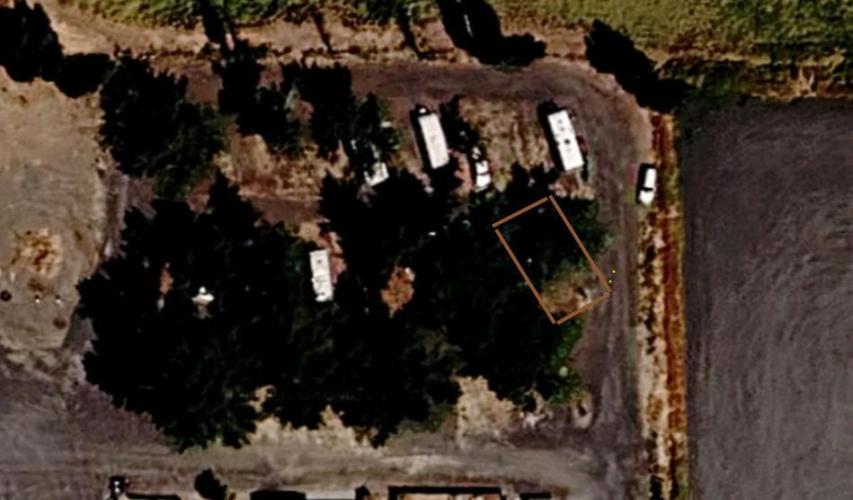
MissLeonard94 This is GrowDiaries calendar Week 10, running Monday, June 1, 2026, through Sunday, June 7, 2026. The plant-age field is Day 60–66, using April 3, 2026 as Day 1. Week 1 is germination, Week 2 is Vegetation Week 1, and Black Belts begins Flowering Week 1 in the August 10–16 calendar week because unmistakable white pistils were photographed August 16.
The plants were still outside the documented record through June 7. The first confirmed Moses Lake images were taken June 11, so this week remains a transition gap rather than being assigned to either location without evidence.
No verified Black Belts photograph survives for this week. The included image is a generated documentation card, not an AI reconstruction of the plant and not an original photograph. It exists solely to keep the Monday–Sunday diary complete while making the evidence gap unmistakable.
The image-based height field reads Not observable. Its evidence basis is: No original photo; Moses Lake documentation begins June 11. The container field reads Unknown during documentation gap, and the substrate field reads Unknown during documentation gap. These distinctions preserve the documented April 20 fabric-pot transplant, the June 26 move into a seven-gallon fabric pot, and the permanent July 8 ground transplant.
This entry falls inside the May 18–June 10 documentation gap. The plants were temporarily out of the grower's care, so the diary does not assert a local exposure pattern, container change, plant condition, or weather observation that was not actually recorded.
Day temperature, ambient humidity, night temperature, and direct-sun exposure remain unknown because the documentation gap does not support a responsible location-specific estimate.
No fertilizer formula, irrigation quantity, pest treatment, disease diagnosis, supplemental CO₂ use, or harvest-readiness conclusion is added unless the surviving record supports it. The goal is a complete, upload-ready Black Belts diary that remains honest about every estimate, missing photograph, and uncertain measurement.
likes
comments
Share
10
Week 10. Vegetation10h ago
63.5 cm
Height
15 hrs
Light Schedule
26 °C
Day Air Temp
Weak
Smell
39 %
Air Humidity
11 °C
Night Air Temp
3.79 liters
Pot Size
MissLeonard94 This is GrowDiaries calendar Week 11, running Monday, June 8, 2026, through Sunday, June 14, 2026. The plant-age field is Day 67–73, using April 3, 2026 as Day 1. Week 1 is germination, Week 2 is Vegetation Week 1, and Black Belts begins Flowering Week 1 in the August 10–16 calendar week because unmistakable white pistils were photographed August 16.
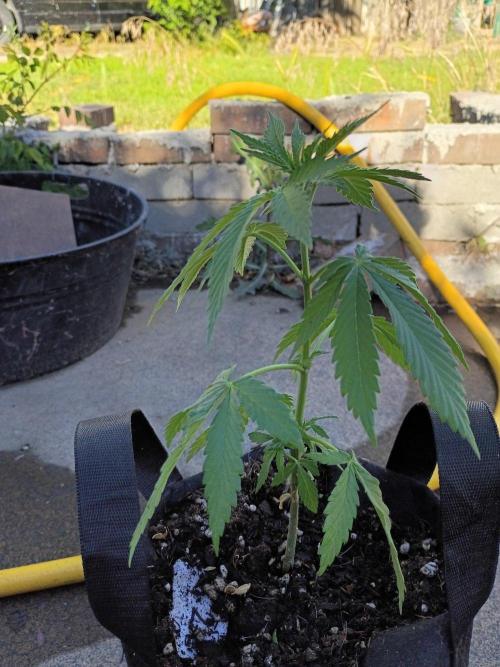
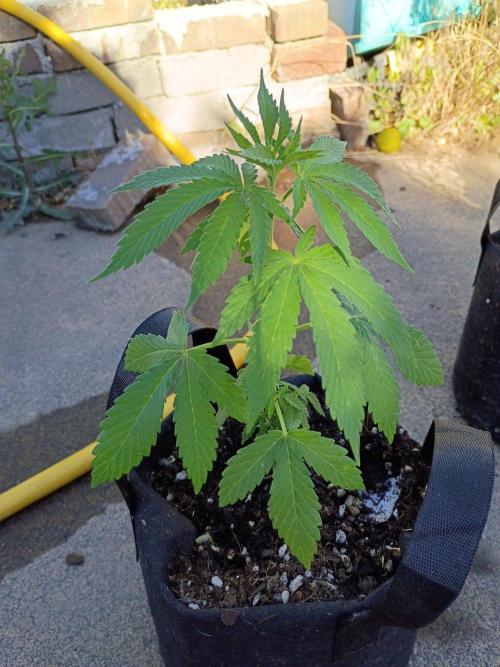
The June 11 photographs begin the Moses Lake portion of the grow. Black Belts had stretched substantially and already showed the upright, open architecture that later became unmistakable. Two opposite-angle views show long leaf stems and increasing vertical separation between nodes.
This week includes 2 verified original images. Captions preserve the source date, original filename, and the evidence used to identify Black Belts. Shared comparison photographs appear only when they clarify Black Belts' height, structure, or flowering progress; they do not merge the two plants into one diary.
The image-based height field reads ~24–28 in. Its evidence basis is: Visual estimate from two June 11 views; tall open form supports Black Belts identification. The container field reads Small fabric pot; exact gallon size not recorded, and the substrate field reads Soil + perlite mix; exact ratio not recorded. These distinctions preserve the documented April 20 fabric-pot transplant, the June 26 move into a seven-gallon fabric pot, and the permanent July 8 ground transplant.
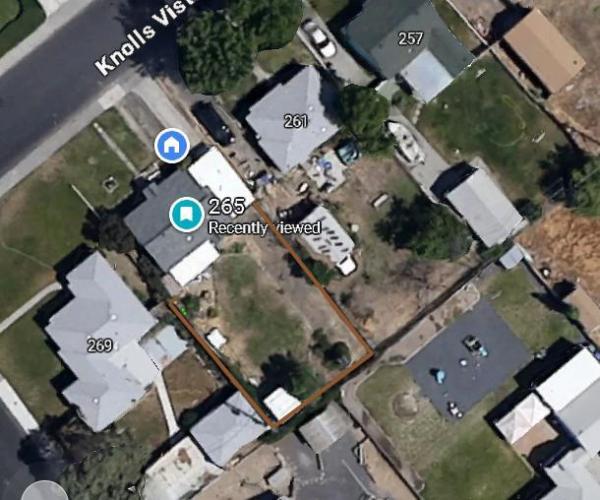
The plant was in Moses Lake, Washington. The supplied aerial map has north at the top, a brown backyard outline, and green dots along the west/left side near boundaries and structures. The map supports a useful morning-to-midday direct-light window with likely late-day fence or structure shade.
The displayed environmental context—~79°F estimated daytime air temperature, ~39% estimated ambient humidity, and ~51°F estimated nighttime air temperature—is a seasonal outdoor estimate for inland eastern Washington, not a recovered yard sensor reading. The natural-light schedule of Approx. 05:05–20:48 PDT (15.8 h daylight) describes approximate sunrise-to-sunset availability, while Estimated 8–9 h direct sun; backyard placement, fence/structures likely reduce late-day exposure is a separate map-based estimate of direct exposure at the plant.
No fertilizer formula, irrigation quantity, pest treatment, disease diagnosis, supplemental CO₂ use, or harvest-readiness conclusion is added unless the surviving record supports it. The goal is a complete, upload-ready Black Belts diary that remains honest about every estimate, missing photograph, and uncertain measurement.
likes
comments
Share
11
Week 11. Vegetation10h ago
63.5 cm
Height
16 hrs
Light Schedule
27 °C
Day Air Temp
Weak
Smell
38 %
Air Humidity
12 °C
Night Air Temp
3.79 liters
Pot Size
MissLeonard94 This is GrowDiaries calendar Week 12, running Monday, June 15, 2026, through Sunday, June 21, 2026. The plant-age field is Day 74–80, using April 3, 2026 as Day 1. Week 1 is germination, Week 2 is Vegetation Week 1, and Black Belts begins Flowering Week 1 in the August 10–16 calendar week because unmistakable white pistils were photographed August 16.
No verified Black Belts photo survives from June 15–21. The plant was still in the smaller fabric pot before the June 26 move into the documented seven-gallon container.
No verified Black Belts photograph survives for this week. The included image is a generated documentation card, not an AI reconstruction of the plant and not an original photograph. It exists solely to keep the Monday–Sunday diary complete while making the evidence gap unmistakable.
The image-based height field reads Not observable. Its evidence basis is: No original Black Belts photo for June 15–21. The container field reads Small fabric pot; exact gallon size not recorded, and the substrate field reads Soil + perlite mix; exact ratio not recorded. These distinctions preserve the documented April 20 fabric-pot transplant, the June 26 move into a seven-gallon fabric pot, and the permanent July 8 ground transplant.
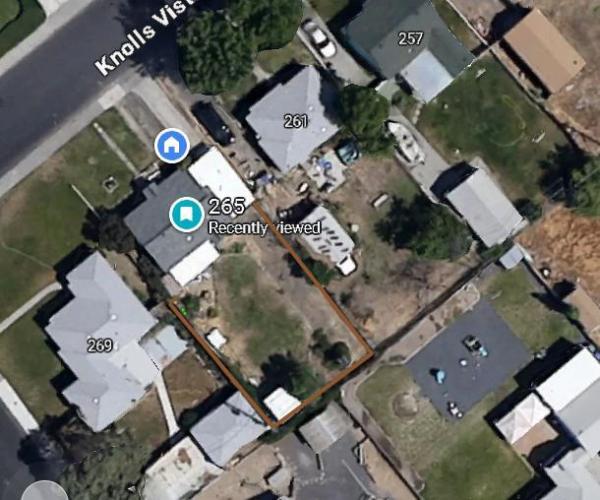
The plant was in Moses Lake, Washington. The supplied aerial map has north at the top, a brown backyard outline, and green dots along the west/left side near boundaries and structures. The map supports a useful morning-to-midday direct-light window with likely late-day fence or structure shade.
The displayed environmental context—~81°F estimated daytime air temperature, ~38% estimated ambient humidity, and ~53°F estimated nighttime air temperature—is a seasonal outdoor estimate for inland eastern Washington, not a recovered yard sensor reading. The natural-light schedule of Approx. 05:02–20:53 PDT (15.9 h daylight) describes approximate sunrise-to-sunset availability, while Estimated 8–9 h direct sun; backyard west-side placement, afternoon fence/structure shade likely is a separate map-based estimate of direct exposure at the plant.
No fertilizer formula, irrigation quantity, pest treatment, disease diagnosis, supplemental CO₂ use, or harvest-readiness conclusion is added unless the surviving record supports it. The goal is a complete, upload-ready Black Belts diary that remains honest about every estimate, missing photograph, and uncertain measurement.
likes
comments
Share
12
Week 12. Vegetation10h ago
86.36 cm
Height
16 hrs
Light Schedule
29 °C
Day Air Temp
Weak
Smell
37 %
Air Humidity
13 °C
Night Air Temp
3.79 liters
Pot Size
MissLeonard94 This is GrowDiaries calendar Week 13, running Monday, June 22, 2026, through Sunday, June 28, 2026. The plant-age field is Day 81–87, using April 3, 2026 as Day 1. Week 1 is germination, Week 2 is Vegetation Week 1, and Black Belts begins Flowering Week 1 in the August 10–16 calendar week because unmistakable white pistils were photographed August 16.
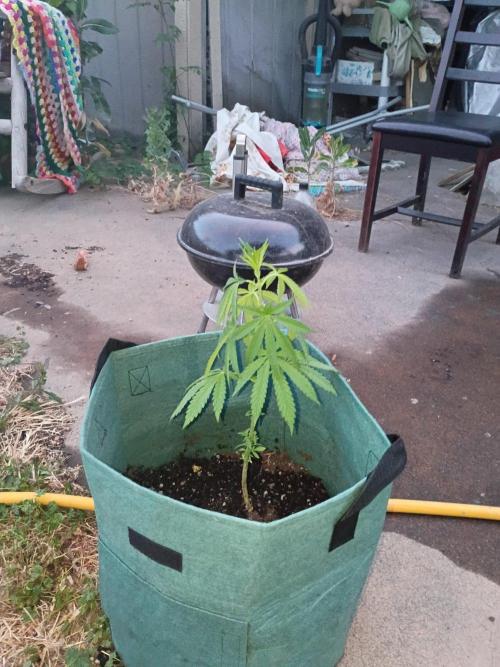
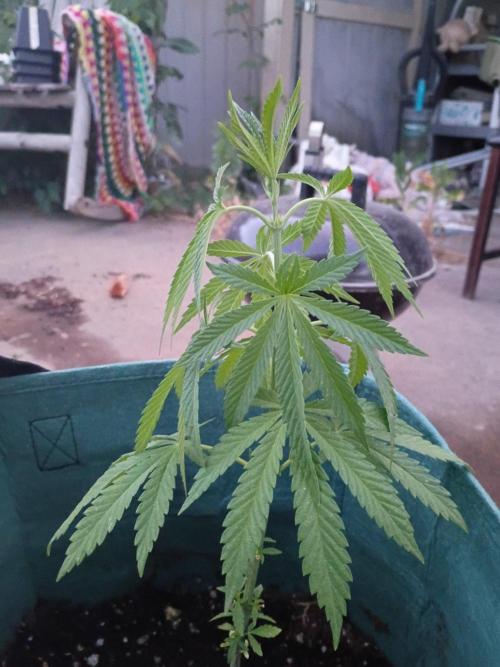
The June 22 photograph shows a tall, drooping Black Belts still in the smaller fabric pot. On June 26, the plant was moved into a seven-gallon fabric pot. The two June 26 originals show the larger green container and the plant's increasingly vertical form.
This week includes 3 verified original images. Captions preserve the source date, original filename, and the evidence used to identify Black Belts. Shared comparison photographs appear only when they clarify Black Belts' height, structure, or flowering progress; they do not merge the two plants into one diary.
The image-based height field reads ~28–36 in. Its evidence basis is: Visual range spanning the June 22 drooped plant and June 26 seven-gallon-pot views. The container field reads Small fabric pot through Jun 25; 7-gallon fabric pot from Jun 26, and the substrate field reads Soil + perlite mix; exact ratio not recorded. These distinctions preserve the documented April 20 fabric-pot transplant, the June 26 move into a seven-gallon fabric pot, and the permanent July 8 ground transplant.
The plant was in Moses Lake, Washington. The supplied aerial map has north at the top, a brown backyard outline, and green dots along the west/left side near boundaries and structures. The map supports a useful morning-to-midday direct-light window with likely late-day fence or structure shade.
The displayed environmental context—~84°F estimated daytime air temperature, ~37% estimated ambient humidity, and ~55°F estimated nighttime air temperature—is a seasonal outdoor estimate for inland eastern Washington, not a recovered yard sensor reading. The natural-light schedule of Approx. 05:00–20:57 PDT (15.9 h daylight) describes approximate sunrise-to-sunset availability, while Estimated 8–9 h direct sun; backyard placement with fence/structure shade later in day is a separate map-based estimate of direct exposure at the plant.
No fertilizer formula, irrigation quantity, pest treatment, disease diagnosis, supplemental CO₂ use, or harvest-readiness conclusion is added unless the surviving record supports it. The goal is a complete, upload-ready Black Belts diary that remains honest about every estimate, missing photograph, and uncertain measurement.
likes
comments
Share
Used techniques
Transplantation
Technique
13
Week 13. Vegetation10h ago
86.36 cm
Height
16 hrs
Light Schedule
31 °C
Day Air Temp
Weak
Smell
34 %
Air Humidity
14 °C
Night Air Temp
26.5 liters
Pot Size
MissLeonard94 This is GrowDiaries calendar Week 14, running Monday, June 29, 2026, through Sunday, July 5, 2026. The plant-age field is Day 88–94, using April 3, 2026 as Day 1. Week 1 is germination, Week 2 is Vegetation Week 1, and Black Belts begins Flowering Week 1 in the August 10–16 calendar week because unmistakable white pistils were photographed August 16.
No original photograph falls inside June 29–July 5. Black Belts was in the seven-gallon fabric pot during this entire week, between the June 26 pot-up and the July 8 crisis.
No verified Black Belts photograph survives for this week. The included image is a generated documentation card, not an AI reconstruction of the plant and not an original photograph. It exists solely to keep the Monday–Sunday diary complete while making the evidence gap unmistakable.
The image-based height field reads Not observable. Its evidence basis is: No original photo for June 29–July 5; last visible height was approximately 36 in. The container field reads 7-gallon fabric pot since Jun 26, and the substrate field reads Soil + perlite mix; exact ratio not recorded. These distinctions preserve the documented April 20 fabric-pot transplant, the June 26 move into a seven-gallon fabric pot, and the permanent July 8 ground transplant.
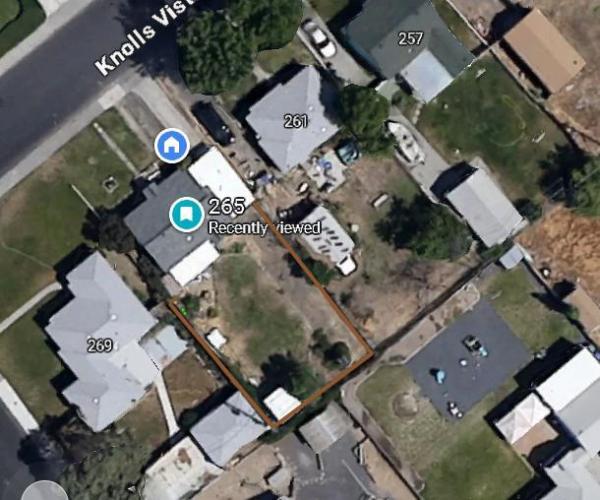
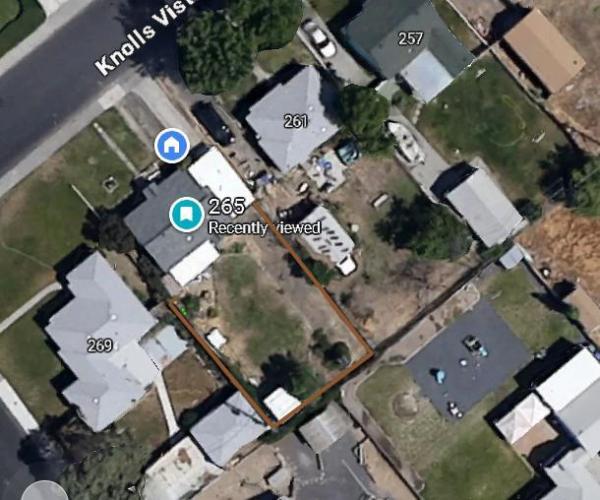
The plant was in Moses Lake, Washington. The supplied aerial map has north at the top, a brown backyard outline, and green dots along the west/left side near boundaries and structures. The map supports a useful morning-to-midday direct-light window with likely late-day fence or structure shade.
The displayed environmental context—~87°F estimated daytime air temperature, ~34% estimated ambient humidity, and ~58°F estimated nighttime air temperature—is a seasonal outdoor estimate for inland eastern Washington, not a recovered yard sensor reading. The natural-light schedule of Approx. 05:01–20:58 PDT (15.9 h daylight) describes approximate sunrise-to-sunset availability, while Estimated 8–9 h direct sun; ground position near backyard boundary is a separate map-based estimate of direct exposure at the plant.
No fertilizer formula, irrigation quantity, pest treatment, disease diagnosis, supplemental CO₂ use, or harvest-readiness conclusion is added unless the surviving record supports it. The goal is a complete, upload-ready Black Belts diary that remains honest about every estimate, missing photograph, and uncertain measurement.
likes
comments
Share
14
Week 14. Vegetation10h ago
93.98 cm
Height
16 hrs
Light Schedule
31 °C
Day Air Temp
Weak
Smell
33 %
Air Humidity
15 °C
Night Air Temp
MissLeonard94 This is GrowDiaries calendar Week 15, running Monday, July 6, 2026, through Sunday, July 12, 2026. The plant-age field is Day 95–101, using April 3, 2026 as Day 1. Week 1 is germination, Week 2 is Vegetation Week 1, and Black Belts begins Flowering Week 1 in the August 10–16 calendar week because unmistakable white pistils were photographed August 16.
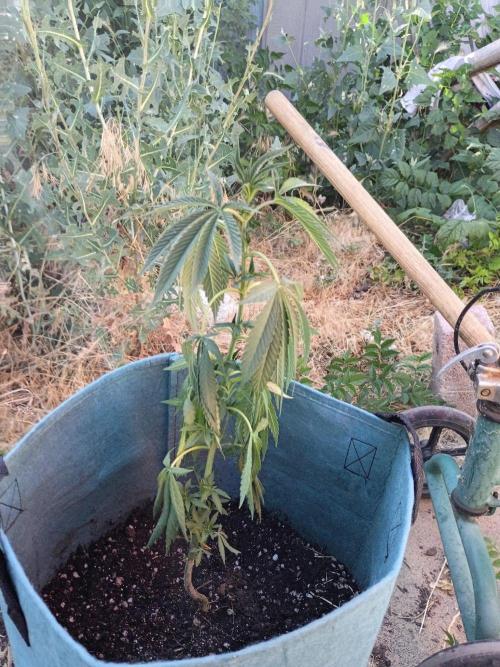
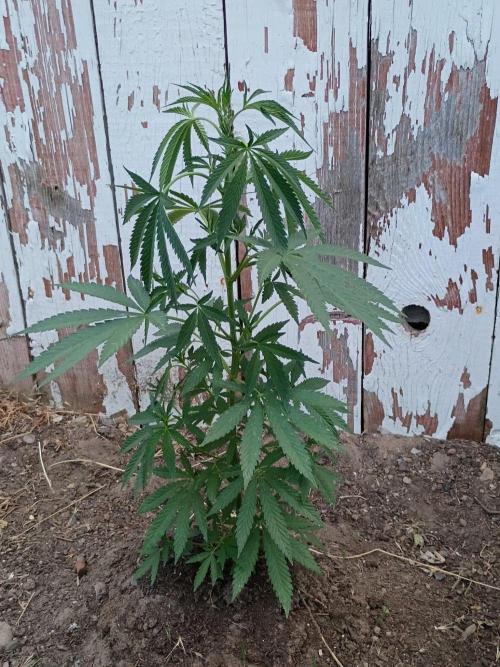
July 8 became the defining recovery event of the grow. Black Belts was severely drooped in the seven-gallon fabric pot, so she was transplanted directly into the ground. The observation record says she visibly stood back up within roughly twenty minutes. The surviving raw image in this package shows the severe pre-transplant droop; the recovery timing comes from the dated grow record rather than a bundled after photograph.
This week includes 1 verified original image. Captions preserve the source date, original filename, and the evidence used to identify Black Belts. Shared comparison photographs appear only when they clarify Black Belts' height, structure, or flowering progress; they do not merge the two plants into one diary.
The image-based height field reads ~35–38 in. Its evidence basis is: Visual estimate from the July 8 severely drooped seven-gallon-pot image; posture depresses apparent height. The container field reads 7-gallon fabric pot through Jul 8; transplanted into ground Jul 8, and the substrate field reads Soil + perlite in 7-gallon pot → native ground soil on Jul 8. These distinctions preserve the documented April 20 fabric-pot transplant, the June 26 move into a seven-gallon fabric pot, and the permanent July 8 ground transplant.
The plant was in Moses Lake, Washington. The supplied aerial map has north at the top, a brown backyard outline, and green dots along the west/left side near boundaries and structures. The map supports a useful morning-to-midday direct-light window with likely late-day fence or structure shade.
The displayed environmental context—~88°F estimated daytime air temperature, ~33% estimated ambient humidity, and ~59°F estimated nighttime air temperature—is a seasonal outdoor estimate for inland eastern Washington, not a recovered yard sensor reading. The natural-light schedule of Approx. 05:05–20:56 PDT (15.7 h daylight) describes approximate sunrise-to-sunset availability, while Estimated 8–9 h direct sun; ground plant receives long morning-to-afternoon window is a separate map-based estimate of direct exposure at the plant.
No fertilizer formula, irrigation quantity, pest treatment, disease diagnosis, supplemental CO₂ use, or harvest-readiness conclusion is added unless the surviving record supports it. The goal is a complete, upload-ready Black Belts diary that remains honest about every estimate, missing photograph, and uncertain measurement.
likes
comments
Share
Used techniques
Transplantation
Technique
15
Week 15. Vegetation10h ago
119.38 cm
Height
16 hrs
Light Schedule
32 °C
Day Air Temp
Weak
Smell
32 %
Air Humidity
16 °C
Night Air Temp
MissLeonard94 This is GrowDiaries calendar Week 16, running Monday, July 13, 2026, through Sunday, July 19, 2026. The plant-age field is Day 102–108, using April 3, 2026 as Day 1. Week 1 is germination, Week 2 is Vegetation Week 1, and Black Belts begins Flowering Week 1 in the August 10–16 calendar week because unmistakable white pistils were photographed August 16.
By July 15, Black Belts was upright and actively growing in the ground. The full-plant photograph shows a dramatic change from the July 8 collapse and makes the tall central leader and open branch spacing easy to see.
This week includes 1 verified original image. Captions preserve the source date, original filename, and the evidence used to identify Black Belts. Shared comparison photographs appear only when they clarify Black Belts' height, structure, or flowering progress; they do not merge the two plants into one diary.
The image-based height field reads ~45–48 in. Its evidence basis is: Visual estimate from the July 15 full-plant original, using fence boards and ground line as rough scale. The container field reads In ground since Jul 8, and the substrate field reads Native ground soil; amendments not documented. These distinctions preserve the documented April 20 fabric-pot transplant, the June 26 move into a seven-gallon fabric pot, and the permanent July 8 ground transplant.
The plant was in Moses Lake, Washington. The supplied aerial map has north at the top, a brown backyard outline, and green dots along the west/left side near boundaries and structures. The map supports a useful morning-to-midday direct-light window with likely late-day fence or structure shade.
The displayed environmental context—~89°F estimated daytime air temperature, ~32% estimated ambient humidity, and ~60°F estimated nighttime air temperature—is a seasonal outdoor estimate for inland eastern Washington, not a recovered yard sensor reading. The natural-light schedule of Approx. 05:10–20:53 PDT (15.5 h daylight) describes approximate sunrise-to-sunset availability, while Estimated 8–9 h direct sun; backyard exposure with later boundary shade is a separate map-based estimate of direct exposure at the plant.
No fertilizer formula, irrigation quantity, pest treatment, disease diagnosis, supplemental CO₂ use, or harvest-readiness conclusion is added unless the surviving record supports it. The goal is a complete, upload-ready Black Belts diary that remains honest about every estimate, missing photograph, and uncertain measurement.
likes
comments
Share
16
Week 16. Vegetation10h ago
139.7 cm
Height
15 hrs
Light Schedule
32 °C
Day Air Temp
Weak
Smell
31 %
Air Humidity
16 °C
Night Air Temp
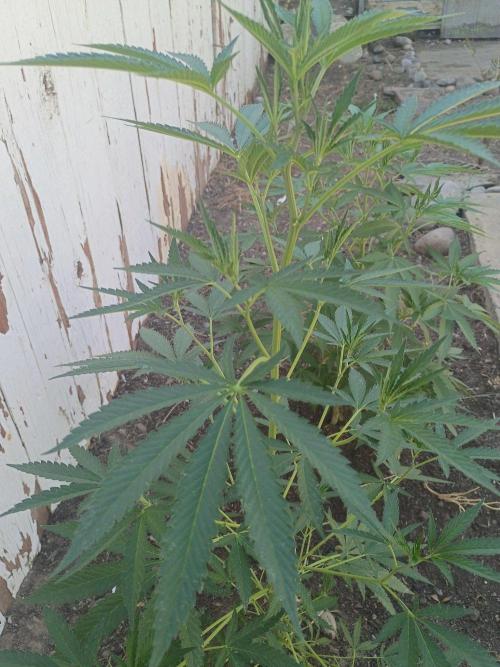
MissLeonard94 This is GrowDiaries calendar Week 17, running Monday, July 20, 2026, through Sunday, July 26, 2026. The plant-age field is Day 109–115, using April 3, 2026 as Day 1. Week 1 is germination, Week 2 is Vegetation Week 1, and Black Belts begins Flowering Week 1 in the August 10–16 calendar week because unmistakable white pistils were photographed August 16.
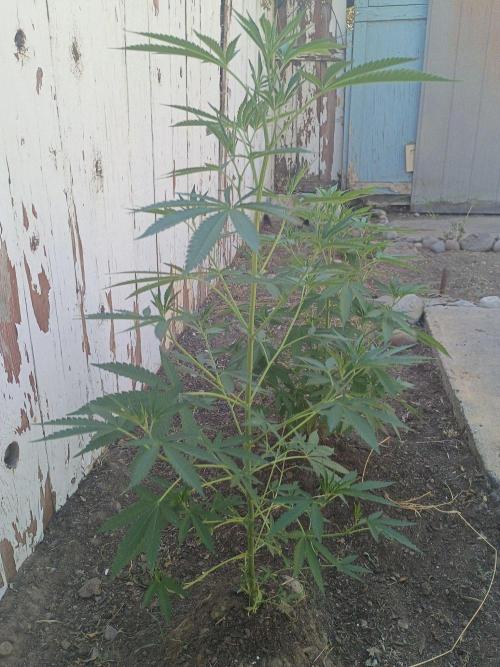
The July 24 photographs show Black Belts developing a pronounced tree-like form. Long internodes, widely separated branches, and a dominant central leader distinguished her from the shorter, denser RS11 beside her.
This week includes 2 verified original images. Captions preserve the source date, original filename, and the evidence used to identify Black Belts. Shared comparison photographs appear only when they clarify Black Belts' height, structure, or flowering progress; they do not merge the two plants into one diary.
The image-based height field reads ~54–58 in. Its evidence basis is: Visual estimate from July 24 full and closer views; fence provides only approximate scale. The container field reads In ground since Jul 8, and the substrate field reads Native ground soil; amendments not documented. These distinctions preserve the documented April 20 fabric-pot transplant, the June 26 move into a seven-gallon fabric pot, and the permanent July 8 ground transplant.
The plant was in Moses Lake, Washington. The supplied aerial map has north at the top, a brown backyard outline, and green dots along the west/left side near boundaries and structures. The map supports a useful morning-to-midday direct-light window with likely late-day fence or structure shade.
The displayed environmental context—~90°F estimated daytime air temperature, ~31% estimated ambient humidity, and ~61°F estimated nighttime air temperature—is a seasonal outdoor estimate for inland eastern Washington, not a recovered yard sensor reading. The natural-light schedule of Approx. 05:16–20:48 PDT (15.3 h daylight) describes approximate sunrise-to-sunset availability, while Estimated 7.5–8.5 h direct sun; open yard but boundary shade later in day is a separate map-based estimate of direct exposure at the plant.
No fertilizer formula, irrigation quantity, pest treatment, disease diagnosis, supplemental CO₂ use, or harvest-readiness conclusion is added unless the surviving record supports it. The goal is a complete, upload-ready Black Belts diary that remains honest about every estimate, missing photograph, and uncertain measurement.
likes
comments
Share
17
Week 17. Vegetation10h ago
152.4 cm
Height
15 hrs
Light Schedule
32 °C
Day Air Temp
Normal
Smell
32 %
Air Humidity
16 °C
Night Air Temp
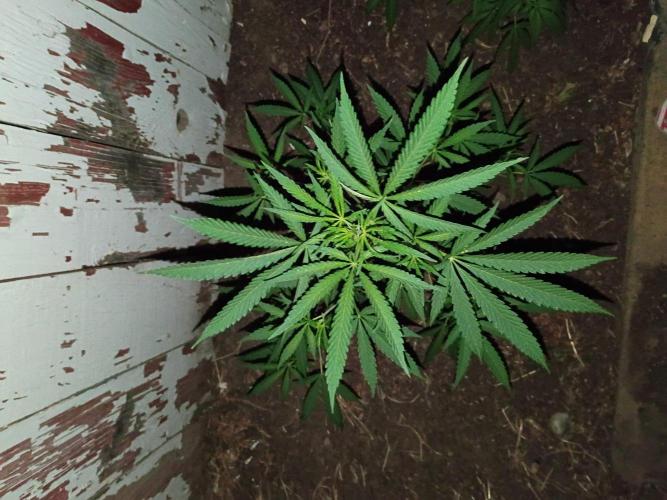
MissLeonard94 This is GrowDiaries calendar Week 18, running Monday, July 27, 2026, through Sunday, August 2, 2026. The plant-age field is Day 116–122, using April 3, 2026 as Day 1. Week 1 is germination, Week 2 is Vegetation Week 1, and Black Belts begins Flowering Week 1 in the August 10–16 calendar week because unmistakable white pistils were photographed August 16.
The July 27 nighttime overhead photograph records Black Belts' after-dark leaf posture. Her open canopy and long branches are visible even from above, though this angle does not provide a dependable standalone height measurement.
This week includes 1 verified original image. Captions preserve the source date, original filename, and the evidence used to identify Black Belts. Shared comparison photographs appear only when they clarify Black Belts' height, structure, or flowering progress; they do not merge the two plants into one diary.
The image-based height field reads ~56–60 in. Its evidence basis is: Low-confidence visual estimate from July 27 nighttime overhead view, anchored to July 24 height. The container field reads In ground since Jul 8, and the substrate field reads Native ground soil; amendments not documented. These distinctions preserve the documented April 20 fabric-pot transplant, the June 26 move into a seven-gallon fabric pot, and the permanent July 8 ground transplant.
The plant was in Moses Lake, Washington. The supplied aerial map has north at the top, a brown backyard outline, and green dots along the west/left side near boundaries and structures. The map supports a useful morning-to-midday direct-light window with likely late-day fence or structure shade.
The displayed environmental context—~89°F estimated daytime air temperature, ~32% estimated ambient humidity, and ~60°F estimated nighttime air temperature—is a seasonal outdoor estimate for inland eastern Washington, not a recovered yard sensor reading. The natural-light schedule of Approx. 05:23–20:41 PDT (15.0 h daylight) describes approximate sunrise-to-sunset availability, while Estimated 7.5–8.5 h direct sun; daytime estimate only; nighttime photo shows posture is a separate map-based estimate of direct exposure at the plant.
No fertilizer formula, irrigation quantity, pest treatment, disease diagnosis, supplemental CO₂ use, or harvest-readiness conclusion is added unless the surviving record supports it. The goal is a complete, upload-ready Black Belts diary that remains honest about every estimate, missing photograph, and uncertain measurement.
likes
comments
Share
18
Week 18. Vegetation10h ago
160.02 cm
Height
15 hrs
Light Schedule
32 °C
Day Air Temp
Normal
Smell
33 %
Air Humidity
16 °C
Night Air Temp
MissLeonard94 This is GrowDiaries calendar Week 19, running Monday, August 3, 2026, through Sunday, August 9, 2026. The plant-age field is Day 123–129, using April 3, 2026 as Day 1. Week 1 is germination, Week 2 is Vegetation Week 1, and Black Belts begins Flowering Week 1 in the August 10–16 calendar week because unmistakable white pistils were photographed August 16.
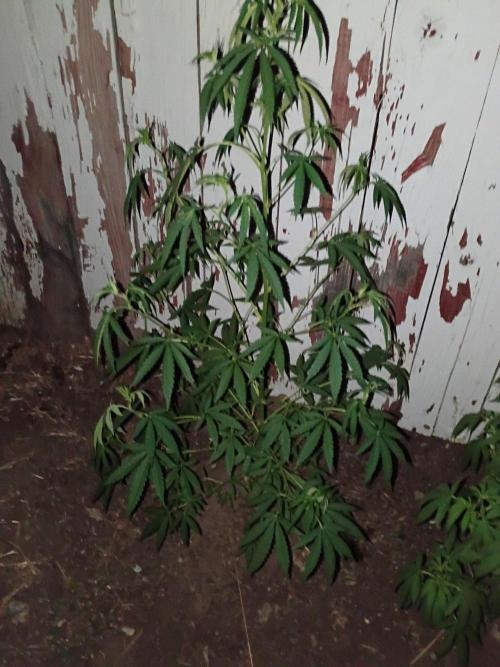
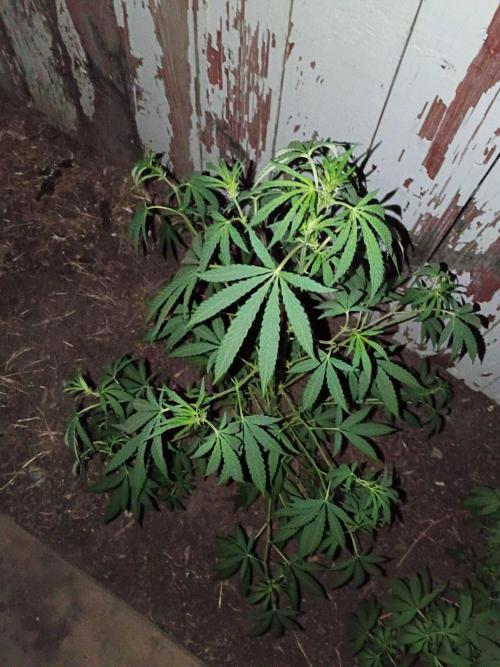
The August 4 nighttime images show dramatic leaf droop, while the August 5 daylight images show the plant recovered and upright. The paired checkpoints demonstrate that the alarming posture was recurring nighttime behavior rather than a persistent collapse. A comparison image also documents the widening height difference between Black Belts and RS11.
This week includes 5 verified original images. Captions preserve the source date, original filename, and the evidence used to identify Black Belts. Shared comparison photographs appear only when they clarify Black Belts' height, structure, or flowering progress; they do not merge the two plants into one diary.
The image-based height field reads ~58–63 in. Its evidence basis is: Visual estimate from August 4 night and August 5 daylight images; includes posture-related range. The container field reads In ground since Jul 8, and the substrate field reads Native ground soil; amendments not documented. These distinctions preserve the documented April 20 fabric-pot transplant, the June 26 move into a seven-gallon fabric pot, and the permanent July 8 ground transplant.
The plant was in Moses Lake, Washington. The supplied aerial map has north at the top, a brown backyard outline, and green dots along the west/left side near boundaries and structures. The map supports a useful morning-to-midday direct-light window with likely late-day fence or structure shade.
The displayed environmental context—~89°F estimated daytime air temperature, ~33% estimated ambient humidity, and ~60°F estimated nighttime air temperature—is a seasonal outdoor estimate for inland eastern Washington, not a recovered yard sensor reading. The natural-light schedule of Approx. 05:31–20:33 PDT (14.8 h daylight) describes approximate sunrise-to-sunset availability, while Estimated 7–8.5 h direct sun; backyard boundary shade likely later in day is a separate map-based estimate of direct exposure at the plant.
No fertilizer formula, irrigation quantity, pest treatment, disease diagnosis, supplemental CO₂ use, or harvest-readiness conclusion is added unless the surviving record supports it. The goal is a complete, upload-ready Black Belts diary that remains honest about every estimate, missing photograph, and uncertain measurement.
likes
comments
Share
19
Week 19. Flowering10h ago
167.64 cm
Height
15 hrs
Light Schedule
31 °C
Day Air Temp
Normal
Smell
34 %
Air Humidity
15 °C
Night Air Temp
Nutrients 1
None
1.3 mll
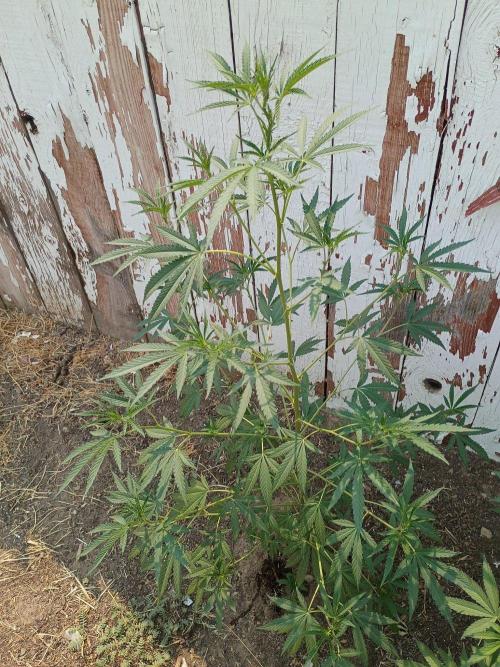
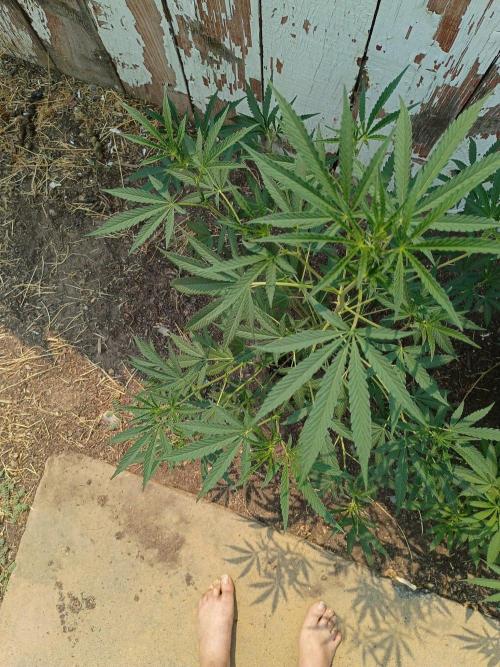
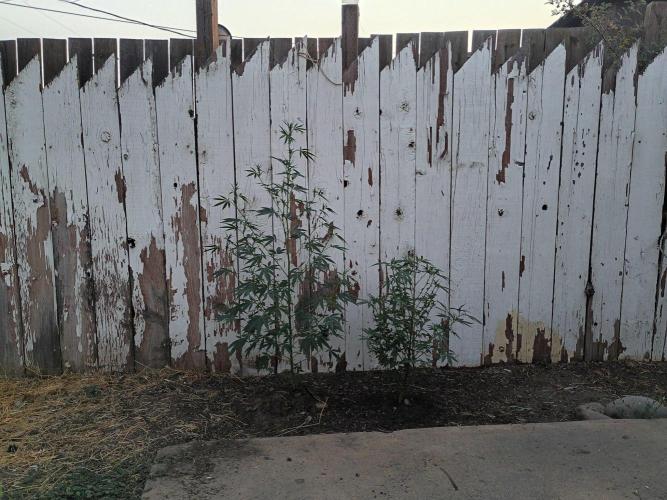
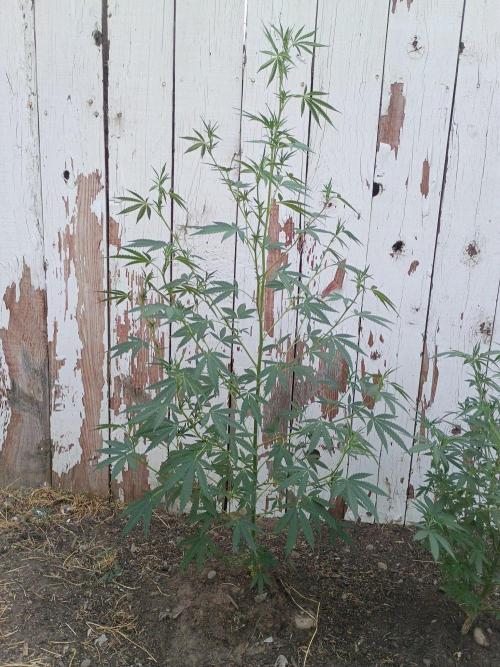
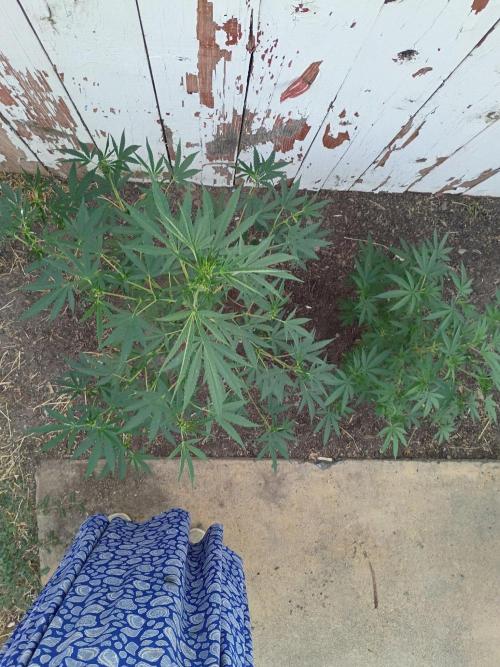
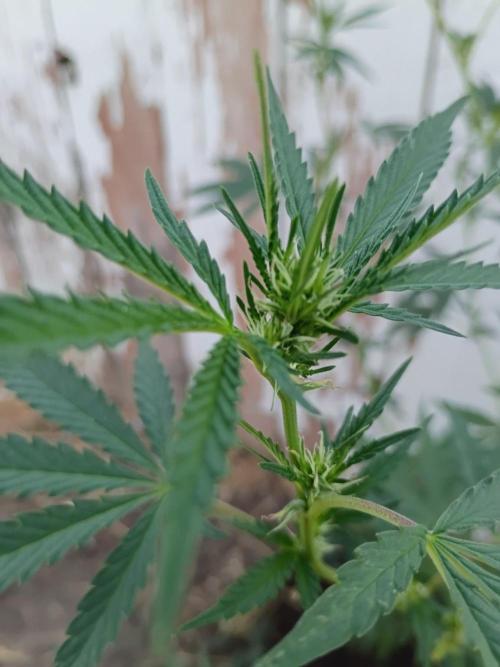
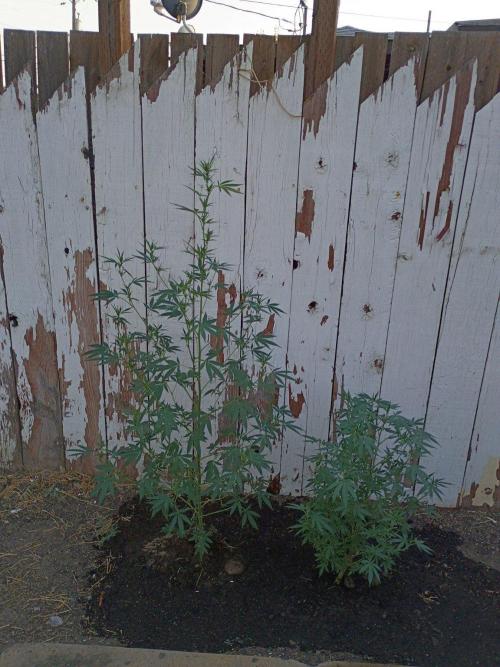
MissLeonard94 This is GrowDiaries calendar Week 20, running Monday, August 10, 2026, through Sunday, August 16, 2026. The plant-age field is Day 130–136, using April 3, 2026 as Day 1. Week 1 is germination, Week 2 is Vegetation Week 1, and Black Belts begins Flowering Week 1 in the August 10–16 calendar week because unmistakable white pistils were photographed August 16.
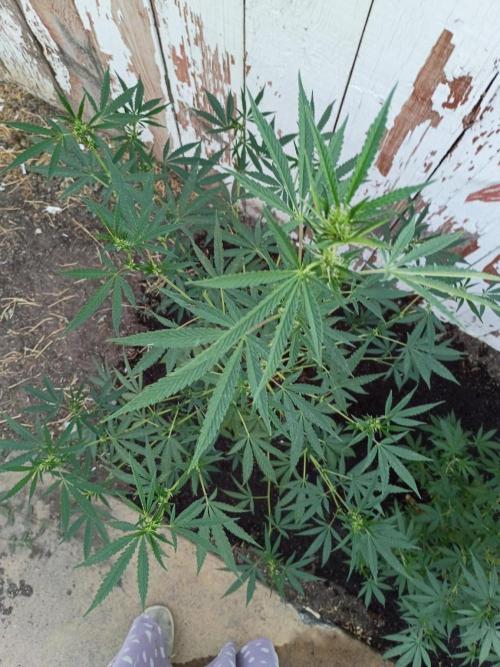
By August 11, Black Belts had become the tall plant of the pair, with a strong central leader and a sparse vertical framework. The August 16 photographs document the first unmistakable white pistils, so this calendar week is counted as Flowering Week 1 rather than another vegetative week.
This week includes 6 verified original images. Captions preserve the source date, original filename, and the evidence used to identify Black Belts. Shared comparison photographs appear only when they clarify Black Belts' height, structure, or flowering progress; they do not merge the two plants into one diary.
The image-based height field reads ~64–68 in. Its evidence basis is: Visual estimate from August 11 full-plant/comparison views and August 16 flowering checkpoint. The container field reads In ground since Jul 8, and the substrate field reads Native ground soil; amendments not documented. These distinctions preserve the documented April 20 fabric-pot transplant, the June 26 move into a seven-gallon fabric pot, and the permanent July 8 ground transplant.
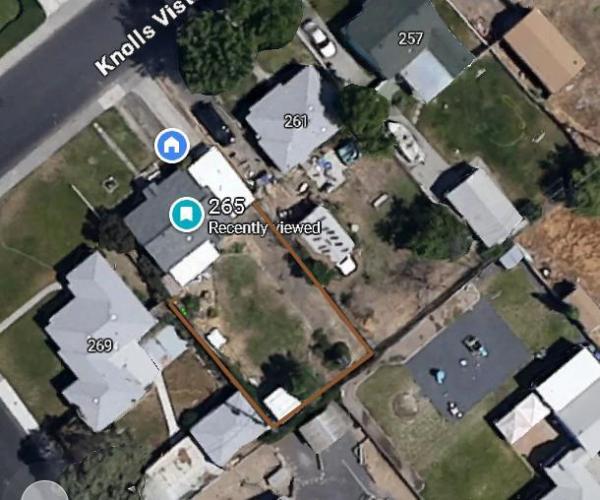
The plant was in Moses Lake, Washington. The supplied aerial map has north at the top, a brown backyard outline, and green dots along the west/left side near boundaries and structures. The map supports a useful morning-to-midday direct-light window with likely late-day fence or structure shade.
The displayed environmental context—~88°F estimated daytime air temperature, ~34% estimated ambient humidity, and ~59°F estimated nighttime air temperature—is a seasonal outdoor estimate for inland eastern Washington, not a recovered yard sensor reading. The natural-light schedule of Approx. 05:40–20:24 PDT (14.5 h daylight) describes approximate sunrise-to-sunset availability, while Estimated 7–8 h direct sun; morning-to-midday light with later fence/structure shade is a separate map-based estimate of direct exposure at the plant.
No fertilizer formula, irrigation quantity, pest treatment, disease diagnosis, supplemental CO₂ use, or harvest-readiness conclusion is added unless the surviving record supports it. The goal is a complete, upload-ready Black Belts diary that remains honest about every estimate, missing photograph, and uncertain measurement.
likes
comments
Share
20
Week 20. Flowering10h ago
177.8 cm
Height
14 hrs
Light Schedule
30 °C
Day Air Temp
Normal
Smell
36 %
Air Humidity
14 °C
Night Air Temp
Nutrients 1
None
1.3 mll
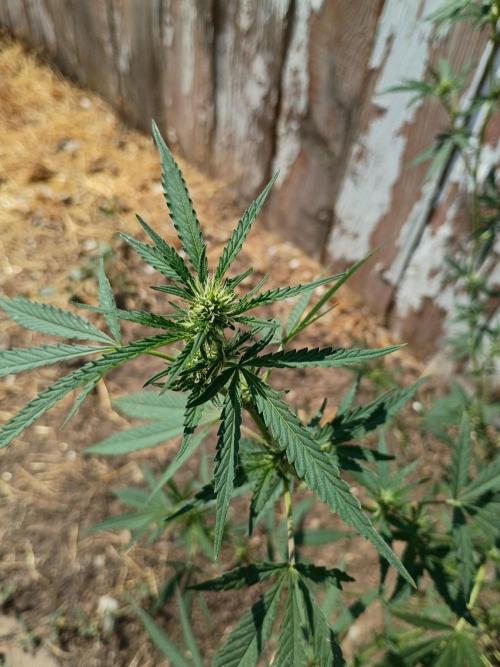
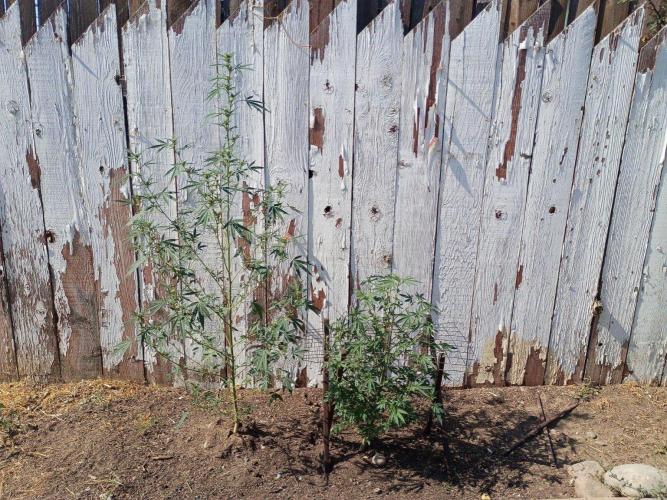
MissLeonard94 This is GrowDiaries calendar Week 21, running Monday, August 17, 2026, through Sunday, August 23, 2026. The plant-age field is Day 137–143, using April 3, 2026 as Day 1. Week 1 is germination, Week 2 is Vegetation Week 1, and Black Belts begins Flowering Week 1 in the August 10–16 calendar week because unmistakable white pistils were photographed August 16.
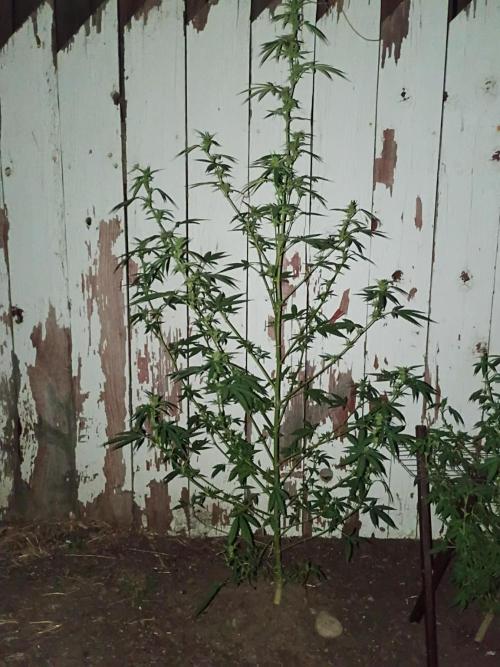
Flowering became established across Black Belts during August 17–23. The August 22 human-height comparison provides the strongest scale reference in the diary, and the August 23 daylight set shows multiple developing bud sites distributed from lower branches through the main leader.
This week includes 9 verified original images. Captions preserve the source date, original filename, and the evidence used to identify Black Belts. Shared comparison photographs appear only when they clarify Black Belts' height, structure, or flowering progress; they do not merge the two plants into one diary.
The image-based height field reads ~68–72 in. Its evidence basis is: Visual estimate from August 22 human-height comparison and August 23 daylight originals. The container field reads In ground since Jul 8, and the substrate field reads Native ground soil; amendments not documented. These distinctions preserve the documented April 20 fabric-pot transplant, the June 26 move into a seven-gallon fabric pot, and the permanent July 8 ground transplant.
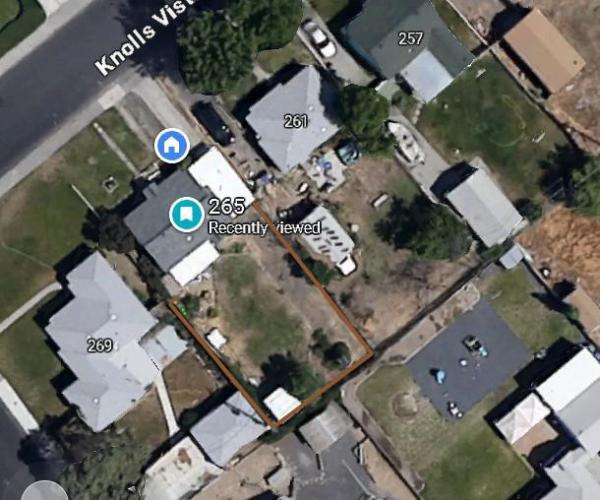
The plant was in Moses Lake, Washington. The supplied aerial map has north at the top, a brown backyard outline, and green dots along the west/left side near boundaries and structures. The map supports a useful morning-to-midday direct-light window with likely late-day fence or structure shade.
The displayed environmental context—~86°F estimated daytime air temperature, ~36% estimated ambient humidity, and ~57°F estimated nighttime air temperature—is a seasonal outdoor estimate for inland eastern Washington, not a recovered yard sensor reading. The natural-light schedule of Approx. 05:49–20:14 PDT (14.1 h daylight) describes approximate sunrise-to-sunset availability, while Estimated 6.5–7.5 h direct sun; west-side backyard with afternoon boundary shade is a separate map-based estimate of direct exposure at the plant.
No fertilizer formula, irrigation quantity, pest treatment, disease diagnosis, supplemental CO₂ use, or harvest-readiness conclusion is added unless the surviving record supports it. The goal is a complete, upload-ready Black Belts diary that remains honest about every estimate, missing photograph, and uncertain measurement.
likes
comments
Share
Used techniques
Defoliation
Technique
21
Week 21. Flowering10h ago
185.42 cm
Height
14 hrs
Light Schedule
29 °C
Day Air Temp
Normal
Smell
38 %
Air Humidity
13 °C
Night Air Temp
Nutrients 1
None
1.3 mll
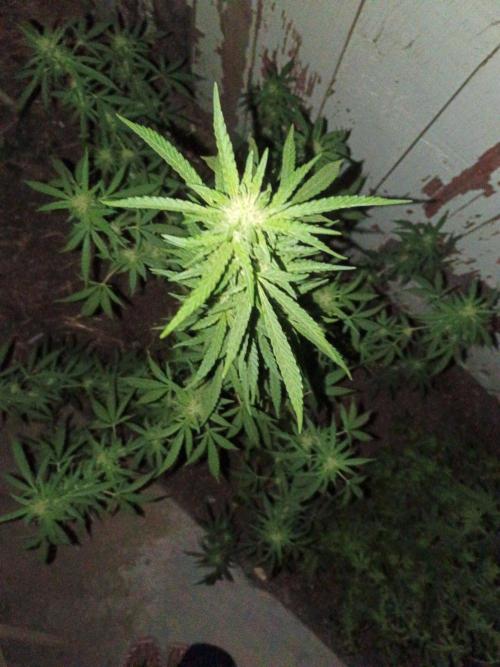
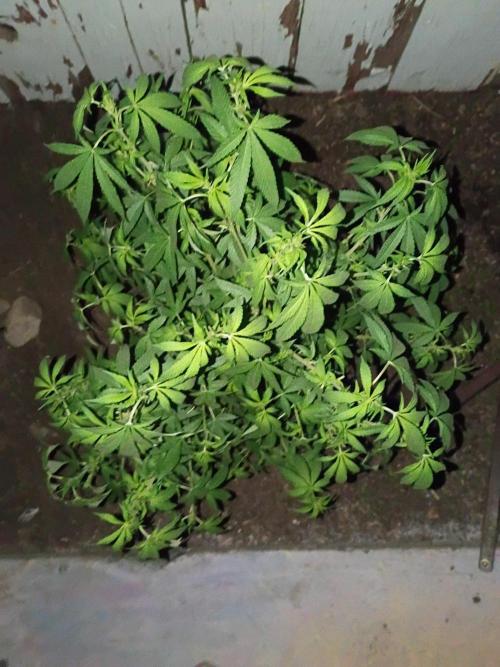
MissLeonard94 This is GrowDiaries calendar Week 22, running Monday, August 24, 2026, through Sunday, August 30, 2026. The plant-age field is Day 144–150, using April 3, 2026 as Day 1. Week 1 is germination, Week 2 is Vegetation Week 1, and Black Belts begins Flowering Week 1 in the August 10–16 calendar week because unmistakable white pistils were photographed August 16.
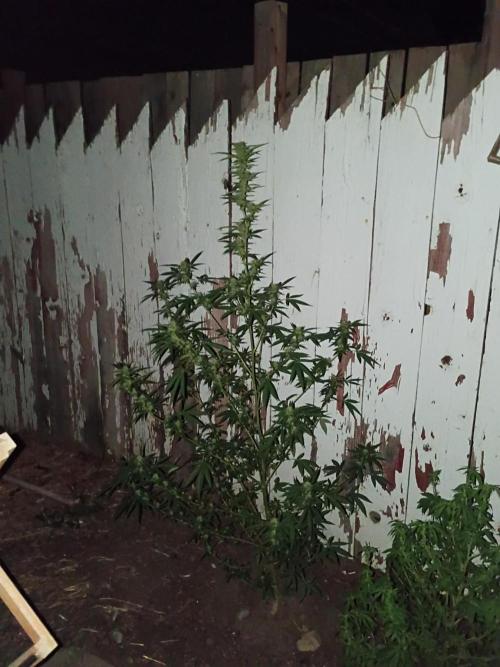
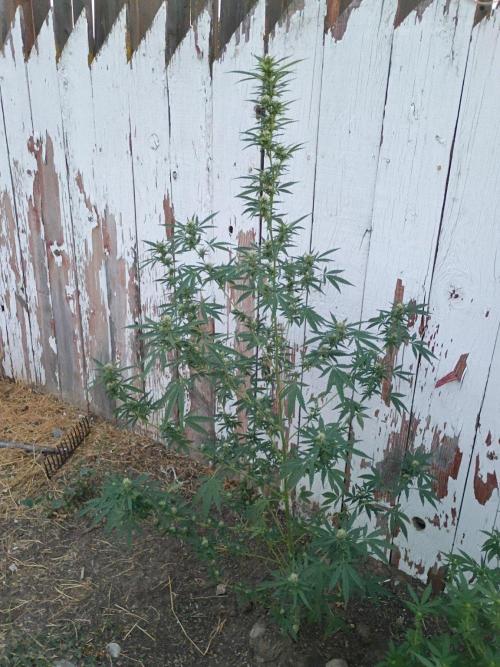
The August 29 nighttime photographs show flower clusters gaining definition along the central cola and side branches. Fresh white pistils remained dominant, and the plant's open structure continued to expose individual sites clearly.
This week includes 2 verified original images. Captions preserve the source date, original filename, and the evidence used to identify Black Belts. Shared comparison photographs appear only when they clarify Black Belts' height, structure, or flowering progress; they do not merge the two plants into one diary.
The image-based height field reads ~72–75 in. Its evidence basis is: Visual estimate from August 29 nighttime originals; camera angle makes a range more honest. The container field reads In ground since Jul 8, and the substrate field reads Native ground soil; amendments not documented. These distinctions preserve the documented April 20 fabric-pot transplant, the June 26 move into a seven-gallon fabric pot, and the permanent July 8 ground transplant.
The plant was in Moses Lake, Washington. The supplied aerial map has north at the top, a brown backyard outline, and green dots along the west/left side near boundaries and structures. The map supports a useful morning-to-midday direct-light window with likely late-day fence or structure shade.
The displayed environmental context—~84°F estimated daytime air temperature, ~38% estimated ambient humidity, and ~55°F estimated nighttime air temperature—is a seasonal outdoor estimate for inland eastern Washington, not a recovered yard sensor reading. The natural-light schedule of Approx. 05:59–20:04 PDT (13.8 h daylight) describes approximate sunrise-to-sunset availability, while Estimated 6.5–7.5 h direct sun; backyard boundary shade likely later in day is a separate map-based estimate of direct exposure at the plant.
No fertilizer formula, irrigation quantity, pest treatment, disease diagnosis, supplemental CO₂ use, or harvest-readiness conclusion is added unless the surviving record supports it. The goal is a complete, upload-ready Black Belts diary that remains honest about every estimate, missing photograph, and uncertain measurement.
likes
comments
Share
22
Week 22. Flowering10h ago
195.58 cm
Height
13 hrs
Light Schedule
28 °C
Day Air Temp
Normal
Smell
40 %
Air Humidity
12 °C
Night Air Temp
Nutrients 1
None
1.3 mll
MissLeonard94 This is GrowDiaries calendar Week 23, running Monday, August 31, 2026, through Sunday, September 6, 2026. The plant-age field is Day 151–157, using April 3, 2026 as Day 1. Week 1 is germination, Week 2 is Vegetation Week 1, and Black Belts begins Flowering Week 1 in the August 10–16 calendar week because unmistakable white pistils were photographed August 16.
The September 1, 3, and 4 sets show rapid flower stacking. The central cola became more continuous, secondary buds thickened, and abundant fresh white pistils confirmed active development. Black Belts remained substantially ahead of RS11 in visible flower maturity.
This week includes 8 verified original images. Captions preserve the source date, original filename, and the evidence used to identify Black Belts. Shared comparison photographs appear only when they clarify Black Belts' height, structure, or flowering progress; they do not merge the two plants into one diary.
The image-based height field reads ~74–77 in. Its evidence basis is: Visual estimate from September 1, 3, and 4 originals; stretch appears to be slowing. The container field reads In ground since Jul 8, and the substrate field reads Native ground soil; amendments not documented. These distinctions preserve the documented April 20 fabric-pot transplant, the June 26 move into a seven-gallon fabric pot, and the permanent July 8 ground transplant.
The plant was in Moses Lake, Washington. The supplied aerial map has north at the top, a brown backyard outline, and green dots along the west/left side near boundaries and structures. The map supports a useful morning-to-midday direct-light window with likely late-day fence or structure shade.
The displayed environmental context—~82°F estimated daytime air temperature, ~40% estimated ambient humidity, and ~53°F estimated nighttime air temperature—is a seasonal outdoor estimate for inland eastern Washington, not a recovered yard sensor reading. The natural-light schedule of Approx. 06:09–19:53 PDT (13.3 h daylight) describes approximate sunrise-to-sunset availability, while Estimated 6–7.5 h direct sun; morning-to-midday exposure, late-day shade likely is a separate map-based estimate of direct exposure at the plant.
No fertilizer formula, irrigation quantity, pest treatment, disease diagnosis, supplemental CO₂ use, or harvest-readiness conclusion is added unless the surviving record supports it. The goal is a complete, upload-ready Black Belts diary that remains honest about every estimate, missing photograph, and uncertain measurement.
likes
comments
Share
23
Week 23. Flowering10h ago
198.12 cm
Height
13 hrs
Light Schedule
26 °C
Day Air Temp
Normal
Smell
42 %
Air Humidity
10 °C
Night Air Temp
Nutrients 1
None
1.3 mll
MissLeonard94 This is GrowDiaries calendar Week 24, running Monday, September 7, 2026, through Sunday, September 13, 2026. The plant-age field is Day 158–164, using April 3, 2026 as Day 1. Week 1 is germination, Week 2 is Vegetation Week 1, and Black Belts begins Flowering Week 1 in the August 10–16 calendar week because unmistakable white pistils were photographed August 16.
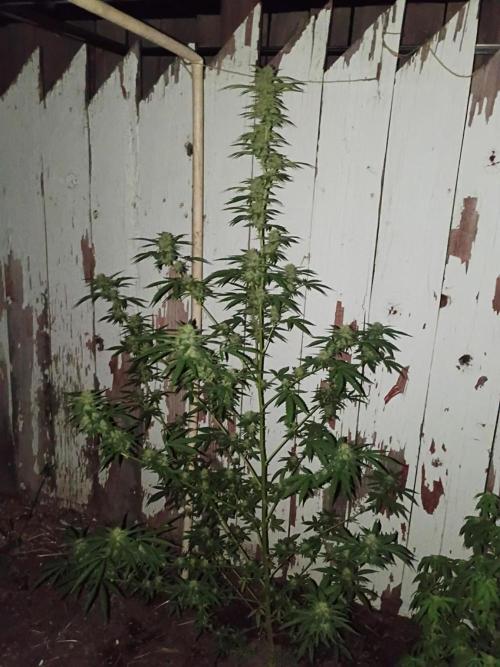
The September 9 and September 11 photographs show a thicker central cola and more developed secondary flower clusters. On September 11, Jamie removed interior and lower foliage. The package preserves both the pre-trim plant and the later post-trim branch views so the structural change remains part of the diary instead of disappearing from the record.
This week includes 8 verified original images. Captions preserve the source date, original filename, and the evidence used to identify Black Belts. Shared comparison photographs appear only when they clarify Black Belts' height, structure, or flowering progress; they do not merge the two plants into one diary.
The image-based height field reads ~75–78 in. Its evidence basis is: Visual estimate from September 9 and September 11 full-plant views; post-trim images do not change height. The container field reads In ground since Jul 8, and the substrate field reads Native ground soil; amendments not documented. These distinctions preserve the documented April 20 fabric-pot transplant, the June 26 move into a seven-gallon fabric pot, and the permanent July 8 ground transplant.
The plant was in Moses Lake, Washington. The supplied aerial map has north at the top, a brown backyard outline, and green dots along the west/left side near boundaries and structures. The map supports a useful morning-to-midday direct-light window with likely late-day fence or structure shade.
The displayed environmental context—~79°F estimated daytime air temperature, ~42% estimated ambient humidity, and ~50°F estimated nighttime air temperature—is a seasonal outdoor estimate for inland eastern Washington, not a recovered yard sensor reading. The natural-light schedule of Approx. 06:19–19:42 PDT (13.0 h daylight) describes approximate sunrise-to-sunset availability, while Estimated 5.5–7 h direct sun; late-season morning-to-midday exposure with boundary shade is a separate map-based estimate of direct exposure at the plant.
No fertilizer formula, irrigation quantity, pest treatment, disease diagnosis, supplemental CO₂ use, or harvest-readiness conclusion is added unless the surviving record supports it. The goal is a complete, upload-ready Black Belts diary that remains honest about every estimate, missing photograph, and uncertain measurement.
likes
comments
Share
24
Week 24. Flowering9h ago
198.12 cm
Height
13 hrs
Light Schedule
26 °C
Day Air Temp
Strong
Smell
42 %
Air Humidity
10 °C
Night Air Temp
Nutrients 1
None
1.3 mll
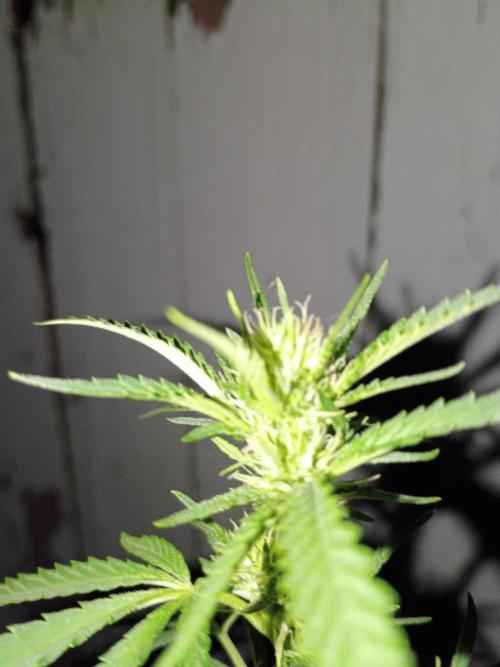
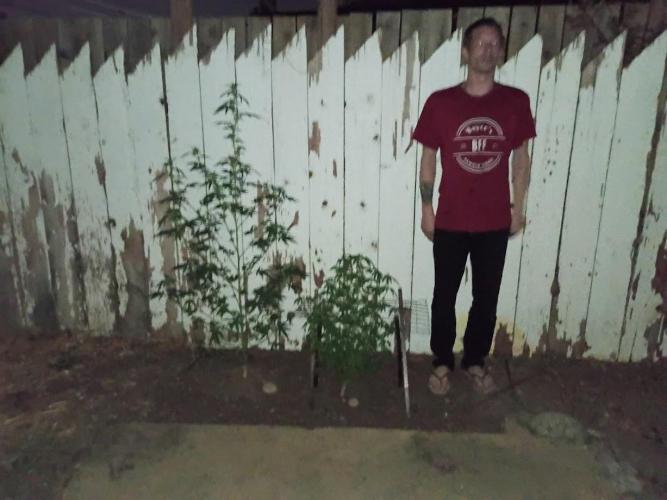
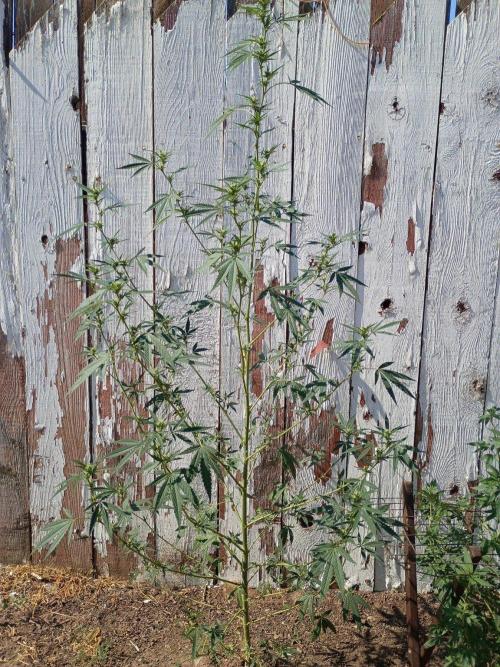
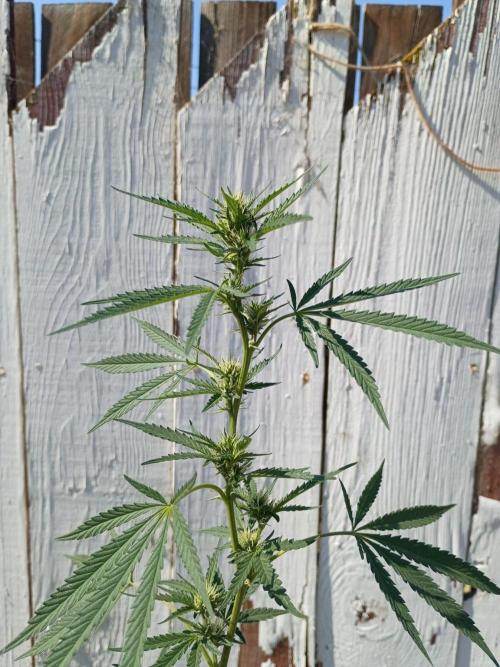
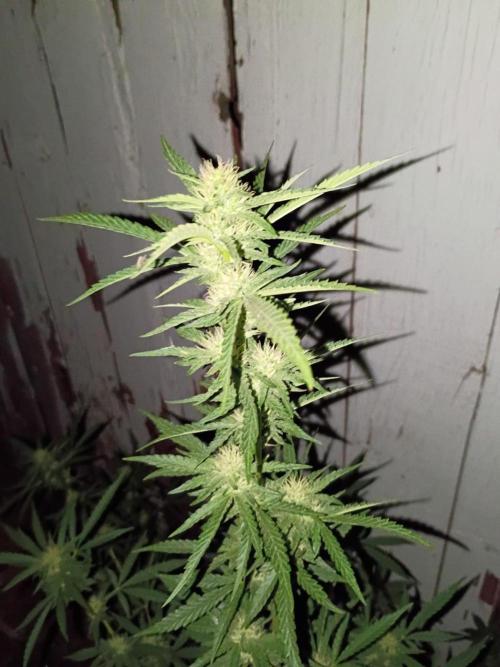
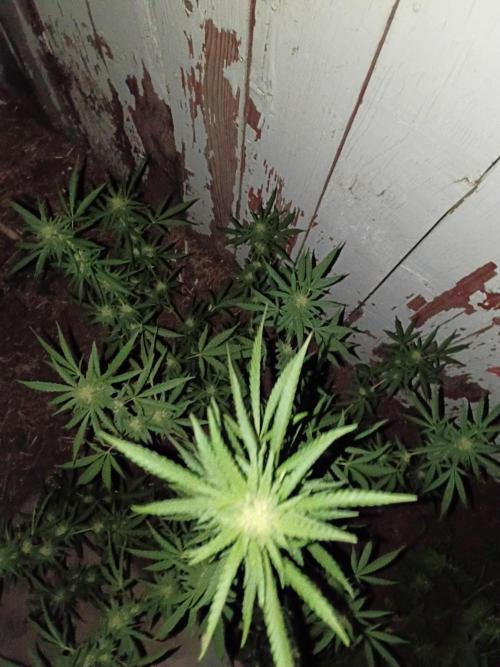
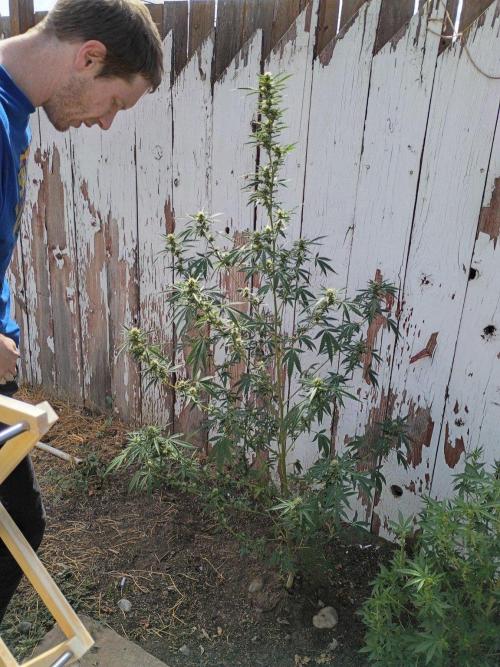
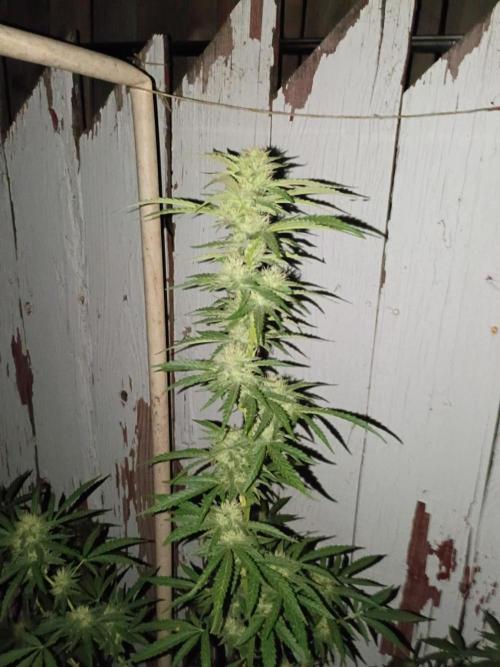
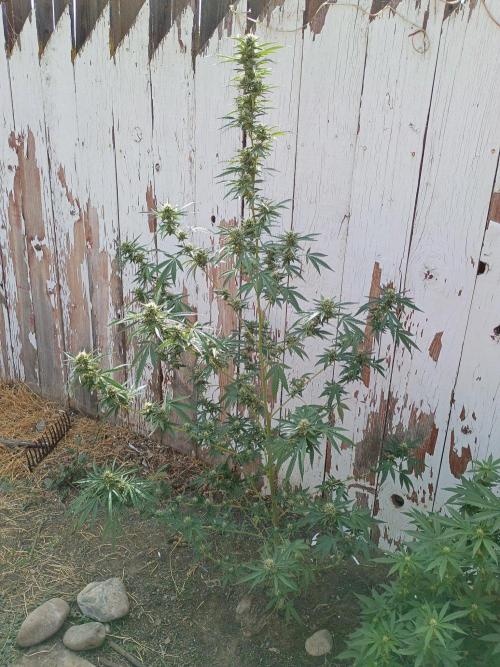
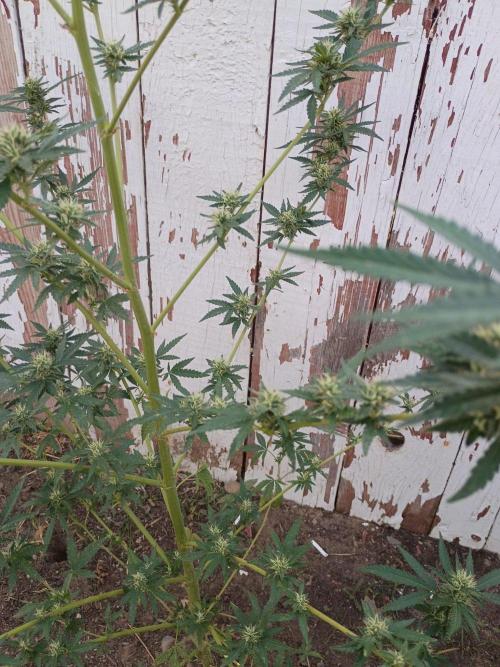
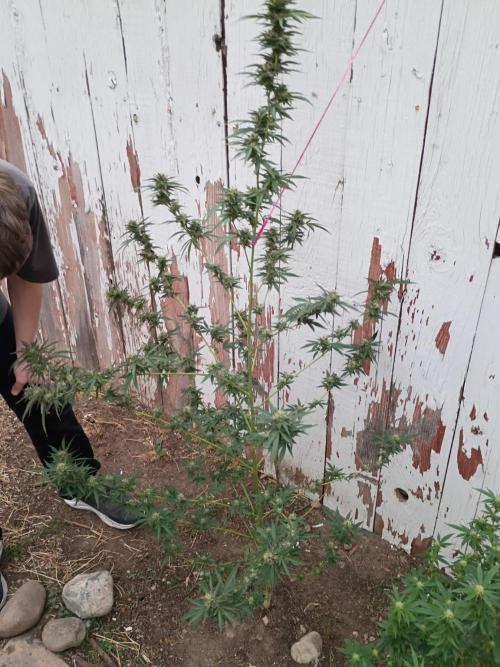
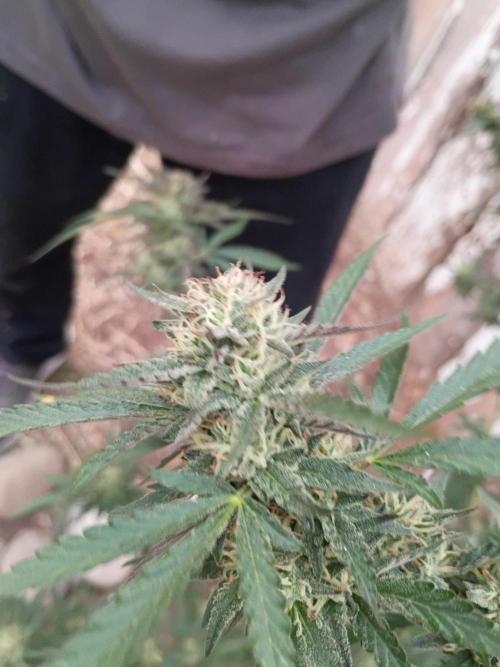
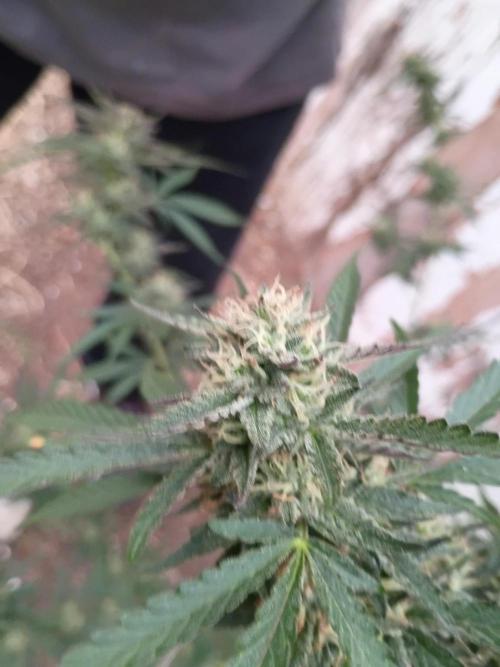
MissLeonard94 Week 25 feels like the point where Black Belts has finally turned that long, lanky structure into something that makes sense. For most of the season BB has been the taller, airier plant, with long internodes, a strong central leader, and widely spaced side branches rather than the compact, bushy structure RS11 developed. That same growth habit is still obvious now, but instead of looking sparse, the open framework is increasingly filled with individual flowering sites. Buds are stacked all the way up the main stem and distributed along the side branches, giving the plant a very vertical, almost candelabra-like appearance. The tallest central cola is still clearly dominant, but the secondary branches have continued developing respectable flowers of their own rather than remaining tiny satellites around the main top.
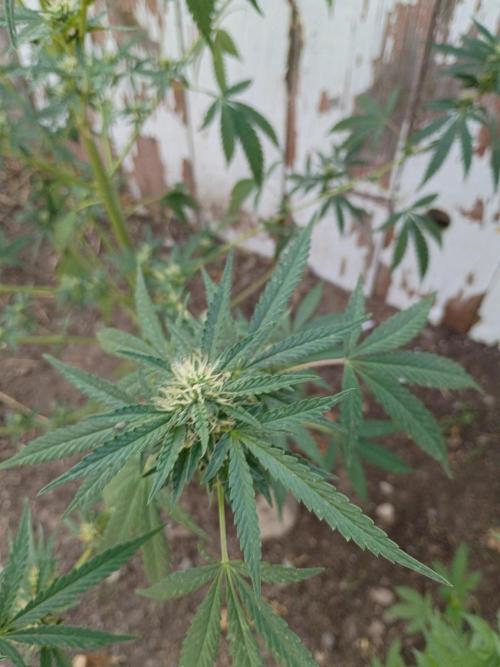
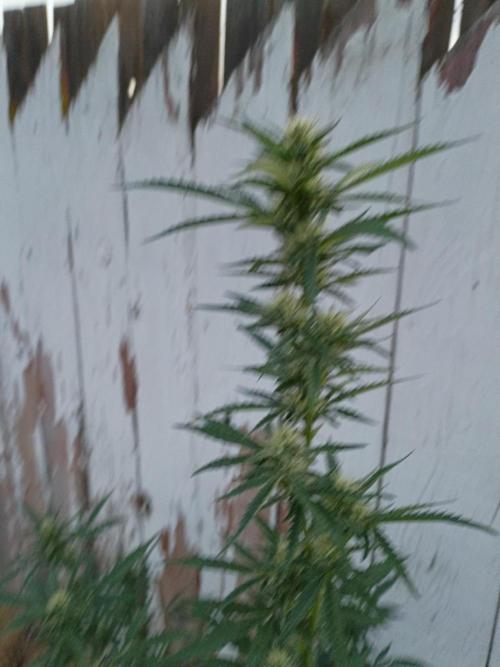
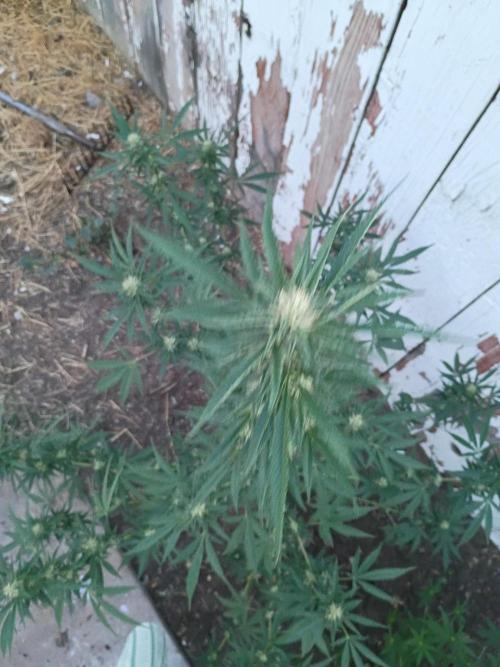
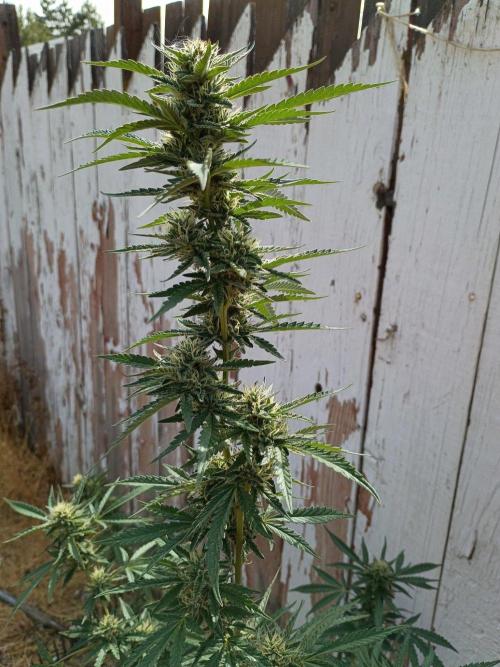
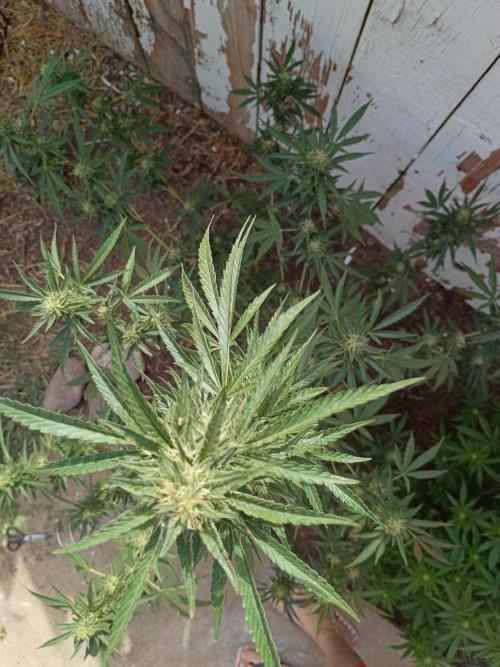
Flower development is noticeably more advanced this week. The close-up photographs show a considerable increase in visible resin across the sugar leaves and flower surfaces, giving the buds a distinctly frosted appearance even without magnification. Trichome coverage is spreading beyond the center of the flowers and onto the smaller surrounding leaves, which makes the buds look much more mature than they did during the first weeks of flowering. At the same time, the flowers are still actively building. There are a large number of fresh cream-to-white pistils projecting outward, particularly near the tops of the buds, while a smaller but increasingly noticeable percentage of older pistils have begun turning tan, peach, or orange and curling inward. That combination is important visually because it shows that BB is no longer in the earliest stage of flower development, but she also is not presenting like a plant that has completely finished producing new floral growth.
The buds themselves are beginning to look fuller and more three-dimensional. Earlier in flowering they were mostly clusters of white hairs around small flower sites; now the underlying flower mass is becoming much easier to see. Individual calyx clusters are swelling and stacking into recognizable buds, especially around the upper branches. The main flowers still have a somewhat narrow, elongated shape that fits BB's overall structure rather than forming extremely round, compact tops. That does not necessarily indicate poor development. It appears to be part of the way this particular plant has expressed itself all season: tall stems, wider spacing, and flowers distributed along stretches of branch instead of everything being compressed into a short canopy.
One particularly encouraging change this week is how much more substantial the upper flowers look compared with the plant's overall thin frame. BB spent much of vegetative growth looking almost comically tall for the amount of foliage she carried, but the flowering sites are now visually catching up with the skeleton that was built earlier. The tallest cola has flowers extending through a long section of the upper stem rather than existing only as one small bud at the tip. Numerous middle and lower branches also have distinct flowering clusters. Because the canopy is naturally open, light has been able to reach many of those lower sites, and that is showing in the fact that the plant has flowers at many different heights instead of only at the very top.
Color remains generally healthy in the photographs. The larger visible leaves are still predominantly green, while some sugar leaves and flower-adjacent foliage show darker or slightly purplish tones. Nothing in these particular photographs jumps out as a dramatic new nutrient problem or sudden plant-wide decline. Some of the lower structure is naturally sparse, but that has been characteristic of BB for months rather than appearing suddenly this week. The plant is also carrying considerably less broad vegetative foliage than a dense bush-type plant would, which makes the branches and flower sites look especially exposed. At this stage, however, that open architecture may actually be helpful because air can move through the plant much more easily than it could through a tightly packed canopy.
The close-ups are especially useful for establishing where BB is in the flowering cycle. There is already heavy visible resin production, a mixture of fresh and aging pistils, and clear flower swelling, but the large number of straight or only partially curled white pistils suggests that the flowers are still actively developing. In other words, Week 25 looks much more like mid-to-late flowering progression than a finished endpoint. BB is clearly moving toward maturity, but the photographs do not give the impression that everything has suddenly stopped growing and begun uniformly ripening. Instead, she appears to be in that transitional period where some of the earliest flower tissue is maturing while newer tissue continues forming around it.
Structurally, the plant continues to be remarkably tall relative to its width. The main stalk remains upright and the branches are still holding themselves reasonably well, although the increasing flower weight is becoming more noticeable. The support line near the upper portion of the plant remains useful because the tallest stem has a lot of leverage in wind due to its height. As the buds continue gaining weight, those long branches will have progressively more mechanical stress placed on them even if the flowers never become exceptionally dense. This is particularly true for BB because the distance between the trunk and the ends of some branches creates long little levers for wind to grab.
Another positive feature visible this week is the absence of anything obviously resembling widespread gray mold, collapsed flower tissue, or major pest damage in the supplied photos. That does not rule out hidden problems inside a flower, especially because photographs only show the exterior, but the visible buds look lively and intact rather than dull, browned through the center, or deteriorating. With BB now producing more substantial flowers, moisture management becomes increasingly important simply because there is more flower material capable of holding water than there was several weeks ago. Fortunately, the plant's naturally open spacing gives it an advantage here compared with an extremely compact plant.
Overall, Week 25 is one of BB's more satisfying visual milestones because the strange proportions she carried through vegetative growth finally look purposeful. She never became the thick, symmetrical bush that RS11 became, and at this point it is clear that she was never going to. BB's identity is the opposite: tall, skeletal, widely branched, and covered in many individually exposed flowering sites. What initially looked like empty space between branches has become airflow and light penetration between buds. The plant now reads much less as a stretched vegetative plant and much more as a deliberately open flowering structure.
The biggest story of Week 25 is therefore continued flower maturation without signs that the plant has finished yet. Resin production is strong, buds are swelling, older pistils are beginning to darken, and the flowers are becoming substantially more defined, but fresh white pistils remain plentiful throughout the visible tops. BB appears to still have meaningful flower development ahead of her. For the grow journal, this week marks a clear move deeper into flowering and a noticeable step toward ripening, while still preserving enough active new growth that Week 25 should be treated as part of the maturation process rather than the final chapter.
likes
comments
Share
Enjoying this diary? Follow for more updates!
Prefer the old Diary view?
Go back to the old Diary view