


3M • Diesel ΘЯGΛИIϾ


Diesel Bastard

VEG
CFL 6400K Fluorescent/105W
CFL 6400K
FLO
Mix Led: 2700K, 3000K, 660nm y FS Light Emitting Diodes/240W
Mix Led: 2700K, 3000K, 660nm y FS

Tent
60x40x125cm
60x40x125cm

Soil
Custom

Indoor
Room Type
FIMing
weeks 5, 9
LST
weeks 6
Defoliation
weeks 7, 11, 13-14
7 liters
Pot Size
Start at Harvest
1
Week 1. Vegetation6y ago


5 cm
Height
24 hrs
Light Schedule
25 °C
Day Air Temp
6.0
pH
100 PPM
TDS
55 %
Air Humidity
20 °C
Solution Temp
21 °C
Substrate Temp
19 °C
Night Air Temp
40 cm
Lamp Distance
Nutrients 3
Auxinas
5 mll
Azomite
3 mll
Micorrizas
2 mll
deFharo 3M: Organic matter, Microorganisms, and Minerals.
I've chosen this seed for its Sativa dominance and its good reputation. First, I prepared a light solution in distilled water made up of homemade auxins, azomite, and humic acids, and I submerged the seed for 30 minutes with the mixture at 24°C. The seed germinated in 24 hours, and after 48 hours, I planted it in a yogurt cup with very light soil and mycorrhizae to start spreading as soon as possible, since these microorganisms take quite a while to develop and must always be in contact with the roots.
My intention is to grow this plant in a 12L Air-pot, applying FIM pruning and with a dedicated grow cabinet for it. I will extend the vegetative stage to create a strong plant structure before moving to flowering. I will also put into practice my new bioles and organic preparations in this grow.
Cheers!
13 likes
2 comments
Share
2
Week 2. Vegetation6y ago




11 cm
Height
22 hrs
Light Schedule
28 °C
Day Air Temp
6.5
pH
100 PPM
TDS
55 %
Air Humidity
20 °C
Solution Temp
21 °C
Substrate Temp
22 °C
Night Air Temp
40 cm
Lamp Distance
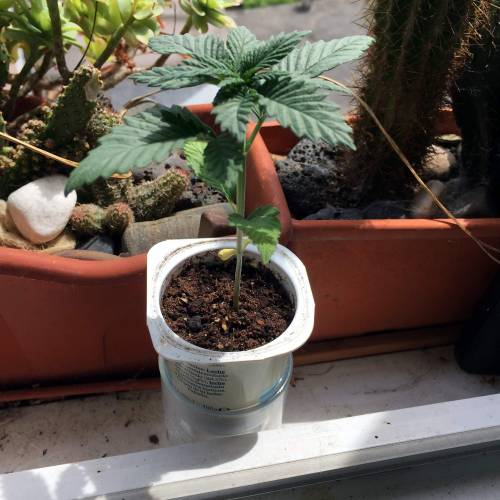
deFharo The seedling has had good growth this week, I continue to give it extra light for about 20 hours a day. The roots are showing through the bottom of the container due to the moisture trapped in the cup, it's one of my main goals to create a strong root system. This week I'll transplant it to a slightly larger pot, and at that moment I'll give it some nitrogen-based nutrients and vitamins.
Cheers!!
9 likes
2 comments
Share
3
Week 3. Vegetation6y ago


20 cm
Height
22 hrs
Light Schedule
28 °C
Day Air Temp
6.5
pH
100 PPM
TDS
50 %
Air Humidity
20 °C
Solution Temp
21 °C
Substrate Temp
22 °C
Night Air Temp
30 cm
Lamp Distance
deFharo The transplant has done wonders for the plant. I continue with 22 hours of light alternating between indoor and outdoor. I haven't added any nutrients yet. The vertical growth of the roots at the bottom of the pot is as I expected; my intention is to develop the roots while preventing them from curling at the base of the pot. This structure will later promote rooting in the final pot, which will be a 10L Air-pot. I plan to transplant on May 3rd, when the waxing moon approaches the full moon.
Cheers!!
9 likes
2 comments
Share
4
Week 4. Vegetation6y ago




26 cm
Height
22 hrs
Light Schedule
28 °C
Day Air Temp
6.3
pH
500 PPM
TDS
50 %
Air Humidity
20 °C
Solution Temp
23 °C
Substrate Temp
24 °C
Night Air Temp
0.06 liters
Watering Volume
30 cm
Lamp Distance
Nutrients 6
Ormus
10 mll
Biol de frutas con MM y BAL
30 mll
Hidrolizado de Humus
10 mll
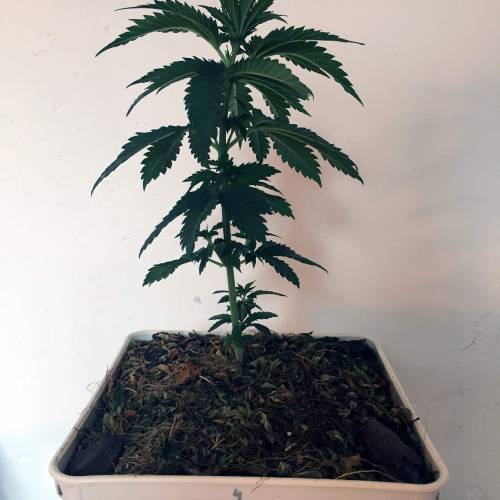
deFharo I moved up the transplant day because the pot quickly became too small. I've also decided to grow in a 7L oxygenated pot for space reasons. The vertical root growth strategy is proving efficient; for this transplant, I added an initial watering of 600ml, of which 350ml was added through watering and 250ml through the pot's saucer to generate more humidity at the base of the pot and less in the center, so the roots seek the bottom of the pot as quickly as possible.
For this first watering, I made a mix of several components:
Ormus at 1% = Magnesium, calcium, and traces of many minerals.
Fermented fruit biol at 3% enriched with MM, BAL, minerals, and yeasts to start the decomposition of organic matter and the inoculation and proliferation of EM.
Molasses and Honey = Vitamins, yeasts, carbohydrates, potassium, enzymes, etc.
Worm humus hydrolysate at 1% = Humic and fulvic acids.
Sheep wool hydrolysate at 0.2% = Organic nitrogen.
For the substrate, I used 50% reclaimed soil plus worm humus, MM, organic matter, and minerals. I also created the last layer before the mulch with coconut fiber, light peat, sheep wool, extra vermiculite, different guanos, and organic matter to achieve a very light layer of about 4cm so that the roots can develop quickly at the top of the pot.
In this grow, I changed the pine bark mulch I usually use for one made from the roots of my previous grow and dry cannabis leaves, thus getting closer to the natural cycle of plant self-feeding. As the mulch decomposes, I will add more leaves, and this is a good way to make use of them since these leaves (organic matter) contain some of the minerals and elements with which I fed the previous grow. Since my grows are completely organic without synthesized chemicals or poisons, I believe these leaves will make excellent mulch. Tomorrow, I will add a solid organic preparation under the mulch, specially designed for the vegetative stage with about 10 components, which will be available to the plant around the next waning quarter.
The plant is growing vigorously; I maintain the light schedule alternating 12 hours indoors and the rest outdoors. I will keep it this way until I switch it to flowering and a cabinet is free for it.
Cheers!!
10 likes
comments
Share
5
Week 5. Vegetation6y ago


31 cm
Height
22 hrs
Light Schedule
28 °C
Day Air Temp
6.4
pH
500 PPM
TDS
58 %
Air Humidity
22 °C
Solution Temp
25 °C
Substrate Temp
24 °C
Night Air Temp
7 liters
Pot Size
0.08 liters
Watering Volume
30 cm
Lamp Distance
Nutrients 7
Ormus
10 mll
Biol de frutas con MM y BAL
10 mll
Hidrolizado de Humus
10 mll
deFharo - This week I added solid components and MM on the surface coinciding with the waxing moon; these components will be available in 10-15 days when the moon starts to wane and the waters are down.
- I also did a FIM pruning to control the height and generate more colas. The homemade auxins I placed around the roots when I transplanted will now help direct energy through the side branches; I have tested these auxins extensively, and a clear indication of their effectiveness in these stages of vegetative growth is the clear stimulus of the plant towards the light (positive phototropism) in the plants treated with these auxins made from germinated black beans. Surely for those who love to torture plants (LST), these auxins can also be very useful.
- I applied a soil watering and several foliar sprays with specialized formulas for growth and MM propagation. The foliar fertilizers are proving to be useful for providing nutrients without wetting the soil; this way, the loss of soil moisture, which is now low (an average of 80ml daily), continues at its consumption rate, and this way I don't saturate the soil with water, something that has frequently happened to me in the growth stages of other crops due to my passion for feeding. We’ll see if this strategy works as I hope.
- Since the ingredient list on this website is quite generic for my growing method, and since I have records of all the actions taken on the crops, I’m going to list the different watering formulas I’m using each week. In growth, I use lemon or apple cider vinegar for pH corrections; in flowering, I correct the pH with phosphoric acid. The water I use is always pure, either collected from rain or from mountain springs.
• Soil watering mix: Worm humus hydrolysate 1%, enriched fruit Biol 3%, Molasses 0.4%. EC: 1.0 PH: 6.4
• Foliar watering:
1) Sodium humate 0.5%, molasses 0.3%, Sheep wool hydrolysate 0.6%. EC: 1.5 PH: 6.5
2) PK humate 0.5%, honey 0.6%, Ormus 0.5%, Sheep wool hydrolysate 0.5%, Fruit Biol 1%. EC: 1.6 PH: 6.45
3) Ormus 1.5%, honey 0.6%, Horn and hoof hydrolysate 1%. EC: 1.9 PH: 6.5
- The mulch degrades quickly aided by my fruit ferment enriched with EM, MM, yeasts, and minerals; so far, I like this covering more than pine bark, the soil is better protected, retains more moisture, and is a permanent contribution of organic matter from the plant itself, where it provides the minerals retained from the previous crop; in the end, it’s the recreation of the forest cycle.
See you later. Cheers!!
12 likes
2 comments
Share
Used techniques
FIMing
Technique
6
Week 6. Vegetation6y ago


34 cm
Height
18 hrs
Light Schedule
29 °C
Day Air Temp
6.5
pH
850 PPM
TDS
45 %
Air Humidity
20 °C
Solution Temp
24 °C
Substrate Temp
22 °C
Night Air Temp
7 liters
Pot Size
0.12 liters
Watering Volume
20 cm
Lamp Distance
Nutrients 6
Ormus
10 mll
Miel
10 mll
Hidrolizado de lana
5 mll
deFharo Sixth week of cultivation, the plant looks healthy and fully recovered from last week's FIM pruning. The final cabinet where I will place this plant is occupied for at least another 15 days, to prevent it from getting too tall I have bent the apex, this way it will also promote the growth of the lateral branches.
I have placed a 6400K CFL above this plant, this spectrum favors lateral branching and makes the plant grow with shorter internodes. I have some T8 fluorescents with a 9500K spectrum that works very well for the goals I mentioned earlier, but the thing is I'm not using it because that lamp is fixed in another cabinet that is always in flowering, and I have the 2 fluorescents with a 2100K spectrum on. I think I will have to add another small cabinet permanently with white spectrum lights.
This week I have applied 2 waterings to the soil of 300ml and another foliar at the beginning of the week, the plant is consuming an average of 140ml and rising.
The formulas I have applied in these waterings have been:
1) Foliar watering 30ml: Ormus 1.5%, Honey 2g, Fruit biol with minerals and EM 1%, Hydrolyzed horn and hoof 1%. EC: 1.9 PH: 6.5
2) Soil: Ormus 1%, Activated MM 3%, Hydrolyzed sheep wool 0.5%. EC: 1.7 PH: 6.5
3) Soil: Ormus 1%, Activated MM 1.5%, Fruit biol with minerals and EM 1.5%, Hydrolyzed horn and hoof 1%. EC: 1.7 PH: 6.45
Until next week. Cheers!!
9 likes
3 comments
Share
Used techniques
LST
Technique
7
Week 7. Vegetation6y ago




40 cm
Height
18 hrs
Light Schedule
30 °C
Day Air Temp
6.5
pH
700 PPM
TDS
45 %
Air Humidity
22 °C
Solution Temp
24 °C
Substrate Temp
24 °C
Night Air Temp
7 liters
Pot Size
0.2 liters
Watering Volume
15 cm
Lamp Distance
Nutrients 7
Ormus
15 mll
Miel
10 mll
Hidrolizado de lana
5 mll
deFharo The plant continues its growth, it's responding well to the LST from last week, the side branches are pushing to stand out. Today I did some defoliation of the larger leaves to invigorate and allow light to reach everywhere.
Water consumption keeps increasing, which I like, as watering more frequently allows me to provide a more varied diet.
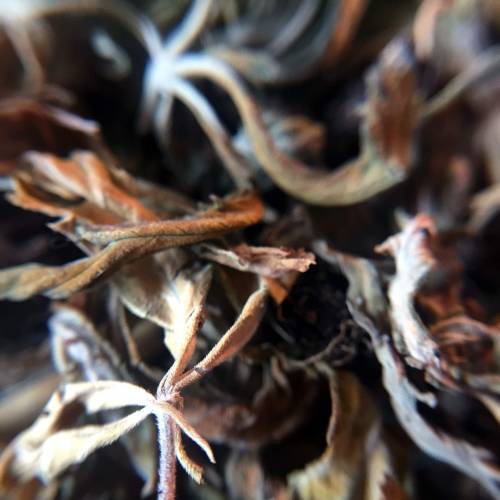
The roots are sticking out from the bottom of the pot excessively, this has never happened to me with large pots. The process I started at the beginning of this grow, to achieve verticality in the roots, avoiding them from coiling as much as possible, has yielded better results than expected; with a good root system, the plant's success is assured. Today, day 55, I cut the lower roots that were sticking out too much; this way I hope to promote the creation of new roots.
This week I did two waterings to the soil and added solid components on the surface (20g) coinciding with the lunar phase of the waning quarter; in 10-15 days the nutrients from this addition will be available to the plant.
Waterings:
1) Ormus 1.5%, MMA with minerals 1%, hydrolyzed animal protein 1%. pH: 6.5, EC: 1.36. 600ml.
2) Ormus 1.5%, enriched fruit Biol with MMA, BAL, and minerals 3%, Humate-K 1%, Honey, Hydrolyzed sheep wool 1%. pH: 6.37, EC: 1.36. 600ml.
I still have to wait 15 days to switch this plant to flowering, as I don't have space in the cabinets; I will try to control the height by supporting the side branches. For now, I continue providing white light (6400K) to try to achieve shorter internodes and also strengthen the side branches.
Until next time. Cheers!!
8 likes
comments
Share
Used techniques
Defoliation
Technique
8
Week 8. Vegetation6y ago







42 cm
Height
18 hrs
Light Schedule
34 °C
Day Air Temp
6.5
pH
750 PPM
TDS
40 %
Air Humidity
24 °C
Solution Temp
26 °C
Substrate Temp
25 °C
Night Air Temp
7 liters
Pot Size
0.35 liters
Watering Volume
15 cm
Lamp Distance
Nutrients 9
Ormus
10 mll
Miel
10 mll
Hidrolizado de lana
8 mll
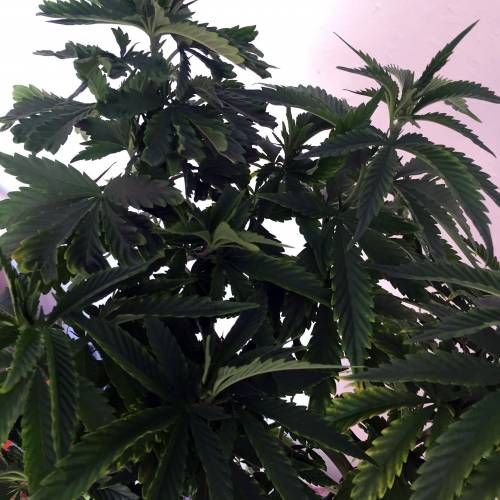
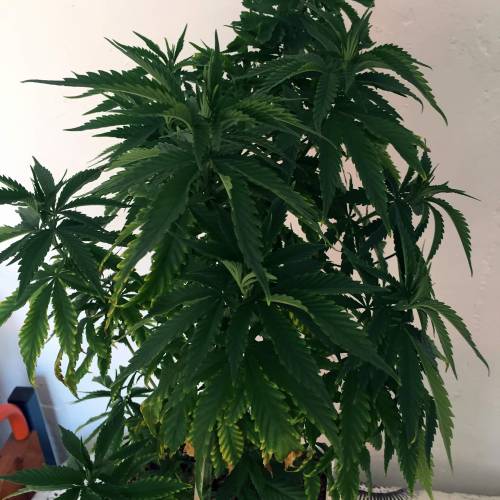
deFharo I'm continuing with the vegetative growth on this plant, I'm waiting to harvest another crop that will free up space to switch to flowering, this will happen in about 6-10 days. This week, I've noticed discoloration on the edges of some large leaves, it could be due to heat, lack of water, or an excess of potassium coming from my wool hydrolysate. As a result, I've organized this week's watering to try to stop this trend and invigorate the crop.
WATERINGS:
1) Ormus 1%, enriched fruit Biol 2.5%, Honey, Wool hydrolysate 0.8%
2) Ormus 1%, Activated MM 1%, honey, and Worm humus hydrolysate 4%
3) Ormus 1%, MMA 2%, and molasses.
4) Ormus 1%, Humate PK 1%, Molasses, and leachate 1%.
Water consumption remains high, the compact growth thanks to the 6400k light is as expected. Finally, at the beginning of the week, I did some root pruning that was sticking out from the base, this way I promote the creation of new roots from the pot.
Until next time. Cheers!!
9 likes
comments
Share
9
Week 9. Flowering6y ago




46 cm
Height
13 hrs
Light Schedule
30 °C
Day Air Temp
6.5
pH
750 PPM
TDS
40 %
Air Humidity
24 °C
Solution Temp
26 °C
Substrate Temp
25 °C
Night Air Temp
7 liters
Pot Size
0.45 liters
Watering Volume
15 cm
Lamp Distance
Nutrients 10
Ormus
15 mll
Miel
5 mll
Melaza
3 mll
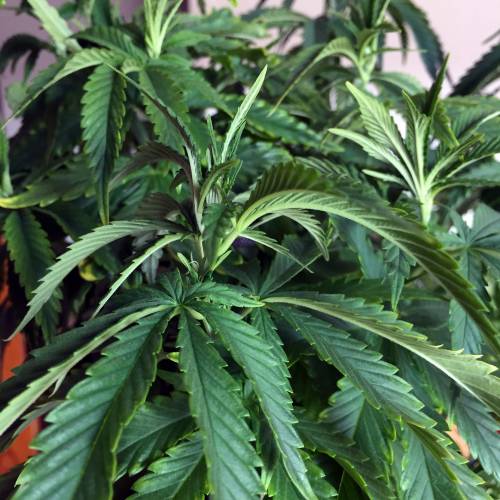
deFharo Good vegetative growth throughout the week, the application of organic nitrogen in the watering has yielded good results. This week I had to repeat the FIM pruning because the previous one was poorly done; although it helped the growth of the lateral branches, I also applied solid organic elements on the surface coinciding with the waxing moon. Additionally, I added mulch with leaves and stems from cannabis and medicinal plants: calendula, sage, and rosemary.
Also, today I switched the plant to flowering with 13 hours of light and selected color spectra.
WEEKLY WATERINGS:
Day 64 - Ormus 1.5%, MMA 2%, Molasses, dried blood 0.5%, and animal protein 0.5%. EC: 1.48 PH: 6.3. 900ml.
Day 66 - Honey, Bio fruits 2.5%, ormus 1.5% - FIM PRUNING. EC: 1.27 PH: 6.5. 400ml.
Day 67 - Just water with honey - 300ml.
Day 68 - Ormus 1%, MMA 2%, Honey, Molasses, Blood 0.5%, auxins, enzymatic algae 0.5%, hydro guanos 0.25%. EC: 1.1 PH: 6.4. 800ml.
Day 70 - Ormus 1.5%, Molasses, Hydro humus 1.5%, bio fruits 2%, humate-K 0.3%. EC: 1.76 PH: 6.6. 900ml.
Until next time. Cheers!!
8 likes
comments
Share
Used techniques
FIMing
Technique
10
Week 10. Flowering6y ago


50 cm
Height
13 hrs
Light Schedule
30 °C
Day Air Temp
6.5
pH
850 PPM
TDS
45 %
Air Humidity
22 °C
Solution Temp
24 °C
Substrate Temp
22 °C
Night Air Temp
7 liters
Pot Size
0.45 liters
Watering Volume
15 cm
Lamp Distance
Nutrients 9
Ormus
15 mll
Miel
5 mll
Melaza
3 mll
deFharo It seems that the switch to flowering is doing wonders for the plant. Good vegetative growth, the plant shows thick foliage and many tips. This week, pre-flowering has started, and I'm eager to see the buds form. The FIM pruning from last week resulted in a top with 3 tips. The plant continues to consume a lot of water, which is a good sign, plus it allows me to have more varied nutrient diets due to the increased watering. The amount of watering is determined by consumption; I calculate the maximum watering-humidity level in the pot, assigning 800ml ±15% as the maximum water level per pot. From there, I let the moisture in the pot be consumed until it reaches between 75% to 90% consumption. To carry out this technique, I weigh the pots daily and input the data into an Excel sheet, where I calculate: daily consumption and the remaining water amount per pot.
Waterings this week:
1) Day 67: Ormus 1.5%, Molasses, Hydro humus 1.5%, Bio fruits 2%, Humate-K 0.3% PH: 6.6 EC: 1.76, 900ml.
2) Day 70: Ormus 2%, Honey, Bio fruits 2%, Animal protein 0.15%, Humate-K 0.8%. PH: 6.6 EC: 1.9, 750ml.
3) Day 72: Ormus 1.5%, Molasses, MMA 2%, Bio fruits 1%, Enzymatic algae 1%. PH: 6.5 EC: 1.55, 700ml.
Until next time. Cheers!!
8 likes
1 comment
Share
11
Week 11. Flowering6y ago



60 cm
Height
13 hrs
Light Schedule
31 °C
Day Air Temp
6.4
pH
850 PPM
TDS
45 %
Air Humidity
22 °C
Solution Temp
24 °C
Substrate Temp
23 °C
Night Air Temp
7 liters
Pot Size
0.55 liters
Watering Volume
15 cm
Lamp Distance
Nutrients 12
Ormus
10 mll
Miel
4 mll
Melaza
2 mll
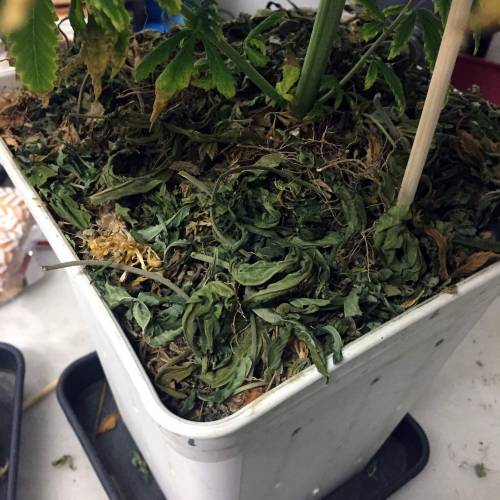
deFharo The vigorous growth continues in pre-flowering. Water consumption remains high, allowing me to provide more complete and complex nutritional watering. This week, coinciding with the days between the waning crescent and new moon, I added solid organic elements on the surface, composed of algae, minerals, guanos, animal meals, etc. These nutrients will be available to the plant in 10-15 days. I also did a medium defoliation to allow light in and direct energy to the new buds. I added more mulch because the degradation of organic matter is significant; in fact, the first mulch is integrated in such a way with the substrate that it is impossible to lift it because the roots have symbiotically populated it and it is turning into soil. The microorganisms are doing their job fantastically; I add them in waterings regularly, with my forest-activated microorganisms with minerals (MMA).
WEEKLY WATERINGS WITH RAINWATER AND MINERAL AT 25%.
1) Day 71. Ormus 1%, Coconut water 5%, Hydro humus 1%, Hydro guanos 0.1%. PH: 6.4 EC: 1.9 - 1L
2) Day 73. Ormus 1%, MMA 4%, Molasses, Hydro Hoof 1%, Algae acid 1%. PH: 6.45 EC: 1.6 - 900ml.
3) Day 74. Molasses, Honey, Algae acid 0.5% and homemade auxins. PH: 6.5 EC: 1.6 - 200ml
4) Day 76. Ormus 1%, Mineral Humate 2%, Molasses. PH: 6.57 EC: 1.65 - 700ml.
5) Day 77. Ormus 1.5%, Fruit Biol 3%, Molasses, PH: 6.31 EC: 1.5 - 800ml.
Until next time. Cheers!! 😎
7 likes
comments
Share
Used techniques
Defoliation
Technique
12
Week 12. Flowering6y ago


62 cm
Height
13 hrs
Light Schedule
32 °C
Day Air Temp
6.4
pH
950 PPM
TDS
45 %
Air Humidity
23 °C
Solution Temp
24 °C
Substrate Temp
23 °C
Night Air Temp
7 liters
Pot Size
0.75 liters
Watering Volume
15 cm
Lamp Distance
Nutrients 10
Ormus
15 mll
Miel
4 mll
Melaza
3 mll
deFharo The defoliation from last week has done wonders, the plant continues to grow vegetatively and produce flowers, the daily water consumption is abundant which allows me to apply very varied nutrient diets, the plant responds positively to everything, I think the great root development of the plant helps a lot.
This week I'm also trying out the first organic fertilizer as part of a family of 4 that I'm creating for each stage of cultivation, this is a lacto-ferment based on whey and enriched with minerals (dolomite, rock phosphate, azomite, diatomaceous earth, ash, and basalt rock), EM (BAL and MMA), Guanos (Bat, birds, and mealworms), extra potassium, and auxin hormones. For this ferment, I use alkaline spring water (pH 9.2 - calcium carbonate) that is highly mineralized, with this water I offset the acidity of the ferment, I've had it fermenting anaerobically for 40 days and this week I've started applying it to this crop, I've designed this fertilizer to be used throughout the pre-flowering period, alternating it with others.
The mulch is consumed quickly thanks to the action of the EM, I highly recommend this technique, organic matter is the ideal food and ecosystem for the work of the MM which also makes a multitude of elements contained in the substrate and organic matter soluble.
WEEKLY NUTRITION:
1) Day 78. Ormus 1.5%, Fruit Biol 3% and molasses. pH: 6.3 EC: 1.5. 800ml.
2) Day 80. Ormus 1.5%, Humate-PK 2%, Molasses, homemade liquid auxins 10%. pH: 6.4 EC: 1.9. 800ml.
3) Day 81. Ormus 1%, Molasses, Liquid Auxins 100ml, Wool Hydrolysate 0.5%, Fruit Biol 3%. pH: 6.4 EC: 2.2. 1000ml.
4) Day 82. Ormus 1%, Humate-PK 1.5%, Fruit Biol 1% and molasses. pH: 6.5 EC: 2. 600ml.
5) Day 83. Ormus 2%, Molasses, Lacto Ferment MMM 4%. pH: 6.3 EC: 1.7. 1000ml.
6) Day 84. Ormus 1%, Honey, MMA 3%, Hydro Humus 3%, apple cider vinegar. pH: 6.4 EC: 1.7. 500ml.
Until next week. Cheers!! 😎
10 likes
comments
Share
13
Week 13. Flowering6y ago












62 cm
Height
13 hrs
Light Schedule
34 °C
Day Air Temp
6.4
pH
850 PPM
TDS
45 %
Air Humidity
23 °C
Solution Temp
25 °C
Substrate Temp
23 °C
Night Air Temp
7 liters
Pot Size
0.75 liters
Watering Volume
15 cm
Lamp Distance
Nutrients 11
Ormus
10 mll
Miel
4 mll
Melaza
3 mll
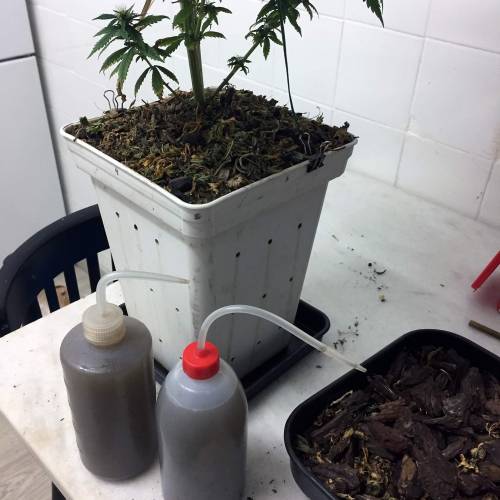
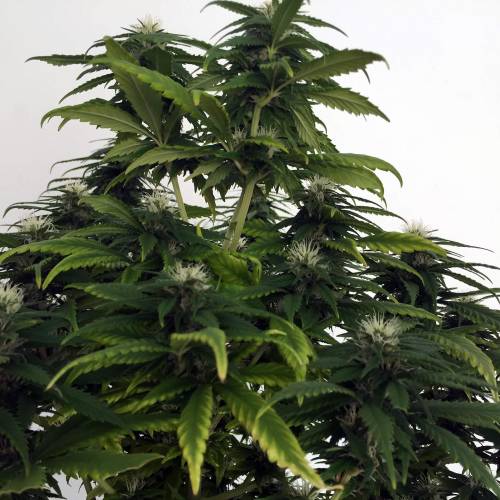
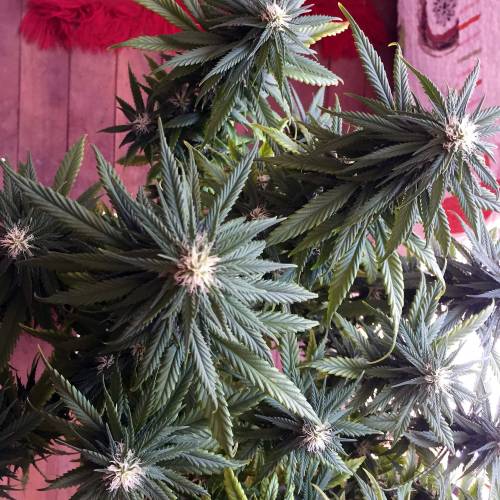
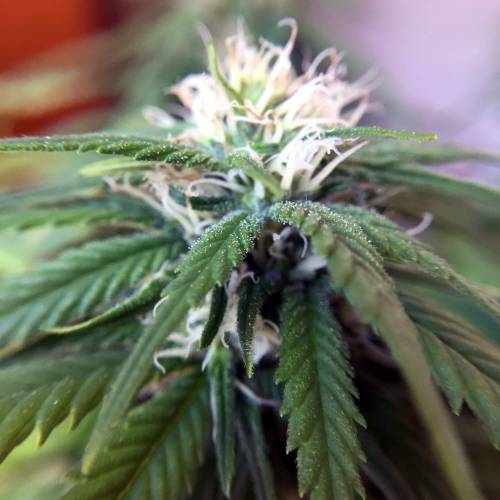
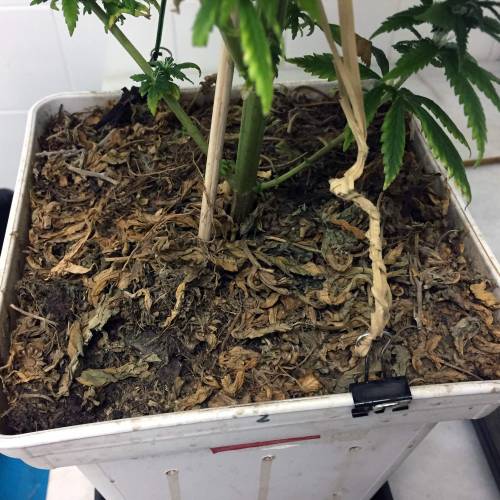
deFharo Week 13 from seed, the grow is moving forward with vigor, the number of buds is impressive, they are growing healthy all along the branches, when they grow, I’ll have buds over 30cm long. I’ve done a medium defoliation to clear the interior of the plant so that light entry is more efficient, mainly cutting large leaves and other stunted ones from the inside of the plant, now it’s time to keep fattening the flowers, water consumption remains very high... this girl is a glutton!!
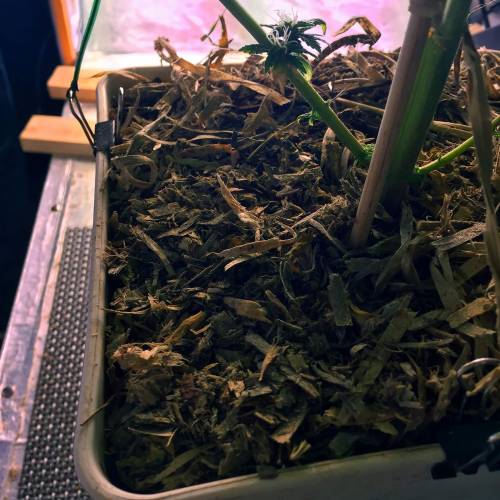
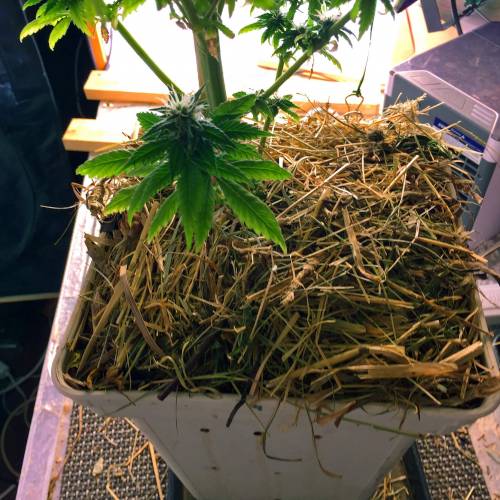
I regularly add new layers of mulch, the action of microorganisms quickly digests the organic matter, I’ve almost run out of my reserves of cannabis leaves, stems, and roots for mulch, now I’m going to continue alternating dry straw, wood chips, and sheep wool, which will surely give the same result, the lower layers have integrated so much with the substrate that it’s no longer possible to lift the mulch, as the roots have colonized and symbiotically interacted with the organic matter in the humification process.
😉 WEEKLY DIET
1) Day 91. Ormus 1.5%, Molasses, Bio fruits EM 1.5%, MMA 1%, Mineral Humate 1.5%. PH: 6.3 EC: 1.8 - 900ml.
2) Day 92. Ormus 1%, Molasses, Lacto Ferment with MMM 3%. PH: 6.6 EC: 1.3 - 700ml.
3) Day 93. Ormus 1%, Mineral Humate 2%, Honey, Animal Protein 0.25%, Hydro humus 1%. PH: 6.4 EC: 1.5 - 900ml.
4) Day 94. Ormus 1.5%, Bio fruits EM 4%, Hydro humus 2% and Molasses. PH: 6.4 EC: 1.7 - 700ml.
5) Day 95. Ormus 2%, MMA 2%, Hydro Humus 2%, Liquid Auxins 10% and Molasses. PH: 6.4 EC: 1.7 - 1000ml.
6) Day 96. Ormus 1%, Bio fruits EM 2%, Sodium Humate, Liquid Auxins 8%, Honey and Apple Cider Vinegar. PH: 5.9 EC: 1.2 - 250ml.
7) Day 97. Solids on surface + Ormus 1%, Humate-P 2%, molasses, Animal Protein 0.25%. PH: 6.4 EC: 1.8 - 800ml.
😇 GROWING TIPS:
- Forced aeration of the substrate
Sometimes it’s necessary to try to oxygenate a waterlogged substrate, if the substrate is light this technique can help speed up the evaporation process as well as create oxygen entry points in the substrate.
I also use this same technique when I apply solid or mineral nutrients on the surface, this way I facilitate that with the watering, following the solid application, it drags the nutrients and minerals, also immediately to the middle and lower parts of the pot, helping the circulation of the liquid, nutrients, and oxygen.
The initial concept of this technique is based on the "laya" and its function, the "laya" is a very ancient cultivation tool that resembles a kind of giant fork and is used to aerate the soil without turning it over.
In my case, I use a skewer stick, which I push down to the bottom several times and on the surface, I also use the lateral holes of my self-oxygenating pots to push the stick down and create cross tunnels that help with aeration, root formation, and distribution of components.
Until next week. Cheers!
12 likes
3 comments
Share
Used techniques
Defoliation
Technique
14
Week 14. Flowering6y ago










62 cm
Height
13 hrs
Light Schedule
34 °C
Day Air Temp
6.5
pH
650 PPM
TDS
45 %
Air Humidity
23 °C
Solution Temp
25 °C
Substrate Temp
24 °C
Night Air Temp
7 liters
Pot Size
0.85 liters
Watering Volume
15 cm
Lamp Distance
Nutrients 9
Ormus
10 mll
Miel
4 mll
Melaza
3 mll
deFharo Week 14 from seed. The plant continues to grow lush and fatten the buds, despite some incidents.
- Midweek, I started noticing small burns on the tips of the larger leaves, so I did a watering with pure water and measured the PPM concentration in the runoff water in the plate. The measurement gave me crazy numbers of up to PPM: 7500, which is an extremely high reading for my purposes, but it can't be compared to high PPM concentrations from waterings with chemical fertilizers, where those readings would have irreparably harmed the crop. The reasons for these high concentrations of minerals and nutrients in the substrate are due to an excess of liquid nutrient input, without giving the crop a break and the opportunity to digest the nutrients I apply.
- Two days after detecting the imbalance in the substrate, I added 3L of rainwater (EC: 0.036) and lowered the PPM level to 1500. As it shows, a root wash in a purely organic substrate is much easier due to the little water needed, as the leaching or dissolution of leftover components is much more direct and doesn’t require as much water as it does to dissolve the accumulated salts from chemical fertilizations. When doing a root wash like the previous one, it should be noted that the element that is lost most rapidly through leaching is Nitrogen, based on this, watch for signs of nitrogen deficiency and correct in subsequent waterings.
• Based on the above, starting this week I will begin applying another strategy for watering with nutrients, the change will be made in all crops and it involves waiting at least 72h since the last nutrient input (solid or liquid) to apply new ones; in the meantime, if the plant needs watering, I will do it only with water to give the plant time to digest all the nutrients properly. I will also lower the EC level in all waterings throughout the crop, plus I will make simpler and more specific nutritional formulations, except for components that I systematically include in all waterings like Ormus, molasses, or honey. With this change in strategy, I will be very attentive to the plant's signals; the reason for the change is primarily to reinforce my self-control against my tendency to overfeed the plants due to my collection of preparations 😋, although it’s not easy to dramatically block a plant grown with pure organic elements, I am observing an exaggerated EC in the leftover water from the pots, which indicates that the MM are doing a great job dissolving the substrate components, components that when added in excess enrich the substrate excessively, making it too dense and harming its effectiveness.
😕 WEEKLY DIET
1) Day 99. Ormus 2%, Bio fruits NP 2%, Lacto ferment MMM 1%, Hoof Hydrolyzate 0.25% and Molasses. PH: 6.33 EC: 2.0 - 900ml.
2) Day 100. Ormus 1.5%, Humate PK 1.5% and Molasses. PH: 6.3 EC: 1.66 - 600ml.
3) Day 101. Ormus 2.2%, MMA 3%, Molasses and Leachate 2%. PH: 6.6 EC: 2.0 - 500ml.
4) Day 102. Ormus 1%, Mineral Humate 2% and Molasses. PH: 6.4 EC: 1.87 - 900ml.
5) Day 103. Only pure water with honey. PH: 6.8 EC: 0.350 - 600ml.
6) Day 104. Pure water with honey and 1% MMA and Ormus. PH: 6.37 EC: 0.850 - 800ml.
7) Day 105. Rainwater. PH: 6.8 EC: 0.036. 3L. (I collect 1.8 liters of leachate that I use diluted to water my geraniums and other flowers)
😂 GROWING TIPS
Experimental lacto ferment with auxins enriched with NP minerals and nutrients, to be used from germination to pre-flowering. Since I had 1.2 liters of liquid auxins that were about to expire, I started this bio-fertilizer with the intention of maintaining a watering solution rich in natural auxins and other specific elements for rooting and vegetative growth.
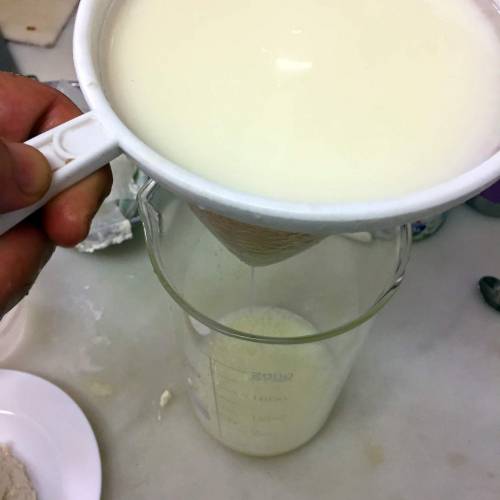
1) Obtaining whey from fresh or pasteurized milk.
a) Heat the milk between 70°C to 90°C
b) Turn off the heat and add the juice of 1 large lemon.
c) Stir with wood until the milk curdles.
d) Let cool for 30 minutes.
e) Strain and filter to separate the whey from the solid matter.
f) From 1.5l of pasteurized milk, I obtained 1.2l of whey.
2) Mix the whey with molasses and honey.
3) Weigh the solid components and add them to the digestion container. I add chopped carrot to ensure the presence of Boron.
4) Add to the whey, Lactic Acid Bacteria (LAB), bread yeast, and Ormus.
5) Add the mixture to the barrel.
6) Shake vigorously.
7) I add the auxin water.*
8) I seal the container tightly and place the gas escape valve.
9) I let it ferment for at least 30 days. The longer it ferments, the better the result of the lacto ferment, just like wine!!
* For all my ferments and biol, I use water from a nearby mountain spring; this water is very alkaline PH: 9.2 and contains a lot of minerals: EC: 0.85, I use it to offset the acidity of the ferments and ensure a safe supply of calcium carbonate and trace minerals. The preparation started fermenting 20 minutes after sealing the barrel. I will try this lacto ferment by including it in my germination and growth processes.
Cheers and see you next week!! 😷
16 likes
2 comments
Share
Used techniques
Defoliation
Technique
15
Week 15. Flowering6y ago


62 cm
Height
13 hrs
Light Schedule
34 °C
Day Air Temp
6.5
pH
Weak
Smell
350 PPM
TDS
45 %
Air Humidity
24 °C
Solution Temp
25 °C
Substrate Temp
26 °C
Night Air Temp
7 liters
Pot Size
0.65 liters
Watering Volume
15 cm
Lamp Distance
Nutrients 4
Ormus
10 mll
Miel
4 mll
Melaza
3 mll
deFharo Day 112 from seed. The plant keeps fattening its multiple colas. This week, signs of nitrogen deficiency have started to appear on the older leaves, which was to be expected after last week's root wash; nitrogen is the component that gets lost the fastest through leaching. To prevent this rapid onset of deficiency, this week I will water with one of my organic nitrogen hydrolysates. I hope this will provide what it needs until the end of the harvest. For now, the colas keep growing and are currently as hard as rocks!! I estimate that in 3 weeks I will be able to harvest it, just at 60 days from the switch to flowering, although depending on the appearance of the trichomes, I could extend the harvest by another 10 days.
However, I have continued all week with gentle watering, mainly composed of Mineral Water, Carbohydrates, and Activated Microorganisms (MMA). On day 110, I added a mix of solid elements on the surface: Minerals, guanos, humates, meals, fruit powder, etc. Subsequent waterings for at least a week will be based on water, honey, or molasses; I have also added Activated Microorganisms (MMA) to inoculate MM and thus accelerate the degradation of the surface solids.
I have also lowered the light intensity in the grow cabinet, replacing the Mars Hydro Eco60 (110w) lamp with a projector that has a 4000K spectrum and 50w.
😬 GROW CABINET SETUP
- Size: 60x45x126cm
- Light hours: 13h.
• LIGHTS
- Fluorescent T8 - 2x55w - 2100K. 104w (Top)
- TLed Secret Jardin: 2700K, 3000K, and 660nm. 23w (Top)
- Side Led Panel 2700K. 30w.
- Warm White + 660nm Panel. 35w. Side.
- COB FS/660 - 380-800nm. 50w. Side
- SB Panel 2700K/660nm. 47w. Side
- Slim COB FS. 380-780nm. Side. 50w.
- COB Wide 4000K. 50w.
- 3 fans. 17w.
- Consumption kWh/Day: 5.30
😷 GROWING TIP
Potassium Humate from Leonardite* enriched with Minerals.
- Leonardite is a mineral that contains humic, fulvic, and himatomelanic acids, very rich in organic matter and high in chelated microelements. It can be used mixed with the substrate, correcting and enriching soils, promoting microbial life, and facilitating humification.
I also use leonardite to create hydrolysates enriched with highly soluble minerals for soil watering, an essential product in any organic soil.
- There are two types of alkaline hydrolysis.
a) With KOH (Potassium humate for flowering)
b) With NaOH (Sodium humate for vegetative growth)
😎 PROCEDURE FOR ALKALINE HYDROLYSIS OF LEONARDITE:
- Components of the basic potassium hydrolysate: Leonardite, water, and KOH.
I also add other minerals to the mix to complement the presence of important components like calcium, silicon, phosphorus, etc., and traces of many other minerals. I have also made other formulations with different mineral and organic components for the different stages of cultivation.
1) Weigh the leonardite and the rest of the minerals.
2) Mix the components well with pure water.
3) Add pure Potassium Hydroxide (KOH) or Sodium Hydroxide (NaOH) to the container.
4) Stir twice a day for 5 minutes each time for the first 3 days.
5) During these first days, keep it in the dark and covered with a cloth to prevent the entry of insects or dust.
6) Keep it in the dark. This preparation improves over time; it can be stored for years without loss of properties.
😐 USES:
- This product can be frequently added to watering; all components are highly soluble and will be available to the plant immediately after watering. Being an alkaline product, pH in the mixes for watering should be monitored.
- Pure leonardite can be mixed with substrates. A 25Kg bag costs approximately €25 and can create enough hydrolysate to nourish the soil of about 5 hectares.
- From the hydrolysates, a concentrated powder can be obtained through dehydration that can be used as a nutrient contribution on the surface or dissolved in water for watering.
- Next week, I will publish the process and results of the dehydration of the Humates.
Until next week. Cheers!! 😳
11 likes
2 comments
Share
16
Week 16. Flowering6y ago





62 cm
Height
13 hrs
Light Schedule
34 °C
Day Air Temp
6.5
pH
Normal
Smell
350 PPM
TDS
45 %
Air Humidity
20 °C
Solution Temp
26 °C
Substrate Temp
28 °C
Night Air Temp
7 liters
Pot Size
0.8 liters
Watering Volume
15 cm
Lamp Distance
Nutrients 5
Ormus
8 mll
Miel
4 mll
Melaza
3 mll
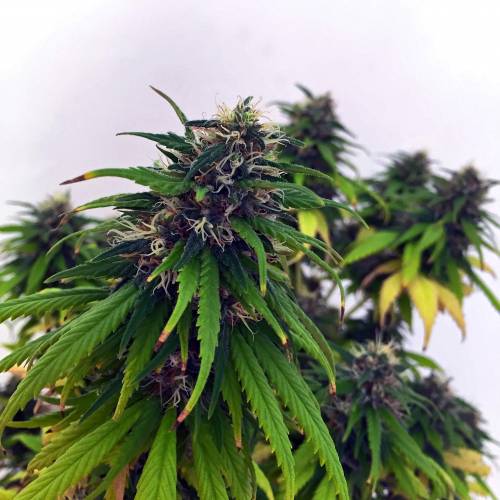
deFharo After 15 days of watering only with water and carbohydrates, the plant is entering its final stretch without signs of deficiencies or excesses, the buds are fattening and hardening day by day. This week I will continue with nutrient PK watering, alternating them only with water mixed with honey or molasses. I will increase the nutrient concentration focusing on the supply of Phosphorus and especially Potassium. For this, I have 3 formulations of Potassium Humate, a high-potassium lacto-ferment, and a fermented mix of fruits and minerals with high organic potassium content.
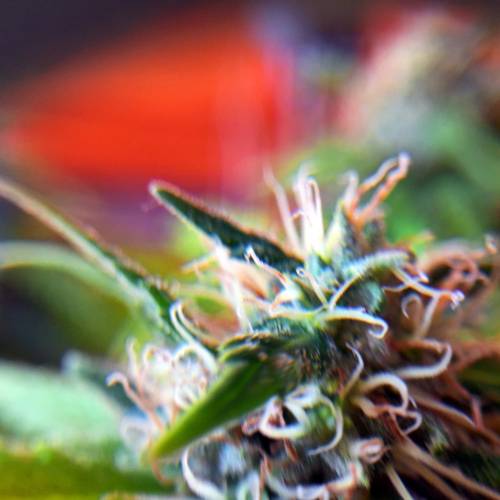
The weight of the buds is already noticeable, but in this grow, unlike the previous Purple Bud, the branches are so far strong enough to hold the long colas without the need for supports. The addition of silicon, mainly, and other minerals has contributed to giving the plant a solid yet flexible structure. This week, the aroma of the plant has also increased; the smell isn't excessive for now, but seeing the change this week, I believe it will end up filled with good aromas.
According to the seed producer, I am 2 weeks away from harvest time (65-70 days since the flowering stage began), and I think it will be right on time, which allows me to plan more accurately for the new replacement grows.
This week I will continue fattening the buds.
Until next week. Greetings to everyone!! 😁
14 likes
2 comments
Share
17
Week 17. Flowering6y ago







62 cm
Height
12 hrs
Light Schedule
32 °C
Day Air Temp
6.5
pH
Normal
Smell
350 PPM
TDS
45 %
Air Humidity
20 °C
Solution Temp
26 °C
Substrate Temp
28 °C
Night Air Temp
7 liters
Pot Size
0.8 liters
Watering Volume
15 cm
Lamp Distance
Nutrients 8
Ormus
10 mll
Miel
4 mll
Melaza
3 mll
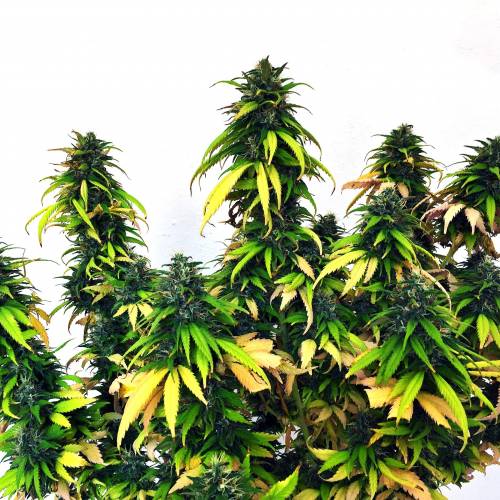
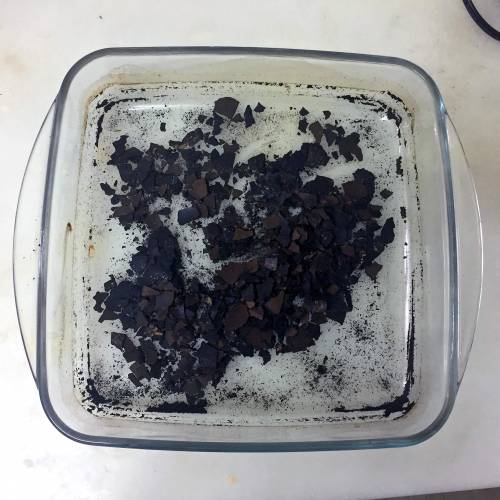
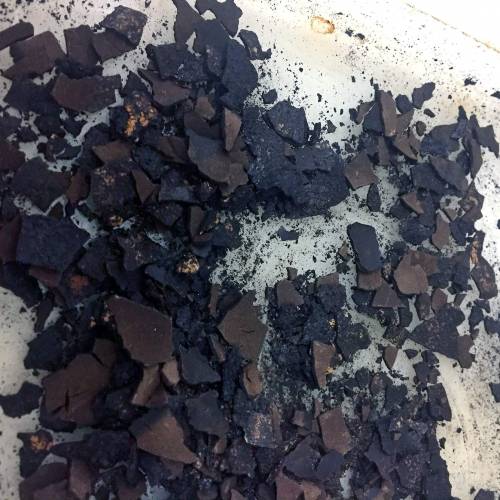
deFharo Day 126 from seed. The plant is in full maturation process, in a week it will meet the first harvest deadline, 65 days after the transition to flowering, although it could be extended another week. The buds keep fattening, the tips look healthy and vigorous with healthy, young leaves and pistils. This week I will start monitoring the color of the trichomes, as so far it seems to me that there are still many to appear. In fact, the plant has little smell, except when you rub it, which indicates to me that the flowers continue their growth-maturation.
I haven't removed any of the old discolored leaves; I hope that after these leaves pass all their nutrients to the next leaves, the plant will naturally drop them to the substrate.
I continue with specific nutrient watering, alternating with others with very low concentration. I think this week after measuring the EC-PH in the runoff water, I will increase the nutrient concentration doses.
Water consumption is optimal, around 850ml, which forces me to water every day, as I maintain the moisture in the 7L pot at around 12% of its capacity (840ml).
😉 WEEKLY DIET
1) Day 120. Water M EC: 0.35, Honey, Cellulase Enzymes 2ml/L. PH: 6.8 EC: 0.4. 600ml.
2) Day 121. Water M EC: 0.35, Humate PK 1.4% (Humic, Fulvic, Minerals, P and K) and Ormus 1% (Ca, Mg, etc.). PH: 6.5 EC: 1.75. 900ml.
3) Day 122. Water M EC: 0.35, Molasses (Carbohydrates, Minerals, Yeasts and K), MMA 1%, Cellulase Enzymes 1ml/L. PH: 6 EC: 0.7. 700ml.
4) Day 123. Water M EC: 0.35, Molasses (Carbohydrates, Minerals, Yeasts and K), Humate M 1% (Humic, Fulvic, Mineral K), Bio Fruits PK 1.5%. PH: 6.17 EC: 1.4. 900ml.
5) Day 124. Water M EC: 0.35, Molasses (Carbohydrates, Minerals, Yeasts and K), MMA 1% (Activated MM), Cellulase Enzymes 2ml/L and Ormus 1% (Ca, Mg, etc.). PH: 6.35 EC: 0.85. 600ml.
6) Day 125. Water M EC: 0.35, Molasses (Carbohydrates, Minerals, Yeasts and K), Bio Fruits PK 4% (Vitamins, Minerals, BAL, P, K, etc.) and Ormus 1% (Ca, Mg, etc.). PH: 6.5 EC: 1.7. 1000ml.
7) Day 126. Water M EC: 0.35, Molasses (Carbohydrates, Minerals, Yeasts and K) and Cellulase Enzymes 2ml/L. PH: 6.6 EC: 0.5. 600ml.
😳 GROWING TIP
Preparation of solid humates from enriched leonardite.
- This Tip is a continuation of another one in week 15 of this crop. Check there for the properties of Leonardite and Hydrolyzed products.
I have dehydrated 1L of each of the four different formulations of hydrolyzed humates that I have; the result is a powder that is 85% soluble, which can be used as a solid amendment to the substrate or dissolved in water:
1) Pure sodium humate from leonardite.
2) Potassium Humate with minerals. (7 minerals, Bone meal Ca and P) Extract: 83g/l
3) Potassium Humate with PK (6 minerals, Bat Guano, Bone meal, Kelp, Fish meal, Bird Guano, Molasses, and Honey). Extract: 48g/l
4) Humate enriched with organic N, P, and minerals.
The dehydration process is done by heat; the most natural way is to expose it to the sun until all the water evaporates, although it can also be dehydrated in the oven at temperatures not exceeding 45°C. After that, it is ground and stored; it does not expire.
Until next week. Greetings to everyone and thanks for visiting me!! 😋
11 likes
1 comment
Share
18
Week 18. Flowering6y ago







62 cm
Height
12 hrs
Light Schedule
32 °C
Day Air Temp
6.4
pH
Normal
Smell
350 PPM
TDS
45 %
Air Humidity
20 °C
Solution Temp
28 °C
Substrate Temp
28 °C
Night Air Temp
7 liters
Pot Size
0.8 liters
Watering Volume
15 cm
Lamp Distance
Nutrients 11
Ormus
10 mll
Miel
4 mll
Melaza
3 mll
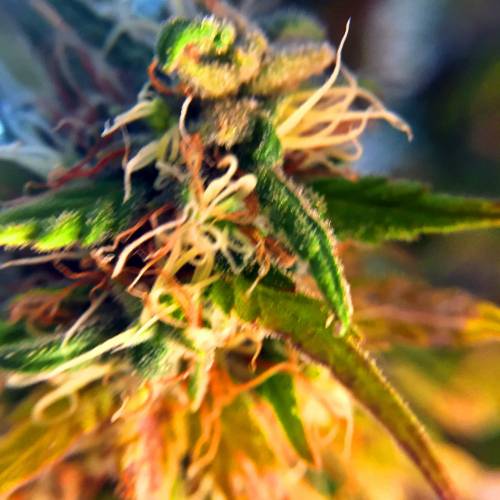
deFharo Tomorrow this plant will be 65 days into flowering, according to the grower it can be extended for another week, just what this plant needs. The smell has intensified, and the trichomes are still clear and milky. The buds are very dense, and this week I've noticed some fattening. I continue alternating watering with nutrients, with others just with spring water and carbohydrates.
Being a purely organic grow, I don't need to do a root wash, and this week, which will be the last, I will continue with the same watering strategy, reserving the last one just with pure water until the pot is completely dry before cutting.
I did a watering with packaged coconut water bought at the supermarket and made from coconut water concentrate; the truth is that the mineral concentration is very high compared to natural coconut water, which has created distrust in me, and I don't plan to use it anymore.
😬 WEEKLY DIET
1) Day 127. WaterM and Humate PK 1.5%. pH: 6.3 EC: 1.45. 800ml.
2) Day 128. Water M, Molasses, MMA 1% and Algae Acid 1%. pH: 6.4 EC: 0.75. 500ml.
3) Day 129. Water M, Honey, Coconut Water PPM: 300, Lacto Guanos 2% and Ormus 1%. pH: 6.4 EC: 1.8. 900ml.
4) Day 130. Water M and Molasses. pH: 6.6 EC: 0.45. 500ml.
5) Day 131. Water M, Molasses, Humate K 1% and Ormus 1%. pH: 6.3 EC: 1.3. 900ml.
6) Day 132. Water M and Molasses. pH: 6.6 EC: 0.35. 600ml.
7) Day 133. Water M, Molasses, Humate M 1.2% and Bio Fruits PK 1%. pH: 6.35 EC: 1.4. 900ml.
See you next week. Greetings to all!! 😅
8 likes
comments
Share
19
Week 19. Harvest6y ago
Happy Harvest Day!

8/10
Rated
Después de una semana fumando esta delicia de variedad, los olores se han acentuado y el humo es muy suave pero muy potente, hasta ahora no he tosido, el sabor es fresco y picante, me recuerda a la marihuana de mi juventud, con toques a microbiología, hongos y sándalo, no he apreciado ningún aroma a diesel o similar. Las semillas baratas-bastardas no son del todo estables, aunque yo me lo fumo todo!!
Los efectos me van a permitir fumar a diario sin interrumpir mis tareas, pero bajando algo las dosis!!
Ha sido un cultivo fácil, la planta se recuperó favorablemente de una crisis de exceso de nutrientes y calor, aunque finalmente, perdí engorde por dar mucha intensidad de luz a las colas, estas permanecen bastante densas después del secado.
Show more
Translate
Spent 127 days
Ger Veg Flo Har
437 g
Bud wet weight per plant
125 g
Bud dry weight per plant
1
Plants
0.24 m²
Grow Room size
Easy
Difficulty

Creative, Relaxed, Uplifted
Positive effects

Earthy, Pungent, Woody
Taste
Height
Day air temperature
Air humidity
PPM
PH
Light schedule
Solution temperature
Night air temperature
Substrate temperature
Pot size
Lamp distance


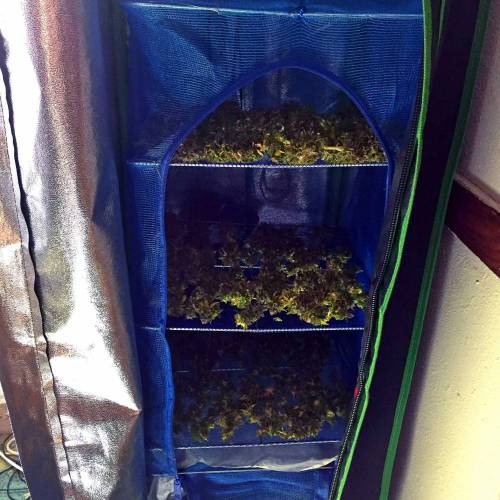


deFharo Today I harvested this plant, on day 70 since the transition to flowering. The plant doesn't emit much smell, but as soon as the buds are touched, a penetrating sweet scent with spicy and forest notes appears.
I manicured all the buds and classified them into 3 types: Small, Medium, and Large. After the first drying, I now have them in glass jars curing with controlled humidity.
The flowers are very sticky, and I harvested it when all the trichomes were milky. I got a nice ball of hash that stuck to my fingers.
Until the next grow, thanks for being there!! 😁
12 likes
1 comment
Share

the end.
Enjoying this diary? Follow for more updates!

Prefer the old Diary view?
Go back to the old Diary view