


Autoflower Seedling Stage Problem?

pinknitestarted grow question 9mo ago
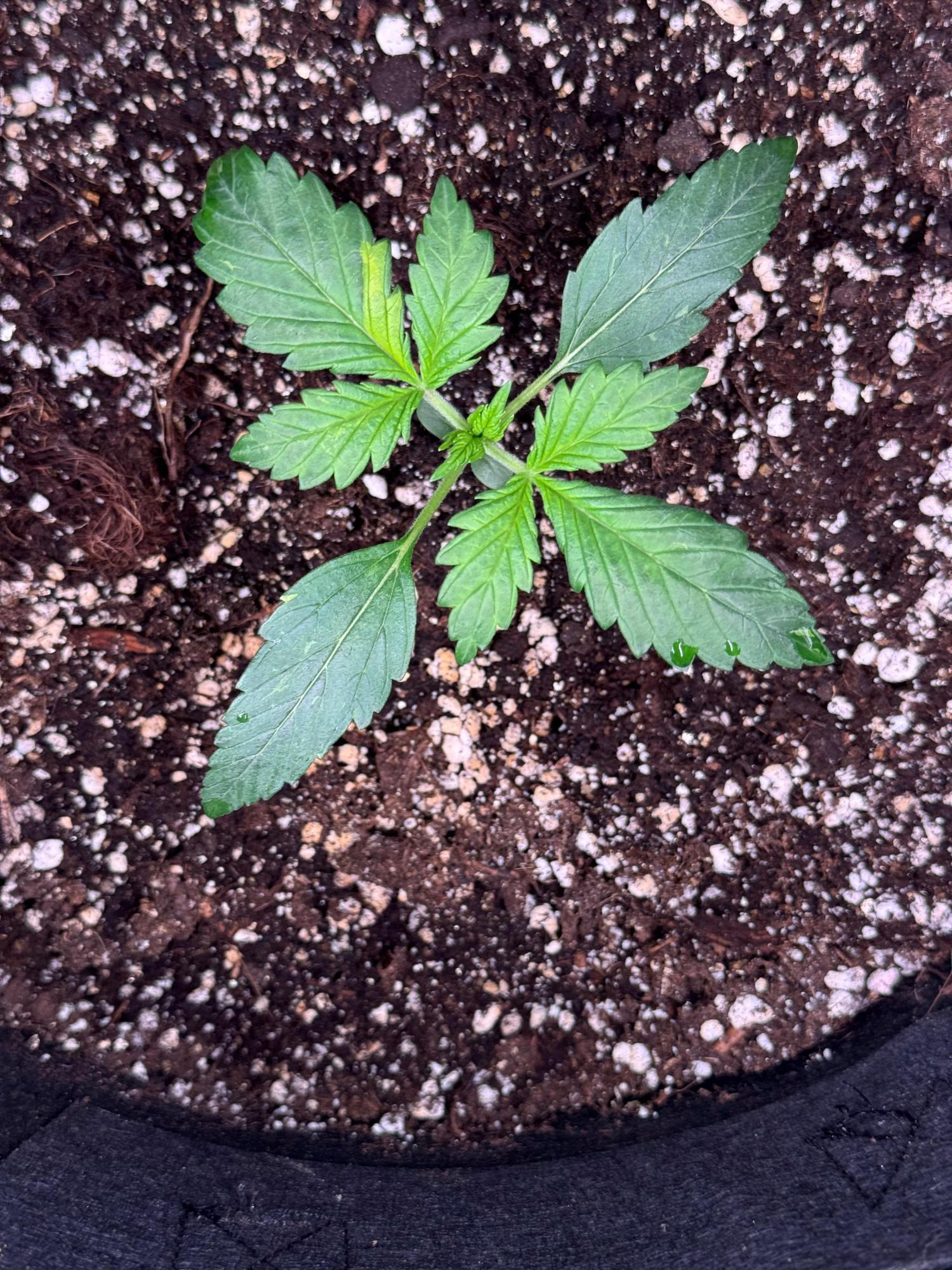
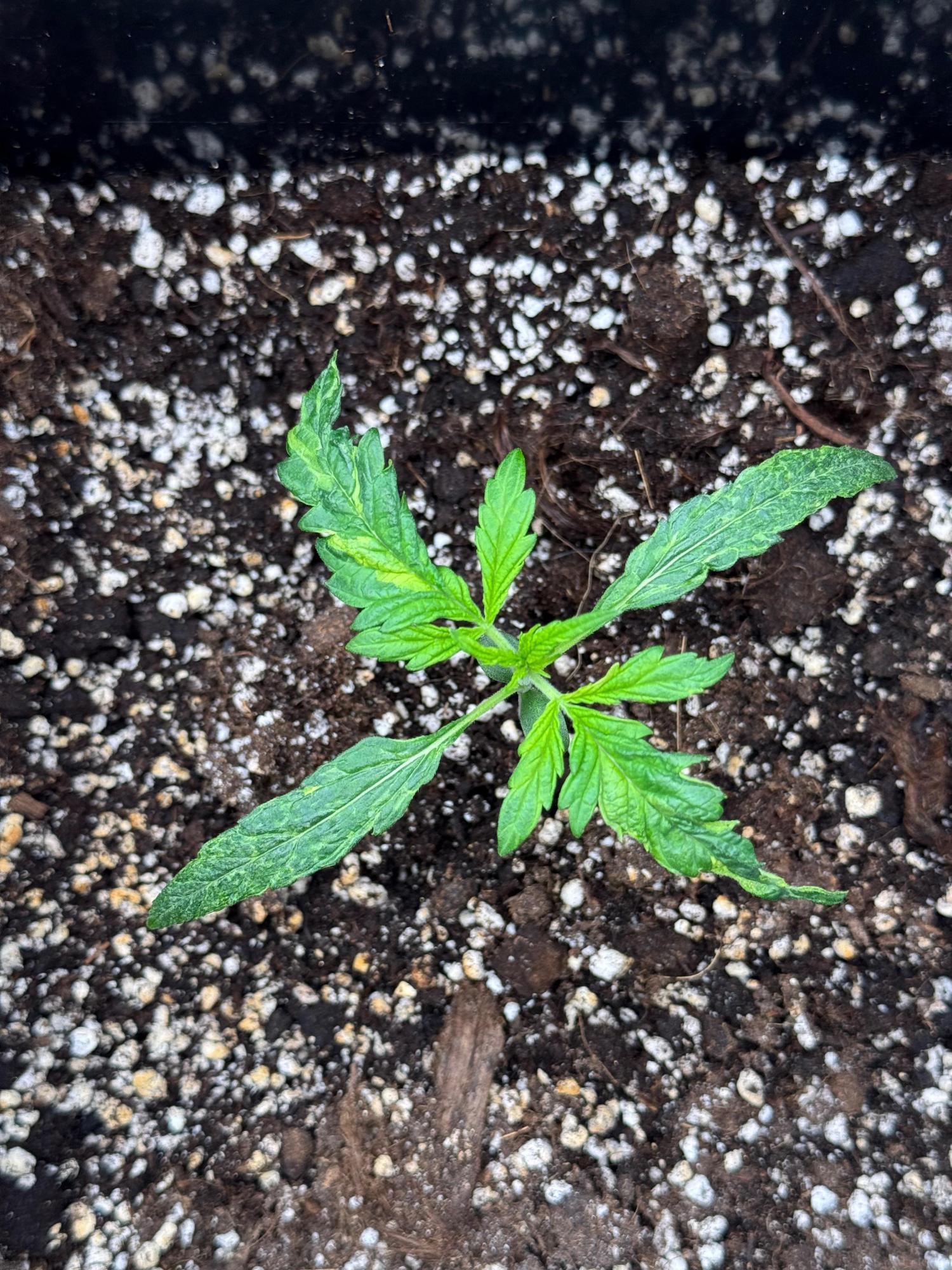
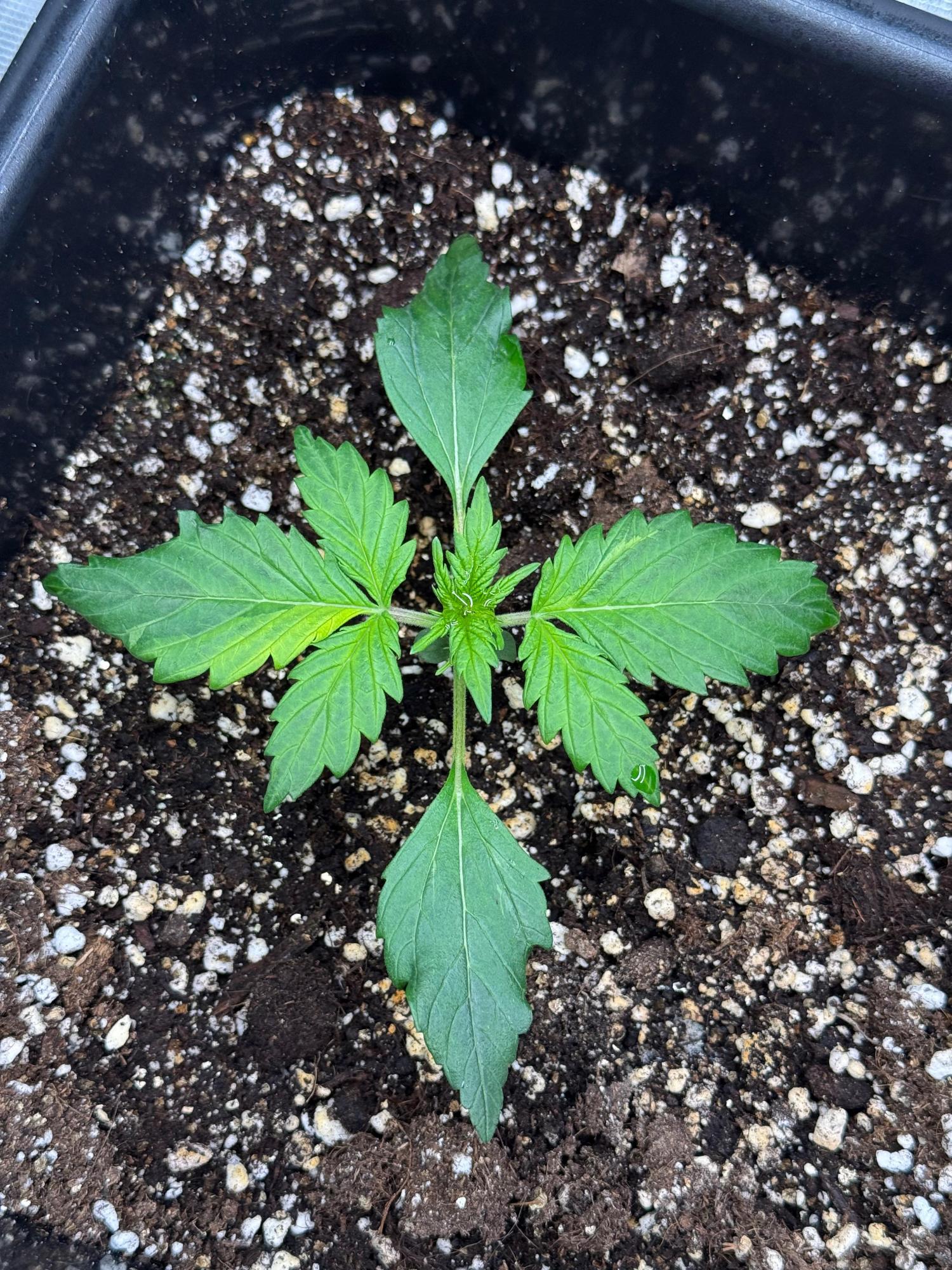
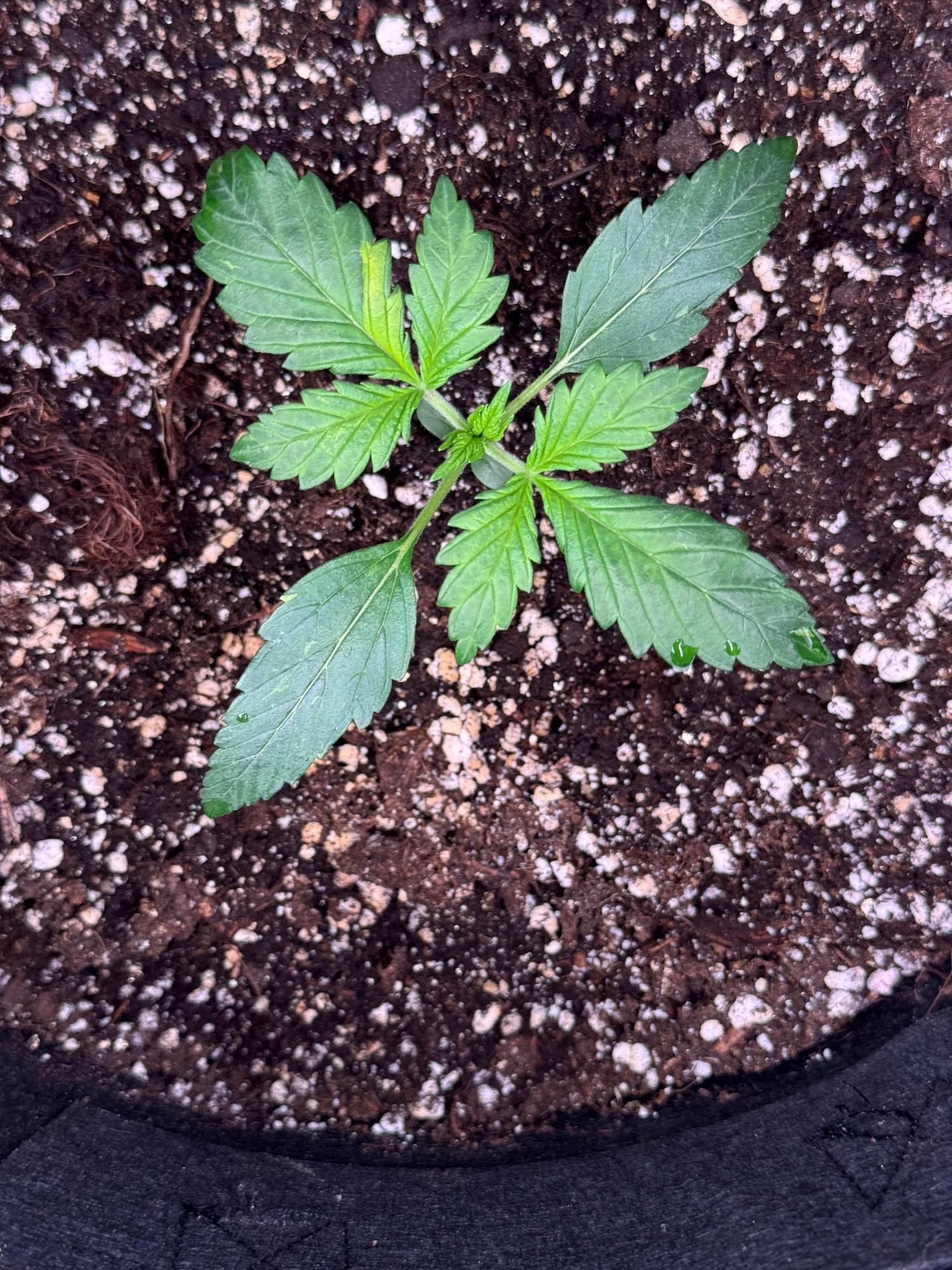
Symptoms: Slowed growth + Disfigured leaves: thin, hanging down, weird shapes + Discoloration of leaves
Strain: Sherbet Queen Auto
Age: Week 3 - Day 22
Substrate: Plagron Lightmix / Perlite / Vermiculite (50% / 40% / 10%)
Temperature: 16-24 Celsius / Humidity: 40-75% (Low-High)
Solved
2 likes

DogDoctorOfficialanswered grow question 9mo ago
Hey buddy, thanks for the clear description and photos, that really helps.
First thing: don’t panic. At week 3 / day 22, this doesn’t look like anything catastrophic. It looks more like a young plant struggling with balance, not disease or genetics failure.
Since you’re using Plagron Lightmix (same base many of us use), the most common causes at this stage are:
• Overwatering / wet root zone
Lightmix drains well, but young roots are still small. If the pot stays wet too long, growth slows and leaves can look thin, droopy, or oddly shaped.
• Environmental swings
A range of 16–24°C and 40–75% RH is quite wide for a seedling. She’ll tolerate it, but consistency really matters at this age.
• Early stress, not deficiency
Discoloration and weird leaf shapes this early are often stress-related, not a nutrient problem, especially in Lightmix.
What I’d personally do now:
• Let the pot dry a bit more between waterings
• Keep temps closer to the middle (around 22–24°C if possible)
• Aim for steadier humidity rather than chasing numbers
• Avoid adding extra nutrients for now
New growth is the key thing to watch. If new leaves start coming in healthier, the plant is already correcting herself.
Autos especially can look “ugly” early on and then completely turn around once roots establish.
This is just my humble opinion, follow your instincts, observe daily, and adjust gently.
Thanks again for sharing,Growers Love and don’t worry, she still has plenty of time to grow 🌱

Kushycatanswered grow question 9mo ago
Hi,
In the third picture, and especially in the enlarged view, you can clearly see that it is flowering.
To be honest, I think that due to the delayed/stunted growth, it will not develop much more leaf mass or length during the stretch.
I wouldn't expect too much, maybe a small bud. Perhaps resow and let it live, or bury it.
Kushy out.
Rue is a Cat
1 like
Complain

Organomananswered grow question 9mo ago
3 out of the 4 look fine and should improve as they get older........plant 2 is weird and is not a plant I would bother with.
When growing, you need to learn to accept that not all seeds are destined for greatness, some just don't make it.
This is why it is essential to plant more seeds than you think you will need, so that you can cull any duds and only grow on the best and healthiest seedlings.
1 like
Complain

DrGruenanswered grow question 9mo ago
hi........
I think you watered too much in the early phase and the soil was too moist..........
Water less and keep an eye on the whole thing.
I think then the next leaves will grow normally again.
Good luck!
2 likes
Complain

JUNGLE_B4RNSanswered grow question 9mo ago
Check the EC and pH levels of the soil by analyzing the drain from the pot.
It’s the only way to know accurately what’s going on.
Otherwise the diagnosis can only be based on suspicions and guesses ….
1 like
Complain

ExAlchemistanswered grow question 9mo ago
Phosphorus (P) deficiency can cause disfigured leaves, while often described as "stunted" or "spindly," the overall lack of energy (ATP) causes leaves to lose vigor, appearing weak, thin, and drooping downward. Phosphorus (P) deficiency in plants can be directly caused or exacerbated by hypoxia (low oxygen availability in the soil), typically resulting from waterlogging, flooding, or poor soil aeration. 16-24°C converts to 60.8-75.2°F, that's a metabolic slog at 75F, Oxygen can easily be locked out in a sense if the medium is oversaturated, even if oxygen is present.
Optimal temp for photosynthesis is a internal leaf surface temp of 86F,
The enzyme Phosphofructokinase-1 (PFK1), which acts as a key rate-limiting step (pacemaker) in glycolysis during cellular respiration, generally functions optimally at warm temperatures, typically in the range of 86°F
Evaporation is a key, energy-dependent (endothermic) way water moves into the atmosphere, but gravity and biological processes (like transpiration) are equally essential for moving water through and across the surface of the earth. Transpiration can only pull where roots can penetrate, transpiration is the primary process that maintains the water balance (and thus the turgor pressure) necessary for structural support, Turgor is created when water enters cells via osmosis, creating a positive pressure (turgidity) that keeps the plant firm and upright. Transpiration (water loss through stomata) creates a negative pressure (tension) in the xylem that pulls water up from the roots. While this transpiration stream brings water to the leaves, excessive transpiration leads to water loss, which reduces the turgidity in cells, causing them to wilt. transpiration keeps the plant hydrated by pulling water upward, but it is the osmotic movement of water into the cells that generates the actual turgor pressure.
Root penetration is a fundamental biological process driven primarily by turgor pressure.
Soggy wet low energy cold metabolic conditions, potential hypoxic conditions, locking P. Phosphorus (P) is widely considered one of the most, if not the most, critical nutrients for early seedling development and establishment. It is essential during the first 2–6 weeks of growth to support energy transfer, cell division, and root development.
1 like
Complain

Purrple_Hazeanswered grow question 9mo ago
Hey Growmie 💚
At week 3, those symptoms together usually point to root-zone stress, not a single deficiency.
A few things stand out to me:
Temps: 16°C on the low end is quite cold for an auto, especially for the roots. Cold roots slow growth and can cause twisted, droopy leaves and discoloration.
Humidity swings: 40–75% is a big range. Rapid changes can stress young plants and mess with transpiration.
Very airy mix: 40% perlite + vermiculite drains fast, which is good, but it can also dry unevenly and stress roots if watering isn’t dialed in.
What I’d do:
Try to keep temps more stable, ideally 20–24°C, especially at the root zone.
Aim for more consistent RH (around 60–65% at this stage).
Check watering — avoid frequent small waterings. Let the medium dry slightly, then water thoroughly.
Don’t push nutrients yet; Lightmix + an auto at day 22 doesn’t need much.
If the new growth starts coming in healthier, you’re back on track. Autos are sensitive early on, but they can recover quickly once conditions stabilize 🌱
1 like
Complain