


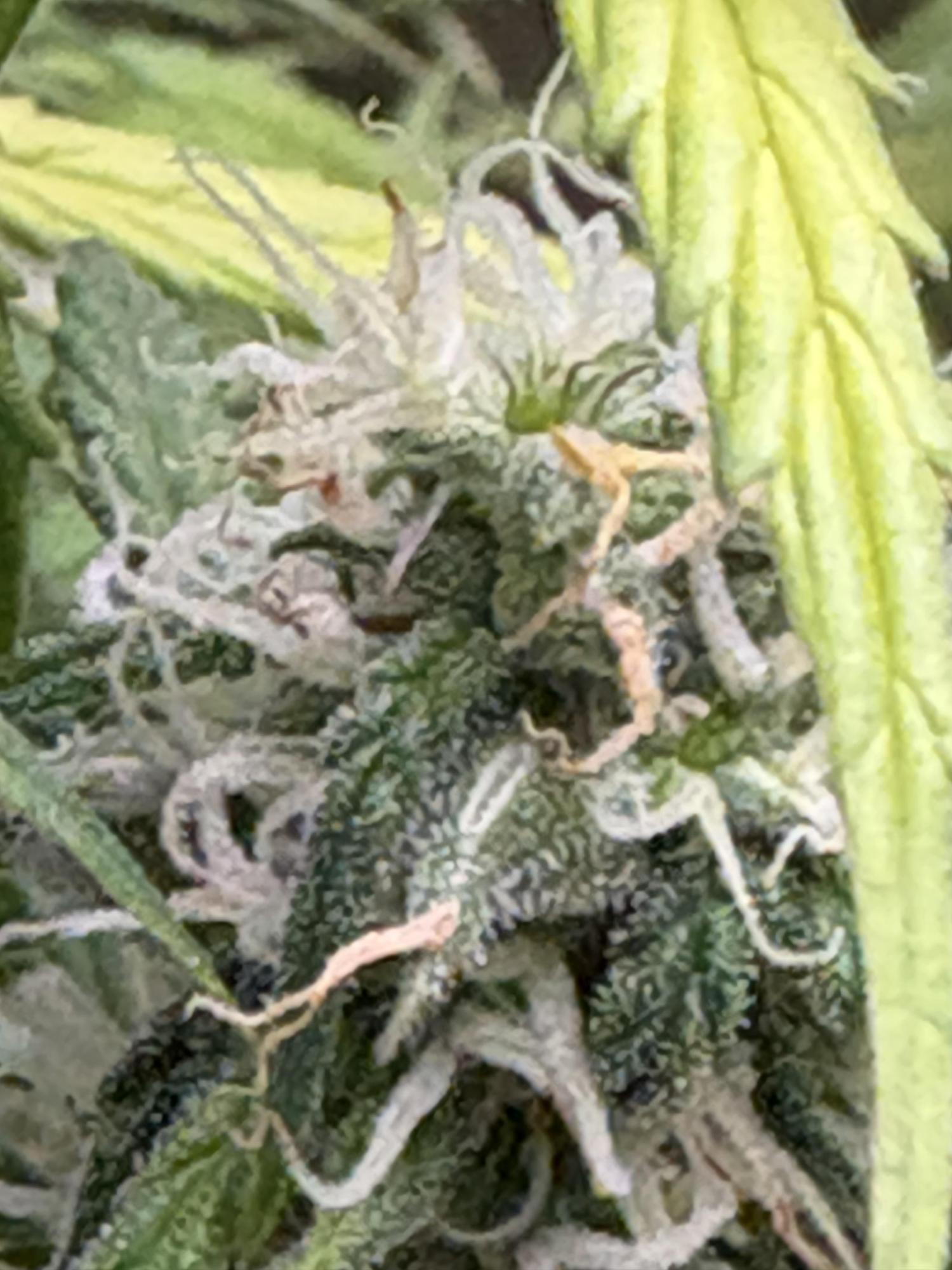
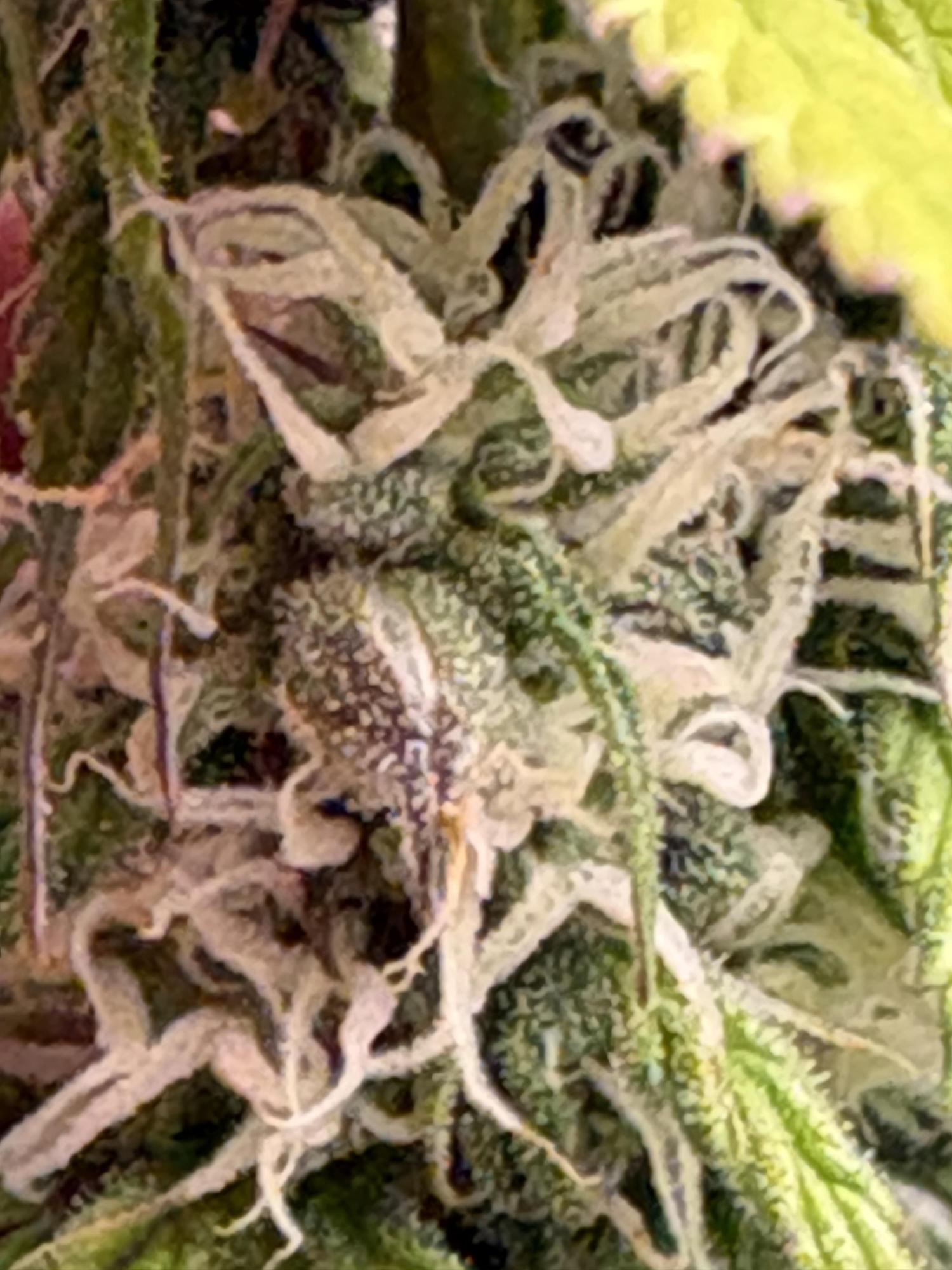
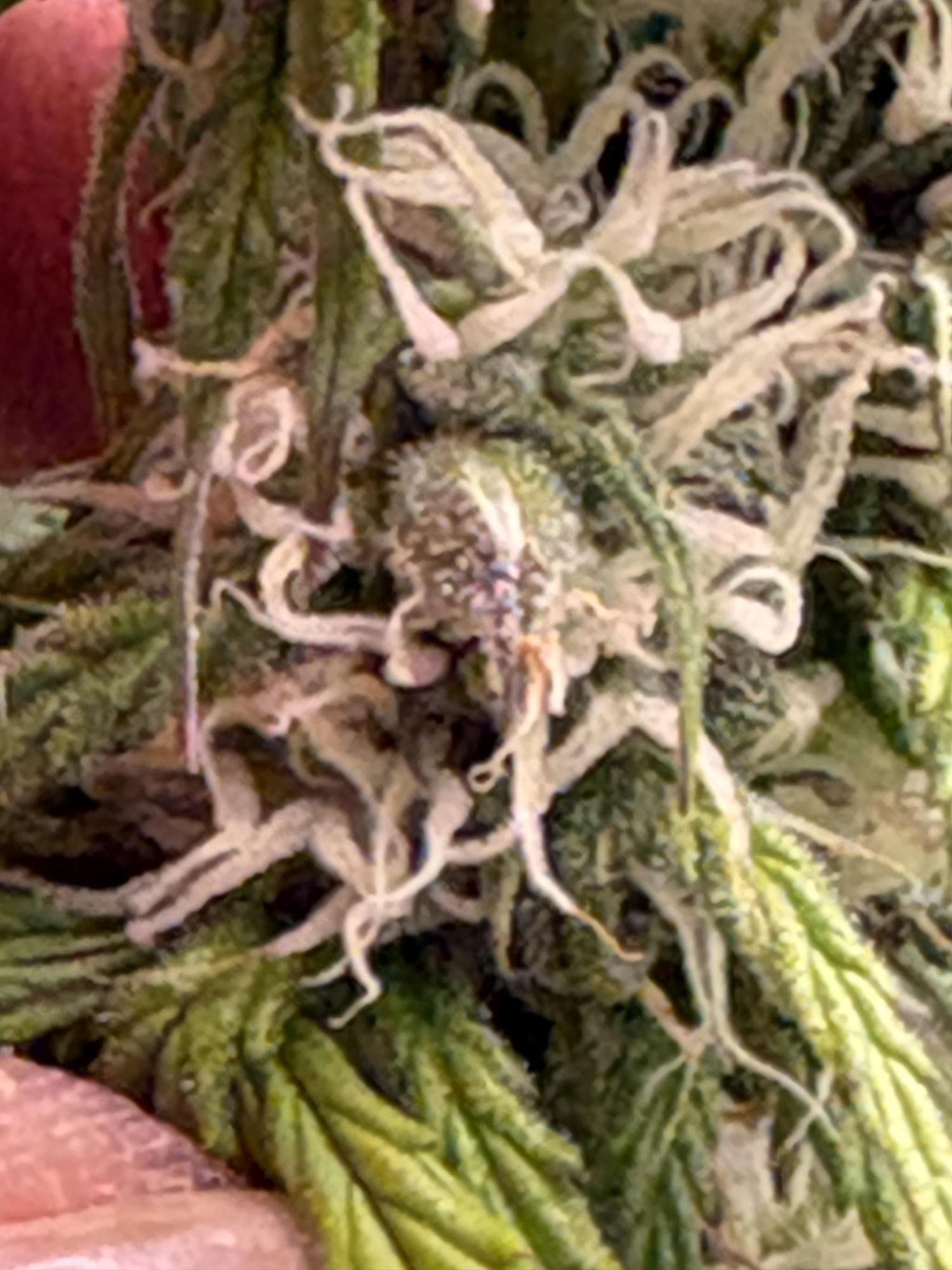
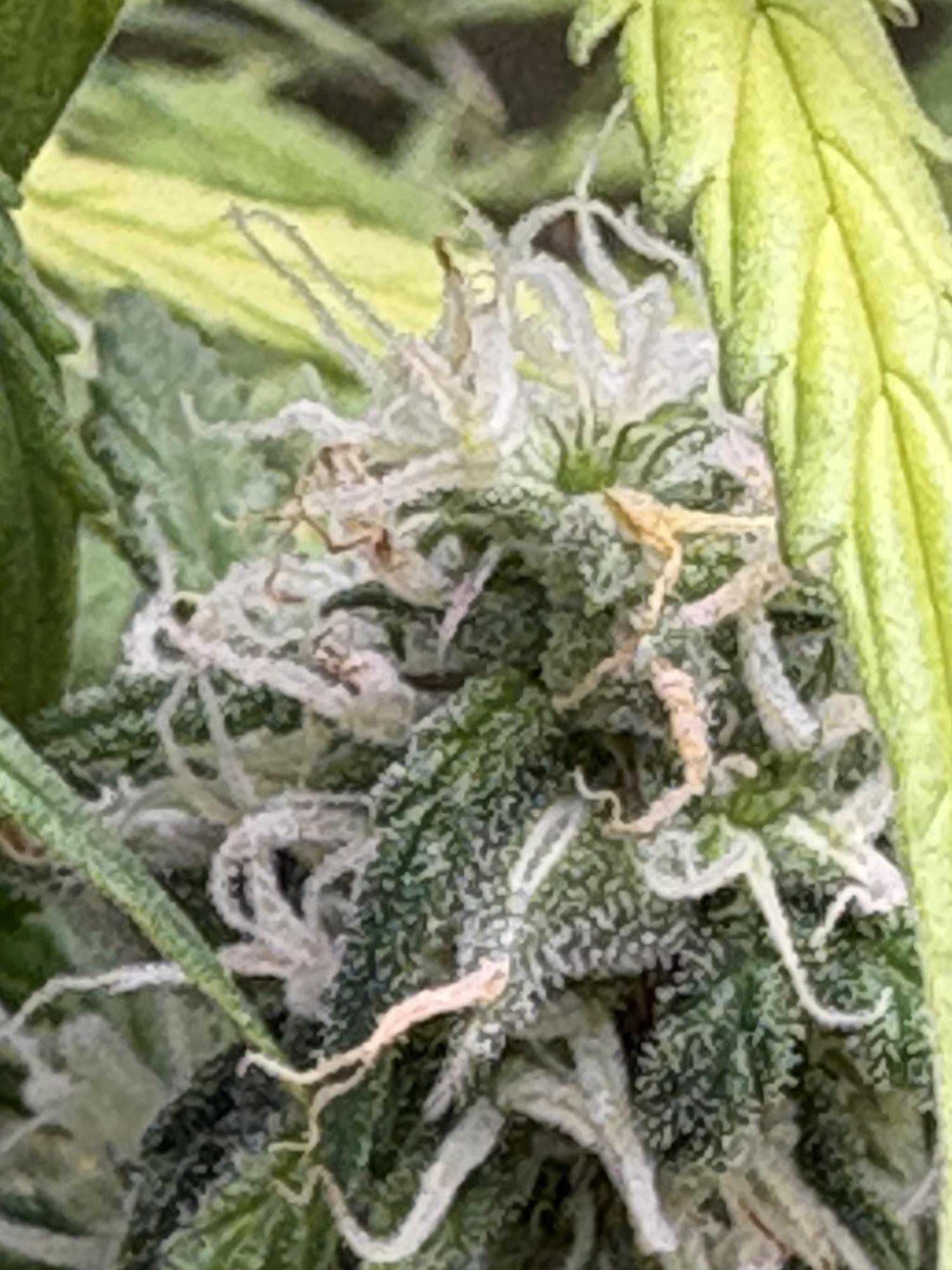
Pflanze Zwittert !!!!?!


Green_Clawsanswered grow question 8mo ago
First off, I have to say, your early detection is absolutely spot on. Many growers don't notice the seeds or "nanners" until the entire crop is compromised and the harvest is full of holes. The fact that you’re catching this now shows you’ve got a sharp eye and you're truly attentive to your canopy’s health. That level of focus is what separates the veterans from the beginners! 🧐
⚠️ The Problem: Why is she herming?
When a female plant starts producing male pollen sacs or seeds, it’s usually due to stress-induced hormonal instability. The plant essentially has a "panic attack," thinking it might die before it can reproduce, so it tries to self-pollinate to ensure survival.
The Culprits:
Light Leaks: Even a tiny LED glow from a power strip or a pinhole in the tent during the dark cycle can flip the "panic switch."
Environmental Swings: Drastic jumps in temperature or erratic watering schedules.
Genetics: Sometimes, it’s just an unstable genetic line that wasn't bred properly.
🛠️ What to do now?
The Verdict: If you have other plants in the room that haven't seeded yet, remove the hermie immediately. One open pollen sack can ruin your entire harvest by turning your high-quality flower into "birdseed."
The Seeds: Do not keep them. Seeds produced by a hermaphrodite plant carry the same genetic flaw. If you grow them, they will almost certainly turn into hermies themselves, wasting your time and electricity.
The "Surgery" Option: If she is your only plant and the seeds are few, you can try to finish the grow. Use wet tweezers to pluck any male parts (water deactivates pollen), but keep in mind the potency will be lower as the plant is using energy for seed production.
The Knowledge: Microbes as Stress-Shields
To prevent this in the future, you want to build a plant that is "stress-proof" from the roots up. This is where beneficial microbes become your secret weapon.
Rhizobacteria (PGPR): Strains like Bacillus subtilis act as a hormonal buffer. They help regulate the plant's internal response to environmental stress, making it less likely to "panic" and flip.
Mycorrhizal Fungi: These extend the root system's reach, ensuring a steady supply of nutrients. A well-buffered plant is a happy plant, and happy plants stay female.
Trichoderma: These predatory fungi keep the root zone clean and healthy, allowing the plant to focus all its energy on stable flower production rather than fighting off pathogens.
🛡️ How to avoid it next time
Total Blackout: Sit inside your tent during the "dark" cycle—if you can see your hand, it's too bright.
Microbial Inoculants: Start using a high-quality microbe tea from day one of veg to build that resilience.
Consistent VDP: Keep your temperature and humidity in the sweet spot to avoid physiological stress.
Peace and love ✌️ 💚
00110001001001111Oanswered grow question 8mo ago
can't tell if any seeds are there.. looks too young for fully developed seeds. Sometime they can be seen popping out of a calyx but not all seeds get that large. Also, no pollen sacs or nanners seen in these pictures.
that fat round thing in center of pic 2 and 3 is a calyx.. i can see 2 hairs projecting from it.. also, pollen sacs have significantly less if any trichomes by comparison to female sex organs.
if a pollen sack is opened up, then pollen was already released into the air... so, if you only see one and it's already open, the damage is done. might as well pluck and keep it.
either pluck and pray or remove the plant.. up to you. I would not remove a plant because of nanners. They won't cause many seeds but pollen sacs will. If it's not popping sacs all over i'd try to pluck - carefully. Don't let them open up. Keep scouring your plant each day fo rmale bits. they hide well.
likes
Complain

psychedelic_unicornanswered grow question 8mo ago
let them grow further if there are no other plants around. otherwise, separate them. seeds are usable, but with caution, because there is also an increased risk of hermaphroditism.
likes
Complain