


Yellow spots in Veg. pH lock?

GracelessGardensstarted grow question 4mo ago
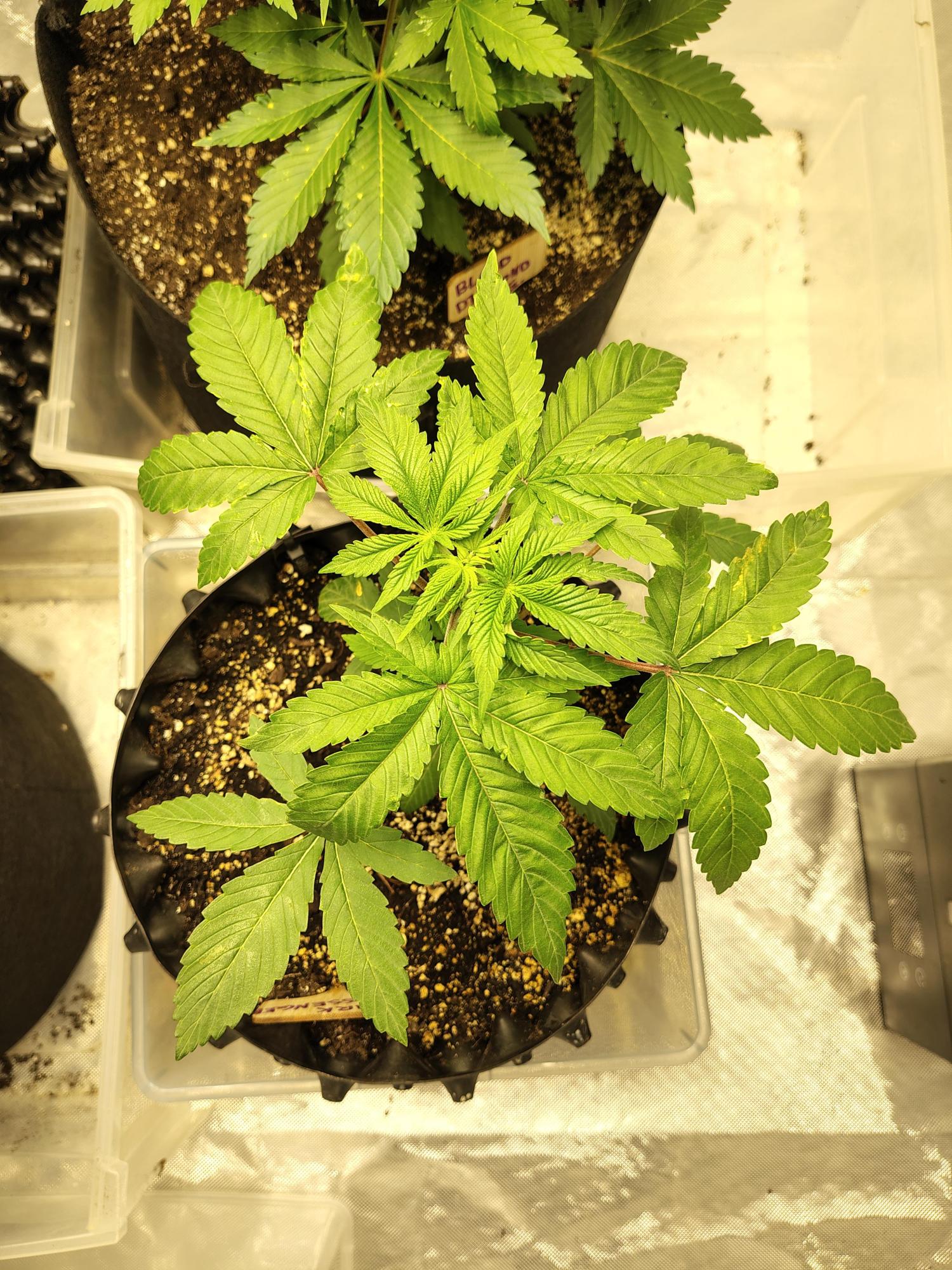
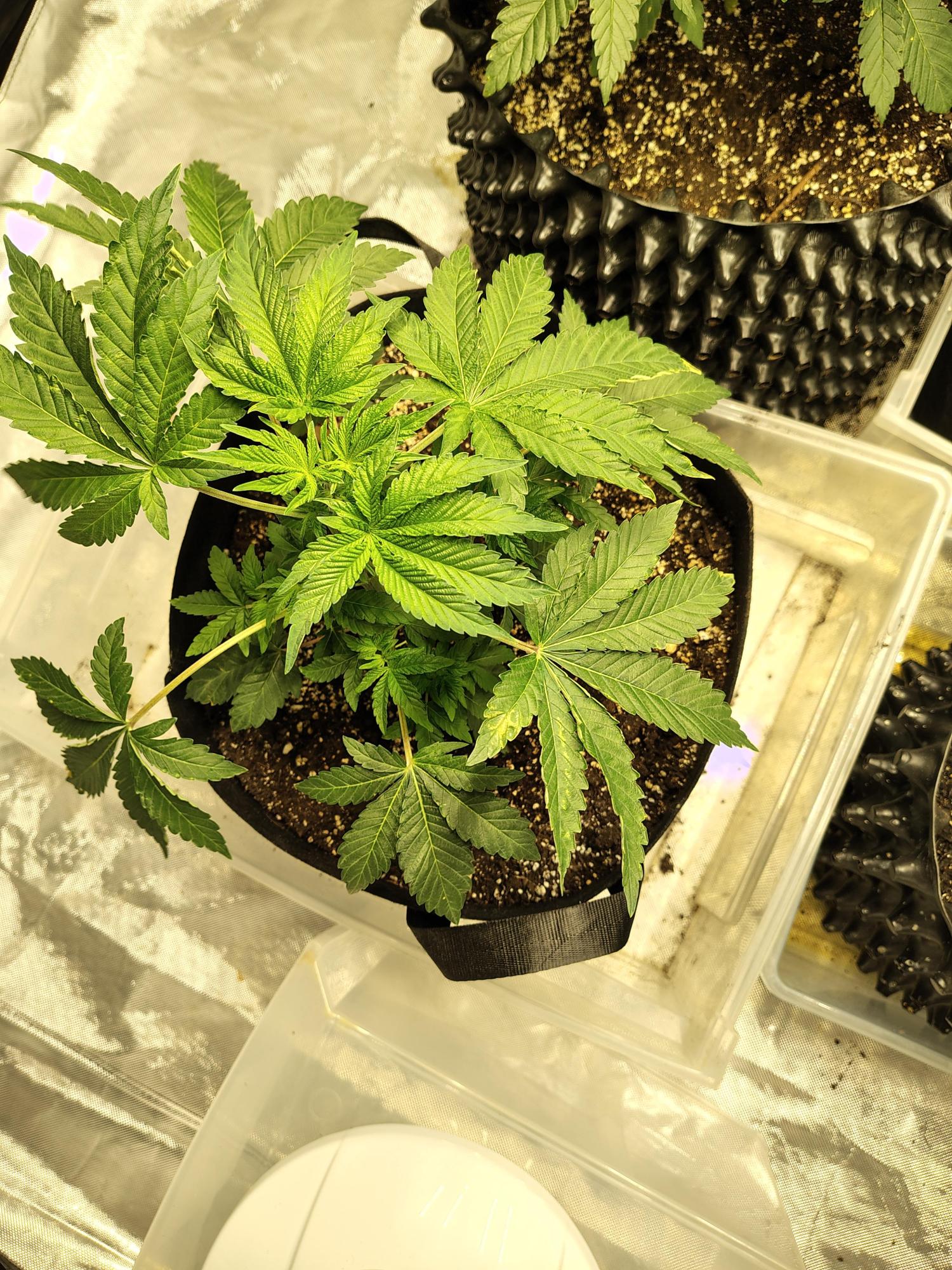
In week 5 pics of plant from above. Some of the leaves have small yellow spotting or little edges yellow. I tested run-off at 7.5 pH. I assume they are having a bit of nutrient lockout. Going to flush with plain 6.2pH water this week. Anyone notice any else that could be issues?
Solved
Week 4 3 likes

DudeGrowsWeedanswered grow question 4mo ago
From my experience the entire plant yellowing in organic soil, like CoM Stonington Blend (I use this also btw) it’s a sign of overwatering, not ph. I’d recommend working on dialing in your watering routine before anything else. Good luck 👍

PharmaZanswered grow question 4mo ago
How high is the light? At full power In veg probably 18-24” @ 18/6hrs
Reason I say that is the leaf edges are curling/tachoing this is from heat/light stress
Accompanied with inadequate magnesium absorption. Potentially also causing high PH from evaporation due to light and heat.
My advice would be to lift the light, if you have kelp (Ascophyllum nodosum)
I would give them a nice soak with run off then leave watering until the pots have dried out. You shouldn’t need to adjust the PH too much you can end up with more problems.
The soil should be managing the PH for you mostly.
It’s important to get your watering practices dialed in, more than adjusting the PH too much
likes
Complain
PharmaZanswered grow question 4mo ago
How high is the light? At full power In veg probably 18-24” @ 18/6hrs
Reason I say that is the leaf edges are curling/tachoing this is from heat/light stress
Accompanied with inadequate magnesium absorption. Potentially also causing high PH from evaporation due to light and heat.
My advice would be to lift the light, if you have kelp (Ascophyllum nodosum)
I would give them a nice soak with run off then leave watering until the pots have dried out. You shouldn’t need to adjust the PH too much you can end up with more problems.
The soil should be managing the PH for you mostly.
It’s important to get your watering practices dialed in, more than adjusting the PH too much
likes
Complain
PharmaZanswered grow question 4mo ago
How high is the light? At full power In veg probably 18-24” @ 18/6hrs
Reason I say that is the leaf edges are curling/tachoing this is from heat/light stress
Accompanied with inadequate magnesium absorption. Potentially also causing high PH from evaporation due to light and heat.
My advice would be to lift the light, if you have kelp (Ascophyllum nodosum)
I would give them a nice soak with run off then leave watering until the pots have dried out. You shouldn’t need to adjust the PH too much you can end up with more problems.
The soil should be managing the PH for you mostly.
It’s important to get your watering practices dialed in, more than adjusting the PH too much
likes
Complain
PharmaZanswered grow question 4mo ago
How high is the light? At full power In veg probably 18-24” @ 18/6hrs
Reason I say that is the leaf edges are curling/tachoing this is from heat/light stress
Accompanied with inadequate magnesium absorption. Potentially also causing high PH from evaporation due to light and heat.
My advice would be to lift the light, if you have kelp (Ascophyllum nodosum)
I would give them a nice soak with run off then leave watering until the pots have dried out. You shouldn’t need to adjust the PH too much you can end up with more problems.
The soil should be managing the PH for you mostly.
It’s important to get your watering practices dialed in, more than adjusting the PH too much
likes
Complain
PharmaZanswered grow question 4mo ago
How high is the light? At full power In veg probably 18-24” @ 18/6hrs
Reason I say that is the leaf edges are curling/tachoing this is from heat/light stress
Accompanied with inadequate magnesium absorption. Potentially also causing high PH from evaporation due to light and heat.
My advice would be to lift the light, if you have kelp (Ascophyllum nodosum)
I would give them a nice soak with run off then leave watering until the pots have dried out. You shouldn’t need to adjust the PH too much you can end up with more problems.
The soil should be managing the PH for you mostly.
It’s important to get your watering practices dialed in, more than adjusting the PH too much
likes
Complain

Altitonans_Fulmenanswered grow question 4mo ago
Potential Hydrogen or pH, for plants, is also sorta a balance of cations and anions. For it to spike above 7.5, there are too many cations and not enough anions; this skewing of the ratio has messed up the pH.
The rate at which nitrogen is released into the medium's EC when using organics is heavily dictated by pH; the higher towards alkalininity she goes, the faster the breakdown and concurrent "mineralization" of nitrogen. If this outpaces the plant's use for nitrogen, there will be a buildup of "excess" nitrogen in the immediate EC. This ratio is a delicate balance. Cool down vigorous microbes, make sure soil does not exceed 74F. Limit moisture fluctuation. Letting the soil become bone dry kills off microfauna, but sudden re-wetting causes nutrient bombs to explode. Maintain consistent moisture.
Stonington Blend is rich in organic inputs (lobster meal, kelp, compost). When microbes break down these inputs rapidly, they release ammonium NH4+ a cation. A high concentration of NH4+ can temporarily alter root zone dynamics. As plants take up NH4}+, they release H+ ions to maintain electrical balance, which locally lowers pH. However, if soil microbes rapidly convert that ammonium into nitrate NO3- via nitrification, they can trigger pH fluctuation, and a higher pH accelerates microbial activity. This creates a runaway loop: higher pH, faster breakdown, massive nitrogen release, toxic accumulation in the electrical conductivity (EC) of the soil solution, and skewed pH from imbalance.
If the pH were going down, it would most likely be oxygen-based deprivation.
Flush to reset the immediate EC, or give the medium sugar in the form of carbon, the micros will use excess nitrogen lying around in EC to convert the excess sugars (tricky and not recommended without homework)
Nitrate and ammonium have opposite mobilities because of their ionic charges, directly affecting how they interact with the soil's Cation Exchange Capacity (CEC). Positively charged ammonium binds to soil particles, requiring intense flushing to displace, while negatively charged nitrate repels soil colloids, moving freely with water.
Nitrate NO3- is a negatively charged anion. Highly mobile in soil water, readily taken up by plants, but prone to leaching into groundwater if not managed.
Ammonium NH4+ A positively charged cation. It is energetically efficient for plants to utilize, adheres to negatively charged soil particles (preventing leaching), and is absorbed directly by roots.
Advise you to get a bigger CEC buffer.
What I find normally happens is that people flush, all the NH4+ stays, and rapidly converts back to lockout. Flush accordingly or do it again in 1 week.
Or you could go with the GD hobby growers' special needs "keeping it simple" answer: just add CalMag!
Good day to you and yours.
2 likes
Complain