


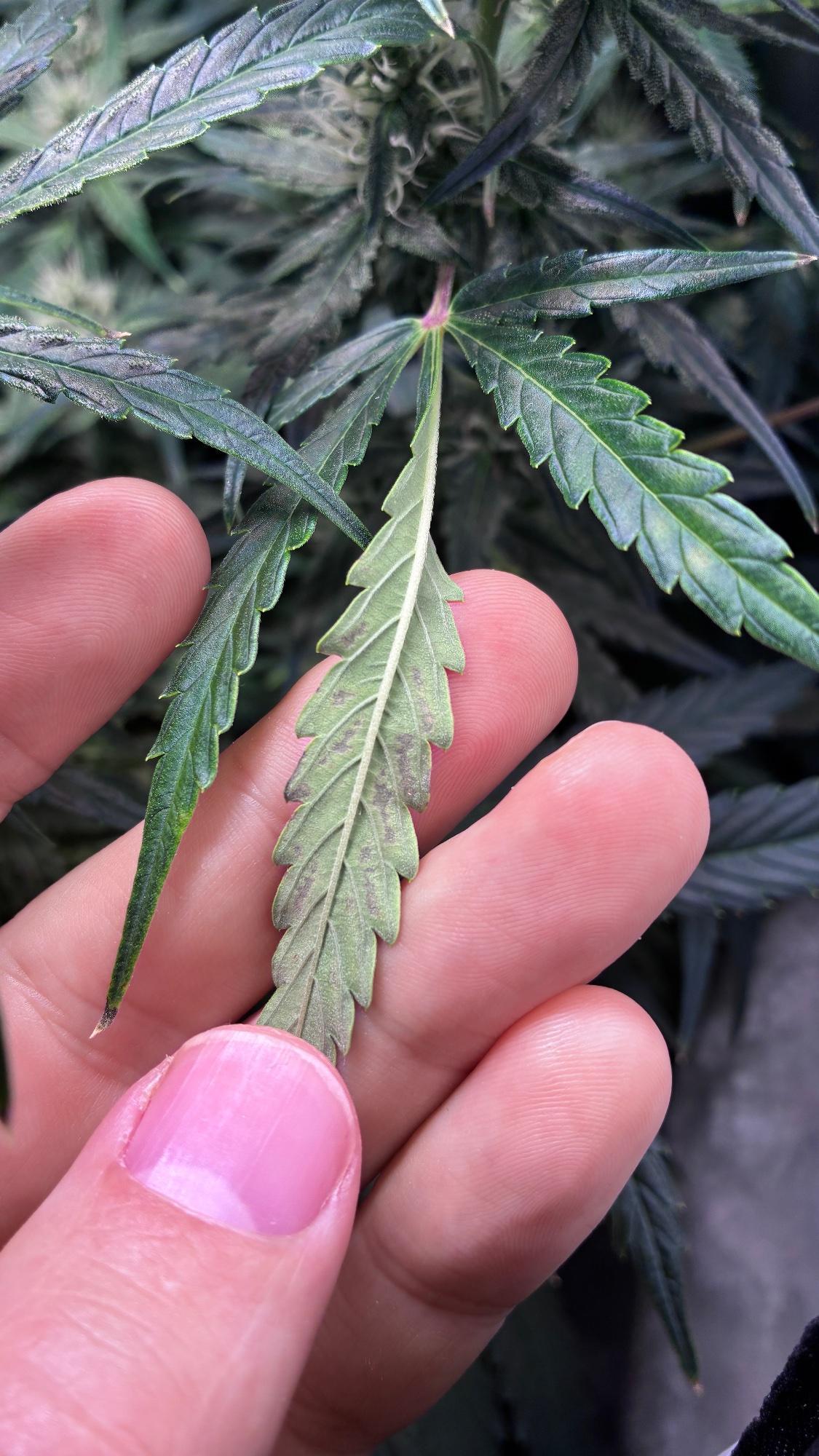
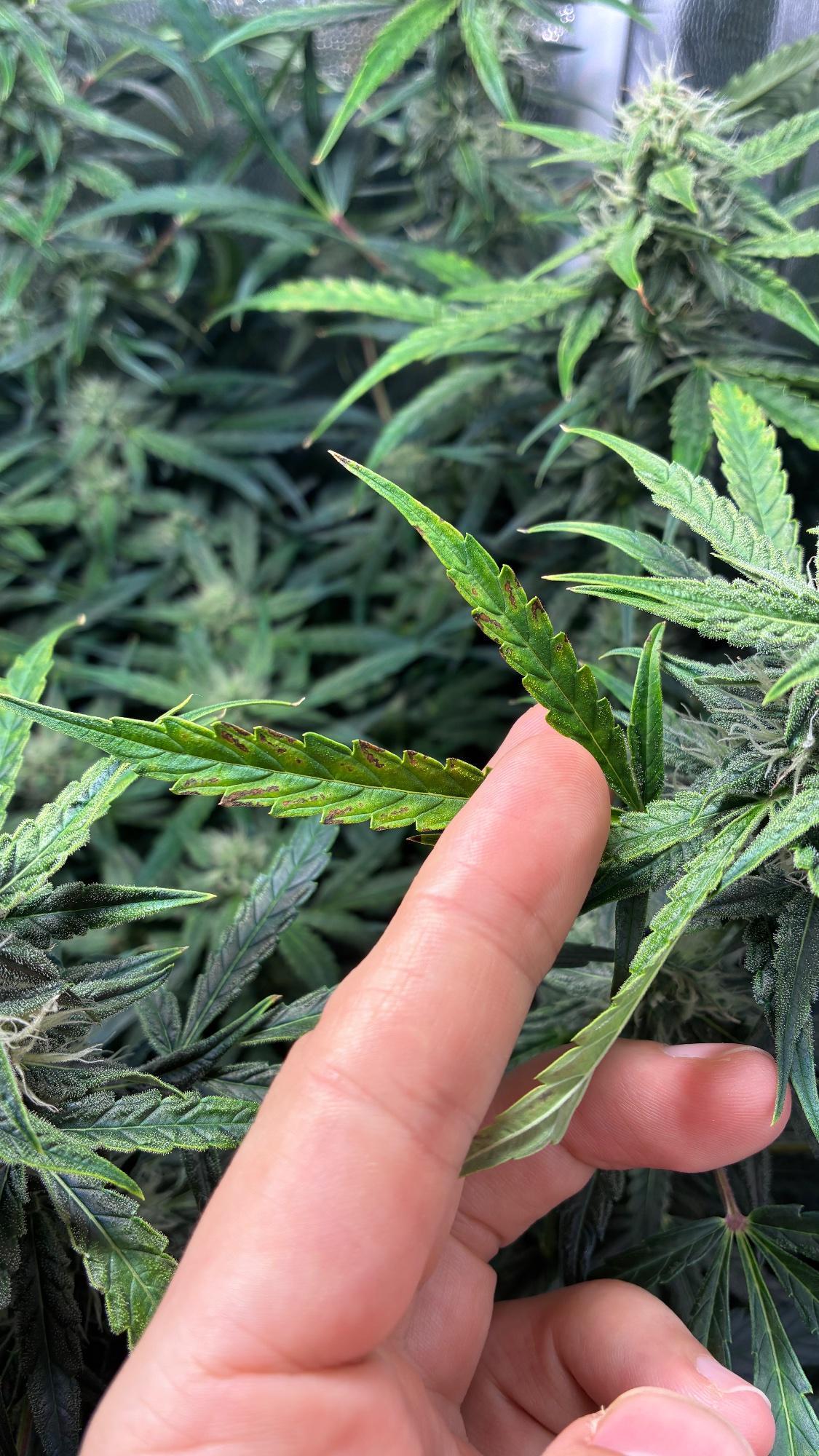
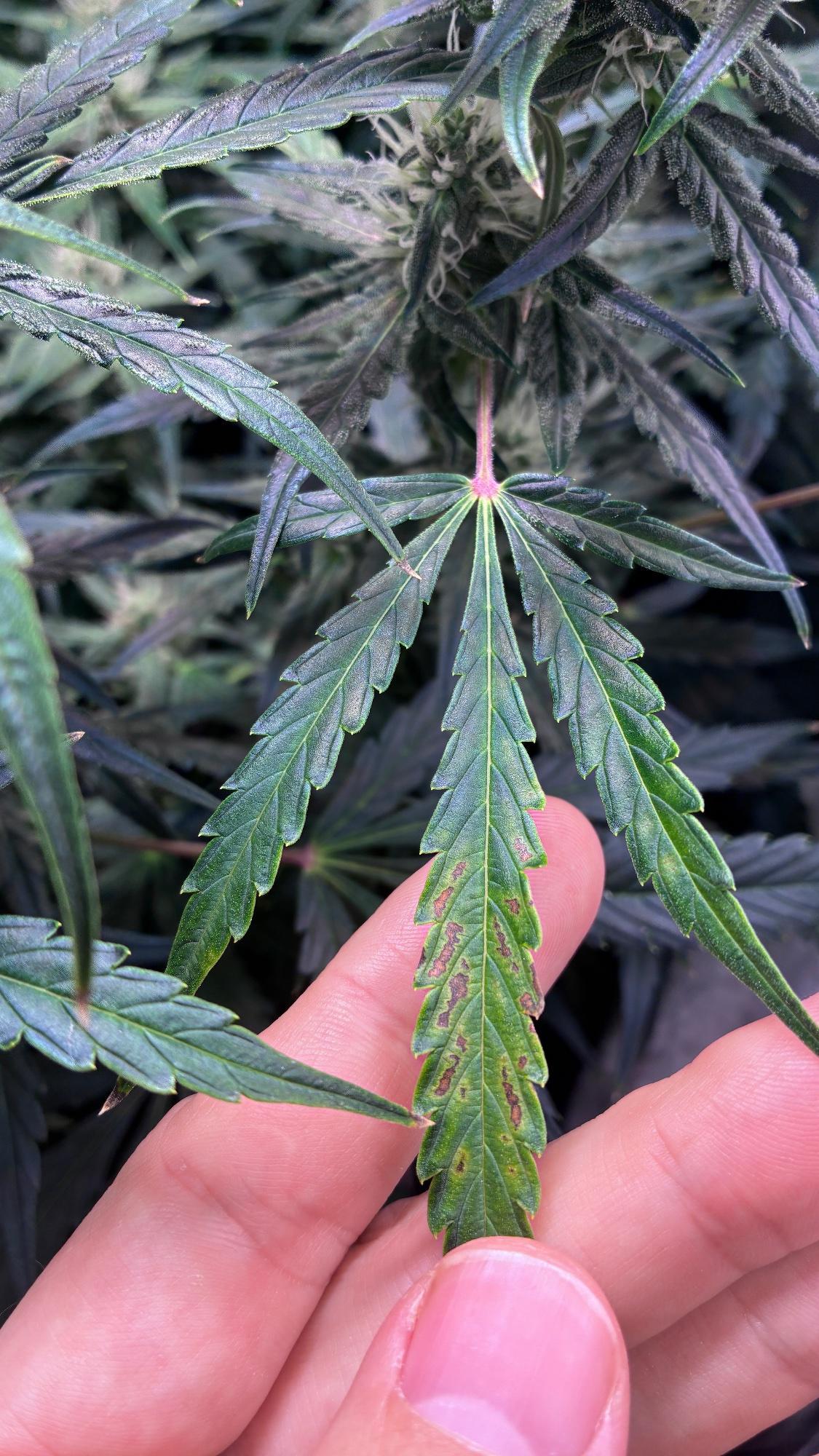
brown splotches upper leafs

Altitonans_Fulmenanswered grow question 2mo ago
Lemme seee Walter.....
#1
While many growers run autoflowers on a 18/6 or 24/0 light cycle because they do not need darkness to flower, blasting them with continuous light ignores their metabolic rhythms. Daytime photosynthesis (light reactions) must balance with carbon fixation and tissue building (the Calvin cycle) to prevent growth bottlenecks. Plants undergo cellular respiration 24/7, but they require oxidative capacity to do so. A leaf fully engaged in active photosynthesis cannot efficiently manage cellular respiration at the same time.
The viral trend of stripping away every leaf that isn't getting "perfect light" actually does more harm than good. A common misconception is that respiration only happens in the dark, but plants breathe 24/7. When you over-prune, you force the remaining leaves to carry the entire metabolic workload. While photosynthesis captures light energy and stores it as carbon, cellular respiration is what actually unlocks that stored energy into usable ATP.
However, respiration is only about 30% to 40% efficient, yielding roughly 30 to 32 ATP molecules per glucose molecule. The remaining 60% to 70% of that energy isn't wasted; it escapes into the environment as heat. This metabolic heat plays a critical role in regulating the plant's internal temperature and driving transpiration. Stripping lower leaves disrupts this delicate balance, especially under sub-optimal growing conditions for oxidative phosphorylation to occur. (Final stage of conversion responsible for 90% ATP release).
Stripping lower leaves directly reduces a plant's capacity for oxidative phosphorylation by cutting off the source of sugars needed to fuel cellular respiration. Lower leaves act as vital energy reserves; removing them starves the plant of glucose, drops ATP production, and reduces the metabolic heat required to survive environmental stress.
Stop it.
Most likely from your rapid wet/dry cycle, causing EC to spike dramatically; this causes a lot of problems with electrical bulk flow, which stops most calcium flow. Also looks to be a little too much nitrogen; tip edges show symptomatic damage from osmotic shock (EC).
No point hitting 50DLI unless you are in your 86F ambient; metabolic temps must match, otherwise plant spends ALOt of its energy protecting itself rather than growing. Reduce to 40- 45; pushing too hard, not enough capacity to make it through the day; remember 90% of plant water use is cooling. When you water more than once a day, it makes it difficult to achieve efficient soil composition/saturation for respiration; EC spikes dramatically near end of day.
Also, bottom-watering, which means you can't top water/dress unless you have been doing both regularly, makes flushing a pain in the richard, also using organic nutrients, which will make autophagic responses a lot more difficult to initiate using industry-standard methods. Make sure your soil is not above 72F; organic sounds lovely, but more breakdown =more reactions = more heat. The concept requires you to add so much buffer using CEC that the rhizosphere can deal with and store excess salt ions that raise immediate EC and cause the shock. Your buffer reached its limit. You don't want to be actively breaking down more than 5% organic matter at a time; the idea is more to store it in the medium prior to growing. The rate of release/organic breakdown is determined by pH and temperature. Unless you are in full control of the pH, things go sideways super fast for a number of reasons; ultimately, it comes down to oxygen at its core: once pH skews from ratio aerobic rapidly shifts to anerobic. She ran out of buffering capacity to deal with the excess release that "organic breakdown" incurred.
The problem with bottom wicking as a watering method is its reliance on ambient atmospheric RH to drive the rate of water uptake, which is not ideal if you are pushing a plant hard photosynthetically it can easily use more water (cooling) than can be drawn up. Depending on many factors, the wicks themselves are the limiting factor.
Transpiration(water movement) is 5x6x that at 86F than 68F.
When you do organic, you feed the rhizosphere as well as the plant. The microorganisms use nitrogen to convert carbon; you can add some sugars to your medium that will "eat up" the excess nitrogen. This is one way how you control the flow of nitrogen and taper it back to prevent skewing the pH balance without "flushing" in an organic medium.
If you try and flush, you will mostly disturb the rhizosphere. Organic nitrogen holds on to soil particles way more than nitrate and requires 5-6 times more water to separate. A big problem growers do is flush, but the medium rapidly locks up again as the stored sticky "ammoniacal nitrogen" rapidly converts once pH returns to normal and fucks it all up again right away. Organic delivery/growing requires a lot more oxygen for the "processing". This creates competition between plants and micros, soon as soil temps deviates its game over, soon as oxygen becomes scarsse its game over. Sugar is a massive oxygen scavenger also.
I can't recommend adding sugars for that reason if there is still soil compaction; it can't wick water fast enough to keep up with the demands of the environment. Hope that helped. Best of luck

Ratlesnkanswered grow question 2mo ago
Potassium deficiency starts at the edges and tips will start to yellow along with spots, phosphorus deficiency starts with leaves turning dark green then spots and progressing. Those leaves look awfully dark to me which suggest phosphorous. Is this the white widow auto? From that diary, to me some conditions are off, when I've grown at 6.5PH I have troubles during flower, humidity is lower, down to 40-50% and I use a 5 gallon pot size. Those 3 things are stressful.
likes
Complain

bkickstandanswered grow question 2mo ago
You are spot on with your instincts—those rusty, necrotic brown splotches creeping in around week 4 of flower look classic for a potassium (K) deficiency, often closely tied to calcium/magnesium issues or a lockout.
Here is why this happens and what you should check:
Why It's Likely Potassium (or a Lockout)
* Demand Peak: Around week 4 of flower, your plant's metabolic and potassium demands are hitting their absolute peak as buds swell and stack weight. If the plant can't pull enough K from the medium, it will cannibalize it from older or upper fan leaves, resulting in those telltale interveinal rust spots and burnt tips.
* Calcium Involvement: The purple stems visible in the background and the nature of the spotting can also point hand-in-hand to a secondary calcium demand or minor uptake block.
How to Troubleshoot & Fix It
* Check Your pH First: Deficiencies in mid-flower are very frequently caused by a pH lockout rather than a true absence of nutrients in the soil.
* Soil: Aim for a runoff/input pH between 6.2 and 6.8.
* Coco/Hydro: Aim between 5.8 and 6.2.
* Inspect Runoff: If your pH has drifted outside that range, do a light flush with balanced, pH-corrected nutrient water to reset the root zone.
* Up the Bloom Boosters: If your pH is locked in and looking solid, she is likely just hungry. Consider slightly increasing your potassium-heavy bloom macro-nutrients or giving her a balanced PK boost tailored for mid-flower.
Keep a close eye on whether it spreads rapidly to the newer growth.
1 like
Complain

Organomananswered grow question 2mo ago
Burning from long term over feeding.................this is obvious.
likes
Complain

THcHunteR23answered grow question 2mo ago
Are you growing in soil, coco coir, or hydroponics?What pH level do you usually water at?Are these spots only on the bottom, middle, or top leaves?
likes
Complain