


Likes
Comments
Share


@Wild_Satori_Forest
Follow
Well that wraps up the seed preservation run! It was a great learning experience as there were several major hurdles to get over the finish line, but nothing worthwhile comes easy. The seeds are available in my Etsy shop as long as I have stock. Thanks for the support from all of you!
Acapulco Gold Landrace Seeds: https://www.etsy.com/listing/1106636229/acapulco-gold-regular-cannabis-seeds8?ref=shop_home_active_1&pro=1&frs=1

Likes
15
Share


@tokesly
Follow
Everyone says the plants smell amazing but I can't smell them! fml. They're supposed to smell like guava candy. Just gotta rest up more till my smell is back, honestly the worst thing about covid. Started flush this week, going to flush for 10 days including a 48 hour darkness period. The darkness period is when the buds can reproduce the trichome coating. It's normally used as sunscreen for light protection but much is burned off during intense day times. This is why it's best to harvest after a period of darkness.

Likes
2
Share


@MistaOC
Follow
25.05. 🌿 Day 25 – Stretching Begins!
The plants have noticeably stretched since the last update — a clear sign that they’re moving deeper into the vegetative phase. The vertical growth is picking up pace, but they’re still looking strong and well-balanced.
Despite the rapid upward growth, structure remains solid, with thick stems and healthy leaf development. The 19L pots and BioGrow feeding seem to be doing their job — no signs of deficiencies or stress.
Light distance and environment are being carefully managed to control the stretch and keep the plants from getting too lanky. So far, they’re adapting really well.
💪 Overall: they’re thriving!
——————————————————————
27.05.
Likes
11
Share


@CreatureCreator
Follow
Day 1 - Ugh! Killed one of my seeds by covering it too deep and too wet😩 Trying to pop another Orange Cookies Nicole to compensate, but not sure that will play well with my 2 autos. Veg for 13 weeks and take clones before switching to flower? Fer Fucks Sake!
Day 3 - Coco is finally prepped and pre-soaked in 0.6EC solution, PHd to 6.3, with normal dose of CalMag. Inoculated the two 5gal containers with 25g DynoMyco. Transplanted my two surviving little gals in their forever home this evening. Watching the (kinda old) OCN seeds to see if they're swelling - they are - but I have a lot of newer seeds I could try, too.
12/26 - My vision is that I’ll have beautiful bonsai mainlines under the canopy of the autos. I’m betting it will get completely out of hand, but WTF, worth a shot.
Ok, so only one of the Orange Cookies Nicole popped, and it’s looking a little wimpy. Popped two more Grandmommy Purple from Herbie’s. The three seedlings will stay in one gallon pots until the Autos are out of the way.
I’ve never tried deliberately stunting veg growth before, but I’ll probably end up getting 32 tops if I mainline the hell out of them the next 12 weeks. Will probably only have room to flower out one of the photos if I’m going to let them go that wide 🙄, but I’d rather go for it now instead of a summer grow with humidity and vacation issues… Plus, the Grandmommy Purple should be THC monsters!

Likes
19
Share


@Eauderay
Follow
This week I have changed the 400w HPS lights for a 240w Leds, and I have seen great improvements for the rust burn that used to plague me for quite some times seems to have stopped and repair to the parts still viable started, now I know it was due to hight intensity and heat for 12h on those fan leaves that turned them dry and eventually burned them...
I still have to watch out because those Leds are powerful and loaded with Deep red, IR and UV!
They are at 45 cm the closest and 70cm the furthest no bleaching is seen so far, I am keeping a close eye on those leaves tip and if I see bleaching to those I higher up the lights for a while...
I feel like I am dancing around those marvelous plants, sometimes pulling the lights or dimming them, tucking those fan leaves shadowing lower growth whenever I feel they need a break or a hand! Trying to be a cannabis whisperer lol
Added 2 tablespoons of fish blood and bones to top layer with worm castings and bat guano a handful.
Lots of spiky hair on one and the other those are curly.
They look almost the same, lots of trichomes, at least 16% covered and smell kushy and flowery, very nice.
Let's hope the leaves do not get worse and the repair continues, not to forget to offer a prayer to Marie Jane so all goes well! ☺️🌹❤️

Likes
3
Share


@HerrnLubitz98
Follow
Crystals all over, getting stinky and fat as wanted. Peaches are hungryyyy gave them some booster shots and still getting yellows, non the less They’re doing great. Next week will be essential for fat sparkling buds so let’s not mess up!
Don’t forget to check out my instagram for more frequent updates. @Herrnlubitz88


Likes
5
Share


@King_KanaZai
Follow
Coupe effectué sur les feuille déformé et sur la tête principale pour effectué une division. Toujours aucun signe de parasite ou de maladie.

Likes
51
Share


@cheetah844
Follow
She's been the bushiest plant so far. I'm excited for this girl.
I topped and defoliated every plant. I'm trying to form them into canna-bushes. Hopefully I'm doing the correct training procedures to make them all grow that way both indoors and out.


Likes
12
Share


@BB_UK
Follow
Forming her big fat colas shooting pistols like it’s the Wild West “pew pew” I think she’ll for the full mile and have 3 more weeks left can’t wait to see the array of colours I’ve seen in my solo 😊 stay tuned and hit that like button it’s free!
Likes
422
Share


@Crashoverite
Follow
Hi all🧑🌾
Welcome to my final 🍌💜👊 week update.
First of all. I would like to thank you all for such an amazing support on this bananas journey. I am amazed of the amount of love received from community here. Thank you Grow Diaries and Fastbuds for opportuniy to share and grow this amazing genetics. Love you all❤️💜💚
Was looking for strong indica dominant strain and after reading and hearing so much about this one. Just couldn't resist to not give a go. Was a bit worried before planting seeds that my final yield outcome may not be satisactionary as only have 0.26msq and Fastbuds advertising this strain as 450-550g msq but thankfuly my result was way above this scale.
My 2 beautiful ladies
Athena - right corner lady. She was slighlthly more dominant over entire grow cycle. She got more space on scrog earlier and that's why she developed the most.
Xena - left corner lady, I belive that she could outgrew her sister if she just have more space and another week of time. Did not expect her to turn so well on the end.
Both girls were put in darkness for 48h before chop. Wet trimmed and hang for a week. Daily jars burbing for 10 days and every 2-4 days now.
Weights
Wet trimmed
Athena 870g
Xena 632g
Total 1502g
Dry trimmed
Athena 172g
Xena 147g
Total dry 319g
Bubble hash 6g (37g of trims)
I am very happy with this result.
In my opinion Banana Purple Punch Auto its a masterpiece.
Thank you so much for all the support, likes, follows and comments 🙏❤️💜❤️
Peace and love brother and sisters ✌️💚🧑🌾
Smoke review coming in shortly
Links
https://2fast4buds.com/seeds/banana-purple-punch-auto
https://plagron.com
https://www.biobizz.com/
https://fishheadfarms.com/
Processing
Likes
9
Share


@Tokologo
Follow
Day 73, took another batch if clones three days after taking the 2nd batch so now I have 80 clones that will root in 11 to 14 days.
The sun is hot again back to +30C° day temps, I was to lazy to take individual photos of my mother plants.
I'll give the plants 10 days to recover from the stress from taking cuttings.
Day 75, last day in the tent for my mother plants, tonight there going inside boxes for 3 day of darkness so that the plants forget the 18 hrs veg lighting to follow the sun.
2nd batch of clones to veg for a week before going outside to flower.
Mothers in boxes they will come out on the 24th September


Likes
52
Share

@ElNass
Follow
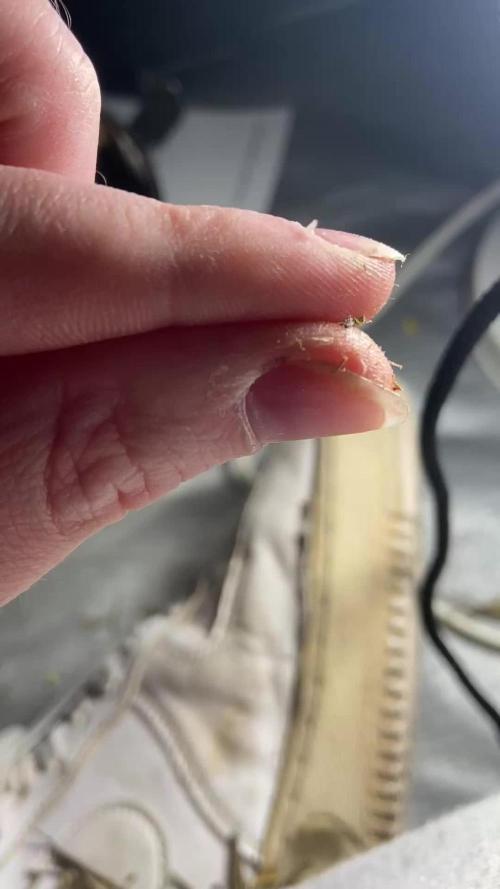
Harvest completed and plants are now hanging to dry.
I focused on a clean, controlled dry, keeping temperature and humidity stable to preserve terpenes and overall quality. This phase is all about patience and letting the work done during the grow settle properly.
I’ll keep monitoring conditions closely and update later with the curing phase, where the final aroma and smoothness will really come together.
Stay tuned 💚

Likes
25
Share


@Dunk_Junk
Follow
Just watching and waiting for trichomes to go milky. They're still clear. Plain water from now on.

Likes
4
Share

@Beastmaster
Follow
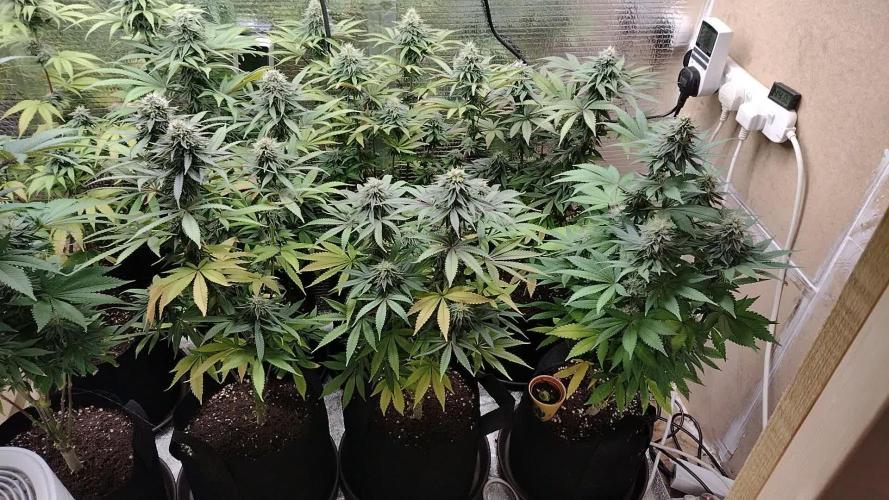
Starting to get a bit of weight on them now. Still feeding with boost calmag and flores.😎

Likes
55
Share


@Hempy_The_Kid
Follow
01/26/22 PH 6.02 TDS 540
Decided to put into bud cycle. Gave 2 quarts recharge. Changed 2/3 nutrient water. Will start on foliar feeding with TPS Canopy Boost at lights out. Will foliar feed approximately every 3-4 days for the next 3 weeks. Will check PH and TDS daily.
01/27/22 PH 6.13 TDS 570 plant grew about 2 inches over night.
01/28/22 PH 6.15 TDS 630 light at 70% power
01/29/22 PH 6.1 TDS 700 tied some branches down. Gave 2 quarts recharge. Will give foliar feeding tonight at lights out.
01/30/22 PH 6.03 TDS 650 added 4 gallons water to reserve tank. Added bloom nutrients.
01/31/22 PH 6.03 TDS 705
02/01/22 PH 6.1 TDS 697
Likes
12
Share


@603grower
Follow
She came out amazing. Super frosty. I got exactly 2 ounce off of her I wish I vegged her out a few more weeks and got a few more branches. Every still branch was stacked! I love useing this site really helps me keep track of my grow and what I’ve done!
Likes
110
Share


@SlowpokeFuegobud
Follow
💜 💚 😍🥤💜💜 💚 😍🥤💜💜 💚 😍🥤💜💜 💚 😍🥤💜💜 💚 😍🥤💜
Dear growmies, welcome to week 4!! ❤️
WOOOW she is growing like from another world!! 🚀 Can't wait to see the stretch!!
DAY 25
Watered with 2ml grow + 4ml more roots + 2ml growzymes + humics + 5ml fast buds + 2ml calmag + epsom💧
DAY 27
Watered with 4ml more roots + 2ml growzymes + humics + 5ml fast buds + 2ml calmag 💧
Thanks @Fast_Buds for your awesome genetics, growing Fastbuds is always a bit like riding a ferris wheel! Woohooo!! 😜 🙏 💚
Thanks to my sponsors @Green_Buzz_Nutrients, their nutes never ever let me down!! Check out my diaries on how well they work! 💚 😘 In case you want to give them a try, you can find a generous discount code in the setup description further down the road ⬇️
You can find more brand hot updates on my IG, where I share real time events from my growroom, don't miss this! 😝
_______________________________________________________________________
Purple Lemonade FF
As refreshing as cold lemonade on a hot Summer day. 🌞
• Quench your thirst. Just as good as lemonade on a hot Summer day.
• The gentle giant. Up to 550 g/m2 of gorgeous pinkish-purple buds.
• Refreshing for the mind and body. The ideal all-day strain with a perfectly balanced effect.
• Sweet n’ sour terps. Mouth-puckering lemon flavors that’ll hypnotize your taste buds.
• Properly purple. The perfect choice for purple hash and extractions. As refreshing as cold lemonade on a hot Summer day.
Arising from a cross between purple and citrus Cali genetics, Purple Lemonade FF (Fast Flowering) offers a complex high made up of perfectly balanced cerebral and body effects that are ideal for daytime use. Expect an extremely enjoyable high that boosts your mood while deeply relaxing your whole body and getting
rid of muscle pain. This meticulous cross produces up to 550 g/m2 of some of the most beautiful purple buds, with pinkish and reddish hues that will catch everyone’s attention. The beautiful purple buds are ready for harvest in 7-8 weeks and come hand-in-hand with unbelievably sugary citrus terps that are just as refreshing as a cold lemonade on a hot Summer day. It’s the ideal variety for the sweet-tooth stoner seeking strains that deliver both in quality and quantity of resin.
Bud Description 🦔
Purple Lemonade FF grows chunky, spade-shaped buds that boast a whole range of pinkish-purple hues with rich, dark orange pistils shooting out of every direction. This variety stands out for the, oftentimes, lilac trichomes that give them a gorgeous pink tint and make for outstanding purple concentrates. The buds give off a delicious tart lemon aroma that reveals a sweeter, more fruity scent as you break the buds open. Definitely a must for flavor chasers and those looking for pungent terpene profiles.
Smoke Reports 💨
Purple Lemonade FF offers an effect that’s just as unique as the flavor. Expect a potent uplifting high that gives you that energy boost you need to get things done while 100% happy and stress-free. The effect gradually transforms into a wave that works its way along the limbs and through the muscles, deeply relaxing your body and putting you in the right mindset to go through a busy day with a huge smile on your face. This is an excellent all-day smoke as it not only increases energy but can also help combat chronic pain, migraine and stress.
Plant Appearance 💄
This feminized photoperiod variety develops a thick and strong structure, growing a medium-sized main cola with multiple shorter side branches, typical of hybrid strains. Purple Lemonade FF develops fairly short internodal spacing with gorgeous purple buds growing stacked on top of each other, making it the perfect choice for growers of all levels looking to get lots and lots of top-shelf purple weed, as this variety can produce up to 550 g/m2 in a 7-8 week flower cycle.
Grow Tips 🤓
This is a super fast feminized photoperiod version that takes approximately 7-8 weeks to flower with a 5-week vegetation cycle,, this means you can have faster harvests by shortening the veg cycle or have a longer veg cycle for bigger yields. Purple Lemonade FF (Fast Flowering) makes for a great candidate for growers of all levels as it’s a vigorous strain that will thrive with basic maintenance both indoors and outdoors. This is a resin powerhouse so make sure to have your trim bin close by as all the resinous sugar leaves will make for the most mouth- watering hash and extracts.
Flavor 😋
Expect a long-lasting citrus zest that taste just like it smells. Purple Lemonade FF reeks of a delicious blend of sweet fruits and tart citrus that’ll make your mouth water. On the inhale, expect sour flavors that taste just like lemon candy with hints of orange and a really subtle earthy background. And on the exhale, the citrus flavors open up, giving place to a more sugary berry fruitiness that leaves your whole mouth tasting like an extremely sweet weed-infused lemonade.
https://2fast4buds.com/seeds/purple-lemonade-fast-flowering
_______________________________________________________________
Setup:
140x70x200 cm Spiderfarmer tent
2x Monkey 16W fans (not oscillating)
1x Secret Jardin 30W
1x box fan 50W oscillating (on lowest level)
LED
Full Spectrum 320W AGLEX AGL-320W-MA
5,6 kg
foldable, dimmable
864 pieces Samsung LH301H
864umol/s
2,7umol/J
full spectrum white + RED 660nm + IR 740nm
wavelength range 380-780nm
covering 3x4ft
Green Buzz Nutrients https://greenbuzzliquids.com/
❗ Use code GD42025 for generous 25% discount (for orders of minimum 75€)
Biobizz Lightmix + coco + wormcastings + perlite
Carbon Active Granulate Filter 125/360 cm³/h
PrimaKlima exhaust EC 125-400/240 cm³/h


Likes
13
Share


@HeavyHead
Follow
So this is a combination of weeks 11-12 as they all went into 48 hours of darkness and cut down on different days. My got cut down on different days. Will post dry harvest pics next ;p
Likes
6
Share

@MO_PureLeaf
Follow
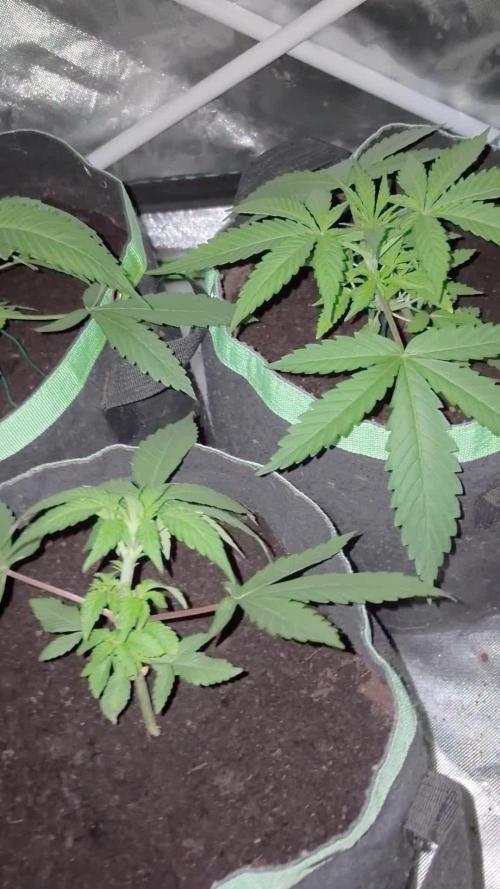
Foto 3 Frosted Grape
Foto 4 Tezla OG
Foto 5 Tezla OG 2
Bis lang wächst die Frosted Grape am wenigsten. Ich habe bei ihr mit dem LST aufgehört, weil ich denke das die Pflanze nicht mit zu recht kommt. Auf jeden Fall, es läuft aber dafür umso besser mit dem beiden Tezla OG. Die haben richtig Bock und die bekommen in der jetzigen Woche auch ihren cut :) bis lange haben die Pflanzen nur eine gießung bekommen und das dann direkt auch mit 4ml/L Alga Grow. Und super vit einmal die Woche als blattdünger
