


Likes
Comments
Share


@CHILLING_RACOONS
Follow
Dear Friends ❤️
in this week we topped again and bended this great Umme by Anesia Seeds ❤️❤️❤️❤️❤️❤️❤️❤️
I topped plants and remove big fan leaves that covered bud sites
I missed to give top crop Big one at 14 october, it is important to give 10 days before flowering
The last day of this week we switched the light to 12/12
week #5 of vegetation
The 240w light is working at 50% power and now it is combined with the 480w quantum board.
I consider week 4 the week from 18/10 to 24/10.
day to day fert schedule:
📅 18/10
📅 19/10 NEEM OIL
📅 20/10
📅 21/10 Top Veg 3ml/L-Deeper Underground 2ml/L - Green Explosion 2ml/L - big one 2ml/L - PURPINATOR 1,2ml/L
📅 22/10
📅 23/10
📅 24/10
ABOUT UMME, feminized seeds
Our Umme is a unique personality, she is incredibly strong, full of life, shows an extraordinary interest in cannabis and delicious flavors and is probably one of the friendliest beings on our planet. Umme is a Vietnamese Pot-Bellied Pig lady and she inspired us to name our new THC-rich strain after her. Both she and our new cannabis strain are real heavyweights with an irrepressible energy.
For UMME we have crossed a particularly aromatic Blackberry Moonrocks and a Brownie Scout selected for potency. We have thus created a unique genetic basis for an outstanding new and extremely potent strain that will certainly be found in numerous varieties over the next few years. And how could it be otherwise, Umme has become a real queen and a bud machine at the same time, producing excessive amounts of resin, buds and intense effects.
The large, dense, resin-drowned flowers often get a beautiful purple color. The buds can reach a massive THC content of up to 30% and are therefore far too strong for many beginners. In addition to the extremely thick layer of white trichomes, it produces a fascinating aroma that is addictive. This is reminiscent of blueberry cake and has notes of cinnamon and vanilla.
The high is overwhelmingly powerful. It gives you a feeling of deep joy, euphoria and pervasive relaxation like you’ve never experienced before. Mind and body are wrapped in a fluffy cloud and it becomes impossible to get up from the couch. The cerebral effects expand the senses and create an impressive feeling of bliss. Stress and worry are shot into another galaxy as space and time reach a new dimension. The effect and the diverse terpene profile make Umme an unforgettable experience.
Those who make clear concentrates or distillates will love the strain because it naturally produces such a highly concentrated amount of THC.
Growing UMME
The indica dominant strain has a flowering time of 8-9 weeks and produces high yields of 500-550 g / m² with no problems under good conditions. Outdoors, the strain reaches a height of 200-250 cm while indoors it grows to around 115-130 cm. The plants from the seeds develop quickly and are amazingly vigorous and hardy. No grow is really complete without the hassle that it upsets everything that has existed.
Medical Use
The strong physical calming effect helps to relieve pain, stress and muscle tension. It ensures a deep sleep and helps to calm down after a stressful day.
DATA SHEET:
Brownie Scout x Blackberry Moonrocks®️
• Genetics: mostly Indica
• Yield: 550g/m² • up to 700g per plant
• flowering time: 8-9 weeks
• THC: up to 30%
• Aroma: blueberries, sweet
💸💸💸💸💸Buy UMME: https://anesiaseeds.com/product/umme/
🔧💡WHAT WE ARE USING💡🔧
-LIGHTS:
💣Quantum board - 480w - 4x120w Boards by Zhoangshan Koray Opto-Electronic Ltd.
Samsung LM301B 288 led/board
+24led/board led Osram 660nm
Efficiency 2.6 umol/J 220 lm/w
Driver: Meanwell HLG-480H-36B
temperature: 3000k
Heat dissipator board: No
Noise: 0dB
💣Quantum board - 240w - 2x120w Boards by Shenzen Yuanhui Led Ltd.
Samsung LM301H 504 led
+24led/board led Osram 660nm
Efficiency 2.7 umol/J 220 lm/w
Driver: Meanwell HLG-240H-48B
temperature: 3500k
Heat dissipator board: YES 15MM
Noise: 0dB
-ESTRACTION FAN:
Blauberg 125 Turbo Pro Series
Power: 42-50W
RPM: 1940-2620 minimum -1
Maximum air flow: 430-560 m³ / h
Sound pressure level at 3 m: 32-44 dBA
-FANS:
A)OSCILLATING FAN
Maximum consumption: 20 W
Minimum consumption: 17 W
Fan diameter: 15 cm
Housing diameter: 20 cm
Height with handle: 35 cm
2100 revolutions per minute
Two speeds
B) COMPUTER FAN Sunon DP200A - 230V
Nominal power: 22/21 Watt
Noise level: 44 / 49dB (A)
Rated speed: 2700/3100 RPM ± 10%
Air delivery: 95/115 CFM
C)Cornawall Electronics Multifan Turbo, three speeds, can be used both on support surfaces and mounted on the wall. High capacity, about 740 m3 / h, can be used in medium-sized rooms. High silence and reliability make it adaptable and versatile.
Technical details:
Rotation range of 90 degrees
Tilt adjustment
Three speeds of rotation
Suitable for wall and ceiling suspension
Power Consumption: 35 Watts
Air Flow: Approx. 740 mc / h
Operating noise: approx. 39 db
Diameter: 20 cm
Voltage: 220-240V
Frequency: 50Hz
Dimensions: L 28 x D 16 x H 28 cm
💊💉💊FERTILIZERS:
MAIN FERTILIZER BRAND: TOP CROP
I use these products:
-DEEPER UNDERGROUND: to stimulate roots system
-TOP VEG: for a excellent growth in the vegetative phase
-GREEN EXPLOSION: to promote creation of bud sites and to allow a faster growth
-MICRO VITA: bacterias for equilibrate the soil and to make the plant healty
-BIG ONE: to stimulate bud sites and to stimulate resin production
-TOP BLOOM: to achieve excellent big and hard buds
-TOP CANDY: to feed the buds with molasses for a tastier smoke and to gain weight
-TOP BUD: to enlarge buds and to gain weight
PLAGRON: PK 13-14 to have big and hard buds and to feed plants with lower effort
ADVANCED NUTRIENTS: Sensi Cal-Mag Extra-> for cal mag deficiency
GROTEK: CAL MAG for cal mag deficiency
HESI: PowerZyme to clean and balance the soil. It feeds the plant cleaning the soil.
GHE: - Final Part (ex Ripen) accelerate the final flowering phase, dissolves minerals in excess
- Flash Clean to flush the plant and to be sure that all excesses are out from plant and pot
These two products improve A LOT the smoke of our babies
-PURPINATOR to stimulate flavonoids and to have a better taste and smell.
____________________________________________________________________________________________
❤️ THANK YOU FOR BEING HERE ❤️
Please leave a comment with your opinions, it is very important to us to have a comparison.
If you like our job, tap the weed button and follow us. It will be really appreciated.🙏
🌿Thank you again🌿
❤️Sweet hugs❤️
👨🌾CHILLING_RACOONS👩🌾

Likes
142
Share


@MadeInGermany
Follow
Hi 😎 everything is going great. they react very well to topping 😄.
The new stragglers are also doing very well.
The stragglers are brought to bloom without topping, as the topped monsters are otherwise too fat 🙈 Let it grow 💪🏻


Likes
2
Share


@GrowTF
Follow
Es Fehlen noch paar Wochen zwischen drine wenn ich mal dazu komme wird es noch aktualisiert.
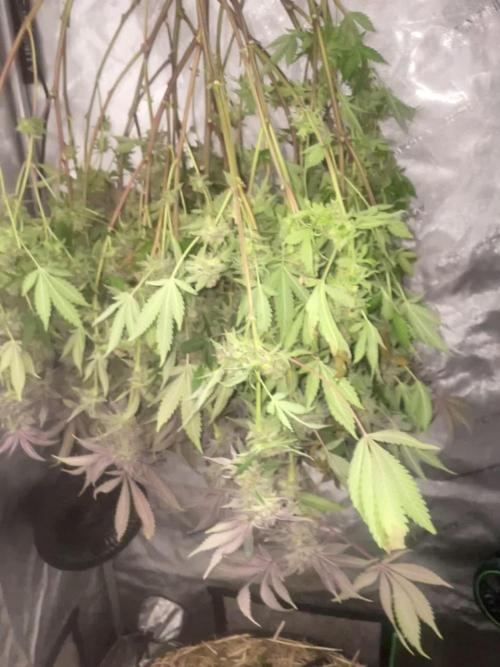
Leider ist mein 80x80 zelt deutlich zu klein.
die Linke Pflanze 94cm wurde absichtlich um 0.2 mS überdüngt und ist doppelt so groß wie die Rechte.

Likes
2
Share

@RatmanJR
Follow
Chopped on July 28th. Hung for 6 days and trimmed on August 3rd and Put into grove bags.
When I first put them into bags I was getting a 65% reading so I have been opening bags once a day for the last week. That takes us too today August 10th. Bags are finally reading 62 stable so they will be getting sealed for the next two weeks where they will thank you be transferred to jars.
Got right around 5.3oz with my lazy trim so figuring a little under 5 when fully trimmed.
I purposefully leave more leaves on than most people because the leaves protect the Trichomes. I do the final trim directly before smoking.
Thank you guys so much for following the diary and God bless!
Likes
9
Share


Likes
29
Share


@Grey_Wolf
Follow
Testing for Connoisseur genetics
Outback haze #1
24th January 2022
She stretched a little bit 😆 Check out those thin arse sativa leaves 👌 Absolutely Glorious 👊
I gave them both aprox 6 weeks worth of Bio bloom , then I'll figure out what to add when the time comes .
It will probably be guano and other goodies but this strain could take a fair while to finish so will need to keep
adding to the soil as I go .
Whether outback haze is a heavy feeder or not will need to be seen .
This shit's about to get real 👈
Cheers for stopping by 👍
Likes
8
Share


Likes
13
Share


@FlavoursUk
Follow
First day of week 4 flower day 22-
Took some shots of a few bud sites, that are looking well and that should start to frost up pretty heavy once in full gear. Increasing the EC slightly 1.6/1.7 around 800ppm for those that don't know. Trying not to overfeed but get to the sweet spot of tlwhat the plants want and require. Respectfully it is my first run with this strain and Breeder but nothing but good things so far.
I managed to take some clones so that I can push the strain better the next run and incase I get a special pheno! But so far so good. The buds should start to go through a fattening period once the flower stretch is completely out the way. Will be back to report and show some more pics/videos as the week goes on.
Stay tuned and follow my youtube and Instagram on my growdiaries profile

Likes
4
Share


@Kielon420
Follow
Soil: BioBizz All•Mix
Almost all products I use are from BioBizz.
About a month before germinating I have wetted the soil to let the microbes start working. On January 1st I put some of this earth in 3 plastic cups with holes on the bottom. I wetted them with ph regulated water with H2O2 to kill most microbes, fungi and diseases.
I inserted the seeds about 2cm deep and poured ~3ml water directly on top. I have a plastic dome that I wet 2 to 3 times a day to keep the humidity above 60%.
It’s now day 5. I don’t water the soil, because it’s still very moist.
Currently waiting for the roots to reach the bottom of the cups.
Likes
103
Share


@Hou_Stone
Follow
👨🚀👋
This week I start cutting a few lower branches from each plant. This way more energy should be available for the upper branches.
For this culture, I would like to let each plant grow with a main bud without "topping". I would like the tent to be filled and look like a Sog in flowering. (a total of 16 plants with 5 strains in this culture)
My goal: at least 300g of dry buds🤞
------------------------------------------------------------
💧Watering each pot:
Day 15 : 0.75 L With a little Bio enhancer ( 0.8grams/L)
Day 21 : 0.75 L
I use tap water, adjust the ph to around 6 and water
------------------------------------------------------------
🔥❄️Temperature of the week :
Day : 19-23°C (Humidity : 60-75%)
Night : 14-17°C
------------------------------------------------------------
🤩Equipment of the week :
Light FC3000 Mars hydro. power 95% at 50cm
Extractor 6 inch Mars Hydro. power 1/10. ON 24/24h
2 fans to circulate the air inside the tent. Each on for 30 minutes then off for 1 hour. this rhythm repeats itself in a loop
Heating mat 95x95cm. ON 45 minutes. OFF 30minutes. In a loop. The day only
------------------------------------------------------------
Thank you for your visit, it's always nice to see you!💚😀
------------------------------------------------------------
My Instagram 🌱❤️️ :
https://www.instagram.com/hou_stone420/

Likes
61
Share


@Prilyfe13
Follow
December 27, 2023 Day 113
This week will focus on burping and trichomes. There may also be a harvest? We shall see. I don't think so though. Most likely next week will be a harvest.
Strawberry Gorilla:
Day 3 Curing
I have grove bags coming in today, so the burping won't be a thing after today.
Gorilla Cookies:
Number 1 is coming to the end of her life. She hasn't started fading yet, which bugs me. She has been flushing for a week now and I'm not seeing much change. No fade, pistils still kinda sticking out. Not in all places, but some. Maybe I just can't tell. Either way, she looks great and smells even better.
She got a full gallon top flush with Flawless Finish. I don't expect to do this much more. Maybe one more watering. I have to check trichomes today. I'll update when I do so. She should be ready for harvest within this week. Maybe a couple days.
Number 2 is looking amazing. Her colas are stupid dense and her aroma is starting to really pack a punch. Not much else to do or say today. She's a beast and is beautiful.
She got a gallon top feed today. The reservoir seems to be fine. I may check that later today as well. Just in case. She is quite a thirsty plant after all.
The funny thing about this plant is the tallest cola. It is absolutely stunning with the exception of the top bleaching, but the rest of it is massive and shaped perfectly. It's the only one that did this. Granted its the tallest, but there are a couple others very close and they didn't do this. I mean, I really can't complain. I did the best I could with what I have.
I'd say she will need another week or two of flowering. I'll leave the nutrient regimen alone until I see 50% cloudy trichomes. That will take some time I think. Pistils are still all very much white and clearly shows no signs of readiness. It's wonderful. I can't wait to see what she gives me for yield.
Update: So I checked the trichomes on Gorilla Cookies 1 and posted a video. I believe she will be done in the next couple days. I may not be doing another flush after all. I'm going to hold off though. I want a bit more amber trichomes. But days away instead of the week I was originally thinking.
Grow System Environment:
Temp: 73.2°
RH: 52.6%
VPD: 1.30 kPa
December 28, 2023
Strawberry Gorilla:
Day 4 Curing
Got the grove bags yesterday and sealed a quarter pound one with all but a few buds. Those are in a one ounce grove bags that I'll be picking out of while the main yield cures. This stuff is fire!
Gorilla Cookies:
Number 1 is now in the second week of flush. She still doesn't look ready, but that will change very soon. She needed no watering today.
I'll be getting my supplemental lighting in today and will be installing it. However, I'm not sure how much it will help the lower part of the canopy. It will definitely speed up the maturing process, but that's about it. I can't complain though, the whole plant is pretty good. Lower buds are pretty small. Some are a bit airy and larfy, but still can be viable with the last but of lighting for the rest of the week.
Number 2 may need a top feeding today. I'm not sure. Her reservoir is about half empty now and the soil moisture is hovering around 20%. It may drink down to 16% but the this afternoon. I'll water if she's low enough by 2 pm. After that, I'll just wait for tomorrow. That's the most likely scenario.
Her buds are starting to get really heavy. Most of the outside ones are leaning over and starting to touch the other sides of the tent. The outside is still kinda safe, but that is mostly due to the two other plants stopping it from leaning even more. such a sight to behold. And they are super heavy and dense. Although, I may be seeing the first signs of foxtailing. I expected some because of the light distance, but it's ok. The colas are already super dense. The foxtailing will be just extra bud. I'll separate that in its own bag when it's time to cure. That's if I'm right and will be getting foxtails. Maybe not though, or not enough to warrant a separate bag.
My supplemental lighting after being installed should help the lower part of the plant perk up a bit. I found several dead and dying leaves today. Actually, lots. That tells me a couple things I think. First, there's too much foliage in the upper canopy and the leaves are dying from overcrowding. Second, the light just isn't penetrating enough to really get the lower parts of the canopy. That's where the new lighting comes in. Hopefully that fixes the lower canopy and helps it bring more bud. Maybe not huge colas, but at least some tight smalls. We shall see.
Update: I ended up top watering Gorilla Cookies 2 with recharge. I'm pretty sure I forgot it the other day.
Grow System Environment:
Temp: 74.1°
RH: 55.5%
VPD: 1.25 kPa
It's still super humid and rainy here, and it's showing in the tent. I'm not all that worried about it. It will drop down later this afternoon like it did yesterday. However, I am of course trying to correct it, but it's not working all that well. Lol.
December 29, 2023
Strawberry Gorilla:
Day 5 Curing
Gorilla Cookies:
Number 1 may be harvested later today or tomorrow morning. She is just about done. But I want to see how much more she will finish up in the next day or so with the supplemental lighting.
Obviously she won't be getting anymore watering. But I'd like to have her dried up a bit more, which should be later today or tomorrow. I may put her in the dry tent later today and let her have a dark period. Maybe I should wait 2 days. Give her 36 hours of dark before harvest.
Number 2 should enjoy the supplemental lighting. However, now that it's on and lighting up the whole lower canopy, there are bud sites with branches that have no budlets on them. I really want to remove them. But I'll just let everything go as it is. The goal is to allow the under canopy to mature at the same rate as the upper canopy. I don't think it will do anything with the lower part of the plant.
I also noticed that the majority of the leaves are drooping pretty hard. I wonder if that's due to lack of light. We shall see. She doesn't need water today, but tomorrow she will need a top feed and a reservoir refill.
She's definitely drinking over a gallon a day now.
Cola formation is perfect. They are come shaped and DENSE. The aroma is getting fairly strong now. At least, it's catching up to Gorilla Cookies 1. Sweet, spicy and minty coming off of her.
They colas are also leaning a bit more today. So much weight coming on. I honestly can't wait for her to be alone in the tent. The lower lighting will cover the all of the lower lights without anything blocking the light.
Update: I decided instead of harvesting today or tomorrow, Gorilla Cookies 1 will spend 2 days in the dry tent for a dark period. Then I will harvest.
Also, I spent about an hour combing through the many many branches of Gorilla Cookies 2. I found a bunch of dead fallen leaves. Some that were dying and even a few that were so over lapped they were crushing each other against the SCroG net. So all of that (not much really) came off. I wonder how long the supplemental lighting will take to show a difference in the lower canopy. And what difference will it show?
Grow System Environment:
Temp: 74.1°
RH: 52.7%
VPD: 1.32 kPa
December 30, 2023
Strawberry Gorilla:
Day 6 Curing
Gorilla Cookies:
Number 1 is in her second day of dark. Tomorrow I'll be harvesting her. Nothing else to report.
Number 2 is smashing. Her lower section is still droopy like it doesn't have enough of something. I thought it was light. Maybe it's something else? Or maybe I'm being impatient. Either way, she still has some time left to go. 3 to 4 weeks I'd say.
She got her full gallon top feed as well as a reservoir refill. Unfortunately, I wasn't paying attention and accidentally dumped 10 ml of Overdrive in one of the gallons. That one went in the reservoir. I probably should have top fed it. Oh well, too late now.
Although, I didn't have any dead leaves today. At least nothing I could see. Maybe the light is doing something. Making the leaves stronger, which if I'm correct, also strengthens the bud production. There won't be much down there, but it's definitely better than leaving it as it was. Maybe I'll get an extra half oz out of these little buds. Who knows.
Update: I ended up finding some dead leaves in Gorilla Cookies 2 after all. Not too many. So now another day of cleaned up Beasty beast.
Grow System Environment:
Temp: 73.2°
RH: 50.7%
VPD: 1.34 kPa
December 31, 2023
Strawberry Gorilla:
Day 7 Curing
Gorilla Cookies:
Number 1:
Harvest Day! And the last day of 2023!
We have a 22 oz wet weight whole plant. Not too sure of the total outcome, but I'm thinking 10% weight retention. So 2.2 oz. Dried and trimmed bud. Who knows, maybe I'll get 15% and have a half decent yield of 3.3 oz. Honestly, I should have waited for midnight, but she needed to be harvested for time purposes. I have another plant coming in the dry tent in a few days to a week. I'm hoping I can stretch it out for the week, but I won't be able to wait for Number 1 to dry. Just too much time. I'm thinking a nice 10 day dry. I set the ambient room temperature to 70°. So that should drop the dry tent down about 6°. I'm hoping for a dry temp of 64° or less and the RH to be around 55%.
She has some pretty dense top colas, and I cut them off after the weight check. That should help the whole plant dry at the same time. I left most of it intact. Just the 3 tallest colas. Now there's more room in the plant for air, but also plenty of space for those large colas to dry. And they should dry quite nicely.
Number 2 looks pretty good. I didn't find any dead leaves. One dying leaf I pulled off, but nothing else. So maybe the supplemental lighting is actually doing something. I don't expect the leaves to really recover from the damage, but at least maybe perk up a bit. Again, I'm not expecting a ton of difference. Just enough to keep the lower canopy as dense as the upper canopy. The lower part of the plant, is more like a lost cause. I should have cleaned up the small budlets as they popped up. Oh well. Nothing to do now but wait and see what she turns out like. I'm not all that worried. The small amount of lower plant growth is minimal compared to the actual canopy which is magnificent. She'll be needing a watering later on today. Definitely a very thirsty plant. She's around 18% soil saturation content. I normally water at no less than 15%. So later today it is.
Her colas are getting so dense it's insane. She still hasn't started really swelling yet either. I expect that to start in the next week or so. Also, the worry about foxtails seems to be unnecessary. IF there is any foxtailing, it won't be much or if there's a lot, it won't matter. The buds are already so dense, anything else is just bonus weed. Still, foxtails are a pain in the ass to trim, so let's hope for none. The only cola I'm really concerned about is the tallest one. It's definitely too close to the light. Also, I'm not seeing any stress from the supplemental lighting. I guess there's just enough. I honestly had a feeling that the top light just isn't bright enough to penetrate through the whole canopy. So the tops are getting plenty, but the actual plant may not have been getting enough. Now, that's should be fixed. Again, I see no stress whatsoever. If I notice any, I can just turn the lights down. They are at full blast now, but they aren't nearly as powerful as the main grow light. Still very nice though.
Grow System Environment:
Temp: 72.6°
RH: 47.8%
VPD: 1.40 kPa
January 1, 2024 Day 118 Happy New Year!
Strawberry Gorilla:
Day 8 Curing
Gorilla Cookies:
Number 1:
Day 1 Drying
I have a tray of water on the bottom of the tent with an oscillating clip fan blowing gently over it. It's keeping the RH between 50% and 53%. Temperature is hovering around 65°. Everything looks good.
Number 2 is now really starting to swell those colas up. It was visibly noticable this morning. Not to mention the outer colas are all leaning further and further over. They are over the end of the ScrOG net up front, touching the. Far side wall and nearly touching the front of the tent. The supplemental light seems to be doing something. the lower bud sites are starting to look healthy and getting a deeper green color on what's left of the healthy leaves. I think I caught the very end of when the supplemental lights are useful for growth. Now it's just maturing and a final week of nutrients... I think. I'm cutting off the nutrients when I see 50% cloudy trichomes. There should be plenty of orange pistils by then. In which case, won't be for another week or two. Man, these colas are going to be massive!
No watering today. Most definitely tomorrow morning.
Update: I decided to lower the light intensity to 30%. The PPFD is around 750 now. So that should help prevent the potential foxtailing. I'm not really sure if that will stress her out at all. I don't think it will though. I'll be checking on her daily to see her reaction.
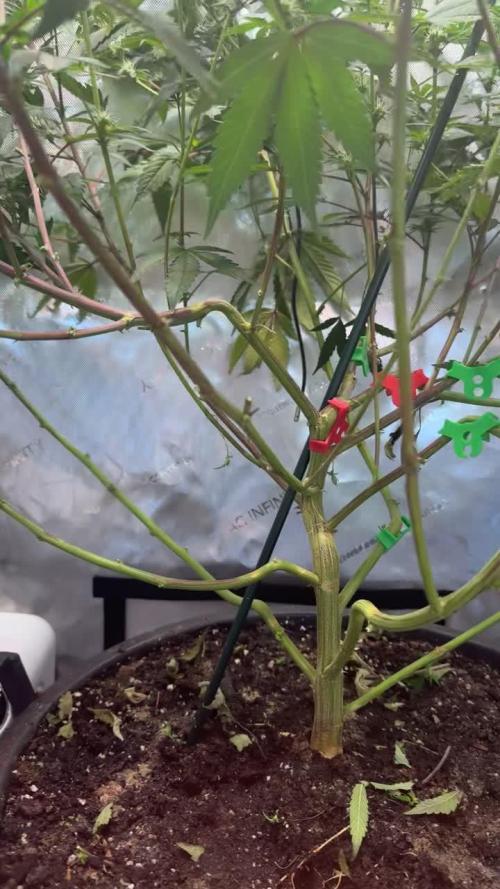
I've read light stress can cause 3 finger fan leaves. In my case, there was a point where the light became too bright during the early flowering stage and caused some of these 3 fingered leaves. It seems to have fixed in some spots where the light was raised high enough to fix it in time other places it stopped when the leaves stopped growing.
Some of the leaves are facing away from the light. With this current intensity, the leaves should level out and even start to reach a bit. Not sure how long it will take. I read it can take up to 2 weeks to recover. I'm not sure how stressed the majority of the plant was though.
Grow System Environment:
Temp: 72.9°
RH: 46.3%
VPD: 1.45 kPa
January 2, 2024
Strawberry Gorilla:
Day 9 Curing
Gorilla Cookies:
Number 1:
Day 2 Drying
Number 2 is her beastly self. She got a top feed today. No need for the reservoir to be topped off yet.
So, I'm not seeing any difference in the lower light intensity yet. Maybe some of the leaves straightened out, but no reaching or anything like that.
The supplemental lighting is doing something. Although the buds down below are tiny, they are weighing down the branches they are on. Still nothing great, but it will definitely be good in the trim bin.
I'm sure they will have plenty of trichomes on them. Perfect for gathering kief.
Her top colas are also doing quite well. They are super dense and heavy. Swelling continues. Not much difference from last night, but still plenty of time to get massive.
I'm also starting to see signs of orange pistils here and there. Which means we are on point. Three or so weeks left until harvest.
Grow System Environment:
Temp: 72.9°
RH: 45.2%
VPD: 1.47 kPa



Likes
46
Share


@Ju_Bps
Follow
Hello my friendly growers,
This end of week, smeel the end of the plant,
Trychromes of today look plant ready to harvest so I ll harvest tomorrow.
See you in few day for the result of harvest.
Thanks to follow and like me,
Nice community 😍🤩
Have a good week
Likes
16
Share


@Weed_nerd
Follow
she grows well but is a bit saggy at times. should take and clean out of it a little it is a little dense and also train out branches a little more .but I am happy with it
Processing
Likes
16
Share


@Divs_darkroom
Follow
Mixed up 1 ml each of medusas magic, Gaia mania, and Zeus juice into a 1 quart spray bottle adjusted to 6.3 ph. When this gets another set or 2 of true leaves I'll take away the fluorescent and install my new hlg-65 led panel. I'm excited to see what the "special phenotype" really means. Photos are day 13 since it popped out of the soil. Also fed some tribus microbes I got as a freebie :).

Likes
78
Share


@ClubRiot
Follow
Week 7 ,
pH Perfect Connoisseur Bloom Part A ( 1 ml/L )
pH Perfect Connoisseur Bloom Part B ( 1 ml/L )
CarboLoad Liquid ( 2 ml/L )
Sensi Cal-Mag Xtra ( 2 ml/L )
Sensizym ( 2 ml/L )
Bio-Heaven ( 2 ml/L )
Big Bud ( 2 ml/L)
Nirvana (2 ml/L)


Likes
2
Share


@KannaGrowing
Follow
Estamos en la primera semana de vegetativo, ya que a la anterior se la conoce como semana de germinación.
Las plantas empiezan a mostrar las primeras hojas reales por encima de los cotiledones.
Cuidado con que la humedad relativa del aire, no sea demasiado baja, lo ideal sería alrededor de un 65%.
En esta etapa solo regamos suavemente con agua cada 5 días aprox.
* Una de las plantas no ha crecido correctamente y la doy de baja.

Likes
2
Share

@WalachianGrowinDiary
Follow
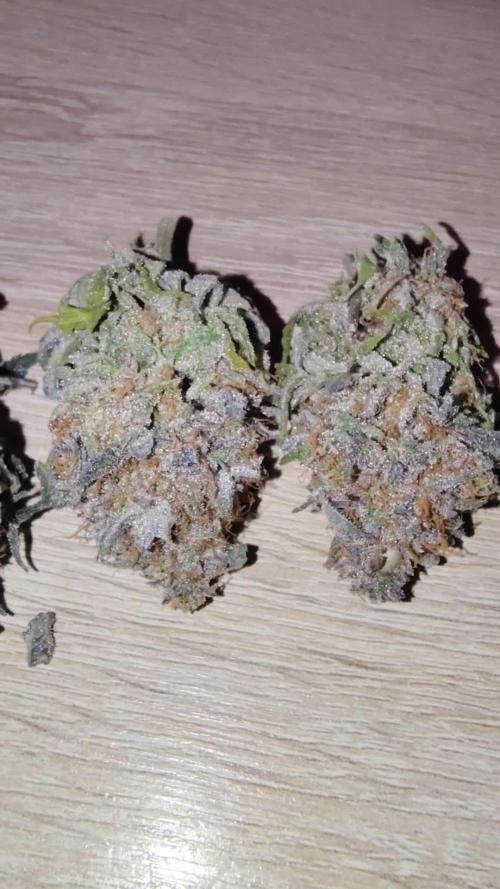
Great Strain and Pheno for low height tents. Citruses oranges and Gass terpZ.


Likes
42
Share


@Ukfarmer420
Follow
Hi guys
So I think they are laying there roots down properly now.
The ladys are all stretching nicely.
I do have a freak show the dog bitten and its growing really weired so ill keep that as a side project in the room.
I expect alot of new growth this week.
Happy growing guys 👌💪💚

