The Grow Awards 2026 🏆 








Likes
39
Share
@MyStery21
Follow
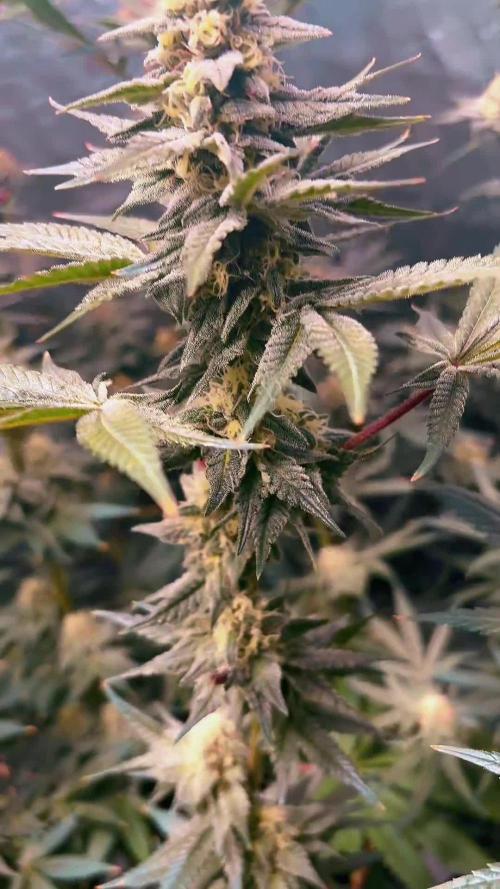
This Baby just can't stop grow. i wanna smoke this strain so bad so badddd.
To give you an example of why i'm telling you this, check this out.
i have my grow tent with the door open in my house with my infinity at maximum speed 10/10. AC ON 24/7. This days are really really hot over here and if i close the grow tent the Temp will raise up to 85%. Anyway.... 2 days ago i had a visit in home and i was a little afraid for the smell, turns that when they got here the first thing they ask for.... was the fruit that smell like that?. 😂😂
I said that i made a casquito de guayaba (that's a famous cuban dessert made from real guavas) smells very very sweet and taste asome.
This plant smells like that. Like a candy or a very sweet fruit But she's taking her time and im glad of that.
I want to tanks to @jinks101 @Trueorganics84 for the help they give me in this, my first grow. 🙏 thank you all guys...


Likes
5
Share
@grazi2706
Follow
Another good week, just waiting for them to ripen. I'm planning on another week. That will put us at 9.5 weeks and they should be good to go.

Likes
14
Share
@kevgrow
Follow
Hey Friends, end of week 13 from seed
Buds are getting thicker
Smell is getting stronger
Bud structure is looking amazing, so far its been an amazing experience seeing this plant grow.
I am watering every 3-4 days 1 full gallon of water mixed with nutrients.
Leaves are green, looking healthy
Trichomes are 98% cloudy 2% amber
This week I had a tough time trying to maintain a steady humidity level, its been raining outside lately so humidity level goes up.
QUESTIONS
When should I begin flushing?
Likes
42
Share


Likes
3
Share

Likes
4
Share
@Ninjabuds
Follow
It’s day 43 of flower! All of the plants look great! I’m going to start dialing back the light intensity slowly over the next couple weeks. Harvest time is getting close

Likes
Comments
Share


Likes
7
Share
@DisTentAint4Campin
Follow
She is jumping out the gym sorry couldn't get a shot of her alone my tent is a little crowded shoving her ass into flower tomorrow so excited 😆

Likes
10
Share
@asstonmartian
Follow
We enter the second full week of flower. I went and got some nutes to start adding in sparingly to the watering sessions. Mild mix from Foxfarms of their Tiger Bloom formula. I didn't catch that the large plant's leaves were curling pretty tellingly so I didn't realize I was about to overload the nutes for that plant when I should have been flushing for a week. I had supercropped this large plant as it was 6" taller than the others but it bounced back so quickly. Five colas snapped and turned 90 degrees, bounced back in a day or two. It did allow the others to catch up a bit.
I find that the one potential male I removed was 100 a male as it now had well developed pollen sacs. I had this plant outside alonside the other two potential herm/males. I put the two questionable ones on the roof and chopped the male down.


Likes
6
Share
@Fullmeltalchemist
Follow
D56/F8 - 11.14 - The LA Sunset and Passion Berry in the 5x4 have gone absolutely beast mode. I'm loving it. Nothing new to report except the obviously responded well to defoliation, got them some peony rings and a blumat system, which is really impressing me so far!!
D59/F11 - 11.17 - the smaller LA Sunset in the 3 gallon is stretching very noticeably but maintaining and nice internode distance 👌
D60/F12 - 11.18 - These plants are vigorous as heck. The Passion Berry is absolutely dominating the stretch <3

Likes
7
Share
@Dargaville_Dukes
Follow
This week has been cold in the grow room with day time temps at 16c and night time around 12-13c. Growth this week has been quite slow and I wonder what has the biggest impact on growth rate. Is it temperature, light intensity or soil moisture levels? I've had the light at 25% since germination and wonder if it would be beneficial to start increasing the light levels or wait until they're more established before doing this. If anyone happens to read this and has thoughts about how to encourage faster growth, I'd be interested to hear.

Likes
12
Share
@AGP90
Follow
4th week done, have some kind of deficiency that I'm not 100% sure on. Keeping an eye on PH more and making sure it stays a little higher. Started adding silicone as heavy buds was starting to make colas lean


Likes
2
Share


Likes
16
Share
@Johan2
Follow
Day 53 flower , decided to cut her down , with better light there was more Amber than I first thought .
38 hours dark before harvest .
Much bigger and fuller buds than expected when cut down .
Lots of trycs 3/4 really big colas and a real lemon smell , lots of dark purple in the bigger buds .
Over all very pleased with harvest . I’ll update yield in a few weeks
Likes
55
Share
@pifflestikkz
Follow
Day 106
16/08/24 Friday
Big feed today using de-chlorinated tap water pH 6.
Finally flipped her!!
Excuse my mess of a Scrog it's first time. I'm cutting away squares to allow the new growth this week to pass through, the net will only be used them as support to allow her to fully express her flowers 💚
Day 107
17/08/24 Saturday
Another watering today using de-chlorinated tap water pH 6 only.
Picture and video update ✌️ 💚
Day 109
19/08/24 MONDAY
Another feed today, she is recovering well from the move, Scrog, LST.
This week I'll be keeping her within the net as she stretches.
Picture update
Day 111
21/08/24 Wednesday
De-chlorinated tap water today pH 6.
Again 5L little run off.
She's stretching 😁 time to fill the floor.

Likes
8
Share
@trichomhunter
Follow
After 48 hours of darkness, the time had come and the Purple Lemonade were ready for harvest. Since she reacted very well to the training and grew with enough space between the buds, I decided to dry upside down.
Dry weight and smoke report follow after curing. Stay tuned...