


Likes
Comments
Share


@lalee
Follow
hello. this is the first plant I have used big bud and bud candy but I don't test the water and the plant was damaged with high PH so I had to buy a PH meter and TDS meter so wish me luck with other plants

Likes
10
Share


@SgtDoofy
Follow
5/8
Watered both with plain PH'd water yesterday. Both of the plants are sucking up leaves. Trichomes are only really looking amber on the brown leaves, but otherwise milky.
5/10
Decided that these brown-leaved buds on Trainwreck were ready, so I tried a little bro-science and watered an hour before harvesting. Noticed there were some really nice green young buds intertwined, so I did my best to trim around to leave them for another week or so. No weight measurements yet, will wait till after trimming and before curing.

Likes
2
Share

@GoodTimesOrganics
Follow
Welcome Back!💚
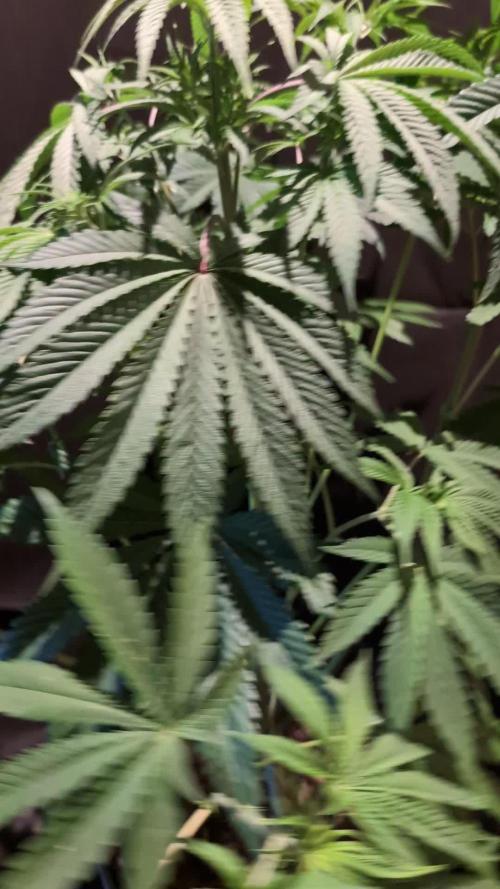
Die Pflanze hat nochmal ordentlich an Masse zugelegt und heute am 17.10.25 wurde sie in die Blüte übergeleitet.
Die Triebe sind schon homogen und Buschig, so dass sie nun bereit ist die Früchte zu tragen.
Die Umgebungsgegebenheiten sind bis jetzt optimal:
—————
🌞 Temp: 23°C bis 24°C
🌚 Temp: 18°C bis 19°C
💧RH: 68%
🌬️ VPD: 0,77 kPa👍
—————
Grüne Grüße 🥦

Likes
50
Share


@Reyden
Follow
Tutto procede alla grande e le ragazze di Anesia stanno allungando verso la loro forma finale…Calypso Sun Rock alla fine si è stabilizzata e al posto di crescere in altezza, ha dato priorità ai rami laterali prendendo la classica forma del pino 🌲 con foglie non troppo larghe in confronto a The Sin e White Runtz che hanno foglie più grosse e spesse più da Indica predominante…la prossima volta iniziamo ad aumentare la Dose di Canna Terra Flores con una bella dose di PK e andiamo verso il fiore appiccicoso e gelido ❄️😀📸📹🚀

Likes
2
Share


@Trinidad
Follow
15.06.25. Day 30.
Plants are looking healthy. Lots of growth in past week. She is showing preflower so I switched to flowering nutrients. First reservoir change out since I placed them into buckets. One plant topped herself because of rapid growth, I did not pull back training wire on main node and so the branch snapped where it was tied down. She is entering stretch now so I took of training wire on all plants.
18.06.25. Day 33!
Defoliation, lilipop.

Likes
11
Share


@Mo_Powers
Follow
unbelievable, the performance of her in the still mixed weather in germany is awesome. the buds are starting to smell and are getting thicker. i'm a bit afraid that if the weather continues like this, mould will form.
fingerscrossed that it doesn't happen.
i give her a mix of biobizz root, grow and bloom every two days. I have removed the LST. from time to time I cut off the large leaves.

Likes
9
Share

@P0C023
Follow
One more week...
I have improved the equipment used to make the Janes will thrive as it should be, and to make sure that the environment is solid as diamond. ||
I absolutely love this genetic. The aroma, the structure of the plant, structure of the flowers and the effects of the final product. I hope in future to look back to what I'm doing and cover any flaws and dive into a very nice pheno-hunt.
🌱 Genetics
Breeder: Royal Queen Seeds
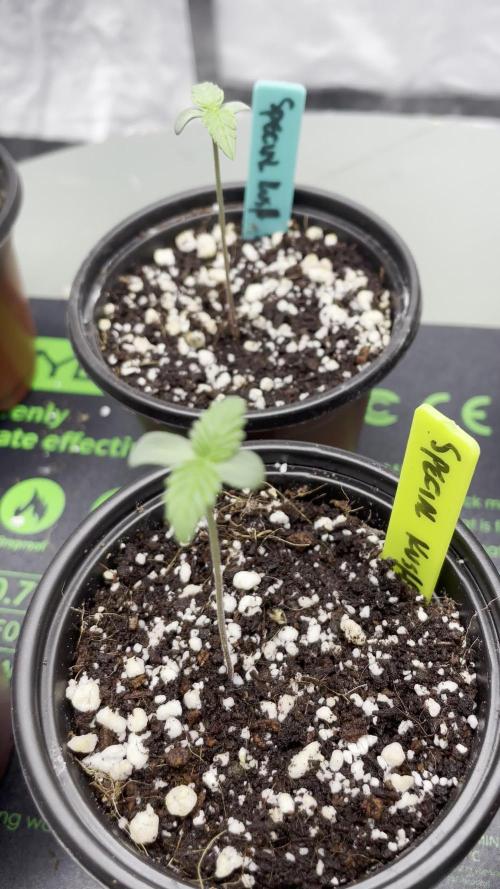
Special Kush #1
Afghan x Kush
Kush is to indica strains what Haze is to sativas. Much like Skunk, “Kush” is a term used to describe an entire lineage of cannabis plants. Today, the term Indica refers to a type of plant that is naturally found (indigenous) to the Indian region.
Source:
https://www.royalqueenseeds.com/feminized-cannabis-seeds/138-special-kush-1.html
🌱 Vegetative Stage
Method used: minimal intervention — I don’t touch the plant and simply let it thrive.
The environment remains stable, especially in terms of temperature. I’ve learned that consistency is key: when conditions stay steady, the plant feels comfortable and grows stronger.
I can’t wait to see it growing, growing, growing!
🎛️ Equipment
MARS HYDRO for almost everything. GET A DISCOUNT ON EQUIPMENT HERE
https://marshydro.eu/?ref=SGR420
Say whatever you want, but this brand is affordable and consistently delivers very good results. Reliable performance without breaking the bank.
INDBIRK Hygrometer (humidity controller)
Dehumidifier: Small no brand equipment.
Grow with passion, and it will thrive. 🌱✨
PEACE! 😀

Likes
4
Share


@KCChiefers
Follow
Not much issues with these plants except for Plant #1 which had a pH problem early on for some odd reason.

Processing
Likes
5
Share


@FlowerBloom09
Follow
Plants are growing so fast , I would say pre flower , next week should be flowering , ran into mini bugs (maybe spiders) but I added more traps so stop them , also ran into mold this week but that may of been due to the humidity so I lowered humidity from 55 down to 45, excited with my first grows!

Processing
Likes
35
Share


@DjDaveAtHome
Follow
Want to thank @Humboldt Seeds for working with me to answer questions about me unusual pheno! Gracias, gang! Every once and a while there is a genetic 'throwback'. Wish I'd have cloned the one from last grow! We'll see what this ASD is like. Displaying more indica like traits than sativa, although it is 80% sativa. This will be a cool grow!
The clones are hanging in there! It's been 6 weeks of vegging under an LED bar. Can they keep going for another 4-5 weeks? I hope so! Will do my best!
One of the two BHB clones will be transferred from soil to DWC at 10 weeks. The adjustment period will be slow. About a week, I figure. If successful. I will have solved my 'Have no way to veg' quandary.
Will build a bubble cloner for the next batch.
Blueberry Headband (2) and a Amhest Sour Diesel (1)from Humboldt Seeds.
* Even though the ASD seedling is much different than the other ASD that I've grown, HSO says there's not a chance seeds got mixed, so I'm assuming that this pheno is more on the Amherst Super Skunk side of the lineage as was a seedling last grow. Love the pheno! Much different than the others.
https://www.dinafem.org/en/blueberry-headband/
https://www.dinafem.org/en/amherst-sour-diesel/
Lighting
https://www.horticulturelightinggroup.ca/products/260w-qb-v2-led-kit
Soil Amendments for Blueberry Headband Soil
https://www.gaiagreen.com/product-page/all-purpose-4-4-4
https://www.gaiagreen.com/product-page/glacial-rock-dust
https://www.gaiagreen.com/product-page/mineralized-phosphate
http://www.seasoil.com/
Worm castings
Sunshine Mix #4
Epsom Salts
Molasses
Teas made from Gaia as well as in the soil and top dressing.
May use General Organics BioThrive 4.3.3
https://generalhydroponics.com/biothrive
and Alaskan MorBloom 0.10.10
https://www.planetnatural.com/product/alaska-morbloom/
DWC Nutients
https://generalhydroponics.com/floraseries
FloraGro
FloraBloom
FloraMicro
Diamond Nectar
https://generalhydroponics.com/diamond-nectar
Cal Mag
https://generalhydroponics.com/calimagic
Epsom salts

Likes
6
Share


@xmackobox
Follow
Hola amigos arrancamos nuevo cultivito, por ahora os traigo los videos que subo a YT como ya sabéis le estoy dando caña al canal, buscarme allí, me llamo como aquí, xmackobox.
Poco mas, se empezaron a germinar el día 14/02/24. Algunas se pasaron a maceta el día 16, otras en 17 y se terminaron de plantar en maceta definitiva de 11 L el día 18/02/24.
Para la primera semana de crecimiento ya meto fotos detalle de todas.
**ACTUALIZADO**
26/02/24 llevamos 12 días desde que se empezó a germinar, todas brotadas perfectas excepto 1 que como veis parece atrofiada o con algún problema, no desarrolla el ojo principal es decir su punta apical.
Esperaremos a ver que hace esta plantita :D


Processing
Likes
49
Share


@AsNoriu
Follow
Day 15. All girls will get either first or second feed. Upside down Kush was left in original pot, newwaver Kush was ripped with fingers from soil and transplanted to new pot, never will i have two plants in same pot ever again !!! And just couldn't throw out one ;)))
Kushes got middle of the tent, think i will top them only, it will be too bushy with 11 heavily LST'ed plants.
Think day 18 - first training day for 8 girls ;)
Day 16. Girls are loving life - thats fact !. Now i have to rethink LST plan, thought to train them on day 18, but they grow so compact, that i have two options :
A. Top them on 5 or 6 nod and train from there.
B. Lift lights and induce vertical grow. But its such a tricky move, usually they repeate that overstreched patern even if you bombard them with light after ...
C. Postpone LST to day 24-26. Never i did it so late, stem becomes very stiff, hard to bend her heavily ...
Next few days will show ...
Day 18. Girls are real beauty, they started to strech a bit, will give couple more days and will train them hard on monday.
Day 20. Dice was rolled !!!
LST !!! Girls are very compact, will be fun to veg them will have to plan well how to flatten up them.
Kushes are behind, but i had to keep tent as dry as possible, need plants dry, otherwise stems crack from such heavy training. Put couple soft wires to lift leaves from soil ..
Pure ph water and loads of spray now !!!
Next few days will show ...
Happy growing !!!


Likes
21
Share


@Rap_a_cap
Follow
No rain from April, it rains the day before the harvest........WTF
Perfectly ripened, this half of a plant will become among the prettiest buds ever grown. See U in few days for harvest.
Spoiler: great smoke!
Likes
1
Share


@TheGourmetWeed
Follow
Hey guys!
New week, here we are!
As always, every Sunday is cleaning day. Took everything again from the tent, washed the saucers.
Was also time to cut down some leaves as it was starting to look very bushy and hard for the light to get through it.
During that time, came across with some bugs under the foliage, which isn't a great sign for sure. Not to mention the fruit flies that move in and are making my life a little chaos.
Reducing now the RH a bit, and watering now on every 72h instead of 48h to keep the grow as dry as possible. Increasing the ventilator speed was another attempt, it so much air circulating should be hard for them to make a living inside. Just put now more of those fly traps and will add a couple glasses of cider vinegar here and there, as it attracts most of the flying things with success.
Note that some plants are yellowing and that's never a good sign.
Though for few weeks it was Nitrogen deficiency, but after increasing it and the CalMag values, the problem persists, so I'm inclined for something bug related.
Besides that, temps are still very stable, RH was changed, now to 40% tops, and the light went a little lower to get it closer to the plants - always with the light burn effect in mind. 40cm is the line between the tops and the lamp.
Flowering is looking good, buds are forming well and seems that's gonna be a good ending if I can keep the bugs under control.
She's on pre-flower, switched the nutrients and increased a bit the feeding volume.
That's all folks, have a great week


Likes
3
Share


@PhantomzWrath
Follow
Think I fed too much water but not sure, it’s been a couple days and medium still feels wet. One of the gorilla cookies is looking terrible and the other looks like it’s kinda starting to show some deficiency that I think might be magnesium deficiency but not sure. Anyone got any suggestions to help?
Likes
21
Share

@All_our_small_plants
Follow
Bewässerung: 500 ml jeden 3 Tag in der Fünften Woche
pH-Wert: 6
EC-Wert: 1,8 mS/cm
Temperatur: 26ºC
Luftfeuchtigkeit: 55%
Schädlingsbekämpfung: im Moment haben wir keine Anzeichen das es was zu bekämpfen gibt, sobald die ersten Anzeichen da sind werden wir handeln :), aber zur Sicherheit haben wir wieder ein paar Raubmilben an die Pflanzen gehenkt.
PPFD: 600 µmol/m²/s
DLI: 38 mol/m²/Tag
Düngemittel: Sie bekommt CalMag von BioBizz zu Prävention. Ab Tag 8 haben wir angefangen sie mit einem Mineralischen NPK Dünger (NPK 10-4-7) zu Gießen .
Besonderheiten: Sie ist nun seit einer Woche im Großen Zelt und macht sich ganz gut.
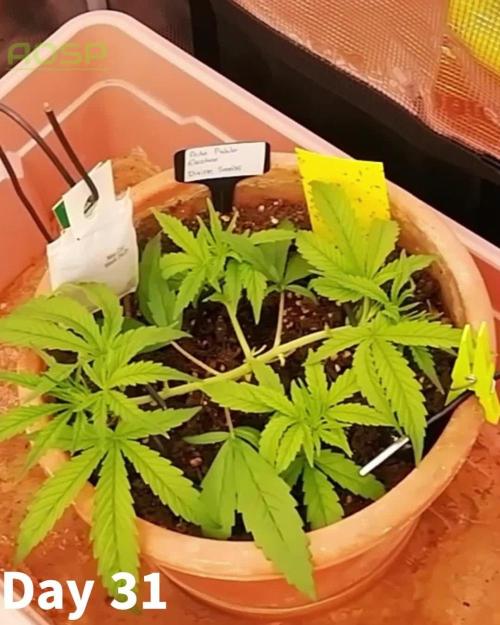
-Tag 33 Heute haben wir sie Stark entlaubt und wieder nach unten gebunden. sie haben eine Portion Dünger bekommen und wird in den nächsten tagen weiter Trainiert.
-Tagg 35 Heute wieder Entlaubt und Gegossen mit Dünger, Sie wächst sehr schnell und erholt sich rasch vom entlauben. Sie wurde heute auch in einen der Größeren Töpfe umgepflanzt und muss sich nun ein paar Tage erholen.

Likes
10
Share


@Ieiogrow94
Follow
Eccoci qui...
Tutto va per il meglio, questa settimana si inizia a vedere la resina e ora si inizieranno a formare le cime, per questo aggiungo Sugar Shot di @xpertnutrients vedremo l'evoluzione settimana prossima.
Odore intenso, fortunatamente ne ho messi 2 di semi ed ora posso godermi queste bellezze che sono SPAZIALI. Mi fanno impazzire sia per l'odore che per l conformazione di entrambe.
Grazie a tutti per il supporto🔥🌲❤️
Likes
13
Share


@FlavoursUk
Follow
Day 15 - The start of week 3 and the girls are really taking off, from 1-2 Inches of vertical growth daily. Consuming a good amount of water, almost leaving the bucket empty. lol.
Lightly defoliating to keep the bud sites exposed to light, as they get bushy very fast and recovery is only taking a day for them to bounce back. Pretty happy with how things are going right now. Slightly increased the EC by .2 but not enough to burn them.. which is the goal. Grateful for my trolmaster unit as it has made keeping tracking of my parameters much easier and effortless.
Day 16- Topping up the res with RO water every two days. Otherwise I'm sure it would be empty! Pistils are showing and the bud sites are very visible. Seeing one pheno with slightly more sativa dominant traits. Luckily I took clones so I can run the best pheno next time around, although all these plants are special. Still going through the flower stretch. Excited for what is to come. Stay tuned for the results.
Day 18 - As you can see, the difference is night and day over a period of 2 days they have had an explosion of growth. They were
heavily defoliated on day 17 and bounced back within a day. Happy plants preying. Bud sites are forming everywhere now. Not much to report. Until the end of week 3 in a few days. Bring on week 4.
Follow my Instagram and YouTube (link in bio)
