
Likes
Comments
Share
Likes
4
Share
@SamDo
Follow
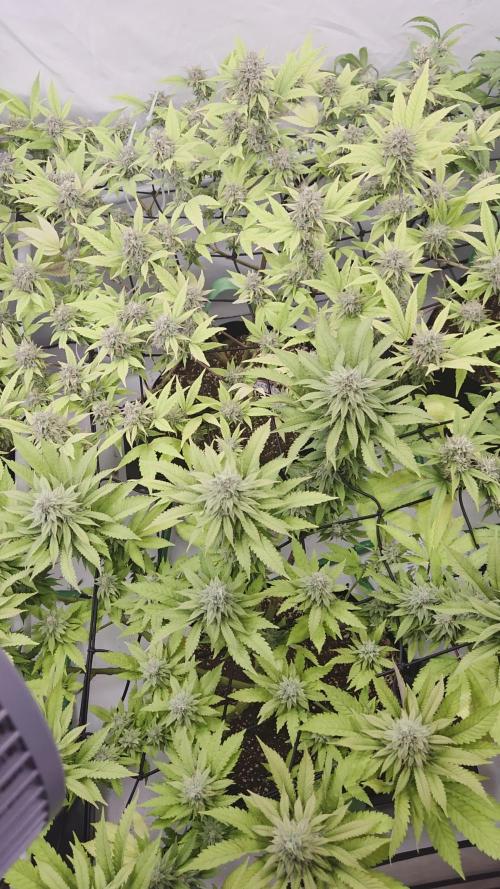
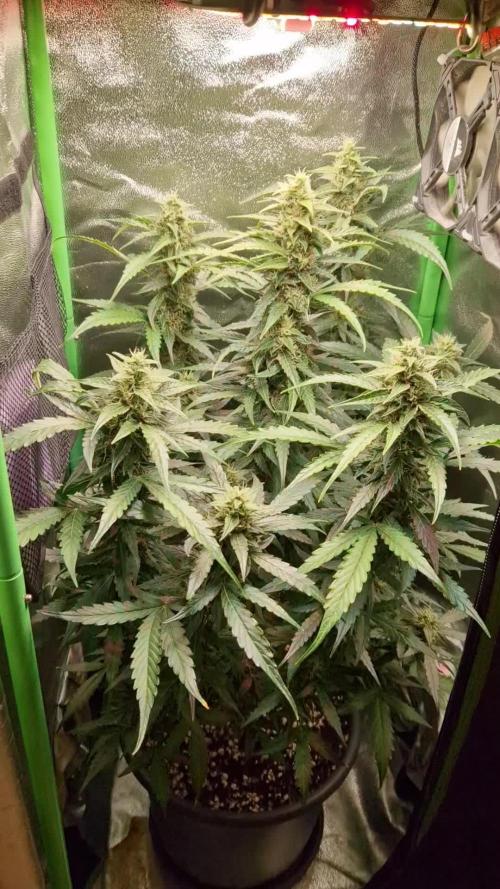
Hello growers, Welcome back for vegetative week 14 of the Pineapple Upside Down from Humboldt. This week was clearly a difficult one. The plant is still growing, but something was off. The overall development slowed down, and the lack of vigor became more noticeable compared to previous weeks. After checking all the usual parameters, the issue finally became clear. The reservoir pH was perfectly stable, sitting in the correct range around 5.7–5.9. However, the real problem was happening in the tray. The nutrient solution was sitting there for too long, and the pH was drifting significantly, reaching around 6.8. This caused the coco substrate to buffer at the wrong pH level, leading to a partial nutrient lockout. Since the plant wasn’t drinking enough, the solution had time to degrade and shift, which is one of the limitations of the Autopot system when the plant is not actively feeding. To correct the situation, I decided to fully reset the system. A complete flush was performed using FlashClean from Terra Aquatica, with a very low EC and a pH adjusted to around 5.5. The goal was to clean the substrate and remove any accumulated imbalance. After the flush, the system was left to drain and stabilize over the weekend. I then restarted feeding manually with a much more controlled approach. Instead of letting the tray stay filled, I used small amounts of nutrient solution at pH 5.7 and EC 1.7, allowing the coco to absorb it before removing any remaining liquid to avoid stagnation. The objective is to progressively bring the substrate back into the correct pH range and restore proper nutrient uptake. This method will be maintained throughout the week to observe how the plant reacts. If the plant shows a strong recovery and regains vigor, the Autopot system will be reactivated. Otherwise, manual control will remain in place. I also performed a light defoliation and cleanup, removing lower growth and excess foliage to improve airflow and light penetration. At this stage, the situation is under control, but the outcome will depend on how the plant responds over the next few days. The next update will be important to confirm whether this recovery strategy was effective. Alright growers, take care and see you next week.
Likes
57
Share
Smokin cookie blunts out the cookie jar and we don't match that♪♪ Feeding 💧 Always foilage with T-rex Shield, MegaKelp+Recharge 25/5 Water 8L+Si 2ml+BioGrow 8ml+TrexGrow 8ml+Calmag 4ml+Whiteroot 4ml ppm530 ph6 27/5 Flush ph6.3 ppm27 29/5 Water 8.5L+BioGrow 8ml+ TrexGrow 8ml+ Calmag 8ml+Si 8ml ppm600 ph6.05
Likes
67
Share
Flush week! 50 gallons of tap water flushed through the roots at the start of this week. She has been on plain tap water(2.5 gallons every 4 days) for the last two waterings.
Likes
7
Share
Tag 7 - Beginn der 2 Woche. Die Pflanze wird täglich besprüht. An Tag 4 der letzten Woche wurde die Pflanze gedüngt. Nährstofflösung: 0.5 ml/l - B-52 Advanced Nutrients 1 ml/l - Voodoo Juice Advanced Nutrients. Davon hat die Pflanze 50 ml an Tag 4 erhalten.
Likes
46
Share
@Dreadnug
Follow
Nicely growing along. Working toward 16 colas on the more established plant. The small was topped and then this weekend started to train its 4 off shoots. Decided to trim after the second node as the others seems to stretch further than I would have liked, however the older IX plant is really not stretchy at all - so well see how it turns out. The smaller one needs alternative training in order to move the second node from an up/down growth to a side to side. Lots of training - noticing that the ground cover is a bit too aggressive and getting in the way of light distribution so having to trim that back quite a bit. Also its making it hard for the training ties to stay in the ground. Weekly nutes continue with same mix above.
Processing
Likes
24
Share
@Leeyum
Follow
This plant is on the move just like last time. She looks impeccable and her canopy is about to become a super dense photosynthesis machine for her future buds. The tiniest signs of pre-flower starting so I gave both the Blackberry and LSD a tad of Tiger Bloom to ease them into pre-flower. My goal is to get night temps close to 65 to increase the potentiality of purples. I hope she keeps on doing her thang. She's a sexy beast. I tied her down on 9/14 when she hit 16 inches.
Likes
23
Share
@Kynareth
Follow
The plant keeps developing good, slow but she looks very healthy and happy.
Likes
5
Share
This plant seems to have grown much denser and better than my first plant. I just got the ac infinity ventilation setup with controller 69 for my 2x2, still trying to learn, hopefully grow #3 goes even better. Stay tuned
Likes
4
Share
@kandra
Follow
Main-Lining: Malawi mit Draht Passion Fruit mit Schnurr Versuch mit etwas Luftbefeuchtung aber ohne Wirkung
Processing
Likes
43
Share
There we go, it‘s week #10 with Skunk #1 and these beautiful pictures. The EC is at 2.0 and the ph at 5.8... let’s see them still growing in the last 2 weeks. Njoy! Day 64: New pictures online! EC is going up every day just like ph. Problem today is the heat! The water in the tank has exceeded 25°C and the temperature is not going to be cooler in the next week. That is why I added Purolyt. To prevent the water in the tank from getting algae and other sh*t. 😎 Day 65: Maybe it was too much Purolyt yesterday or the plants just give away all the leafes that are not in the light. Have to check tomorrow with lights off if something went wrong. Put 10liter pure water into the tank and ph'ed down. Day 66: I know the water in the tank is too warm with 26° C. I will have to solve this problem. (I think I will use icecubes or something like that) But the flowers look pretty good. They stand the heat better than we do.(35° C outside in the city!) Day 67: Still problems with the water temperature in the tank. Put an ice pack inside to get the temp down. Won't be helping long but for a moment. Day 69: Still problems with the hot summer. Heat is up to 31,2° C but the plants seem to like it. Water temp went down to 24.4° C after refilling 10l pure water. After that I checked the EC which is at 1.86 and ph'ed down to 5.6 Planning to harvest soon, maybe in one week, what do you guys think? The white spots in the blossoms are burned blossoms that contains no thc or cbd. It looks like an albino flower to me. 😌 I can't avoid them because the tent is too low.
Likes
91
Share
@DreamIT
Follow
🌵🐵 PEYOTE GORILLA BY SEEDSMAN 🐵🌵 🌵 19.3... 🌵 20.3 ... 🌵 21.3 ... 🌵 22.3 ... 🌵 23.3 ... 🌵 24.3 ... 🌵 25.3 Beautiful, healthy and strong, I can't wait to smell the scents it releases ____________________________________________________________________________________________ 📜 A look at the details of what I'm growing 📜 🌵🐵 Peyote Gorilla🐵🌵 ⚧ Gender ▪️ Feminised ➰ Genes ▪️ 60% Indica / 40% Sativa 🎄 Genetics ▪️ Gorilla Glue #4 (Chem Sister x Chocolate Diesel) x Peyote Purple (Bubba Kush purple pheno) 🚜Harvest ▪️ 600 g/m² 🌷Flowering ▪️ 65 - 70 days ✨THC ▪️ 26.0% ✅CBD ▪️ 1.0% 🏡Room Type ▪️ Indoor 🌄Room Type ▪️ Outdoor 🕋Room Type ▪️ Greenhouse 🎂Release Year ▪️ 2019 __________________________________________________________________________ 📷🥇 Follow the best photos on Instagram 🥇📷 https://www.instagram.com/dreamit420/ 🔻🔻Leave a comment with your opinions if you pass by here🔻🔻 🤟🤗💚Thanks and Enjoy growth 💚🤗🤟
Likes
62
Share
@nonick123
Follow
Día 71 (30/12) Christmas holidays. Only watering Día 72 (31/12) He recibido mi nueva lampara Mars Hydro FC1500 EVO Led Grow Light (2024 NEW FC 1500-EVO Samsung LM301H 150W LED) - https://marshydro.eu/products/fc1500-evo-led-grow-lights/ - https://www.amazon.de/dp/B0CSSGN5D8?ref=myi_title_dp Procedo a instalarla, de modo que tengo la tienda de 120x60 cm perfectamente cubierta con las DOS (2) lámparas FC1500 EVO Es ideal tener dos lámparas, porque así puedo ajustar la distancia a la lampara en función de la altura de capa planta Ajusto ambas lámparas al 75% de potencia (Total 225W), que es más que suficiente para cubrir el área de 120x60 cm Día 73 (01/01) CBD Auto 20:1 #1 - Muestra una ligera deficiencia con algunas puntas de las hojas dobladas hacia arriba y clorosis... Creo que le voy a dar otra ración de BIO PK 5-8 OG Kush Auto - Está apilando cogollos de forma brutal. Increíble el olor y la cantidad de tricomas que está formando 😍 Día 74 (02/01) CBD Auto 20:1 #1 - Se empiezan a formar tricomas entre los incipientes cogollos OG Kush Auto - Una pena que se haya intensificado la deficiencia de CalMag... en las hojas, porque los cogollos son gordos y densos, y cubiertos de tricomas Día 75 (03/01) CBD Auto 20:1 #1 - Voy a darle un boost para las 4 semanas que le quedan hasta la cosecha con SILICIUM FLASH Hago un pequeño agujero cerca del tallo, espolvoreo 25g de SILICIUM FLASH en el agujero, lo cubro de tierra. Riego con una solución de 2g de BACTREX por litro de agua. OG Kush Auto - Impresionante densidad de los cogollos que empieza a doblar las ramas 😍 La ventana de cosecha se acerca! 💥 Día 76 (04/01) CBD Auto 20:1 #1 - Investigando me doy cuenta de que lo que le pasa es quemadura de luz, ya que la parte externa de la planta sufre clorosis, y la parte interna (donde no alcanza la luz) está completamente verde Ajusto la lampara sobre esta planta para 40 DLI OG Kush Auto - Sigue poniendo los cogollos duros como rocas y muy llenos de tricomas! 😍💥 Día 77 (05/01) CBD Auto 20:1 #1 - On going OG Kush Auto - Empieza la senescencia en las hojas de abanico, acelerada por la deficiencia de CalMag... que ha tenido. 💦Nutrients by Bio Tabs - www.biotabs.nl/en/ 🌱Substrate PRO-MIX HP BACILLUS + MYCORRHIZAE - www.pthorticulture.com/en-us/products/pro-mix-hp-biofungicide-plus-mycorrhizae "GDBT420" 15% DISCOUNT code for the BIOTABS Webshop https://biotabs.nl/en/shop/ With 2 x Mars Hydro FC1500 EVO Led Grow Light (2024 NEW FC 1500-EVO Samsung LM301H 150W LED) - https://marshydro.eu/products/fc1500-evo-led-grow-lights/ - https://www.amazon.de/dp/B0CSSGN5D8?ref=myi_title_dp
Likes
11
Share
DAY 14 of flower🌼🌸 Feed compost tea n sst tea No bottles no nutes
Likes
19
Share
Yellow butterfly came to see me the other day; that was nice. Starting to show signs of stress on the odd leaf, localized isolated blips, blemishes, who said growing up was going to be easy! Smaller leaves have less surface area for stomata to occupy, so the stomata are packed more densely to maintain adequate gas exchange. Smaller leaves might have higher stomatal density to compensate for their smaller size, potentially maximizing carbon uptake and minimizing water loss. Environmental conditions like light intensity and water availability can influence stomatal density, and these factors can affect leaf size as well. Leaf development involves cell division and expansion, and stomatal differentiation is sensitive to these processes. In essence, the smaller leaf size can lead to a higher stomatal density due to the constraints of available space and the need to optimize gas exchange for photosynthesis and transpiration. In the long term, UV-B radiation can lead to more complex changes in stomatal morphology, including effects on both stomatal density and size, potentially impacting carbon sequestration and water use. In essence, UV-B can be a double-edged sword for stomata: It can induce stomatal closure and potentially reduce stomatal size, but it may also trigger an increase in stomatal density as a compensatory mechanism. It is generally more efficient for gas exchange to have smaller leaves with a higher stomatal density, rather than large leaves with lower stomatal density. This is because smaller stomata can facilitate faster gas exchange due to shorter diffusion pathways, even though they may have the same total pore area as fewer, larger stomata. Leaf size tends to decrease in colder climates to reduce heat loss, while larger leaves are more common in warmer, humid environments. Plants in arid regions often develop smaller leaves with a thicker cuticle and/or hairs to minimize water loss through transpiration. Conversely, plants in wet environments may have larger leaves and drip tips to facilitate water runoff. Leaf size and shape can vary based on light availability. For example, leaves in shaded areas may be larger and thinner to maximize light absorption. Leaf mass per area (LMA) can be higher in stressful environments with limited nutrients, indicating a greater investment in structural components for protection and critical resource conservation. Wind speed, humidity, and soil conditions can also influence leaf morphology, leading to variations in leaf shape, size, and surface characteristics. Small leaves: Reduce water loss in arid or cold climates. Environmental conditions significantly affect gene expression in plants. Plants are sessile organisms, meaning they cannot move to escape unfavorable conditions, so they rely on gene expression to adapt to their surroundings. Environmental factors like light, temperature, water, and nutrient availability can trigger changes in gene expression, allowing plants to respond to and survive in diverse environments. Depending on the environment a young seedling encounters, the developmental program following seed germination could be skotomorphogenesis in the dark or photomorphogenesis in the light. Light signals are interpreted by a repertoire of photoreceptors followed by sophisticated gene expression networks, eventually resulting in developmental changes. The expression and functions of photoreceptors and key signaling molecules are highly coordinated and regulated at multiple levels of the central dogma in molecular biology. Light activates gene expression through the actions of positive transcriptional regulators and the relaxation of chromatin by histone acetylation. Small regulatory RNAs help attenuate the expression of light-responsive genes. Alternative splicing, protein phosphorylation/dephosphorylation, the formation of diverse transcriptional complexes, and selective protein degradation all contribute to proteome diversity and change the functions of individual proteins. Photomorphogenesis, the light-driven developmental changes in plants, significantly impacts gene expression. It involves a cascade of events where light signals, perceived by photoreceptors, trigger changes in gene expression patterns, ultimately leading to the development of a plant in response to its light environment. Genes are expressed, not dictated! While having the potential to encode proteins, genes are not automatically and constantly active. Instead, their expression (the process of turning them into proteins) is carefully regulated by the cell, responding to internal and external signals. This means that genes can be "turned on" or "turned off," and the level of expression can be adjusted, depending on the cell's needs and the surrounding environment. In plants, genes are not simply "on" or "off" but rather their expression is carefully regulated based on various factors, including the cell type, developmental stage, and environmental conditions. This means that while all cells in a plant contain the same genetic information (the same genes), different cells will express different subsets of those genes at different times. This regulation is crucial for the proper functioning and development of the plant. When a green plant is exposed to red light, much of the red light is absorbed, but some is also reflected back. The reflected red light, along with any blue light reflected from other parts of the plant, can be perceived by our eyes as purple. Carotenoids absorb light in blue-green region of the visible spectrum, complementing chlorophyll's absorption in the red region. They safeguard the photosynthetic machinery from excessive light by activating singlet oxygen, an oxidant formed during photosynthesis. Carotenoids also quench triplet chlorophyll, which can negatively affect photosynthesis, and scavenge reactive oxygen species (ROS) that can damage cellular proteins. Additionally, carotenoid derivatives signal plant development and responses to environmental cues. They serve as precursors for the biosynthesis of phytohormones such as abscisic acid () and strigolactones (SLs). These pigments are responsible for the orange, red, and yellow hues of fruits and vegetables, while acting as free scavengers to protect plants during photosynthesis. Singlet oxygen (¹O₂) is an electronically excited state of molecular oxygen (O₂). Singlet oxygen is produced as a byproduct during photosynthesis, primarily within the photosystem II (PSII) reaction center and light-harvesting antenna complex. This occurs when excess energy from excited chlorophyll molecules is transferred to molecular oxygen. While singlet oxygen can cause oxidative damage, plants have mechanisms to manage its production and mitigate its harmful effects. Singlet oxygen (¹O₂) is considered a reactive oxygen species (ROS). It's a form of oxygen with higher energy and reactivity compared to the more common triplet oxygen found in its ground state. Singlet oxygen is generated both in biological systems, such as during photosynthesis in plants, and in cellular processes, and through chemical and photochemical reactions. While singlet oxygen is a ROS, it's important to note that it differs from other ROS like superoxide (O₂⁻), hydrogen peroxide (H₂O₂), and hydroxyl radicals (OH) in its formation, reactivity, and specific biological roles. Non-photochemical quenching (NPQ) protects plants from damage caused by reactive oxygen species (ROS) by dissipating excess light energy as heat. This process reduces the overexcitation of photosynthetic pigments, which can lead to the production of ROS, thus mitigating the potential for photodamage. Zeaxanthin, a carotenoid pigment, plays a crucial role in photoprotection in plants by both enhancing non-photochemical quenching (NPQ) and scavenging reactive oxygen species (ROS). In high-light conditions, zeaxanthin is synthesized from violaxanthin through the xanthophyll cycle, and this zeaxanthin then facilitates heat dissipation of excess light energy (NPQ) and quenches harmful ROS. The Issue of Singlet Oxygen!! ROS Formation: Blue light, with its higher energy photons, can promote the formation of reactive oxygen species (ROS), including singlet oxygen, within the plant. Potential Damage: High levels of ROS can damage cellular components, including proteins, lipids, and DNA, potentially impacting plant health and productivity. Balancing Act: A balanced spectrum of light, including both blue and red light, is crucial for mitigating the harmful effects of excessive blue light and promoting optimal plant growth and stress tolerance. The Importance of Red Light: Red light (especially far-red) can help to mitigate the negative effects of excessive blue light by: Balancing the Photoreceptor Response: Red light can influence the activity of photoreceptors like phytochrome, which are involved in regulating plant responses to different light wavelengths. Enhancing Antioxidant Production: Red and blue light can stimulate the production of antioxidants, which help to neutralize ROS and protect the plant from oxidative damage. Optimizing Photosynthesis: Red light is efficiently used in photosynthesis, and its combination with blue light can lead to increased photosynthetic efficiency and biomass production. In controlled environments like greenhouses and vertical farms, optimizing the ratio of blue and red light is a key strategy for promoting healthy plant growth and yield. Understanding the interplay between blue light signaling, ROS production, and antioxidant defense mechanisms can inform breeding programs and biotechnological interventions aimed at improving plant stress resistance. In summary, while blue light is essential for plant development and photosynthesis, it's crucial to balance it with other light wavelengths, particularly red light, to prevent excessive ROS formation and promote overall plant health. Oxidative damage in plants occurs when there's an imbalance between the production of reactive oxygen species (ROS) and the plant's ability to neutralize them, leading to cellular damage. This imbalance, known as oxidative stress, can result from various environmental stressors, affecting plant growth, development, and overall productivity. Causes of Oxidative Damage: Abiotic stresses: These include extreme temperatures (heat and cold), drought, salinity, heavy metal toxicity, and excessive light. Biotic stresses: Pathogen attacks and insect infestations can also trigger oxidative stress. Metabolic processes: Normal cellular activities, particularly in chloroplasts, mitochondria, and peroxisomes, can generate ROS as byproducts. Certain chlorophyll biosynthesis intermediates can produce singlet oxygen (1O2), a potent ROS, leading to oxidative damage. ROS can damage lipids (lipid peroxidation), proteins, carbohydrates, and nucleic acids (DNA). Oxidative stress can compromise the integrity of cell membranes, affecting their function and permeability. Oxidative damage can interfere with essential cellular functions, including photosynthesis, respiration, and signal transduction. In severe cases, oxidative stress can trigger programmed cell death (apoptosis). Oxidative damage can lead to stunted growth, reduced biomass, and lower crop yields. Plants have evolved intricate antioxidant defense systems to counteract oxidative stress. These include: Enzymes like superoxide dismutase (SOD), catalase (CAT), and various peroxidases scavenge ROS and neutralize their damaging effects. Antioxidant molecules like glutathione, ascorbic acid (vitamin C), C60 fullerene, and carotenoids directly neutralize ROS. Developing plant varieties with gene expression focused on enhanced antioxidant capacity and stress tolerance is crucial. Optimizing irrigation, fertilization, and other management practices can help minimize stress and oxidative damage. Applying antioxidant compounds or elicitors can help plants cope with oxidative stress. Introducing genes for enhanced antioxidant enzymes or stress-related proteins over generations. Phytohormones, also known as plant hormones, are a group of naturally occurring organic compounds that regulate plant growth, development, and various physiological processes. The five major classes of phytohormones are: auxins, gibberellins, cytokinins, ethylene, and abscisic acid. In addition to these, other phytohormones like brassinosteroids, jasmonates, and salicylates also play significant roles. Here's a breakdown of the key phytohormones: Auxins: Primarily involved in cell elongation, root initiation, and apical dominance. Gibberellins: Promote stem elongation, seed germination, and flowering. Cytokinins: Stimulate cell division and differentiation, and delay leaf senescence. Ethylene: Regulates fruit ripening, leaf abscission, and senescence. Abscisic acid (ABA): Plays a role in seed dormancy, stomatal closure, and stress responses. Brassinosteroids: Involved in cell elongation, division, and stress responses. Jasmonates: Regulate plant defense against pathogens and herbivores, as well as other processes. Salicylic acid: Plays a role in plant defense against pathogens. 1. Red and Far-Red Light (Phytochromes): Red light: Primarily activates the phytochrome system, converting it to its active form (Pfr), which promotes processes like stem elongation and flowering. Far-red light: Inhibits the phytochrome system by converting the active Pfr form back to the inactive Pr form. This can trigger shade avoidance responses and inhibit germination. Phytohormones: Red and far-red light regulate phytohormones like auxin and gibberellins, which are involved in stem elongation and other growth processes. 2. Blue Light (Cryptochromes and Phototropins): Blue light: Activates cryptochromes and phototropins, which are involved in various processes like stomatal opening, seedling de-etiolation, and phototropism (growth towards light). Phytohormones: Blue light affects auxin levels, influencing stem growth, and also impacts other phytohormones involved in these processes. Example: Blue light can promote vegetative growth and can interact with red light to promote flowering. 3. UV-B Light (UV-B Receptors): UV-B light: Perceived by UVR8 receptors, it can affect plant growth and development and has roles in stress responses, like UV protection. Phytohormones: UV-B light can influence phytohormones involved in stress responses, potentially affecting growth and development. 4. Other Colors: Green light: Plants are generally less sensitive to green light, as chlorophyll reflects it. Other wavelengths: While less studied, other wavelengths can also influence plant growth and development through interactions with different photoreceptors and phytohormones. Key Points: Cross-Signaling: Plants often experience a mix of light wavelengths, leading to complex interactions between different photoreceptors and phytohormones. Species Variability: The precise effects of light color on phytohormones can vary between different plant species. Hormonal Interactions: Phytohormones don't act in isolation; their interactions and interplay with other phytohormones and environmental signals are critical for plant responses. The spectral ratio of light (the composition of different colors of light) significantly influences a plant's hormonal balance. Different wavelengths of light are perceived by specific photoreceptors in plants, which in turn regulate the production and activity of various plant hormones (phytohormones). These hormones then control a wide range of developmental processes.
Likes
85
Share
@Organic_G
Follow
Ein weiterer Grow kommt zum Enden. Insgesamt wurden von Anfangs 5 Planzen, 4 zur Ernte gebracht, die andere hat gezwittert und ich habe Sie aus dem Zelt entfernt. Das Ergebniss nach 14 Tage trocknen bei 60-65% RH & 17-20 C. Pheno 1 : 61,40 g Pheno 2 : 33,85 g Pheno 3 : 29,22 g Pheno 4 : 56,42 g Summe : 180,89 g getrimmtes Trockengewicht Seit auf den nächsten Grow gespannt meine Freunde! Smoke Review folgt, wenn die Blüten ordentlich gecured sind.
Likes
3
Share
@Jessi576
Follow
Diary started at 03.04.2026 (vegi week 8) : 👉vegi week 8 👈 👉03.04.2026-09.04.2026👈 This will be quite an interesting run with only superb genetics. They are all clones. Kept the plants already for like 3-4 months in a very small state because of space and timing issues. Now its there turn as they went from 3 litre cloth pots into their final 8 L cloth pots. We've got : Solfire Gardens- Fx-3 Solfire Gardens - Pineapple Pucker The Cali Connection - Bellini abf genetics - Hawaiian Rainbow TerpHogz - Skittlez Z3 ( The original Z x Hindu Kush BC3 ) Since they we're kept very small until now i am starting with a relatively low PPFD value of 350-400 and they will constantly get more light until we have reached the ~600 PPFD point.