The Grow Awards 2026 🏆
Likes
Comments
Share
I'm practicing a lot of LST from the main ranch and practing the defoliation for creating a Cannabonsai. It's my first bonsai I'm using a led lamp grow the jungle "the smith" 150w full spectrum.
Likes
47
Share
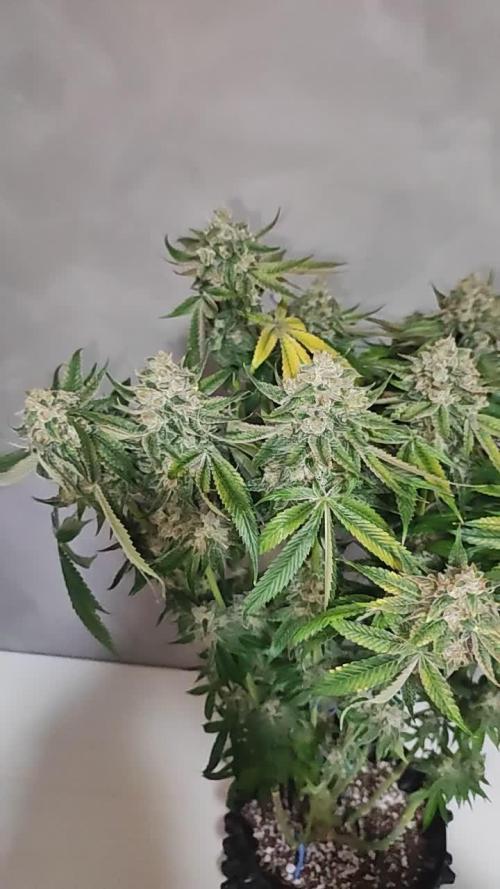
All content on this diary is for inspirational and educational purposes only. The ideas shared are not a substitute for professional advice. This diary/account is not officially affiliated with Alan Watts or his estate. All materials are used under the principles of fair use. I honor the legacy of Alan Watts by sharing his wisdom respectfully and with the intention of inspiring awareness and self-understanding. 2nd net is up. Early bud formations are promising. holding up to the extremes pretty well, some leaves taking minor damage, but overall, she is holding up, gave her 1 night at 50F see how she would react, stressful. Not advised as it messes with her metabolism, but I want to see if it triggers any anthocyanin response. Love to see her purp up but no signs yet. Remember, For every molecule of glucose produced during photosynthesis, a plant needs to split six molecules of water. This process provides the hydrogen needed for synthesizing glucose and other organic compounds, while oxygen is released as a byproduct. Homework. If Rubisco activity is impaired and it cannot properly function or regenerate its substrate, the plant's leaves are likely to turn a pale green or lime green, a condition known as chlorosis. Essentially, Rubisco activity is highly regulated and susceptible to various environmental and metabolic factors that can cause it to become inhibited, leading to an apparent failure in RuBP regeneration due to a lack of consumption. Rubisco regeneration is intrinsically linked to nitrogen supply because Rubisco is a major sink for nitrogen in plants, typically accounting for 15% to over 25% of total leaf nitrogen. The regeneration phase itself consumes nitrogen through the synthesis of the Rubisco enzyme and associated proteins (like Rubisco activase), and overall nitrogen status heavily influences the efficiency of RuBP regeneration. RuBisCO is a very large enzyme that constitutes a significant proportion (up to 50%) of leaf soluble protein and requires large investments in nitrogen. Insufficient nitrogen supply limits the plant's ability to produce adequate amounts of RuBisCO, thereby limiting the overall capacity for photosynthesis and carbon fixation. Maintaining the optimal, slightly alkaline pH is crucial for the proper function and regeneration of Rubisco. Deviations in either direction (too high or too low) disrupt the enzyme's structure, activation state, and interaction with its substrates, leading to decreased activity and impaired RuBP regeneration. (Lime/yellowing) Structural Component: Nitrogen is an essential building block for all proteins, and the sheer abundance of the Rubisco protein makes it the single largest storage of nitrogen in the leaf. Synthesis and Activity: Adequate nitrogen supply is crucial for the synthesis and maintenance of sufficient Rubisco enzyme and Rubisco activase (Rca), the regulatory protein responsible for maintaining Rubisco's active state. Nitrogen deficiency leads to a decrease in the content and activity of both Rubisco and Rca, which in turn limits the maximum carboxylation rate, Vmax, and the rate of RuBP regeneration Jmax, thus reducing overall photosynthetic capacity. Nitrogen Storage and Remobilization: Rubisco can act as a temporary nitrogen storage protein, which is degraded to remobilize nitrogen to other growing parts of the plant, especially under conditions of nitrogen deficiency or senescence. Nitrogen Use Efficiency (NUE): The allocation of nitrogen to Rubisco is a key determinant of a plant's photosynthetic nitrogen use efficiency (PNUE). In high-nitrogen conditions, plants may accumulate a surplus of Rubisco, which may not be fully activated, leading to a lower PNUE. Optimizing the amount and activity of Rubisco relative to nitrogen availability is a target for improving crop NUE. Photorespiration and Nitrogen Metabolism: Nitrogen metabolism is also linked to the photorespiration pathway (which competes with carboxylation at the Rubisco active site), particularly in the reassimilation of ammonia released during the process. To increase RuBisCO regeneration, which refers to the process of forming the CO2 acceptor molecule Ribulose-1,5-bisphosphate (RuBP) during photosynthesis, the primary methods involve optimizing the levels and activity of Rubisco activase (Rca) and enhancing the performance of other Calvin-Benson-Bassham (CBB) cycle enzymes. Biochemical and Environmental Approaches: Optimize Rubisco Activase (Rca) activity: Rca is a crucial chaperone protein that removes inhibitory sugar phosphates, such as CA1P (2-carboxy-D-arabinitol 1-phosphate), from the Rubisco active site, thus maintaining its catalytic competence. •Ensure optimal light conditions: Rca is light-activated via the chloroplast's redox status. Adequate light intensity ensures Rca can effectively maintain Rubisco in its active, carbamylated state. •Maintain optimal temperature: Rca is highly temperature-sensitive and can become unstable at moderately high temperatures (e.g., above 35°C/95F° in many C3 plants), which decreases its ability to activate Rubisco. Maintaining temperatures within the optimal range for a specific plant species is important. •Optimize Mg2+ concentration: Mg2+ is a key cofactor for both Rubisco carbamylation and Rca activity. In the light, Mg2+ concentration in the chloroplast stroma increases, promoting activation. •Manage ATP/ADP ratio: Rca activity depends on ATP hydrolysis and is inhibited by ADP. Conditions that maintain a high ATP/ADP ratio in the chloroplast stroma favor Rca activity. Enhance Calvin-Benson-Bassham (CBB) cycle enzyme activity: The overall rate of RuBP regeneration can be limited by other enzymes in the cycle. •Increase SBPase activity: Sedoheptulose-1,7-bisphosphatase (SBPase) is a key regulatory enzyme in the regeneration pathway, and increasing its activity can enhance RuBP regeneration and overall photosynthesis. •Optimize other enzymes: Overexpression of other CBB cycle enzymes such as fructose-1,6-bisphosphate aldolase (FBA) and triose phosphate isomerase (TPI) can also help to balance the metabolic flux and improve RuBP regeneration capacity. Magnesium ions, Mg2+, are specifically required for Rubisco activation because the cation plays a critical structural and chemical role in forming the active site: A specific lysine residue in the active site must be carbamylated by a CO2 molecule to activate the enzyme. The resulting negatively charged carbamyl group then facilitates the binding of the positively charged Mg2+ion. While other divalent metal ions like Mn2+ can bind to Rubisco, they alter the enzyme's substrate specificity and lead to dramatically lower activity or a higher rate of the non-productive oxygenation reaction compared to Mg2+, making them biologically unfavorable in the context of efficient carbon fixation. The concentration of Mg2+ in the chloroplast stroma naturally increases in the light due to ion potential balancing during ATP synthesis, providing a physiological mechanism to ensure the enzyme is activated when photosynthesis is possible. At the center of the porphyrin ring, nestled within its nitrogen atoms, is a Magnesium ion (Mg2+). This magnesium ion is crucial for the function of chlorophyll, and without it, the pigment cannot effectively capture and transfer light energy. Mg acts as a cofactor: Mg2+ binds to Rubisco after an activator CO2 molecule, forming a catalytically competent complex (Enzyme-CO2-Mg2+). High light + CO2) increases demand: Under high light (60 DLI is a very high intensity, potentially saturating) and high CO2, the plant's capacity for photosynthesis is high, and thus the demand for activated Rubisco and the necessary Mg2+ cofactor increases. Mg deficiency becomes limiting: If Mg2+ is deficient under these conditions, the higher levels of Rubisco and Rubisco activase produced cannot be fully activated, leading to lower photosynthetic rates and potential photo-oxidative damage. Optimal range: Studies show that adequate Mg2+ application can enhance Rubisco activation and stabilize net photosynthetic rates under stress conditions, but the required concentration is specific to the experimental setup. Monitoring is key: The most effective approach in a controlled environment is to monitor the plant's physiological responses e.g., leaf Mg2+ concentration, photosynthetic rate, Rubisco activation state, and adjust the nutrient solution/fertilizer to maintain adequate levels, rather than supplementing a fixed "extra" amount. In practice, this means ensuring that Mg2+ is not a limiting factor in the plant's standard nutrient solution when pushing the limits with high light and CO2. Applying Mg2+ through foliar spray is beneficial to Rubisco regeneration, particularly in alleviating the negative effects of magnesium (Mg) deficiency and high-temperature stress (HTS). While Mg can be leached from soil, within the plant it is considered a mobile nutrient, particularly in the phloem. Foliar-applied Mg is quickly absorbed by the leaves and can be translocate to other plant parts, including new growth and sink organs. Foliar application of: NATURES VERY OWN MgSO4 @ 15.0g L-1 in a spray bottle. For those high-intensity workouts when 1 meal a day is just not enough! Foliar sprays are often recommended as a rapid rescue measure for existing deficiencies or as a supplement during critical growth stages, when demand for Mg is high. Application in the early morning or late evening can improve absorption and prevent leaf burn. The plant was getting a little limey yellow in the centre. Shortly thereafter, she was back in business, green mostly regenerated. The starting point [of creativity] is curiosity: pondering why the default exists in the first place. We’re driven to question defaults when we experience vuja de, the opposite of déjà vu. Déjà vu occurs when we encounter something new, but it feels as if we’ve seen it before. Vuja de is the reverse—we face something familiar, but we see it with a fresh perspective that enables us to gain new insights into old problems. Confidence is evidence... nothing more. You are confident because you have driven 10,000 times, you are confident because you have spoken 10,000 times. People think confidence is a feeling, but it's not. If you want more confidence, then you need to create evidence, take more shots, collect more data, build more experiences, take more risks; fail, confidence doesn't come first; it is the reward you get for doing the work. no one else wants to do.
Likes
4
Share
@Diips
Follow
Week 6 allready! atleast 4 weeks left minimum 🌞✌️
Likes
113
Share
the growth of my girls is slowed down, due to the techniques of hst ..... in return my tops are becoming dense and robust. we will see some beautiful ones see you around friends
Processing
Likes
28
Share
Day 30 - We are officially in flower now! So I'm upping the Bio-Bloom and Top-Max while making sure not to burn her. Day 32 - Stretching out nicely now. Buds site are starting to form and you can see a little bit of the purple color coming through, very exciting stuff. Leaves are perfect, she is happy and loving life.
Likes
15
Share
@BruWeed
Follow
🍀27/06 - Empieza su quinta semana en Etapa de flora. 🍀Se encuentra perfecta sin ningún problema. 🍀Los cocos cada vez están más llenos de tricomas, se nota la genética gorilla. 🍀Cada vez requiere de más agua, antes era aprox cada dos días y ahora ya cada 1 día y medio esta pidiendo. 🍀Ya queda poco tiempo para la cosecha, igual se ve que le falta engorde a los cogollos. 🍀Subi dos videos para que se pueda apreciar mejor de como se encuentra. 🍀En estos dias subiré más imágenes de como viene. 🇦🇷🍀😶‍🌫️Podes seguirme en Insta Gram como @bruweed_arg 🇦🇷🍀😶‍🌫️
Likes
4
Share
@HolyPlant
Follow
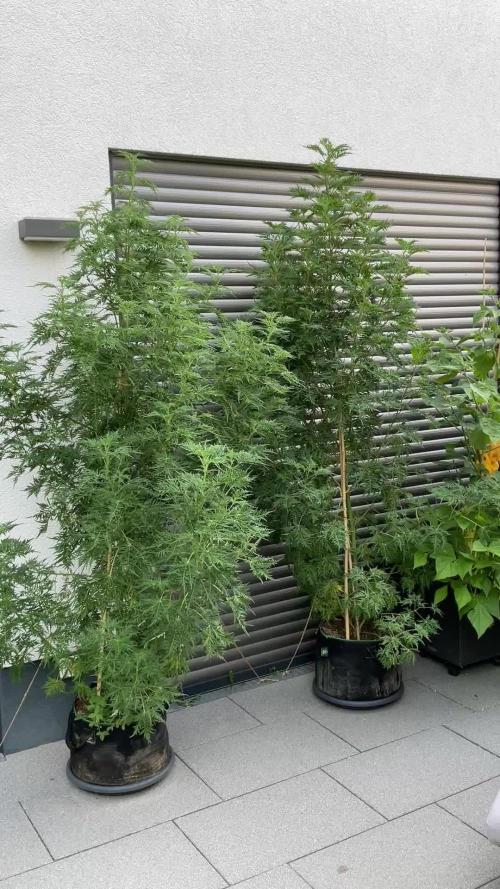
Hi everyone! I would like to show my second outdoor grow. Got some auto just for curiousity, to see purple colour. I started 25.05, 5 seeds, all sprouted. In one month time replant 3 plants in 1 pot, 26.06 First flowers 05.07, 40 days later I put seed in water
Likes
29
Share
Quinta settimana di fioritura 💪 forza bella mia,vai avanti così e fammi delle belle e grandi pannocchie 🙏🕉️💚💛❤️
Likes
14
Share
@MG2009
Follow
03/03/2022 Down to one Lemon OG, one Biscotti Skunk, and three Grape Skunk all looking super vigorous including Lemon OG . Very happy with the genetics so far trimmed up the legs a bit lots of potential clones! Ps. Forgot picture of Biscotti Skunk it's lights out so that will get done tomorrow.
Likes
42
Share
@Gabarram
Follow
03/12/2019 Day 81 The Dr seems to be concentrating in forming buds but I think she's grown some half centimeter, is she going to touch the ceiling? She has to know that is is confined and the sky is not the limit, at least in her condition. Day 82 (04-12-2019) The shoot at the rear left is almost touching the celiling of the grow tent😨 and i keep on tying other shoots and keeping them the farthest from the burning lights (many leaves' tips are scorched, but fortunately it's just the tip and the bud is still far from that hot point. Other leaves that are close to the lights, well, I took scissors and there's no need to speak further. Look the hard work I'm having with this plant height's issue. Goddammit why can't I have a normal grow like everyone? Day 83 just looking the video and the pics is self explanatory. No further comments 😒 Day 84 Ithe tallest shoot has reached the ceiling and seems to try to keep on growing so she needed to start bending at the very top because she wouldn't get past the tent fabric. Regarding EC, I am using a fertigation solution about 1,3 mS/cm and the runoff EC at 1.5 mS/cm. EC has been kept controlled since I raised fertigation volume to 6 L per fertigation event (1/day), unfortunately this solution containing nutrients goes to waste :( Day 85 07/12 I'lllst the tops that get to touch the ceiling and keep observing and acting as needed. I fear she'll stilll keep going up for a while. Fertigations as usual, got runoff EC 650 ppm today (1.3 ms/cm) which I think it's very good of a value. Day 86 (08/12/2019) Following advice I defoliated and even cut some thin and improductive shoots. Removed a lot of foliage and even supercropped a long tall shoot, I want to see how this high stress technique affects her. Because I plan to keep it doing if other shoots decided to continue growing. I wonder why do shoots continue growing vertical after having passed the light's level. Is it the glow coming from the reflective walls perhaps? Many questions. I decided to take down some tall shoots by suspending little weights near the tip, it seems to work more or less fine. Day 87 luckily the HST seems to have worked fine, the shoots are recovering and point upwards again. The main tip is quite unruly, today I supercropped that tip. Runoff EC is 650 ppm, perfect. Day 92 /14-12-2019) I think that despite her exaggerate growth she's managing to thrive fine with some limitations, buds seems going well. Shoots are still growing vertical but supercropping and resistance seems to have hampered her a while, but now I see she engaged on growing some centimeters more :/ Day 93 two days from starting the 14th week, despite the lights and the heat of this season (added to the lights I had to keep the tent door open for there was 32 ºC inside) the Dr is taking it well, I see the buds foxtailing as I expected, and I'm positive this grow will get to a good end. I'll work day by day to achieve that. Regarding fertigation, I gave her a solution half concentrated (relative to the solutions that I had given her the preceding days) because I noticed salt build-up by the EC measurements. I left run off EC at 800 ppm which is still a bit high for my liking but not excessively. For the amount of runoff I collected today, I see she seems to be drinking a little more.
Likes
Comments
Share
Semana 2 de floracion exterior.
Likes
2
Share
@Hempire
Follow
Hello growers ! This week I started to put cannaboost and terra Flores ! They grow higher every days and the size of the second branches is huge !! Good plants and very strong ! I’m quite excited to see the flowers ! I cut a bit of leaves that cover buds from the light ;) this session I don’t pinch the branches to let the stretch doing the job
Likes
16
Share
@IQuSX
Follow
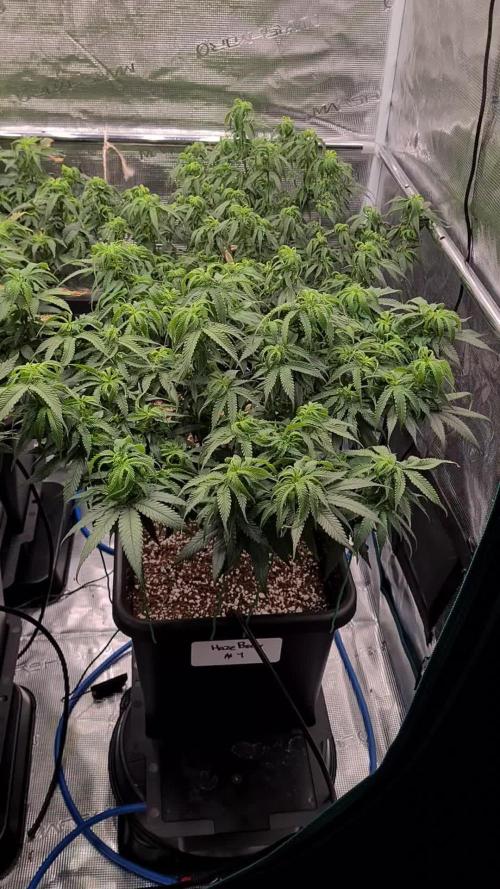
>> 1. Defoliation (25% green weight) was as 30 on 31 days after the 12/12 lighting change! >> 2. Cleaner substrate - added 25% nutrients. >> 3. Downloaded good position rockets’ green.
Processing
Likes
15
Share
@MG2009
Follow
08/25/2020 Did some defoiliating more pistils popping out all over.
Likes
9
Share
Flus atıp 2 gün karanlığın ardından kesicem bir hasarın daha sonuna geldik hasat tatmin etmedi ama.kafa olarak mükemmel kalitede..
Likes
17
Share
Fattening up really nice every think smells how it should bubble gum really kicking up now they look very healthy I can’t complain thank you for stopping in leave a like I shall repay the favor some think not right please say 😅😁😎
Likes
23
Share
Just watered with water this week. Sometimes I add some Bio-Bizz products but rarely. The plants need trimmed. I am going to wait until next week which will be 21 days from 12/12 to give them a nice trim to open them up for more light and clear the lower growth. Everything is perfect temperature and humidity, light, Co2, air circulation... All on point. 👌
Likes
13
Share
@RakonGrow
Follow
+ Day 74: + trichome analyse video , side-bud Day 71: 4L mixed Water (ec 0.500) Flores 20ml (PH 6.0) +
Likes
6
Share
@Spumpill
Follow
Risolta la carenza di fosforo, o qualunque cosa fosse, con iguana bloom❤️ Tra poco darò un irrigazione senza fertilizzanti, ma con cannazym, micorrize e aceto