The Grow Awards 2026 🏆 






Likes
Comments
Share
@Wolf47
Follow
Pics are from 1/18-1/24
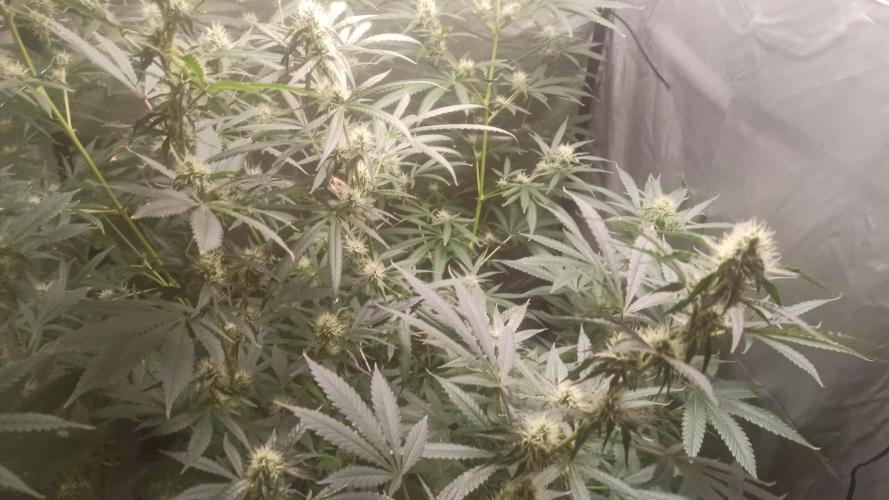
Girls are still behaving really well!! My “fan leaf” OCD has been kept in check, and am proud of myself!! The only other annoying thing, is that, one plant is almost twice as long, as the other 3!!

Likes
10
Share
@Gram_Solo
Follow
👸🎂
Queen lizzies cake staying short like a bonzai lol, fattening up on the 4 main colas on 1 , I did some lst to keep apart the stems and defoilated the middle again as it was clogged up. Ended up snapping them abit but they took it like a boss! 😎

Likes
119
Share
@PEAKYPLANTERS
Follow
Hello, fellow growers
I thank you for having dedicated your attention to my garden and I hope that the contents are to your liking and help for your growth.
The white mykoriza powder is like cocaine for my roots.... they shoot like crazy 😄😎

Likes
6
Share
@JeyGanesha
Follow
Eccoci. Siamo entrati nella prima settimana di fioritura.....bella pianta strongh.....mi auguro che faccia dei fiorelloni giganti e carichi di tricomi profumatissimo🙏💪
Likes
49
Share
@Schnabeldino
Follow
_____📅 Week 5 | 📅 Day 29 - 35 | 27.05 - 02.06 ______
27.05.25 | Day 29 🌞💧
🔸The ladies moved into the big tent on the 29th day after I had cleaned it and hung up my new lights.
🔸Oreoz is the smallest of all 4 and the most underdeveloped, but it has stabilized and is now really stepping on the gas, unfortunately a branch broke off during the LST with clips, well, 2 new shoots are coming at this point.
🔸I only work with hooks and occasionally with clips, but I've often broken branches with them so I prefer to use hooks hehe :D
01.06 | Day 34 💧
🔸 1500 ml
🔸 Sorry not the best pictures/vids this week, we are currently down with the flu again - only the bare minimum is being done 😅
_________________________________________________________________________________________
current conditions:
🌡️🔆= 24-25°
🌡️🌜= 18-19°
💨 Hum. = 65%
🔦 PPFD = 500 umol 18/6
🔦⌚DLI = ~ 32
_________________________________________________________________________________________
Equipment to use:
💡 Light: 2 x Sanlight Evo 4- 120 on 50%
⛺ 120 x120 x 180
🍯 Pots: 18 liter pot
🌱 Soil: Bio-Bizz light mix
💊 Nutrients: Advanced Nutrients
💧 Water: Tap Water 0,5 EC

Likes
22
Share
@herbalistssword
Follow
First day of week 6, I will be adding content as the week progresses, have a look at week 5 as that is now complete.
Status:
Candy Kush #1 d36 - Looking awesome, some pistils showing. Was too bushy so did some LST and slight defoliation today with supercrop on 1 branch.
Candy Kush #2 d36 - Looks like nitrogen deficiency is sorted, now I have excess? :D see the clawing tips? Gonna stick with the current feed, hopefully she'll overcome otherwise I'll flush her once if things get worse.
Bubble Kush d32 - Amazing, nothing to report, some tucking done
Fastberry d32 - Looking as weird as ever, some tucking done
Sugar Mama d36 - growing and getting really bushy, shame about the mess I did with the roots/stem but she is doing ok now.
----
Fed 2nd day of weeks 6 (day 37), 3ml biogrow 2ml calmag. pH was at 6.5 Ec was at 1.5.
New leaves are really yellow in candy Kush 2, iron deficiency? Not sure what is happening, will be monitoring.
----
Day 38, Removed the yellow leaves and a little defoliation on all the plants
----
Day 39, Raised the shorter plants so they get some more lights. All of them have finished 35 days (5 weeks from seedling today) and are looking great. Feed the same, although they still look very bright, brighter than I am used to.
----
Day 41, Feeding time, started giving them bloom at 5ml/l and the other normal dosages as in diary.
----
Day 42, End of week 6
The girls are all looking great, there is is so much hair on the buds, haven't seen so much with outdoor grows. Exciting :D
Sugar mama is way too bushy and not getting taller. The new blades are too thin, maybe I'm overfeeding her (only biogrow+calmag)? defoliated her, lots of fan leaves removes, she is asking for some training, I've ordered plant tie and will do some LST when delivered.
Fastberry also had a couple of leaves removed
All kushs doing great
Thanks for reading and happy growing!


Likes
35
Share
@eldruida_lamota
Follow
Vamos familia con la octava semana de vida y cuarta semana de floración de estás Cereal Milk de RoyalQueenSeeds.
La temperatura está en 25 y la humedad actualmente está en 50%.
La cantidad de agua cada 48h entre riegos no cambia, y por supuesto controlando el Ph entre riegos alrededor de 6.5 - 6.2.
Ya se ven bien sanas estas 5 cereal milk, tienen un color y una salud espectacular, vemos como siguen progresando y van formándose las flores estas próximas semanas.
Mars hydro:
Code discount: EL420
https://www.mars-hydro.com/
Agrobeta:
https://www.agrobeta.com/agrobetatiendaonline/36-abonos-canamo
Hasta aquí todo, Buenos humos 💨💨💨
Likes
13
Share
@NordicClosetGrower
Follow
Finally received a couple of humidifiers to test from the local shop. These shitty low cost humidifiers will not really do, I can only have them on non stop until the water runs out. If I connect them to a sensor that switches them off, it won't go back on because it doesn't have a mechanical switch, I have to press on each time.
Still, let's see if this helps my poor dry leafs a little bit
Likes
17
Share
@Targona
Follow
Looks like the girl recovered after the last fan crash. My medical splint helped her, she stands alone without help 😍. In addition, the stress apparently helped her induce large amounts of resin. It is completely white, the resin is even on large leaves. They are affected by burning nutrients, so the girl does not look so pretty. Anyway, I'm proud of her, she managed twice as much stress and she will definitely be tasty and potent 😘 💪


Likes
152
Share
@EBxAH
Follow
It was a good, busy week. The clones are down, dry, and now jarred. Total weight from them was 5oz. I didn't think I was going to get more than 2oz because I didn't put much effort into them. However they all turned out pretty solid for growing led and soil 😎 The mothers come down in 9 days and I'm definitely looking forward to seeing how dense those will be! I'm pretty sure a certain someone is going to be donating to some polar bears 😏 because I'm damn sure getting more than 2.5oz per plant 😎
That's about it for now, happy growing everyone ✌️🍀✌️


Likes
19
Share
@MadeInGermany
Follow
Hi everyone 🤗
Today it was placed in the flowering tent 😊, from now on it has a lighting time of 12 h / 12 h.
I am very excited to see how this strain develops 😍.
So far it looks very beautiful and I am really looking forward to the flowers.
I wish you all a nice start into the week. Let it grow 🌱 and stay healthy 🙏🏻👍
You can Buy this Strain at : greenhouseseeds.nl
Type:
Wonder Pie
☝️🏼
Genetics:
Wedding Cake x OG Kush
👍😍
Vega lamp: 2 x Todogrow Led
Quantum Board 100 W
💡
Flower Lamp : 2 x Todogrow Led
Cxb 3590 COB 3500 K 205 W
💡💡☝️🏼
Earth: Canna Bio
☝️🏼
Fertilizer: Canna Bio
☝️🏼🌱
Water: Osmosis water mixed with normal water (24 hours stale that the chlorine evaporates) to 0.2 EC. Add Cal / Mag to 0.4 Ec Ph with Organic Ph - to 6.0

Processing
Likes
Comments
Share
@SGCFarms
Follow
Day 17, and she’s starting to show sugars from the top down. I can’t wait for a smell to develop, but when I did smell something during the first opening of the tent it smells something fruity. She’s drinking at least 4 gallons a day at this point.

Likes
51
Share
@MadeInGermany
Follow
Info:
Unfortunately, I had to find out that my account is used for fake pages in social media.
I am only active here on growdiaries.
I am not on facebook instagram twitter etc All accounts except this one are fake.
Hey everyone :-)
Another nice week goes by and it is slowly becoming a bush from training 😊.
This week it was poured 2 times with 1 l each time (For nutrients, see the nutrient table above).
She was trained once again with topping.
You still have some time until it blooms until space is free :-).
Otherwise everything was checked and cleaned like every day.
Have fun with the update and stay healthy 🙏🏻
You can buy this Nutrients at :
https://greenbuzzliquids.com/en/shop/
With the discount code: Made_in_Germany you get a discount of 15% on all products from an order value of 100 euros.
You can buy this Strain at :
https://www.exoticseed.eu/
Type:
Herz Og
☝️🏼
Genetics:
Larry OG X Kosher Kush
Indica 60 % / Sativa 40 %
👍
Vega lamp:
2 x Todogrow Led
Quantum Board 100 W
💡
Bloom Lamp :
2 x Todogrow Led
Cxb 3590 COB 3500 K 205W
💡💡☝️🏼
Soil :
Canna Coco Professional +
☝️🏼
Nutrients :
Green Buzz Liquids :
Organic Grow Liquid
Organic Bloom Liquid
Organic more PK
More Roots
Fast Buds
Humic Acid Plus
Growzyme Big Fruits
Clean Fruits
Cal / Mag
Organic Ph - Pulver
☝️🏼🌱
Water: Osmosis water mixed with normal water (24 hours stale that the chlorine evaporates) to 0.2 EC. Add Cal / Mag to 0.4 Ec Ph with Organic Ph - to 5.8

Likes
1
Share
@Michijardinero
Follow
Muy buenas familia damos fin a la 5° semana y comenzamos la 6° a sido Una semana muy buena una semana de aprendizaje van muy bien mis nenas están engordando muy bien y cada vez es más rico el olor que sueltan le e subido un poquito los fertilizantes hos dejó unos videos para que vean y comenten un saludo familia buenos humos paz

Likes
Comments
Share
@Takeaims
Follow
Sweet manderain taking g it's sweet time to finish haha on week 9 witb this girl week 7 for the others and week 3 for the smallest ones doing some defoliation

Likes
10
Share
@I_Identify_As_A_Dan
Follow
Week 8 for White Widow by Greenhouseseedco,
Shes got her final topping to 16 mains 😬 Or will she get the 32 mains treatment.... 😎 Ill probably keep her at 16 tops but we'll see how stuff goes as she still has 2 months of veg ahead of her...
Have been fighting high humidity but atleast i still in veg😅 Will be buying a dehumidifier for flower time.
Likes
74
Share
@AsNoriu
Follow
Day 78. Girls is down. Dry trim chosen as to most smaller plants.
Overall I am happy with Urban Legend brand, only Gorilla will be meh.... ;)))
Day 88. Girl went to jars, amazing 62 g of her !!! Top quality all the plant through.
We are testing it with my friend's wife and it's pure joy, think after cure I'll keep it pure for myself, no share ;)))
Happy Growing !!!


Likes
45
Share
@SherbGrows
Follow
Time for another update!
During Week 9
Light defoliation on bottom canopy
Added 1 heaping tbsp of GEO Bloom dry amendment 3-12.5-9 with regular PH'd water
Watering every 3 days with 1/2 liter of water or more. Trying to keep soil moist without drying out. Seems to be improving the plants
Plan week 10
Installing ViparSpectra XS2000 light to help with better light coverage in the 4x4 tent
Going to keep RH around 45% and keeping up with airflow
Planning to put in dehumidifier in upcoming week if necessary
Weaning down on light defoliation at this point.
Happy with how these girls are doing! Hoping the new light set up with the ViparSpectra XS2000 will make a difference in yield this far into flower. Trying to combat a little bit of light burn happening at the moment as well.
Thanks for checking in! See you next week
Likes
23
Share
@Mr_McNasty408
Follow
Day 36 (1/11/21)
Nutes:
Veg A: 3.83 g/gal
Veg B: 2.58 g/gal
PPM: 1050
Water temp: 59°F
pH: 5.7
Day 37 (1/12/21)
Nutes:
Veg A: 4.6 g/gal
Veg B: 3.1 g/gal
PPM: 1150
Water temp: 59°F
pH: 5.7
Day 38 (1/13/21)
Nutes:
Veg A: 4.6 g/gal
Veg B: 3.1 g/gal
PPM: 1150
Water temp: 60°F
pH: 5.7
Day 39 (1/14/21)
Nutes:
Veg A: 4.6 g/gal
Veg B: 3.1 g/gal
PPM: 1150
Water temp: 62°F
pH: 5.7
Day 40 (1/15/21)
Nutes:
Veg A: 4.6 g/gal
Veg B: 3.1 g/gal
PPM: 1150
Water temp: 62°F
pH: 5.7
Day 41 (1/16/21)
Started running a RO:Tap water mix as recommended by Cropsalt FAQ instead of ph adjuster. PPM comes out about 20ppm higher but that’s no problem.
Nutes mix:
RO:TAP = 15:1 or 120oz:8oz
Veg A: 4.6 g/gal
Veg B: 3.1 g/gal
PPM: 1350
Water temp: 62°F
pH: 5.8
Day 42 (1/17/21)
Starting flower tonight, 12 hours of darkness tonight and for the rest of the grow.
Nutes mix:
RO:TAP = 15:1 or 120oz:8oz
Veg A: 4.6 g/gal
Veg B: 3.1 g/gal
PPM: 1350
Water temp: 60°F
pH: 5.8