Likes
Comments
Share


Likes
36
Share


@TheGreenLeopard
Follow
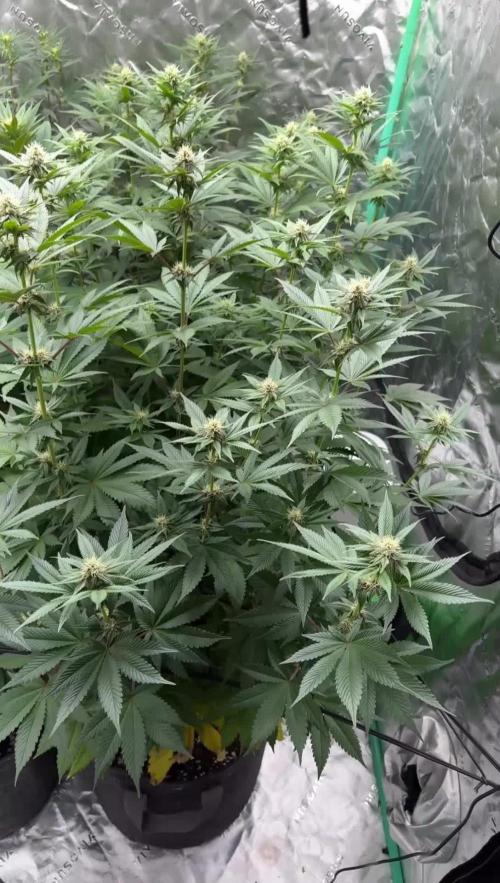
nice week this week. very noticeable transformation. I have a yetti purple berry kush in there which smells just amazing. this week i tried, for the first time, some under canopy LED. 2nd day with it today as i write this. they really took it well. perked up and kept at it. the color and hue is starting to come through. Super happy with this tent. I think its worth the effort to create an organised space to give yourself the best chance possible. you will see the difference in approach form Auto tent and then photperiod tent.


Likes
8
Share

@Nebuloso420
Follow
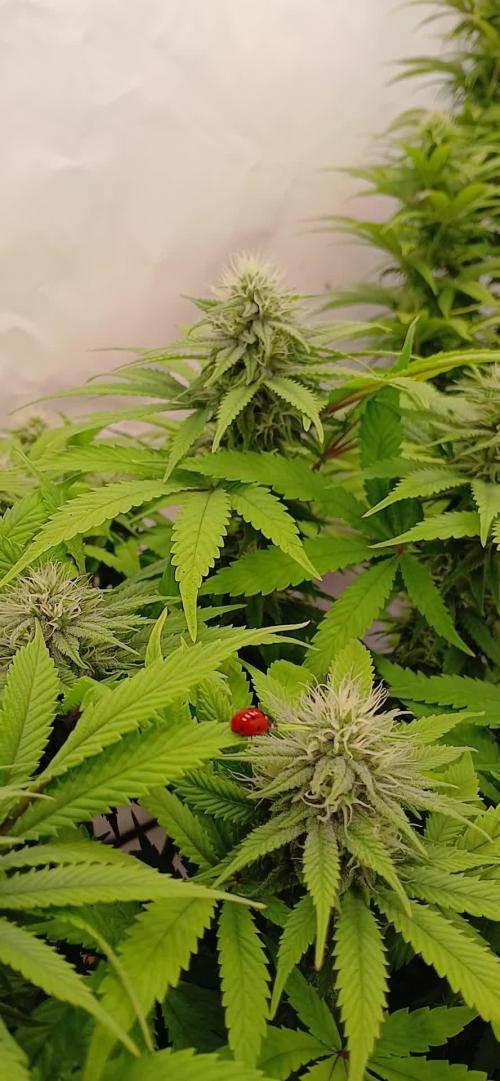
started with 15 liters of nutrient-mix this week. I need exactly one third of the recommended amount of fertilizer to get an EC of 1.4 mS/cm.
pH was 6.3.
Drain of the StrawberryAK had an EC of 2.2 and she smelled super strong when i took her out of the tent. An intense sour strawberry bubblegum scent.
The Humboldt Gelato smelled als very good, the typical mouthwatering Gelato smell. Drain had an EC of 1.7mS/cm.
The CBD Chronic also had an EC of 1.7mS/cm. Compared to the two other plants, she wasnt smelling very strong. Good old lemon and wood.


Likes
4
Share


@Growyourownathome2x2
Follow
Thursday 16th march day 59 Harvested a couple days earlier then planned as my humidity was getting a bit high and worried about risking mold I decided to chop, have to get a good dehumidifier soon, everything looking lovely, nice and dense with very strong fruity potent smell definitely the best looking plants I have grown to date not the biggest buds but they look quality, chopped plants whole gonna do my best to keep the temp and rh% in the dry room as close 60/60 as I can to get a nice slow dry, 🍁😎 I only took the wet weight from 1 plant back left plant was 270g with large fan leaves removed
Likes
1
Share


@MJ_LIVINGSOIL
Follow
We want to make 12 lbs per 4x8 bed it have 10 plant avg. per 1 cola = 5-10 gram
But my coffin Candy is 60-100 top-cola per 1 plant
Total 10 plant = 800-1,000 cola per 1 bed
Waiting for mission

Likes
13
Share

@masterofsmeagol
Follow
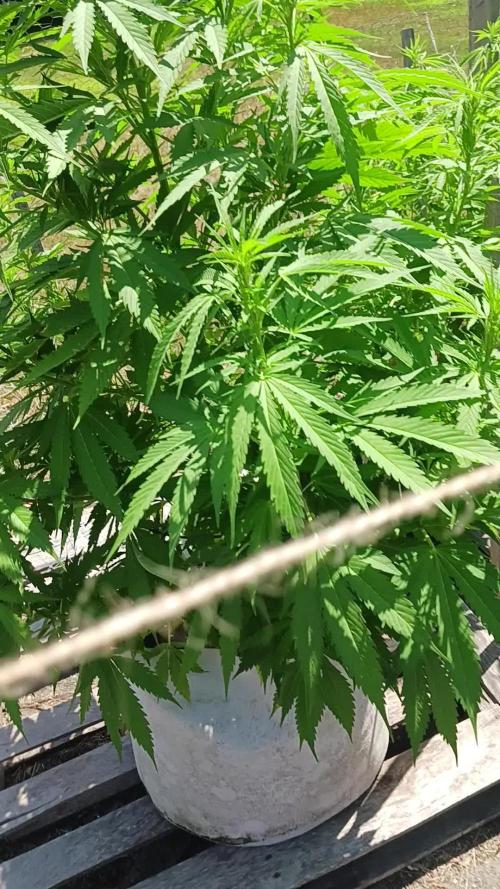
7/13 It's maine-ing out. Overcast and misting. I guess it rained last night but not much. Today is my watering day although I think they could've made it until tomorrow. These drastic temp changes makes it hard to get a STEADY routine in place. I watered everything in the 20's a gallon the 10's 1/2 gallon. The 10th planet in the front was still heavy so I didn't water it. I'll keep an eye on it. Temps are much milder. I noticed a few more septoria leaves on the 10th planet which I promptly defoliated. This pheno is flowering. I could've put this week as flowering as several plants have started. I also saw ONE leaf on my chem dog that had septoria on it. ONE f-ing leaf! I was planning on treating this early anyway so I mixed one gallon of plant doctor 3 tsp gallon/gallon which was the recommendation. I'll monitor this plant and continue treating it the next two weeks. I may do foliar too but the mixture is different. It's a systemic so I don't think that matters as much. Considering getting mulch to protect from spores on the soil. My plants look GORGEOUS. I Hate to use such a nice plant as a guennie pig but I'm not going to sit here and watch it progress. I'm lucky it's really not that bad and that it's on a reveg. There's so many leaves that I would be forced to prune anyway. I'm seeing two MAYBE three leaves a morning but I want to get this under control. Last year u let a plant with septoria go and it finished but went to extracts. I've got a pretty good feeling about this plant doctor. I've used it before with good results. Only time will tell though.🤞
EDIT: WENT OVER AT ABOUT 1PM. ITS 2 NOW AND BLUE SKIES AND SUNNY. IM SUPER GLAD I WATERED AND EVEN MORE SO THAT I APPLIED THE PLANT DOCTOR HOW I DID. THE GIRLS ALL LOOKED AMAZING. THE TENTH PLANET I TREATED WITH PLANT DOCTOR LOOKS THE BEST IVE EVER SEEN IT. I FOUND ON LEAVE DEEP ON THE INTERIOR WITJ A SMALL SPOT BUT ITS SOMETHING IM SURE I MISSED THIS MORNING. IF THIS WORKS THIS GOOD ILL BE APPLYING IT TO EVERYTHING EVEN IF ITS JUST PREVENTATIVE.
7/14 Rained last night andcwas still sprinkling when I went over. Amazingly the 10th planet that I treated with the plant doctorcmix had ZERO visible signs of septoria. I did find one leaf on Mt chem dog and two on my mk ultra with the big leaves. It could've been calcium deficiency but I really doubt it because I think I saw THAT as well. I'm going to wait a day or two and if there are still no negative results and the plant is still looking good I'm going to treat AT LEAST the two others that MAY be infected. It's a systemic and can be used proactively and supposably breaks down into p and k after stimulating immune response. I'll monitor a little longer but as it stands I think I'm going to treat the other two just in case. I also need to start feeding. I've watered a lot more than I normally do so obviously the soil won't last as long. This has been some tricky weather but I'm happy with how things are progressing. I probably should've changed this to the first week of flower as several plants are popping pistols everywhere.
EDIT: WENT OVER AROUND NOON AND MIXED UP TEO GALLONS OF PLANT DOCTOR PLANNING TO TREAT THE TWO PLANTS BESIDE THE 10TH PLANET. EVERYTHING LOOKED SO PERFECT AND TOMORROW IS MY WATER DAY SO I DECIDED TO HOLD OFF AND APPLY IT WHEN IT NEEDS WATER ANYWAY. I DID NOTICE THAT PLANTS SEEM TO BE FLOWERING MORE AGGREWWIVELY THAN BEFORE. THINGS ARE GETTING INTERESTING.
7/15 It was water day. The girls looked great this morning. I watered everything at least a gallon and 1.5 for the thirstier plants. I treated my big fan leaf mk ultra and my chem dog #4 with the same Plant Doctor mix as i did tge 10th planet beside it. I havent seen ANY septoria on that plant since application and it looks better than ever. I watered them with a half gallon of phed water before doing a soul drench with the gallon of Plant Doctor @ 3tsp/gal. I'm not seeing much septoria but plants are starting flower and I want to nip it in the bud. This product can be used preventatively and I went by the guidelines for medical marijuana. It was 70 earlier this morning. I'll update as I go forward.
EDIT: WENT BACK OVER AT 3 AS THE TENPS WERE PIST 90 AND HAD BEEN ALL DAY. I POSTED A SHORT VIDEO BUT EVERYTHING IS LOOKING GREAT. THE PLANT DOCTOR SEEMS TO HAVE HELPED SUBSTANTIALLY. DIDNT FIND ONE SEPTORIA LEAF. STILL IT WILL TAKE A WHILE TO WORK FULLY BUT IM GLAD I DIDNT CHICKEN OUT AND I APPLIED THE RIGHT AMOUNT. IM GOING TO KEEP AN EYE ON THINGS BUT I MIGHT JUST TREAT EVERYTHING PREVENTATIVELY WHICH IS JUST HALF A TSP A GALLON I THINK. IT DEF TRIGGERS A RESPONSE IN THE PLANT. I LOVE IT WHEN SHIT JUST WORKS OYT AND YOU END UP PLEASANTLY SURPRISED. NEXT WATERING ILL PROBABLY DO NUTES. IM DEBATING WHETBER TO TRELLUS OR JUST USE STAKES AND STRINGS ACROSS THE CAGE AS NEEDED. OH WELL. OVER 90 IS TO MUCH FOR ME TO BE OUTSIDE FOR TOO LONG.
7/16 Plant Doctor is doimg its job. I saw a couple septoria leaves on chem dog but it was interior amd I could've missed it. It takes a little bit to get going. I think I'm going to treat the rest of the garden with at least the preventative dose of 1tsp per gallon. I'll wait and see if this keeps it from popping back up. It almost got to 100 yesterday. It was 80 early this morning. I mixed up two gallons of water and gave the thistiest/lightest a half gallon. I'm hoping that will hold everything over until tomorrow which is water day. I'll have to check but I think it might be time to feed too. I def should make sure to treat tjis septoria before focusing on nutes. It says you can mix it with nutes but I'm leary of doing so. I'd rather apply them at seperate times. I'll watch the garden and of I NEED to water I will. I'm hoping what I did will be enough.
EDIT: WENT OVER AROUND ONE. IT WAS 93° WITH SUPER HIGH HUMIDITY. IM GLAD I SPLIT THAT TWO GALLONS WITH THOSE FOUR PLANTS THATS FOR SURE! THEY'D PROBABLY BE DROOPED IF I DIDNT. EVERYTHING WAD PRAYING TO THE SUN GODS. WELL, EVERYTHING EXCEPT THE MK ULTRA IN THE 30 AND THE 10TH PLANET. THEY ARENT DROOPING THEY JUST LOOK NORMAL. THEY ARENT "PRAYING" LIKE THE OTHERS. THEY ARE DEFINATELY A LITTLE LIGHT AND ARE LOOKING FORWARD TO THEIR WATERING. AND THEIR FEEDING. THATS FOR SURE. I WAS SUPER HAPPY WITH WHAT I SAW GOING OVER AND THE GIRLS WILL BE ABLE TO HOLD OUT UNTIL THE MORNING. ONE IN SPECIAL KUSH (WHICH GROW AMAZING AND LARGE HERE) IS IN A 10 AND I EVEN GAVE IT A LITTLE WATER THIS MORNING BUT ITS DROOPY. I COULD STILL FEEL A LITTLE BIT OF MOUSTURE EVEN THOUGH IT WAS LIGHT. IT CAN WAIT UNTIL THE MORNING WITH THE REST. IF IT WAS DROOPING BAD I WOULDA WATERED IT. I DONT GET WHY IM HAVING PROBLEMS FINISHING PLANTS IN 10GAL SMART POTS. YEARS AGO I COULD FINISH SOMETHING IN A 5GAL BUCKET! BUT NOW ITS LIKE THE PLANTS I GROW GET FAR TO BIG TO FINISH FLOWERING ON THESE TINY BAGS. ILL MONITER. HOPFULLY IT WILL BE FINE. IF I HAVE TO I SUPPOSE I COULD CUT THE BOTTOM OFF AND PUT THEM IN THE GROUND OR MORE SUBSTRATE BUT THATS NOT SOMETHING I REALLY WANT TO DO. I CANT WAIT TO SEE YOU THESE GIRLS TURN OUT.
7/17 I'm glad I gave those few plants that extra water. It hit 100 yesterday. Plants made it through it OK. It's 80 at 9am. I watered the garden even though it's supposed to rain with a chance of thunderstorms. Everything got at least a gallon. The mk ultra reveg in the 30 got 2gals as did the thirsty special kush on the end. I've figured out which plants use more water and I try to give them a little more. I also fed today. I was hesitant to feed the plants I treated with plant doctor, but I did anyway. 1tsp grow big 2tsp big bloom .5 tsp calmag. I've noticed pistles coming together on a few plants and forming buds. Next week will definitely be labeled flower. The plants treated with plant doctor LOOK great! I've found a few septoria leaves on a couple other plants. No big deal. I was going to treat the rest of the garden preventatively but if a couple more are infected I'll just add them to the rotation. I just need to make sure I follow-up with the next few treatments. Can't say enough good about this plant doctor.
7/18 Well this fucking sucks. It's 35mph wind gusts and windy as hell. It might've rained last night but if it didn't rain much. I spent the morning "trying" to put up little strong or rope supports to help the girls. I ran a rope across the front of the three on tje back to suppirt them. That one works good. I have one going the other way the entire length which helps support some. Then I took string and ran it around each side of a row for supports. So far no observable damage abd the plants all looked awesome. They've been through a lot and are big tough hardy plants. They'll make it through tjis no problem. I'd be more worried if they had big wet flowers on them but by then I'll have the proper supports and maybe a trellis up. I feel for them this morning and I hope that wind doesn't dry out my bags!
EDIT: SPIDY SENSE STARTED TINGLING AROUND ONE SO I WENT AND CHECKED. I GUESS WILL POWER ALONE WONT MAKE IT SO THE PLANTS MAKE IT TO WATERING DAY. WIND GUSTS HAVE BEEN HIGHER THAN 35MPH AND IVE SEEN REPORTS OF 25MPH SUSTAINED WIND. I DONT KNOW WHAT IT IS HERE BUT IT DRIED OUT SOME BAGS AND WAS TURNINGVPLANTS SIDEWAYS. BOTH 10TH PLANETS (THEY DRINK ALOT OF WATER) AND THE MK ULTRA REVEG WERE BADLY DROOPING. THE REST "MIGHT" HAVE MADE IT UNTIL MORNING BUT WHATS THE POINT? I ALSO HAVE TO LEAVE EARLY TOMORROW TO TAKE THE WIFE TO THE DOCTORS. WHAT I DECIDED ON WAS TO WATER THE PLANTS THAT DRINK THE MOST 2 GALS AND GIVE THE OTHERS TGATXWERENT DROOPING AND LIGHT 1.5. I GAVE THE TWO IN THE TENS A HALF GALLON EACH. THERE ATE TWO PLANTS AT THE BACK (SPECIAL KUSH AND PINK KUSH) THAT I DECIDED TO HOLD OFF AND WATER TOMORROW. I NOTICED SOME LEAVES WITH THE COMMON "IF THE BROWN SURROUNDS YOUR PLANT IS DROWNED" SO IF THE PLANTS HAVE A LITTLE WEIGHT, LOOK GOOD AND HAVE PRAYING LEAVES THEN I SHOULD PROBABLY WAIT TO WATER. THEY ARE ALL GETTING BEATEN TO SHIT BY THIS WIND STORM. IM SURPRISED THERE IS NO DAMAGE. THESE PLANTS ARE VERY STRONG. RESILIENT. I DIDNT WATER THE 50 EITHER AND IM UP IN THE AIR ABOUT WATERING IT TOMORROW.
Edit 2 I went over around six once the wind died down a little. All the plants I didn't water look great. It's jist the reveges that took it the worst and has some fading leaves. I fixed it with nutes but it doesn't fix the leaves already pale. The reverse mostly are the ones seeing any stress from this storm. The large special kush in the front has buds like an inch long now. Soon it will be time to treat with plant doctor again.
7/19 Well that was a ridiculous windstorm that lasted all day. It was 54 when I was there this morning. I watered the two kush's in the back with a gallon and the 60 with a gallon. Now it's 9 and 70 but it's not supposed to be as hot. This weather is crazy. I defoliated some leaves from the 10th planet that I treated first with plant doctor. Tomorrow it's due for its second treatment. The other plants are only a couple days different and are doing good. Next watering I think I may treat everything. It's a small enclosure. That would be the smart move. I'm having some leaves yellow up on two of the plants that reveged. It sucks because I know I've overwatered a little on occasion but that's because it's 100° with strong wind running through my bags and drying them out. I give them their 10% so its not that I'm not giving enough at a time. I've also noticed some random pest damage. I'm considering using citric acid as I have it on hand and it supposably also helps with septoria. If I do it it will be a diy of Dr. Zymes. The way I look at it is these are outdoor plants. This isn't a sterile environment and shit like this is going tp happen. I saw a leaf that was almost totally eaten. Probably jpn beetle or grasshopper/cricket but they certainly got a good meal! I need to spend more time in the garden.
EDIT: WENT over around noon to check things out. Windy and 77°. It LOOKS like the two 10th planet's and the mk ultra reveg are picking up a little. I think they suffered not only wind stress but over watering do to these 100° that can drop to 60° in a day. Those super hot days I even left them until they drooped before I watered but still wasn't good enough. They're in transition though so they use the most water. Plus those 3 are the ones that revegged. It's getting to be close to the one week mark where I do the second treatment of plant doctor. I may hold off a day to get everything on the same page. I'm thinking about treating everything. If some were good I'd guess they wouldn't be after that horrible wind storm. Plants LOOK good though. I defoliated a couple septoria leaves and a few overwatered or yellow leaves.


Likes
17
Share


@Mr_nugs_lover_David
Follow
She's looking stunning, super healthy and big on her 3rd week, I'll be transplanting her in no time, and once Transplanted we'll start to see how I train my plants, thank you so much everyone! Let's see what awaits us with this beautiful pheno of ak420 by seedstockers! 🌱💎🔝

Likes
2
Share


@Cannaapeace
Follow
Hey
So I had to harvest a little earlier now because I'm going on vacation, so I'm done with everything 2 weeks before :)
It was quite easy to grow it has a very strong smell and generally a strong effect it tastes sweet/sour/woody
It is sticky and the buds are quite heavy
I harvested 146.5g dry weight from a plant :))

Likes
23
Share


@Jackweed77
Follow
Le ragazze dopo la germinazione sono rimaste in una mini serra per circa una settimana e in seguito dono state spostate nella loro casa ddefinitiva...tutto procede senza problemi

Likes
13
Share
@masterofsmeagol
Follow
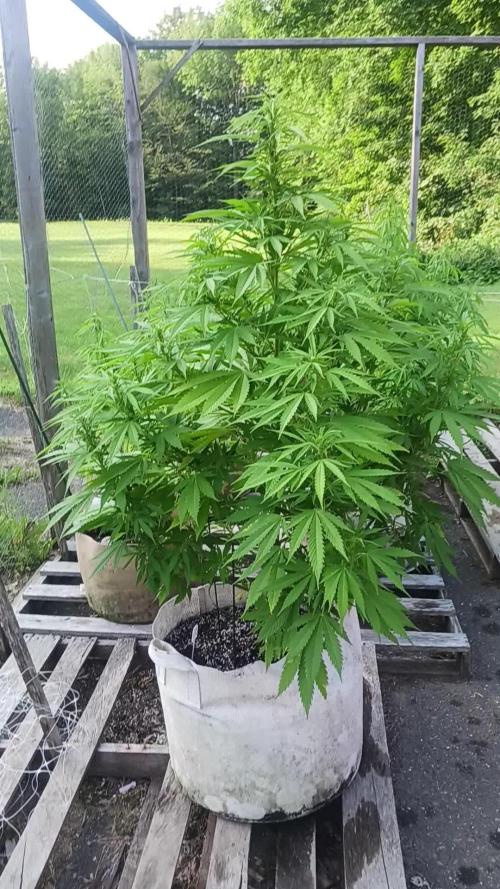
7/27 My phone ran out of storage and wouldn't let me take a video. I tried deleting several other videos bit that didn't work either. Finally I wad able to upload a few RANDOM pictures from the "website" camera. But no video. Everything looked so beautiful tjis morning too. Not watering was the right choice. I defoliated a couple septoria leaves on the reveg 10th planet that wad about to receive its third dose of Plant Doctor. The chem dog #4 and mk ultra this will be their second treatment. Seeing the positive impact of the product and finding a few septoria leaves I decided to treat every plant in the garden with plant doctor. I'm still going to do the diy Dr. Zymes but Plant Doctor had been working good and I want to suppress as much as possible. Everything looks great. I started by giving the thirstiest plants a half gallon of water. I then did a root drench of 3tsp per gallon on every plant but the 10gal. A gallon of solution was used on each plant. I really feel like this is a good mood. Previously AFTER I applied Plant Doctor the plants would have a noticeable positive effect shortly after. I'm hoping this will be the case here. I think stretch has stopped. I have one special Kush that has buds already but EVERYTHING is in early flower. I'll fix the phone and get a video up there.
Likes
10
Share


@Gutismoke102
Follow
Just feed the girls some compost tea and overall they look healthy growing stronger by the day... she has a lot of bud sites and is getting thicker by the day


Likes
6
Share


@jollychap
Follow
Mon, 22 July
Ok everything is coming along swimmingly except for the fact that that plant #3 had to meet the executioners block. Because he was dried out at a young stage he never bounced back properly but that's ok because I now have a holding tank for when I'm working on the other plants thus plant #6 is now plant #3. With the inclusion of my new humidifier I must say my operation is looking quite sophistimakated. Trying to get RH around 60% and I keep looking into my co2 generation options.
Note to self a good rule to remember for light to plant distance is that if you put your hand near the highest point of your plants for 30 seconds and it's starts to burn, then your lights too close

Processing
Likes
5
Share


@sercultiveta
Follow
35 dias de actividad en el indoor, foto periodo de 20 horas de luz y 4 de oscuridad


Likes
101
Share


@DogDoctorOfficial
Follow
One more week up we go :)
i'.m doing 14h light 5h out 1h light 4 out since they are enjoying it so much i'm going to keep it up until i change to 12/12. the one hour ligth in the midle is just to prevent them from switching to flower.
I'm Trying too keep it arround 500 umol/s/m2 for a total of 15h a day ligth for now this guives me a 27.00Mol/M2Day, i know i could go up to 34.00Mol/M2Day but sometimes less is more and i dont want to take my girls to a point were they are so tired that they cant process more light
I'm learning and testing all this since it's my first time growing with this tecnologie , but i belive we have to keep moving fowerd and i belive this is the road to walk 😅
Girls:
1-BlueBerry
2-Alaskan Purple
3-Poyote Gorilla
4-Hindu Kush
5-Whitw Mango
6-Super Glue
7-Badazz Cookies
8-S.A.D.
tent -8x8 / 2.4x2.4 but i'm only using 1/2 so 4x4 / 1.2x1.2
Led - Lumatek 465w Compact Pro at 75%
All i Grow is medicine for myself,
Stay safe, stay tuned and B Happy
Peace out


Likes
29
Share


@Grow_for_Happiness
Follow
Well she all done, now it's just time to dry her out and get her trimmed and cured. Was a great grow, can never complain when you max out your tent lol. High humidity last 2&3 weeks at night, up around 70% even with the tent walls sucking in hard and fan at full speed. Didn't see any issues while cleaning them up for dry (knock on wood), but did have to move my humidifier to be directly beside the tent with its dry air outflow blowing into the tent intake to get the environment down to 60% for drying.
Can't wait to take a taste before curing in 7-14 days once dry is done
Ladies and gentlemen we have a new winner! My new PB per plant . It didn't quite hit the pound mark but what a great turnout none the less! I'm guessing if I had the same plant in a 4x4 it would have been over, just not enough light penetration in the 3x3. Top 2/3 were solid big ol' buds but bottom third was not nearly as dense, most of which went to trim. But hey, over a pound of trim after drying will make a good amount of dry sift/hash . Great colouring and very nice purple/berry smell. Can't wait to cure it up for a true taste cause she's already tasty