


Likes
Comments
Share


@SillyTrippyHippy
Follow
The week was well. One of my ladies seem a little over watered. So I'll cut back on her little this week. I did top them all (yes I top earlier than most people 3rd or 4th node rather than 5th or 6th)
this week every time I watered I threw in some human acid and whatever microbes I felt like using I think I've added pnsb, & recharge and prolly the sample of fish sh!t I had this week. I'll prolly brew a tea or do a compost extract sometime this week just because I haven't done one yet.

Likes
13
Share


@Chuckwaggon420
Follow
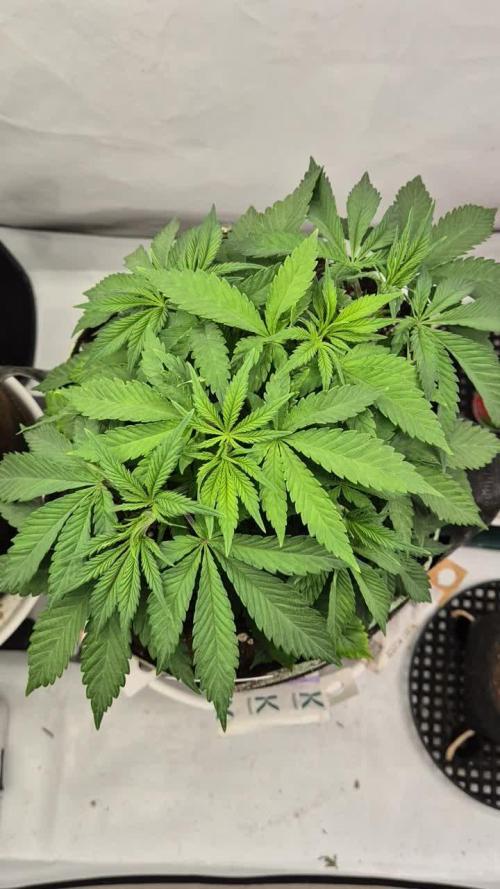
This week everything is falling perfectly into place week 8 so close to the end not even funny! You can see from the tricomes shots (all from lower buds) is just around the corner of all 5 plants being done. Some is already sone like a runtz muffin and 1 persian pie, but we wait for their friends. Over week 8 have gave them only fresh water with blackstrap molases and have taken the temps even lower to 67 at night. Pushing towards that finish line!!! Next should be a harvest i would think!!!




Likes
16
Share


@Vps420
Follow
The flowering continues, only on one branch I went wrong I think the bud will not grow .. The girls are suffering from N deficiency (?) Or from continuous changes of Ph (?) Who is more experienced tell me .. Hope flowering finish well, I add some N.
Besides, the heat is advancing and the temperatures in the grow are rising a lot, fucking summer

Likes
36
Share


@HAPPYWEEDS
Follow
La planta aguantó bastante bien todos mis fallos, finalmente no fue todo lo productiva que me habría gustado. Pero teniendo en cuenta todo lo que hice mal creo que puedo darme por satisfecho. Personalmente creo que debería haberla dejado crecer una semana más. Ya tengo todo preparado para mi segundo cultivo, en el cual incluiré muchas novedades (cepas, iluminación, nutrientes, etc). Esta vez detallaré mucho más todo el seguimiento del cultivo. Nos vemos pronto! 👽


Likes
45
Share


@Hologram
Follow
Bubatz is growing well, she is now starting to make pre-flowers, i can see some small pistels coming up..(i have given her 'flower'nutes yesterday)
But weather is still very unstable and now she is standing in their safehouse, to stay dry and comfy..
weather is gonna get better end of this week, they say, lets just hope for some sunshine now and then...
😇
But as you can see, she grows strong and doesnt seem to care
Its feels so nice in the safehouse when it rains.. 😎👌 i just want to 'set up shop' there when i visit them.. oh wait a moment!! I already have !!...😜👍
happy growing for all✊
*** KISS! Growtechnique: KeepItSimple, Stupid!
PS i also sprayed her with a mix of neemoil (8ml) , detergent(2'squeezes) and luke warm water. last week.bc there are a lot of parasites running/flying/crawling around..

Likes
22
Share


@Albeginner420
Follow
Those colas are gigantic and so damn dense, this is a very resinous strain with Amazing smell. Im sure she will give me goosebumps. The waiting game is very difficult. She's a 9/10 weeks strain.

Processing
Likes
10
Share


@StarletBud21
Follow
Start of week 3 I believe the girls are doing good a few minor worries but that’s at ease for now I think , i have added nutes at a low level and will increase once I see how the plants react to the introduction of the nutes .. Looking into starting lsd on some plants but not too sure wether it’s to early or so . will continue to update the week but for now
Started lst on a few plants day 15 and seen good reactions by day 17 so quite happy with that and will continue this process I will also look into topping my plants as well but not just yet ... they seemed to like the nutes as well so all good week so far
Soo topping done on 4 plants wasn’t as scary as it sounded haha let’s see how they recover ! Going to combine lst as well now
Very good recovery it looks like and the end of week 3 looks promising with the plants
happy growing



Likes
47
Share


@hawkeye_diesel66
Follow
She is looking great. I topped all of her mains and then waited a few days then started to clean up the bigger fans to expose the lower sites to light and air.
Likes
7
Share


@StoneyMelony
Follow
Brooklyn Sunrise was not difficult to grow, she has a nice indica shape structure, with short internode. She has a lot of sidebranch and all produced big nugs. The second note was very dominant and gave 2 enormes side buds. I performed a HST to create a more even cannopy and a bigger main cola because of a bigger nut transport line.. EC levels never raised EC 1.4 and i had never a problem with feeding her. I harvest this plant at day 77. This plant had a wonderfull sour diesel smell, buds are covered with crystals and are sticky as hell.
Overview of my grow:
Tent: Secret Jardin DS120 4 x 4 (120 cm by 120 cm)
Lights: 2 x 120 Watt CTlite c4 clusterled
Climat: Trotec Dehumidifyer 240 watt- 10L/24h
Filter: Prima Klima carbon filter PK2600
fan: 2 x Secret Jardin 20watt osc. fan
Pots: Gronest 4 x 11 liter airpots
Water : automated water system
PH: bluelab
Nutrients: Plagron cocos A/B
Plagron PK 13/14
ATA cal/mag
Epsom salt
no rights to music in the videos
Likes
3
Share


@Unculti_responsable
Follow
Bueno esta semana estaban muy bien la planta pero ya estaba muy alta y estaban por llegar a la altura máxima de la carpa , pusimos una malla así bajaban las ramas y podían recibir mejor luz toda la planta, estamos fertilizando con engorde y guano también abonamos con humus de lombriz, la planta está muy bien así q vamos a ir viendo como sigue

Likes
30
Share


@DrewbieDoobieNoobie
Follow
I can see the finish line. I started the flush this week 5/2/19 nothing but Harvested Rain Water 25 PPM filled both 5 gallon pots nice and slow to saturate the coco until I had runoff. I checked the drip pan PPM was 1986 I'm sure the residue from the other feedings were still in the pan from weeks past.
I collect a clean sample of runoff today 5/5/19 with a 5 gallon flush on each pot and check that. 1100 ppm I used the Flawless Finish on the 5 gallons to clean out most of the salts let the plants slowly eat up the reserves in the fan leaves. I am seeing the yellow fade of autumn now. will let dry out for 2 more days and Flush again with the Flawless Finish on 5/7/19 PPM 390 I am seeing the fade to yellow on the shorter one the tall one is still green but the PPM on both are at 390. another 2 day dry out last flush 5 gallons of R/O WATER. on 5/9/19 The time-lapse files got corrupted 😥 but I shot a live video of some close ups. Cut of the SCROG and wow are they sticky. the smell is really strong now. Thanks for all the support and advice on this grow. I have to have patience for the chop, all most there.


Likes
16
Share


@GrowerGaz
Follow
So far so good , girls are coming on nicely . Nothing to report really. Afgooey is looking as fat as I hoped for


Likes
4
Share


@Mr_nugs_lover_David
Follow
She looks very healthy and strong,think she's gonna grow very good without any issues,she's being 100% organically fed by biotabs organics with bactrex,mycotrex and 2 tablets of slow release organic fertilizer by biotabs. Looks fantastic on day 14I hope to not have ant bad issues tje rest of the journey! 💚🌱🤞
Likes
2
Share


@Madman2020
Follow
Oct 5-11 Vegetative steering?
Aiming for:
leaf Temp -80f
CO2 -1250ppm
VPD +1.04
(65%/75F)
Vegetative Steering 6P1/ 2P2/1P3
Each P1 water event is 15 minutes apart. Seems to far apart. I think i Need More water events, with less time in between events in order to get a strong veg signal?
Watering for 2min(110)ml
May need 3min waterings(currently not getting runoff)
I have to hand water every two days.
Day 11 flo
18.5inches tall
12inches from light(moved to 16)
1300ppm
Day 18
Defol
Sprout chickpea(2days)
Soaked 1cup for 4 hours then rinsed. Completely covered then Soaked overnight.
Rinsed then poured water out and layed jar on the side for one day.
Blended with water(aloe vera and coconut)
Day 19&20 foilarspray
Alfalfa/Chickpea SST with Kelp,aloe,coconut,silicate,microbes brewed for 1.5 days
Day 21
Fed the Tea blend
Leaf temp 80
65kluxx
Co2 100
Plants look like they responded well to the foilar. The flowers at this stage are my best performance yet .crop steering may be working?


Likes
4
Share


@OutForReal
Follow
🍎🍑🍋🍐🍏Fruity Jack Part.2 🍌🍍🍒🍊🍇
Song of the week : Konshens - Bassline
----------
She is now heavily feed like you can see the EC is reaching 2.2 but I have some difficulties to adjust the PH ( no PH down or up at home ) but 6.1 will be ok , next time it will be higher let's just hope that she will not suffer from the PH variations


Likes
10
Share

@GoodTimesOrganics
Follow
Hi liebe Community and Welcome Back! 💚
Slush Mint Cake von Dutch Passion
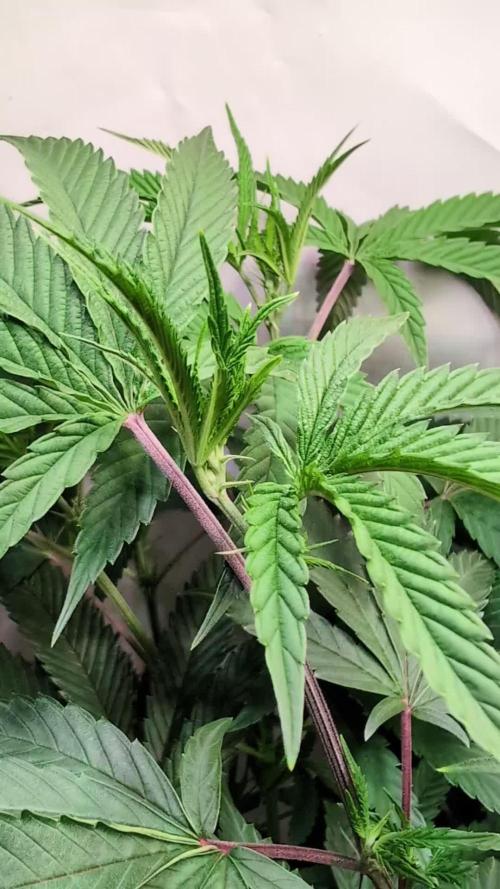
Nach dem Topping erholt sich die Pflanze wunderbar und wir haben eine schöne Homogenität der Seitentriebe.
Aus Platzgründen bleibt die Pflanze nochmal im Wachstum.
Ich habe bereits die untersten Triebe entfernt und auch daß untere Blattwerk rausgenommen.
Die Wuchsform ist kräftig und Energie geladen.
Die Bedingungen im Growschrank sind für die Wachstumsphase Top!
—————
🌞 Temp: 26
🌚 Temp: 18°C bis 19°C
💨 RH: 64%
VPD: 1,1 kPa
💡ppfd: 330 mpm
—————
