


Likes
Comments
Share


@ChameleonsCannabis
Follow
I love sativa. This is a great freaking plant. Long skinny buds (a little squeezed by me :) and the smell is incredible (strong put in jar open 5 min later my house smells strong) its sweet from the haze but it's got that gassy fuel smell to it also with a tiny bit of earthy after aroma. It's wonderful smokes great gets me higher than any weed at the stores and I never have coughed from it I don't think it's so smooth. Organically grown buds are fckin smooooothh man I never would have understood until I grew organic! This bud is the tits I'm stoned off a mix of blueberry amnesia haze northern ligbt joint as I write this lmao good harvest

Likes
41
Share


@Cannaguy
Follow
Started to have problems with insects munching on the leaves, I applied trifecta and insecticidal soap simultaneously so they do not get used to one or the other and it has seemed to stop their destruction for now. Will continue to apply one a week as a preventative measure. Have not given the plants any nutrients up to this point since they have not shown any problems during growth
Likes
2
Share


@BombBuds
Follow
Bin super zufrieden! Alle pflnazen noch gesund. Ein ganz kleiner bleach Punkt mit dabei bei einem headbud von der Purple magnolia aber nix wildes.


Likes
13
Share


@HomeGrownFamz
Follow
I went away for a week and forgot to switch the lights over to 12-12. They had an extra 5 days veg! Things are getting too big for my tent now! I’ll top it and see how it goes.

Likes
44
Share


@Aedaone
Follow
I didn't record the temps this week. I watered these about 3 gallons per pot per day. It was very cool this week. The high temp was averaging upper 50's F. Low temps were upper 30's lower 40's. Day 4 around 6 a.m. the temperature was 26°F and there was heavy frost on the ground. When I check on the plants about 7 a.m. they didn't have frost on them and were fine.
These girls really did well. They didn't require and canopy maintenance. I topped way back and never had to tie up the branches or support in any kind of way. They were exposed to really strong wind that laid other plants over and bent branches that didn't recover. I'd recommend these for outdoors. The powdery mildew was manageable and the only maintenance these required. They did want to eat a lot and my wife was managing this by herself. I think we could have fed more and made bigger colas, but they did well regardless. The smell of these is special. They're very loud and have a watermelon note. 🤤🤤🤤
Processing
Likes
29
Share


@Grey_Wolf
Follow
Ginger nut cookies and Aussie Music Videos update 20th Feb 2020
On Monday just past, I started to leave this plant out at night thus reducing light hours to the same as a regular outdoors Plant. This should induce flowering as all my other
Photoperiod dependent strains are now in Flowering mode. Thru the use of Topping and LST training I have managed to create lots of potential bud sites for this plant to develop into lovely sticky and stinky Buds. Later on today I will do some more LST & As soon as I see pistils developing I will begin to add P+K to the soil by using Guano , Mollasses , Liquid potash, comfrey teas ,Compost teas and Worm castings. The smell of the stems is increasing in strength and has a blend of Red diesel stink mixed with cookies dankness. 😛
Now for the Weekly Music Videos yes I say videos because there will be three 🙏
Last week I chose The Divinyls but this week I thought I would do something different and ask the People what they wanted to hear. Well I got 3 responses and they all
made good suggestions all of which I will play this week . @Fruitgrower asked to see anything by Kylie minogue naked 😆 Couldn't manage that but the video I chose does see her prancing around in next to nothing which is the next best thing . So Fruity Enjoy mate heres the Link https://youtu.be/j3VjJKKVNew
@PlaguedGardens asked for Flume. I had to google them as I hadnt heard of it but they sound ok I am not particuarly into Electronic music but it has it's place and I chose this one for you mate https://www.youtube.com/watch?v=Hwg7hJrDiRg
Then finally @I_and_I asked for Airbourne which is a great group who obviously were influenced by AC/DC , Metallica , Motorhead etc etc and you will understand when you watch the video so here is Airbourne for I_and_I https://www.youtube.com/watch?v=Q0q9a5QS6WQ
All three growers couldn't have chosen more different music genres if they'd tried which just goes to show how different we all are with our musical tastes .
I won't clog up the questions section again so if anyone has a request for an Aussie artist or bands Music video they's like to see played please drop your suggestions in the comments section below. Thankyou again for reading my update I hope you enjoy the Music 👍
Likes
28
Share


@Bongman
Follow
Hi Guys,
Week 9 of flowering. I've harvested usually in week 8 but I am holding back this time and really let her do her thing until I see more Amber Tris. Right now it's mostly milky and maybe 5% amber only so a few more days to go.
***Mid-week update***
Day 3 of Week 9 of flower - I think they are ready to be cut down very soon. So I went in today and did a quick defoliage. Am waiting for the new moon to come in a day 6 of wk 9 so 3 more days then they are coming down. Am going to flush on the 5th day wk9.
That's all for now.
Happy Growing.
BM
4TweentY

Likes
4
Share


@Devon420
Follow
Happy with what I’m seeing, roll on another 30 days, any tips appreciated

Likes
7
Share


@JBsTastyBudz
Follow
Sorry for the late video post.. I was assaulted and 2 of my 23 year old cats passed away 2 days ago.. So it's been a rough few weeks... Couple of yellow leaves.. Never had that problem using just RO water... Can't go to the grow store to get RO water right now. Transplanted 6-18-2020 switched to 12/12 🕒


Likes
8
Share


@sweetkaya
Follow
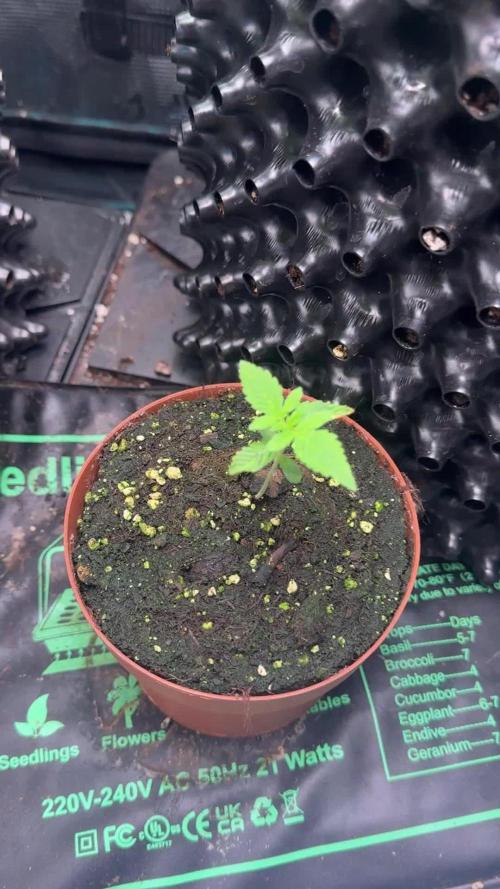
Day 57 - Yesterday I noticed that the leaves are darker than they should be, so I re-made the mixing solution lowering the PPM from 750 to 550. I've tried to raise it to see how much nutes that ladies can handle since it's my first time in coco and I like to experiment. Now I'm going to finish this mixing solution and then stabilize the next ones on 650 PPM. Keep learning every day 🙏
Day 60 - Today I added one extra equivalent 75W LED to give the lower nodes more power. Some fan leaves touch it, wish they will not burn. New update in the next days.

Likes
7
Share


@Cannabiszimba
Follow
conseguimos mudar ela para um vaso maior, última atualização antes de iniciar o 12/12. estou gostando como ela respondendo aos treinamentos. está bem ramificada e pronta pra entrar em floração.
Likes
3
Share

@in_a_few_weeks
Follow
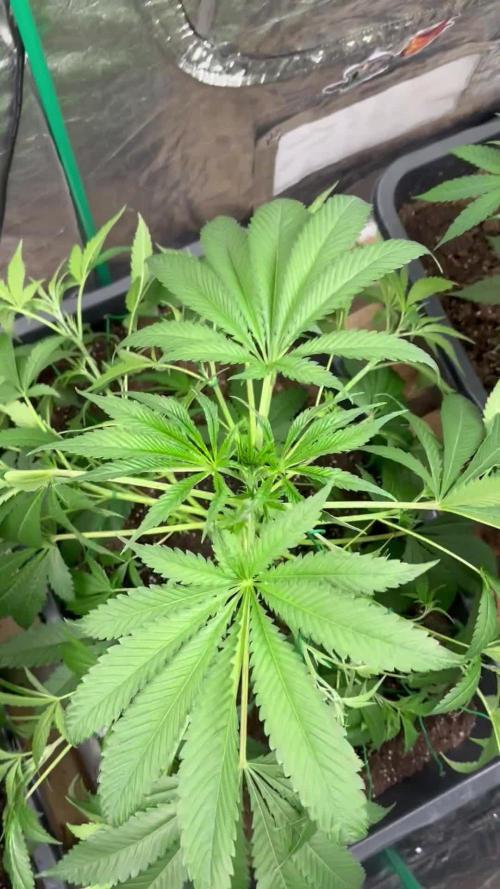
Today i started the LST training. In the morning i gave more water than usual thats why the leaf tips are a bit hanging. I did it because i trained all i in one, the plants are a bit more flexible in the afternoon when i give a bit too much water in the morning. The Devils Pastry is very healthy and got 9-11 fingers right now.
Likes
2
Share

@Drehpaper
Follow
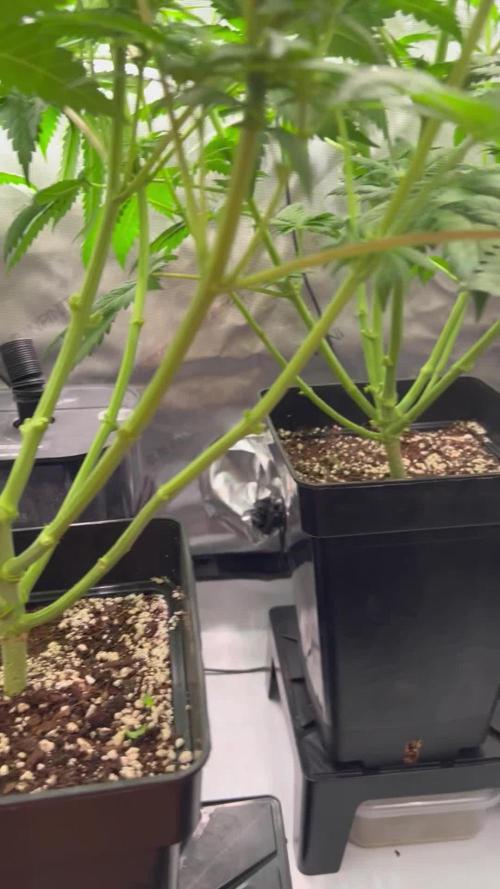
Woche: 03 Blüte 15-21 / 43-49
27.07-02.08 / Licht 100/50
VPD: 1,0
Höhe: 63cm
PPFD: 768
DLI: 33,2
Temperatur Tag: 27,7
Temperatur Nacht: 23,8
Luftfeuchtigkeit: 62,4
Hatte die Woche bisl mit der Luftfeuchtigkeit zu kämpfen. Werd Anfang nächster Woche den Entfeuchter aufstellen. Ansonsten läuft alles ganz gut, war paar Tage weg und als ich wiederkam waren sie sehr sehr ausgetrocknet, nach 2 Liter Wasser und bisl warten war zum Glück alles wieder so wie es sein soll.
An Blütetag 21 wurde gelollipoppt, diesmal nicht ganz so viel wie beim letzten Grow. Zusätzlich gab es am Blüte Tag 21 noch Bio Tabs Bio PK 5-8 8ml pro Pflanze verdünnt auf 1 Liter Wasser.


Likes
5
Share


@Ninjabuds
Follow
Warning beast of a plant lol
My Northern Lights #10 plant is an absolute beast! It's the biggest in the tent, growing incredibly strong. Even the second-deck buds are developing with amazing vigor. This plant is a true powerhouse, and I can't wait to see the massive yield it produces. It's got that classic Northern Lights aroma – earthy and sweet with a hint of pine. This one's gonna be a winner!
This past week has been a whirlwind of work, leaving little time for anything else. My phone's camera roll is sadly neglected, with only a few snapshots to show for it. But finally, I'm finding a moment to catch up on my grow diaries. It's been exciting to see the progress, even if it's just through photos. I'm looking forward to documenting the next stage!

Likes
2
Share

@420DeepGrow
Follow
📆 Semana 9
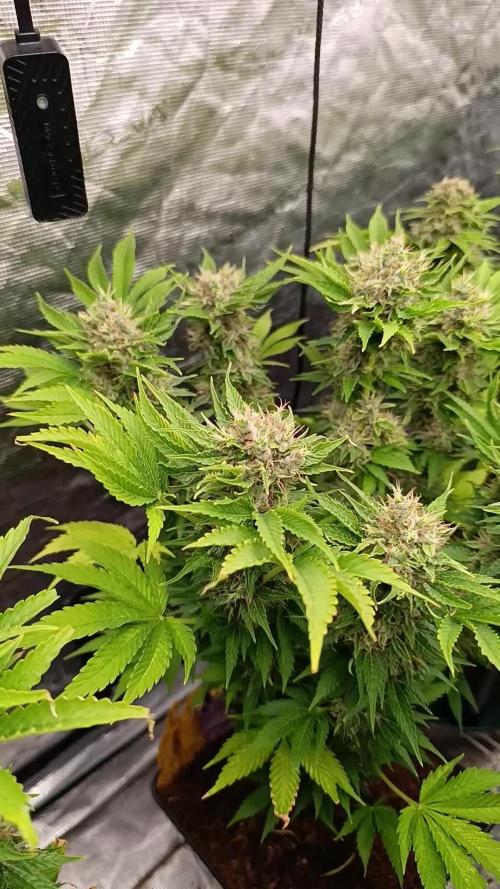
El cultivo entra en la fase de engorde avanzado, manteniendo una buena absorción aunque empezando a estabilizarse, con el coco aún equilibrado. La planta continúa enfocada en aumentar densidad y rematar el peso final de las flores.
Los cogollos alcanzan una alta compactación, endureciéndose progresivamente, mientras la resina sigue en aumento y cubre de forma más densa toda la superficie.
Se aprecia un leve foxtailing en algunas puntas, algo sutil y típico en esta fase, sin impacto en la calidad general del cultivo.
El cultivo se mantiene sano, con buen color y aromas cada vez más intensos y definidos.
Seguimos creciendo fuerte 💪!

Likes
11
Share


@Jeremi420
Follow
Giorno 42. Ciao a tutti. Profumi intenti anche questa settimana. In attesa che gonfino ancora un po'. Credo 2 settimane e saranno pronte per il taglio. Un saluto a tutti ✌️💚.
Likes
34
Share


@Robbaus
Follow
Siamo quasi alla fine! Durante la settimana dovremmo essere arrivati al massimo gonfiore dei fiori, i tricomi sono praticamente per metà color latte e per metà leggermente trasparenti, penso che quella di oggi sia stata l'ultima bagnata. Ho tagliato due apicali a campione della pianta che avevo il dubbio fosse ermafrodita, ma da questi due apicali non è uscito nemmeno un seme e l'effetto è stato quello desiderato, tenendo presente che le ho tagliate in anticipo rispetto a quando sarebbero da consumare quindi direi che dovrei aver scampato il pericolo, me ne sono accorto in tempo. Non vedo l'ora di toglierle e vedere l'effettiva resa del raccolto, dovrei essere sui 400g 😁😁🍀🍀💪🏼💪🏼

Likes
2
Share

@frigo_camelo
Follow
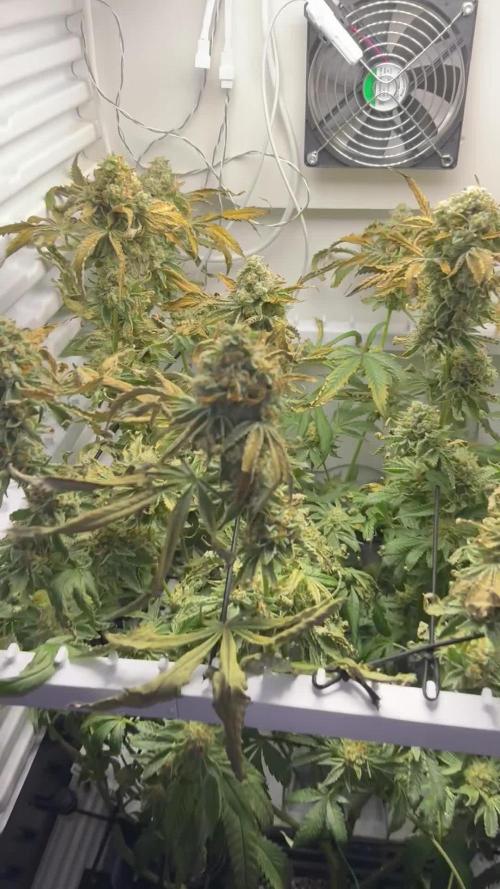
harvest after almost 9 weeks flower | insane permanent marker terps! love this cut
