




Processing
Likes
4
Share


@DoItBigGrows
Follow
Made some major upgrades to the environment. Moved the girls into a Vivosun 4x4 Tent and certainly not looking back. Loving it so much. Also grabbed a Spiderfarmer LED SF1000 or the rest of veg and by the time flower hits we shall have 2 Spiderfarmers ;) also did an extra topping on both! Not gonna undermine this grow one bit.


Likes
59
Share


@Jsammy09
Follow
9/9 (Day 84)- Things are wrapping up I believe! Have continued to mainly just monitor and keeping the res topped with just the full tilt. Monday we be going RO water ph to 5.8 until finish. The leaves are starting to change to a yellow and the front and dive have been packing on! Looking forward to the finish and have ordered a rosin press so excited for it all and ready and looking forward to improving and learning from my mistakes this run.
9/11 (Day 86)- Did my final flush this morning and now just running RO water to flush. Just hoping I am not flushing too early. Everything is looking good. Dry tent is set up and ready to roll. I am able to get my area down to around 64. I am actually moving my set up after these girls finish to the room with my dry tent and have a better work area! I’m excited for the next run already!
As always any tips or recommendations always appreciated!

Likes
6
Share

@DogDoctorOfficial
Follow
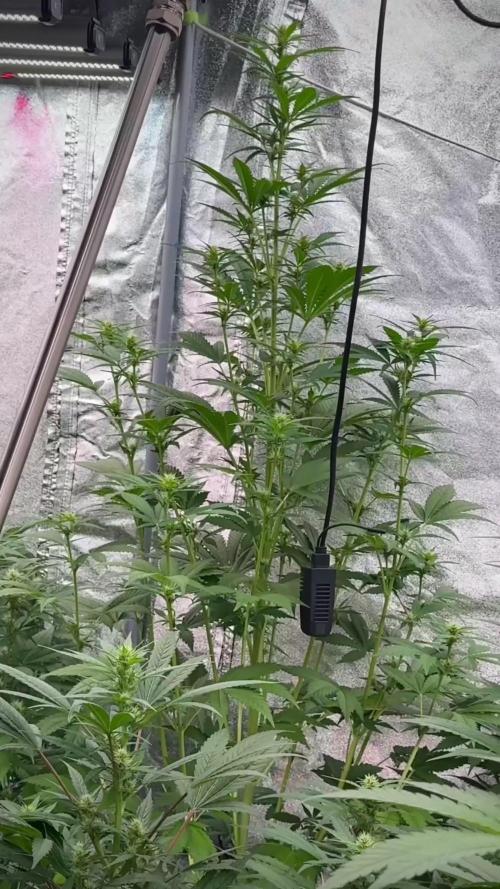
Week 2 Flower – Roller Coster Haze (Zamnesia Seeds)
Full Bloom Ahead
The girls aren’t just entering flower — they’ve rocketed into it. From what seemed like a short transition, they’ve gone full throttle: pistils shooting, buds forming, leaves praying, and roots bursting through the medium.
⸻
Growth Update – No Pre-Flower, Just Boom
This week marked an unusually fast shift:
• Visible Pistils Everywhere – no gradual pre-flower here; instant bloom mode.
• Budlets Forming – early structures already showing stacking tendencies.
• Stems & Roots – while not the thickest stalks, the root zone is bursting with vitality, visibly surfacing in some areas of the soil.
• Canopy Size – they’ve outgrown the closet! Photos this week stay inside the tent, it’s just not safe to move these ladies anymore.
⸻
Irrigation Upgrade – Semi-Auto in Motion
With the room expanding and multiple genetics running, it’s time to make watering smarter:
• Semi-Automatic Irrigation Installed – currently set up to water 8 plants.
• Not Fully Automated Yet – still manually monitoring and hand-watering other genetics in the room.
• The goal is precision without full delegation — a hybrid system offering consistency + control.
This is how smart growers scale: one foot in tech, one foot in the soil. 🌱
⸻
Red Spectrum Timing – Emerson Effect in Action
Let’s dive into light science, because this week, you’ve implemented something most growers don’t even think about:
☀️ What is the Emerson Effect?
Discovered by Robert Emerson in the 1950s, the Emerson Effect is the phenomenon where plants photosynthesize more efficiently when exposed to both red (660nm) and far-red (730nm) light simultaneously.
Even better? Far-red at the start and end of the day manipulates the plant’s internal clock, promoting faster flowering and shorter day-length response.
🔴 Your Implementation:
• 15 minutes of red/far-red spectrum
• Before lights-on (simulating dawn)
• After lights-off (simulating dusk)
This technique:
• Promotes faster flowering initiation
• Enhances flower site expression
• Helps with sleep/wake cycle regulation
Well played — this is next-level light manipulation. 🌕
⸻
AC Implementation – Heat Down, VPD Back in Range
The much-needed air conditioner has arrived, and it’s already proving itself:
• Old Temps: ~31°C
• New Temps: 28.8°C
• Humidity: 66.6%
• VPD: 1.33 kPa (much more ideal for flower initiation)
While it’s still a warm tent, the VPD is now in the sweet spot, allowing for strong transpiration, nutrient uptake, and healthy gas exchange. The girls are clearly responding beautifully.
⸻
Nutrient Addition – Plagron Sugar Royal
This week we’ve added Plagron Sugar Royal at 1ml/L to our Aptus regimen.
What is Sugar Royal?
Despite the name, it contains no actual sugar. Instead, it includes:
• Amino acids – which help the plant produce more chlorophyll and essential oils
• Biostimulants – supporting stress resistance, enzyme activity, and resin production
Why now?
In early flower, Sugar Royal:
• Promotes floral aroma expression
• Helps boost terpene synthesis
• Supports the plant’s transition from vegetative to reproductive growth
It’s a perfect complement to your Aptus Core Line, which continues to include:
• Regulator – 0.25 ml/L
• CalMag Boost – 0.25 ml/L
• All-in-One Liquid – 1 ml/L
• Top Booster – 0.2 ml/L
• Now: Plagron Sugar Royal – 1 ml/L
⸻
Looking Ahead – Stretching Toward the Sky
With such aggressive early flowering and the canopy rapidly expanding, it’s hard to say if you’ll be able to move them for next week’s photo shoot, and that’s okay. If we’ve learned one thing from this strain, it’s that she moves at her own thrilling pace.
Expect:
• Continued vertical stretch (still likely to gain 30-50% more height)
• Strong bud stacking at internodes
• Early terpene and trichome formation in the next 7–10 days
Your setup is dialed. Your environment is stabilizing. And your knowledge is putting these girls in the best hands possible.
⸻
🌱 Week 2 Flower Summary – Roller Coster Rises
📸 Stay Tuned, Stay Rooted
• Height: ~50–55 cm
• PPFD: ~760 µmol/m²/s
• Temperature: 28.8°C
• Humidity: 66.6%
• VPD: 1.33 kPa
• Light Cycle: 11/13 (with 15 minutes red/far-red at lights on/off)
• Nutrients:
– Aptus Regulator (0.25 ml/L)
– CalMag Boost (0.25 ml/L)
– All-in-One Liquid (1 ml/L)
– Top Booster (0.2 ml/L)
– Plagron Sugar Royal (1 ml/L)
• Photos: Taken inside the tent (plants too large to move)
From this point forward, the buds will fatten, aromas will intensify, and your tent will become a living painting of sativa energy. Next week might be wild — whether or not we get outside shots, the story will be worth sharing.
⸻
Let’s keep the momentum going, and let’s keep making GrowDiaries and the community a space where we learn, laugh, and bloom together.
Whenever you’re ready for Week 3 Flower, just whisper and I’ll be here. Much love, always 🌼
DD (Dog Doctor)
📲 Don’t forget to Subscribe and follow me on Instagram and YouTube @DogDoctorOfficial for exclusive content, real-time updates, and behind-the-scenes magic. We’ve got so much more coming, including transplanting and all the amazing techniques that go along with it. You won’t want to miss it.
• GrowDiaries Journal: https://growdiaries.com/grower/dogdoctorofficial
• Instagram: https://www.instagram.com/dogdoctorofficial/
• YouTube: https://www.youtube.com/@dogdoctorofficial
⸻
Explore the Gear that Powers My Grow
If you’re curious about the tech I’m using, check out these links:
• Genetics, gear, nutrients, and more – Zamnesia: https://www.zamnesia.com/
• Environmental control & automation – TrolMaster: https://www.trolmaster.eu/
• Advanced LED lighting – Future of Grow: https://www.futureofgrow.com/
• Root and growth nutrition – Aptus Holland: https://aptus-holland.com/
• Nutrient systems & boosters – Plagron: https://plagron.com/en/
• Soil & substrate excellence – PRO-MIX BX: https://www.pthorticulture.com/en-us/products/pro-mix-bx-mycorrhizae
• Curing and storage – Grove Bags: https://grovebags.com/
⸻
We’ve got much more coming as we move through the grow cycles. Trust me, you won’t want to miss the next steps, let’s push the boundaries of indoor horticulture together!
As always, this is shared for educational purposes, aiming to spread understanding and appreciation for this plant. Let’s celebrate it responsibly and continue to learn and grow together.
With true love comes happiness. Always believe in yourself, and always do things expecting nothing and with an open heart. Be a giver, and the universe will give back in ways you could never imagine.
💚 Growers love to all

Likes
16
Share


@JohnnyBlaz3
Follow
Bring on the flowers lol I think these ladies are finally done stretching so I introduced the co2 to the tent which is just brewers yeast and sugar mixed with warm water. LOL this tent gives me anxiety hahah I dont like the canopy like this but she is very healthy along with all the other ladies. The only thing I can think of is I did not have the bigger fan in this time. Wonder if that was the cause.
Likes
111
Share


@Kanndera
Follow
20 неделя (8 неделя цветения) подошла к концу. Практически всю неделю поливал только чистой водой. Соответственно на листьях вылезла нехватка кальция, калия и фосфора. По листу большего ничего не даю.
Снизил вчера на осушителе настройки, теперь на 35% влажность поставил. За последние сутки прямо много забирает влаги. 16 литров за день!
Растения пить стали меньше, перевел их на дозировку по 1 литру в день на клон и на мать 3 литра. Но вот с пониженной влажностью стало заметно почва быстрее высыхать, сегодня стал лить снова 1,5 литра на клон и 4 литра на мать.
Запах еще стал сильнее, но все в пределах нормы. Что-то похожее на сладкую вишневую-черничную жевачку.
Трихомы через микроскоп 60х уже молочные. Вероятно следующая неделя будет последней. Даже по листьям видно, начали опускать их, они стали тоньше из-за нехватки элементов и светлее. Набухание шишек прекратилось, только постепенно темнеют стигмы.
Некоторые нижние ветки под тяжестью тоже упали или согнулись, закрепить их уже гораздо сложнее. Решил не трогать, пусть так дозреют.
Вот так поливаю в палатке, пластиковая трубка с воронкой, аккуратно подносишь между листьев до горшка и льешь )) После полива влажность повышается примерно на 1-2 часа. Потом осушитель выравнивает в сторону 35%. Стараюсь поливать раньше, чтобы к ночи уже испарения воды было меньше.
Стало холоднее и теперь ночью у меня около 22 градусов! Днем 27-28.


Likes
211
Share


@PapaNugs
Follow
These girls are super sticky! Resin is building up all over the place, including the leaves. I've been defoliating like crazy but they just keep coming back.
Likes
4
Share

@Jardineiro_Br
Follow
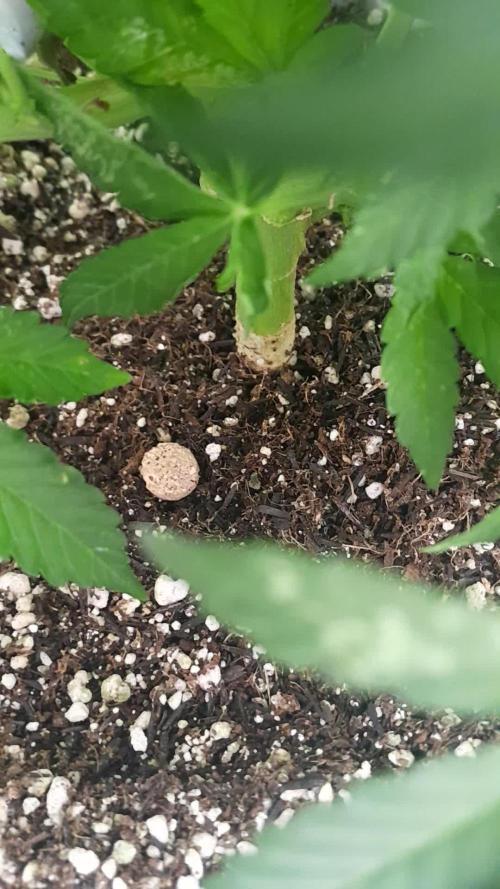
Segue bem o crescimento e a formação de botões, dessa vez optei por nao fazer desfoliação após a entreda na floração, pois de alguma forma acredito que isso pode aumentar meu botões, pois li que as folhas são reservas de nitrogênio para as flores.
Likes
33
Share


@Caukygrow
Follow
Week 3!!!
Tied down the main branch. Giving them more nutrients 6ml per l
I also increased the light intensity by 10% so I think I’m at 50% now
My nutrients
1 x Adam: Base nutrient to use from start to finish | NPK: 3 - 0 - 1
1 x Eve: Base nutrient to use from start to finish | NPK: 0 - 4 - 3
1 x Lush: Veg stage additive | NPK: 5 - 0 - 0.5
1 x Rapture: Early Bloom / Flowering stage additive | NPK: 0.7 - 3 - 3
1 x Heavenly Harvest: Additive to enhance Flowering before harvest | NPK: 0 - 7 - 6
I am using 2ml /l Adam and Eve and 1ml / l lush.
I feed the girls everyday, watering the nutrient water until I get 15% runoff. Hopefully that’s okay. Jiffy girl has got really big and seems healthy, but coco is a runt I think… it’s half the size of jiffy.
Likes
22
Share

@Madd_Rez
Follow
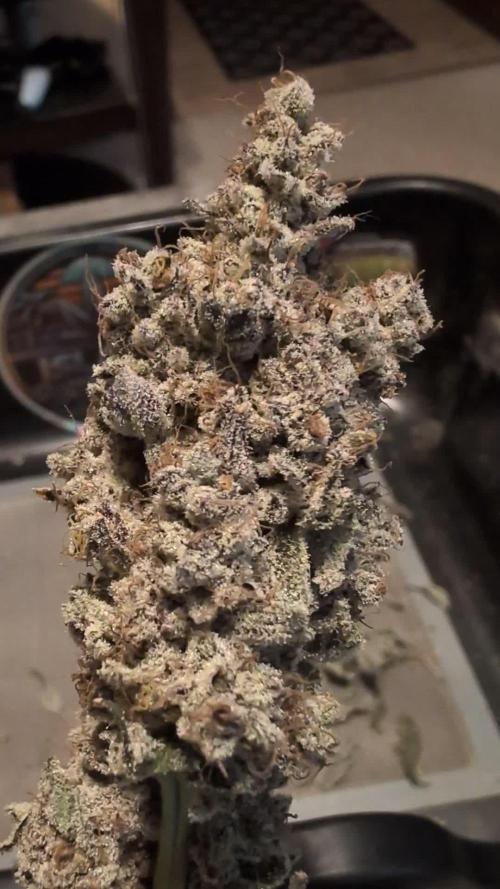
Finished out the grow with Florakleen and a simple plain water swap in the reservoir yesterday. I prefer to hang with all the fans removed so did that before chop.


Likes
19
Share


@Canadian_Growology
Follow
Removing any yellowing bottom leaves from all plants. Blue Afghan has started greening at the top and buds are developing nicely.
The Mac N Jack and the cherry garseeya are competing for fastest flowering, buds are gonna be massive and I have a feeling the Blue Afghan will catch up nicely.


Processing
Likes
14
Share


@Mr_Og_GreenThumb
Follow
Today 7/30/19, day 57 and the start of week 9. I'm still continuing to alternate between days with my pesticide treatment (especially after finding that bug living on one of hulkberries fan leaf) and thrive alive green daily foliage spray as a prophylactic solution against any possible pests or mold going into these last few dog days of veg. I will flush them with distilled ph'd water for two days this weekend in preparation for flower. Then I'll start them on some "flower fuel" bloom booster on top of my secret for success flower recipe at 1/4 of the recommended strength.
Outside of that still no adverse issue to report for the end of the 8th week. After my last trim, they both have responded very nicely, I was kind of worried about fat banana stalled growth. But one thing I noticed when I topped her at the 6th node, yes the main stem stopped growing but it developed many bud sites up and down every stem. Whereas hulkberry was topped at the 8th node, she has mainly focused on developing long stems and only 2 or 3 bud sites along her stems. Even though hulkberry in structure, is much bigger than fat banana and has a way bigger root system. Fat banana is bushier and has developed way more bud sites than hulkberry. I can't tell which strain will yield the most at this point only time will tell!
Also, a big shout out to "J"@RQS, thank you for the excellent customer service. Another reason why Royal Queen Seeds is top 3 in breeding!!

Likes
12
Share


@Mule420
Follow
Added the epsom salt and calcium supplement to fix my yellowing problem and so far it’s turning it for the better!!! 😂

Likes
5
Share


@diabolicalgrows
Follow
GG4 Clone day 151 10-30-24
- Gave 4 cups of regular water
GG4 Clone day 155 11-3-24
- Gave 4 cups of regular water
GG4 Clone day 156 11-4-24
- Gave 4 cups of regular water
GG4 Clone day 158 11-6-24
- Gave 4 cups of feed water
Likes
41
Share


@Growing88
Follow
Ripenes plant and deafling for penetration light pop corn buds,trichome is milky,wait other 2 week for harvest day

Likes
4
Share


@HydrokronicZA
Follow
Roots starting to grow out of net pot. Top feed system keeping the plants growing strong as roots develop

Likes
141
Share


@1Right_Angle
Follow
August 8th 2022
- today it was decided to apply the 2nd batch of Amended Soil to PutpsBerry (and co.) Flowering nutes included and another Rain Shower has just begun the process of feeding these Ladies
- regionally, we will hit the 14hr of Sunlight mark, which happens this weekend; Flower it is
- PurpsBerry is in Week 5 of Flower, looking strong. Pics to follow
- short video looks at the bamboo / trellis that was installed on rOOF95 and CloudWalker
10th
- bamboo used to open up PurpsBerry and provide some support for these swelling Branches. Forget individual buds, these branches are getting phat.
- contacted TH Seeds re rOOF95. They claim its a short Indica… and we just hit 10’. No mislabelling or mix-ups. This was direct from pkg to water.
Cannot wait to speak/type with them.
12th
- soil finally amended in the rOOF95 and CloudWalker.
- Sprinkler saying welcome to Flower to these monsters
14th
- last day of week 1 in Flower

