


Likes
Comments
Share


@WishiFishi
Follow
***April 11
First things first, she is looking sexy as hell. Trichomes are spreading down the leaves, they are fattening up super nicely, it's been handling the nutrients really well, and has been drinking a decent amount. I get a nice vanilla bean, sweet, pine smell coming off of her, and it's been getting stronger every day.
I haven't been needing to take too much off of her, just a few fan leaves here and there, but she has been taking care of herself pretty good in the long run. I have been taking off some of the teenie-tiny buds as I see them, because I want the main focus on the top nugs and the middle branch.
Roots are growing like nuts, but I'm going to leave them go for now, until they get more out of hand (probably the end of this week).
I gave 1tsp extra of the Bloom, since it seems to be handling things well, and not showing any signs of burn.
😍
Very happy with things so far!!
***April 13
Wasn't around to open my tent when the lights turned on, so it spent 6 hours in max humidity, but it seemed to like the stress, because it's literally coated to the tips of the top fan leaves with trichomes.
***April 15
WELLP.... I had to raise the light again 😂 She is growing vigorously, and is showing no signs of wanting to slow down. Still stretching just a tad, but mostly just packing on the weight and getting dense. Even the nugs down at the bottom are big enough so show they are worth keeping.
I am so impressed with this grow, and I can't get over how happy I am to see it loving everything I can think to throw at it!
Hard to believe just how big this filled out compared to before flower. Definitely 5x the size she started from, that's just my estimate. She started 1/4 the tent, and had enough room for all those veggies along with her, and now looking at her, I am thinking "wow... it's a good thing I got everything out of there when I did." 😂😅😍

Processing
Likes
2
Share


@Valedor
Follow
semana de crecimiento de tricomas, ademas las flores presentan un crecimiento muy bueno, ya están madurando de verdad, el próximo cultivo lo documentaré con fotos mas claras, he aprendido mucho de tenerlas en hidroponia, me gusta y lo voy a seguir usando y explotando


Likes
16
Share

@DE_BW
Follow
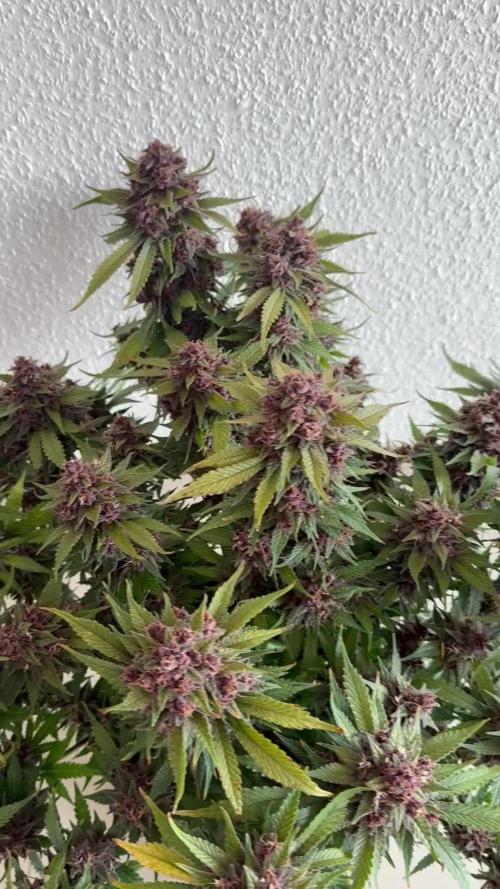
The plant developed an excellent structure with well-spaced branches and very good light penetration, resulting in evenly matured buds.
The flush clearly paid off, as the aroma intensified significantly toward harvest and the flowers developed a clean, strong terpene profile.
Bud density is impressive, with tight, heavy flowers showing great resin coverage and a visually striking finish.

Likes
18
Share

@Brotanical
Follow
Sie bekommen Ph kontrolliertes Gieswasser👍 zurzeit noch mit hesi TNT und plagron Lemon Kick
Pro Pflanze wird mit ca 1 Liter gegossen und dazu bald mit CalMag Pro von Plagron
Bisher finde ich performt die WOB M100 Pro super mir gefällt der Wuchs der Critical Runtz unter ihr 🙂

Likes
32
Share

@Chubbs
Follow
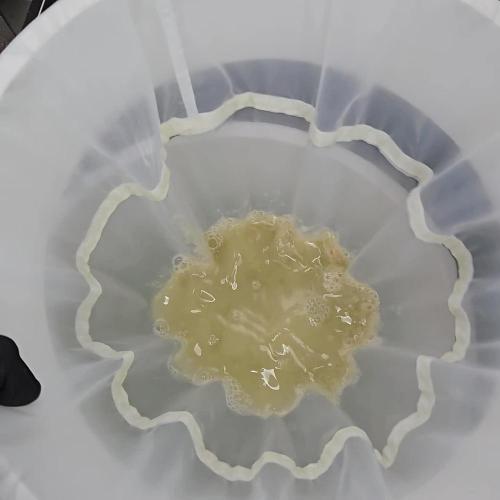
2025 Fastbuds GreenHouseGrow has come to an end. Its been an absolute roller coaster of a grow. So cool to watch them grow from sprouts to absolute giants around 8ft tall. They're a great and easy strain to grow and I could only imagine having them in bigger pots how much bigger they could get. I ended up harvesting them for fresh frozen and immediately put them into the deep freezer after trimming everything that didn't have trichs on it. Excited to do some bubble wash and make FreshFrozen Rosin/Hash. All in all highly recommended and Happy Growing.
Likes
7
Share

@Kevs_Best
Follow
DE
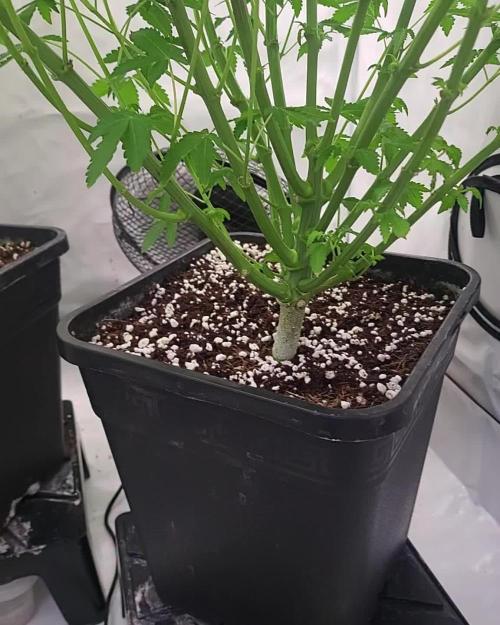
In der dritten Blütewoche zeigt der erste Last Dance-Phänotyp weiterhin kräftigen Stretch und wird immer dichter und buschiger. Die Hauptcolas formen sich sehr stark aus, die Blütenansätze nehmen schnell an Volumen zu. Sein Geruch wird immer intensiver – sehr dank und funky, mit einer tiefen gassigen Basis.
Der zweite Phänotyp bleibt kompakter, verzweigt sich aber gleichmäßig und zeigt ein interessantes, natürliches LST am unteren Hauptstamm. Die Bud-Sites entwickeln sich sichtbar, und der Duft geht klar in eine süßere, fruchtig-cocktailartige Richtung.
Insgesamt eine sehr produktive dritte Blütewoche – beide Pflanzen zeigen kräftige Blütenentwicklung, stabile Gesundheit und zunehmend komplexe Terpenprofile.
EN
In the third week of flowering, the first Last Dance phenotype continues to stretch strongly, becoming denser and bushier. The main colas are shaping up impressively, with flower sites gaining volume fast. Its aroma is getting very intense – dank and funky, with a deep gassy backbone.
The second phenotype remains more compact but branches evenly and shows an interesting natural LST at the lower main stem. Bud sites are visibly expanding, and its scent leans clearly towards a sweeter, fruity cocktail-like profile.
Overall, a very productive third week of flowering – both plants show vigorous bud development, strong health, and increasingly complex terpene expressions.
Likes
39
Share


@GODSGIFT_2005
Follow
For LIQUIDS & NUTES ******GREEN BUZZ NUTRIENTS***** organic.
Also i’m using their LIVING SOIL CULTURE in powder form!
MARSHYDRO ⛺️ has large openings on the sides which is useful for mid section groom room work. 🤩
☀️ MARSHYDRO FC 3000 LED 300W
💨MARSHYDRO 6” in-line EXTRACTOR with speed-variation knob, comes complete with ducting and carbon filter.
Likes
10
Share


@Wynh1
Follow
Plants growing lovely getting big took well to topping, slight yellowing on bottom leaves so will have to up the grow slightly
Likes
13
Share

@Organic473
Follow
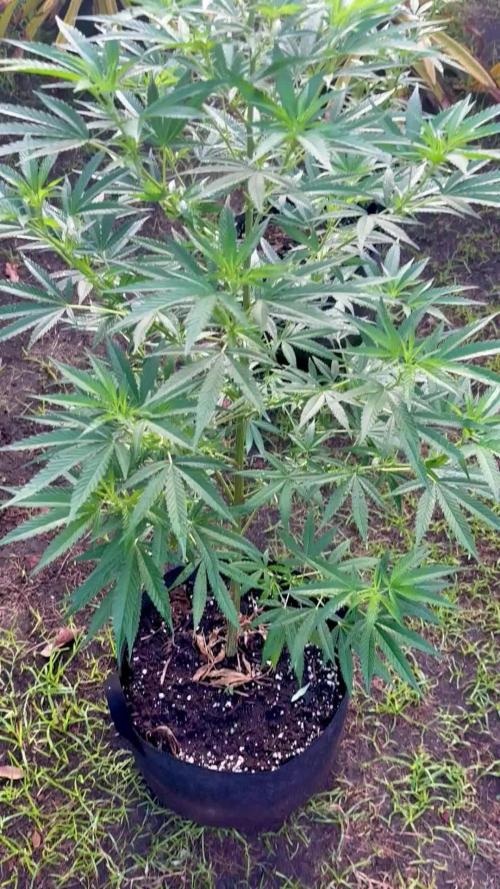
I defoliated & lollipop because of this high humidity so far so good maybe another week or two in this 5 gallon before I put her in a 10 gallon.

Likes
43
Share


@TheCannaProphet
Follow
~ GG4 SHERBET FAST FLOWER by FastBuds ~
Well fam, here we go again with another epic strain from FastBuds Fast Flowering stable. After having such tremendous success growing their Gorilla Cookies Fast Flower outdoors last year, I've decided to run another of their fast flowering strains outdoors this year... GG4 Sherbet Fast Flower!
The best description of this awesome cultivar comes directly from my friends at FastBuds which is as follows:
"Bred from extremely potent and flavorful Gorilla Glue and Orange Sherbet genetics, GG4 Sherbet FF (Fast-Flowering) takes all the best traits to the next level, offering a high-yielding strain that can produce up to 600 g/m2 in a 7-week flowering time. This super resilient Indica-leaning hybrid thrives indoors and outdoors, and in all types of climates while producing mouth-watering sweet, fruity, spicy and earthy terps that translate into a delicious sugary hazelnut aroma. Expect an extremely relaxing and overall happy effect that’ll leave you with a huge smile from ear to ear. It’s the perfect strain for growers of all levels of experience seeking low-maintenance yet highly productive photoperiod varieties that deliver quality and quantity without extra effort.
GG4 Sherbet FF grows chunky buds with long dark orange hairs and spade-shaped calyxes that get encrusted with trichomes by harvest time, giving them a gorgeous silvery-white appearance. This medium-sized photoperiod can reach up to 200 cm in height and yields up to 650 g/m2 while developing that typical hybrid structure. GG4 Sherbet FF grows with a stocky, bushy appearance, developing one sturdy main cola and fat side branches that support huge yields without much effort. This super-fast variety produces distinctive light-green buds with a high bud-to-leaf ratio, making your trimming sessions a breeze. It’s a top-notch resin producer that doesn’t need much maintenance and will thrive in almost every climate, rewarding growers of all levels with extremely flavorful resin that makes for outstanding hash end extracts."
________________________________________________________________________________________________________________________________________________________________________________________________________________________________________________________________________________________________________________________
The Setup:
This is going to be an outdoor grow, but I have started the GG4 Sherbet Fast Flower indoors as our weather is still too cold to put her outside (nighttime temp's dipping regularly into the 30's℉).
The plan is simple... let her grow inside under a 19/5 light schedule until the nighttime temperatures stay above the mid 40's℉, at which point she'll be moved outside and transplanted into the soil which I have already setup and inoculated with beneficial microbes, and then let the fun begin!🤪💚
________________________________________________________________________________________________________________________________________________________________________________________________________________________________________________________________________________________________________________________
Weekly Updates:
8/18- Week 5 of flower's here for the FastBuds GG4 Sherbet Fast Flower and she has transformed into an absolutely gorgeous specimen of this strain, and hopefully it will become a good example of this strains capabilities!
Our weather continues to be cool and dry with nighttime temp's dipping into the upper 50's℉ with daytime highs in the mid to upper 70's℉, and the daylight has dropped to just over 13 hours now.
8/20- I am still watering the GG4 Sherbet FF daily but, with the cooler weather and with the plant at this stage of flower, her water requirements have dropped a bit so I'm only giving approximately 4-5g of well water after the sun goes down to allow it to soak in thoroughly throughout the soil.
8/22- Along with my daily watering, I am also constantly going through the plant and removing any dead or yellowed leaves. I'm also checking over the entire plant including the undersides of leaves looking for early signs of insect infestation or their eggs being laid, as well as looking for signs of deficiencies and as flowering progresses mold and fungus.🤢
8/24- With five weeks of flower behind her now, the FastBuds GG4 Sherbet Fast Flower has passed the halfway point and only has another 2-3 weeks to go! My only hope is that our weather continues to cooperate and at least stay dry to quell any fears of bud rot on her beautiful flowers!
Thank you for checking out my diary, your positive comments and support make it all worthwhile! 💚Growers Love!💚😎🙏
Likes
61
Share


@UnorthadoxDude
Follow
Hello growers and welcome to week 6. I expect Queen Citronella to gain a lot of height this week.
I will be doing the measurements shortly, but first I wanted to share some news! Queen Citronella has a new home, she hasn't moved in yet, but I'm working on it today. I will also be rearranging all the other grows and starting some new things off! I am not sure if I have mentioned it anywhere but I am using a 1.2m x 1.2.m x 1.8m tent.. I have just got a 60cm x 60cm x 140cm tent and a 300w LED. Her Majesty I hope will enjoy her new quarters.
Day 36: I have lowered the light to 30cm above the tallest plants.
Day 37: It is done! Queen Citronella resides in her own palace, while the rest of the plebs squat together in the communal living area. I have reorganised and moved my 4x4, mounting the carbon filter and duct fan properly in the center. Setup a 2 x 2 with a 300w LED and put the lights for both tents on the same timer (for now). I will measure and photograph Her Majesty a little later, including photos of her new home.
Day 37: Added media. Height: 31cm. Fertigated 2l.
Day 37.5: Alright she is really stretching fast, she grew almost 5cm in a little over 30 hours, A thought has just occurred to me; I could, if I chose to, put the Queen on a flower cycle at this point. Now I did want to do a full grow of clones, however we're talking something like another 2 weeks of veg then 2 weeks for cuttings to root, then I'd want to veg them for a few more weeks, maybe 2, 3 or 4? So that's 6-10 weeks before I start flowering. Then at least ten weeks of flowering, A week to dry, and at least a fortnight to cure. We're talking 20-25 weeks before I get to smoke it, that's six months! I probably wont be able to grow in the summer due to the heat. Now I already have the one cutting which I am hoping will root soon, which I can take forward, but I also have two more seeds. So, regretfully, I think I will change my plans. I will flower queen Citronella, starting on day 43. I still intend to do a full tent of Super Lemon Haze clones, but I think I will postpone that adventure until September.
So this is now the final week or final five days of veg, she will spend the bulk of her last week of veg under a different light. We wont get much data on vegging (unless there is a significant change this week) but it'll be a nice trial run flowering with an LED light for the first time.
Exciting!
I am still waiting for the Epislon F1 seeds from RQS. I set their pot up today, inoculated, fed, and sowed some Dark Opal (Purple) Greek Basil and a liberal sprinkling of chamomile. I am going to germinate all five seeds in jiffy pellets and then put them all in the same 40l
Day 38: I have realised Her Majesty was too tall to flower in this little tent so I snapped her neck a bit.
I installed a photometer app yesterday and discovered I was blasting Citronella with 75 DLI so I raised to light up until canopy level was 40 DLI. The LED is pretty good. The HPS Dual Spectrum bulb in the main tent must be on its last legs as output was around 40 DLI for optimally positioned plants and 30 least optionally positioned. I could do to buy a new bulb. Identical replacement is about fifteen bucks, best one is about fifty. For that I could get another one of those LEDs which seems like better value. At the moment though I really need the heat. So I am thinking identical replacement.
4 days to flower cycle!
Day 38.5: Replaced crappy old Dutch barn reflector with a much nicer angel wing model. Installed a significantly larger carbon filter into the main tent which has significantly increased air flow. The main tent vents into the bottom of Queen Citronella's tent, and from there and unfiltered duct fan in the far top corner exhausts it out. The exhaust pipe goes up the chimney. Why have I reorganised and moved the tents again so soon is because I was wasting power heating the little tent with the LED light, but the main tent has excess heat. Well this setup is working a treat. Citronella is sitting in a balmy 23-24 degree wind tunnel.
Check out the little video of the changes.
Day 39: I think her majesty likes her new quarters. It's going to be weird seeing her square in a few more days. We are 2 days into a "dry spell" I'm simulating for all my plants.
Day 40: Dry spell ended. Fertigated 6l.
Day 41: Fertigated 3l. Citronella's penultimate day of veg, she is going 12/12 from lights out after next. Photos taken 10:00 9/2/23. Current lights out is Citronella's last 6 hour night!
Day 42: Start: Have performed pre-flower LST, HST, and defoliation. 24 hours to flower cycle.
Day 42: End: photographed immediately before first 12h night.
End of week summary: Huge week for Citronella. I think this LED light is pretty good. Change of plans regarding the grow and preparing her for flower. Let's see how she does.


Processing
Likes
6
Share


@Mr_nugs_lover_David
Follow
This beautiful lady smells very strong,I swear I can't believe it's her 15th day of flower since I forced flower on August 3rd,smells just like OG kush but with a different tone of sweetness. Love this strain to pieces.
On August 24th starts the 3rd week of flower 🌸🌱.

Likes
1
Share


@Grizzly
Follow
Harvested at day 98 really wish I could have gone longer, check out how the bud turned out on my IG, link in profile
Likes
34
Share


@TheWeedaltor
Follow
Still a cold April this year but the HPS makes it more warm 🔥
Happy 420 to all the growers here 💚

Likes
109
Share


@MadeInGermany
Follow
Welcome to the Green House CUP 🏆
Hi everyone :-)
I hope you are all fine 🙏🏻.
This week the lady has developed really well 😍👍, which probably has something to do with the Green House Powder feeding that she has been using for a few days 😎.
I will top her tomorrow for the first time. After a few more days, I will spontaneously decide whether to do LST or a few more times top :-)
Depending on what time allows and how it develops 🤗. It seems to be a very nice genetics.
This is how you are used to from Green House 😍🙏🏻.
I wish you all a good start to the week, stay healthy 🙏🏻 and let it grow 😎👍
Green House Seeds Company Cup 🏆
Type:
Wonder Pie
☝️🏼
Genetics:
Wedding Cake x OG Kush
👍😍
Vega lamp: 2 x Todogrow Led
Quantum Board 100 W
💡
Flower Lamp : 2 x Todogrow Led
Cxb 3590 COB 3500 K 205 W
💡💡☝️🏼
Earth: Canna Bio
☝️🏼
Fertilizer: Bio Grow Feeding ( GHSC ) , Enhancer ( GHSC ) , Bio Bloom ( GHSC)
☝️🏼🌱
Water: Osmosis water mixed with normal water (24 hours stale that the chlorine evaporates) to 0.2 EC. Add Cal / Mag to 0.4 Ec Ph with Organic Ph - to 6.0
Likes
10
Share

@DogDoctorOfficial
Follow
💙 Project Blue Tent – Week 10
Blue Waffle F1 – Pheno A
🌸 Sometimes the Best Thing You Can Do Is Watch
Hello everyone, and welcome back to another chapter inside Project Blue Tent! 💙🌱
If you've been following this project, you'll know that the last few weeks have been anything but quiet.
We had aggressive stretching.
We had to reorganize the entire vertical space.
We moved the carbon filter and extractor outside the tent.
We raised the LEDs.
We installed a second SCROG.
We performed a major defoliation.
We added another fan underneath the canopy.
We adjusted the nutrition.
Basically...
we gave ourselves plenty of work. 😂
But this week?
Not so much.
And honestly...
that's exactly how I like it.
Because when the plants look this good, sometimes the smartest thing a grower can do is step back and watch.
🌿 PHENO A – NOW WE WATCH THE WORK
Blue Waffle F1 Pheno A is looking absolutely beautiful.
She's still standing at approximately 145 cm, with an enormous amount of flowering structure developed throughout the plant.
And this is where I'm particularly enjoying the project now.
We're finally getting to see the results of all those decisions we made earlier.
The long vegetative period created the structure.
The first SCROG helped organize it.
The stretch showed us where we needed more control.
The defoliation opened the plant back up.
The second SCROG gave those tall flowering branches additional support.
Moving the ventilation equipment gave us valuable vertical space.
Raising the LEDs gave the tops more breathing room.
And the additional airflow helped keep everything moving through that newly opened structure.
Now?
We're watching the plant do its thing.
🌸
✂️ THE RESULTS OF THE DEFOLIATION ARE BECOMING VISIBLE
One of the things I'm paying particular attention to this week is the result of the heavy defoliation we performed previously.
At the time, the plants looked dramatically different.
We removed a substantial amount of foliage because the canopy had become extremely dense.
But the objective was never simply to make the plants look cleaner.
The objective was to create a more functional flowering structure.
And now we're seeing why.
There is much better visibility through the plant.
The flowering sites have more space around them.
Air can move through the structure more easily.
The individual branches are much easier to follow.
And most importantly...
the plant doesn't look like it's struggling because of what we did.
Quite the opposite.
She's continuing to develop beautifully.
This is the part of the process I find fascinating.
You make a structural decision weeks earlier...
and then you have to wait.
You don't immediately know what the final result will look like.
Now we're beginning to see it.
And I have to say...
I'm very happy with what I'm seeing. 💙
💡 INTRODUCING THE LUMIFLORA UNDER-CANOPY LIGHT
And because we're apparently incapable of leaving the setup completely alone... 😂
we've introduced another piece of equipment.
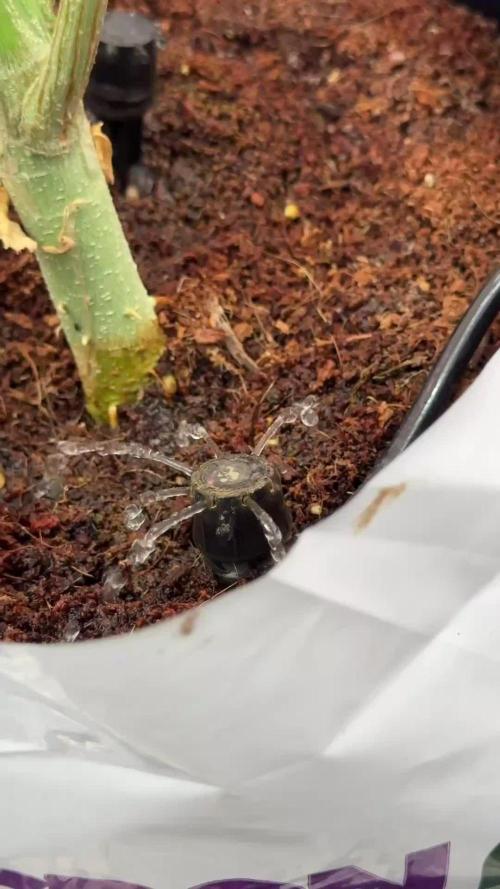
This week, we're adding the LumiFlora 150W full-spectrum under-canopy light.
The reason is very simple.
These plants have become BIG.
Really big.
😂🌿
At this stage, the upper canopy is receiving plenty of light from the main fixtures.
But once you have a plant with this much vertical structure and this much foliage, the lower portions naturally receive less direct light.
That's simply what happens inside a dense canopy.
So instead of trying to solve that by constantly removing more foliage, we're experimenting with providing additional light from underneath.
The LumiFlora unit is 150W full spectrum, with additional emphasis toward the red portion of the spectrum.
We're positioning it underneath the canopy so that we're able to provide supplemental light to areas that would otherwise receive considerably less from above.
And I'm particularly interested in watching how the lower flowering sites respond over the coming weeks.
We're not trying to replace the main lighting.
We're complementing it.
The main fixtures continue doing the heavy lifting from above.
The LumiFlora is simply giving the lower canopy another source of usable light.
And now...
we watch.
🌱💡🌸
🕸️ THE CANOPY IS FINALLY WHERE WE WANT IT
The second SCROG is also doing exactly what we hoped it would do.
The flowering branches are now supported within the upper structure, rather than being allowed to move wherever they want.
This is particularly useful with Pheno A because she has so much vertical growth.
The first SCROG helped create the architecture.
The second is now helping support that architecture.
And together they have transformed what could have become a very difficult flowering structure into something much more manageable.
Looking through the canopy now, you can actually see the work we've done.
And that's probably my favorite part of this week.
We're not building anymore.
We're seeing the result of the building.
🌬️ AIRFLOW – LETTING THE CANOPY BREATHE
The airflow arrangement we established last week is also staying in place.
With the additional Zamnesia clip fan underneath the canopy and the upper airflow working across the plants, we're keeping air moving through multiple levels.
That becomes particularly important now that we're supplementing the lower canopy with additional lighting.
The goal is to keep the environment moving and avoid stagnant pockets developing underneath the plants.
Again...
nothing dramatic this week.
And that's good.
😂
When everything is working properly, you don't need to keep changing it.
NUTRITION – KEEP FEEDING, KEEP WATCHING
The girls are continuing with the established PLAGRON Hydro feeding program.
The current recipe remains:
PLAGRON Hydro A — 2.2 ml/L
PLAGRON Hydro B — 2.2 ml/L
🌱 PLAGRON Hydro Roots — 1 ml/L
🌸 PLAGRON Power Buds — 1 ml/L
pH adjustment as required
The plants are responding very well to the feeding, so there's no reason to make unnecessary changes.
That's another lesson I'm learning from this project.
When the plants are telling you that they're happy...
listen.
😂💙
There's no prize for changing something every week.
Consistency is part of the experiment too.
🌸 THIS WEEK'S REAL EXPERIMENT
So, what are we actually doing this week?
Honestly?
We're watching.
😂
We're watching how Pheno A develops after the major structural work.
We're watching how the flowering sites progress.
We're watching how the second SCROG supports the branches.
We're watching how the airflow performs through the opened canopy.
And now we're watching what happens when we introduce supplemental 150W full-spectrum lighting underneath the canopy.
This is the point where I don't want to interfere unnecessarily.
We've already done the work.
Now we need to give the plant the opportunity to show us what that work achieved.
🌡️ CURRENT GROW CONDITIONS
🌸 Flowering: Week 10
📏 Height: approximately 145 cm
💡 Light schedule: 12/12
☀️ Day temperature: 27°C
🌙 Night temperature: 27°C
💧 Relative humidity: 61%
⚗️ pH: 6.01
⚡ EC: approximately 2.49 mS/cm
🌡️ Solution temperature: 26°C
🌱 Substrate temperature: 24°C
🌬️ CO₂: approximately 666 ppm
💦 Watering: approximately 1.6 L per plant / 24h
? Pot size: 8 L
💡 LumiFlora Under-Canopy: 150W Full Spectrum
🔬 SAME ROOM. SAME ENVIRONMENT. ONE VERY INTERESTING PLANT.
This is still one of my favorite aspects of Project Blue Tent.
We're documenting individual phenotypes while keeping the overall environment consistent.
Same room.
Same lighting environment.
Same irrigation.
Same nutrition.
Same cultivation philosophy.
And yet each plant still develops its own character.
Pheno A has certainly made herself known. 😂💙
She's tall.
She's vigorous.
She's heavily branched.
And she's giving us a fantastic opportunity to see what happens when a large flowering plant is managed through multiple stages of structural training.
Now we're simply waiting to see the flowers take over the story.
🌸 FROM TRAINING TO FINISHING
We've spent a huge portion of this project talking about growth.
Training.
Stretch.
Canopy management.
Defoliation.
Support.
Airflow.
Lighting.
But now we're entering a different part of the journey.
The structure is established.
The canopy is supported.
The room has been reorganized.
The airflow is in place.
The nutrition is stable.
And now the plant gets to concentrate on finishing.
That's why this week feels different.
There isn't a huge intervention to announce.
There doesn't need to be.
The work has already been done.
Now we're watching the result.
And sometimes...
that's the most exciting part. 💙🌸
💙 LOOKING AHEAD
Over the coming weeks, I'll be watching the response of the lower canopy particularly closely.
The LumiFlora under-canopy light is now part of the experiment, and I'm interested to see how the additional supplemental lighting influences the development of those lower flowering areas.
At the same time, we're continuing to monitor the upper canopy, environmental stability, nutrition, and overall flower development.
No major changes planned.
No unnecessary interference.
Just observation.
Because right now...
Pheno A is doing exactly what we want her to do.
And I'm very happy to let her continue.
🌸💙🌿
🙏 A HUGE THANK YOU
A huge thank you once again to Zamnesia for making Project Blue Tent possible and for giving us the opportunity to explore these Blue Waffle F1 phenotypes individually.
Thank you to PLAGRON for the Hydro nutrient line and for supporting the plants throughout this vigorous cycle.
A massive thank you to Mars Hydro for the irrigation and drainage system that keeps this ecosystem running smoothly.
Thank you to LumiFlora for the 150W full-spectrum under-canopy light, which we're now putting to the test as part of the next stage of this experiment.
And of course, thank you to GrowDiaries for giving us the platform to document the entire journey.
Most importantly, thank you to everyone following Project Blue Tent.
We've spent weeks building this canopy.
We've stretched it.
Bent it.
Supported it.
Opened it.
Reorganized the room around it.
😂💙
And now?
We're finally at the fun part.
We sit back...
we watch...
and we let Blue Waffle F1 Pheno A show us what she's capable of.
Until next week...
More flowers. More observation. Less interference. 🌸💙🌿
Growers Love, happy growing, and take care everyone! 🌱💙
Processing
Likes
13
Share


@Rambazamba
Follow
Die Woche ist die gute Weihnachtszucker-Glasur mehr und mehr geworden. Meine Damen fangen an Ihren Zucker mehr und mehr zu zeigen. Die ersten Haare färben sich auch langsam braun.
Ich musste die Woche wenig machen und habe mich beschränkt auf das gießen ohne Hesi um ihnen die Woche so angenehm wie möglich zu machen.
Die Temperatur ist super und ich muss sagen die LED überrascht mich immer noch sehr sehr stark.
Ich werde später noch Tagesaufnahme von den Pflanzen reinsetzen.
Ich kann manchmal gar nicht meine Augen von der natürlichen Schönheit der Pflanzen nehmen.
Ich wünsche alle einen schönen 1.Advent.
Likes
7
Share


@XoticGROW666
Follow
( RUNTZ X F1DURB X GUSHERS )🍬🌈🍨🍧
PURP KICKIN INN END #WEEK4
CANT WAIT TILL THE BUDS SWELL UPP!!
SUPA INTENSE CANDY TERPS THIS ROUND
NOT BIG BUDS BUT SUPA HIGH IN BRIXX LEVEL WITH ALL THE ORGANIC CARBON INPUTS!! PPM 900/1200 1.2 max
(Face Off OG x Watermelon Zkittlez) X (Runtz x F1 Durb x Gushers) 🍉🍬🌈🍧🍨🍦
LIL PRUPLE TINT WIT MOUTH WATERING SUGARY TERPS KICK INN END #WEEK4 BY WEEK 7/8 SHE WILL BE PURPLE PURPLE WIT SUPER INTENSE CANDY MOUTH WATERING TERPS CANT WAIT TILL SEE THEM BUDS SWELL UPP!! PHENO A/B
NOT BIG BUDS BUT SUPA HIGH IN BRIXX LEVEL WITH ALL THE ORGANIC CARBON INPUTS!! PPM 900/1200 1.2 max

Likes
8
Share


@Bluedreaming
Follow
Yum, yum !!! Took some cuts of all three this week and think the gorilla girl is going to be a great candidate for half the garden next grow. Just love the size and smell of the flowers!!


