The Grow Awards 2026 🏆
Likes
Comments
Share
@Bud_Bunny
Follow
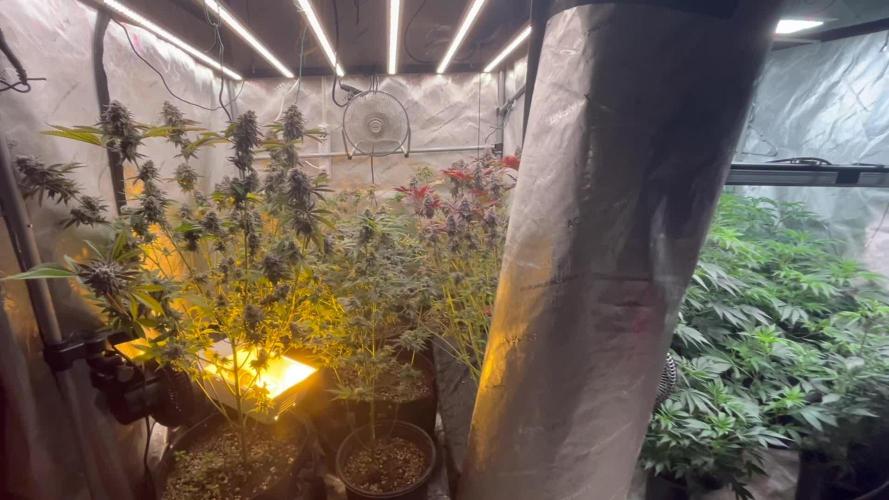
So we are coming into the final week(s). Super frosty. The fan leaves are dripping with tricholmes and so are the buds. Smells amazing like citrus.
Likes
15
Share
Last week the weather outside the window was terrible - it was raining and fog. This also affected the harvest - one cola was affected by mold! I managed to avoid extensive damage and I lowered the humidity in the tent. We continued, there was very little time left until the finish line.
Likes
Comments
Share
She’s getting nice a frosty and budding up nicely growing in sohum just add water
Likes
37
Share
@Cremo
Follow
So here we are, at the end, a few months later. I was so happy that I'll finally grow a plant without any training at all, just to see the full and uninterrupted genetic expression. It was a blast to grow her, I can't wait for the plant to dry and give it a few weeks of curing but she smells great already. I also wanted to thank Divine Seeds for the contest strain and Bio Tabs for great Bio fertilizer. You can judge for yourself because I'll let the photographs speak for themselves. Speaking of photography, I went with a moody style this time, because she has a great structure. I've trimmed her a little bit here and there and I've left a few big fan leaves on both sides for better looks. The big fan leaves reflect the light so well, it make the whole plant shine. Okay now head to the gallery and let all that sink in ;) XOXO Cremo
Likes
12
Share
@Tanjalope
Follow
Flushed all the girls this week seen to be getting close to harvest time now 😁😁 starting to notice more of a lovely smell this week 👌 all frosting over nicely and bulking up not sure if in going to make my target weight this time but should be some tasty smoke. Got my missile 33 plant looking nice n bushy waiting for a space in the tent think she will be a lovely plant from what I've seen so far. Roll on harvest time 🍁 peace
Likes
14
Share
@LumpaziV
Follow
Von den heutigen Updates zeigen mir die Pflanzen, dass sie schon in Vorblüte waren, wie ich sie bekam, aber sie sich noch Zeit genommen haben, um zu bewurzeln.
Likes
5
Share
@MG2009
Follow
03/24/2021 Been a slow transition week, starting to see pistils but not flowering been on 12-12 just under a week so expecting to see some flowers soon, gave some 4-10-3 with IBA so hopefully she is putting out extra roots before she starts to flower, I know my cuttings root better under 12-12 so fingers crossed. Hoping root & grow does the good job.
Likes
2
Share
@EtnoGrow
Follow
this is the beginning of the 4th week along with the publication of the end of the 3rd week, this is how the fourth week is received, another intensive pruning that has no choice but to do it due to the size of the indoor, which is working great for us and we believe that I will always work like this, I am happy, here then the pruning of its results a little before and after and how it is receiving this fourth week, with the threads I touch a little bit of hair I hope it does not affect much but all in favor of opening the field to all the branch buds alike.WE CHANGE THE MESH FOR A BETTER ONE AND OF THE IDEAL SIZE AND AGAIN WE USE THREADS THAT HELP US VERY WELL, WONDERFULLY
Likes
13
Share
📆 Semana 9: Debido a las altas temperaturas, tuve que cosechar la Mimosa Auto cultivada en el sistema hidropónico, ya que no soportó el calor. Los cogollos quedaron densos y resinosos, con tonos anaranjados en los pistilos que indican su madurez. El perfil aromático se mantiene complejo, con notas cítricas y terrosas que prometen potencia y sabor. La otra Mimosa Auto sigue en su ciclo, creciendo fuerte en sustrato, donde el ambiente es más estable y controlado, lo que le permite continuar desarrollándose con buena salud. ¡Seguimos creciendo fuerte! 💪
Likes
5
Share
Week 7 (Day 49) – Week 4 of Flower: This little beast may only be 10 inches tall, but she's dripping in trichomes. Every bud site is frosting up heavy, and even the sugar leaves are coated like she got hit with a snowstorm. You can see the resin starting to glisten under the lights — sticky and strong already. No signs of slowing down either. She's staying compact but dense, stacking nicely with solid development. Still feeding bone meal and Morbloom, and she’s taking it like a champ. Smell is starting to punch through the tent walls now — sweet, funky, and loud. She's got that "touch me and your fingers are stuck" vibe going.
Processing
Likes
8
Share
Que hay familia, volvemos con malas noticias, un ejemplar salió hermafrodita y toco sacarla de su hueco os dejo fotografías de algunas ramas. Las 2 que quedan no pintan mal , se me fueron mucho de altura pero bueno XL. Ph controlado en 6,5 temperaturas máximas 28 y mínimas 19 , sin problemas aparentes. Variedad algo difícil para principiantes.
Likes
20
Share
This was a real fun strain !! Definitely do it over and over again ! Thank you Fastbuds!! I’m not sure of the weight yet ,I have them hanging low an slow for 12- 14 days to try then will be trim , cure , the fun stuff!✌️Peace, love, and Positive Vibes to y’all cheers 🔥😤💨💨💨💨🤙 I will be letting know the final weight soon as it’s done drying!
Likes
52
Share
Lacewings seemed to have mostly killed themselves by flying into hot light fixtures. I may have left the UV on which was smart of me :) Done very little to combat if anything but make a sea of carcasses, on the bright side its good nutrition for the soil. Made a concoction of ethanol 70%, equal parts water, and cayenne pepper with a couple of squirts of dish soap. Took around an hour of good scrubbing the entire canopy. Worked a lot more effectively and way cheaper. Scorched earth right now, but it seems to have wiped them out almost entirely very pleased. Attempted a "Fudge I Missed" for the topping. So just time to wait and see how it goes. Question? If I attached a plant to two separate pots but it was connected by rootzone, one has a pH of 7.5 ish the other has 4.5. Would the Intelligence of the plant able to dictate each pot separately to uptake the nutrients best suited to pH or would it still try to draw nitrogen from a pot with a pH where nitrogen struggles to uptake? Food for stoner thought experiments! Another was on my mind. What happens when a plant gets too much light? Well, it burns and curls up leaves. That's the heat radiation, let's remove excess heat, now what? I've always read it's just bad, or not good, but when I look for an explanation on a deeper level it's just bad and you shouldn't do it. So I did. How much can a cannabis plant absorb, 40 moles in a day, ok I'll give it 60 moles. 80 nothing bad ever happened. The answer, finally. Oh great........more questions........ Reactive oxygen species (ROS) are molecules capable of independent existence, containing at least one oxygen atom and one or more unpaired electrons. "Sunlight is the essential source of energy for most photosynthetic organisms, yet sunlight in excess of the organism’s photosynthetic capacity can generate reactive oxygen species (ROS) that lead to cellular damage. To avoid damage, plants respond to high light (HL) by activating photophysical pathways that safely convert excess energy to heat, which is known as nonphotochemical quenching (NPQ) (Rochaix, 2014). While NPQ allows for healthy growth, it also limits the overall photosynthetic efficiency under many conditions. If NPQ were optimized for biomass, yields would improve dramatically, potentially by up to 30% (Kromdijk et al., 2016; Zhu et al., 2010). However, critical information to guide optimization is still lacking, including the molecular origin of NPQ and the mechanism of regulation." What I found most interesting was research pointing out that pH is linked to this defense mechanism. The organism can better facilitate "quenching" when oversaturated with light in a low pH. Now I Know during photosynthesis plants naturally produce exudates (chemicals that are secreted through their roots). Do they have the ability to alter pH themselves using these excretions? Or is that done by the beneficial bacteria? If I can prevent reactive oxygen species from causing damage by "too much light". The extra water needed to keep this level of burn cooled though, I must learn to crawl before I can run. Reactive oxygen species (ROS) are key signaling molecules that enable cells to rapidly respond to different stimuli. In plants, ROS plays a crucial role in abiotic and biotic stress sensing, integration of different environmental signals, and activation of stress-response networks, thus contributing to the establishment of defense mechanisms and plant resilience. Recent advances in the study of ROS signaling in plants include the identification of ROS receptors and key regulatory hubs that connect ROS signaling with other important stress-response signal transduction pathways and hormones, as well as new roles for ROS in organelle-to-organelle and cell-to-cell signaling. Our understanding of how ROS are regulated in cells by balancing production, scavenging, and transport has also increased. In this Review, we discuss these promising developments and how they might be used to increase plant resilience to environmental stress. Temperature stress is one of the major abiotic stresses that adversely affect agricultural productivity worldwide. Temperatures beyond a plant's physiological optimum can trigger significant physiological and biochemical perturbations, reducing plant growth and tolerance to stress. Improving a plant's tolerance to these temperature fluctuations requires a deep understanding of its responses to environmental change. To adapt to temperature fluctuations, plants tailor their acclimatory signal transduction events, specifically, cellular redox state, that are governed by plant hormones, reactive oxygen species (ROS) regulatory systems, and other molecular components. The role of ROS in plants as important signaling molecules during stress acclimation has recently been established. Here, hormone-triggered ROS produced by NADPH oxidases, feedback regulation, and integrated signaling events during temperature stress activate stress-response pathways and induce acclimation or defense mechanisms. At the other extreme, excess ROS accumulation, following temperature-induced oxidative stress, can have negative consequences on plant growth and stress acclimation. The excessive ROS is regulated by the ROS scavenging system, which subsequently promotes plant tolerance. All these signaling events, including crosstalk between hormones and ROS, modify the plant's transcriptomic, metabolomic, and biochemical states and promote plant acclimation, tolerance, and survival. Here, we provide a comprehensive review of the ROS, hormones, and their joint role in shaping a plant's responses to high and low temperatures, and we conclude by outlining hormone/ROS-regulated plant-responsive strategies for developing stress-tolerant crops to combat temperature changes. Onward upward for now. Next! Adenosine triphosphate (ATP) is an energy-carrying molecule known as "the energy currency of life" or "the fuel of life," because it's the universal energy source for all living cells.1 Every living organism consists of cells that rely on ATP for their energy needs. ATP is made by converting the food we eat into energy. It's an essential building block for all life forms. Without ATP, cells wouldn't have the fuel or power to perform functions necessary to stay alive, and they would eventually die. All forms of life rely on ATP to do the things they must do to survive.2 ATP is made of a nitrogen base (adenine) and a sugar molecule (ribose), which create adenosine, plus three phosphate molecules. If adenosine only has one phosphate molecule, it’s called adenosine monophosphate (AMP). If it has two phosphates, it’s called adenosine diphosphate (ADP). Although adenosine is a fundamental part of ATP, when it comes to providing energy to a cell and fueling cellular processes, the phosphate molecules are what really matter. The most energy-loaded composition for adenosine is ATP, which has three phosphates.3 ATP was first discovered in the 1920s. In 1929, Karl Lohmann—a German chemist studying muscle contractions—isolated what we now call adenosine triphosphate in a laboratory. At the time, Lohmann called ATP by a different name. It wasn't until a decade later, in 1939, that Nobel Prize–-winner Fritz Lipmann established that ATP is the universal carrier of energy in all living cells and coined the term "energy-rich phosphate bonds."45 Lipmann focused on phosphate bonds as the key to ATP being the universal energy source for all living cells, because adenosine triphosphate releases energy when one of its three phosphate bonds breaks off to form ADP. ATP is a high-energy molecule with three phosphate bonds; ADP is low-energy with only two phosphate bonds. The Twos and Threes of ATP and ADP Adenosine triphosphate (ATP) becomes adenosine diphosphate (ADP) when one of its three phosphate molecules breaks free and releases energy (“tri” means “three,” while “di” means “two”). Conversely, ADP becomes ATP when a phosphate molecule is added. As part of an ongoing energy cycle, ADP is constantly recycled back into ATP.3 Much like a rechargeable battery with a fluctuating state of charge, ATP represents a fully charged battery, and ADP represents a "low-power mode." Every time a fully charged ATP molecule loses a phosphate bond, it becomes ADP; energy is released via the process of ATP becoming ADP. On the flip side, when a phosphate bond is added, ADP becomes ATP. When ADP becomes ATP, what was previously a low-charged energy adenosine molecule (ADP) becomes fully charged ATP. This energy-creation and energy-depletion cycle happens time and time again, much like your smartphone battery can be recharged countless times during its lifespan. The human body uses molecules held in the fats, proteins, and carbohydrates we eat or drink as sources of energy to make ATP. This happens through a process called hydrolysis . After food is digested, it's synthesized into glucose, which is a form of sugar. Glucose is the main source of fuel that our cells' mitochondria use to convert caloric energy from food into ATP, which is an energy form that can be used by cells. ATP is made via a process called cellular respiration that occurs in the mitochondria of a cell. Mitochondria are tiny subunits within a cell that specialize in extracting energy from the foods we eat and converting it into ATP. Mitochondria can convert glucose into ATP via two different types of cellular respiration: Aerobic (with oxygen) Anaerobic (without oxygen) Aerobic cellular respiration transforms glucose into ATP in a three-step process, as follows: Step 1: Glycolysis Step 2: The Krebs cycle (also called the citric acid cycle) Step 3: Electron transport chain During glycolysis, glucose (i.e., sugar) from food sources is broken down into pyruvate molecules. This is followed by the Krebs cycle, which is an aerobic process that uses oxygen to finish breaking down sugar and harnesses energy into electron carriers that fuel the synthesis of ATP. Lastly, the electron transport chain (ETC) pumps positively charged protons that drive ATP production throughout the mitochondria’s inner membrane.2 ATP can also be produced without oxygen (i.e., anaerobic), which is something plants, algae, and some bacteria do by converting the energy held in sunlight into energy that can be used by a cell via photosynthesis. Anaerobic exercise means that your body is working out "without oxygen." Anaerobic glycolysis occurs in human cells when there isn't enough oxygen available during an anaerobic workout. If no oxygen is present during cellular respiration, pyruvate can't enter the Krebs cycle and is oxidized into lactic acid. In the absence of oxygen, lactic acid fermentation makes ATP anaerobically. The burning sensation you feel in your muscles when you're huffing and puffing during anaerobic high-intensity interval training (HIIT) that maxes out your aerobic capacity or during a strenuous weight-lifting workout is lactic acid, which is used to make ATP via anaerobic glycolysis. During aerobic exercise, mitochondria have enough oxygen to make ATP aerobically. However, when you're out of breath and your cells don’t have enough oxygen to perform cellular respiration aerobically, the process can still happen anaerobically, but it creates a temporary burning sensation in your skeletal muscles. Why ATP Is So Important? ATP is essential for life and makes it possible for us to do the things we do. Without ATP, cells wouldn't be able to use the energy held in food to fuel cellular processes, and an organism couldn't stay alive. As a real-world example, when a car runs out of gas and is parked on the side of the road, the only thing that will make the car drivable again is putting some gasoline back in the tank. For all living cells, ATP is like the gas in a car's fuel tank. Without ATP, cells wouldn't have a source of usable energy, and the organism would die. Eating a well-balanced diet and staying hydrated should give your body all the resources it needs to produce plenty of ATP. Although some athletes may slightly improve their performance by taking supplements or ergonomic aids designed to increase ATP production, it's debatable that oral adenosine triphosphate supplementation actually increases energy. An average cell in the human body uses about 10 million ATP molecules per second and can recycle all of its ATP in less than a minute. Over 24 hours, the human body turns over its weight in ATP. You can last weeks without food. You can last days without water. You can last minutes without oxygen. You can last 16 seconds at most without ATP. Food amounts to one-third of ATP production within the human body.
Likes
16
Share
@Chucky324
Follow
Hello. This is the end of week 5 and the beginning of week 6 of flowering. I think, after this week, I'll "not" close the tent at night. I've read that around the 50th degree latitude a plant will stay in flower if it is kept in dark for 3 weeks and put out after the summer solstice June 21st. As long as the light is getting less at night the plants will stay in flowering... So, 1 week to go and I'll leave the tent open. The buds are bulking up now. Smells like tropical skunk in and around the greenhouse. Won a runner up prize in a Ganja Farmers photo contest and for my prize I'll get, 3 seeds of Kush Mints, 3 of Animal Cookies and 3 of Gorilla Gelato. 2 mostly indica and 1 hybrid. Seed descriptions said they are strong. Oh Boy... OK. Be Cool. Chuck.
Likes
17
Share
@Canna96
Follow
Hey now, hope everyone is having a great weekend and staying safe. Another great week for the ladies, as they are now almost halfway through flowering which is 4 weeks into flower, and the stretch has just finished. I am still feeding them silica, cal mag, and flower nutrients maxi bloom by GHE. I did start to add a PK booster last week pushing the EC up to 1.4. I also switched the Medic Grow light from V1 to the F1 Spectrum at the beginning of last week, and will be integrating the UV/IR bar into the light cycle later this week. I will run the UV/IR bar for approximately 30 minutes prior to lights off to get started. The tallest plants are the Sundae Driver and the Durban Nights at 44" and the Red Hot Cookies is the shortest plant at 40" however they all look happy and healthy and capable of easily giving up a half pound each. The 5X5 tent is starting to really fill up and they are just now starting to smell. I was out of town all weekend so I was unable to make a time lapse video but I will update next week. I did defoliate twice this week and I may do one or two more rounds before just letting them do their thing. Not much to do from here on out except make sure the reservoir is full and the PH is in the proper range. I hope everyone has a great weekend, Thanks for stopping by, Stay Safe and Blaze On!!! 💪 Website: https://medicgrow.com/ https://growdiaries.com/grower/medicgrowled