


Likes
Comments
Share


@GekyumesMom
Follow
Gemma (gelato) is being shady lol
Rosemary is 11 days old 5/21/22


Likes
6
Share


@GanjaDjarin
Follow
For the Grow section on my page: Throughout the germination stage, I explored three distinct seed germination techniques: the direct soil implantation, immersion in a hydroponic medium, and the classic paper towel method. My tests involved the Gods Gift autoflower from Premium Cultivators, Northern Lights from Royal Queen Seed Bank, and the F1 Epsilon strain, also from Royal.
My primary focus, however, has been on the F1 Epsilon strain. As part of my shift towards commercial operations, I'm currently pushing the potential of these seeds to achieve maximum efficiency and productivity. I'm in the midst of identifying the optimal strains for my commercial venture.
My objective, quite simply, is to strike an optimal balance between quality and yield for my future cannabis crops. With astute business planning and leveraging emerging laws, I plan to provide these products at a significantly lower price than my competitors. End of Germination Stage - Staring Vegetation Stage
Day 9 - I inadvertently oversaturated my plants with nutrients, which led to the immediate demise of two plants. A key lesson learned was that utilizing old woolite medium is not advisable. Instead, using dirt plugs proves to be a more effective method. Moreover, it's crucial to ensure that nutrients are introduced directly into the water supply to avoid any potential harm to the plants.
Additional Note: For enhanced root stability and quicker access to the water supply, it's important to situate the dirt plugs deeply within the pebbles.
Also ensure germination process as follows: 12 hour soak, drop into soil plug deep into hydroponics pebble medium.


Likes
6
Share


Likes
31
Share


@Reaper
Follow
next time i wont Veg under fluorescent lights, needs more power from the start for bigger stem and root system, i cant complain by the end result lol

Likes
9
Share


@STAYINGONMYMAINCBATORUNTWO
Follow
Best flowers in the whole grow forming with these runtz! Amazing amount of bud sites regardless of bud blood or bud ignitor both plants developed so many and flowers are looking amazing under the mars hydro eco (discontinued) along side the ts600’s got some amazing shots hope you like and will continue to impress!
Likes
88
Share


@Zengrower
Follow
Merry Christmas growmies 🎄 I hope you are enjoying the holidays with friends, family and Cannabis ✨😁
The Purple Haze is entering the final stage of bloom. For me this is a great time as the plants are finally at their prime. As you can see in the pictures the buds have grown big and fat. The resin is also covering most of the sugar leafs and even though it's not snowing outside, thing sure look frosty in the GTools 😅 I inspected the trichromes today and most are cloudy, no amber just yet. Going from the strain description this could be the final week before harvest. It would be cool to close off this year with a Purple Haze harvest but as always I let the plant decide when she's ready to be harvested. The pistils are still mostly white, but my main indicator are the trichromes.
The two plants in the back are both a bit bigger (and have fatter buds) than the plant in the front. So maybe this one will have to grow for a week longer to reach her full potential. The plan for this week will be just giving just water and no nutrients, lower the temperature and see if I can nudge the ladies in coloring the leafs to a nice purple hue. If they don't it's perfectly ok, I'm happy with how healthy and frosty they look anyway.
Let's see what this week will bring us! I just harvested my first flush of shrooms today. These are the Hawaïan Cubensis from the Zamnesia webshop. Chack it out at https://www.zamnesia.com/3484-magic-mushroom-spore-syringes-mondo-psilocybe-cubensis-hawaii.html
Even though this was in the smaller monotub I ended up with a 5L mason jar full of beautiful mushrooms ☘️🍄. Stay tuned for more pics and updates as the week progresses and again have a great holiday 🌟
Likes
15
Share


@DaddyPrime2
Follow
5/20 I'm in love 😍 the leaves are lime green only because of the frost lmao this plant is ridiculous and Iam so looking forward to where this plants headed. This one bud in the middle is looking more and more purple each day. If the flower from this plant is what I'm hoping it to be, I will definitely be keeping this in my garden, which would be a first. I also never had intentions to do that or medical intentions to be more specific, up until now. Hopefully this will be my first, last keeper
5/22 gave her a tbsp of terp tea
5/26 end of the week 3 flower. She's starting to chunk and gain bud structure. The next four weeks will be

Likes
Comments
Share

@frigo_camelo
Follow
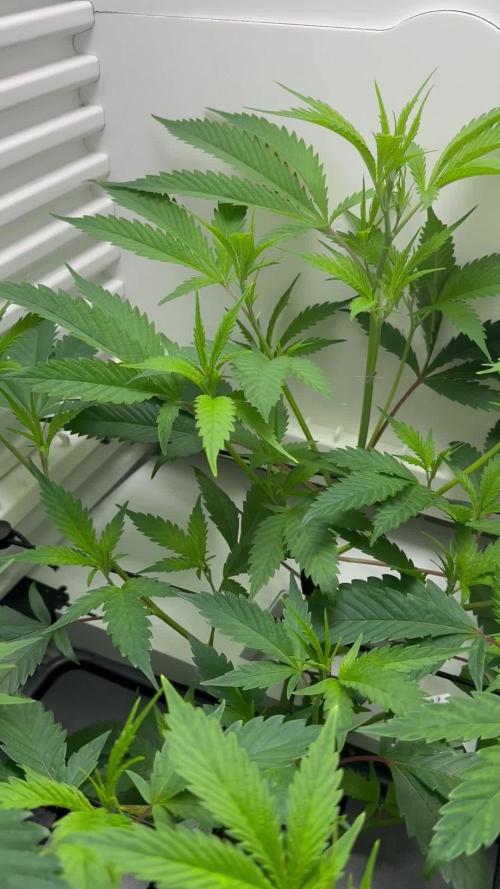
End of veg Week 3 | plant looking really strong and healtthy | just started flower | lets see it stretch!


Likes
5
Share


@satirosseeds
Follow
Esta semana empiezan a entrar en la sala de floración. Las primeras en entrar han sido unas shishkaberry´s, 2 zkittlez y una grapefruitmalawi. También hay un macho shishkaberry.
Likes
6
Share


@agustinnnv
Follow
Una planta criada en excelente condiciones desde el comienzo hasta el final de su ciclo. Nunca demostró carencias ni excesos y tuvo un buen armazón para el momento de empezar a cogollar. Aún así, no salió mucha cantidad pero no tengo ningún tipo de queja respecto a la calidad. Cogollos bañados en tricomas y con un pegue increíble. Excelente genética.


Likes
6
Share


@Rinna
Follow
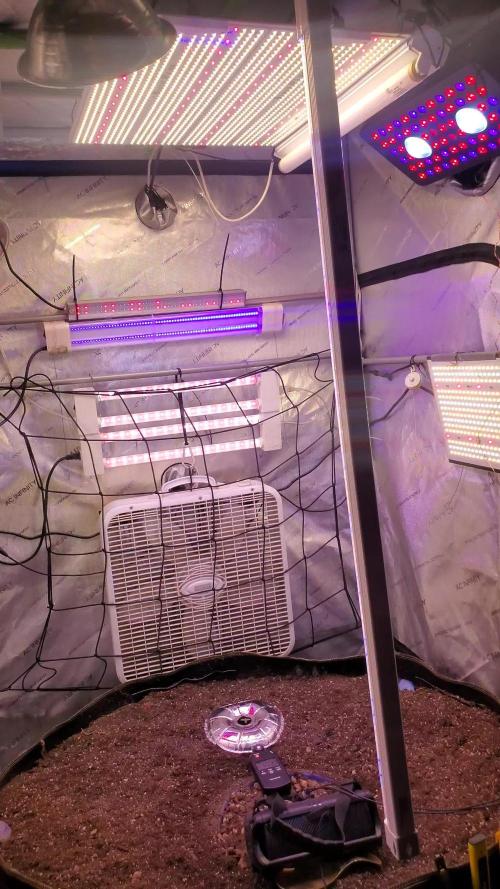
Defoliated and lollipopped quite a bit, also flipped the ladies this week! All the girls are looking very happy and I’m super excited to see some flowering action soon 🤩 also I’m glad I managed to fill up the tent completely, with an uncountable amount of budsites!

Likes
24
Share

@Ultraviolet
Follow
The cannabis strain Grape Guava can be a purple strain, depending on its specific phenotype and genetic makeup. While not all phenotypes of Grape Guava are purple, some variations, such as the Zatix Grape Guava, are noted for their striking purple appearance due to the genetic expression of anthocyanin pigments.
In a garden of green, Grape Guava gleams,
With its fruity aroma, enchanting dreams.
Clusters of grapes, guava's sweetness ignite,
A strain so divine, in purple and white.
Euphoria whispers, a lush fruity haze,
Grape Guava's embrace, a tranquil daze.
Off and away.@1400ppm. The increased CO2 allows plants to thrive at higher temperatures, which in turn necessitates higher humidity to maintain the ideal VPD for healthy growth and transpiration. 80F -5F = 75F LST with 70% RH = 0.72 kPa. Higher temperatures and humidity promote rapid growth, nutrient uptake, and photosynthesis while maintaining a lower stress level. Temperature influences the rate of enzymatic reactions involved in aerobic respiration. Enzymes, such as those involved in glycolysis, the Krebs cycle, and the electron transport chain, work most efficiently at an optimal temperature range. In low temperatures, enzymatic activity will slow down, thus reducing the rate of aerobic respiration. In high temperatures, enzymes can become denatured, thus impairing their function and stopping the process of aerobic respiration. Glucose is the primary fuel for aerobic respiration. The rate of aerobic respiration increases with the availability of glucose, as it is the starting point for glycolysis. If glucose levels are low, cells may rely on alternative energy sources such as fatty acids or amino acids , but these processes may yield less ATP or be less efficient. To determine this effect, carbon dioxide volume was measured (as carbon dioxide is an output of aerobic respiration)
A seed germinated via skotomorphogenesis (in the dark) will generally develop faster in its initial stages to reach light, though it will be etiolated (elongated and weak) and will switch to slower, more robust photomorphogenesis (light development) once it emerges into light. While skotomorphogenesis is a rapid, growth-oriented process for soil escape, it's a temporary phase; photomorphogenesis is a more sustainable development program that prepares the seedling for photosynthesis.
18/6 with the 6 being IR instead of darkness, keeping temps overnight a neat 77F-80F. PPFD overnight 1.8.
Think of my tent as a lung. What goes in must come out. When the rate of air going out exceeds the amount of air coming in, it creates a negative pressure. Tent concaves (bends in). If set up correctly, your RH will begin to drop slowly to the desired level you set, and the extraction turns off when it reaches 50% RH. The plant, as it performs cellular respiration, will always be releasing more water into the air, so the RH% of the tent overnight will always increase, so long as oxidative phosphorylation is occurring. As soon as the RH% creeps back up to 55%, the extraction turns back on, over and over, this creates a strong pressure differential which will work wonders on your grow. replicating high and low pressure fronts in nature, critical for oxygen diffusion, but more importantly, full control of your RH%.
Moisture will not transfer from a saturated atmosphere to another if that air is already at or above its saturation point, meaning the air can't hold any more water vapor. Once I understood that water is produced as a by product during cellular respiration, specifically at the very end of the electron transport chain (ETC) where electrons are finally transferred to molecular oxygen, the higher the RH of the air, the more resistance there is for more moisture to be added to that environment, and effects the ease with which it does so. But none of that water comes from the pot; it's pulled from the air. If you run high daytime RH, your medium/pot is 100% reliant on transpirational root pull to move water. ZERO evaporation happens across the atmosphere if the tent air has high RH%, the medium cannot release its water through evaporation. Once a canopy develops, light no longer slowly wicks and evaporates from the topsoil. The Soil-Plant-Atmosphere Continuum (SPAC) describes the continuous pathway and process of water movement, driven by a gradient in water potential, from the soil, through the plant's roots, stem, and leaves, and finally evaporating into the atmosphere through transpiration. There is evaporation, there is transpiration, then there is evapotranspiration; Evapotranspiration (ET) is the combined total of two processes: evaporation (water lost directly from soil and surface water into the atmosphere) and transpiration (water released from plants to the atmosphere through their leaves). Evapotranspiration represents the total amount of water that moves from the medium into the air. There is no such thing as a medium with too much water, only a medium that retains too much for too long.
The water must always flow efficiently from one atmosphere(Medium) to another(Air) in a timely manner. Moisture is a critical factor for bacterial growth and decay. Dictating how long it's allowed to sit in any one location for any given period is a key preferred control. To ensure a net reduction in a bacterial population, the rate of removal (ET) must exceed the rate of bacterial growth (decay rate), which is often modeled as a growth rate for the specific bacterium under the given conditions. By optimizing daytime VPD, we also optimize conditions for bacterial growth to explode exponentially above 77°F.. If water is allowed to sit in a medium without an escape within a timeframe, nothing good will happen. IF High RH is maintained overnight as well as during the day, placing 100% of water movement at the behest of daytime transpiration, roots can only pull where they can reach, and if soil is compressed above a certain point, moisture will become trapped in a medium with no way of moving day or night. This will begin the countdown for decay to take hold. When water stagnates in a medium, it loses oxygen, creating anaerobic conditions that foster the growth of harmful microorganisms like bacteria and fungi, which can produce toxins and disease vectors.
Thigmomorphogenesis, the process by which plants respond to mechanical stimuli like touch by altering their growth and development, resulting in significant morphological changes to improve survival against mechanical perturbations. This complex response involves sensing touch and initiating physiological and genetic responses, leading to changes in form and structure over days or weeks. The process is triggered by physical forces such as wind, rain, or touch. Plants adapt to these stimuli by changing their shape and structure, which may include slower growth, thickened stems, or altered leaf development. Plants possess sophisticated mechanisms to detect even subtle mechanical stimuli and initiate responses. A variety of molecules, including calcium ions, jasmonates, ethylene, and nitric oxide, are involved in signaling these mechanical inputs. Touch can induce the expression of genes that encode proteins for calcium sensing, cell wall modification, and defense mechanisms. A plant exposed to constant wind may become shorter and sturdier. A plant that is touched frequently might grow slower to conserve energy and develop thicker cell walls. These changes increase a plant's resilience and ability to survive in harsh environments.
Let's get Thiggy with it.
Processing
Likes
2
Share


@homegrow_pro
Follow
I am cutting two handful of leafs every third day by now. Trying to figure out where the plant sends the least amount of energy ... Major lollypopping will be after week 2 or 3 of flower.


Likes
15
Share


@Luckydope69
Follow
Nun geht immer mehr mit den Buds doch leider wirkt auch der Mangel immer noch stark auf sie ein. Ich versuche weiterhin die Versorgung mit Komposttee zu gewährleisten.
Likes
13
Share


@GrowerGaz
Follow
The autopots are flying now , you can see the Cuppa T has gone from the biggest to the smallest plant. In 10 days. I have been defoliating daily as the plants are growing so fast now. Will flip on Monday hopefully there should be a new flowering light arriving soon, a slight upgrade. I have also been giving the plants a weekly foliar feed with some of the KNF nutrients I have , FAA (Fish Amino Acid) WCAP ( Water Soluable Calcium Phosphate ) and LAB ( Lacto Bacillus )


Likes
30
Share


@BillMonroe
Follow
Just waiting.
The pineapple chunk is quite fat. The critical seems more hardy. It resisted the light burn and recovered slightly better.

