Likes
Comments
Share
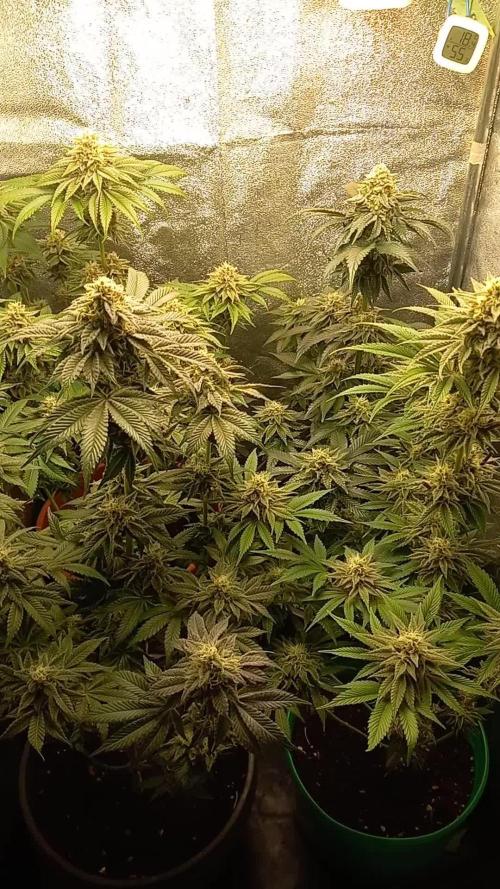
This week went great again. The flowers are chunking up more now, filling with trichomes. The smell is amazing🤤🤤🤤! Afghan kush early harvest is impressive with chunky buds already.Pink kush has the best smell and beautiful Color’s on her leaves. They all smell great. Orange bunz smell like oranges. Lots of trichomes everywhere! These LED lights seem to be doing a great job so far. Gaia green hasn’t disappointed me yet, always heathy happy plants. I defoliated a bunch a little bit over time to make sure I didn’t run into pm or other issues. 🔥💨💚✌️🏼
Likes
37
Share
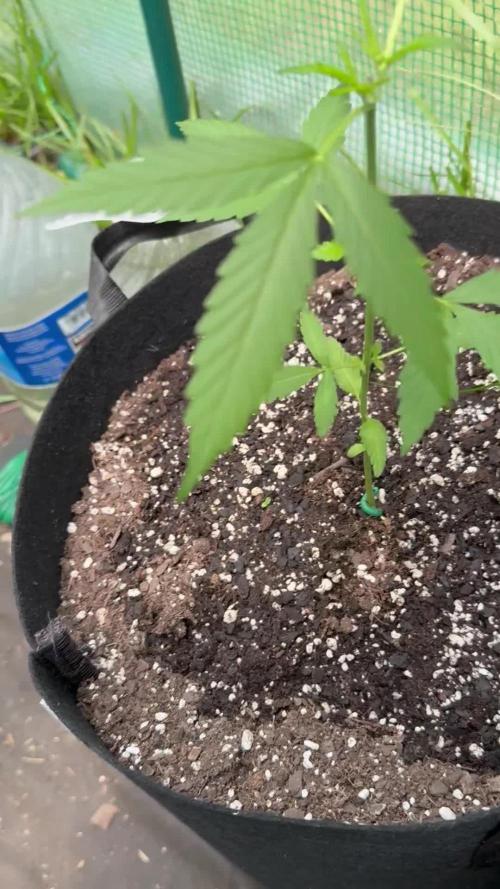
After germinating the seeds are transplanted into small pots with soil (see tutorial in VIDEO above). The soil is prepared with water mixed with a little bit of BIO NOVA Roots (0,5 ml/l), which aids the development of the seedling. Transplanting is very easy now, because they have grown a STRAIGHT tap-root while hanging during the SERIOUS' WAY of germination. This straight root allows for easy potting of the seeds. Simply make a little hole in the center of the soil with your pinky finger and carefully place the germinated seed with the white root pointing DOWNWARDS into the hole. Best is to lay it onto one side-wall of the hole with the seed shell right at the surface. Then I push the other side inwards and enclose the whole root with soil. At the end only the top of the seed-shell peeks out of the soil. IT IS VERY IMPORTANT to plant the seeds NOT TO DEEP into the soil. The seedling only needs extra strength to work itself upwards thru the soil and you run the risk of the soil drying out and the seed dying off. When you PLANT THE SEED VERY SHALLOW into the soil (=with the top of the seed-shell still peeking out) your seedling can grow out right away and you have a small plant already 24 hours after putting the seed into the soil. The small seedling sometimes still has the seed-shell on its 'head', it normally falls off by itself, but sometimes you have to carefully help and take it off with your finger nails. Be careful to NOT clip of the seedling accidentally when you do this! The seed-shall has an inner lining, which feeds the small seedling when it germinates. This inner lining sometimes gets tangled around the stem of the small seedling after the shell has fallen off. This little skin MUST be taken off the stem right away! Once it dries up, it gets hard and can strangulate the seedling around the stem. In order to avoid this, the skin must be taken off as soon as possible! I show it in the pics above and also made a video about taking off the inner lining of the seed.
Likes
6
Share
Week 4 Topped plus applied some LST training Seems like Pheno 1 has better structure and growing alot faster Pheno 2 started to slow slight fade on the lower leaves But lets push her through!
Likes
10
Share
Hello 👋 🤗 Ripening word-forming element meaning "beyond" (ultraviolet) or "extremely" (ultramodern), from Latin ultra- from ultra (adv. and prep.) "beyond, on the other side, on the farther side, past, over, across," from PIE *ol-tero-, suffixed form of root *al- "beyond." In common use from early 19c., it appears to have arisen from French political designations. As its own word, a noun meaning "extremist" of various stripes, it was first recorded in 1817, from French ultra, shortening of ultra-royaliste "extreme royalist." There’s no specific formula for boiling the roots. It’s just boiling the roots, nothing out of the ordinary. Here’s a simple step-by-step process to boil cannabis roots during harvest for utmost potency; Step 1: Detach the roots from the substrate without spoiling them. Some will break from the root ball but retain as many roots as possible. Note that the technique is only helpful when you leave the roots attached to the plants when you boil them. Step 2: Soak the roots into boiled water for about 45 seconds. The water should be hot, bubbling hot, if you may. Step 3. Hang dry the plants while still attached to the roots and let them dry until you can cure them From here we ensure consistency, 60F/60RH with strict measures to ensure little fluctuations. for the next 4-7 days. (edit: Took 9 days)
Likes
3
Share
@Lazuli
Follow
10 weeks is pretty fast for this size
Likes
8
Share
@Bari125
Follow
made a top kola today,during the week I will continue in LST.✌️
Likes
24
Share
@Dingle
Follow
No feed this week just continuing to flush. Seeing more and more amber trichomes starting to appear now so it’s lights out from tomorrow for 48 hours before harvesting to dry. The buds have bulked up nicely over the week and are smelling really tasty! All going well the next update will be the final harvest. 🙌 🍪🍧🍪
Likes
21
Share
10/05/22 watered. 10/09/22 mid-week found WPM on plant. Bathed in sodium bicarbonate. Also plant is now in bud cycle.
Likes
18
Share
Likes
5
Share
Here we grow! These are clones of Mandarin Cookies, rooted in peat plugs, under low light T5 Sunblaster 24w, inside a dome, keeping humidity levels high.
Likes
17
Share
Hello Diary, The fourth week of flowering is over and we are slowly heading towards the end. Last week I did defoliation, so now there is better air flow through the whole plant. Purple Punch looks great, some leaves take on a yellowish color which are the first signs that its end is near. The flowers themselves fill very nicely and become larger and larger and are full of trichomes. As you can see in the photos, Purple Punch has a nice shape, good leaf color, the scent is intense, it’s just all great and I’m looking forward to the harvest. Although there are two Purple Punch on the Farm, I didn’t do photos of both plants this time but I promise to show both in the end. In one watering I added Biobizz and that was the last addition of nutrients for her. From now on just flushing. Conditions in the growbox are good, the temperature varies around 25 degrees, while the humidity is around 40%. Now comes the stage when I start observing the development of trichomes through a microscope, it’s a special experience for me, like I’m looking at something from another planet. Here's a brief overview of the week: 11/03/2021 - Day 44. Watering. I didn’t add any nutrients, I just lowered p.H. water at 6.3. Temp / Humidity on the farm - 25.5 degrees and 36% humidity. 13/03/2021 - Day 46. Watering. p.H. I downgraded to 6.4 and added BioBizz as scheduled for the current week. This will be the last addition of nutrients. From now on only clean water. Temp / Humidity on the farm - 26 degrees and 39% humidity. 16/03/2021 - Day 49. Photographing for the end of the seventh week. That’s it for this week, see you soon with a new week. Greetings to everyone who looks at the diary.
Likes
14
Share
After I repotted the plants, they grew really well and healthily for 12 days. Now they are showing iron deficiency again... I already had the problem before repotting. The pH value of the earth has fallen again to 4.8 to 5.7. This time I used biodegradable braids to germinate. I believe that this is the reason for the PH fluctuations in the soil. Every time I water I measure the PH and adjust it to 6 - 6.5. Nevertheless, the PH value drops back to 4 to 5. I'm trying to correct the problem. I also work with neemoil because I can't get rid of the trips
Likes
12
Share
@Prof_Weed
Follow
So this is the last week before harvest, the trichomes are gettin milky and this time i will cut a little bit earlier. It is rainy and humid outside, it's good to finish now. Gave her Flash Clean for 3 days now, flushing. in 3 days the reservoir will be empty and the last 3 days she wont get any water . Set the PPFD to 600 to save the terpenes. After some start problems she turned out better, my first time in Autopots and pure coco. The top buds are Rock hard and smell like lemon. 6 days left.. Thanks to Terra Aquatica for the fertilizers and FastBuds for the seeds!
Likes
6
Share
@Averynate
Follow
As we mark the culmination of week 4, we stand on the brink of a significant transition for our plants. This period, characterized by attentive care and meticulous cultivation, has seen our plants flourish in their vegetative stage. They have developed robust root systems and lush green foliage, which are evidence of their vitality and resilience. But in the world of plant growth, time is always of the essence. It is imperative to recognize when to shift gears and usher in the next phase. With that realization, we are poised to send these plants into their flowering stage in just a few days. The preparations for this pivotal moment have been both detailed and extensive. Understanding the significance of this transition, we have preemptively amended the soil. Soil amendment is a cornerstone of ensuring that our plants have access to all the essential nutrients they require during the flowering stage. This period demands a different nutrient profile, with an emphasis on phosphorus and potassium, which are vital for bud development and overall flower health. Our amendments ensure that the plants won't be lacking in any crucial elements, thus setting the stage for optimal flower production. Beyond the soil, the atmosphere in which our plants reside is equally critical. It plays a central role in determining how efficiently the plants can carry out their metabolic processes, particularly photosynthesis. Therefore, we've made the necessary adjustments to create an environment primed for 'blastoff'. By meticulously controlling factors such as temperature, humidity, and light duration, we've fostered a setting that is conducive to the onset and thriving of the flowering stage. In essence, every decision made has been in pursuit of one objective: to offer these plants the best possible conditions to blossom into their full potential. As we look forward to the weeks ahead, we anticipate a rewarding flowering phase, a testament to our diligence and the intrinsic vigor of the plants themselves.
Likes
55
Share
What's in the soil? What's not in the soil would be an easier question to answer. 16-18 DLI @ the minute. +++ as she grows. Probably not recommended, but to get to where it needs to be, I need to start now. Vegetative @1400ppm 0.8–1.2 kPa 80–86°F (26.7–30°C) 65–75%, LST Day 10, Fim'd Day 11 CEC (Cation Exchange Capacity): This is a measure of a soil's ability to hold and exchange positively charged nutrients, like calcium, magnesium, and potassium. Soils with high CEC (more clay and organic matter) have more negative charges that attract and hold these essential nutrients, preventing them from leaching away. Biochar is highly efficient at increasing cation exchange capacity (CEC) compared to many other amendments. Biochar's high CEC potential stems from its negatively charged functional groups, and studies show it can increase CEC by over 90%. Amendments like compost also increase CEC but are often more prone to rapid biodegradation, which can make biochar's effect more long-lasting. biochar acts as a long-lasting Cation Exchange Capacity (CEC) enhancer because its porous, carbon-rich structure provides sites for nutrients to bind to, effectively improving nutrient retention in soil without relying on the short-term benefits of fresh organic matter like compost or manure. Biochar's stability means these benefits last much longer than those from traditional organic amendments, making it a sustainable way to improve soil fertility, water retention, and structure over time. Needs to be charged first, similar to Coco, or it will immobilize cations, but at a much higher ratio. a high cation exchange capacity (CEC) results in a high buffer protection, meaning the soil can better resist changes in pH and nutrient availability. This is because a high CEC soil has more negatively charged sites to hold onto essential positively charged nutrients, like calcium and magnesium, and to buffer against acid ions, such as hydrogen. EC (Electrical Conductivity): This measures the amount of soluble salts in the soil. High EC levels indicate a high concentration of dissolved salts and can be a sign of potential salinity issues that can harm plants. The stored cations associated with a medium's cation exchange capacity (CEC) do not directly contribute to a real-time electrical conductivity (EC) reading. A real-time EC measurement reflects only the concentration of free, dissolved salt ions in the water solution within the medium. 98% of a plants nutrients comes directly from the water solution. 2% come directly from soil particles. CEC is a mediums storage capacity for cations. These stored cations do not contribute to a mediums EC directly. Electrical Conductivity (EC) does not measure salt ions adsorbed (stored) onto a Cation Exchange Capacity (CEC) site, as EC measures the conductivity of ions in solution within a soil or water sample, not those held on soil particles. A medium releases stored cations to water by ion exchange, where a new, more desirable ion from the water solution temporarily displaces the stored cation from the medium's surface, a process also seen in plants absorbing nutrients via mass flow. For example, in water softeners, sodium ions are released from resin beads to bond with the medium's surface, displacing calcium and magnesium ions which then enter the water. This same principle applies when plants take up nutrients from the soil solution: the cations are released from the soil particles into the water in response to a concentration equilibrium, and then moved to the root surface via mass flow. An example of ion exchange within the context of Cation Exchange Capacity (CEC) is a soil particle with a negative charge attracting and holding positively charged nutrient ions, like potassium (K+) or calcium (Ca2+), and then exchanging them for other positive ions present in the soil solution. For instance, a negatively charged clay particle in soil can hold a K+ ion and later release it to a plant's roots when a different cation, such as calcium (Ca2+), is abundant and replaces the potassium. This process of holding and swapping positively charged ions is fundamental to soil fertility, as it provides plants with essential nutrients. Negative charges on soil particles: Soil particles, particularly clay and organic matter, have negatively charged surfaces due to their chemical structure. Attraction of cations: These negative charges attract and hold positively charged ions, or cations, such as: Potassium (K+) Calcium (Ca2+) Magnesium (Mg2+) Sodium (Na+) Ammonium (NH4+) Plant roots excrete hydrogen ions (H+) through the action of proton pumps embedded in the root cell membranes, which use ATP (energy) to actively transport H+ ions from inside the root cell into the surrounding soil. This process lowers the pH of the soil, which helps to make certain mineral nutrients, such as iron, more available for uptake by the plant. Mechanism of H+ Excretion Proton Pumps: Root cells contain specialized proteins called proton pumps (H+-ATPases) in their cell membranes. Active Transport: These proton pumps use energy from ATP to actively move H+ ions from the cytoplasm of the root cell into the soil, against their concentration gradient. Role in pH Regulation: This active excretion of H+ is a major way plants regulate their internal cytoplasmic pH. Nutrient Availability: The resulting decrease in soil pH makes certain essential mineral nutrients, like iron, more soluble and available for the root cells to absorb. Ion Exchange: The H+ ions also displace positively charged mineral cations from the soil particles, making them available for uptake. Iron Uptake: In response to iron deficiency stress, plants enhance H+ excretion and reductant release to lower the pH and convert Fe3+ to the more available form Fe2+. The altered pH can influence the activity and composition of beneficial microbes in the soil. The H+ gradient created by the proton pumps can also be used for other vital cell functions, such as ATP synthesis and the transport of other solutes. The hydrogen ions (H+) excreted during photosynthesis come from the splitting of water molecules. This splitting, called photolysis, occurs in Photosystem II to replace the electrons used in the light-dependent reactions. The released hydrogen ions are then pumped into the thylakoid lumen, creating a proton gradient that drives ATP synthesis. Plants release hydrogen ions (H+) from their roots into the soil, a process that occurs in conjunction with nutrient uptake and photosynthesis. These H+ ions compete with mineral cations for the negatively charged sites on soil particles, a phenomenon known as cation exchange. By displacing beneficial mineral cations, the excreted H+ ions make these nutrients available for the plant to absorb, which can also lower the soil pH and indirectly affect its Cation Exchange Capacity (CEC) by altering the pool of exchangeable cations in the soil solution. Plants use proton (H+) exudation, driven by the H+-ATPase enzyme, to release H+ ions into the soil, creating a more acidic rhizosphere, which enhances nutrient availability and influences nutrient cycling processes. This acidification mobilizes insoluble nutrients like iron (Fe) by breaking them down, while also facilitating the activity of beneficial microbes involved in the nutrient cycle. Therefore, H+ exudation is a critical plant strategy for nutrient acquisition and management, allowing plants to improve their access to essential elements from the soil. A lack of water splitting during photosynthesis can affect iron uptake because the resulting energy imbalance disrupts the plant's ability to produce ATP and NADPH, which are crucial for overall photosynthetic energy conversion and can trigger a deficiency in iron homeostasis pathways. While photosynthesis uses hydrogen ions produced from water splitting for the Calvin cycle, not to create a hydrogen gas deficiency, the overall process is sensitive to nutrient availability, and iron is essential for chloroplast function. In photosynthesis, water is split to provide electrons to replace those lost in Photosystem II, which is triggered by light absorption. These electrons then travel along a transport chain to generate ATP (energy currency) and NADPH (reducing power). Carbon Fixation: The generated ATP and NADPH are then used to convert carbon dioxide into carbohydrates in the Calvin cycle. Impaired water splitting (via water in or out) breaks the chain reaction of photosynthesis. This leads to an imbalance in ATP and NADPH levels, which disrupts the Calvin cycle and overall energy production in the plant. Plants require a sufficient supply of essential mineral elements like iron for photosynthesis. Iron is vital for chlorophyll formation and plays a crucial role in electron transport within the chloroplasts. The complex relationship between nutrient status and photosynthesis is evident when iron deficiency can be reverted by depleting other micronutrients like manganese. This highlights how nutrient homeostasis influences photosynthetic function. A lack of adequate energy and reducing power from photosynthesis, which is directly linked to water splitting, can trigger complex adaptive responses in the plant's iron uptake and distribution systems. Plants possess receptors called transceptors that can directly detect specific nutrient concentrations in the soil or within the plant's tissues. These receptors trigger signaling pathways, sometimes involving calcium influx or changes in protein complex activity, that then influence nutrient uptake by the roots. Plants use this information to make long-term adjustments, such as Increasing root biomass to explore more soil for nutrients. Modifying metabolic pathways to make better use of available resources. Adjusting the rate of nutrient transport into the roots. That's why I keep a high EC. Abundance resonates Abundance.
Likes
10
Share
@Prop207
Follow
Will up date later
Likes
5
Share
@Faegrows
Follow
She seems to be coming along well. Fed her cal mag once this week 2 ml per liter. The other feeding she only received bloom and grow. Top leaves are discolouring but I'm unsure why.
Likes
82
Share
Buds stacking up! I love these plants!!!! So far this is the closest to a perfect grow I've gotten! ________________________________________________ I tried to stretch out watering and I think the plants suffered a bit for it. But lesson learned and not to much stress. I've decided I have 2 different phenoms, they have quite different bud structure and the tight small buds seem alot less purple. Not disappointed, just interesting to see their difference. By the small bud I wonder if it has more ruderalis in it or something. ________________________________________________ Gonna do Dry Kool bloom then ripen then done? Hopefully!
Likes
3
Share
@arzaq
Follow
We introduced LST this week to get more parts of the plant to get more sunlight. We also started using a fertilizer (NPK 9-3-6) using 3ml/l.