


Likes
Comments
Share


@Rinna
Follow
Did a strip/defoliation on all of them. She's catching up with the rest nicely and looking great. Will be feeding them all Terra Bloom from now on, still no mildew or bugs thanks to spraying cannacure weekly. Also, the subtle colors I spotted (hard to get a clear pic) are developing nicely, but some leaves are turning, twisting and curling, my first guess is that I've overwatered her, she's quite a bit smaller (more 'skinny', and flowering slower) but I've been watering here the same as the other two, might need to let her dry up a bit longer than the others.

Likes
4
Share


@Exoticfarm99
Follow
Hacemos poda de hojas satélites, y regamos las que están más secas con agua ph 7.0, lo hacemos con ese pH porque la carga nutricional de mi suelo es baja y no quiero que lleguen con carencias a floracion


Likes
27
Share


@RDWCGrowing
Follow
3/25/2023
Week 6- Day 1 of Veg (Day 52 overall)
Added my first between changes SILICA Top offs. Was worried that when you add it to pre mixed Nutes that it can make the whole thing turn into a gummy looking substance. I was ready to drain the system and start it over for the week if needed, but no issues adding it to the tank. the Silica going into the Res didn't gummy the system up, it did drop my PH by quit a bit causing me to have to bring it back in balance.
36 Gallons in the Tank
Silica
Add .5mil/Gal = 18Mil
I topped some that needed to be topped, I defoliated some that needs to be defoliated. Since I have moved into Week 6 I have increased the light intensity up to just over 500 maxing it out for Veg Cycle. Next increase will be Week 1 of Flower.
3/26/2023
Week 6- Day 2 of Veg (Day 53 overall)
All conditions looked great. Other than me not putting one of the humidifiers back right which means it didn't work last night so Humidity was lower than I like. But got the Humidifier back on it's stand correctly and it is now pumping away. With that I decided to give the plants a day off from any stresses, no topping, no FIMing, no Defoliation for today. Just some good old soaking up the light rays and the ability to get all the Nutes they would like..
3/27/2023
Week 6- Day 3 of Veg (Day 54 overall)
Looking kind of Bushy today, so I defoliated some, and topped some.
3/28/2023
Week 6- Day 4 of Veg (Day 55 overall)
PH was a little lower than I like 5.74 so I added a few Mil of PH UP and brought it back up to 5.94.
Not much else at this stage, just I topped a little and I defoliated a little.
3/29/2023
Week 6- Day 5 of Veg (Day 56 overall)
Topped a little, Defoliated a little Watched them grow!!
3/30/2023
Week 6- Day 6 of Veg (Day 57 Overall)
Main action today was breaking down my old tent and setting up a new tent and getting my second RDWC system setup and ready for clones. I Topped a little, I Defoliated some and started taking a good look at what I would like to take for clones in the coming days. I have a few bottom branches that look every promising for my clone material on each.
3/31/2023
Week 6- Day 7 of Veg (Day 58 overall)
#3 is at 16" Tall
#2 is at 13" Tall

Likes
7
Share


@RivenWaters
Follow
Girls are still growing great! I went away for the weekend and they were not watered for 48 hours and they dried out a little to much. One plant got curled leafs and brown spots. I’ve noticed a very small amount of PM hiding in some undergrowth. I just removed the effected leaves, I think it might be from where I water the back plants. Some water drips onto those areas

Likes
28
Share

@wolfvb
Follow
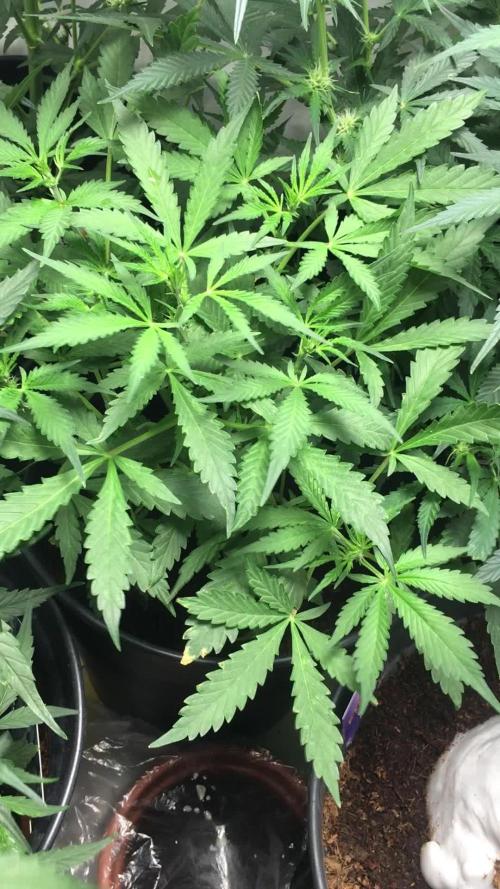
Week 5: babe this cake been baking for 30 days!
Loving this girl so far looking strong and healthy.
Will we have a new star ?


Likes
13
Share


@Aircoholic
Follow
Girl Scout Cookies Auto was suddenly ready to get chopped - I would've like to see a few more amber trichomes, but the fan leaves started yellowing faster, and more sugar leaves got crispy tips. Also, the smell got pretty strong over the last week or so. It was a very nice grow, and I'm curious on the yield and effect after drying and curing.
Yuhbar Auto still needs a little more time, and will enjoy a few more days or weeks under the (artificial) sun, giving the trichomes more time to ripen.


Processing
Likes
22
Share


@Chucklebrother1
Follow
3 of the same strain 2 are going into flush and the big one is getting another week of overdrive as she seems to be responding well to it I started her off on it much later than the other 2 probably be another 2 weeks before she comes down.

Likes
6
Share


@rvabudman
Follow
The buds are forming! Changed to a nicer light recently, light is great, although my mars hydro 600w did me justice. This new one I got of amazon for under $100 is 1000 watt led and crushing it. It has increased temps significantly which is a bit tough for me to control given my tent is in a closet. Also it is starting to getting less humid outside, so I reduced airflow in the tent to keep the humidity at 50. I have a small humidifier coming soon (oddly a Corporate work gift lol).

Likes
4
Share


@TheGreenGroomer
Follow
🌱 Grow Diary Update 🌸
What’s up! It’s Week 7, Day 1 of flower, and the girls are keeping me on my toes. 🌿
After getting the PPMs back in range last time, they’ve crept up again, so it’s flush time once more. 💧 I think letting the coco dry out too much between waterings might’ve been the culprit. Lesson learned—keeping a closer eye on that from now on!
Besides that little hiccup, everything’s looking good. These buds are getting juicier and stinkier by the day, and there’s no serious nutrient burn, so we’re still in the clear. 🙌
Wish me luck as I ride out these last couple of weeks—hoping to finish strong! 🍀
Catch you in the next update! 💚


Likes
43
Share


@Hashy
Follow
********************************************
Week 11 mid flower (flower week 5)
********************************************
Light cycle=12/12
Light Power=150w 63%
Extractor controller settings
High temp= Day 26c, Night 20c
Low temp= c
Temp step=0c
High Rh= Day 50%, Night 55%
Low Rh= %
Rh step=0%
Speed max=10
Speed min=2
Smart controller settings (during lights on).
Lights on=9.00am
Top fan on=+22.5c
Top fan off=-22.0c
Dehumidifier on=+50% and -26c
Dehumidifier off=-50% or +26c
Smart controller settings (during lights off).
Lights off=9.00pm
Dehumidifier on=+55% and -20c
Dehumidifier off=-55% or +20c
VPD aim=0.6-1.6
DLI aim=30-45
EC aim=0.2-2.0
PH aim=6.0-6.5
NPK(10.45/9.9/28)
💧💧💧💧💧💧💧💧💧💧💧💧💧💧💧💧
Method= Autofeed 6 drippers.
Feed=Flower Nutes.
Neutralise=0.1ml/L
Bloom=3.0ml/L
Silicon=1.0ml/L
Calmag=0.25ml/L
Pk=0.5ml/L
Boost=2.0ml/L
Volume=12L
Easy Ph down= 0.166ml/L
Ec=1.6 PH=6.4/6.5
Runs=14
Run times=5min (275ml each)
Gap times=15min
Total runtime=70mins (3.85L each)
Total flowrate= 110ml/min (55ml/min each)
Auto start time=10.00am
Auto stop time=2.25pm
💧💧💧💧💧💧💧💧💧💧💧💧💧💧💧💧
********************************************
********************************************
📅28/7/24 Sunday (day 71, day 29 flower)
📋 Hot day.
💧
Method= automatic
Feed=Nutes flower
Volume=12L
Ec=1.6 PH=6.4/6.5
Volume left=L
Volume used=L (125ml/min)
Volume each=L (62.5ml/min)
Runoff.
Total runoff=0L
Ec= PH=/
Feed=manually @2.55pm
5 mins
Feed=manually @3.50pm
5 mins
Volume left=2.5L
Volume used=9.5L (125ml/min)
Volume each=4.75L (62.5ml/min)
Runoff.
Extra runoff=0.3L
Ec=3.2 PH=/6.4
💧
📅29/7/24 Monday (day 72, day 30 flower)
📋 Hot day.
Defoliation
📅30/7/24 Tuesday (day 73, day 31 flower)
📋 Hottest day of the year again
📅31/7/24 Wednesday (day 74, day 32 flower)
📋 Hottest day of the year again
She's got a bit to much nitrogen in her.
💧
Method= automatic
Feed=water
Volume=13L
Ec=0.2 PH=6.3/6.3 (PH D=0.02ml/L) 7d
Volume left=L
Volume used=L (105ml/min)
Volume each=L (52.5ml/min)
Runoff.
Total runoff=0L
Ec=PH=/
Water=manually @3.55pm
5 mins
Water=manually @5.00pm
5 mins
Water=manually @5.30pm
5 mins
Water=manually @6.35pm
5 mins
Water=manually @7.20pm
5 mins
Volume left=2.5L
Volume used=10.5L (105ml/min)
Volume each=5.25L (52.5ml/min)
Runoff.
Extra runoff=0.5L
Ec=3.2 PH=/6.4
💧
📅1/8/24 Thursday (day 75, day 33 flower)
📋 mega hot again.
📅2/8/24 Friday (day 76, day 34 flower)
📋 Hot day
📅3/8/24 Saturday (day 77, day 35 flower)
📋 H=99cm D=16cm Dli=64.9 Ppfd=1489
Slight defoliation.
💧
Method= automatic
Feed=water
Volume=13L
Ec=0.2 PH=6.2/6.3 (PH D=0.025ml/L) 8d
Volume left=5L
Volume used=8L (110ml/min)
Volume each=4L (55.ml/min)
Runoff.
Total runoff=0L
Ec=PH=/
Water=manually @4.10pm
5 mins
Water=manually @4.40pm
5 mins
Water=manually @6.15pm
5 mins
Water=manually @6.35pm
5 mins
Water=manually @7.05pm
5 mins
Volume left=2.5L
Volume used=10.5L (110ml/min)
Volume each=5.25L (55ml/min)
Runoff.
Extra runoff=0.7L
Ec=4.1 PH=/6.2
💧
********************************************
Weekly roundup.
📋 Been a tough week conditions wise. Had consecutive hottest days of the year, so I had a battle keeping temps below 30c in the lung room.
She's looking good but a bit over fed on nitrogen, I still have faith this one is going to produce a decent amount of solid nugs.
Take it easy.
Back soon.
********************************************
Likes
Comments
Share
@JamesRenato
Follow
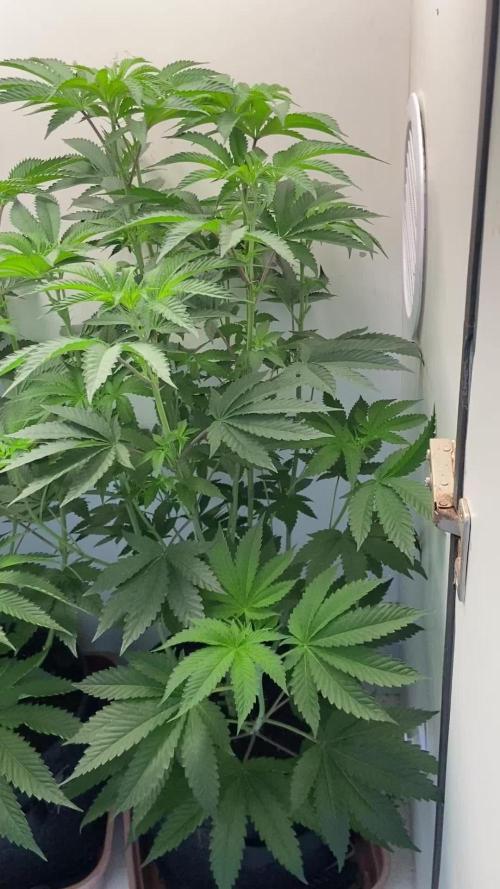
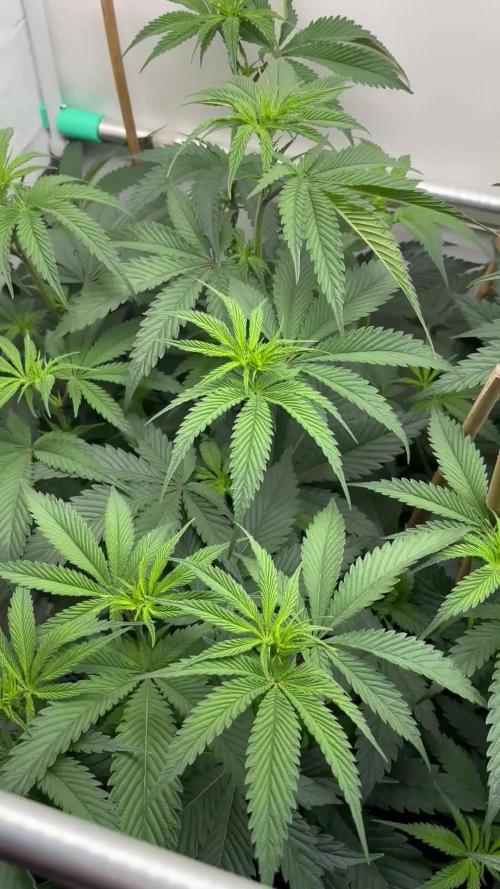
Agora sim o período de luz está em 12/12. Liguei o adicional de luz que alcança mais no espectro, o tom de vermelho, comecei entrar com ácido húmico, e uma proporção de NPK para suprir as necessidades da floração (BioBloom e TopMax). Com a mudança da luz, previsivelmente a planta começou a crescer bastante em altura, porém ainda não apresentou sinais de pré flora, o que é normal. Com certeza na próxima atualização veremos alguns pistilos.




Likes
20
Share

@TrickzGrowz
Follow
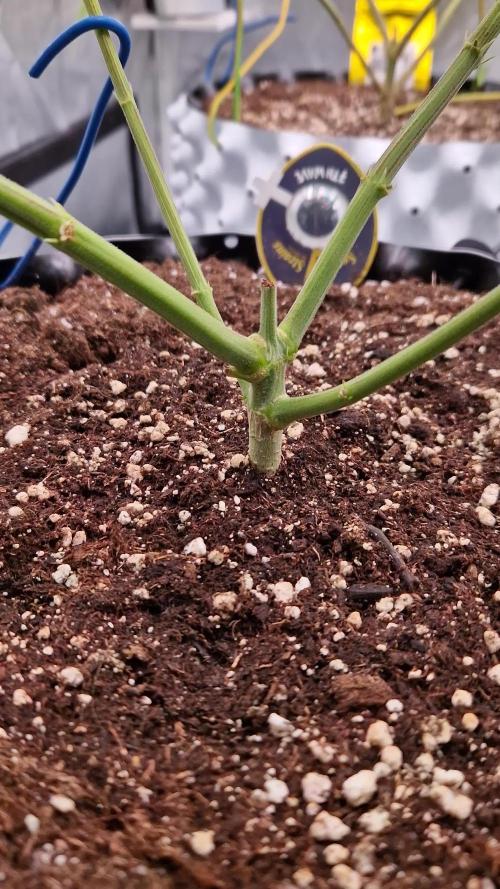
Mega heftig was sie für ein Wachstum hinlegt. Sie holt einfach super auf. Ist schon genauso groß wie die anderen Ladys.
Spraymix alle 2 Tage.

Likes
25
Share


@HippyHemulen
Follow
She is still alive and very little bit growing in last few days, still making roots anyway so didnt wait any grow with this weather. Week was pretty cold night temps mostly 2-4 and day temps 11-14. Dont want to take it inside i just want to see how they react at outside.
Likes
9
Share

@Chef_LA
Follow
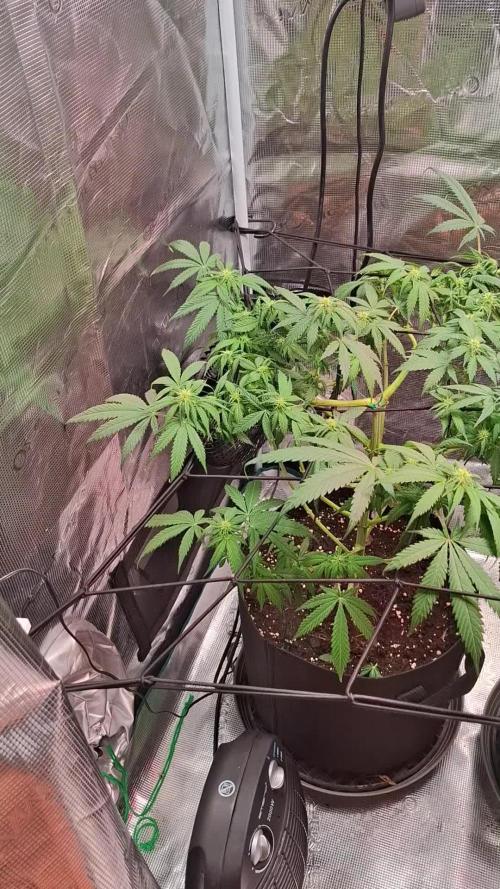
Langsam entwickeln sich schöne Blüten. Zwei bis drei mal in der Woche muss ich leicht entlauben. Die Blätter sprießen nur so. Ich hoffe das überträgt sich auch auf die Blüten. Habe jetzt zusätzlich zwei LED Rotlichtlampen (60cm) von Spiderfarmer ins Zelt gehängt. Mal schauen ob sich das auf die Blüten auswirkt. Zusätzlich zum normalen Düngeschema wurde ein mal mit Brennnesseljauche gedüngt, 100ml pro Liter für die vier Ladys. Erziele damit immer gute Ergebnisse im normalen Gemüsegarten.
Ja und das wichtigste, mit schöner Musik, guter Laune und genügend Zeit "gärtnern!!!

Likes
22
Share


@julian100614
Follow
El ciclo fué perfectamente desde el principio. Bien es cierto que puse dos plantas y una fué la que tiró realmente bien. Se realizó una poda apical que respondió perfectamente creando dos grandes puntas y con un pequeño LST conseguimos ajustar el resto de ramas a la misma altura para que crecieran uniformemente y la luz les diera de igual manera a todas las puntas.
En general me ha gustado mucho cultivar la AK48 DE WEEDSEEDSEXPRESS en primer lugar por la novedad, en segundo por la facilidad de cultivo y por ultimo por los resultados tan maravillosos de esta genetica 👌👏
Repetiré sin duda 😊💪
BUENOS HUMOS 🔥

Likes
4
Share


@cheetah844
Follow
He's been through a beating - torrential rain & hot weather. He's strong!

Likes
11
Share


@w00tGrow
Follow
Although it looked bigger, it gave smaller yeld, buds are not as heavy as Californian Snow. Tastes great tho. Great plant for starters.