


Likes
Comments
Share


Likes
Comments
Share

@FarithAriasFajardo
Follow
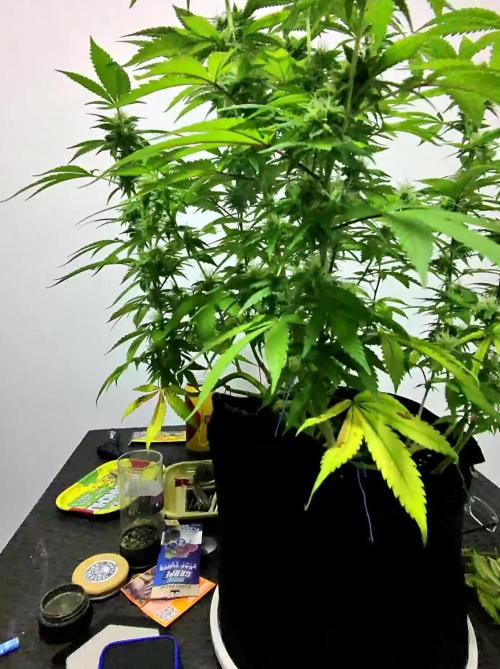
Al igual que con happy lora, esta pinneaple también se adelantó para ustedes, ya que las últimas semanas estuve ocupado


Likes
16
Share


@Magic_frequency
Follow
Sorry guys as i have not weigh my buds much because ive been smoking them little by little 😂😂👌 so on my first harvest i had 12Gs. And on this one i think about 15-20gs well i need to weigh them when they are dry. Posting now cause i might be busy. Hopefully next grow i will have more time organizing my journals ❤️

Likes
33
Share


@BudXs
Follow
Just starting to see the autos flower today, so the stretch is on. All topped and lst except for 2.
Photo veg is on, waiting on some clones to root. Room will be filled with 3 top cultivars:
1) Pink Sugar Breath by Visions (GD growmies, top cross, check him)
2) cactus breath by Barrie Grower. Amazing cut
3) Slurricane by Inhouse. If you know you know
Special appearance in a scrog net made by Peanut Butter OGKB gifted to me by Original Sensible Seeds. These are one of the very few breeders here on GD that I will sprout. Amazing every time
Hope everyone has a good week, except you bots. Bots go fuck yourself

Likes
8
Share


@SoakingThePot
Follow
Week one of germinations going well unfortunately our strawberry banana we did have to re germinate and start over again but we have already re planted and is ready to go hopefully we she pops up because I’m definitely most excited about her. But the banana purple punch and the gorilla cookies are looking fantastic going into week one!
Processing
Likes
38
Share


Likes
72
Share

@BodyByVio
Follow
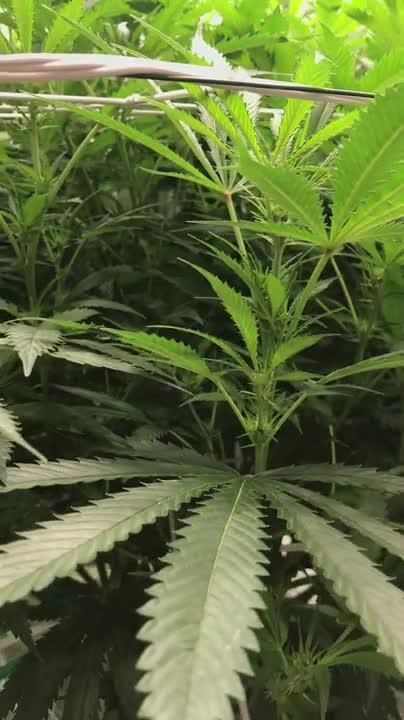
Day 9 I had no choice but to defoliate, the canopy was getting way to dense and humidity was hard to control even with my 30 pin dehumidifier. Hopefully will not affect to much. Probably I will do another defoliation on day 21.
TDS stays at 550PPM this week and CO2 at 1200PPM.

Likes
22
Share


@BlumenBot
Follow
2/13 - a little bit of LST to bring the branches to the edges of the pot and down a bit, then letting the 8 shoots grow long enough to spread out evenly along the edge of the pot. Also got a plain watering.
2/18 - she got her feeding and almost ready for the final training before letting her grow height

Likes
4
Share


@Chubbs
Follow
What up fam, weekly update one these lovely girls. They're doing ok, especially for only getting calmag and Ph'd well water up to this point. I'll introduce Bloom nutes this coming week as it looks like this will be the last week of Veg. Next the preflower stretch begins. All in all Happy Growing.
Likes
24
Share


@Alpengrower
Follow
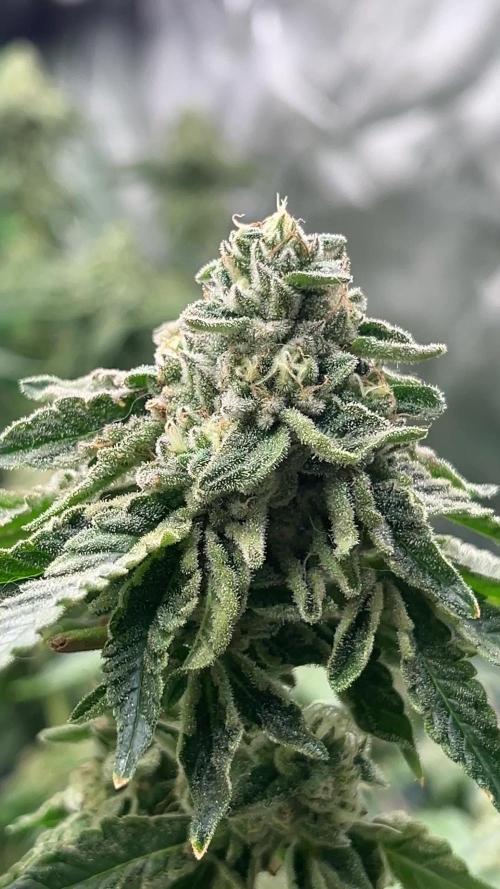
Thanks to marshydro for giving me the oportunity to test your lights and also thanks Sweetseeds for providing me one of the best genetics! so exited about this diary too, this is a 20 liter pot filled with %75 soil, %20 rich compost and %5 mulch



Likes
148
Share


@BioBuds
Follow
Merry Christmas everyone from Sunshine and me! Thank you for following another update and I hope you and yours are enjoying yourselves!
She is still filling out her bud sites and the buds have grown considerably so in my case she seems more of a late-bloomer, she is covered in trichomes and smells like exotic fruit.
Removed some more leaves, she had some more humid areas that could go moldy.
Started only giving plain water since a couple of days. The previous time with the final shot of perma tea.
She is clearly ending her run and my guess is that the soil still has high nute level, coming days will start flushing with more water
I don't know if I can give her days of darkness since shell probably go first. I will try, but no clue how yet.
Thank you all and have a good one!
Hug Bud and Sunshine

Likes
39
Share


@Wachsemilian
Follow
hi guys,
This strain is fast becoming a fat lady😃💪
I love the smell, it reminds me of lemon and orange now with that touch of "fizz" if you know what i mean👍 .... it forgives mistakes (I gave her a little too much .. so she got burned a bit ...😐 she does not like much fertilizer .... very surprising .... noticed for the next time👆 ... but otherwise everything looks pretty good .. let's see how long she still grows, since she already looks premature .... because of this year's heat wave, all my plants have had problems in the root zone. these problems are now unfolding their effect .. the root zone has taken so much damage that the roots can no longer properly feed the plant, resulting in finishing wayyyy too fast ... shit happens
The resin production is of the hook and she is producing more and more😍
The grow:
ph 5.8
Ec.0.9 i will lower it to 0.8 and inrease N a bit at the same time
RHD:45% very good for this stage..
have a nice one people till next week


Likes
4
Share


@SKUDUDUBAW
Follow
Added sticky paper to prevent pest.
Root juice + pure zym
Fed with nutrients 1/3
Processing
Likes
7
Share


@Mrg7667
Follow
Casually working up to week two nutrients which are shown. Babies look like they handled the flip very very well considering their long strenuous lives and the extra stress they got with the shwazzing!
You can see they have put on easily 1.5-2inches in some areas. I could use some more light probably going to try and get another before the end of flower.
Adjusted canopy and moved some plants around for more even coverage but also easier watering and clean up for stagnant water! That will be the last time I adjust before I let them just do their thing and stretch! Also been foliar feeding fish mix every three days at .5 ml/l

Likes
2
Share

@BasedBuds_89
Follow
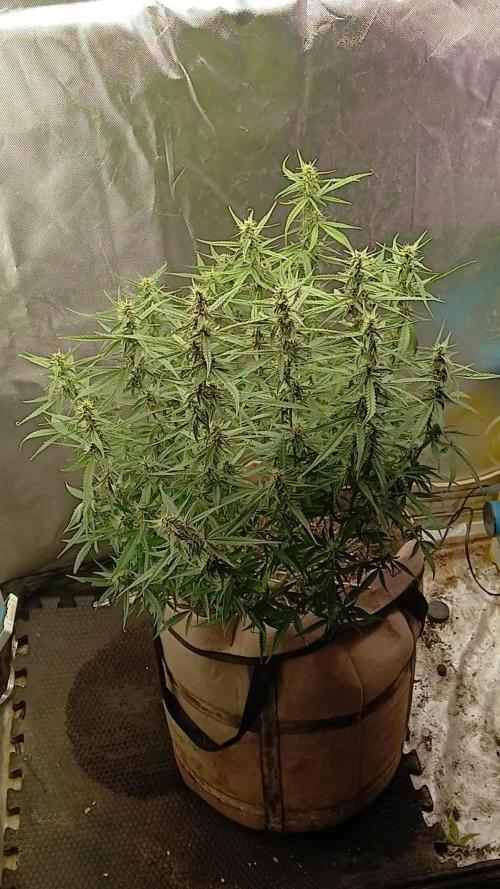
This baby is looking so 🔥 right now. Nug sites are stacking up, guaranteed to produce a lot of bud.

Likes
25
Share


@stephandjo
Follow
End of the fourth week of flowering.
The stretch being finished and the buds starting to grow, I added a little PK 13/14 to the soup Shark.
They are the most advancing in flowering.
The buds start to form well, the plant although rather small develop buds that promise to be very interresting.


Likes
5
Share


@AustinRon
Follow
TH 1Q2025 - Week 7 - Flower 4
(ON Haze X Original Haze) X Northern Lights #2
“Todd’s Haze”
Objective
- 8 Female Plants, Topped ONCE @ Flip, 12” when topped
- Modified Sea of Green
Seeds Wet: 1139PM, 28.2.2025
Germinated: 2.3.2025
Flip: 21.3.2025
Harvest: 77 Days, DATE: 6.6.2025
_________________________________________
Initiate Auto-Fertigation
LightDistance: [ 19.5, in] # We’re in STRETCH, ~1.5”/day!
11” Top Canopy
- [ ] TM-7: [ 0.125, g] # Prep
- [ ] Fertigation: [12, 12, 6] # [Primer A, Primer B, Silica Skin], Dilute to EC
- [ ] Photosynthesis Plus: [ 6, ml]
__
Fri Apr 18, 2025
TH 1Q25 29:F:4:1
__
Sat Apr 19, 2025
TH 1Q25 30:F:4:2
2000 Watering w/ PCAL 1660
Fertigation: [ 1, gal]
RLA: [ 8.5, 4.2, 3.4]
PCAL 1660: [ 2.5, ml] # Micronized Powder
__
Sun Apr 20, 2025
TH 1Q25 31:F:4:3
Light Distance[TOP]: [ 11, in] # Still Stretching
LightIntensity[TOP]: [ 925, µ], [ 40, mol/day]
LightIntensity[Main]: [ 801, µ], [ 34.6, mol/day]
We’ll Raise EC by 0.1 mS/cm/day till we’re comfortably ~ 2.4 (IFF They’re happy) …
Would like to see overall GREEN both darkening & evening out . . .
Defoliation
- [x] Remove Fan Leaves below Node 7 # Preparation for Understory Lighting
- [x] Remove Branches with TOPS bottom 25% of canopy
Auto-Fertigation Today
- [x] CLEAN Chiller
- [x] Vinegar
- [x] H202
- [x] High Throughput (Blast the interior AFTER Vinegar & H202)
Initial Reservoir Fill: EC: [ 2.0, mS/cm]
- [x] 4 Gallons (Dehu, RO, or Distilled)
- [x] Primer A & B: [ 54, ml]
- [x] Silica Skin GEN 3: [ 27, ml]
- [x] Photosynthesis Plus: [ 24, ml]
While configuring - Ran 2 Gallons of Feed Before UNPLUGGING. ;-}
__
Mon Apr 21, 2025
TH 1Q25 32:F:4:4
- [x] Light Distance[TOP]: [ 9, in] # Still Stretching 1.5 - 2”/Day
Reservoir Fill: EC: [ 2.1, mS/cm]
- [x] 4 Gallons (Dehu, RO, or Distilled)
- [x] Primer A & B: [ 54, ml]
- [x] Silica Skin GEN 3: [ 27, ml]
- [x] Photosynthesis Plus: [ 24, ml]
- [x] SLF-100: [ 20, ml]
We’ll take EC to 2.4 mS/cm (Relatively Heavy) IFF They’re all happy with the ‘upgrade’. ;-}
Picked up 8 gallons of Distilled from HEB. Used for to refresh tank after last nights flush.
Going for NO MORE than 2 Gal/Day.
We’ll feed MORE than necessary to get DOWN TO Optimal delivery.
Irrigation Timer is set to Every 3 Hours, 1 min flow, four times a light period.
__
Tue Apr 22, 2025
TH 1Q25 33:F:4:5
Observation
Vibrant, Uplifted, Rockin’ - 1250 runoff, Grew TWO MORE INCHES, Light Distance 6”
1900: Measure Runoff
- Amount: [ 1250 , ml]
- EC: [ 2.1, mS/cm]
- [x] Harvest Dehu
- [x] Refresh Reservoir - 2 Gallons
- [x] EC: 2.1
- [x] Primer A & B: [ 27, ml]
- [x] Silica Skin GEN 3: [ 14, ml]
- [x] Photosynthesis Plus: [ 12, ml]
- [x] SLF-100: [ 10, ml]
__
Wed Apr 23, 2025
TH 1Q25 34:F:4:6

Plants Look GREAT!
Plants stretched 2 - 3” last night. If we don’t stop, we’ll need to supercrop the Exceptions.
Cleaned MANIFOLD FILTER - Had GRANULAR feel, on top of a little slime. Will check Thursday.
Doubled IRRIGATION TIME from one to two minutes x 5 Irrigations. We had negligible runoff last night.
1900: Measure Runoff
- Amount: [ negligible, ml]
- EC: [ ? , mS/cm]
- [x] Harvest Dehu
__
Thu Apr 24, 2025
TH 1Q25 35:F:4:7
- [x] Harvest Dehu
- [x] Refresh Reservoir - 2 Gallons
- [x] EC: 2.3
- [x] Primer A & B: [ 31, ml]
- [x] Silica Skin GEN 3: [ 16, ml]
- [x] Photosynthesis Plus: [ 12, ml]
- [x] SLF-100: [ 10, ml]
