




Likes
39
Share


@eldruidamx
Follow
Day 64. Watering with fertilizers.
Day 65. Watering with clean water.
Day 66. Watering with fertilizers.
Day 67. Watering with clean water.
Day 68. Watering with fertilizers.
Day 69. Watering with clean water.
Distinct sweet smell.
Day 70. Watering with fertilizers.

Likes
459
Share


@Ju_Bps
Follow
Hello my friends 👨🌾👩🌾,
Week was great! I got my new lamp, SP3000 from Mars Hydro 💡💡.
The girls are beautifull 😍, we have lot of hedgehogs 🦔, already frosty ❄️❄️
A nice smeel when I open the tent 😋😋.
The canope is nice 🌲🌲, we have a nice rectangular green screen, as expected.
I didn't remove leaves, I know in few weeks some of them will be died, so I'll let the nature do is job.
So I just kick off the big leaves.
💦 1 Watering this week 1.5l/plant .
Water + Cannazym + Sugar Royal
PH@6
I continue to spray with water each day, but probably the last week I did it, I don't like put water on the buds...
I'll start the flowering nutes next week, I didn't give this week, so I'll start the schedule week 2 Flo.
Lamp @100%
After 1 week, I love this lamp, very nice for 120x60, all the canope is covered by the lamp.
Thanks community for follow, likes, comments, always a pleasure 👩🌾👨🌾❤️🌲
See you next week 👊👊
Mars Hydro - TS 1000
https://www.mars-hydro.com/ts-1000-led-grow-light
Mars Hydro - FC3000
https://www.mars-hydro.com/fc-3000-samsung-lm301b-led-grow-light
Mars Hydro - SP3000
https://www.mars-hydro.com/sp-3000-samsung-lm301b-greenhouse-led-grow-light
The High Chameleon - Vannila T
https://www.thehighchameleon.com/shop/vanilla-t-5


Likes
46
Share


@GermanGrow182
Follow
Es läuft. Apple fritter Auto: 2 sehr gut. Der Mutant dümpelt dahin. Fritter feminized schießt auch nach dem topping. Critical, die ein paar Tage später keimt, kommt gut hinterher, nachdem ich den Kübel 180 ° gedreht und ihr mehr licht verschafft habe. Creamatic läuft prächtig. Die Autos zeigen alle mindestens die vorblüte. Läuft super. Bis nächste Woche ✌️

Likes
1
Share


@Randomjcb
Follow
14 oz dry weight ish think it was 393g’s didnt weigh it for 14days was a stunning plant to grow nice mellow stoned defo happy with it and one i would recommend if u want big yield’s

Likes
25
Share


@Grower_Of_Persia
Follow
week intel:
everything is perfect!
stresses :
just a little E.C stress around 1.7 once a week
feeding:
i feed them 3 times this week with this order :
day 1 : i feed them heavy with silicate +base nutrients(calcium & micros + Bloom) about 818 ppm - 1.7 e.c to cause a little stress.
day 3 : i feed them low dose of Feeding Booster + Karbo Boost around 382 ppm - 0.7 e.c to let them recover a little but not fully recover still a little stress will caused.
day 5 : i feed them with low dose of Top-Max + B-52 around 250 ppm - 0.5 e.c to let them recover the stresses to get ready for another stress next week.
guide of the week :
know your plant tolerance limit of E.C stress once you saw the very very little yellowing on tips of leaves , that's the sign to don't go further , never reach that limit if you want a high quality buds, in my case tolerance is 1.8 and i'll reach to that level only once a week to cause precision stress , love your plants and have a happy growing!

Likes
13
Share


@DrewbieDoobieNoobie
Follow
Well after a miscalculation on the feeding weeks I am back on track. I gave them a drink of PH 6.2 water on the 15th I will feed them this week with another Bloom, Humic Acid and Big Fruits I will increase them by 2 ml per gallon. I am out of the PK booster and should have enough of the other Green Buzz Nutrients to last the grow. They seem to be responding well to the feedings. I might have a little nutrient burn on some of the sugar leaves. Over all autos that don't get very big, the PPM level I have been giving them might be a little high. so one more week of feeding after this 1/25 last food before the 2week flush with Clean Fruits from Green Buzz Nutrients. something similar to a flawless finish I am guessing. till next week Roll Bigger Joints.😺


Likes
30
Share

@D33jW
Follow
I would like to thank the organizers of the Eternity Grow Cup 2026, Zamnesia and Plagron, for the opportunity to take part in this project.
Big thanks as well to everyone who followed my grow diary I really appreciate all the support and interest.
It was a great experience to be part of this competition, and I wish all participants the best of luck in the final results.
Let’s see who grows the best broccoli! 🥦😄
Likes
15
Share


@NokEternal
Follow
Entering the 9th week things are going Splendidly, I had to adjust the lights up a bit as NLA#1, Suffered a little bit of what looks to be Light Burn, Other than that, The Girls are filling out nicely, and the aroma is kicking in good. I also decided too go ahead and start using Fox Farm Bembe, which to my understanding is a Molasses backed with Microbes for the Root Zone, That and I've Heard it's a natural sweetener as well. Thanks everyone thus far for the views and likes, One Love...

Likes
16
Share


@Mopish
Follow
24 Jan - 30 Jan
Started Flushing on Sunday night (23 Jan)
----
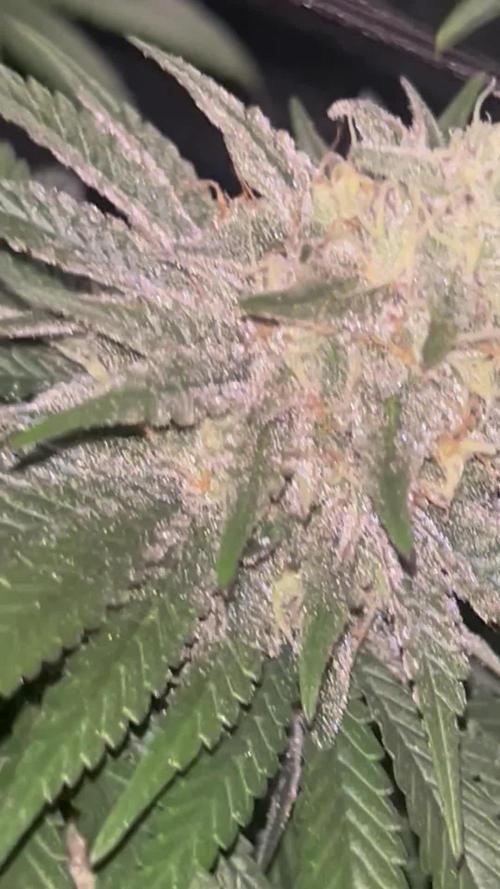
25 Jan
A lot of leaves are starting to die, from all of the plants, maybe due to nutrients maybe due to climate, or maybe is just the strain on the end of its life.
Either way, I'm planning to harvest next week.




Likes
2
Share


@KcKoolaidMan
Follow
Really flowering now. And they took a big stretch the last seven days or so. Tents full, I took the net out a bit ago just to shuffle the plants around in the tent. Still feeding and loving the em harvest. I’ll update again soon as always 🍻


Likes
Comments
Share

@Gardens_of_Of
Follow
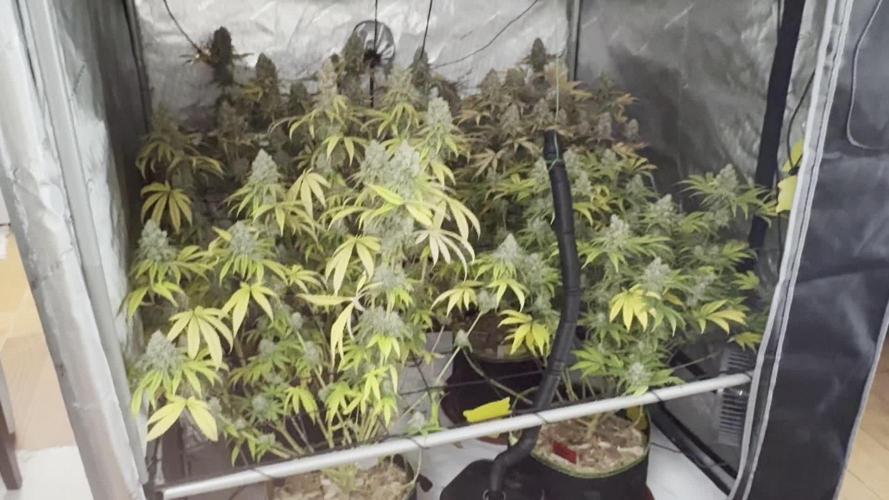
And just like that, the ninth and final week of flowering has come to an end. After months of training, adjusting, observing, and patiently waiting, the girls have finally reached the finish line.
Unfortunately, the last week wasn't entirely stress-free. Humidity became particularly challenging, reaching levels much higher than I would have liked this close to harvest. With the flowers now at their densest, this naturally made me more cautious about potential mold and bud rot.
One bud on Planet of the Grapes caught my attention, as it appears to be showing either some localized damage or the early signs of bud rot. I have been monitoring it very closely, and thankfully, the surrounding flowers still look healthy and unaffected. With harvest planned for tomorrow, I don't intend to take any unnecessary risks—if the affected area looks any worse, it will simply be removed during harvest.
Now for the good news: the girls have finished beautifully.
Trichome development is right around where I wanted it to be, with most plants showing approximately 15% amber trichomes, although naturally there is some variation between cultivars and even between individual flowers. Some are slightly further along, while others could probably continue for a little longer.
Nevertheless, I have decided to harvest the entire tent together at the end of Week 9. They have matured closely enough to one another that a synchronized harvest makes the most sense, especially since I would rather not set up a second tent purely for drying.
Looking back, it's satisfying to see how much the garden has changed. What started as four relatively small plants eventually became a completely filled canopy of heavy, frosty flowers. There were challenges along the way—yellowing leaves, summer heat, stubborn humidity, light adjustments, deficiencies, and branches eventually becoming too heavy to support themselves—but the plants kept pushing forward.
And now there is nothing left to adjust.
No more chasing the perfect light distance. No more canopy management. No more wondering how much they will stretch or how large the flowers will become.
Tomorrow, the scissors finally come out.
After nine weeks of flowering and a lot of patience, harvest day has arrived. 🌿✂️

Likes
14
Share


@Wicked_Stix
Follow
This one is the runt of the group, but she is still kicking. Started getting some yellowing on the lower leaves on all the plants. I increased the maxibloom a little today so hoping that makes them a little happier. I also changed the setup where the plants dont sit on top of the reservoir. This will make it easier to adjust the nutes if needed. I also hooked up a valve to adjust the water flow because I had a couple overflows last week. These cups are just packed full of roots. This "little" grow has become a lot of work. Chugging along though....
Likes
13
Share


@GangbudsGenesgdl
Follow
19/01/21. segundo dia de su nueva semana de 12 x 12 se le cortaron las hojas mas grandes para
intentar que le pegue mejor la luz a los brotes bajos
22/01/21. hoy se aplico riego con nutrientes organico de Rootz.mx se aplico magnaflor y forzasilicia
MagnaFlor. Estimula la floración.
100% orgánico.
Contiene biocatalizadores que serán rápidamente absorbidos por las raíces de tus plantas. El comienzo de la floración será explosivo.
24/01/21. cierre de semana la separe del resto por que note inicios de hermafroditismo 😞
solo era en las ramas bajeras no se que tipo de estres causo esto

Likes
86
Share


@CANNASIM
Follow
------GENERAL COMMENT------
Flush time, within the end of this week is now flush time.
To summary this week i just kept on my feeding habits, Water with base > Water with boosters, alternating Recharge.
My led seams to be crashing a bit, the colors are not stable as is possible to see in the timelapse.
Trichomes are mostly cloudy, with a slight amber. 9 weeks flowering time will be exact, just need time to flush, they are maturing fast fast, hairs are getting orange in a blink.
------GG.AK47 COMMENT------
Compared to the Blueberry the nugs are thinner, still nice size, a bit less dense, thru the stems there are many popcorn buds, that is also due to the less removal on this girl to test. Loaded with colas and the scent is very sugary too, a bit stronger than the BB, and the hairs are turning orange faster, starting to look very mature. Defoliated a bit to avoid rot, will defoliate more for this reason.

Likes
20
Share


@MrPott
Follow
Switched to 18 hours light schedule now and she seems to be loving it so far. The lemon balms are keeping the soil nice and moist.
