


Likes
Comments
Share


@Dutchhobby
Follow
The lst one is making denser and bigger buds .u can see she wants to make me happy..the other one smells very citrus..like it..green one smells bit like original jack her.dont expect high hield.but the people from growers choice say on website that they only produce 30 gr...looking forward to smoke it do

Likes
11
Share


@Haoss
Follow
The plant has started active flowering, is actively fed, feels very well 💚❤️💜

Likes
13
Share


@Robeeriegenetics
Follow
Replacement seeds not fairing well lol but chosen mothers are thriving
Likes
1
Share

@Growfather1
Follow
Hello everyone,
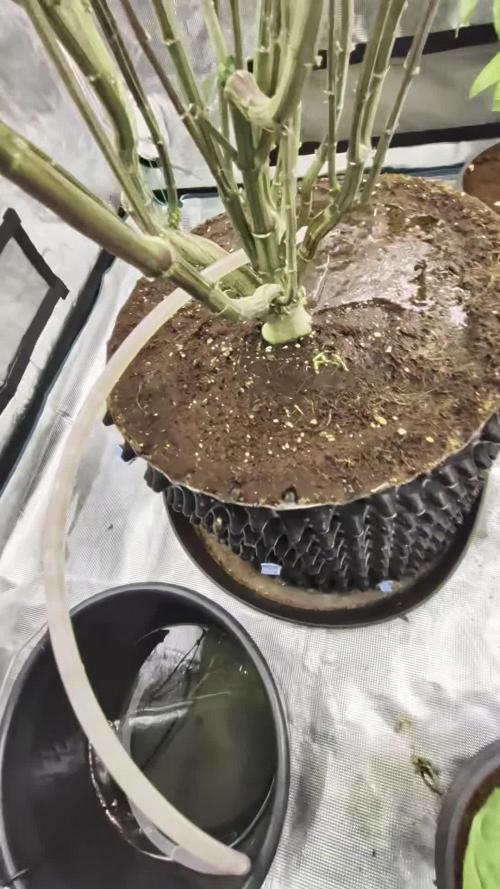
this is an update on my Mac 1 F1 hybrid.
We’re just at the start of week two. I’ve adjusted the light to its maximum height and it’s almost touching the carbon filter.
Humidity is around 60% at night and 55% when the lights are on. The plant is stretching right now, and I’m hoping the stretch won’t go too far. I’ve also removed some fan leaves to let light reach the lower branches.
Thanks for stopping by and have a good one.
Best regards,
Growfather.

Likes
37
Share


@The_Bearded_Grower
Follow
welcome to Day 22 8/1/21 as you can see she has grown a lot but still short lol no SoG yet maybe by sun. she looks happy and healthy and she looks like she has 9 lower branches out of only 3 nodes and I expect 3 more branches before flower how crazy she is growing.
drop a msg I would love to hear from ya.
As always happy growing and keep your stick on the ice

Likes
26
Share

@Northern_Ent
Follow
May 15: later start as a replacement for my failure on Durban Poison. Have wanted to fit this one in for a while and should be an easy and reliable grow.
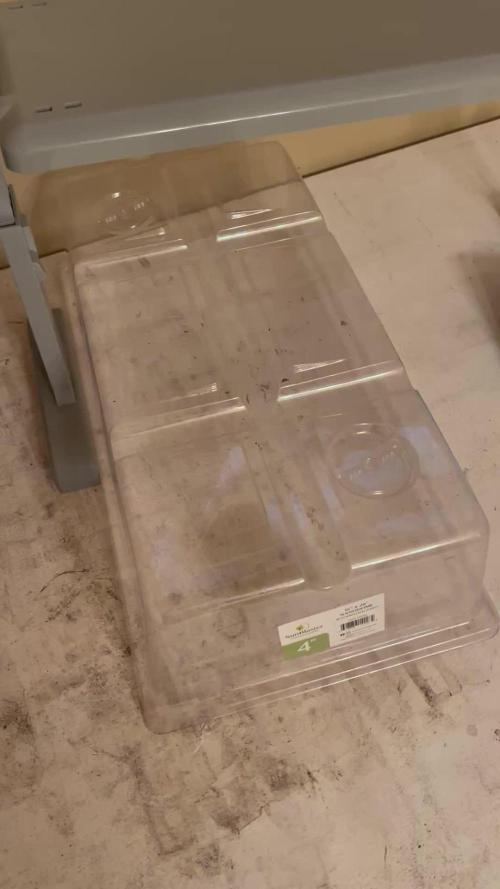
Top tip for germination stage is get a heating mat. My house is usually about 18 C but cannabis, tomatoes and pepper all need it warmer to start properly. So, get a heating mat. i usually keep it at about 26 C.
Next germination tip is to expose the newly sprouted seed to ethylene gas just before it first reaches light. This is a huge tip for all growers.
Seed ‘priming’ using ethylene gas in dark before seedling is exposed to light.
https://scitechdaily.com/accidental-discovery-how-a-whiff-of-an-unusual-chemical-transforms-seedlings-into-super-plants/
Seed priming works. I tried it last year on peppers, tomatoes and cannabis. 😎 This is as big a tip as my standard “get a pH meter”.
Seed priming takes minimal effort (use a ripe apple or banana) and it certainly seems to pay off big time as shown by my last two seasons. I’ll be doing this every single time now.

Likes
4
Share

@pHilosophy420
Follow
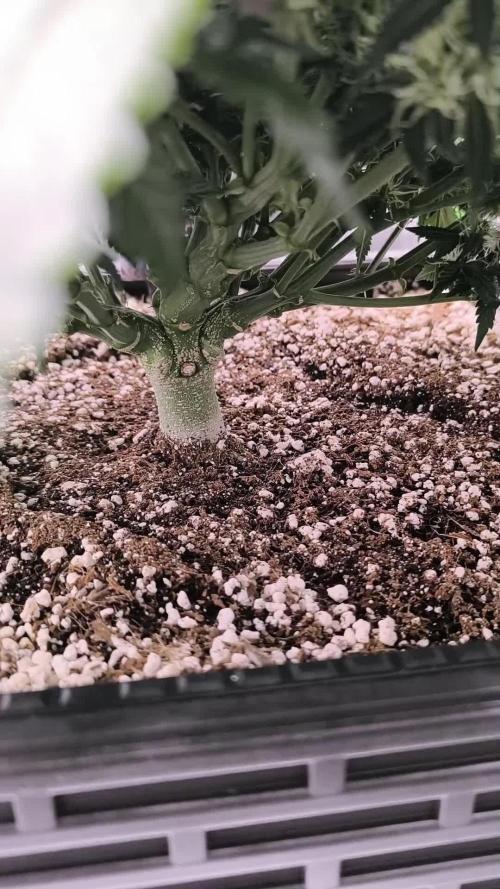
Day 63 - Power at 85% lamp distance 45cm.
She is growing very well the buds start getting some volume and the smell is getting pretty strong. THC level only showing around 20% so will have to see how good is the high.

Likes
16
Share


@valiotoro
Follow
Hello everyone week 6 of flower has passed for this Tropicana cookies auto 🌴
For the feeding schedule i stopped feeding Power Roots and Pure Zym and started feeding Green Sensation 0,5/l
Mars hydro FC-E6500 75%
have a great day and wish you all happy growing 😎👨🌾🏻
Likes
10
Share


@Roberts
Follow
Auto black Opium is growing good. She had a rough start, but is cruising now. Everything is looking good. I did some more lst on her and defoliation as well. Thank you Spider Farmer, Divine Seeds, and Athena nutrition. 🤜🏻🤛🏻🌱🌱🌱
Thank you grow diaries community for the 👇likes👇, follows, comments, and subscriptions on my YouTube channel👇.
❄️🌱🍻 Happy Growing 🌱🌱🌱
https://youtube.com/channel/UCAhN7yRzWLpcaRHhMIQ7X4g.

Likes
19
Share


@nonick123
Follow
Día 20 (13/05) Todas las plantas muestran las preflores!
Día 21 (14/05) Baño de sol de 2 horas!
Día 22 (15/05) N/A
Día 23 (16/05) Riego 750 ml H2O + Regulator 0,15 ml/l + CaMg-Boost 0,25 ml/l + Startbooster 0,25 ml/l - pH 6.2
Día 24 (17/05) Las plantas salen al exterior! 😍 Les aplico heno como mulch (acolchado)
Día 25 (18/05) Riego 250 ml solo agua todas las plantas
Día 26 (19/05) Banana Purple Punch Auto está sedienta!
Riego con 750 ml H2O + Regulator 0,15 ml/l + CaMg-Boost 0,25 ml/l + Startbooster 0,25 ml/l + TopBooster 0,2 ml/l- pH 6.2
💦Nutrients by Aptus Holland - www.aptus-holland.com
🌱Substrate PRO-MIX HP BACILLUS + MYCORRHIZAE - www.pthorticulture.com/en/products/pro-mix-hp-biostimulant-plus-mycorrhizae
Likes
35
Share


@SAC87
Follow
Day 14 flower
Hey Growers
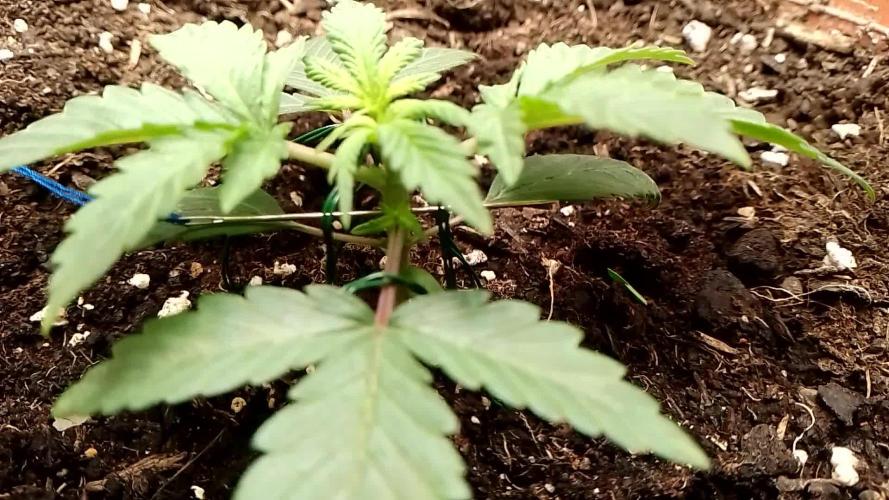
So day 14 of flower, I decided to defoliate as the tent was getting so overgrown. They are drying out quickly and the media is dense with roots. They are going to require daily watering very shortly. They seem quite happy and doing well. You can see in one of the pictures, the leaf edge is raised, which idk exactly what that is. I’ve decreased the light to 70% until I know how they’ll react.
Other than that just put in the trellis to support the tops.
Happy Growing 🌱

Likes
45
Share


@masterofsmeagol
Follow
9/3 Shook the plants off this morning and took a few pics and did a video. Let's see if it uploads. Plants are doing good. Toasted toffy is due for another plant doctor application tonight. It seems like I'm losing lots of leaves. Looking back on my other diaries I guess it's normal. BUT I could've had pest/pathogen problems then. I'm over thinking it. Toasted toffy only needs a few more weeks. It will definitely outvrun the disease. The nugs are super dense too. The plant in the 50 is loosing leaves faster than I'd like. It is also one of the furthest along. The big leaves that turn yellow look like it's a calcium/magnesium issue. The stalk and branches are all bright green and healthy looking. So are the flowers. It could be something below the soil. I couldve been overwatering but last time I waited until it drooped. It will be fine though. I'm happy with my results so far. Not my best or biggest year but I'm going to put in the work and Mae these plants produce the best quality cannabis that im able too. Also I think plant doctor may kill insects. K bicarb with dawn does too. I've found a few dead bugs like flies and pillars. Pillars actually seem to be gone. Not many moths either. Unless I see them I'm not going to treat them for it. This is that magical time where you get to watch the plant produce those beautiful flowers. Despite some small problems I'm very grateful for what I have. I've worked hard for it.
9/4 Watered everything but the sherb pie which was still heavy with leaves yellowing. It's tied for the furthest behind in flower with the seed in the 10. I treated the toasted toffy with 1/4 gallon (4tsp/gallon) of plant doctor. I avoided flowers as much as possible and tried to just get a few leaves. I used the rest on the soil. I just wanted it to absorb a little faster. That's why I sprayed the foliage. It's not 4 days it's 14 days when tje plant doctor just leaves behind a bunch of potassium and phosphorus after it's done its job. Can't be used in a 14 day interval with copper and I think that's what treats septoria best. I dontvknow if I can use that in flower. Doesn't really matter. Things are looking good. Plant Doctor and the K bicarb seem to be doing there job effectively as long as i stick to the application times. I made a short video but didn't upload. I'll try again but I may have some medical emergencies that need to be dealt with. If not I should defoliate and tie down some event horizon branches. I thought about treating the other event horizon as well. I'm not positive it has septoria but it wouldn't hurt anything to be practice. It AT LEAST has a couple suspucuous spots. I smelled a skunk as soon as I got out of my car. It can't get in my grow but I might put out traps to catch it. We'll see how it goes. Video seems to be uploading. It's at 31% so I'll wait for it. I think I've got like four or five weeks on my toasted toffy and one event horizon and the one in the 50 that I THINK is red runtz. That's good that I'll have different plants to harvest at different times. It's seeds from here on out though. It was hard to find info on some of the strains I'm growing but they all have ONE thing in common. They are EXOTIC and they are at least MODERATELY DIFFICULT to grow. AT LEAST lol. Last year I picked the right seefs and strains and it greatly helped. Still, if these are difficult strains to grow, then I'm doing a good job.
EDIT: I WAS STONED BUT IM PRETTY SURE I TREATED THE PLANT IN THE 50 WITH PLANT DOCTOR. DIDNT SPRAY BUDS. TRIED TO GET THE LEAVES THEN USED THE REST ON THE SOIL. I REMEMBER BECAUSE A STREAM ACCIDENTLY HIT A COUPLE LEAVES ON THE HUGE PLANT IN THE 10.
9/5 Sherb Pie was light and drooping. It's not to far in flower and still seemed moist yesterday with a little bit of weight. I watered it a gallon. I defoliated a little but I need to go through that plant. I have a bunch of plants that need a little work. The 50 gal seed is losing lots of leaves. I must not be feeding it enough, overwatering or maybe theres some sort of lock out. The plant looks nice and healthy. Leaves just turn yellow and die. Looked like a calcium or magnesium deficiency but i saw a septoria spot. I wouldn't think I've over feed or locked out using the small amounts of nutes I've used. It will be time to feed again soon. It's in the middle of flowering and still has leaves. I'm hoping things work out. I just have an anxiety disorder and worry too much. I'm GOING To have a great harve! I just need to keep moving forward and putting in the work.
9/6 What a fucking shitty morning. I did research on how to keep skunks out of your garden. Because I smelled it and the neighbors shot a few. Dad put traps out and it caught one. It wasn't a no spray trap so I approached it with him. Both had tarps. I kept telling him to throw it while I was distracting it bur he got a cramp and only got it over half. The half away from my garden. It's pretty far and down in a field but still. We had talked all morning about how to release it. I offered to drive their dog to take it for a walk so his alcoholic girlfriend wouldn't spiteful put the dog on its run. It wouldn't be sprayed but I made it out like it would ruin my plants. Picked dad up and got him to the bathroom. In that 30 seconds the stupid bitch grabbed the dog and brought it outside despite me YELLING "Can't you wait 5 minutes!? We've been dealing with this all morning. I heard fuck you in my head and she did it anyway. Dog ran at the skunk barking and it sprayed. Not a lot but I was fucking pissed. She's a full blown alcoholic and doesn't like me around early or the fact that my old man's 80 and house is mine. Anyway I got back and there was NO SKUNK SMELL. AT ALL! I WATERED EVERYTHING BUT SHERB PIE AND FED EVERYTHING BUT SHERB PIE. ILL FEED AND WATER THAT TOMORROW. WATERED A GALLON WITH A QUART OF FEED. Researched my strains found out they were all "difficult" to grow. One year ago to the Day I cut my first tenth planet. I got a couple close to a few weeks but the others will be later. If I can pull this off though I'll have some crazy quality! Grateful for what I have that's for sure! I doubled beastie bloom this time. We'll see how it goes.nothings uploading. I did some vids a pictures but I'll have to upload today.
9/7 I think it rained last night. I forgot to water and feed the sherb pie but I'll do it when I get back. I shook off the plants the best I could. I need to get the leaf blower out now and put it to use. Buds are swelling like crazy. GMOs are very tight flowers. Same with the event horizon. Rock hard nugs. With the gmo's I'm not worried. The were monster cropped so they have enough leaves even if some do die off. The toasted toffy only has like four weeks left. Same with the event horizon. The plant in the ten is the furthest behind but it's extremely healthy. I removed some leaves from the bottom and large fan leaves. The plant in the 50 I hope finishes before it loses all its leaves. I treated it with plant doctor and SOME people strip their plants but I don't. I'm grateful for what I've got. Won't be the biggest harvest but WHEN I make it to the finish line I will have some incredibly potent strains. I'm proud of myself to even get these to finish seeingvthe level of difficulty on cultivation. I'm trying to upload some stuff. We'll see.
9/8 Apparently it rained pretty hard last night. Took forever to go through and shake everything off and defoliate what needs it. Sherb pie is praying to the sky and almost totally purple. It's flowering so much more in the last couple days. Everything has. Even the one in the ten is stacking up! I defoliated most of what needed it and I was soaked. I noticed a branch on the middle gmo that was getting heavy and starting to break away from the trunk. It wad wobbly but I don't think there was a break un the Cambrian. I made a sling with rope (couldn't find zip ties) and I pulled it tight amd secured that branch to the tomato cage. GMO buds are hard as rocks. Everything is in overdrive. They liked that beastie bloom. I have cha ching but nothings ready for that yet I don't think. We'll the event horizon and toasted toffy might be I'll have to check. It's been beautiful today but not too hot. Lots of wind which is good. I'll upgrade supports as needed. Flowers are progressing at an amazing rate. Weather is supposed to be great the next few days. I'll keep this updated.
9/9 Had to shake the plants off. WATERED EVERYTHING BUT THE SHERB PIE WHICH WAS REALLY HEAVY. It's also lost a lot of leaves and the majority of leaves have turned purple. Toasted toffy and event horizon and red runts are pretty far into flower. I tried to take some pictures. Even the ten is blowing up! That looks like I'm going to switch to cha ching when flower gets further. Trichs are developing nicely on the ones further in flower. This year it's going to be quality over quantity. All these strains are ranked HARD to grow but have insane cannabinoid profiles and high THC %'s. So if I can keep it together for another month I'll be golden. Looking forward to it. This is the fun part. It's also the anxiety provoking part. I've learned a lot just since joining grow diaries.

Likes
10
Share


@420DeepGrow
Follow
Gracias al equipo de Zamnesia, Marshydro, XpertNutrients y Trolmaster sin ellos esto no sería posible.
💐🍁MAC 1:
La MAC 1 es una variedad muy solicitada, creada originalmente por Capulator y distribuida solamente a determinados criadores y cultivadores. ¡Pero ahora ya puedes cultivar este tesoro en casa y disfrutar de sus cogollos densos, jugosos y potentes!
Gracias a su densa copa y vigor, la MAC 1 es una opción ideal para LST, poda apical y otras técnicas de entrenamiento (incluido el lollipopping). Cuando entra en floración, las plantas de la MAC 1 se estiran bastante y una vez maduras pueden alcanzar una altura de 160cm en interior y más de 180cm en exterior. De media, las plantas feminizadas de la MAC 1 necesitan un total de 9-10 semanas para terminar la floración, momento en el que estarán repletas de cogollos índica pequeños y compactos.
🌻🚀 Consigue aqui tus semillas:
https://www.zamnesia.es/10906-zamnesia-seeds-mac-1.html
Código Descuento 20%: ZAMMIGD2023
💡TS-3000 + TS-1000: se usaran dos de las lámparas de la serie TS de Marshydro, para cubrir todas las necesidades de las plantas durante el ciclo de cultivo, uso las dos lámparas en floracion para llegar a toda la carpa de 1.50 x 1.50 x 1.80.
https://marshydro.eu/products/mars-hydro-ts-3000-led-grow-light/
🏠 : Marshydro 1.50 x 1.50 x 1.80, carpa 100% estanca con ventanas laterales para llegar a todos los lugares durante el grow
https://marshydro.eu/products/diy-150x150x200cm-grow-tent-kit
🌬️💨 Marshydro 6inch + filtro carbon para evitar olores indeseables.
https://marshydro.eu/products/ifresh-smart-6inch-filter-kits/
💻 Trolmaster Tent-X TCS-1 como controlador de luz, optimiza tu cultivo con la última tecnología del mercado, desde donde puedes controlar todos los parametros.
https://www.trolmaster.com/Products/Details/TCS-1
🍣🍦🌴 Xpert Nutrients es una empresa especializada en la producción y comercialización de fertilizantes líquidos y tierras, que garantizan excelentes cosechas y un crecimiento activo para sus plantas durante todas las fases de cultivo.
Consigue aqui tus Nutrientes:
https://xpertnutrients.com/es/shop/
📆 Semana 4:
Aparecieron un monton de erizos esta semana, el temporal ha hecho algo de mella en la carpa al bajar las temperaturas aunque todo sigue correcto.
Continuamos con las dosis de nutrientes recomendadas por el fabricante.
Likes
371
Share


@love_2_grow
Follow
D29.
We're at the start of the fifth week of veg, and today, I finally topped the first girl. I should have done it a while back, but I couldn't decide how to train the girls. Due to how tall the first girl had become, I topped quite a bit of her. I left four nodes, applied LST and some minor defoliation, so now I have eight tops in an almost flat canopy. I'll top the second girl later this week before putting in the scrog net.
I noticed how the second girl at the end of the day had drooping taco leaves, indicating that she is getting too much light. I raised the light and will observe tomorrow how she react. This strain seems sensitive to how much light it gets during veg, and I'm curious how it will react once we're in flower.
------------------------------
D31.
The first girl has bounced back from her topping and is looking great. I will top the second girl in a day or two, but since she has greater internodal spacing, I will keep only six branches to have both girls at a similar height.
------------------------------
D32.
I brewed up a quick compost tea using oat flour as the food source. Some people claim that that will result in a fungally dominant tea, so I thought I'd try it out. I also added humic acid and a teaspoon of myco because why not?
Honestly, I'm not sure it is even possible to create a fungally dominant AACT, as the constant water movement will most likely tear the fungal hyphae apart as they form.
In any case, a different food source should promote other bacteria than the molasses I usually use. Diversity is the name of the game in living soil. Well, in life in general.
I gave each girl 2 liters (5% of container volume) of tea @ pH 6.1.
------------------------------
D33.
Today, I topped the second girl. At first, I tried to keep four nodes, but her internodal spacing was much larger than the first girl, so I had to cut her down to three nodes.
Some LST followed the topping to start shaping that flat canopy.
She looked pretty scraggly afterward but had perked up a few hours later.
------------------------------
D35.
We're on the last day in the first week of flower.
All is well in the tent, and the second girl has bounced back from her topping. I'll let them veg for another week or so and then flip them.
I bought a mushroom grow kit to keep in the tent. I figured I'd test it out and see how it works. The mushrooms produce CO2 that the plants love, and hopefully, I'll get some tasty Oyster mushrooms to eat — two birds with one stone and all that.
Yesterday, I gave the girls around 1 liter each of water @ pH6.0, with EM-1 added at 20ml/l, and today the girls got some fulvic foliar spray just before lights out.
------------------------------


Likes
4
Share


Likes
12
Share


@StarfishSmallBatch
Follow
I'm back for another update this week! It hasn't been a very busy week this week, the veg area is vegging and the flower area is on its last week before harvest. I've been taking very small cuttings (about .1 gram) and scoping the trikes using a 45x desktop microscope.
Ethos: Lilac Diesel #22 (x) Grandpa's Cookies #7- This seedling is still doing well and branching out keeping a "v" shaped branch formation, thinner long leaves and decently far spaced nodes. It is still the tallest plant in the whole garden now standing at 19 inches tall. It's top four branches are beginning to develop smaller branches from them.
HSO/ Giest Grow: Tow Truck- Unfortunately the Tow Truck showed signs of being a male. Last week I had assumed it was a male. But this week I was able to call it for certain. I don't have the space to keep any males, so I went ahead and cut it down. This diary will now be for the Ethos Seedling! It is feminized so it will surely go to the flower room with the Raspberry Ripple plants it shares a tent with.
Raspberry Ripple Clones (#1 and #2)- These veg clones are still spreading out with branching decently. The #2 Phenos hit 12 inches in height and received their topping. So now all plants in the clone tent have been topped once.
Flower Tent (Raspberry Ripple #1 and #2)- It is currently day 67 Flower, Under the HLG Blackbird. I went ahead and dimmed it down one level. I let my buddy use my PAR meter for a few days. But I'd assume it's probably about 450-700 PPFD on most top sites. I've assessed the trichomes today and last week. Most are getting cloudy but I'm gonna wait just a few more days, to push into some amber coverage. A lot of the #2 pheno top sites are now leaning over and being fully supported by the trellis. The little branches just couldn't support the massive flowers it grew. One of the #2 plants is still holding strong and standing tall. But 2/3 are pretty much fully supported by the trellis. The number one phenos are once again super thick stalked, with thick branches. One of the #1 plants, looks like it completely bottomed out this week. Most of its leaves are completely faded. The other plant of the #1 Phenos is much more bright and vibrant. There are still some straggling white pistil hairs left on the #1s but they are still changing color by the day. Pushing into day 70 or 71 will probably be perfect harvest time!
Thank you for checking in on my grow diary! Until next week! Happy growing and Happy Living!
-Starfish

Likes
52
Share


@PEAKYPLANTERS
Follow
Ladies and gentlemen.
It begins with the rinsing of our roots to remove all excess nutrients from the gems.
Happy and abundant harvesters for everyone.

Likes
3
Share

@HighHolidays
Follow
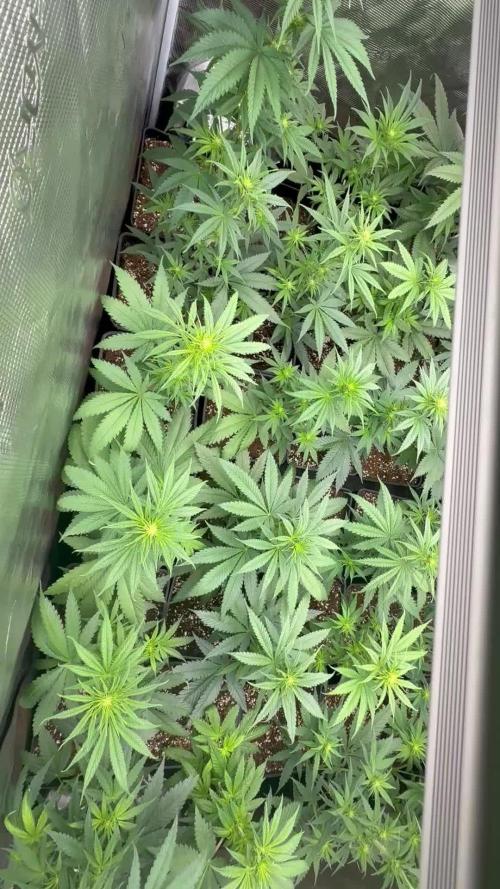
I’ve kept almost all the fertilizer, light, and environmental parameters the same. I did a good defoliation to improve airflow, since I was having a bit of trouble lowering the humidity. This also helps the light penetrate better through the buds, allowing them to develop more fully.