


Likes
Comments
Share


@zombikush81
Follow
I hope you will enjoy my work, the peaks are to dry, share a few days for comments or advice, or questions please write to me.... !! peace & love

Likes
15
Share


@Messypies
Follow
brilliant week of growth from the peanut butter cookies. Been a little bit of a struggle for space but will HST once all autoflowers are out.
Both the auto cinderella jack and auto critical cheese are developing buds nicely


Processing
Likes
2
Share


@High_Class
Follow
This clone is look I wonderful. In my opinion it's further along than the mother plant was at this week of flowering.


Likes
10
Share


@JiminyCricket
Follow
Been doing a lot of tweaking with the new gear and multiple sets of plants. Been quite a busy week and probably behind a bit on keeping track of everything. I'm currently working on trying to get better charts made to keep track of things like light schedules, detailed feedings, height change per day, etc.
My current setup is my oldest 1st set of plants (5plants) and my 3rd set (6 seedlings), in my new 4x4 Vivosun grow tent equipped with a Spider Farmer SF-1000.
I have kept my 2nd set of plants (4plants) in my original 4x2 Vivosun equipped with 600W Vivosun LED. These plants had been extremely stressed due to not having soil or containers available with shipping constraints. They've been doing a lot better since then and I'm hoping they make a full recovery. Fingers crossed!
Running 24hr light schedule.
Both tents equipped with temp/hygro high and low ranging from about 71-81°F with an average of about 78°F.
Watering by plant pot weight, according to GH FloraTrio + CalMag Schedule.
Mild LST via tucking of leaves blocking developing sites. No more than 3 leaves removed per plant, per day to avoid stress.
______________________________________
Can't wait to start upgrading the quality of my journals and to hear you all's feedback! Happy growing and good vibes as always 🌱
______________________________________
4/29/20 - Update
Okeydoke! Feel like I've been doing too much running around everywhere. Sorry for being so hectic the past week or so if anyone has been keeping up with this 😂
For the time being, I'm currently running all three sets of my plants in my 4x4 tent. It's running all three of my fans, both lights and has the carbon filter system and humidifier hooked up to it as well. I basically have the other 4x2 just sitting as a shell for the moment. Either planning to save it for climate control when curing the first harvest or sell it to invest in another Spider Farmer SF-1000 LED or equivalent and possibly another 4x4 tent.
I have started a grow chart that's still a little sketchy but if nothing else having it here hells me keep up with it that much better.
[April 24th @ 3pm]
Plant 1- (11in.)
2- (9in.)
3- (14.75in.)
4- (13in.)
5- (10.75in.)
[April 26th @ 1:30pm]
Plant 1- (11in.)
2- (9.5in.)
3- (18in.)
4- (14in.)
5- (11.5in.)
[April 27th @ 12pm]
Plant 1- (11.5in.)
2- (10.5in.)
3- (20.5in)
4- (15.25in.)
5- (11.5in)
[April 29th @ 4am]
Plant 1- (12in.)
2- (10.5in.)
3- (23in.)
4- (16in.)
5- (11.75in.)
[April 30th @ 3:30pm]
Plant 1- (12.25in.)
2- (10.5in.)
3- (25.75in.)
4- (16.75in.)
5- (12in.)
______________________________________
The most current batch of nutrient mixes for was made this morning about (2am 4/29/20) for the 1st and second set of plants.
The first set of plant's nutrients was made to 4gal of water. The mix is a ratio of
(Cal-Mag/GHMicro/GHGro/GHBloom)
It's mixed (for the 4gal) in order; 10mL, 5mL, 10mL, 10mL.
440ppm @ 98.5°F
890EC @ 2.2°F us/cm
This new nutrient mix was applied for the first time tonight and will run about a week. I'm running a bit behind according to the GH schedule I was following due to stunting the growth I felt like over a couple issues to where I have them an extra week of veg nutrients. As I have defoliated them and they have seemed to take it pretty well, I'm hoping the increase in bloom nutrients will kick the buds into overdrive for production and the plants will start to thicken up again.
The second mix follows the same order as the first set in regards to nutrient usage. This mix is only mixed to one gallon. It as follows; 2.5mL, 2.5mL, 1.25mL, 2.5mL.
500ppm @ 98.6°F
992EC @ 0.4°F us/cm
This is mostly following the same GH nutrient schedule as the first set only about 2 weeks behind. These plants suffered from being in too small of containers for too long and I believe this stunted their growth. I've had them in suitable new containers for a couple days now and hoping this new mix of increased nutrients will bring them back to life a bit and get them back in schedule.
I'm honestly not too sure still about the ppm and EC numbers but a few bud-dies have mentioned that it plays important roles in plant health. So until I can better research good numbers and how to control it for my set up, I'm at the very least trying to keep track of the data.
I apologise about this large chunk of text! I hope you enjoy the diary anyway in spite of the fact. I'm loving the look of the buds and everything seems to be going great. Only a few months to go! 😎


Likes
36
Share


@nonick123
Follow
Día 66 (05/08) Cerrado por vacaciones
Día 67 (06/08) Mi amigo viene a casa a hacer un riego con 1 Litro de H2O pH 6,5
Día 68 (07/08) Cerrado por vacaciones
Día 69 (08/08) Vuelta de vacaciones! A ver como están después de 5 días sin verlas... 😱
Riego con 1 litro. OnionOG con 1.5 L
Añado 3 cm de sustrato nuevo porque se ha compactado y se ven las raíces! 😢
Día 70 (09/08) Riego 500 ml H2O pH 6,55
Eliminación de algunas ramas bajas
Día 71 (10/08) OnionOG vuelvo a hacer topping a todas las ramas principales! 💥
Riego 500 ml H2O pH 6,55
Sesión de fotos semanal!
Día 72 (11/08) Riego con 1 Litro de Té Vegetativo de Lurpe Solutions. Preparación: 24 horas con bomba de aire (oxigenación) con ingredientes:
Green Sunrise 8 ml/L + Insect Frass 16 ml/L + Hummus Lombriz 8 ml/L + Melaza 1 ml/L + Kelp Hidrolizado 0,25 g/L
Aplicación foliar Kelp hidrolizado de Lurpe Solutions a 0,25 ml/l
💦Nutrients by Lurpe Solutions - www.lurpenaturalsolutions.com
🌱Substrate PRO-MIX HP BACILLUS + MYCORRHIZAE - www.pthorticulture.com/en/products/pro-mix-hp-biostimulant-plus-mycorrhizae

Likes
1
Share


@DrGL_Thumb
Follow
Girls doing well, clearly see all hit with hit substrate 😂 but ChemDawg is despite the hit battling n fast 😂
Likes
35
Share


@DudeGrowsWeed
Follow
February 20, 2019 update:
Pretty much just waiting to be ready for harvest. Everything is moving along nicely at this point. Planning on feeding until the end of February, then starting a 2 week flush with most of the plants going in the flower room now, but I may let the Cookies & Cream go a little longer.
Fed MegaCrop, Cal+Mag Pro and Mammoth P this week. I've used up the last of my Mammoth P at this point. It will be MegaCrop & Cal+Mag Pro only until flush.
All pics were taken with the lights on. I tried color correcting the best I could, but the pics really don't represent the actual colors very well. Usually I try to get some pics with the lights off also, but I was not able to do that last week. I'll make sure to get some better pics next time. 👍
Likes
35
Share


@MadeInGermany
Follow
Info:
Unfortunately, I had to find out that my account is used for fake pages in social media.
I am only active here on growdiaries.
I am not on facebook instagram twitter etc All accounts except this one are fake.
Flowering day 29
since time change
to 12/12 h.
Hey guys :-)
Once again a nice week has passed in which the lady has developed super :-).
The buds start to grow and are now getting more pk.
This week it was poured 3 times with 1.2 l each (nutrients see table above).
Fresh osmosis water was filled in canisters for the next 2 weeks.
Everything was cleaned and the plant was checked for health :-).
I wish you a lot of fun with the update and stay healthy 👍
You can buy this Nutrients at :
https://greenbuzzliquids.com/en/shop/
With the discount code: Made_in_Germany you get a discount of 15% on all products from an order value of 100 euros.
You can buy this Strain at :
https://greenhouseseeds.nl/
☝️🏼☝️🏼☝️🏼☝️🏼☝️🏼☝️🏼☝️🏼☝️🏼☝️🏼☝️🏼☝️🏼☝️🏼
Green House Seeds Company Cup Clone 🏆
Type:
Wonder Pie
☝️🏼
Genetics:
Wedding Cake x OG Kush
👍😍
Vega lamp: 2 x Todogrow Led
Quantum Board 100 W
💡
Flower Lamp : 2 x Todogrow Led
Cxb 3590 COB 3500 K 205 W
💡💡☝️🏼
Earth: Canna Coco Professional +
☝️🏼
Nutrients :
Green Buzz Liquids :
Organic Grow Liquid
Organic Bloom Liquid
Organic more PK
More Roots
Fast Buds
Humic Acid Plus
Growzyme Big Fruits
Clean Fruits
Cal / Mag
Organic Ph - Pulver
☝️🏼🌱
Water: Osmosis water mixed with normal water (24 hours stale that the chlorine evaporates) to 0.2 EC. Add Cal / Mag to 0.4 Ec Ph with Organic Ph - to 5.8


Likes
77
Share


@Bread_n_Buds
Follow
Get your drool ready, these little flowers are already making your mouth water after just 4 weeks of flowering. It's a marvel, a thousand shades of purple and an immense quantity of resin. The already a lot of resin in the 4th week actually seems to have come out at the same time as the use of Plagron's turbo additives. I've always been a little skeptical about additives but I have to change my mind as soon as I put Sugar Royal on the sugar really came out. Power Buds and the mythological Green Sensation did the rest. This week I will only show you the plant processed with just one topping while we will leave the one grown straight for the next few weeks.
Gnam Gnam Biscotti parfum!
Food by Plagron >>
Plagron - Alga Bloom > 4ml/l
Plagron - CalMag pro > 1ml/l
Plagron - Sugar Royal > 1ml/l
Plagron - Green Sensation 1ml/l
Plagron - Power Buds 1 ml/l
>> SOLUTION PH - 6.2
Love Italian name of the strain, several crazy people but a lot of style. Thanks you America for this.
>>> https://www.zamnesia.io/it/9484-zamnesia-seeds-biscotti.html
Plagron is a guarantee in feeding your little ones
>>> https://plagron.com/en
>>> Music of the week >> Radio Nula from Slovenia > https://radionula.com/
"I can see the light"
>>> https://marshydro.eu/negozio/?lang=it
***Sorry sometimes write like an animal. My English teacher is dead. Rest in peace Miss.


Likes
2
Share


@smoking_hills9
Follow
Plants are doing great, but very annoying slow fase of preflower. That's why I do mostly auto. Let's c maybe this harvest will change my mind. Start using spirulina powder as natural PGR.

Likes
7
Share


@Mazgoth
Follow
The color is amazing,we are talking about a real purple color,the smell is so sweet and smells like a banana tree with milk and fruits.You need a good carbon filter for this strain
Likes
27
Share


@simps
Follow
Brain damage grower choice genetics
This plant is growing great definitely one of my favorites she is in flower very excited this strain has high resin production so we should see some nice frosty buds loaded with tricomes this is a high thc variety with heavy yields she bushed up beautifully set up great ready for flower she is very healthy no problems to speak of what so ever there are hundreds of tops on this plant so we should have a really nice yield if you go on the growers choice genetics website they have a great disruption of this strain run you through the different affects and smells and thc% really a nice strain the seeds came in a really cool little case with velvet liner and little folded up paperwork that tells you all about the strain your about to grow i in joyed that when the seeds came in so definitely a cool little package anyways the root system on this plant is huge completely took over this 50 gallon pot the roots are busted through the bottom of the cloth pots and firmly planted in the ground where u Literally have to rip the pots off the ground to move the plants around I’m going to be taking lots of pictures through this flower stage to document the bud growth and development closely having a great time growing this one

Likes
45
Share


@psuperman
Follow
Starting week 4 by moving the plants to another part of my apartment and added a 65 watt LED full spectrum light to see if that helps. Still leggy looking but they hold up on their own so that can’t be a bad sign right? Watered today with 250 ml each of just straight spring water no extra nutes just what’s in the soil. That will be all the water for 2-3 days. Hoping for some good growth over the next week like last time.
*Update*
I found a great deal on a grow tent with carbon filter system (Spider Farmer) and stronger light (Mars TS1000) plus several other items and I could not turn it down. Pictures and more updates to come! I uploaded a video to show the new setup.
*Day 29*
Added 250 ml of water each with Hydrogarden TNT growth solution. 1ml per 250 ml. The new setup is great for controlling temp and humidity. Hovering around 40% but I have a humidifier just in case. Loving the new light too.
Likes
14
Share


@LokalGrenz
Follow
Had some humidity issues been watering with spring water until I get something to filter the tap water
Jan.8th amnesia haze 1 got bit taller so I did some more LST
Likes
1
Share

@carlitospiratahaze
Follow
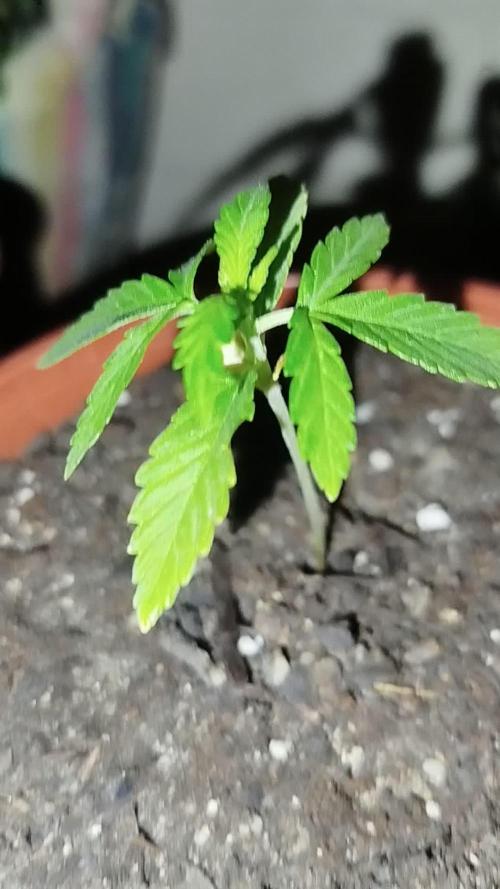
Seguimos avanzando con la pequeña papaya ya va empezando a parecer una plantita de cannabis!!
Seguimos el seguimiento con ganas de que empiece a estirar!

Processing
Likes
Comments
Share


@Mr_nugs_lover_David
Follow
This lady looks super beautiful very simetric and ready to give all her love in full flower, let's see how this beautiful strain performs at the end,I'm enjoying a lot so far. 💚💛✌️❤️

Likes
18
Share


@Dr_Lia
Follow
OG Kush tuvo una pequeña deformación genética que pude controlar y creo que va a surgir de buena forma la planta...
(No se abrieron las dos primeras hojas lo cual genero que el brote del ápice naciera abajo de estas, Ya abrí las hojas de forma manual así la luz penetra y llega al brote.